

Note: This article contains affiliate links. If you click on these links and make a purchase, I may earn a small commission at no extra cost to you. This helps support my research and content. Read my full affiliate disclosure here.
If you want to garden without kneeling or lifting heavy soil by hand, an elevated garden bed planter can transform your growing space. These raised, waist-height planters bring soil up to a comfortable working level, improve drainage, and make it simpler to control soil mix and pests. This guide covers five top-rated elevated garden bed planters shortlisted for sturdiness, drainage performance, and realistic garden use. We evaluated these planters for materials and construction, water management, and ease of use so you can pick the right option for patio, balcony, or backyard beds. Read on to see the practical pros and cons that matter in a working garden.
Top Picks at a Glance
| Best Overall The best all-around choice for most situations | Best Choice Products 48 x 24 x 32 in Mobile Raised Garden Bed (Fir Wood) |  |
| Best Quality Built to a higher standard if you want something more solid | Vego Garden Elevated Raised Garden Bed 2' x 4' with Legs and Storage Rack |  |
| Best Value The sweet spot between price and what you get | FOYUEE 31.5" Elevated Mobile Raised Garden Bed with Wheels and Shelf |  |
| Highest Rated A top-rated pick with lots of positive feedback | LDAILY Elevated Raised Garden Bed with Legs and Storage Shelf |  |
| Most Popular A crowd favorite that many people choose with confidence | Best Choice Products 72in Fir Wood Raised Garden Bed |  |
Best Choice Products 48 x 24 x 32 in Mobile Raised Garden Bed (Fir Wood)

| Capacity | 135 quarts |
|---|---|
| Material Type | Fir Wood |
| Plant or Animal Product Type | Vegetable |
| Other Special Features of the Product | Drainage Hole |
| Mounting Type | Floor Standing |
This raised garden bed is designed for small outdoor vegetable plots where mobility and comfort matter. The bed stands 32 inches tall so you can tend plants without bending, and the included locking casters let you reposition the planter to follow sun or shade. Constructed from unfinished fir wood with a removable liner, it keeps soil off the wood to reduce rot while the liner also helps block weeds. A built-in lower shelf gives a handy spot for potting tools and small bags of soil and the four drainage holes prevent waterlogging for healthier roots. Assembly is required and the unfinished wood will need sealing or staining for long-term weather resistance. The 100 lb weight capacity limits very heavy soil mixes or large potted specimens, and fir is less rot-resistant than cedar, so expect to treat or replace it sooner if exposed to constant moisture. For gardeners who want an ergonomic, movable elevated planter with storage, this is a practical, space-efficient option.
Best for: Gardeners who want an easy-to-access, movable raised bed for growing vegetables in small yards, patios, or balconies and who prioritize comfort and practical storage while gardening.
Less Ideal for: People seeking a maintenance-free or long-lasting hardwood planter or those who need to use very heavy professional soil mixes or large planters that exceed the stated load capacity.
- Ergonomic 32 inch height reduces bending and back strain for planting and maintenance
- Locking wheels provide easy mobility to move the bed for optimal light or protection
- Removable garden bed liner separates soil from wood to slow rot and block weeds
- Built-in lower shelf offers convenient storage for tools and supplies
- Multiple drainage holes help prevent oversaturation and root problems
- Unfinished fir wood will require sealing or staining to resist weathering and decay
- 100 lb weight capacity limits use with very heavy soil mixes or large container loads
Verdict: A practical, movable elevated planter that makes vegetable gardening easier by combining ergonomic height, drainage, and on-board storage.
Vego Garden Elevated Raised Garden Bed 2' x 4' with Legs and Storage Rack

| Capacity | 700 pounds |
|---|---|
| Plant or Animal Product Type | Vegetable |
| Material Type | Metal |
| Finish Types | Powder Coated |
This Vego Garden 2' x 4' elevated raised bed is a heavy-duty metal planter built for vegetable production and repeated seasonal use. It arrives as a kit that bolts together without special skills and uses powder-coated VZ 2.0 metal to resist rust and rot. The 32-inch overall height reduces bending while the 12-inch planting depth gives roots room for most vegetables, and a stated 700-pound capacity means it will hold ample soil and mature plants. Practical touches include one-piece welded corners and a center support that improve rigidity and a rubber edging that covers sharp panels during assembly. Because it is metal, the bed warms up and drains faster than wood or plastic, which can speed early-season growth but may require more frequent watering in hot weather. The kit needs assembly and fastener tightening, so expect an hour or two to set up. If you want a durable, high-capacity raised bed that eases back strain and stands up to multi-year vegetable gardening, this model delivers strong, performance-focused value.
Best for: Gardeners who prioritize long-term performance and structural strength for vegetable production and want an elevated bed that reduces bending and holds a lot of soil.
Less Ideal for: People who want a no-assembly, lightweight seasonal planter or those who prefer the moisture retention and look of natural wood in ornamental beds.
- Robust VZ 2.0 powder-coated metal construction offers long-term rust and rot resistance
- High load capacity (700 lb) supports deep soil and heavy plantings
- 32-inch total height reduces bending and improves ergonomics for planting and harvest
- One-piece welded corners, center support, and storage rack add rigidity and utility
- Metal walls warm and dry soil faster than wood, increasing watering frequency in heat
- Requires assembly with fasteners which takes time and basic hand tools
Verdict: A durable, high-capacity elevated metal bed built for serious vegetable gardeners who want less bending and long-lasting performance.
FOYUEE 31.5" Elevated Mobile Raised Garden Bed with Wheels and Shelf

| Capacity | 2.5 cubic feet |
|---|---|
| Material Type | Metal |
| Finish Types | Powder Coated |
| Mounting Type | Floor Standing |
| Included Components | Wheels, Plant Stand |
This FOYUEE elevated raised bed is a mobile, waist-height planter designed for easy, ergonomic vegetable and herb growing on patios and balconies. The galvanized steel box with a powder-coated finish resists rust and supports heavy fill so you can add ample soil for productive vegetable crops. Built-in drainage channels and a central drain help prevent waterlogging while the raised profile improves air circulation around roots. A lower storage shelf keeps tools and pots handy and the integrated handle plus 6-inch all-terrain wheels make it straightforward to reposition the planter for sun or shelter. Typical uses are growing salad greens, herbs, compact vegetables, or creating a movable culinary garden outside a kitchen door. Assembly and moving when fully loaded will require some effort despite wheels, and the metal surface can warm in strong sun so seedling protection may be needed. The unit favors growers who want less bending and an organized, movable planting station rather than a large in-ground plot.
Best for: Gardeners who want an ergonomic, moveable vegetable planter for patios or balconies and value easy access, organization, and rust-resistant construction.
Less Ideal for: People who need very large planting volumes, deep-rooted crops, or a permanent in-ground bed for large-scale vegetable production.
- Powder-coated galvanized steel construction resists rust for outdoor use
- Raised waist-height design reduces bending and back strain
- Integrated drainage channels and central drain prevent water buildup
- Built-in wheels and handle allow the planter to be moved for light or weather
- Lower shelf provides convenient storage for tools and supplies
- May be heavy and awkward to assemble or move when filled with soil
- Metal walls can heat up in direct sun and may require shading for sensitive plants
Verdict: Buy this if you want a durable, waist-height mobile planter that makes growing herbs and compact vegetables easier without stooping.
LDAILY Elevated Raised Garden Bed with Legs and Storage Shelf
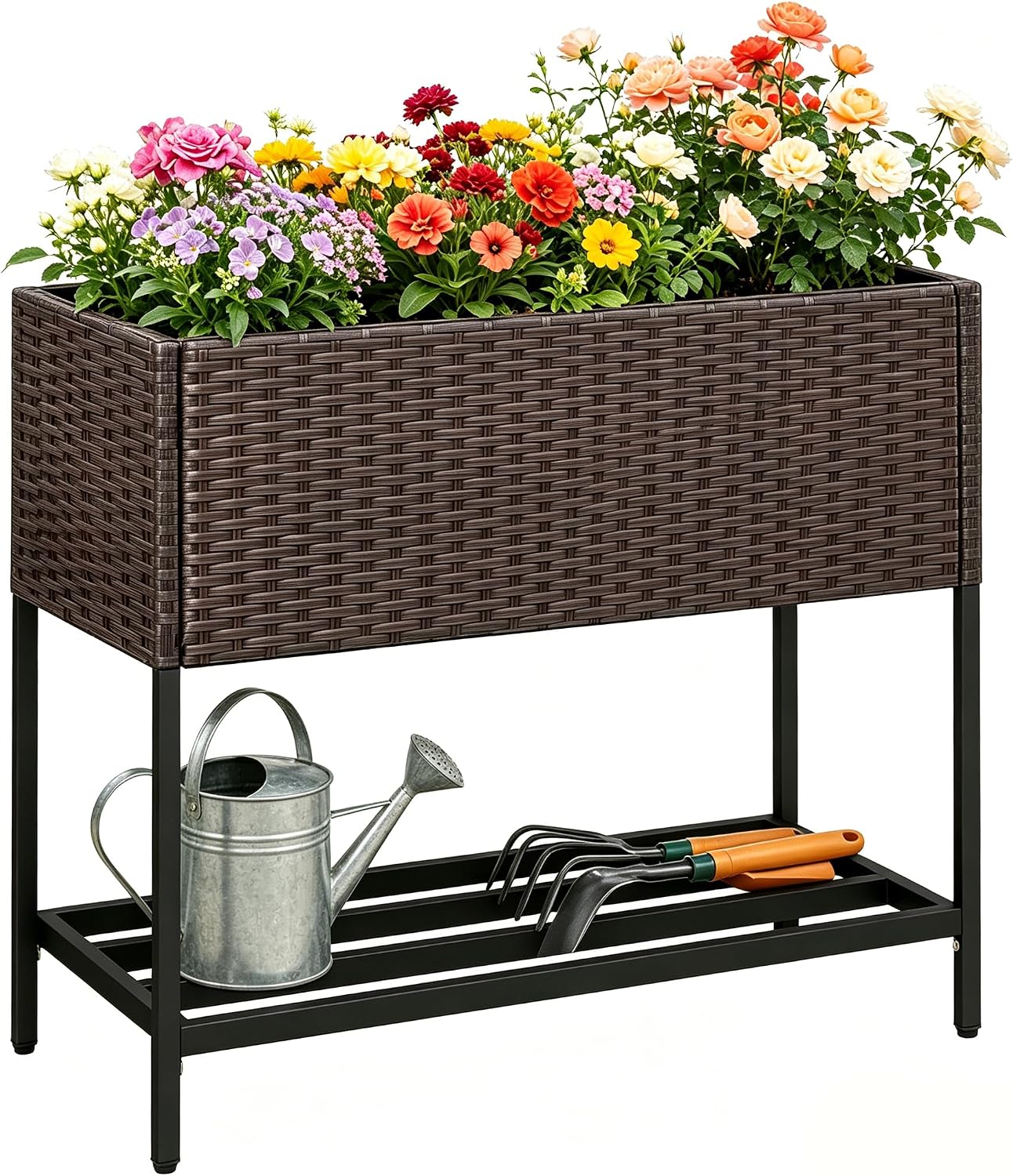
| Capacity | 132 pounds |
|---|---|
| Material Type | Metal, Rattan |
| Mounting Type | Floor Standing |
| Other Special Features of the Product | Drainage Hole |
This elevated raised garden bed provides a convenient, waist-high planting box supported by a metal frame and finished with rattan-style panels. It is intended for container vegetable and flower growing on patios, balconies or small yards, letting you fill the lined box with soil while the bottom drainage gap prevents waterlogging. The included non-woven liner keeps soil contained while allowing air to the roots, and the lower shelf gives a handy place to store gloves, small tools or pots. The frame is rated to hold up to 132 pounds in the garden box and 66 pounds on the shelf, so it can support rich potting mix and a few heavier containers without sagging. Assembly is required and the compact footprint limits planting width compared with full-size raised beds, so it is best for short rows, herbs and small vegetables. The materials combine metal strength with rattan styling for outdoor use, but long-term exposure in very wet climates may need periodic care to maintain appearance.
Best for: Gardeners who prioritize a reliable, sturdy elevated planter for small-space vegetable and herb growing and want easy, comfortable access without bending.
Less Ideal for: People needing large-area vegetable production or deep root crops should choose a full-size raised bed or ground planting instead.
- Elevated design reduces bending and makes planting and harvesting easier
- Built-in drainage gap and non-woven liner help prevent waterlogged roots
- Sturdy metal frame rated to support 132 lb in the garden box and 66 lb on the shelf
- Lower storage shelf keeps tools and supplies accessible while gardening
- Narrow planting width limits what and how many larger vegetables you can grow
- Made for outdoor use but rattan finish may require maintenance in very wet climates
Verdict: Choose this elevated planter when you want a sturdy, easy-to-use raised bed with integrated drainage and a storage shelf for reliable small-space gardening.
Best Choice Products 72in Fir Wood Raised Garden Bed

| Capacity | 251 quarts |
|---|---|
| Material Type | Fir Wood |
| Mounting Type | Floor Standing |
| Other Special Features of the Product | Drainage Hole |
| Indoor Outdoor Usage | Outdoor |
This elevated planter is a straightforward solution for backyard and patio gardeners who want a large, ergonomic raised bed without complex installation. Built from unfinished fir wood, it offers a roomy planting area and a 30-inch height that reduces bending and makes routine tasks like planting, weeding, and harvesting easier on the back. The box includes multiple drainage holes to prevent waterlogging and promote healthy root aeration, and its floor-standing design keeps plants off the ground to deter small animals. Assembly requires some time and basic tools but is manageable for two people using the included guide. Because the wood is unfinished, you can stain or seal it to match your space and extend its lifespan but you should expect some weathering if left untreated. The unit has a substantial weight capacity suitable for heavy soil mixes but it is large, so plan placement carefully and ensure a level surface for stability.
Best for: Buyers who prioritize comfortable, elevated gardening and want a roomy, natural wood planter for a balcony, deck, or backyard where social proof and reliability matter.
Less Ideal for: Those who need a maintenance-free, synthetic planter or who cannot position a large box-bed due to space or weight restrictions.
- Ergonomic 30-inch height reduces bending and kneeling when gardening
- Large planting capacity suitable for vegetables, flowers, and mixed beds
- Multiple drainage holes to prevent waterlogging and support healthy roots
- All-wood construction gives a natural look and can be customized with stain or sealant
- Wood is unfinished so it requires sealing or periodic maintenance to resist weathering
Verdict: A roomy, back-friendly wooden raised bed that delivers a proven and comfortable elevated planting platform for vegetable and container gardening.
Choosing the Right Elevated Garden Bed Planter: Key Factors to Consider
Construction Material and Finish
The material used for an elevated garden bed planter determines how it weathers sun, rain, and soil contact. Wood offers a natural look but varies widely by species and treatment; rot-resistant species and proper finishes extend lifespan. Metal is strong and space-efficient but can heat up in full sun and may need protective coatings to prevent corrosion.
Synthetic materials like recycled plastic resist rot and insect damage and require little upkeep, but check for UV-stable formulations to avoid brittle cracking over time. The finish and fastenings matter too: stainless or galvanized hardware and well-sealed joints reduce maintenance and keep the planter square and stable season after season.
Drainage Design and Water Flow
Good drainage prevents waterlogging and root rot while allowing gardeners to control moisture for different crops. Look for planters with bottom drainage holes, raised internal platforms, or removable liners that let excess water escape without washing out soil. Planters intended for patios may include trays to catch runoff; confirm tray capacity and ease of emptying.
Consider how the planter will behave in heavy rain versus dry spells. A design that promotes even drainage and prevents pooling near corners will support healthier root systems and reduce disease risk.
Planting Depth and Root Volume
Different vegetables and perennials require varying soil depths. Shallow planters suit herbs and salad greens, while tomatoes, peppers, and many perennials need more root volume. Measure the usable soil depth, not just exterior height, and account for any false bottoms or liners that reduce planting depth.
Also think about soil weight when fully loaded. Deeper beds hold more soil and moisture but increase total weight, which affects placement on decks or balconies and the need for a stronger frame.
Accessibility and Working Height
One of the main reasons gardeners choose elevated bed planters is to reduce bending and kneeling. The working height should match the primary gardener's comfort: waist height is common for standing work, while a lower elevation can be better for seated tending. Consider edge width and whether the top rail allows comfortable leaning or placing small tools.
Accessibility also includes harvesting reach and whether the planter allows easy row access on all sides. If the planter sits against a wall, ensure you can reach the center planting area or plan shallow plantings for that side.
Assembly, Mobility, and Maintenance
Assembly effort affects how quickly you can put a planter into service. Some units arrive preassembled, while others require many fasteners and tools. Fast, clear assembly is preferable for gardeners who want immediate use. Mobility matters if you plan to move the planter seasonally or to protect it from weather; lighter materials or built-in casters make relocation easier.
Maintenance needs include reapplying finishes, cleaning catch trays, and replacing liners. Choose a design whose routine upkeep fits your time and skills to keep it functional for years.
Pest Management and Environmental Exposure
Elevated planters reduce some ground pests but can still be vulnerable to insects, birds, and windblown seeds. A planter that accommodates covers, mesh, or cloches makes it easier to protect young plants. Consider how open the sides are and whether gaps allow burrowing pests access from below.
Also account for wind exposure on balconies or raised patios. Lightweight planters may tip or shift unless anchored. Materials that reflect heat or trap it against roots will affect plant stress in hot climates, so choose a design suited to your local conditions.
Best Uses by Garden Situation
Elevated garden bed planters fit a range of spaces from small balconies to larger backyard patches. On patios and balconies they give you controlled soil without digging into the substrate below. In yards they serve as tidy, raised borders that simplify crop rotation and season extension.
Match planter size to your intended crops. For herbs and lettuces pick narrower, shallower beds that are easy to reach from one side. For larger vegetables and mixed plantings choose deeper, wider planters that provide adequate root room and soil volume.
- Balcony gardening: prioritize lightweight, drainage-friendly designs.
- Small yards: choose durable frames with sufficient depth for vegetables.
- Accessible gardening: look for comfortable working height and wide top rails.
Preparing Soil and Filling Elevated Beds
Filling an elevated planter requires a well-draining, nutrient-rich mix that is lighter than native soil if weight is a concern. Blend compost with screened topsoil and an airy amendment such as coconut coir or perlite to balance moisture retention and drainage.
Layering can improve performance: a thin layer of coarse material at the bottom for drainage, followed by the planting mix, works well. Avoid using heavy, clay-rich soils straight from the garden unless amended to reduce compaction and weight.
- Use lightweight organic amendments to reduce total load.
- Pre-moisten the mix to settle soil and avoid large air pockets.
- Top-dress with compost annually to replenish nutrients.
Seasonal Care and Winter Storage
Seasonal care for elevated planters includes checking drainage points before heavy rains, topping up soil after planting seasons, and protecting frames from prolonged moisture in winter. In cold climates, insulating the planter sides with straw or removable panels reduces freeze-thaw stress on roots.
If you need to store a planter over winter, empty the soil and keep the structure dry and off the ground to prevent rot. Removable liners make this process faster and reduce wear on the main frame.
- Inspect seals and fasteners each spring and autumn.
- Remove and compost spent soil or plants to reduce disease carryover.
- Store small or lightweight planters indoors if possible to extend life.
Integrating Irrigation and Accessories
Planter-compatible irrigation makes watering consistent and conserves water. Drip tubing or soaker hoses work well in deep beds and can be run under a thin layer of soil to hide lines. Ensure any irrigation setup does not block drainage outlets or create saturated pockets.
Accessories such as trellis attachments, mesh covers, and drip trays increase functionality. Choose accessories that attach to the planter without compromising structural joints or drainage.
- Place emitters near root zones for even moisture.
- Use removable covers for pest protection and season extension.
- Confirm any added weights from accessories do not overload the frame.
Placement and Sun Exposure
Position elevated planters where they receive the appropriate light for your intended plants. Most vegetables need at least six hours of direct sun, so avoid shaded corners or locations blocked by tall structures. If the planter is on a balcony, consider how neighboring buildings or seasonal sun angles affect light.
Also account for reflected heat from walls and pavement, which can increase temperature stress. Allow space for airflow to prevent fungal issues and make maintenance tasks easier.
- East or south-facing positions work well for most crops.
- Avoid placing planters where water runoff from roofs will soak them.
- Ensure clear access on at least two sides for planting and harvesting.
How We Chose the Best Elevated Garden Bed Planter
We selected elevated garden bed planters based on features that matter in daily garden use and long-term durability. Core evaluation criteria included construction material and joinery for structural longevity in outdoor conditions; depth and drainage design to support a wide range of vegetables and flowering perennials; ease of assembly and maintenance so the planter is manageable for one or two people; and accessibility features such as working height and edge design for comfortable planting and harvesting. We also considered weight capacity and footprint to ensure each option suits patio and backyard layouts, and assessed built-in pest exclusion or ease of adding protective covers. Products with poor drainage design, insufficient planting depth for roots, or construction that would degrade rapidly outdoors were excluded. The final list balances real-world gardener priorities: strength in weather, soil health through drainage, and practical ergonomics for frequent use.
FAQ
How deep should an elevated garden bed planter be for vegetables?
It depends on the crop. Shallow-rooted herbs and lettuces do well in 6 to 8 inches of soil, while most vegetables need 10 to 18 inches. Heavy feeders and root crops like carrots may require deeper, looser soil to develop properly.
Can I use regular garden soil in an elevated planter?
You can, but heavy native soil often compacts and holds too much water in raised beds. Mixing garden soil with compost and a light amendment such as perlite or coir improves drainage and reduces weight. Screen out large debris before filling.
Do elevated planters need liners or bottom drainage?
Yes, proper drainage is essential. Liners can help retain soil while allowing water to escape through designed holes or trays. If the planter sits on a deck, use a catch tray or ensure runoff will not damage the surface below.
How do I prevent elevated planters from tipping in wind?
Anchor heavier planters to a stable base, place them against a solid wall, or add ballast such as gravel in lower compartments if the design allows. Lightweight planters benefit from widening the footprint or using anchors rated for outdoor use.
Will elevated planters dry out faster than in-ground beds?
Often they will, because they are exposed on all sides and have better drainage. To reduce drying, use moisture-retentive soil mixes, apply mulch, and consider drip irrigation or regular check watering during hot periods.
Final Verdict
Choose an elevated garden bed planter that matches the crops you intend to grow and the conditions where it will sit. Prioritize adequate planting depth and reliable drainage for healthy roots, and select materials and finishes that stand up to your local weather. Balance working height and accessibility with footprint and weight capacity so the planter fits your daily gardening routines. When you focus on construction durability, water management, and ergonomic comfort, you will find an elevated planter that reduces strain and improves productivity in your garden. Opt for the tradeoffs that align with your space and maintenance preferences to get the most from your raised beds.
