

Note: This article contains affiliate links. If you click on these links and make a purchase, I may earn a small commission at no extra cost to you. This helps support my research and content. Read my full affiliate disclosure here.
Choosing the right plants for a frog terrarium changes how well the enclosure holds humidity, how comfortable hiding places are, and how easy routine care becomes. The right plant mix creates microclimates, supplies cover for stress-sensitive amphibians, and helps stabilize moisture without frequent misting. This guide covers the top shortlisted plants selected for frog enclosures, explaining why each plant type works in a terrarium environment. We also lay out the practical criteria used to evaluate suitability so you can pick plants that match your frog species, tank size, and maintenance plan.
Top Picks at a Glance
| Best Overall The best all-around choice for most situations | Josh's Frogs Dart Frog Vivarium Bioactive Plant Kit (10 Gallon) |  |
| Best Quality Built to a higher standard if you want something more solid | Josh's Frogs 12x12x24 Vivarium Plant Kit (3 Plants) |  |
| Best Value The sweet spot between price and what you get | LUCKYRUNES Live Moss Duo Pack for Terrariums and Reptile Habitats |  |
| Best Budget The cheapest option that still gets the job done reliably | SCALYKIN Sphagnum Moss for Reptiles & Plants, 3.5 oz |  |
| Most Popular A crowd favorite that many people choose with confidence | Sukh Sphagnum Moss for Reptiles — 5 oz Terrarium Moss Substrate |  |
Josh's Frogs Dart Frog Vivarium Bioactive Plant Kit (10 Gallon)

| Kit plant count | 7 plants |
|---|---|
| Intended tank size | 10 gallon or 12x12x18 |
| Suitable for | Thumbnail dart frogs |
| Plant types included | Tropicals, vine, fern, moss/selaginella |
This kit supplies seven live plants selected to create a bioactive environment for thumbnail dart frogs in a 10-gallon or similarly sized terrarium. Typical use is straightforward: plant the tropicals, fern, vine, and moss or selaginella into your substrate and hardscape to establish hiding spots, moisture retention, and visual cover for small frogs. Notable features include a preselected mix balanced between foliage types and a live arrival guarantee that helps reduce the risk of receiving damaged stock. The practical benefits are immediate: faster setup compared with sourcing individual plants, coordinated aesthetic, and plant choices suited to humid, low-light frog enclosures. Limitations are that the kit is sized for 10-gallon or 12×12×18 tanks only and may not include extra plants for heavy planting or replacements if some specimens decline; buyers should be prepared to pot or quarantine plants and monitor humidity and lighting to keep them healthy. For hobbyists who value convenience and a ready-made plant palette, this kit simplifies creating a functional dart frog habitat.
Best for: Someone building a small dart frog terrarium who wants a ready-made, species-appropriate plant selection to speed setup and ensure a balanced look and function.
Less Ideal for: Gardners planning larger vivaria, heavy planting, or those who prefer selecting individual specimen plants for rare varieties or specific layouts.
- Seven live plants chosen for compatibility with dart frog vivaria
- Includes a mix of tropicals, a vine, a fern, and moss or selaginella for layered cover and moisture retention
- Designed specifically for 10-gallon or 12×12×18 tanks which simplifies plant selection
- Live arrival guarantee reduces risk of receiving dead or severely damaged plants
- Kit is sized for small tanks only and may not provide enough coverage for larger or densely planted setups
- Some plants may require quarantine or extra care after arrival to prevent pests or transplant shock
Verdict: A convenient, live-plant kit that gets a 10-gallon dart frog vivarium planted quickly with species suited to humid, small-scale enclosures.
Josh's Frogs 12x12x24 Vivarium Plant Kit (3 Plants)

| Indoor Outdoor Usage | Indoor |
|---|---|
| Sunlight Exposure | Partial Sun |
| Soil Type | Sandy Soil |
| Moisture Needs | Moderate Watering |
This Josh's Frogs vivarium plant kit supplies three live plants — typically a fern, a vine and a bromeliad — chosen for use in tropical reptile and amphibian enclosures. It is intended for planting directly into a humid terrarium to help stabilize humidity, provide hiding cover and create natural climbing surfaces. Plants arrive potted (bromeliads bare root) and are screened for pests, and the brand treats stock only with OMRI-listed products which simplifies rinsing and planting. Practical benefits include instant bioactivity and visual impact with minimal plant selection effort, plus the live arrival guarantee when temperatures are within the stated range. Limitations are that exact varieties are not promised and plant sizes are small, so some buyers will need to repot or supplement the kit for larger enclosures or long-term landscaping. For a performance-focused keeper this kit is a quick, low-effort way to establish functional planting in a small tropical tank but expect to monitor growth and replace or upgrade specimens as your terrarium matures.
Best for: Keepers setting up small tropical frog or gecko terrariums who want a ready-made selection of hardy plants to establish humidity and cover quickly with minimal sourcing effort.
Less Ideal for: People who need specific plant species, mature specimens, or immediate, permanent landscaping for very large enclosures should look for individually specified, larger plants instead.
- Plants selected for tropical vivaria to help maintain humidity and create natural cover
- Quarantined stock with pest checks to reduce hitchhikers
- OMRI-listed treatments only, making plants safe for amphibians and easier to rinse before planting
- Includes a mix of growth habits (fern, vine, bromeliad) for layered enclosure structure
- Exact plant varieties are not guaranteed which can complicate specific planting plans
- Plants arrive small and may require repotting or replacement for larger or long-term setups
Verdict: A convenient, bioactive-ready trio of hardy tropical plants that gets a small frog terrarium planted and functioning fast.
LUCKYRUNES Live Moss Duo Pack for Terrariums and Reptile Habitats

| Indoor Outdoor Usage | Indoor |
|---|---|
| Other Special Features of the Product | Supports humidity, Suitable for terrariums, Grows over time, Naturally grown, Ideal for reptiles |
| Sunlight Exposure | Full Shade |
| Moisture Needs | Regular Watering |
| Number of Pieces | 2 |
This duo pack supplies two different live moss types prepared for terrarium use and small habitat projects. The moss ships dry and dormant for safe transit and revives quickly when misted or lightly soaked, making it useful for closed terrariums, bioactive reptile setups, bonsai accents, and miniature landscapes. Its natural water-holding ability helps stabilize humidity in enclosures for geckos, frogs, and other small reptiles while providing soft, realistic groundcover that grows slowly over time. Care is straightforward: keep the moss shaded, mist regularly, and maintain a humid microclimate for continued growth. Because the pieces are small and packaged flat, they are easy to position and store for short periods. Limitations are that the kit is a starter amount—best for small tanks or as accent patches—and it requires consistent humidity and low light to thrive, so it is not a set-it-and-forget-it decorative product for dry, bright rooms.
Best for: Ideal for hobbyists building closed terrariums or small bioactive reptile habitats who want live, low-maintenance groundcover that revives easily and grows over time.
Less Ideal for: Not a good fit for users who need large-area coverage, want a maintenance-free artificial look, or keep plants in bright, dry rooms where humidity cannot be maintained.
- Includes two distinct live moss varieties for contrasting texture and color
- Ships dry and revives quickly with misting to avoid rot during transit
- Helps retain moisture and stabilize humidity in closed terrariums and reptile enclosures
- Designed for indoor, low-light environments and beginner-friendly care
- Small quantity intended as starter patches rather than full coverage for larger tanks
- Needs regular misting and a shaded, humid environment to stay healthy
Verdict: A compact, easy-to-revive pair of real moss varieties that bring living groundcover and humidity support to small closed terrariums and reptile enclosures.
SCALYKIN Sphagnum Moss for Reptiles & Plants, 3.5 oz

| Package weight | 3.5 OZ |
|---|---|
| Sterilization | UV-sterilized |
| Dust level | Low-dust |
| Intended use | Terrarium substrate, humid hide, plant potting |
This small pack of hand-selected sphagnum moss is aimed at hobbyists creating humid microhabitats for frogs and other moisture-loving terrarium animals and plants. It arrives low-dust and UV-sterilized, so you can use it directly in humid hides, as a top layer to help retain soil moisture for orchids and tropical plants, or as a soft bedding area where frogs can burrow and rest. The moss soaks up water quickly and holds moisture well, making it useful for maintaining localized humidity and aiding sheds. Because it is sold in a compact 3.5 ounce portion, it is best for small enclosures or for spot use rather than lining a large vivarium. Expect to replace soiled moss regularly to avoid organic breakdown, and plan to rehydrate it periodically. The natural look is an easy way to make a frog tank appear more rainforest-like without synthetic materials. For basic humidity control and aesthetic planting in small terrariums this product is practical and simple to use.
Best for: Buyers setting up small frog terrariums or humid hides who want an inexpensive, ready-to-use natural substrate to boost localized humidity and plant health.
Less Ideal for: People stocking large vivariums or needing long-term bulk substrate should look for larger quantities or compressed blocks intended for whole-tank coverage.
- UV-sterilized and low-dust for cleaner, safer substrate use
- High water absorption and retention helps maintain localized humidity
- Soft, loose texture supports digging, hiding, and comfortable resting
- Natural appearance improves terrarium aesthetics for plant and frog displays
- Small 3.5 oz size limits coverage to small tanks or touch-up uses
- Requires periodic replacement to prevent organic breakdown
Verdict: A small, budget-friendly packet of clean sphagnum moss that quickly raises humidity and adds a natural look to frog terrariums and plant hides.
Sukh Sphagnum Moss for Reptiles — 5 oz Terrarium Moss Substrate
| Size | 5 Ounces |
|---|---|
| Item model number | H-Re-SphagnumMoss-112 |
| Manufacturer | H-Re-SphagnumMoss |
| Date First Available | October 16, 2023 |
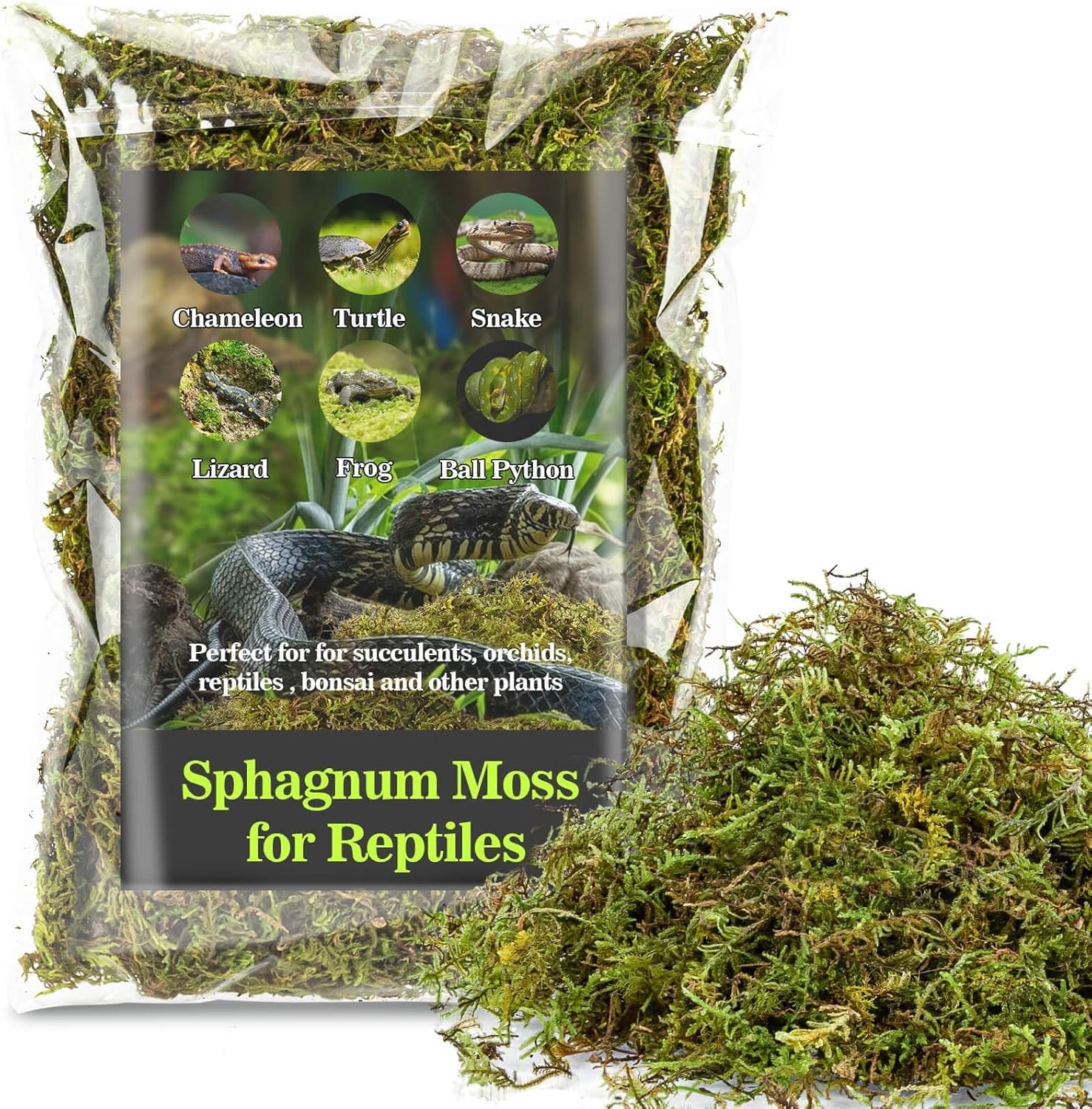
This 5 ounce pack of Sukh sphagnum moss is meant to stabilize humidity and add a soft, natural substrate layer in small terrariums. It soaks up water and releases it slowly, so it is typically used as a top layer, nesting patch, or humidity-retention insert for enclosures housing frogs, geckos, and other moisture-loving amphibians. The long fibers create comfortable hiding and nesting spots and can help with shedding by keeping skin moist. It is also useful around orchid roots or in hanging baskets where consistent moisture is desirable. Important limitations are the small package size and that the manufacturer notes moss should not be the sole substrate for many species, so it often needs to be mixed with other substrates for burrowing or aquatic needs; it also requires periodic cleaning and replacement to avoid buildup. For planted frog setups this moss is a handy humidity aid and decorative accent but not a complete flooring solution for larger or heavily soiled terrariums.
Best for: Buyers building a planted or humid frog terrarium who prioritize stable humidity and a natural feel and want a small, easy-to-use humidity layer or nesting spot.
Less Ideal for: People needing a full substrate solution for large or messy enclosures or keepers who want a low-maintenance, never-replaced flooring option.
- High water absorption for maintaining stable humidity in small enclosures
- Long fibers create soft hiding and nesting areas that encourage natural behavior
- Versatile for use with orchids, hanging baskets, and terrarium decor
- Small 5 oz package may not cover larger tanks or require frequent replacement
- Not intended as a standalone primary substrate for most reptile or amphibian species
Verdict: A compact, highly absorbent sphagnum moss that's ideal for adding reliable humidity and soft nesting areas to planted frog terrariums.
Choosing the Right Plants for Frog Terrarium: Key Factors to Consider
Humidity Retention and Microclimate
Plants differ in how well they trap and release moisture. Species with broad leaves or rosette forms help create localized humid pockets that frogs use for hydration and skin shedding. In a terrarium, these microclimates reduce the need for constant misting and stabilize ambient humidity overnight.
When choosing plants, consider how leaf surface area, transpiration rate, and proximity to hides or water features will affect humidity where the frog spends most time. Avoid plants that wilt quickly under low moisture because decaying foliage can degrade air quality in a sealed enclosure.
Toxicity and Chemical Safety
Amphibians absorb chemicals through their skin, so plant safety is critical. Select species known to be non-toxic and avoid any plants treated with pesticides, systemic fungicides, or leaf shine. Even common houseplant fertilizers can build up in a small terrarium and stress frogs.
Ask about plant provenance and choose clones or tissue-cultured specimens from trusted sources when possible. If buying from general retailers, quarantine and rinse roots to reduce residues. Prioritize species with a documented history of use in vivaria to minimize risk.
Growth Habit and Maintenance
Plants that are vigorous outdoors can overwhelm a terrarium. Look for compact growers, slow spreaders, or varieties that respond well to trimming. Plants with upright habits, clumping growth, or controllable runners are easier to manage in limited substrate.
Consider how often you can perform pruning and whether the plant tolerates regular trimming without collapsing. Also think about how decaying leaves will be removed to keep the enclosure clean and reduce ammonia buildup from organic matter.
Root Structure and Substrate Interaction
Root shape affects planting depth and substrate stability. Dense fibrous roots anchor well in shallow vivarium substrates, while deep taproots can disrupt layers and water flow. Choose plants whose roots stay contained and do not create pockets that trap excess water and foster rot.
Match plant root needs to the substrate mix you plan to use. If your setup includes a drainage layer, prefer species tolerant of periodic saturation. For fully planted bioactive floors, pick plants whose roots integrate with microbial life rather than outcompeting beneficial organisms.
Light Requirements and Placement
Frogs often prefer shaded areas, so plant placement should create cover without demanding intense light. Select plants that tolerate low to moderate light unless you can provide higher-intensity fixtures safely. Leaf color and thickness can indicate light tolerance: thinner leaves usually mean lower light needs, while thicker, waxier leaves often require more intensity.
Plan plant placement to balance the frog's thermal and visual needs with the photosynthetic needs of the plants. Use taller or vining plants at the back or sides to create vertical shelter and lower-growing species near the front for accessible hiding spots.
Pest and Disease Resistance
Terrarium conditions favor fungi and some sap-sucking pests. Choose plants that resist common fungal issues in high-humidity environments and that do not attract pests that are hard to eradicate without risking amphibian health. Inspect new plants for eggs, mites, or scale and quarantine them before adding to the main enclosure.
Opt for species that recover well from minor damage and that do not require systemic treatments. Good airflow design and periodic spot-cleaning of dead material reduce disease risk and keep plants healthy alongside amphibians.
Creating Layered Cover with Broadleaf and Rosette Plants
Mixing broadleaf species with rosette-forming plants creates sheltered pockets at different heights. Broad leaves overhead mimic forest floor canopy and slow evaporation, while low rosettes offer damp resting spots close to the substrate.
Place broader-leafed plants toward the back and higher points, and situate rosettes near hide boxes or water dishes so frogs can choose their preferred humidity level.
- Use larger-leaf plants sparingly to prevent shading out understory species
- Rotate placements if growth becomes one-sided
Using Vines and Climbers to Add Vertical Complexity
Climbing plants can transform an otherwise flat terrarium by giving frogs vertical surfaces and elevated resting places. Choose slow-growing vines or train stems to avoid rapid overgrowth.
Attach vines to cork bark or driftwood rather than planting dense root balls directly in the substrate to preserve floor space and improve airflow.
- Trim vines to control coverage and maintain sightlines for observation
- Secure climbing materials so amphibians do not dislodge them while moving
Managing Light and Positioning Plants for Species Needs
Assess your frog's natural habitat when deciding light and plant placement. Forest-floor species favor dimmer, well-covered setups, while some tree frogs benefit from more vertical planting and moderate light.
If you use artificial lighting, set timers to mimic natural day-night cycles and avoid intense direct light that can overheat small enclosures.
- Use plants with similar light needs grouped together to simplify maintenance
- Place light-tolerant plants where they will not raise enclosure temperature excessively
Propagating and Replacing Plants Safely
Keep spare cuttings of dependable terrarium plants in a quarantine pot. This lets you replace lost specimens quickly without introducing new pests or treatments into the main enclosure.
When replacing plants, rinse roots gently and check for pests or soil-borne fungi. Adjust substrate in small areas rather than redoing the whole floor to minimize stress on the terrarium ecosystem.
- Label quarantined cuttings with planting date and light conditions
- Use sterile tools for pruning and propagation to reduce cross-contamination
Maintaining Cleanliness Without Harsh Chemicals
Avoid strong pesticides and systemic fungicides inside a frog terrarium. Instead, rely on manual removal of dead foliage, targeted pruning, and biological controls compatible with amphibians when possible.
Regularly remove uneaten food and check substrate moisture to prevent mold. If a plant develops persistent rot, remove and isolate it, then treat the affected area of substrate without using products that can leach into water features.
- Establish a weekly visual check for decaying material
- Use damp paper towel spot-wiping for small mold patches before removing the plant if needed
How We Chose the Best Plants for Frog Terrarium
We focused on factors that matter to amphibian keepers rather than aesthetic trends. Each candidate needed to demonstrate reliable moisture management, non-toxicity to common pet frogs, manageable growth habits for confined enclosures, and tolerance of low to moderate light. We also considered root structure and substrate compatibility so plants do not destabilize damp bedding or create unhealthy bacterial pockets. Excluded items included large outdoor species that cannot be contained, plants requiring high, direct light, and varieties known to be toxic or chemically treated. We prioritized species that establish in terrarium soil, contribute to cover or climbing structure, and survive routine misting schedules. Final selections were filtered for ease of propagation or replacement, resistance to rot in humid conditions, and minimal need for fertilizer that could harm amphibians. These same dimensions form the scoring criteria used across each shortlisted plant.
FAQ
Can I use regular houseplants in a frog terrarium?
Often you can use common houseplants if they are non-toxic and tolerant of high humidity and low light. Quarantine new plants and rinse roots to remove residues. Avoid species known to be toxic to amphibians or treated with systemic chemicals.
How often should I mist a planted frog terrarium?
Misting frequency depends on plant choice, enclosure ventilation, and frog species. Often terraria with moisture-retaining plants need less frequent misting, sometimes once or twice daily in the morning. Monitor substrate dampness and frog behavior to fine-tune the schedule.
What do I do if plants start to rot in the terrarium?
Remove rotting material promptly and isolate the plant to prevent spread. Improve airflow and reduce direct saturation in that area. Replace substrate locally if it remains waterlogged and choose more rot-tolerant species for that spot.
Are live plants necessary for a healthy frog terrarium?
Live plants are not strictly necessary but they provide humidity buffering, hiding spots, and microhabitats that improve frog welfare. Many keepers find planted setups reduce maintenance and create more natural behavior in frogs.
How can I prevent pests when introducing new plants?
Quarantine new plants for several weeks, inspect regularly, and use manual removal for visible pests. Avoid chemical treatments inside the main enclosure; instead use isolated treatments on quarantined pots and ensure plants are pest-free before transfer.
Final Verdict
Prioritize plants that create reliable humidity pockets, are non-toxic, and match the light and space constraints of your terrarium. Trade off aggressive growth for stable microclimates and choose species with compatible root systems to avoid substrate problems. With the right plant selection and simple maintenance, you can build a healthier, lower-stress environment that supports natural frog behaviors and reduces day-to-day intervention.
