

Note: This article contains affiliate links. If you click on these links and make a purchase, I may earn a small commission at no extra cost to you. This helps support my research and content. Read my full affiliate disclosure here.
A chainsaw with a 20-inch bar can change how you tackle big jobs around the yard, from storm cleanup to processing firewood. Choosing the right 20 Gas Chainsaw affects how fast you cut, how often you refuel, and how comfortable long jobs feel. This guide shortlists the top options for homeowners and light commercial users who need reliable, high-output cutting without sacrificing basic serviceability. We examined units that perform well in real garden and property tasks and that are practical to maintain. Below are the best 20 Gas Chainsaws we selected, with clear evaluation points so you can match a saw to the size and frequency of jobs you face.
Top Picks at a Glance
| Best Overall The best all-around choice for most situations | Husqvarna 455 Rancher Gas Chainsaw, 20-inch, 3.5 HP |  |
| Best Quality Built to a higher standard if you want something more solid | Husqvarna 450 Rancher 20" Gas Chainsaw (50.2 cc, 3.2 HP) |  |
| Best Value The sweet spot between price and what you get | SUPMIXTOOLS 62cc 20" Gas Chainsaw (2-Cycle) |  |
| Best Budget The cheapest option that still gets the job done reliably | Akynjtbca 58cc 20" Gas Chainsaw with Tool Bag |  |
| Highest Rated A top-rated pick with lots of positive feedback | Husqvarna 455 Rancher 20-Inch Gas Chainsaw |  |
| Most Popular A crowd favorite that many people choose with confidence | VEVOR 62cc Gas-Powered Chainsaw, 20-inch Guide Bar |  |
Husqvarna 455 Rancher Gas Chainsaw, 20-inch, 3.5 HP

| Power Source | Gas Powered |
|---|---|
| Horsepower | 3.5 hp |
| Chain Length | 20 inches |
The Husqvarna 455 Rancher is a robust gas chainsaw aimed at homeowners and landowners who need a dependable workhorse for tasks like storm cleanup, cutting firewood, and routine tree trimming. It uses a 3.5-HP X-Torq two-stroke engine and a 20-inch bar to deliver strong cutting power while Smart Start and an inertia-activated chain brake simplify starting and improve safety. Practical features such as Air Injection to reduce debris reaching the filter, side-mounted chain tensioning for on-the-fly adjustments, LowVib vibration dampening, and an ergonomic offset front handle make longer jobs less tiring. Maintenance is straightforward thanks to the automatic oiler and accessible tensioning, but being a gas model it requires fuel mixing and periodic engine upkeep that electric alternatives avoid. Its weight and fuel noise are typical for this class, so expect more vibration and emissions than battery or corded saws. For someone who needs reliable, professional-level cutting performance in an all-around package, this model balances power and user-friendly features well.
Best for: Buyers who want a capable, versatile saw for frequent property maintenance and heavier cutting tasks and who prioritize cutting performance and durability over quieter electric operation.
Less Ideal for: Casual users with small yards or those who prefer low-noise, low-maintenance electric or battery saws should consider lighter alternatives.
- Powerful 3.5-HP X-Torq engine suitable for heavy cutting and firewood
- Smart Start and inertia chain brake for easier starting and improved safety
- Air Injection centrifugal system reduces debris reaching the air filter to extend engine life
- Side-mounted chain tensioning and automatic oiler simplify adjustments and routine maintenance
- Requires gas and oil mixing and regular engine maintenance unlike battery models
- Heavier and louder than electric chainsaws, which can increase fatigue and noise on long jobs
Verdict: Choose the 455 Rancher when you need a durable, pro-capable gas chainsaw that balances strong cutting power with user-focused features for regular property work.
Husqvarna 450 Rancher 20" Gas Chainsaw (50.2 cc, 3.2 HP)

| Power Source | Gas Powered |
|---|---|
| Horsepower | 3.2 hp |
| Chain Length | 20 inches |
The Husqvarna 450 Rancher is a workhorse gas chainsaw aimed at users who need reliable power for pruning, yard cleanup, and firewood cutting. It pairs a 50.2-cc X-Torq two-stroke engine with a 20-inch bar to deliver strong cutting performance and steady torque under load. Practical features include Smart Start and an air purge for easier, quicker startups and an Air Injection centrifugal pre-cleaning system that reduces debris reaching the air filter to help engine longevity. LowVib technology, an ergonomic rear handle and soft inlay improve comfort during extended use, and an inertia-activated chain brake adds a safety layer against kickback. Expect robust power and professional handling, but also the usual maintenance needs of a gas saw such as fuel mixing, routine filter and spark plug service, and higher noise and emissions compared with battery models. For buyers wanting consistent heavy-duty cutting and proven engine performance, this model is a solid choice; for very light occasional jobs, it may be more saw than necessary.
Best for: Experienced homeowners and semi-pro users who prioritize sustained cutting power and durability for frequent tree work, firewood cutting, and heavy yard cleanup.
Less Ideal for: Casual users with only occasional light trimming needs or those who prefer low-noise, low-maintenance battery tools.
- Powerful 50.2-cc X-Torq engine delivers strong cutting performance for heavy tasks
- Smart Start and air purge make starting quicker and less finicky
- Air Injection centrifugal system reduces debris in the air filter for longer service intervals
- Ergonomic design with LowVib and soft inlay improves comfort during extended use
- Requires regular gas and two-stroke oil mixing and routine maintenance inherent to gas engines
- Heavier and louder than cordless electric alternatives
Verdict: Choose the Husqvarna 450 Rancher when you need a durable, high‑power gas chainsaw for frequent heavy cutting tasks.
SUPMIXTOOLS 62cc 20" Gas Chainsaw (2-Cycle)

| Power Source | Gas Powered |
|---|---|
| Horsepower | 4.2 hp |
| Chain Speed | 8500 Rpm/Min |
| Chain Length | 20 inches |
The SUPMIXTOOLS 62cc 20-inch gas chainsaw is a powerful 2-cycle saw built for homeowners and light pros who need strong cutting performance. It uses a 62cc 2-stroke engine that delivers high chain speed and roughly 4.2 horsepower, making it capable of cutting larger logs, limbing, and routine tree work. The saw ships with a 20-inch guide bar, low-kickback chain, basic toolkit, spare spark plug, and a fuel mixing bottle so you can get started after assembly. Practical benefits include strong cutting power for firewood and felling medium trees, an ergonomic balance that helps reduce fatigue during longer sessions, and a chain brake and safety switch for added protection. Note that it is a carbureted gas engine so you should expect routine maintenance such as mixing fuel, sharpening/adjusting the chain, and periodic tuneups; it is also heavier and louder than electric alternatives. If you need dependable, high-power cutting in areas without electricity, this model supplies the necessary performance but requires careful handling and upkeep.
Best for: Buyers who need a traditionally powered saw with strong cutting ability for firewood, tree trimming, and occasional felling and who prefer established gas-engine reliability over battery alternatives.
Less Ideal for: People who want the quietest, lowest-maintenance option or who primarily work in small yards with easy access to electricity should consider electric or battery chainsaws instead.
- Powerful 62cc 2-stroke engine suitable for demanding cutting tasks
- 20-inch guide bar and low-kickback chain for efficient cutting of larger logs
- Includes starter kit items useful for first-time setup (toolkit, spark plug, fuel bottle)
- Chain brake and safety switch for added operator protection
- Requires regular gas mixing, maintenance, and tuning typical of carbureted 2-stroke engines
- Heavier and louder than battery or electric chainsaws, which affects transport and noise
Verdict: Choose this saw if you need a robust gas-powered 20-inch chainsaw that delivers real cutting power for demanding outdoor jobs.
Akynjtbca 58cc 20" Gas Chainsaw with Tool Bag
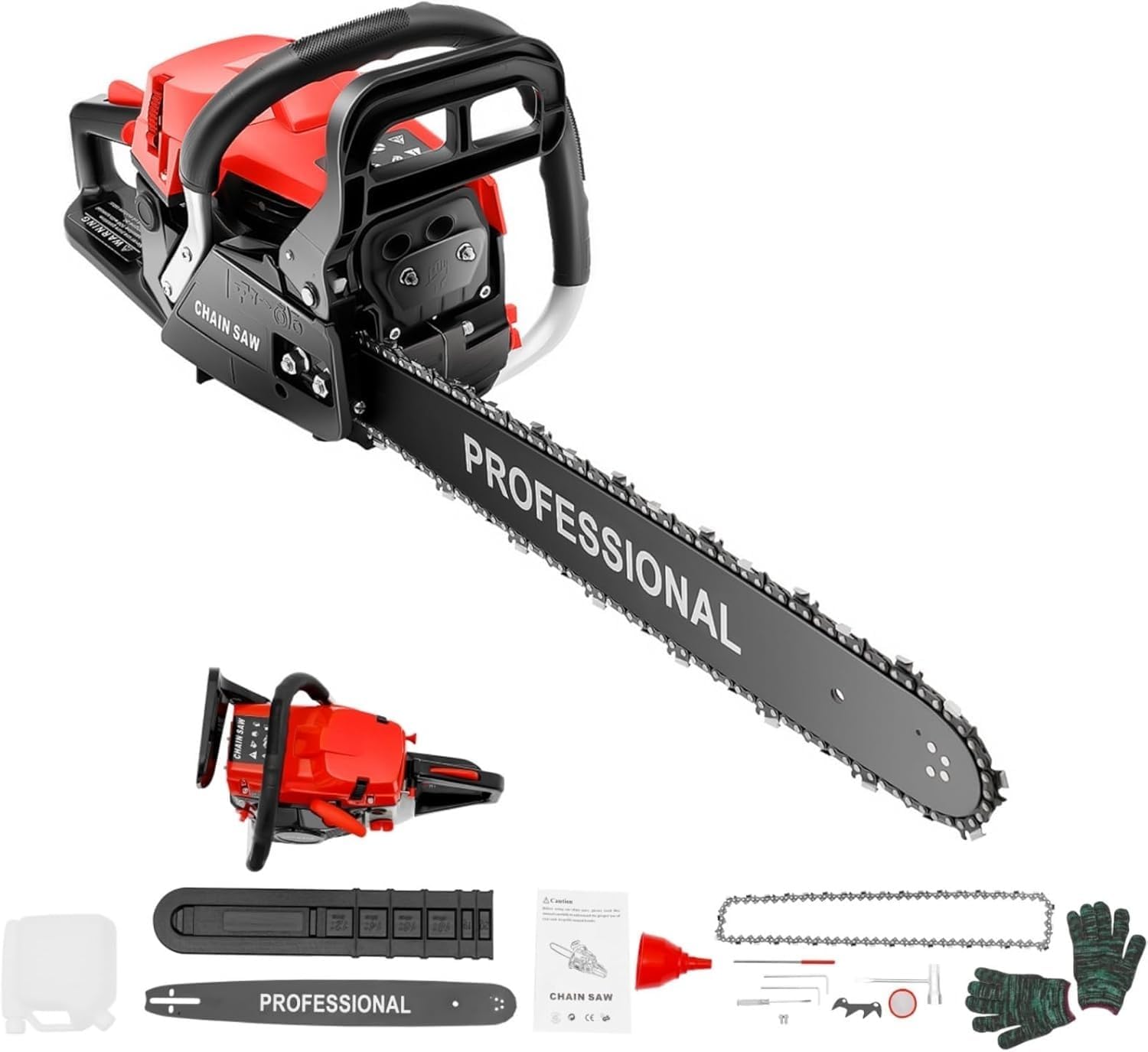
| Power Source | Gas Powered |
|---|---|
| Horsepower | 3.6 hp |
| Chain Length | 20 inches |
This Akynjtbca 58cc chainsaw is a budget-minded gas model with a 20-inch guide bar and a 3.6 HP two-stroke engine designed to handle felling, cutting firewood, and property cleanup. It arrives with a basic accessory kit including a fuel mixing bottle, spare chain, guide bar cover, tool bag, and gloves so you can assemble and maintain the saw without extra purchases. Notable features are an auto-lubrication system that keeps the chain oiled during use, an air-cooling design to help prevent overheating, and an anti-vibration ergonomic handle plus a dual-switch safety and brake for quick stopping. In practice this means the saw can cut through medium to large logs reasonably quickly for the price while remaining comfortable for short to moderate sessions. The trade-offs are typical for an entry-level petrol saw: expect a heavier unit and a need for routine tuning and fuel/oil mixing, and you may encounter more vibration and noise than higher-end professional models. For homeowners who need a capable 20-inch saw without a premium price, it offers strong value if you are comfortable with basic engine maintenance.
Best for: Homeowners or small acreage owners who need a capable 20-inch gas saw for occasional heavy cutting and want the lowest-cost option that includes basic accessories and maintenance tools.
Less Ideal for: Professional arborists or users who need a lightweight, low-vibration saw for daily commercial use or those who prefer electric/battery models for quieter operation.
- Powerful 3.6 HP two-stroke engine suitable for felling and firewood cutting
- 20-inch hardened manganese steel guide bar and chain for larger cuts
- Auto-lubrication keeps the chain oiled for smoother cutting and less wear
- Comes with accessory kit (fuel bottle, spare chain, tool bag, gloves) for immediate use
- Entry-level construction can require frequent tuning and basic maintenance
- Heavier and louder than higher-end or newer low-vibration models
Verdict: A budget-friendly 20-inch gas chainsaw that gives homeowners reliable cutting power and useful accessories for basic heavy-duty yard work.
Husqvarna 455 Rancher 20-Inch Gas Chainsaw

| Power Source | Gas Powered |
|---|---|
| Horsepower | 2.6 KW |
| Chain Length | 20 inches |
| Included Components | Chainsaw, chainsaw bar, chain, 2 cycle fuel |
The Husqvarna 455 Rancher is a 20-inch gas chainsaw designed to handle pruning, limbing, and firewood cutting for property owners who need dependable power. It uses a 2-stroke, 55.5cc engine with smart-start and an air injection centrifugal system to reduce debris reaching the air filter, helping the engine run cleaner over time. Practical features include automatic chain oiler, side-mounted quick chain tensioning, a quick-release air filter for fast maintenance, and an inertia-activated chain brake for safety. The saw balances strong cutting performance with rider comfort through an anti-vibration system and ergonomic layout that makes longer jobs less fatiguing. Important trade-offs are the typical maintenance demands of a gas two-stroke engine and the need to buy bar and chain oil separately before use. For buyers who prioritize a rugged, serviceable saw with proven components, the 455 Rancher delivers predictable performance and accessible upkeep for seasonal heavy use.
Best for: Buyers who need a reliable, work-capable 20-inch saw for seasonal heavy chores and value proven mechanical systems and easy field maintenance.
Less Ideal for: Casual users who prefer low-maintenance electric or battery models or those who need a lighter, less powerful saw for small yard tasks.
- Powerful 55.5cc two-stroke engine suitable for heavy cutting tasks
- Smart-start and anti-vibration design improve starting and operator comfort
- Automatic chain oiler and side-mounted tensioner simplify on-the-job maintenance
- Air injection system helps keep the air filter cleaner for longer engine life
- Requires routine two-stroke maintenance and fuel mixing
- Bar and chain oil not included and must be purchased separately
Verdict: A robust, serviceable 20-inch gas chainsaw that delivers dependable cutting power and straightforward maintenance for landowners and serious homeowners.
VEVOR 62cc Gas-Powered Chainsaw, 20-inch Guide Bar

| Engine displacement | 62CC |
|---|---|
| Horsepower | 3.8 hp |
| Chain pitch | 0.325 in |
| Chain links | 76 links |
| Fuel tank capacity | 550 ml |
The VEVOR 62cc gas-powered chainsaw is built to tackle medium to large jobs like felling small trees, cutting firewood, and heavy pruning. Its 3.8 hp two-stroke engine and 20-inch guide bar can cut logs up to about 18 inches in diameter, and a high-revving 12,000 rpm top speed helps it chew through dense wood. The saw includes practical touches such as a longer pull rope and cold/hot start settings to help with starting in varied temperatures, an emergency stop lever, and a corrosion-resistant 45# steel guide bar with a 0.325-inch pitch chain (76 links). The PA6 composite body and separate fuel and chain-oil tanks aim to reduce leaks and withstand outdoor conditions. Expect a substantial tool weight and the usual maintenance demands of a gas saw: you will need proper fuel mixing, routine chain tensioning, sharpening, and periodic engine tuneups. Also plan for noise, vibration, and protective gear when operating. For buyers who prioritize power and cut capacity, this VEVOR delivers straightforward performance, but it requires the typical hands-on upkeep of a 2-stroke gas machine.
Best for: Buyers who need brute cutting power for frequent medium-to-large tree work and accept hands-on maintenance and safety protocols to keep a gas saw performing reliably.
Less Ideal for: Casual gardeners, those who prefer low-maintenance tools, or users who need a quiet, vibration-minimized option should consider electric or battery alternatives instead.
- High cutting capacity with a 20-inch guide bar suitable for logs up to about 18 inches in diameter
- Strong 62cc two-stroke engine rated at 3.8 hp for demanding yard and light-logging tasks
- Cold and hot start options plus an extended pull rope to improve starting reliability in different conditions
- Separate chain oil tank and chain adjuster for on-the-job lubrication and easy tensioning
- Emergency stop and guard design to help limit flying debris and improve operator safety
- Requires regular gas/oil mixing, carburetor adjustments, chain sharpening, and general 2-stroke maintenance
- Relatively heavy and produces typical gas-saw noise and vibration which mandate PPE during use
Verdict: If you want a powerful 20-inch gas chainsaw that handles large-diameter cuts and you are prepared for routine 2-stroke upkeep, this VEVOR is a work-oriented choice.
Choosing the Right 20 Gas Chainsaw: Key Factors to Consider
Engine Size and Power Delivery
Engine displacement and how that power is delivered across the rev range determine how a 20-inch chainsaw performs on large logs. A saw with steady torque at lower RPMs makes plunge cuts and bucking thicker limbs less prone to stalling, which is useful when working with damp or knotty wood.
Higher peak power improves cutting speed, but it can also increase vibration and fuel use. Consider how often you will cut heavy material and whether smoother low-end torque or short bursts of high RPM cutting better fits your planned tasks.
Bar Length, Chain Type, and Cutting Setup
A 20-inch bar expands the maximum safe cutting diameter and reduces the number of cuts needed to process larger rounds, but chain choice and pitch matter too. Low-kickback chains improve safety on a wide-working bar, while full chisel chains cut faster in dry, straight-grained wood but dull quicker in dirty or resinous material.
Also consider chain speed and whether the saw accepts standard replacement bars and chains. This affects long-term maintenance and availability of parts when you need to replace or sharpen components in the field.
Fuel Consumption and Tank Capacity
Runtime between refills is important when working away from a fuel source or tackling big cleanup jobs. Two-stroke gas saws vary in fuel use depending on tune, load, and riding the throttle. A larger tank increases continuous work time, but also adds weight and can change balance.
Think about the typical length of your jobs and whether you will have easy access to mixed fuel. Efficiency matters for long days and for reducing the amount of spare fuel you must carry.
Weight, Balance, and Vibration Control
A 20-inch bar adds reach but also shifts the saws balance forward. Overall weight plus handle ergonomics determine how tiring the saw is during repeated cuts. Good anti-vibration systems and well-placed handles reduce hand-arm fatigue and make precise cuts easier, especially when cutting at awkward angles or above shoulder height.
Balance changes as fuel is consumed, so consider how a saw feels at full and near-empty tanks. Comfort affects accuracy and safety on long jobs.
Starting, Choke Systems, and Cold-Weather Use
A reliable starting system saves time and frustration. Easy-access choke controls, decompression valves, and intelligently routed starters improve cold starts and frequent restarts that happen during pruning and cleanup. Cold-weather performance can be noticeably worse on poorly tuned carburetors, so ease of starting is a real field consideration if you work in variable climates.
Also think about how simple routine adjustments are, since you'll often need to tune idle and mixture after air-filter cleaning or when switching altitudes.
Serviceability and Replacement Parts
Routine maintenance for a gas chainsaw includes cleaning the air filter, sharpening or replacing chains, inspecting the spark plug, and accessing the bar studs. Saws that provide tool-free or quick-access panels speed these chores so you spend more time cutting and less time at the bench.
Also consider how common the replacement chains and bars are and whether standard sizes are used. Readily available parts reduce downtime and ensure you can keep the saw in the field for longer seasons.
When a 20-Inch Bar Is the Right Choice
A 20-inch bar suits property owners who regularly cut 8 to 18-inch diameter logs and who process firewood by hand. It reduces the number of passes required to buck larger rounds and makes short work of medium trees compared with shorter bars.
If you mostly trim small branches or work in tight, ornamental garden areas, a long bar adds unnecessary bulk. The 20-inch size strikes a balance between reach and portability for many home and light professional tasks.
- Best for bucking larger rounds and storm cleanup
- More efficient for firewood processing than 14- or 16-inch bars
- Requires attention to balance and user strength for extended use
Maintaining Cutting Performance in the Field
Carry a spare chain, a round file or sharpening system, and a small tool kit so you can restore cutting performance quickly. Chains dull from dirt, sand, or sap, and a sharp chain reduces kickback risk and fuel consumption.
Check the air filter frequently during dusty jobs. A clogged filter reduces power and raises fuel use. Cleaning or swapping the filter is a routine step that keeps the saw cutting predictably.
- Sharpen chains after every heavy day of cutting
- Empty and clean the bar groove and oil passages regularly
- Inspect anti-vibration mounts and handle fasteners before long jobs
Safety Practices for Larger Bar Chainsaws
A longer bar increases cutting reach but also kickback potential. Use proper stance, maintain a firm two-handed grip, and be cautious with the tip when making cuts near the tip zone. Wearing appropriate PPE, including chainsaw chaps, eye protection, gloves, and hearing protection, is essential.
Plan cuts to avoid pinching the bar and to reduce binding. When possible, use wedges or support the log to keep the cut open and prevent the bar from getting stuck.
- Never operate above shoulder height with a long bar
- Keep bystanders well away and clear the work area of tripping hazards
- Refuel only when the engine is cool and after setting the saw on a stable surface
Transporting and Storing a 20-Inch Chainsaw
Use a secure case or cover the bar and chain when transporting to prevent accidental contact and protect the chain from damage. Secure the saw in a truck bed to avoid shifting that could loosen fittings.
Store the saw drained of fuel if it will sit for extended periods. Stabilize fuel and fog the engine to protect internal components during long-term storage.
- Use a bar cover for transport
- Store in a dry, ventilated location away from direct sunlight
- Perform a basic service before seasonal storage
Accessories That Improve Usability
Consider ergonomic or aftermarket handles and anti-vibration mounts if you expect to use the saw for long sessions. A high-quality file guide and a dedicated sharpening station make maintaining cutting geometry easier and prolong chain life.
Wedges, a good set of protective gear, and a fuel mixing bottle with measuring marks all make regular tasks faster and safer. Carry a small chain tensioner and spare drive sprocket if you work far from parts supplies.
- Sharpening kit and spare chains
- Wedges and log supports
- Proper protective equipment and fuel-mixing tools
How We Chose the Best 20 Gas Chainsaw
We focused on features and real-world attributes that matter when using a 20-inch gas chainsaw in yards, small acreage, and light professional work. Important evaluation criteria included engine displacement and delivered torque because these determine cutting speed and how well the saw handles large-diameter wood. We evaluated bar and chain compatibility along with chain speed since those define effective cutting diameter and cutting efficiency in different timber types. Fuel efficiency and runtime were reviewed to judge how long a saw will run between refills during long projects. Ergonomics and vibration control were considered to assess operator fatigue during extended use. Ease of maintenance was also a key filter, including access to spark plug, air filter, and chain tensioning systems so routine service is straightforward on-site. We excluded saws intended only for occasional small-limb trimming or purely professional high-displacement units outside the 20-inch bar scope. The final shortlist balances cutting capability, maintainability, and real-world handling that matter for garden and property work.
FAQ
Is a 20-inch chainsaw too big for home firewood?
It depends on the size of the trees you process. A 20-inch bar is very capable for logs commonly used for firewood and reduces the number of cuts for larger rounds. If your wood is mostly small limbs under 8 inches, a shorter bar may be easier to handle.
How often should I sharpen a chain on a 20-inch saw?
Sharpening frequency depends on wood type and contaminants. For regular firewood with some dirt, expect to sharpen daily or every few hours of heavy work. In clean, straight-grained wood you can go longer between sharpenings.
Can I use standard replacement chains for a 20-inch bar?
Most 20-inch bars accept commonly available chain pitches and gauges, but you should confirm pitch and gauge before buying. Using a compatible chain ensures safe tensioning and proper engagement with the drive sprocket.
What maintenance matters most to keep cutting power?
Keep the chain sharp and correctly tensioned, maintain a clean air filter, and ensure the bar oiling system is working. Regular spark plug checks and correct fuel mix for two-stroke engines also preserve performance.
Are there special safety concerns with longer bars?
Yes. Longer bars increase kickback risk and require better stance and control. Avoid cutting above shoulder height and take care with tip-zone cuts. Use the recommended protective gear and follow safe cutting techniques.
How important is fuel mixing accuracy for these saws?
Accurate fuel-to-oil ratios are important for engine life and performance. Too lean a mix risks engine damage, while too rich a mix can foul spark plugs and increase smoke. Use the manufacturer-recommended ratio or a reliable reference for two-stroke engines.
Final Verdict
When choosing among 20-inch gas chainsaws, prioritize the balance between engine torque, manageable weight, and serviceability. Think about the typical diameter of the wood you will cut, how long you need to run between refuels, and how often you can perform maintenance. Focus on a saw that offers steady low-end torque for heavy cuts, an easily serviced air filter and chain system, and comfortable vibration control. Those tradeoffs will help you pick a tool that is powerful enough for larger jobs while still practical to maintain and operate safely.
