

Note: This article contains affiliate links. If you click on these links and make a purchase, I may earn a small commission at no extra cost to you. This helps support my research and content. Read my full affiliate disclosure here.
Picking the right outdoor planters for herbs matters because these containers determine soil moisture, root space, and how easily you can harvest fresh leaves. Whether you have a sunny balcony, a shaded patio, or a compact urban courtyard, the right planter keeps herbs productive and reduces maintenance tasks like frequent watering or repotting. This guide covers seven shortlisted outdoor planters for herbs that perform well in real garden conditions. We evaluated each option on drainage, material resilience, and how they affect plant health to help you find the best fit for your growing situation.
Top Picks at a Glance
| Best Overall The best all-around choice for most situations | Best Choice Products 48 x 24 x 30in Raised Fir Wood Garden Bed with Liner |  |
| Best Quality Built to a higher standard if you want something more solid | VegTrug Custom Herb Garden Planter Box — Cedar Wood, Multi-Liner Raised Bed |  |
| Best Value The sweet spot between price and what you get | Land Guard 2-Pack Galvanized Raised Garden Beds (4×2×1 ft) |  |
| Best Budget The cheapest option that still gets the job done reliably | CHUKEMAOYI Plastic Window Box Planters, 7-Pack |  |
| Highest Rated A top-rated pick with lots of positive feedback | BIVODA Small HDPE Elevated Raised Garden Bed |  |
| Most Popular A crowd favorite that many people choose with confidence | FOYUEE 31.5" Elevated Mobile Raised Garden Bed with Wheels and Shelf |  |
| Best Seller A high-volume bestseller chosen again and again | Dahey 15-inch Metal Railing Planter Box, 3-Pack |  |
Best Choice Products 48 x 24 x 30in Raised Fir Wood Garden Bed with Liner

| Capacity | 5 cubic feet |
|---|---|
| Material Type | Fir Wood |
| Mounting Type | Floor Standing |
| Other Special Features of the Product | Drainage Hole |
| Indoor Outdoor Usage | Outdoor |
This raised garden bed is a straightforward option for small-space vegetable and herb gardening. Constructed from unfinished fir wood, it assembles into a 48 x 24 footprint with a 30 inch planting height that reduces bending while you tend plants. The included bed liner separates soil from the wood, slowing rot and keeping roots and soil contained, and a built-in drainage hole prevents waterlogging. With about 5 cubic feet of planting volume and a 200 lb weight capacity it accommodates several seasonal vegetables, potting mixes, or a mix of herbs and flowers. The all-wood construction looks natural outdoors but will need sealing or periodic maintenance to maximize longevity. Assembly requires following the included guide and handling multiple pieces, so expect some time and basic tools. For gardeners who value an elevated, ergonomic setup and a ready-to-use liner, this planter delivers a practical balance of planting space and convenience; heavy-duty or permanent raised beds will outlast unfinished fir without added treatment.
Best for: Gardeners who want an elevated, easy-to-use planter for vegetables or herbs and prefer a natural wood look while minimizing daily maintenance.
Less Ideal for: People seeking a permanent, maintenance-free raised bed or very large-scale vegetable production should consider heavier-duty or larger alternatives.
- Ergonomic 30 inch height reduces bending and makes planting and harvesting easier
- Included liner keeps soil off the wood to slow rot and discourage pests
- Built-in drainage hole prevents waterlogging and promotes healthier roots
- Natural fir wood construction offers an attractive, rustic look outdoors
- Unfinished fir requires sealing or periodic maintenance to resist weathering
- Assembly involves multiple parts and basic tools and can take time
Verdict: A practical, elevated wooden planter with a liner and drainage that makes small vegetable and herb gardening easier and more ergonomic.
VegTrug Custom Herb Garden Planter Box — Cedar Wood, Multi-Liner Raised Bed

| Capacity | 50 liters |
|---|---|
| Number of Pieces | 1 |
| Number of Levels | 1 |
| Material Type | Cedar Wood |
| Indoor Outdoor Usage | Outdoor |
The VegTrug Custom Herb Garden is a compact raised planter built to make growing multiple herbs tidy and low-maintenance. It ships with eight small liners, two medium liners, and one large liner so you can allocate root space and soil mixes to different plants and prevent aggressive species from invading neighbors. Constructed from weather-resistant cedar and finished with a water-based preservative, the unit stands at a comfortable 31.5 inches for planting and harvesting and includes a lower shelf for tools or pots. The pre-formed liners improve drainage and aeration, simplifying watering and reducing the risk of root rot, while removable pockets make end-of-season soil changes easier. Important limits to consider are its relatively compact soil capacity, which suits herbs and small vegetables but not large root crops, and the need for occasional preservative maintenance to keep the wood protected over time. Assembly and placement on a stable, level surface are necessary for best performance.
Best for: Buyers who prioritize productive, organized herb growing in small outdoor spaces and want ergonomic access for regular harvesting and maintenance.
Less Ideal for: Gardeners who need large-volume planters for big vegetables, heavy feeders, or deep-rooted crops should choose a larger raised bed or in-ground planting instead.
- Included multi-size liners let you customize spacing and soil per herb variety
- Raised 31.5-inch working height reduces bending and is ergonomically friendly
- Weather-resistant cedar construction offers natural rot resistance and an attractive finish
- Pre-formed liners and good drainage support healthier root systems and easier seasonal soil changes
- Soil capacity is modest and best suited to herbs and small vegetables rather than large crops
- Wood requires periodic maintenance with water-based preservative to maximize lifespan
Verdict: Choose this VegTrug when you want a durable, ergonomically designed multi-liner herb planter that keeps different herbs separated for better performance.
Land Guard 2-Pack Galvanized Raised Garden Beds (4×2×1 ft)

| Material Type | Galvanized Metal |
|---|---|
| Capacity | 54 gallons |
| Included Components | 2x Planter, Instruction manual, Tools |
| Set Name | Land Guard 2-Pack Raised Garden Bed Set |
These Land Guard raised beds are a straightforward option for growing vegetables and herbs in a backyard or patio. Each set includes two 4×2×1 ft galvanized steel planters that assemble with the supplied nuts and bolts; the metal panels and hardware create a sturdy, low-maintenance frame that will hold soil and seedlings easily. The open-bottom design sits directly on the ground so soil can interface with the native soil for drainage and root expansion while helping reduce standing water and weed intrusion. The thickened zinc galvanizing is intended to resist rust and weathering, which makes the beds suitable for season-long outdoor use with typical vegetable crops. Expect simple installation and durable performance, but keep in mind these are shallow beds better suited to shallow-rooted vegetables, herbs, and annuals rather than deep-rooted perennials or large root crops. Also plan for soil settlement over time and use good-quality compost to maximize fertility in the smaller soil volume.
Best for: Buyers who want a low-maintenance, durable raised bed to reliably grow vegetables and herbs in a small yard or patio and prefer a product that is straightforward to assemble and weather-resistant.
Less Ideal for: Gardeners who need deep soil for large root vegetables, long-term perennial beds, or who want larger single raised beds for extensive vegetable production.
- Galvanized steel with thick zinc coating provides corrosion and weather resistance
- Open-bottom design improves drainage and allows root access to native soil
- Comes as a two-pack with hardware and instructions for easy assembly
- Shallow footprint fits small yards, patios, and raised-row vegetable planting
- 12-inch depth limits suitability for deep-rooted vegetables and large root crops
- Metal sides can heat more than wood or fabric beds in full sun
Verdict: A practical, rust-resistant two-pack of shallow galvanized raised beds that makes establishing dependable vegetable and herb beds quick and low-maintenance.
CHUKEMAOYI Plastic Window Box Planters, 7-Pack

| Material Type | Plastic |
|---|---|
| Capacity | 12.13 liters |
| Number of Pieces | 7 |
| Mounting Type | Window Mount |
| Indoor Outdoor Usage | Outdoor |
These CHUKEMAOYI window box planters are a practical, budget-friendly option for growing herbs and small vegetables on windowsills, balconies, or patios. Each rectangular planter is made of lightweight, durable plastic and includes a removable saucer and built-in drainage holes so excess water can escape while the tray helps prevent mess. The 16.6 by 7 by 5.9 inch footprint and roughly 12 liter capacity give enough soil volume for herbs, lettuce, baby greens, and small root vegetables like radishes. Because they are plastic and polished, they resist weathering and are easy to wipe clean between seasons. The seven-pack is convenient for creating a row of containers or using multiple varieties side by side. Limitations to note are the shallow depth for larger root crops and the lack of heavy-duty materials if you need a planter that will withstand rough handling or very hot sun long-term. For simple, low-cost vegetable container gardening where portability and easy maintenance matter, these boxes cover the basics well.
Best for: Buyers who need an affordable, space-saving solution to grow herbs and small vegetables on windowsills, balconies, or small patios and prefer lightweight, easy-to-move containers.
Less Ideal for: Gardeners who want deep beds for large root crops or who need heavy-duty, long-lasting materials for permanent outdoor installations should look elsewhere.
- Seven-pack provides multiple containers for planting several vegetables or herbs
- Lightweight plastic construction resists chipping and is easy to move
- Built-in drainage holes with attached saucers help prevent overwatering and spills
- Smooth polished surface is simple to clean between plantings
- Shallow depth limits use to shallow-rooted vegetables and herbs
- Plastic may degrade sooner than heavier materials under prolonged intense sun
Verdict: A low-cost, lightweight seven-pack of window boxes that makes starting a small vegetable or herb container garden simple and affordable.
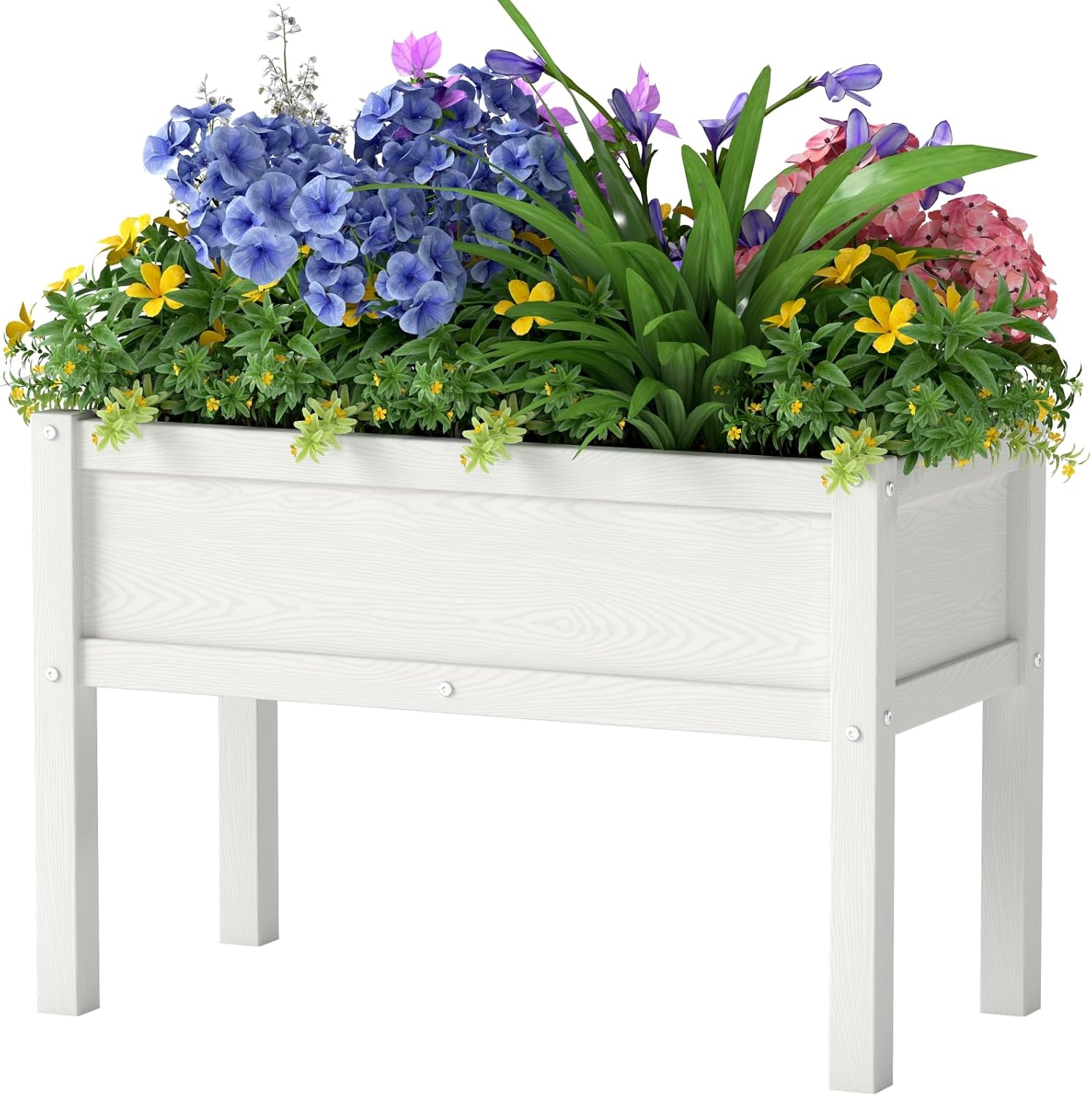
BIVODA Small HDPE Elevated Raised Garden Bed
| Capacity | 10 gallons |
|---|---|
| Material Type | High Density Polyethylene (HDPE) |
| Other Special Features of the Product | Drainage Hole, Fade Resistant, Rot Resistant, Rust Resistant, Weather Resistant |
| Mounting Type | Floor Standing |
This elevated planter is a compact, low-maintenance raised bed built from high-density polyethylene (HDPE) that resists rot, rust, fading, and harsh weather. It stands on legs to lift plants off the ground, includes drainage holes and a reinforced bottom for better soil support, and uses stainless steel screws and pre-inserted nuts to simplify assembly. Typical use is for herbs, seedlings, or a small row of vegetables on a balcony, patio, or small yard where protecting plants from ground pests and improving access are priorities. The HDPE construction means you will not need to paint or treat the wood and it cleans easily with soap and water, though it is relatively small in planting volume so you will refill or fertilize more often than with deeper beds. The elevated height helps reduce bending and keeps soil warmer in cool spells, but the single-level, compact footprint limits how many larger vegetables you can grow at once. For someone who wants a durable, weatherproof planter that is quick to set up, this does the job well.
Best for: Gardeners who prioritize a durable, low-maintenance elevated planter for herbs, seedlings, and small vegetable patches and who value reliability over maximum planting area.
Less Ideal for: Growers who need large, deep beds for multiple big vegetables or those wanting a multi-tiered or high-capacity planting system.
- HDPE construction resists rot, rust, fading, and weather for long outdoor life
- Elevated design protects plants from ground pests and reduces bending during gardening
- Pre-inserted nuts and 304-grade stainless steel screws speed assembly and resist corrosion
- Drainage holes and reinforced bottom help prevent waterlogging and support soil load
- 10-gallon capacity and compact footprint limit the number and size of vegetables you can grow
- Item is single-level so it does not provide extensive planting depth for larger root crops
Verdict: Choose this elevated HDPE planter if you want a reliable, weatherproof, low-maintenance raised bed for small-scale vegetable and herb growing.
FOYUEE 31.5" Elevated Mobile Raised Garden Bed with Wheels and Shelf

| Capacity | 2.5 cubic feet |
|---|---|
| Material Type | Metal |
| Finish Types | Powder Coated |
| Mounting Type | Floor Standing |
| Included Components | Wheels, Plant Stand |
This FOYUEE elevated raised bed is a mobile, waist-height planter designed for easy, ergonomic vegetable and herb growing on patios and balconies. The galvanized steel box with a powder-coated finish resists rust and supports heavy fill so you can add ample soil for productive vegetable crops. Built-in drainage channels and a central drain help prevent waterlogging while the raised profile improves air circulation around roots. A lower storage shelf keeps tools and pots handy and the integrated handle plus 6-inch all-terrain wheels make it straightforward to reposition the planter for sun or shelter. Typical uses are growing salad greens, herbs, compact vegetables, or creating a movable culinary garden outside a kitchen door. Assembly and moving when fully loaded will require some effort despite wheels, and the metal surface can warm in strong sun so seedling protection may be needed. The unit favors growers who want less bending and an organized, movable planting station rather than a large in-ground plot.
Best for: Gardeners who want an ergonomic, moveable vegetable planter for patios or balconies and value easy access, organization, and rust-resistant construction.
Less Ideal for: People who need very large planting volumes, deep-rooted crops, or a permanent in-ground bed for large-scale vegetable production.
- Powder-coated galvanized steel construction resists rust for outdoor use
- Raised waist-height design reduces bending and back strain
- Integrated drainage channels and central drain prevent water buildup
- Built-in wheels and handle allow the planter to be moved for light or weather
- Lower shelf provides convenient storage for tools and supplies
- May be heavy and awkward to assemble or move when filled with soil
- Metal walls can heat up in direct sun and may require shading for sensitive plants
Verdict: Buy this if you want a durable, waist-height mobile planter that makes growing herbs and compact vegetables easier without stooping.
Dahey 15-inch Metal Railing Planter Box, 3-Pack

| Material Type | Metal |
|---|---|
| Mounting Type | railing |
| Capacity | 0.96 gallons |
| Unit Count | 3 Count |
| Indoor Outdoor Usage | Outdoor |
These Dahey railing planters are a straightforward solution for adding container gardening to a balcony or deck. Each painted metal box is sized to sit over a rail using the included hooks and is intended for outdoor use with flowers, herbs, or small vegetables. The kit arrives as three identical rectangular planters with hooks to mount on typical rails up to the stated width and the metal construction feels sturdy for season-long use. Practical touches include a near-gallon capacity per trough and drainage-ready design so you can add holes for runoff to avoid waterlogged roots. Installation is simple and the low-profile shape makes it easy to fit multiple boxes along a rail for a continuous planting display. Expect to assemble the hooks and, over time, to monitor for surface paint wear in very wet or salty environments since painted metal can show rust if left untreated. These planters work best when paired with lightweight potting mix and regular watering in warm months.
Best for: Buyers who want a low-effort way to add flower or herb containers to a balcony or deck and prefer a ready-to-hang, durable-feeling option they can install quickly.
Less Ideal for: People who need decorative finishes, rustproof materials for coastal climates, or planters sized for large root crops should consider other options.
- Sturdy painted metal construction suitable for outdoor rail mounting
- Includes hooks and is easy to install on standard balcony or deck rails
- Generous planting capacity for flowers, herbs, or small vegetables
- Comes as a three-pack for fuller continuous displays along a railing
- Painted metal may develop surface wear or rust over time in wet or salty conditions
- Hooks must be assembled and may not fit unusually wide or shaped rails
Verdict: A simple, ready-to-hang three-pack of metal railing planters that makes it easy to create a continuous balcony garden quickly.
Choosing the Right Outdoor Planters for Herbs: Key Factors to Consider
Drainage and Water Management
Herbs are particularly sensitive to waterlogged roots and to extremes of drought. Effective drainage prevents root rot and fungal problems that quickly stress aromatic plants. Look for planters with multiple drainage holes, raised feet, or an integrated saucer system that allows excess water to escape but not leave roots sitting in standing water.
The planter shape and internal volume also affect how quickly potting mix dries. Narrow, deep pots retain moisture differently than wide, shallow ones. For mixed herbings or salads in one container, consider layers of coarse material at the bottom only when paired with ample drainage, because that layer alone will not substitute for proper holes.
Material and Durability in Outdoor Conditions
Materials determine how a planter behaves across seasons. Clay and terracotta breathe and help avoid overwatering, but they can crack in freeze-thaw cycles and dry out soil more quickly in hot sun. Plastics and resin are lightweight and resist breakage and moisture loss, but they can retain heat and degrade under intense UV unless stabilized.
Metal planters are sturdy and modern-looking but may heat the root zone in full sun and can corrode if not properly finished. Wood offers good insulation for roots but needs rot-resistant species and periodic treatment. Choose a material that matches your climate, sun exposure, and how often you want to move or maintain the container.
Size, Root Volume, and Planting Depth
Herbs range from shallow-rooted parsley and cilantro to deeper-rooted rosemary and thyme. A planter's internal depth and overall root volume influence which herbs thrive together. Small saucer pots are fine for annual cut-and-come-again herbs, while long troughs and deeper pots accommodate mixed plantings and herbs that develop woody roots.
If you plan to grow multiple herbs in one container, ensure each plant has room for root spread to avoid competition for water and nutrients. Adequate soil volume also buffers temperature swings and moisture loss between waterings, reducing maintenance.
Sunlight Exposure and Placement
Where you place planters determines which herbs will succeed. Many culinary herbs need at least six hours of direct sun, so planters intended for sunny spots should resist UV and not overheat the root ball. For partial shade locations, choose containers that retain moisture a little longer and allow you to group plants with similar light needs.
Consider whether you will move containers seasonally to follow the sun or protect tender perennials; this affects whether you need lightweight planters with sturdy handles or heavier, more stable options to resist wind.
Ease of Access and Harvesting
A planter's height and shape directly affect how comfortable it is to harvest and prune herbs. Raised planters or taller pots reduce bending and make it easier to snip leaves regularly. Wide, shallow troughs make small harvests convenient but may force closer spacing.
Think about how you will use the herbs: frequent snipping benefits from easily reachable planters placed near cooking areas, while decorative or less-used herbs can be in lower or more sculptural containers.
Maintenance Needs and Longevity
Routine care for herb planters includes watering, occasional repotting, and seasonal cleaning. Some materials require more maintenance than others: wood may need re-treatment, and porous clay benefits from overwintering in protected spaces in colder climates. Durable, low-maintenance materials reduce winter prep and replacement frequency.
Also check for features that simplify care such as removable liners, lightweight construction for repositioning, and accessible drainage. Planters that make soil refresh or root inspection simple will extend the productive life of your herbings.
Best Planter Types by Growing Situation
Different planter types suit specific herb gardening situations. Troughs and window boxes work well for windowsill or balcony plantings where multiple herbs share a narrow footprint. Deeper single pots are better for larger specimens and woody herbs that need more root depth.
Raised planters or barrel-style containers are ideal for gardeners who want easier access and larger soil volume for seasonal mixing. Lightweight resin or fabric planters make repositioning simple when you need to chase sun or shelter plants during extreme weather.
- Balconies and railings: choose long, narrow window boxes with secure brackets.
- Small patios: use stackable or vertical planters to maximize space.
- Sunny terraces: pick UV-stable materials that avoid excessive root heating.
Potting Mix and Soil Depth Recommendations
Herbs generally prefer a well-draining, nutrient-moderate potting mix rather than heavy garden soil. A mix with good aeration and organic matter helps roots establish while preventing waterlogging.
Aim for at least 6 to 8 inches of good soil for small annual herbs and 10 to 12 inches for larger woody herbs. If you plan layered plantings, check that the overall soil volume fulfills the deepest root requirement among the plants.
- Add coarse perlite or grit to improve drainage in deep pots.
- Use a balanced, slow-release fertilizer or periodic liquid feed during the growing season.
Placement, Microclimates, and Seasonal Care
Microclimates around buildings, fences, and trees create varied sun and wind patterns that affect planter choice. South- and west-facing spots get hotter and may need planters that moderate root temperatures. North-facing or shaded corners benefit from containers that retain moisture.
Prepare for seasonal changes by moving sensitive planters to protected areas during hard freezes or intense summer heat. Consider elevating planters off cold surfaces in winter to reduce freeze-thaw damage.
- Group containers with similar watering and light needs to streamline care.
- Use plant tags or a simple map to remember which herbs prefer full sun versus part shade.
Design and Aesthetics Without Sacrificing Performance
Planters can be both attractive and functional. Choose shapes and finishes that complement your outdoor space but also offer the features herbs need, like adequate depth and drainage. Matte, porous finishes help soil dry between waterings while glossy finishes often shed water and reflect heat.
Think about long-term placement and visual layers. Low troughs create continuous bands of herbs, while taller planters add vertical interest and make harvesting easier without bending.
- Match planter scale to plant size to avoid overwhelm or visual imbalance.
- Consider neutral tones that let foliage stand out for a cohesive look.
Common Mistakes to Avoid
Avoid choosing planters solely for looks without checking drainage and depth. Shallow decorative bowls frequently cause rapid drying or root crowding. Also avoid containers that are too large for the plant, which can hold excess moisture and encourage root rot.
Do not assume all materials are suitable year-round. Some containers that work in temperate summers will fail in freezing winters unless moved to a protected spot.
- Do not block drainage holes with saucers that trap water unless you monitor moisture carefully.
- Avoid planting multiple herbs with very different light or water needs in the same pot.
How We Chose the Best Outdoor Planters for Herbs
We shortlisted products that match common herb gardening needs and excluded items that are primarily decorative with poor growing performance. Key evaluation criteria included drainage effectiveness, material durability in outdoor conditions, root volume and planting depth, sun exposure suitability, and ease of routine care. We prioritized planters that provide consistent moisture control because herbs are sensitive to both waterlogging and rapid drying. Materials were judged for weather resistance and how they affect soil temperature and root health. Size and root volume ratings were applied to ensure a range of herbs from small annuals to larger perennial varieties fit comfortably. We also considered practical features such as integrated saucers, portability for repositioning, and compatibility with common potting mixes. Items that lacked meaningful drainage, were fragile outdoors, or had unusable planting depth were excluded from this list.
FAQ
How deep should a planter be for most culinary herbs?
Most annual culinary herbs do well in 6 to 8 inches of soil, while larger or perennial herbs that develop woody roots need 10 to 12 inches. Depth affects root development and watering frequency.
Can I use decorative pots without drainage for herbs?
Decorative pots without drainage are risky because herbs dislike standing water. If you must use them, plant in a removable liner with holes or use a layer of potting mix in a drained internal container to protect roots.
Which materials keep soil cooler in hot weather?
Porous materials like unglazed clay and wood tend to moderate soil temperature better than dark metal or thin plastic, which can heat up quickly. Choosing a lighter color and providing some shade during peak afternoon sun also helps.
How often should I repot herbs in containers?
Repotting frequency depends on growth rate and container size. Many annual herbs are refreshed each season by replacing some soil, while perennials may need repotting every 1 to 3 years when roots fill the pot.
Are fabric planters good for herbs?
Fabric planters provide excellent aeration and drainage, which benefits root health. They dry faster, so they may require more frequent watering than solid containers, especially in hot, windy locations.
Final Verdict
When choosing outdoor planters for herbs, prioritize drainage, appropriate root volume, and a material that suits your local climate. Balance ease of access and maintenance needs with the aesthetic and placement you want for your outdoor space. Decide which tradeoffs matter most to you-lower maintenance versus better insulation, or lightweight mobility versus long-term durability-and pick planters that match those priorities to keep herbs productive and easy to harvest.
