

Note: This article contains affiliate links. If you click on these links and make a purchase, I may earn a small commission at no extra cost to you. This helps support my research and content. Read my full affiliate disclosure here.
Getting propagation right starts with the medium you use. A potting mix for propagation must be light enough for young roots to expand, hold consistent moisture without becoming waterlogged, and resist disease that can kill cuttings or seedlings. In this guide we shortlisted the top potting mixes for propagation and tested their suitability for common starting tasks like seed starting, stem cuttings, and division. Below you will find practical notes on how each type of mix behaves in a home garden, plus the evaluation criteria used to compare them so you can pick a mix that matches your propagation method and growing environment.
Top Picks at a Glance
| Best Overall The best all-around choice for most situations | Soil Sunrise Plant Propagation Mix (8 Quarts) |  |
| Best Quality Built to a higher standard if you want something more solid | Old Potters Germination Mix (24 qt) — Peat Moss with Fine Perlite & Vermiculite |  |
| Best Value The sweet spot between price and what you get | Miracle-Gro Indoor Potting Mix for All Plants, 6 qt., 2-Pack |  |
| Best Budget The cheapest option that still gets the job done reliably | Back to the Roots 3-in-1 Seed Starting Mix, 6 Quart, Organic Peat-Free |  |
| Highest Rated A top-rated pick with lots of positive feedback | Royal Gold Potting & Propagation Mix, 1.5 cu ft (Peat-Free) |  |
| Most Popular A crowd favorite that many people choose with confidence | Miracle-Gro Indoor Potting Mix for Seed Starting, 8 qt. (2-Pack) |  |
| Best Seller A high-volume bestseller chosen again and again | Back to the Roots Organic Indoor Potting Mix, 6 Quart |  |
Soil Sunrise Plant Propagation Mix (8 Quarts)

| Ingredients | peat moss, perlite, worm castings, lime |
|---|---|
| Volume | 8 quarts |
| Style Name | Peat Moss, Perlite, Worm Castings, pH-Balanced Plant Propagation Mix |
Soil Sunrise Plant Propagation Mix is a ready-to-use, soil-less blend designed to help cuttings form strong roots and to refresh lightweight potting for tropical and houseplants. The formula combines peat for moisture retention, perlite for drainage and aeration, worm castings for gentle nutrition, and lime to stabilize pH. In practice the mix holds enough moisture to keep delicate cuttings from drying while still allowing oxygen to reach developing roots, so you see fewer soggy stems and more healthy root threads. The light texture also makes it easy to insert cuttings and remove them for inspection without compacting. Because it is a specialized propagation mix rather than a complete potting soil, you may need to switch to a richer potting medium after roots establish or top-dress for longer-term growth. The 8 quart bag is convenient for small batches of cuttings but not intended for large-scale propagation projects. If you want a straightforward, low-mess starting medium that reduces rot risk, this does the job very well.
Best for: Buyers looking for a no-fuss, reliable starting medium to root cuttings and repot small tropical or houseplant specimens; ideal for people who value predictable rooting conditions and low maintenance during the rooting phase.
Less Ideal for: Growers who need a heavy-duty long-term potting soil or who propagate at large scale should consider larger-volume potting blends or custom mixes tailored to their species and batch size.
- Light, fast-draining texture helps oxygen reach roots and reduces risk of root rot
- Includes worm castings for gentle, natural nutrients during early root development
- pH-balanced formula with lime to stabilize acidity for sensitive cuttings
- Ready-mixed blend saves time compared with sourcing individual components
- 8 quart volume is small for large or repeated propagation batches
Verdict: A compact, ready-made propagation mix that gives cuttings the moisture control and aeration they need to root reliably.
Old Potters Germination Mix (24 qt) — Peat Moss with Fine Perlite & Vermiculite

| Volume | 24 quarts |
|---|---|
| Unit Count | 768 Fluid Ounces |
| pH range | 5.4 – 6.3 |
| Electrical conductivity | 1.0 – 1.5 mmhos/cm |
This germination mix is built for starting seeds and propagating cuttings with consistent results. Its formula is 80–90% finely milled Canadian sphagnum peat moss combined with fine horticultural perlite and vermiculite to provide a balance of moisture retention and aeration that promotes uniform root development. Calcitic and dolomitic limestone are added to hold the pH in the 5.4–6.3 range and a wetting agent helps the medium rehydrate evenly so you avoid dry pockets in small cells or trays. A mild starter nutrient charge and a modest EC (1.0–1.5 mmhos/cm) give seedlings a gentle early feed without burning young roots. The fine texture makes it well suited to both sub-irrigation and overhead watering systems and to use in seed flats, plug trays, and small pots. Be aware the mix is peat-based, so it will compress over time and may hold more water than soilless mixes with higher perlite content, requiring attention to drainage for long-term potting. For reliable, repeatable seed starts this is a practical, no-nonsense choice.
Best for: Gardeners who prioritize consistent, predictable seed starts and propagation results and want a ready-to-use medium that performs across trays and small pots.
Less Ideal for: Growers looking for an entirely peat-free or very fast-draining mix for succulents or long-term container culture should consider alternatives.
- High peat content for even moisture retention and fine texture ideal for seeds and cuttings
- Added fine perlite and vermiculite improve aeration and uniform water holding in trays
- pH balanced with calcitic and dolomitic limestone for consistent nutrient availability
- Wetting agent promotes quick, even rehydration to reduce dry spots in small cells
- Peat-based formulation can compress and retain more water over time compared with higher-drainage mixes
- Contains a light starter charge but not a complete fertilizer for longer-term growth
Verdict: Choose this germination mix when you need a dependable, fine-textured medium that gives repeatable, uniform seed and cutting starts.
Miracle-Gro Indoor Potting Mix for All Plants, 6 qt., 2-Pack

| Number of Packs | 2 |
|---|---|
| Unit Count | 400.58 Ounce |
| Item Highlight | Feeds for up to 6 Months |
| Ingredients | Sphagnum Peat Moss, Coir, Perlite, Fertilizer, Wetting Agent |
This Miracle-Gro indoor potting mix is formulated as an all-purpose soil for indoor container plants and is sold in a two-pack of 6‑quart bags. It combines sphagnum peat moss, coconut coir, and perlite to create a lightweight, well-draining mix that holds moisture yet releases it to roots, which helps tropical houseplants like a Dragon Tree avoid waterlogged roots. The bagged mix includes a slow-release fertilizer meant to feed plants for up to six months so you do not need to amend immediately after potting. Notably the formula excludes bark and compost, which can reduce habitats for fungus gnats — useful when repotting indoor specimens. Use is straightforward: fill a pot with drainage, set the plant, backfill with mix, and water. Limitations are that the fertilizer schedule is fixed to the included feed and heavy feeders may need additional fertilizing after several months, and serious growers who want a custom cactus or orchid-style mix will find the texture too fine. For routine repotting of Dragon Trees and similar tropical houseplants this mix is convenient and consistent.
Best for: Buyers who want a reliable, low-effort potting mix for repotting tropical houseplants like Dragon Trees and prefer a product with built-in feeding and pest-reduction features.
Less Ideal for: Specialist growers who need custom texture blends for succulents, orchids, or aggressive feeders should choose purpose-formulated mixes or amend this product accordingly.
- Balanced blend of peat moss, coir, and perlite for good moisture retention and drainage
- Includes slow-release fertilizer that feeds up to six months for low-maintenance care
- Bark- and compost-free formula reduces places for fungus gnats to breed
- Ready-to-use bag makes repotting quick with no mixing required
- Fertilizer is fixed for about six months so additional feeding may be necessary for heavy feeders
- Texture may be too fine for plants that prefer very fast-draining or chunky mixes
Verdict: A convenient, low-maintenance indoor potting mix that keeps Dragon Trees healthy with good drainage and up to six months of built-in feeding.
Back to the Roots 3-in-1 Seed Starting Mix, 6 Quart, Organic Peat-Free

| Unit Count | 192 Fluid Ounces |
|---|---|
| Style Name | 3-in-1 Seed Starting Mix |
| Brand Name | Back to the Roots |
| UPC | 810667035822 |
This 6-quart Back to the Roots 3-in-1 Seed Starting Mix is a peat-free, organic blend aimed at making seed starting and early potting simple. You use it straight from the bag to fill trays, small pots, or starter cells; the mix includes coconut coir for water retention, dolomitic limestone to balance pH, mycorrhizae to support root uptake, and yucca extract for moisture control. Practically, that means fewer extra amendments for a new gardener and a more forgiving environment for delicate seedlings. The formula is designed to drain well while retaining enough moisture for even watering, and the included nutrients and worm castings can reduce early feeding. Limits to note are the small 6-quart volume, which is best for hobby-scale starting rather than large beds, and a lighter texture that may dry faster in very hot, exposed conditions. For budget growers who want an all-in-one starter mix without experimenting with multiple additives, this is a convenient choice.
Best for: Great for budget-minded home gardeners who want a single, ready-to-use seed starting mix that reduces extra amendments and simplifies starting herbs, vegetables, and flowers.
Less Ideal for: Not the best fit for landscapers or gardeners starting large numbers of plants or filling large containers where bulk bagged mixes would be more economical.
- Peat-free organic formula with coconut coir for moisture retention and aeration
- Includes mycorrhizae and worm castings to support early root development and nutrient uptake
- pH balancing with dolomitic limestone reduces the need for corrective amendments
- Ready-to-use blend suitable for seed trays, small pots, and indoor container starts
- Only 6 quarts per bag, so multiple bags are needed for larger projects
- Light, fast-draining texture can require more frequent watering in hot or windy conditions
Verdict: A convenient, peat-free all-in-one starter mix that saves time and extra purchases for home gardeners starting small batches of seeds.
Royal Gold Potting & Propagation Mix, 1.5 cu ft (Peat-Free)

| Volume | 1.5 cubic feet |
|---|---|
| Peat-free | Yes |
| Amendments | Worm castings, fish bone meal, kelp meal |
| Drainage component | Perlite |
| Primary ingredients | Coco fiber and aged forest products |
Royal Gold Potting & Propagation Mix is a ready-to-use, peat-free growing medium formulated for seed starting, cuttings, transplants, and container gardens. Made from coco fiber blended with aged forest products and perlite, it has a fine, sifted texture that fills small cells and pots evenly and promotes good air-to-water balance for healthy root growth. Light organic amendments such as worm castings, fish bone meal, and kelp meal supply gentle, steady nutrition without synthetic fertilizers, so plants get an early boost while you maintain your regular feeding schedule. Practical benefits include consistent batch quality from small-batch mixing, good drainage that helps prevent root rot in containers, and suitability for both indoor and outdoor hibiscus containers or transplants. Limitations to note are that the bag is moderately amended rather than pre-fertilized for the long term, so larger hibiscus in big pots will need regular feeding, and handling warns to use gloves and a dust mask due to fine particles.
Best for: Gardeners who prioritize dependable, consistent potting media for starting seeds, propagating cuttings, and potted hibiscus that need reliable root development and steady early nutrition.
Less Ideal for: Growers who want an all-in-one, long-feeding potting mix for large specimen hibiscus without supplemental fertilizer should consider mixes with higher sustained-release nutrients.
- Peat-free coco fiber base that improves moisture retention while supporting sustainability
- Sifted fine texture ideal for small cells, seed starting, and uniform root development
- Light organic amendments (worm castings, kelp, bone meal) provide steady, natural nutrients
- Well-draining perlite blend reduces risk of soggy roots in containers
- Consistent small-batch production for predictable texture and performance
- Moderately amended rather than long-term fertilized so larger container plants will require additional feeding
- Contains fine dust so handling precautions like gloves and a mask are recommended
Verdict: Choose this peat-free, finely sifted mix when you want a consistent, well-draining medium that reliably promotes healthy root development in hibiscus seedlings and container plants.
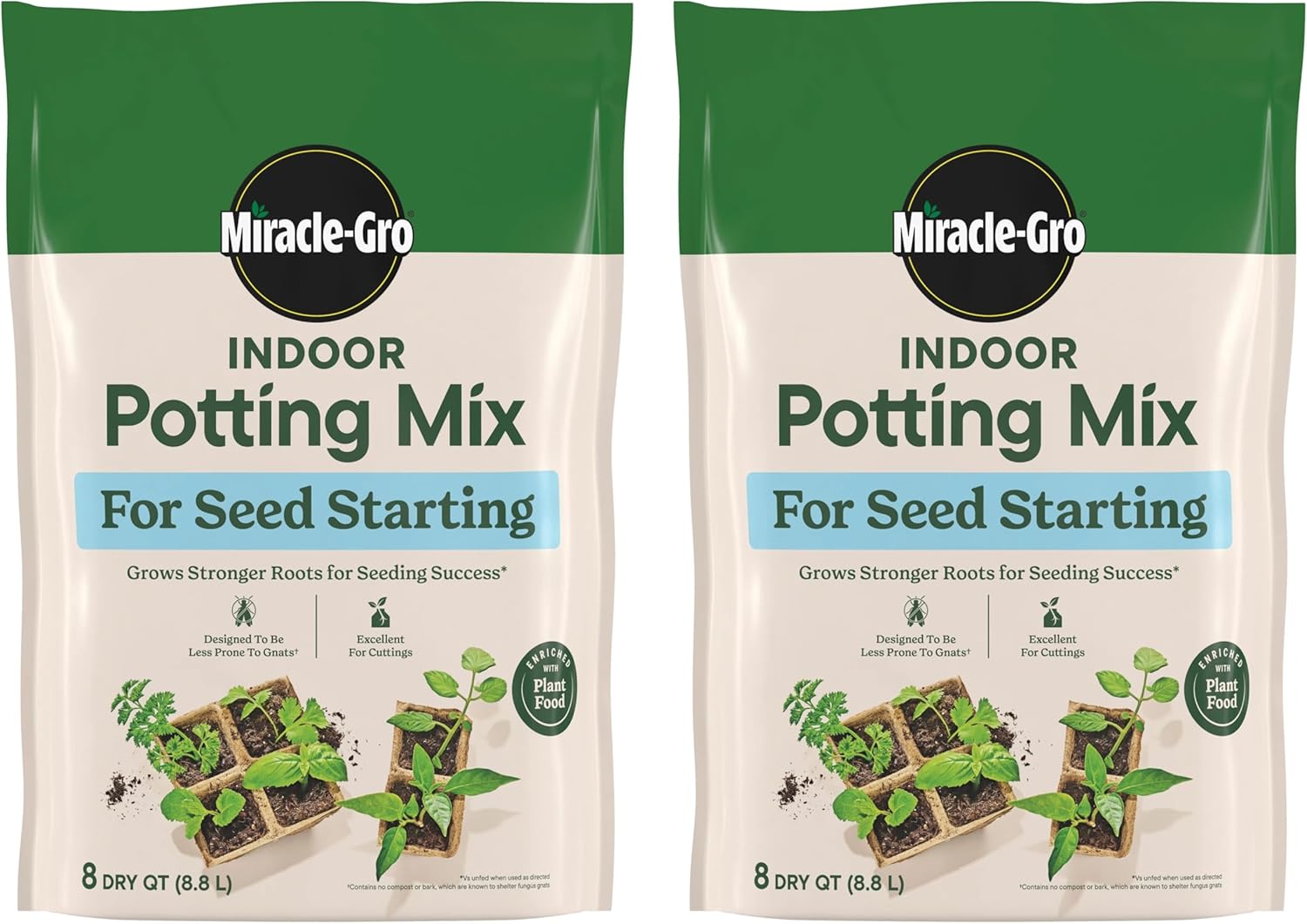
Miracle-Gro Indoor Potting Mix for Seed Starting, 8 qt. (2-Pack)
| Brand Name | Miracle-Gro |
|---|---|
| Item Type Name | Potting Mix |
| Number of Packs | 2 |
| Volume | 8 quarts |
This two-pack of Miracle-Gro Indoor Potting Mix is designed specifically for starting seeds and rooting cuttings indoors. The blend is lightweight and pre-enriched with plant food so seedlings get a nutrient boost during early root development, and the manufacturer says it yields stronger roots compared with unfed mixes when used as directed. It is intended for vegetables, flowers, and herbs and works well in cell trays and small containers; one 8 qt. bag will fill roughly three 72-cell trays. Notably, the formula omits compost and bark, which helps lower the chance of fungus gnat infestations in damp seed-starting setups. Use it by filling trays or pots, keeping the mix evenly moist, and shielding newly sown seeds from direct sun until germination. Important limitations are standard for enriched mixes: it contains fertilizer (so handle carefully) and it is a seed-starting medium rather than an all-purpose potting soil for mature plants, so you will likely transplant seedlings into a different mix or amend soil later.
Best for: Buyers who want a low-effort, indoor seed-starting medium that supports faster root development and reduces common pest risks while following proven seed-starting practices.
Less Ideal for: Gardeners who need a permanent potting soil for mature container plants or who prefer fully organic, compost-rich mixes should consider alternatives.
- Lightweight, ready-to-use formula tailored for seed germination and cuttings
- Pre-enriched with plant food to support early root and seedling growth
- Excludes compost and bark to reduce habitat for fungus gnats
- Comes as a two-pack so you have enough mix for multiple trays
- Contains fertilizer which requires careful handling and storage
- Intended for seed starting so not formulated as long-term potting soil for mature plants
Verdict: A practical, low-risk seed-starting mix that boosts early root growth and reduces fungus gnat risk, making it a reliable choice for indoor vegetable seedlings.
Back to the Roots Organic Indoor Potting Mix, 6 Quart

| Unit Count | 192 Fluid Ounces |
|---|---|
| Item Type Name | Indoor Potting Mix 6qt |
| Item Highlight | Peat-free, 100% organic, made in the USA |
| Ingredients | Coconut Coir, Yucca, Mycorrhizae, Perlite, Horticultural Sand |
This Back to the Roots indoor potting mix is a ready-to-use, 6-quart blend designed for common houseplants such as pothos, monstera and ferns. It combines coconut coir, yucca extract, mycorrhizae, perlite and horticultural sand to improve moisture retention, drainage and root development without peat. In practice it feels light and friable, so it is easy to pot seedlings or repot mature plants and it reduces compaction that can suffocate roots. The added mycorrhizae helps young roots establish and take up nutrients more efficiently while yucca extract helps the mix hold water between waterings, which is convenient for forgetful or busy plant owners. Because it is peat-free and made in the USA, it is a more sustainable choice versus traditional peat-based mixes. Limitations are the small 6-quart size, which means frequent repurchasing for larger collections, and the bag does not include fertilizer so you will need to feed plants separately as they grow.
Best for: Buyers who prioritize low-risk, easy-care houseplant solutions and want an organic, ready-to-use potting mix that reduces watering hassles and supports healthy root growth.
Less Ideal for: Not ideal for gardeners who need large-volume soil for many pots or for those expecting a mix that includes built-in fertilizer for long-term feeding.
- Peat-free organic formula that reduces environmental impact
- Yucca extract improves moisture retention between waterings
- Contains mycorrhizae to support root development and nutrient uptake
- Light, well-draining texture suitable for repotting seedlings and houseplants
- Small 6-quart volume may require frequent repurchasing for larger plant collections
- Does not include fertilizer so additional feeding is necessary
Verdict: A compact, peat-free potting mix that simplifies indoor plant care by holding moisture and boosting root establishment.
Choosing the Right Potting Mix for Propagation: Key Factors to Consider
Texture and Particle Size
The feel and particle distribution of a propagation mix control how easily roots can push through the medium. Fine-textured mixes can cradle tiny seeds and hold contact with stem cuttings, which encourages rooting. However, mixes that are too fine tend to compact and reduce oxygen near developing roots.
A well-graded mix blends fine particles for contact with larger pieces that create stable air pockets. That balance helps maintain consistent moisture at the root interface while preventing the anaerobic conditions that lead to damping-off or rot.
Moisture Retention and Drainage
Successful propagation needs a mix that keeps surface moisture long enough for roots to form but drains excess water quickly after watering. Retentive components such as coconut coir or peat hold water and maintain even moisture between waterings. Drainage components like perlite, coarse sand, or small bark fragments ensure excess flows away and air returns to the pore space.
Match the balance to your climate and watering routine: in warmer, drier conditions, a mix with higher water-holding capacity reduces frequent watering. In humid or cool environments, favor faster-draining blends to reduce disease pressure.
Sterility and Low Disease Risk
Young seedlings and cuttings are especially vulnerable to pathogens in the medium. Sterile ingredients or pasteurized mixes reduce the chance of damping-off fungi and root rots. Look for mixes that specify sterilized components or those that are manufactured in controlled, clean conditions.
Even with sterile mix, sanitation in trays, clean tools, and fresh water for misting matter. Choosing a low-disease-risk mix gives the best start and reduces losses during the critical rooting window.
Air Porosity and Oxygen Supply
Roots need oxygen as much as water when they are forming. Air-filled pore space in a propagation mix keeps oxygen available for root tips and encourages branched root growth rather than long, weak root systems. Ingredients that resist compaction, such as perlite, vermiculite, or coarse bark, maintain porosity as you water and handle trays.
Consider mixes that advertise good porosity or list stable coarse amendments. In small starter pots or deep plug trays, porosity is often more important than sheer water-holding capacity.
Longevity and Structural Stability
While propagation mixes do not need to last as long as potting soil for mature plants, structural stability during the rooting phase matters. Mixes that break down quickly can form a crust or compact, reducing aeration and making transplanting harder. Stable mixes retain their texture through repeated waterings and gentle handling when you check roots or transplant plugs.
If you plan to reuse trays or to keep seedlings on the bench for several weeks, choose mixes formulated to resist rapid decomposition and compaction.
Best Mix Types by Propagation Method
Different propagation techniques favor different media. For tiny seeds, a finer, mellow surface mix with good contact encourages even germination. Stem cuttings do better in a grittier, fast-draining blend that limits rot while keeping the cutting hydrated. Division or transplanting of larger root masses often needs a slightly heavier starter mix to support the plant while roots expand.
Match the mix to the task: seed trays benefit from a lightweight, uniform medium, cuttings do best in porous, well-draining mixes, and divisions may need blends that provide a bit more structure and nutritional buffering.
- Seed starting: fine, uniform texture with light moisture-holding capacity
- Stem cuttings: coarse perlite or grit for drainage and air flow
- Division/transplanting: stable particles and modest water retention to support growth
How to Prepare and Use Propagation Mix
Pre-moisten the mix before filling trays so the material is evenly damp and not waterlogged. Work the mix gently to settle it without compacting. For seeds, fill trays lightly and firm with a gentle press so seed-to-soil contact is consistent.
When inserting cuttings, make a clean hole with a dibber or pencil instead of forcing the cutting into loose mix. This reduces air gaps around the stem and improves initial moisture contact. Use bottom heat or a humidity dome when appropriate to speed rooting, but monitor moisture closely to avoid fungal growth.
- Pre-moisten to avoid dry pockets and uneven germination
- Avoid compacting when filling trays to preserve porosity
- Use clean tools and fresh water to reduce pathogen transfer
Adjusting Mix for Climate and Watering Habits
In hot, dry climates increase the proportion of water-retaining components so you do not need to water multiple times per day. Coconut coir offers a good balance of retention and aeration for many gardeners. In cool or humid regions, reduce retention and increase drainage to prevent prolonged wetness that invites disease.
If you water from the top frequently, ensure the mix has sufficient drainage to carry away surplus. Conversely, if you rely on bottom-watering trays, choose a mix that wicks moisture upward without becoming waterlogged at the crown of seedlings.
- Hot climates: higher water-holding blends
- Humid/cool climates: faster-draining mixes
- Bottom-watering: choose mixes that wick evenly
Sanitation and Reuse Guidelines
Use fresh, sterile mix for critical propagation tasks when possible. If you must reuse media, remove visible roots and debris, then re-sanitize trays and briefly reprocess the material by sun pasteurizing or baking small batches if appropriate and safe. Reused mixes often have reduced air porosity and increased disease risk.
Always clean and disinfect trays, tools, and labels between batches. Good sanitation reduces the need for chemical interventions and helps maintain high success rates during the first weeks of rooting.
- Prefer fresh mix for high-value or finicky crops
- Sanitize reused media and inspect for compaction or odors
- Clean trays and tools between propagation cycles
Common Additives and When to Use Them
Perlite and vermiculite are common amendments that alter drainage and water retention respectively. Perlite increases air space and speed of drainage; vermiculite holds more moisture and nutrients. Horticultural grit or coarse sand can add weight and structure for cuttings that need stability.
Avoid adding fertilizer to a propagation mix intended for delicate seeds or newly rooted cuttings. Starter feeds can burn tender roots. Consider a light, dilute feed only after a healthy root system is established and true leaves appear.
- Perlite for drainage and porosity
- Vermiculite for moisture retention
- Grit or coarse sand for weight and stability
How We Chose the Best Potting Mix for Propagation
We focused on factors gardeners told us matter when starting seeds and rooting cuttings. We prioritized mixes with a clean, low-salt composition and consistent particle size so young roots are not shocked by variable texture. Sterility and low disease risk were important, so mixes with pasteurization or sterile ingredients scored higher. Moisture management was another core filter: we evaluated how well mixes retain usable moisture while still draining excess water to avoid damping-off. Particle stability and air space were assessed for how long the mix stays friable without compacting under regular watering. Ease of use and versatility across propagation methods – such as direct sowing, plug trays, or rooting hormone dips – were included as practical criteria. We excluded potting soils designed primarily for established container plants that contain high proportions of compost or heavy minerals that can suffocate young roots. We also excluded seed mixes formulated exclusively for large-scale commercial propagation because they are not representative of what home gardeners can reasonably source. The final list reflects choices that balance sterile ingredients, texture consistency, controlled moisture retention, and long-term particle stability.
FAQ
Can I use regular potting soil for propagation?
You can in a pinch, but regular potting soil often contains compost and larger organic particles that retain too much moisture for young roots and may contain pathogens. A lighter, cleaner propagation mix will give seedlings and cuttings a better start.
How often should I water seed trays filled with propagation mix?
Frequency depends on climate and container size, but check daily. Keep the surface evenly moist without pooling. Use bottom-watering or misting to maintain moisture while avoiding saturation of the crown.
Is coconut coir a good base for propagation mixes?
Coconut coir is often a good base because it holds moisture while remaining airy and resists compaction. It is a suitable alternative to peat and works well when blended with perlite or grit for improved drainage.
Should I add fertilizer to a propagation mix?
Avoid added fertilizer during the earliest rooting phase because young roots are sensitive and can be burned by salts. A mild feed can be introduced once seedlings have established true leaves and roots are visibly active.
How do I prevent damping-off in seedlings?
Use a sterile, well-draining mix, avoid overwatering, provide good air circulation, and start with clean trays and tools. Using bottom heat sparingly and avoiding crowded trays also reduces the risk of fungal outbreaks.
Final Verdict
Choose a potting mix for propagation that balances light texture, reliable moisture retention, and good air porosity. Prioritize sterile or pasteurized mixes to reduce disease risk and select particle sizes that match your propagation method. Expect tradeoffs between water-holding capacity and drainage; tune the mix to your climate and watering style. Focus on mixes that stay stable during the rooting period and support healthy root architecture. With the right medium and clean hygiene, you will improve rooting success and produce stronger plants ready for transplanting.
