

Note: This article contains affiliate links. If you click on these links and make a purchase, I may earn a small commission at no extra cost to you. This helps support my research and content. Read my full affiliate disclosure here.
Slopes and banks present challenges that flat beds do not: water runoff, shallow topsoil, and access for routine care. Choosing the right ground cover for bank addresses erosion control while keeping maintenance manageable. In this guide we shortlisted five top-performing ground covers suited for banks and steep slopes and evaluated each on root strength, spread habit, and maintenance needs. Use this overview to match plant behavior to your slope conditions and soil type, then check the product details to pick the right fit for your site.
Top Picks at a Glance
| Best Overall The best all-around choice for most situations | Outsidepride Hairy Vetch Cover Crop Seeds, 5 lb |  |
| Best Quality Built to a higher standard if you want something more solid | Plants for Pets Sedum Succulent Mat (10 x 20 in.) |  |
| Best Value The sweet spot between price and what you get | BuildASoil No-Till 60% Clover Seed Mix — 12-Species Cover Crop (1 lb) |  |
| Best Budget The cheapest option that still gets the job done reliably | BuggyBeds Creeping Thyme Herb Seeds (17500 Count) |  |
| Most Popular A crowd favorite that many people choose with confidence | Outsidepride White Dutch Clover Seed, 2 lb |  |
Outsidepride Hairy Vetch Cover Crop Seeds, 5 lb

| Indoor Outdoor Usage | Outdoor |
|---|---|
| Other Special Features of the Product | Drought Tolerant |
| Sunlight Exposure | Full Sun |
| USDA Hardiness Zone | 3 |
| Material Features | Heirloom |
Outsidepride Hairy Vetch is sold as a 5 lb bag of cover crop seed for building soil fertility and stabilizing ground. You sow it in late summer to early fall so it can establish before frost and then overwinter as a dormant stand that resumes rapid growth in spring. Its strengths are high nitrogen fixation and winter hardiness, which translate to substantial biomass for erosion control, weed suppression, and improved soil structure. The product notes suitability on a range of soils, good drought tolerance once established, and attractiveness to pollinators, making it useful along banks where both slope stabilization and habitat value matter. Practical limitations are that it is a vetch legume, so it may need termination or mowing before seeding crops or when used with lawns, and establishment requires adequate seeding rate and timing to get dense coverage before winter. For bank planting plan for enough seed and fall establishment to ensure the root mass and biomass develop for erosion control.
Best for: Gardeners and land managers who want a reliable, nitrogen-fixing cover to stabilize banks, suppress weeds, and build organic matter without intensive maintenance.
Less Ideal for: Those wanting a no-maintenance ornamental groundcover or a permanent low-mow lawn substitute should consider species specifically bred for permanent turf or decorative mat-forming plants instead.
- Winter-hardy variety that provides substantial biomass for erosion control and soil cover
- High nitrogen fixation that improves soil fertility as a green manure
- Suitable across USDA zones 3–10, offering wide climate adaptability
- Drought tolerant once established and attractive to pollinators
- Requires correct fall planting window and seeding rate to establish effective coverage
- Needs mechanical or chemical termination before planting many spring crops or if seed heads are undesirable
Verdict: Choose this hairy vetch if you need a winter-hardy, nitrogen-fixing cover crop to stabilize banks and rapidly build soil organic matter.
Plants for Pets Sedum Succulent Mat (10 x 20 in.)

| Indoor Outdoor Usage | Indoor, Outdoor |
|---|---|
| USDA Hardiness Zone | 3, 4, 5, 6, 7 |
| Moisture Needs | Little To No Watering |
| Soil Type | Sandy Soil |
| Expected Blooming Period | Spring to Summer |
This live sedum mat arrives as a pre-planted 10 by 20 inch tray designed for quick installation as low-growing ground cover, edging, green roofs, or vertical panels. The tray contains a mix of hardy sedum varieties that tolerate heat and drought, so you can plant it in well-drained, sandy soil and expect minimal watering once established. Sedums in the mix produce small star-shaped flowers in late spring to summer, adding seasonal color to slopes or banks where erosion control and low maintenance are priorities. The mat ships dry to reduce rot, so watering thoroughly on arrival and settling it into sunny locations improves establishment. Limitations are its small starting size, so covering a large bank will require multiple mats and some initial patience while the plugs spread together, and partial shade will reduce flowering and vigor compared with full sun sites.
Best for: Gardeners who need a durable, low-maintenance ground cover for sunny banks and slopes and who prioritize plant performance and drought resilience over instant full coverage.
Less Ideal for: People wanting immediate, dense coverage without installing several mats or those planning to plant in mostly shaded, poorly drained areas.
- Drought and heat tolerant once established, suitable for dry, sunny slopes
- Pre-planted tray saves time compared with planting individual plugs
- Uses low-maintenance sedum varieties that flower in spring to summer
- Weather resistant and usable for outdoor ground cover, living walls, or green roofs
- Small 10 x 20 inch tray means multiple units are needed to cover large banks
- Ships dry and requires an initial thorough watering and establishment period
Verdict: Choose this sedum mat when you need a hardy, drought-tolerant ground cover that establishes into an attractive, low-maintenance bank or slope solution.
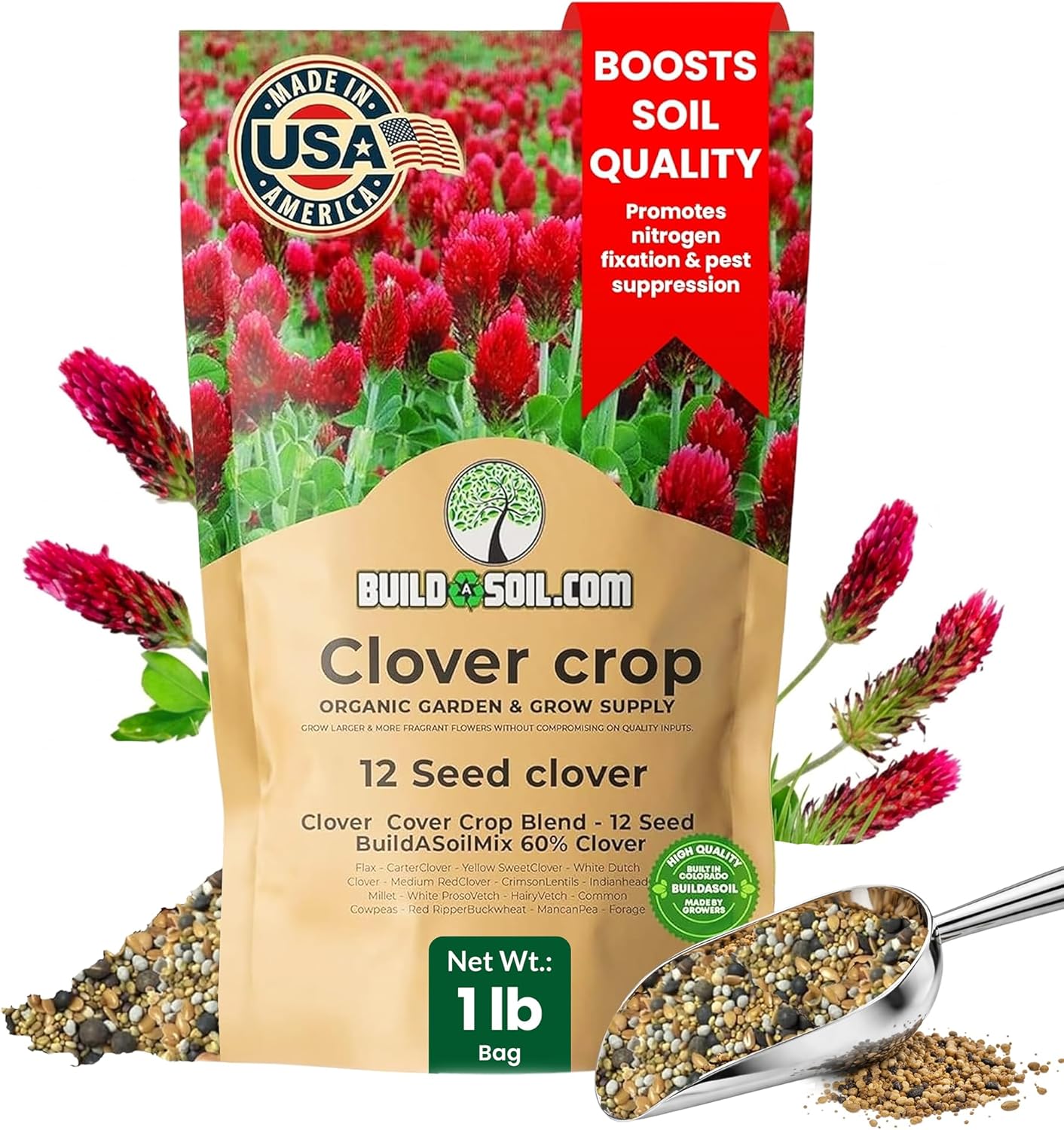
BuildASoil No-Till 60% Clover Seed Mix — 12-Species Cover Crop (1 lb)
| Unit Count | 16 Ounce |
|---|---|
| Indoor Outdoor Usage | Outdoor |
| Brand Name | BUILD A SOIL |
| Manufacturer | BuildASoil LLC |
This 1 lb BuildASoil mix is a clover‑dominated cover crop blend intended to form a no‑mow ground cover and improve soil biology. With 12 species and 60% clover, it is used by broadcasting seed over lawns, banks, or beds to suppress weeds, fix nitrogen, and encourage deeper rooting without tilling. The lack of filler grasses means faster clover establishment and a denser stand of beneficial legumes that attract pollinators and reduce irrigation needs. It works for spring, summer, and fall seeding and is compatible with frost seeding and no‑till routines. Practical limits are the concentrated clover makeup: if you want a traditional grass lawn appearance or rapid erosion control with aggressive fibrous grasses, this mix will be slower to build surface cover and may not provide the same immediate soil anchoring. Coverage guidance is given (one pound ~900 sq ft) so planning for steep banks or larger areas requires buying larger bags or multiple units. Non‑GMO and USA made, it is best used where a low‑mow, ecologically focused ground cover is the goal.
Best for: Buyers who want a low‑maintenance, ecologically minded ground cover for stabilizing and improving soil on banks and garden areas and who prioritize reduced mowing and increased soil health.
Less Ideal for: Those who need an immediate turf‑like appearance or rapid surface erosion control on very steep, high‑runoff slopes should consider mixes with fast‑establishing grasses or erosion control blankets.
- High clover concentration (60%) speeds establishment of legume cover and nitrogen fixation.
- Twelve species mix increases biodiversity and supports pollinators.
- Formulated for no‑till/no‑mow use, reducing maintenance and mowing time.
- Suitable for multiple seasons and compatible with frost seeding and raised beds.
- Not formulated with fast‑establishing fibrous grasses so initial erosion control on very steep banks can be slower.
- One pound covers a modest area, requiring multiple bags for large slopes.
Verdict: Choose this mix when you want a low‑mow, biodiversity‑rich clover ground cover that improves soil health rather than a traditional grass lawn.
BuggyBeds Creeping Thyme Herb Seeds (17500 Count)

| Unit Count | 17500 Count |
|---|---|
| Indoor Outdoor Usage | Outdoor |
| USDA Hardiness Zone | 5-9 |
| Expected Blooming Period | Late Spring To Early Fall |
| Moisture Needs | Low |
These BuggyBeds creeping thyme seeds are sold in a very large 17,500-count packet and are aimed at establishing a fragrant, low-growing ground cover that suppresses weeds and attracts pollinators. Typical use is direct sowing in spring or fall where you want a carpet-like planting between stones, on slopes, or in areas that are hard to mow. The seeds produce a drought-tolerant perennial that blooms from late spring through early fall and performs best in partial shade to full sun in zones 5 to 9. Practical benefits include minimal ongoing care once established, strong weed suppression, and a pleasant aroma when walked on. Because the packet contains so many seeds, it is cost-effective for covering large areas or multiple projects. Important limitations are that success depends on proper soil contact and site preparation, and germination rates can vary so you may need time and patience to get a uniform stand; very heavy clay with poor drainage will still need amendment for best results. This is a straightforward option for gardeners who want an inexpensive, attractive ground cover for drier, well-drained spots.
Best for: Gardeners looking to cheaply establish a fragrant, low-care ground cover over large or difficult-to-mow areas and who prioritize value and low ongoing maintenance.
Less Ideal for: Gardeners seeking an instant lawn-like cover or planting in permanently waterlogged clay sites where drainage cannot be improved.
- Very large 17,500 seed count makes it economical for covering large areas
- Drought-tolerant perennial habit reduces watering once established
- Low-maintenance growth habit that helps suppress weeds
- Attractive, fragrant ground cover that attracts pollinators
- May require site prep and soil amendment for heavy clay to ensure good drainage
- Germination and uniform coverage can be variable, so establishment may take time
Verdict: If you need an inexpensive, drought-tolerant ground cover to seed large areas, this high-count creeping thyme pack offers strong value and low long-term care.
Outsidepride White Dutch Clover Seed, 2 lb

| Indoor Outdoor Usage | Outdoor |
|---|---|
| Other Special Features of the Product | Attracts Pollinators |
| Sunlight Exposure | Full Sun |
| Moisture Needs | Little To No Watering |
| Material Features | Heirloom |
Outsidepride White Dutch Clover is a perennial clover seed sold in a 2 pound bag and treated (nitrocoated and inoculated) to support reliable germination and soil nitrogen fixation. It is typically broadcast or mixed with grass/cover-crop seed, lightly raked in, and kept moist until established; germination is expected within about two weeks under warm soil conditions. Notable features include drought tolerance from a deep root system, attractiveness to pollinators when it blooms in summer, and an ability to form dense ground cover that suppresses weeds and reduces erosion. Practical benefits for full-sun sites include low watering needs once established, weed suppression, improved soil fertility from nitrogen fixation, and a visually pleasing carpet of small white flowers. Important limitations are that it grows low to the ground (a few inches up to a foot) so it is not a turf substitute where heavy foot traffic or formal mowing height is required, and establishing a uniform stand requires correct seeding rate and initial moisture management. This seed is best used for informal lawns, slopes, pollinator strips, and pasture mixes rather than high-traffic ornamental lawns.
Best for: Gardeners and homeowners who want a low-maintenance, pollinator-friendly ground cover or lawn alternative for sunny areas and slopes and who prioritize ecological benefits and ease of establishment.
Less Ideal for: Property owners who need a formal, high-traffic turf or a grass lawn with traditional mowing and wear resistance should consider conventional grass seed blends instead.
- Treated (nitrocoated and inoculated) seed for improved germination and soil health
- Attracts pollinators with fragrant white summer blooms
- Forms dense ground cover that helps suppress weeds and control erosion
- Drought tolerant once established, suitable for low-water sites
- Not suited for heavy foot traffic or formal turf uses
- Requires initial moisture and correct seeding rate for an even stand
Verdict: A quick-establishing, pollinator-friendly ground cover seed that improves soil nitrogen and holds sunny slopes and informal lawns with minimal ongoing watering.
Choosing the Right Ground Cover for Bank: Key Factors to Consider
Root Structure and Soil Retention
Plants for banks rely on strong root systems to bind soil and reduce surface erosion. Deep, fibrous roots are preferable on steeper slopes because they hold soil layers together and resist slumping after heavy rains.
Consider how roots interact with your soil type. Sandy soils benefit from species with extensive lateral roots that weave through loose particles, while clay-heavy soils need plants tolerant of periodic saturation and able to penetrate dense layers. Avoid ground covers with very shallow roots on vulnerable slopes.
Spread Habit and Coverage Density
How quickly and densely a ground cover spreads affects how soon bare spots are eliminated. Aggressive spreaders fill gaps fast and reduce weed establishment, but on small or narrow banks they can encroach on other plantings.
Prefer plants that match the width and length of your bank. Low, mat-forming types create continuous cover with minimal gaps, while stoloniferous or rhizomatous species may be better for long runs where rapid colonization is needed.
Moisture Tolerance and Drainage Needs
Banks often have variable moisture across the slope: wetter at the bottom and drier near the crest. Choose ground covers that tolerate the range of conditions present on your specific bank.
If runoff concentrates water in certain bands, pick species that survive occasional saturation. Conversely, on well-drained, sun-exposed banks select drought-hardy options that resist desiccation during dry spells.
Maintenance and Long-Term Management
Maintenance influences the long-term success of bank plantings. Low-pruning, low-fertilizer plants reduce labor and disturbance, which helps maintain root structure and soil cover.
Think about how often you can trim, remove volunteers, or replant. Some ground covers need periodic thinning to prevent crowding and to maintain root vigor. Choose species whose maintenance rhythm fits your care plan to avoid creating weak, patchy stands.
Establishment Time and Seasonal Timing
Faster-establishing ground covers begin protecting soil sooner, which is crucial on erodible banks. Establishment depends on planting time, local climate, and initial care such as mulching and irrigation.
Plan plantings for the season that gives the fastest root take in your region-often spring or early fall. If immediate stabilization is required, combine planting with temporary erosion controls while plants establish.
Sun Exposure and Local Climate Compatibility
Sun and climate determine which species will thrive without excessive intervention. Some ground covers perform in full sun on hot slopes, while others prefer the cooler, moister microclimates at the base of a bank.
Match the plant to the exposure and average winter lows and summer highs in your area. Choosing climate-adapted species reduces irrigation and replacement needs and improves long-term coverage.
Preparing a Bank for Planting
Preparation reduces the labor required later and gives ground covers a head start. Clear loose debris and reduce competing weeds without disturbing the soil structure more than necessary. On very erodible banks install temporary silt fencing or biodegradable erosion control matting to protect soil during establishment.
Lightly roughen the surface to create micropockets that trap seeds or cuttings and hold moisture. If soil is compacted, create shallow terraces or step beds where feasible to slow runoff and provide planting platforms.
- Remove large roots and invasive perennials before planting
- Use erosion control matting on newly seeded slopes
- Install temporary wattles or straw on very steep banks
Planting Techniques for Slopes
Spacing and planting method change with slope steepness. For steeper banks place plugs or cuttings closer together to speed canopy closure. Use horizontal planting on contours where possible to reduce downhill migration of soil.
Stagger rows and plant in overlapping patterns so new growth interlocks. After planting, firm soil gently around each plug to eliminate air pockets but avoid creating dense compaction that impedes root growth.
- Plant on the contour to slow water flow
- Water thoroughly after planting and during the first season
- Mulch lightly to retain moisture without smothering young shoots
Managing Water and Runoff
Control runoff to reduce the erosive force hitting your plantings. Incorporate small swales, check dams, or rock outcrops to break up flow lines and spread water more evenly across the slope. These features reduce point erosion during storms.
Water established plantings less frequently but more deeply to encourage strong rooting. During the establishment window, supplemental irrigation helps plugs survive dry spells and accelerates soil-binding root growth.
- Redirect concentrated flows away from bare soil
- Use drip tubing or soaker hoses to deliver consistent moisture
- Inspect after heavy rains and patch any washouts quickly
Combining Ground Covers with Structural Solutions
Sometimes plants alone are not enough on steep or highly erodible banks. Combining plantings with structural measures provides redundancy: live staking, coir logs, or terraced walls work with ground cover roots to stabilize soil.
Design these combinations so the structure reduces immediate risk while the plants develop root systems. Avoid hard solutions that channel water or create new failure planes; instead favor measures that slow and diffuse runoff.
- Use coir wattles along contours for immediate reinforcement
- Terraces can convert a steep face into manageable beds
- Select plant species that root well around structural elements
Seasonal Care and Troubleshooting
Monitor plantings at least twice a year. Look for thinning, erosion scars, and invasive weeds. Address small gaps right away by filling with additional plugs or seed so the area does not expand.
Adjust care by season: reduce irrigation in rainy months and apply light pruning if mats become too dense. If pests or disease reduce vigor, remove affected areas and replant with more tolerant ground cover types for long-term resilience.
- Repair erosion spots immediately to prevent widening
- Thin overly dense mats to maintain healthy root exchange
- Replace sections in fall or spring for best establishment
How We Chose the Best Ground Cover for Bank
We focused on traits that matter on sloped ground rather than flat ornamental beds. Primary evaluation criteria included rooting depth and soil anchoring, which determines erosion resistance; lateral spread and density, which affect how quickly exposed soil gets covered; drought and moisture tolerance for real-world slope conditions; and maintenance requirements such as trimming, replanting, and weed control. We also considered establishment speed so plants begin protecting soil sooner and resistance to common pests and diseases that can weaken stands. To build the shortlist we filtered out plants that require heavy staking, annual replanting, or intensive irrigation. Species needing sheltered microclimates or strict greenhouse care were excluded. The resulting candidates balance robust root systems with manageable spread and low ongoing labor. For clarity we measured each product against the scoring metrics above and favored options suited to a range of bank angles, sun exposures, and soil types.
FAQ
How close should I plant ground cover on a steep bank?
Spacing depends on growth habit. Fast-spreading mats are best planted closer together to ensure quick coverage, while slower forms can be wider apart. On steeper banks err toward tighter spacing to minimize bare soil during establishment.
Will ground cover survive heavy runoff after storms?
Many ground covers withstand occasional heavy runoff if their roots are well established and you use erosion controls initially. Newly planted areas are vulnerable, so combine plantings with temporary matting or wattles until roots develop.
Can I seed a bank instead of planting plugs?
Seeding can work, especially with fast-germinating mixes, but it often takes longer to provide soil protection. Seeded slopes benefit most from erosion control blankets and frequent initial watering to improve germination and early root growth.
How do I stop an aggressive ground cover from taking over adjacent beds?
Containment techniques include physical barriers, mowing or cutting edges regularly, and choosing less invasive neighbors. A root barrier placed along the edge or periodic thinning will keep aggressive spreads in check without removing the soil-holding benefits.
When is the best time to plant ground cover on a bank?
Spring and early fall are generally best since cooler temperatures and seasonal rains favor root establishment. Planting outside these windows can work with added irrigation and protection, but growth will be slower in hot, dry summer months.
Final Verdict
Prioritize root anchoring and spread behavior when choosing ground cover for banks. Match plant rooting patterns to your soil and slope angle, and plan spacing and planting season to speed establishment. Expect tradeoffs between fast coverage and potential invasiveness, and pair plantings with temporary erosion controls when needed. Ultimately choose the option that balances immediate soil protection with long-term low maintenance. With the right species and setup your bank can become a stable, low-effort landscape element rather than a constant erosion problem.
