

Note: This article contains affiliate links. If you click on these links and make a purchase, I may earn a small commission at no extra cost to you. This helps support my research and content. Read my full affiliate disclosure here.
If you grow vegetables, herbs, or tender ornamentals in a limited yard or on a patio, a small garden greenhouse can give you more reliable starts and a longer harvest window. The right compact greenhouse protects seedlings from late frosts, stabilizes temperatures for germination, and gives you a sheltered space for overwintering delicate plants without taking over the garden. This guide covers seven shortlisted small garden greenhouses chosen for real-world backyard performance. We evaluate structure durability, ventilation and climate control, footprint efficiency, and ease of setup so you can pick a compact option that fits your space and seasonal needs.
Top Picks at a Glance
| Best Overall The best all-around choice for most situations | EAGLE PEAK 8×6 Pop-Up Walk-In Greenhouse |  |
| Best Quality Built to a higher standard if you want something more solid | Sylviera 6×4 ft Outdoor Greenhouse with Hygrometer and Ventilation | 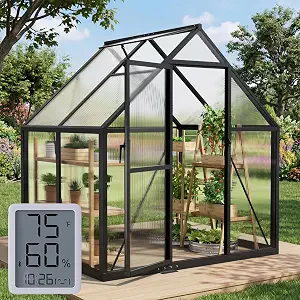 |
| Best Value The sweet spot between price and what you get | Ohuhu 4-Tier Mini Greenhouse with PE Cover and Iron Frame |  |
| Best Budget The cheapest option that still gets the job done reliably | HBlife Mini Stackable Clear Indoor Greenhouse (1‑Pack) |  |
| Highest Rated A top-rated pick with lots of positive feedback | EAGLE PEAK 8×6 Pop-Up Walk-In Greenhouse with Gable Roof |  |
| Most Popular A crowd favorite that many people choose with confidence | Pure Garden 4-Tier Mini Greenhouse with PVC Cover and Locking Wheels |  |
| Best Seller A high-volume bestseller chosen again and again | EAGLE PEAK 6×4 Pop-Up Walk-In Greenhouse |  |
EAGLE PEAK 8×6 Pop-Up Walk-In Greenhouse

| Size | 8×6 |
|---|---|
| Cover Material | Polyethylene (PE) |
| Frame Material | Alloy Steel |
| Number of Doors | 1 |
| Number Of Vents | 2 |
The EAGLE PEAK 8×6 pop-up greenhouse is a walk-in shelter aimed at extending the growing season and protecting plants from frost and light weather. Its preassembled alloy-steel frame uses extra steel reinforcement and a patented PeakPush center lock so one person can set it up quickly without tools. The PE cover is water-resistant and UV-filtering to help retain warmth and humidity, while the roll-up zippered door and mesh vents let you manage airflow and pest access. It includes stakes and guy ropes for added stability and a ground skirt you can weight down for windy conditions. Practical benefits include ample interior space for shelving or multiple pots, straightforward seasonal use for seed starting or fall protection, and replaceable covers or frames if components wear. Important limitations are that pop-up greenhouses are not engineered for heavy snow loads or sustained high winds so you will need to clear snow and add extra anchoring or weights during storms, and the PE cover will age faster than rigid glazing in strong sun over many seasons.
Best for: Gardeners who want an easy-to-assemble, walk-in greenhouse to start seeds, protect pots, and extend the growing season with minimal setup time and hands-on maintenance.
Less Ideal for: People needing a permanent, year-round structure for heavy snow loads or high-wind exposed sites should choose a rigid-glazed or anchored greenhouse instead.
- One-person, tool-free setup with patented center lock for fast assembly.
- Sturdy alloy-steel frame reinforced for better stability than typical pop-ups.
- Water-resistant, UV-filtering PE cover that traps warmth for season extension.
- Zippered roll-up door and mesh vents for adjustable ventilation and pest control.
- Not built to withstand heavy snow or severe winds without additional reinforcement.
- PE cover will wear faster than rigid glazing and may need replacement after prolonged sun exposure.
Verdict: Buy this if you want a roomy, one-person pop-up greenhouse that balances easy setup with a stronger steel frame for reliable seasonal protection.
Sylviera 6×4 ft Outdoor Greenhouse with Hygrometer and Ventilation
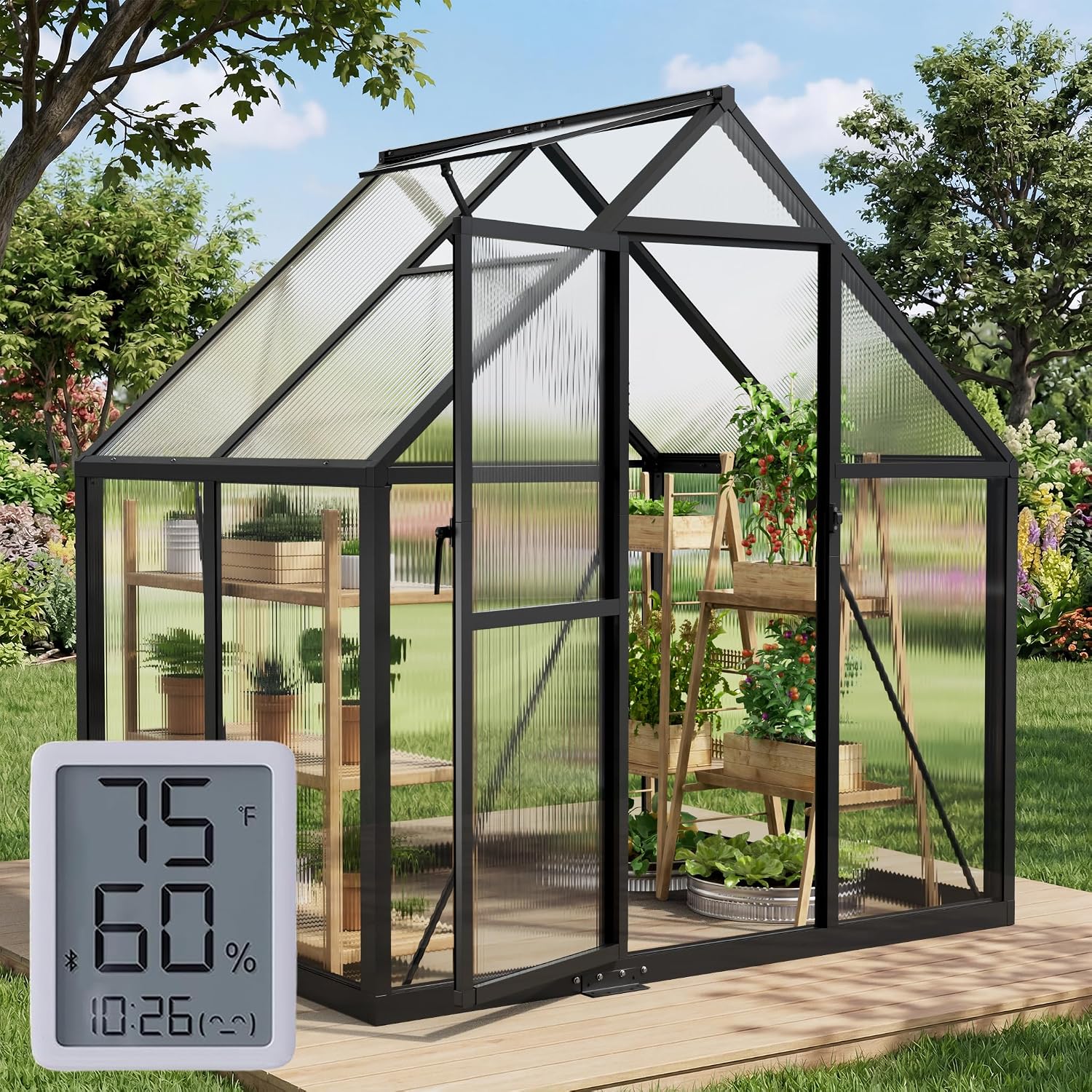
| Cover Material | Polycarbonate (PC) |
|---|---|
| Frame Material | Aluminum |
| Number Of Vents | 2 |
| Indoor Outdoor Usage | Outdoor |
This Sylviera 6×4 ft greenhouse is a small walk-in kit built to extend the growing season and protect plants from wind, rain, and light snow. It assembles from labeled aluminum frame pieces and 4mm double-wall polycarbonate panels that are UV resistant and let a lot of light through while reducing harmful rays. Typical use is backyard vegetable, herb, or seedling production where you need a controlled environment without moving to a larger structure. Notable features include two adjustable roof vents, a lockable door, and included thermometers or a hygrometer for basic climate monitoring. The aluminum frame and multiwall panels give a sturdier feel than thin plastic covers, and the panels can be sealed further with adhesive to improve rigidity in harsher weather. Limits are its compact footprint and 4mm panel thickness, which means it is best for light to moderate winter conditions rather than heavy snow loads, and assembly will require two people and careful following of instructions to avoid alignment issues. For growers focused on steady performance in a small footprint this greenhouse balances light transmission, ventilation, and year-round protection.
Best for: Gardeners who want a compact, reliable greenhouse to extend the season and produce vegetables, herbs, or seedlings with predictable environmental control in a backyard setting.
Less Ideal for: People needing a large production greenhouse or a structure rated for heavy, prolonged snowfall should consider larger, heavier-duty models instead.
- Aluminum frame with polycarbonate panels offers better rigidity and weather resistance than fabric covers
- 4mm double-wall polycarbonate panels are UV resistant and provide good light transmission while reducing UV exposure
- Adjustable roof vents and a lockable door give practical airflow control for temperature and humidity
- Includes basic climate monitoring (thermometers/hygrometer) to help manage growing conditions
- 4mm panels and small footprint are not suited for heavy snow loads or very large crops
- Assembly requires at least two people and careful alignment for a weather-tight fit
Verdict: A compact, performance-minded mini greenhouse that gives year-round protection and good ventilation for backyard vegetable and seedling growers.
Ohuhu 4-Tier Mini Greenhouse with PE Cover and Iron Frame

| Cover Material | Polyethylene (PE) |
|---|---|
| Frame Material | Iron |
| Number of Doors | 1 |
| Closure Type | Zipper |
This Ohuhu 4-tier mini greenhouse creates a sheltered microclimate for seedlings, herbs, and small potted plants while maximizing vertical space on balconies, patios, or in sunrooms. It uses a high-density polyethylene cover to retain heat and moisture and an iron frame that the brand describes as rust-resistant for outdoor use. The unit assembles without tools using a push-fit system, and adjustable shelf heights let you fit taller seedlings or small grow lights. Practical benefits include protection from wind, light frost, and pests plus organized storage for trays and pots; each shelf is intended to support heavier containers so you can load multiple plants. Limitations are typical for this size and construction: the PE cover reduces light transmission compared with clear PVC, it is not a permanent hard-structure greenhouse for storms, and long-term durability depends on care of the fabric cover and proper anchoring in windy locations. For gardeners focused on earlier starts, compact displays, or portable season extension, this model delivers an affordable, easy-to-use option.
Best for: Buyers who want a low-effort way to start seedlings earlier and protect small plants year-round in compact spaces, and who value easy assembly and visible social validation when choosing a reliable product.
Less Ideal for: Those needing a permanent, heavy-duty greenhouse for large plants or extreme weather protection should consider larger framed or hard-panel structures instead.
- High-density PE cover for improved heat retention and humidity control
- Rust-resistant iron frame for stable support
- Tool-free push-fit assembly and adjustable shelves for quick setup
- Compact vertical footprint that maximizes growing space in small areas
- PE cover transmits less light than transparent PVC so ornamental visibility is reduced
- Not designed as a permanent, heavy-duty structure for severe weather
Verdict: A simple, portable four-tier greenhouse that makes reliable early-season seed starting and small-space year-round gardening easy and low-effort.
HBlife Mini Stackable Clear Indoor Greenhouse (1‑Pack)

| Indoor Outdoor Usage | Indoor |
|---|---|
| Cover Material | Polyethylene (PE) |
| Frame Material | Plastic |
| Special Features | Easy to Clean, Stackable Design, Sturdy and Durable |
| Number of Packs | 1 |
This HBlife mini greenhouse is a small, clear indoor enclosure designed to shelter seedlings, herbs, and small potted plants on a windowsill, table, or narrow balcony railing. It assembles quickly without tools and uses a plastic frame with a PE cover that gives a transparent 360 degree view for easy monitoring. The magnetic door opens smoothly for routine watering and forms a water- and wind-resistant seal when closed, and the unit is stackable so you can expand vertically to maximize limited space. Practical benefits include simple cleaning, light protection from dust and drafts, and portability for moving plants to better light. Important limitations are its compact interior, which is suited only for short plants and seed trays, and the tendency for heat and humidity to build up if left sealed in direct sun, so occasional ventilation is necessary. It does not include lighting or a thermometer, so you will need separate grow lights or monitoring if you plan to use it in low-light spots.
Best for: Buyers who want an inexpensive, space-saving way to start seeds or keep a few herbs and small plants indoors, especially in apartments or tight outdoor spaces.
Less Ideal for: Gardeners who need a greenhouse for larger plants, multi-tiered production, or integrated lighting and environmental controls should look for a larger or more feature-rich unit.
- Compact, stackable design saves space and lets you expand vertically
- Magnetic door provides easy access and a waterproof, windproof seal
- Clear PE cover gives a full view for monitoring without opening
- Tool-free assembly and included gloves make setup quick and tidy
- Small internal volume limits use to seedlings, herbs, and short pots
- Can overheat or become excessively humid if left closed in direct sunlight
Verdict: A budget-friendly, space-saving mini greenhouse that protects seedlings and herbs while letting you stack units to make the most of small indoor areas.
EAGLE PEAK 8×6 Pop-Up Walk-In Greenhouse with Gable Roof

| Frame material | Powder-coated steel |
|---|---|
| Cover material | PE (water-resistant, UV-resistant) |
| Door type | Zippered roll-up doors |
| Ventilation | Mesh windows |
The EAGLE PEAK 8×6 pop-up walk-in greenhouse is built for straightforward, reliable backyard use. Its patented Peak Push Center Lock system lets one person open and secure the structure quickly without tools, so it is useful for seed starting, potting, and protecting small plants through seasonal changes. The gable roof increases headroom and airflow compared with flat-top pop-ups and accommodates shelving for organized staging. The PE cover is water-resistant and UV-resistant, and zippered roll-up doors plus mesh windows improve ventilation to help avoid overheating. A powder-coated, reinforced steel frame with extra tubing plus included guy ropes, stakes, and weight bags gives the structure added stability in typical outdoor conditions. Expect easy setup and effective all-weather protection for common small-plot gardening tasks, though it is a temporary-style greenhouse rather than a rigid, permanent structure and will need proper anchoring in very exposed sites.
Best for: Gardeners who want a dependable, easy-to-assemble small greenhouse for season extension, seed starting, and organized container work without committing to a permanent structure.
Less Ideal for: People seeking a permanent, heavy-duty greenhouse for year-round commercial production or for very exposed, high-wind sites where a rigid structure would be safer.
- One-person pop-up assembly with patented center lock system for fast, tool-free setup
- Gable roof design provides extra headroom and better airflow for working inside
- Water-resistant and UV-resistant PE cover protects plants from sun and rain
- Reinforced powder-coated steel frame with anchoring hardware for improved stability
- Designed as a portable/tent-style greenhouse so it is not as durable as permanent glass or polycarbonate structures
- Performance depends on proper anchoring; may need extra reinforcement in very windy locations
Verdict: A reliable, single-person pop-up greenhouse that delivers quick setup and solid season-extension protection for small garden spaces.
Pure Garden 4-Tier Mini Greenhouse with PVC Cover and Locking Wheels

| Number of Doors | 2 |
|---|---|
| Closure Type | Zipper |
| Weight Capacity | Maximum weight: 24 pounds |
| Cover Material | Polyvinyl Chloride (PVC) |
| Frame Material | Alloy Steel |
This 4-tier Pure Garden mini greenhouse provides a compact, movable environment for starting seedlings, growing herbs, and protecting small potted plants from frost. Assembly is tool-free and the tubular alloy steel frame plus clear PVC cover create a warm, sheltered space; the zippered roll-up door gives easy access and ventilation control. Each shelf is rated to hold up to 24 pounds, so it accommodates multiple trays, medium pots, or seed flats across four levels. Locking caster wheels make it simple to move the unit onto a porch or into a sunroom, and you can remove the wheels to keep it stationary outdoors. Practical benefits include season extension for vegetables and tender perennials and convenient organization of plants and supplies. Limitations are the lightweight PVC cover, which will need careful anchoring and protection from strong wind and prolonged sun exposure, and the modest shelf spacing that limits very large pots or tall plants.
Best for: Gardeners who want a versatile, space-efficient greenhouse to start seedlings, grow herbs, or protect small plants through cooler months and who value portability and simple setup.
Less Ideal for: Growers who need a heavy-duty, long-term outdoor greenhouse for large plants or commercial propagation should look for sturdier, larger climate-controlled options.
- Compact four-tier design fits seed trays and multiple small to medium pots
- Tool-free assembly with locking wheels for easy repositioning
- Clear PVC cover with zippered roll-up door for protection and ventilation
- Alloy steel tubular frame offers basic stability for everyday use
- PVC cover is lightweight and can deteriorate under prolonged sun or rough weather
- Shelf spacing and weight limits restrict use with large or heavy containers
Verdict: A practical, easy-to-move four-shelf greenhouse that extends the season for seed starting and small-plant growing in compact spaces.
EAGLE PEAK 6×4 Pop-Up Walk-In Greenhouse

| Size | 6×4 |
|---|---|
| Cover Material | Reinforced Polyethylene Film |
| Frame Material | Alloy Steel |
| Number of Doors | 1 |
| Number Of Vents | 2 |
The EAGLE PEAK 6×4 pop-up walk-in greenhouse is a compact, easy-to-use shelter for starting seeds, protecting tender plants from frost, and extending fall or early-winter growth. Its pre-assembled pop-up frame and patented center lock let one person erect the structure quickly without tools, and the reinforced polyethylene cover holds warmth and humidity while filtering light. Mesh windows and a roll-up zippered door provide straightforward ventilation and access, and included stakes and guy ropes help stabilize the unit in light to moderate winds. The alloy steel frame and powder-coated finish add durability compared with flimsy hobby tents, but because it is a lightweight pop-up design it still needs care in heavy snow or high winds and can require additional anchoring or weight bags for stormy weather. The greenhouse is best for patios, balconies, and small backyards where a simple, portable shelter is desirable rather than a permanent heavy-duty structure.
Best for: Buyers who want a small, reliable portable greenhouse they can set up alone to start seeds, overwinter plants, or extend the growing season in a patio or small yard with minimal fuss.
Less Ideal for: Gardeners needing a permanent, heavy-duty greenhouse for large crops or those in exposed, high-wind or heavy-snow climates should choose a framed, rigid structure instead.
- One-person, tool-free pop-up frame for quick setup
- Reinforced PE cover that retains warmth and is UV and water resistant
- Alloy steel frame with powder-coated finish for improved durability
- Zippered roll-up door and mesh windows for ventilation and easy access
- Pop-up design is not suited to heavy snow loads or extreme wind without extra anchoring
Verdict: A compact, one-person pop-up greenhouse that delivers easy setup and season-extension performance for small-space gardeners.
Choosing the Right Small Garden Greenhouse: Key Factors to Consider
Frame Material and Strength
The frame is the backbone of a small greenhouse and determines how well the structure stands up to wind, rain, and occasional snow. Metal frames vary from lightweight aluminum to thicker steel tubing; aluminum resists rust and stays lighter to move, while steel can offer greater rigidity if it is properly treated against corrosion. Plastic or PVC frames can be very portable and cheap, but they often flex under wind and can sag over time. For small garden greenhouses you will want a frame that anchors securely to the ground or to a heavy base and that tolerates the local weather you experience.
A stronger frame also supports shelving, hanging baskets, and added equipment such as small heaters or fans. Consider how the frame connects at joints and whether replacement parts are available. In a confined space, a slightly heavier but stiffer frame often gives you more usable years of service than the lightest possible option.
Covering Type and Light Transmission
Covering material affects how much light reaches plants and how well the greenhouse holds heat. Common coverings include polyethylene film, twin-wall polycarbonate panels, and clear PVC. Polyethylene film is inexpensive and easy to replace, but it degrades faster in sunlight and can tear. Twin-wall polycarbonate balances light diffusion with insulation and tends to last longer; it reduces hotspots and provides some thermal buffering for cold nights. Clear PVC gives high clarity but can trap heat and may yellow over time.
Think about the plants you plan to grow: seedlings and leafy greens thrive with bright, diffused light and moderate warmth, while sun-loving fruits may need higher light transmission. Also consider seasonal extremes. Better insulating coverings can reduce frost risk during cool nights, while ventilated or roll-up panels help prevent overheating on sunny days.
Ventilation and Temperature Management
Small greenhouses can heat up quickly on sunny days, making ventilation essential to prevent plant stress and fungal problems. Passive options include roof vents, louvered side vents, and roll-up doors that let you control airflow without power. Active ventilation can be achieved with small circulation fans or thermostat-controlled exhaust fans, which are useful if you maintain higher humidity crops or use the greenhouse for extended growing seasons.
Good ventilation also helps with pollination if you grow flowering crops in the space and reduces the risk of pest and disease buildup. Evaluate how easy it is to add vents or fans to the structure and whether openings can be secured to keep out pests while still allowing airflow.
Footprint, Layout, and Usable Growing Area
In small garden greenhouses every inch counts. Assess the external footprint versus internal usable area and the headroom available for shelves or taller plants. Narrow walkways and inset shelving can multiply usable space, but overly complex shelving can reduce flexibility. Rectangular or lean-to frame shapes may fit better against a wall or fence, while free-standing A-frame or dome styles offer more headroom but take slightly more footprint for the same internal volume.
Think about how you will organize benches, trays, and potting space. A greenhouse that allows vertical stacking or built-in shelving gives more growing capacity in a compact footprint. Also plan for door swing and access so you can easily move plants and equipment in and out.
Ease of Assembly and Maintenance
If a small greenhouse is difficult to assemble, you may defer setup until the season is partly gone. Look for clear instructions, labeled parts, and common fasteners that require basic tools. Some designs use snap-fit connections that speed assembly, while other durable frames require more bolts and time. Maintenance is also a consideration: can damaged covering panels be ordered and replaced easily, and are common wear parts user-serviceable?
Consider how you will clean the interior and exterior. Mold and algae can build up on coverings, and easy access for washing and replacing panes keeps light levels high. For portable units, evaluate how straightforward it is to disassemble and store the structure at season end.
Anchoring and Weather Resistance
Anchoring prevents a small greenhouse from shifting in wind and helps it resist uplift during storms. Common anchoring methods include ground stakes, auger anchors, or bolting to a wooden or concrete base. For small greenhouses located on patios or rooftops, weighted base systems or bolting to a fixed deck may be necessary. Weather resistance also covers how the structure deals with driving rain and snow load; consider sloped roofs for shedding precipitation and reinforced frames in areas that see snow.
Even compact greenhouses benefit from details like gasketed joints, overlapping covers, and drip edges that keep water out and prevent rot at base connections. Check whether the design channels water away from entryways and whether vents can be closed securely during storms.
Placement Strategies for Small Spaces
Choosing where to place a compact greenhouse is as important as choosing the structure itself. South-facing locations give the most winter light, while east-facing placements warm earlier in the day and avoid late-afternoon heat. Against a south- or west-facing wall you can use a lean-to greenhouse to gain reflected heat and save yard space.
Also consider proximity to water and power. Short hoses and extension cords make routine tasks easier, but keep electrical runs safe from puddles and avoid placing the greenhouse where runoff pools after rain.
- Allow clear access to the door and space to move plants in and out.
- Avoid low spots where cold air pools overnight.
- Use a level base to ensure panels seal and doors align correctly.
Seasonal Use and Crop Planning
Decide how you will use the greenhouse through the year. A small greenhouse is ideal for early-season seed starting, hardening off transplants, and sheltering frost-sensitive plants in shoulder seasons. Some gardeners also use compact greenhouses to extend fall harvests or carry containerized herbs through mild winters.
Plan crops by height and light needs so taller plants do not shade seedlings. Rotate space between staging benches and active growing benches as the season changes to keep light balanced and reduce pest build-up.
- Start seeds on lower shelves and move them to brighter benches as they grow.
- Use shade cloth during heat spikes to protect young plants.
- Schedule ventilation checks during hot spells to prevent overheating.
Maintenance Tips to Prolong Service Life
Regular maintenance keeps a small greenhouse performing well across seasons. Remove dead leaves and spilled soil promptly to reduce pests and disease. Clean coverings with mild soap and water to maintain light transmission and check seals for wear.
Inspect frame connections and tightening hardware after storms. Replace any cracked panels or torn films before the next period of heavy weather to avoid progressive damage.
- Lubricate sliding doors and hinges annually.
- Store removable covers or films indoors during long off-seasons to extend life.
- Label and store spare fasteners and small parts with the greenhouse manual.
Accessory Upgrades That Make a Difference
Certain accessories increase the usefulness of a small greenhouse without major alterations. Simple shelving units, rolling benches, and adjustable propagators let you increase plant capacity and adapt the layout quickly. Automatic vent openers use thermal expansion to lift vents at set temperatures, providing passive climate control.
For year-round use in mild climates, a small thermostat-controlled heater and a tiny circulating fan can prevent frost damage and reduce temperature stratification. Choose accessories sized to the compact volume to avoid overpowering the space.
- Install shelving that allows airflow under trays to reduce standing moisture.
- Use thermal mass such as water barrels in larger compact units to moderate temperature swings.
- Consider insect mesh screens for vents to keep out pests while allowing air exchange.
How We Chose the Best Small Garden Greenhouse
We focused on criteria that matter in everyday garden use for small greenhouses: structural strength, covering material, ventilation options, footprint and layout efficiency, and ease of assembly and maintenance. Structural strength covers frame material, anchoring, and resistance to wind and snow for small installations. Covering material looked at UV resistance, light transmission, and longevity under sun and temperature swings. Ventilation options evaluated passive vents, roll-up panels, and compatibility with small fans to avoid overheating. Footprint and layout efficiency considered usable growing area versus external dimensions and shelving compatibility. Ease of assembly and ongoing maintenance assessed tool needs, hardware clarity, and how simple it is to replace parts. We excluded oversized or commercial greenhouse systems and any structures requiring permanent foundations. We also filtered out flimsy temporary covers that offer little weather protection. Final selections were those that balanced compact footprint with reliable weather resistance and usable internal space.
FAQ
How much sunlight does a small greenhouse need each day?
Most vegetables and seedlings do best with at least six hours of bright light daily, but light quality in winter is lower so position the greenhouse where it receives the most sun. If full sun is limited, prioritize bright, diffused light and choose crops that tolerate lower light.
Can I leave a small greenhouse unattended during hot summer days?
You should not leave it completely unattended without passive or active ventilation because internal temperatures can rise rapidly. Passive vents or automatic openers help; for extended absences consider battery-powered fans or placing shade cloth over portions of the cover.
Do I need a foundation for a small garden greenhouse?
A permanent foundation is not always required for small units, but a level base improves sealing and door alignment. Options include compacted gravel, paving stones, or a simple treated timber base. Secure anchoring is important on any non-permanent base to resist wind uplift.
How do I prevent condensation and mold inside a compact greenhouse?
Improve airflow by adding vents, using circulation fans, and avoiding overcrowding plants. Water in the morning so surfaces dry during the day, and remove excess foliage that blocks air. Good ventilation and periodic cleaning are effective preventative measures.
What coverings last longest for a small greenhouse?
Rigid twin-wall polycarbonate generally lasts longer than thin polyethylene film and provides better insulation and light diffusion. However, longevity depends on exposure to strong sun and local weather; protective UV coatings and thicker panels increase service life.
Is it safe to use heaters and electrical equipment in a small greenhouse?
Yes, if you follow safe installation practices. Use equipment rated for outdoor or greenhouse use, keep cords off wet surfaces, and protect connections from moisture. Thermostat controls and tip-over or overheat shutoffs add safety when heating enclosed spaces.
How do I winterize a small greenhouse in colder climates?
Add insulation where possible, seal gaps, and use thermal covers for young plants on cold nights. Remove snow from sloped roofs promptly and reinforce anchors. For prolonged freezing, consider moving container plants indoors or providing supplemental heat.
Final Verdict
A small garden greenhouse is a practical way to extend your season, protect tender plants, and make the most of limited outdoor space. Prioritize a sturdy frame, durable covering, and good ventilation for everyday reliability, and choose a footprint and layout that suit how you work in the garden. Tradeoffs are inevitable: the most compact designs sacrifice some headroom or shelving space, while heavier-duty options may require more effort to assemble. Focus on the criteria most important for your climate and planting plans to pick a compact greenhouse that fits your routine and delivers reliable seasons of use.
