
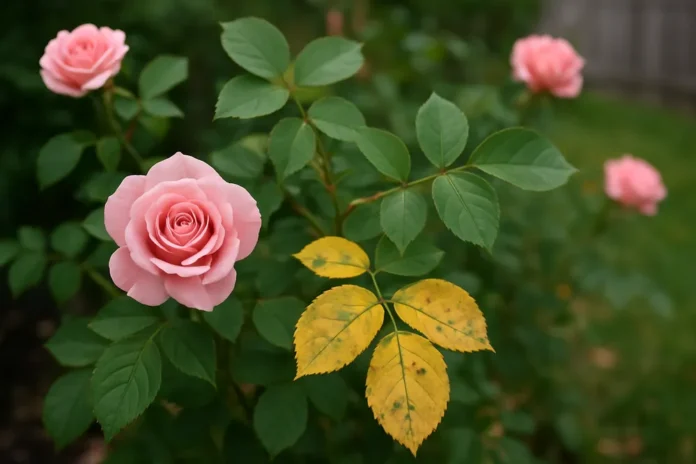
Rose leaves usually turn yellow because of watering stress, nutrient imbalance, poor drainage, pests, disease, or normal leaf aging. The exact cause often depends on whether the yellowing is widespread, patterned, or limited to older leaves.
Seeing rose leaves turning yellow can be frustrating, especially when the plant was healthy and blooming just weeks ago. Yellow foliage is one of the most common rose problems in home gardens, and it can show up for several different reasons, from simple watering mistakes to nutrient deficiencies and fungal disease.
The good news is that yellowing leaves do not always mean your rose is dying. Sometimes the plant is shedding older leaves naturally, but in other cases the color change is an early warning sign that roots, soil, or overall plant health need attention. Once you match the yellowing pattern to the most likely cause, it becomes much easier to correct.
What Yellow Rose Leaves Usually Mean
Yellow leaves are a stress signal, not a diagnosis by themselves. Roses respond to root stress, nutrient shortages, weather swings, and disease by reducing chlorophyll in affected leaves. That loss of green color may happen evenly across the leaf, between the veins, around the edges, or only on lower foliage.
The pattern matters. If older bottom leaves are yellowing first, the issue is often normal aging, nitrogen deficiency, or water stress. If newer leaves are yellow with green veins, an iron-related chlorosis problem is more likely. If yellowing comes with black spots, fuzzy growth, holes, or distorted leaves, pests or disease should move to the top of your list.
- A few old yellow leaves near the base can be normal
- Many yellow leaves at once usually point to stress
- Yellowing with wilting often suggests root or watering trouble
- Yellowing with spotting or lesions often suggests disease
- Yellowing on new growth may indicate a micronutrient issue or root damage
Watering Problems Are the Most Common Cause
Overwatering and Soggy Soil
Roses need consistent moisture, but they do not like sitting in saturated soil. When roots stay too wet, they cannot pull in oxygen properly. That stress often shows up as widespread yellow leaves, a dull overall appearance, and sometimes soft stems or leaf drop. In containers, overwatering is especially common because potting soil can stay wet longer than expected when drainage is poor.
If the soil feels wet several inches down for days at a time, or if the planting area puddles after rain, excess moisture may be the main problem. Roots under chronic wet conditions can also begin to rot, which makes yellowing worse and harder to reverse.
Underwatering and Drought Stress
Too little water can also turn rose leaves yellow, especially during hot, windy weather. A thirsty rose may first look limp or slightly gray-green, then develop yellowing on lower leaves before dropping them to conserve moisture. Newly planted roses are much more vulnerable because their roots have not spread deeply yet.
Drought stress is common when gardeners water too lightly and too often. That pattern wets only the surface and encourages shallow roots. Deep, infrequent watering is usually better than a daily sprinkle.
- Signs of overwatering: constantly wet soil, yellow leaves across the plant, leaf drop, poor vigor, possible mushy roots
- Signs of underwatering: dry soil, drooping in heat, crisp edges, yellowing lower leaves, buds that fail to open well
- Container roses: dry out faster in summer but can still suffer if drainage holes are blocked
- Newly planted roses: need more regular moisture than established shrubs
Nutrient Deficiencies and Soil Chemistry Can Trigger Yellowing
Nitrogen Deficiency
Nitrogen helps roses produce leafy green growth. When it is lacking, older leaves often turn pale green, then yellow, and growth may become weak or sparse. This is more common in poor soils, very sandy beds, or plants that have not been fed during the growing season.
Iron Chlorosis and High pH Soil
If young leaves turn yellow while veins stay greener, iron chlorosis is a strong possibility. Roses can struggle to take up iron when soil pH is too high, even if iron is technically present in the soil. This problem is common in alkaline soils and in beds watered repeatedly with hard water.
Magnesium and Other Imbalances
Magnesium deficiency can cause yellowing between veins, often beginning on older leaves. Excess fertilizer salts can also interfere with nutrient uptake and create deficiency-like symptoms. In other words, yellow leaves may come from either too little feeding or too much of the wrong kind.
A rose that blooms heavily every year pulls a lot from the soil. If it has been in the same spot for many seasons without compost or a balanced rose fertilizer, nutrient depletion becomes more likely.
- Older leaves yellowing evenly often suggests nitrogen shortage
- New leaves yellow with greener veins often points to iron chlorosis
- Yellowing between veins on older leaves may suggest magnesium deficiency
- High soil pH can lock up nutrients even when fertilizer is present
- Too much fertilizer can burn roots and mimic deficiency symptoms
Poor Drainage and Root Stress Often Hide Below the Surface
Sometimes the real problem is not how often you water but how the soil handles water. Compacted clay, low spots, buried construction debris, and dense mulch piled against the crown can all interfere with healthy roots. When roots are stressed, the foliage often turns yellow because the plant cannot move water and nutrients efficiently.
Transplant shock is another common cause. A newly planted rose may yellow and shed some leaves while adjusting to its new location. This is especially true if planting happened during hot weather, roots were disturbed, or the root ball dried out before planting.
Container roses can become root-bound, which also limits moisture and nutrient uptake. If roots circle densely inside the pot, yellow leaves may appear even when you water and feed regularly.
- Heavy clay soil can stay wet too long after rain
- Compacted soil reduces oxygen around roots
- Mulch piled directly on the crown can hold too much moisture
- Recent transplanting can cause temporary yellow leaf drop
- Root-bound container roses may yellow despite good care
Pests and Diseases That Cause Yellow Leaves on Roses
Black Spot
Black spot is one of the most common rose diseases in many U.S. gardens. It usually starts as dark circular spots with fringed edges on leaves. The tissue around those spots turns yellow, and badly infected leaves often drop early. Humid weather, overhead watering, and crowded growth make black spot worse.
Spider Mites
Spider mites are tiny pests that suck plant juices, often during hot, dry weather. Their feeding creates fine stippling that can make leaves look pale, bronzed, or yellow. Heavy infestations may also produce delicate webbing on the undersides of leaves.
Aphids and Other Sap-sucking Insects
Aphids usually target tender new growth and buds, but repeated feeding can weaken the plant and contribute to yellowing. Thrips, whiteflies, and scale can create similar stress. These pests are more likely when a rose is already under heat or water pressure.
Rose Mosaic Virus and Other Chronic Issues
Some roses show yellow mottling or unusual line patterns due to viral issues such as rose mosaic virus. This type of yellowing tends to look different from uniform nutrient stress and does not clear up with fertilizer. While some infected plants continue to perform reasonably well, they rarely return to perfectly healthy foliage.
- Black spot causes yellowing around dark lesions and early leaf drop
- Spider mites cause stippling, bronzing, and fine webbing
- Aphids cluster on soft growth and reduce vigor
- Scale insects can sap energy and contribute to pale foliage
- Viral yellow patterns are often irregular and persistent
Environmental Stress and Seasonal Leaf Loss
Roses react strongly to weather changes. A spell of intense heat can cause lower leaves to yellow and drop, especially if the plant is trying to support blooms at the same time. Cool, wet weather can lead to slower growth and temporary chlorosis. Sudden temperature swings after planting or pruning can do the same.
Late in the season, some yellowing is normal as deciduous roses prepare for dormancy. Older interior leaves naturally age out, particularly on large shrubs with dense growth. If the plant is otherwise healthy and the yellowing is limited, there may be little to worry about.
Too much shade can also play a role. Roses generally bloom and grow best with at least six hours of direct sun. In shadier locations, leaves may yellow more easily because the plant cannot photosynthesize strongly enough to maintain dense, healthy foliage.
- Heat stress often triggers lower leaf yellowing and drop
- Seasonal aging affects older interior leaves first
- Insufficient sun can reduce vigor and leaf color
- Wind exposure can dry plants quickly and intensify stress
- Recent pruning can briefly shift the plant's energy and affect foliage
How to Fix Yellowing Rose Leaves
Start with the basics before reaching for fertilizer or sprays. Roses recover best when the root zone, watering routine, and growing conditions are corrected first. Once those are stable, you can target nutrient shortages, pests, or disease more accurately.
- Check soil moisture several inches down to determine whether the plant is too wet or too dry.
- Improve drainage if water stands after rain or the planting bed stays soggy.
- Water deeply and less often rather than giving frequent shallow drinks.
- Feed with a balanced rose fertilizer if the plant has not been fertilized and growth is pale or weak.
- Test soil pH if new leaves are yellow with green veins or if chlorosis keeps returning.
- Remove badly diseased leaves from the plant and the ground to reduce reinfection.
- Inspect leaf undersides and stems for mites, aphids, scale, or webbing.
- Make sure the rose gets enough direct sun and airflow.
If black spot is the issue, sanitation and airflow are important, and many gardeners also use a labeled fungicide during favorable disease weather. If pests are present, a strong spray of water, insecticidal soap, or horticultural oil may help depending on the pest. If high pH is causing iron chlorosis, lowering pH gradually and using an iron product suited to alkaline conditions can improve new growth.
Do not expect yellow leaves to turn fully green again. In most cases, recovery shows up as healthier new growth rather than reversal of older damaged foliage.
When Yellowing Is Normal and when to Worry
It is normal for a rose to lose some older leaves during the season, especially low on the plant or deep in the interior where light is limited. A small amount of yellowing after transplanting, during a heat wave, or near dormancy is also common.
You should pay closer attention if yellowing spreads quickly, affects the whole plant, appears on new growth, or comes with black spots, wilt, stem dieback, poor blooming, or foul-smelling soggy soil. Those combinations usually indicate a more serious root, disease, or nutrient problem.
- Usually normal: a few older lower leaves yellowing, mild seasonal shed, brief transplant stress
- More serious: whole-plant yellowing, rapid leaf drop, yellow new growth, black spotting, mushy roots, repeated decline
FAQ
Should I Remove Yellow Leaves From My Rose?
Yes, you can remove yellow leaves, especially if they are spotted, diseased, or already dropping. If the yellowing is from temporary stress, focus more on correcting the cause than stripping every affected leaf.
Can Too Much Fertilizer Make Rose Leaves Turn Yellow?
Yes. Excess fertilizer can burn roots and interfere with water and nutrient uptake, which may lead to yellow leaves, brown edges, or weak growth.
Why Are Only the Bottom Leaves on My Rose Turning Yellow?
Bottom leaves often yellow first from normal aging, drought stress, overwatering, or nitrogen deficiency. If the rest of the plant looks healthy, a few yellow lower leaves are usually not a major concern.
Do Yellow Leaves Mean My Rose Has Black Spot?
Not always. Black spot usually causes yellowing around distinct dark lesions, but plain yellow leaves can also come from watering issues, nutrient problems, root stress, pests, or seasonal aging.
Will Yellow Rose Leaves Turn Green Again?
Usually no. Once a leaf has yellowed significantly, it often stays damaged and may drop. Improvement is normally seen in newer leaves after the underlying issue is corrected.
Can Roses Get Yellow Leaves in Pots More Easily than in the Ground?
Yes. Container roses dry out faster, heat up more quickly, and can suffer from poor drainage or root crowding, all of which make yellowing more likely.
Does Epsom Salt Fix Yellow Leaves on Roses?
Only if the problem is related to magnesium deficiency, which is not the most common cause of yellow leaves. Using Epsom salt without a clear need can distract from the real issue.
Need the right fix fast? Explore our rose care guides and recommended fertilizers, fungicides, and pest controls to restore healthy green growth and better blooms.
