
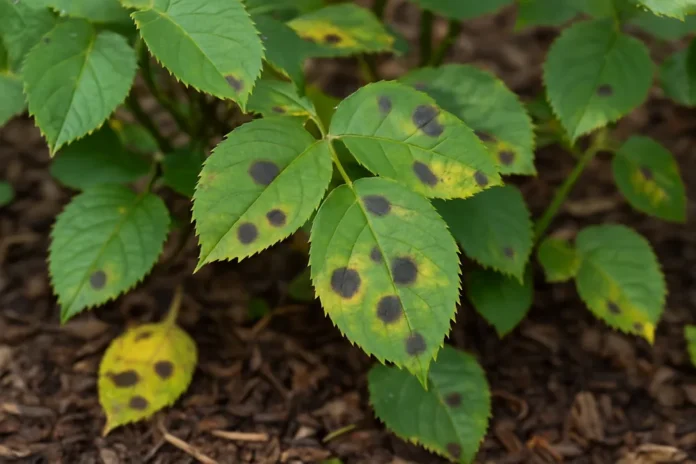
Black spots on a rose plant are usually caused by black spot disease, a common fungal infection that spreads in warm, wet conditions. Stress from poor airflow, overhead watering, and crowded growth often makes it worse.
If your rose plant has black spots, the most likely cause is a fungal disease called black spot. It is one of the most common rose problems in home gardens, especially during warm, humid weather or after long periods of rain.
The spots usually begin as small dark marks on leaves, then expand and cause yellowing around them. Over time, affected leaves drop early, the plant looks thin and weak, and flowering may slow down. The good news is that black spots on roses are very manageable once you understand what is causing them and how to break the disease cycle.
In some cases, the issue is not just the fungus itself but also the growing conditions around the plant. Wet leaves, poor air circulation, crowded canes, and debris left under the bush all help the disease spread faster.
What Black Spots On Roses Usually Mean
On roses, black spots most often point to black spot disease, a fungal infection caused by *Diplocarpon rosae*. This disease affects leaves first, though severe infections can also weaken stems and reduce blooms. It is extremely common in many parts of the U.S., especially where spring and summer bring regular moisture.
The classic symptom is a round to irregular black spot with feathery or fringed edges on the upper leaf surface. As the infection grows, the area around the spot often turns yellow. Eventually the leaf drops, starting from the lower part of the plant and moving upward.
- Small black or deep purple leaf spots
- Yellowing around the spots
- Premature leaf drop
- Bare lower canes with sparse growth at the top
- Reduced vigor and fewer flowers
A few spots may not seem serious at first, but repeated defoliation weakens the rose. When a plant loses leaves again and again, it has less energy for root growth, flowering, and winter survival.
Why Black Spot Develops So Easily
Black spot thrives when rose leaves stay wet for several hours. Rain, overhead irrigation, heavy dew, and dense foliage create the perfect environment for spores to germinate. Once the disease starts, water splashing from leaf to leaf spreads it quickly.
The fungus also overwinters on fallen leaves and infected canes. That means your rose may look fine early in the season, then become infected again when spring rains splash old spores back onto fresh growth.
Conditions That Encourage Black Spot
- Warm temperatures with frequent rain or humidity
- Leaves that stay wet overnight
- Overhead watering late in the day
- Crowded plantings with poor airflow
- Shade that slows leaf drying
- Old infected leaves left under the plant
- Susceptible rose varieties
Even healthy roses can develop black spot in favorable conditions, but stressed plants usually show more damage. A rose that is underfed, drought stressed, root bound, or crowded often struggles to outgrow the infection.
Common Causes Behind Black Spots On Rose Plants
Black Spot Fungus
This is the main cause in most home gardens. The fungus infects leaves during wet weather and spreads by water splash. Symptoms usually begin on older lower leaves and then move upward if conditions stay favorable.
Overhead Watering
Sprinklers and hand watering from above do not create the disease on their own, but they do make it much easier for spores to spread. They also keep the foliage wet longer, especially when used in the evening.
Poor Airflow
Roses planted too close together, against solid fences, or surrounded by dense shrubs dry slowly after rain. That extended leaf wetness increases infection pressure.
Infected Leaf Litter
Fallen rose leaves are a major source of recurring infections. If they stay under the plant through winter and spring, the fungus can survive and restart the cycle.
Susceptible Rose Varieties
Some roses are naturally more prone to black spot than others. Hybrid teas and older garden roses can be especially susceptible, while many newer shrub roses are bred for better disease resistance.
General Plant Stress
Stress does not directly cause fungal spots, but it makes the plant less able to recover. Irregular watering, depleted soil, winter injury, or excessive shade can all worsen the appearance of the problem.
Other Problems That Can Look Similar
Although black spot disease is the most likely explanation, not every dark mark on a rose leaf is the same problem. A few other issues can resemble black spot at first glance.
Cercospora Leaf Spot
This fungal disease can create small circular spots that are purple, brown, or black. Unlike classic black spot, the margins may look more defined and the center can turn tan or gray as it ages.
Anthracnose
Anthracnose may cause irregular dark lesions on leaves, especially during wet periods. The spots can merge and create larger dead patches.
Chemical Burn
Improperly mixed sprays, fertilizer splash, or herbicide drift can leave blackened or scorched spots on foliage. These marks often appear suddenly and may affect exposed leaves unevenly.
Physical Damage
Hail, wind abrasion, or sunscald after sudden heat can darken damaged tissue. These spots usually lack the yellow halo and steady spread typical of black spot fungus.
If the spots are clearly expanding, surrounded by yellowing, and followed by leaf drop, black spot disease remains the strongest suspect.
How To Tell If It Is Really Black Spot Disease
You can often diagnose black spot by looking at the pattern of damage. Start with the oldest leaves near the bottom of the plant. If those leaves show dark spots with yellowing and are dropping early, the diagnosis is usually straightforward.
- Spots are black or very dark purple
- Edges look feathery rather than perfectly smooth
- Yellowing forms around the spots
- Lower leaves are affected first
- Leaves fall off after spotting
- The problem worsens after rainy or humid weather
A hand lens can help, but most home gardeners do not need one. The combination of dark spots, yellow halos, and defoliation on roses is usually enough to separate black spot from minor cosmetic leaf damage.
If you are unsure, bring a few affected leaves to a local extension office or independent garden center. A quick confirmation can save time and prevent unnecessary spraying.
How To Treat Black Spots On A Rose Plant
Treatment works best when you combine cleanup, pruning, and protective fungicide use. Sprays alone rarely solve the problem if infected leaves and wet conditions remain.
Remove Infected Leaves
Pick off badly spotted leaves from the plant if the infection is light. Rake up every fallen leaf underneath the rose. Do not compost heavily infected material unless your compost pile reaches temperatures high enough to kill disease organisms.
Prune for Airflow
Thin crowded interior growth so air can move through the plant. Remove weak, crossing, or congested canes. Better airflow helps leaves dry faster after rain or irrigation.
Water at the Base
Switch to drip irrigation, a soaker hose, or careful hand watering at soil level. Morning watering is best because any moisture that reaches the foliage has time to dry quickly.
Apply a Labeled Fungicide
For active black spot, many gardeners use fungicides labeled for roses and ornamental fungal diseases. Common active ingredients include chlorothalonil, myclobutanil, propiconazole, sulfur, copper, and neem-based products, depending on the product and region. Always follow the label exactly, including reapplication intervals and temperature precautions.
Organic options can help, especially when started early, but they usually work best as protectants rather than cures. Once leaves are badly infected, those leaves will not turn green again. The goal is to protect new growth and stop further spread.
Support New Healthy Growth
Keep the rose evenly watered and feed it appropriately for the season. A healthy rose can replace lost leaves faster and resume blooming sooner after infection pressure drops.
- Clean up infected leaves on the plant and the ground.
- Prune for light and airflow.
- Water only at the base of the plant.
- Spray a labeled fungicide on a regular schedule if needed.
- Continue sanitation so reinfection slows down.
How To Prevent Black Spots From Coming Back
Prevention matters because black spot is easier to stop early than to reverse once a rose has lost a lot of foliage. In areas with humid summers, routine prevention is often part of normal rose care.
- Plant roses in full sun where leaves dry quickly
- Space plants well and avoid overcrowding
- Prune yearly to open the center of the bush
- Water the soil, not the leaves
- Mulch the soil to reduce spore splash from the ground
- Remove fallen leaves through the growing season
- Clean beds thoroughly in fall and early spring
- Choose disease-resistant rose varieties when planting new roses
Mulch is especially helpful because it forms a barrier between the soil surface and the lower leaves. That reduces splash-up when it rains and helps keep spores from moving back onto fresh foliage.
If black spot is a yearly issue in your climate, a preventive fungicide schedule started at the first sign of spring growth may be worthwhile. This is common in regions with long humid seasons, but it should always be based on the product label and your local growing conditions.
When Black Spots Become A Bigger Concern
A few affected leaves are frustrating but not usually disastrous. The bigger concern is repeated severe defoliation. If your rose loses leaves several times in one season, it can become too weak to bloom well, establish strong roots, or head into winter in good shape.
Watch more closely if the plant is young, recently transplanted, already stressed by drought, or growing in a container. These roses have fewer reserves and may struggle more with disease pressure.
Signs the Problem Is Becoming Serious
- Most lower leaves have dropped
- New leaves quickly develop fresh spots
- Blooming has slowed sharply
- Canes look weak or stunted
- The plant has recurring infections every year despite basic care
If the rose repeatedly struggles in the same location, the long-term fix may be improving the site or replacing the plant with a more disease-resistant variety rather than relying only on treatments.
Best Long Term Strategy For Healthy Roses
The best long term approach is to think of black spot as a cycle to interrupt. The fungus needs moisture, susceptible leaves, and a source of spores. When you reduce any of those, the disease pressure drops.
For most home gardeners, the simplest winning combination is this: grow roses in sun, keep foliage dry when possible, remove infected debris promptly, and choose resistant varieties for future planting. Add fungicide protection only when conditions and plant history suggest it is needed.
That practical routine will not make every leaf perfect, especially in rainy climates, but it usually keeps the plant healthy enough to stay leafy, bloom well, and recover quickly from occasional disease flare-ups.
FAQ
Will Black Spots on Rose Leaves Go Away on Their Own?
Infected leaves will not heal or turn fully green again. If weather becomes dry, the spread may slow, but the existing damage stays and the plant can keep dropping leaves.
Should I Remove Every Spotted Rose Leaf?
Remove heavily infected leaves that are easy to reach, and always clean up fallen leaves. If you strip too many leaves at once from a badly affected plant, you can add stress, so focus on sanitation and protecting new growth.
Can I Compost Rose Leaves with Black Spot?
It is safer to discard them unless you maintain a hot compost system that reliably kills plant pathogens. Many backyard piles do not heat evenly enough to do that.
Is Black Spot Worse in Shade?
Yes. Roses growing in shade or crowded conditions dry more slowly after dew or rain, which gives fungal spores more time to infect the leaves.
Can Overwatering Cause Black Spots on Roses?
Too much water in the soil does not directly create black spot, but overhead watering and constantly wet foliage strongly encourage it. Poor drainage can also stress the plant and make disease problems worse.
What Is the Best Spray for Black Spot on Roses?
The best spray is a fungicide labeled for black spot on roses and suitable for your growing conditions. Products vary by active ingredient, so always follow the label and rotate modes of action when appropriate.
Do Some Roses Resist Black Spot Better than Others?
Yes. Many modern shrub roses are bred for stronger disease resistance, while some older and more ornamental varieties are much more prone to spotting and leaf drop.
Need a treatment that actually works? See our guide to the best rose fungicides and disease-resistant rose varieties so you can stop black spot faster and keep your plants blooming.
