

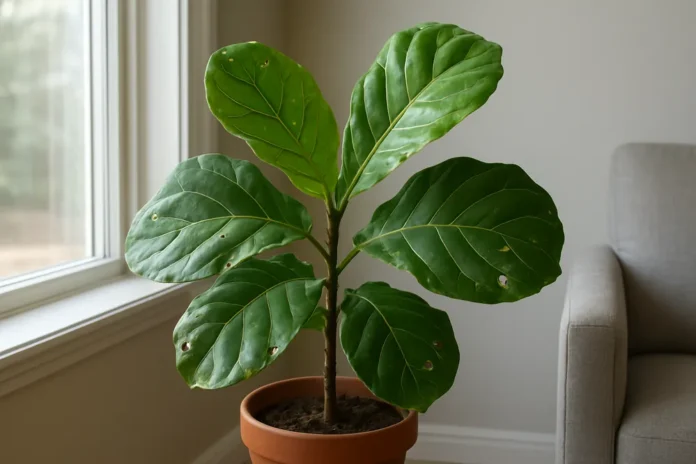
Fiddle leaf fig leaves usually get holes from physical tearing, insect feeding, or stress while new leaves are developing. Dry air, rough handling, and leaf damage that happened before the leaf fully opened are especially common causes.
Seeing holes show up in your fiddle-leaf fig can be alarming, especially when the rest of the plant looks healthy. In many cases, holes in leaves are not caused by disease at all. They often happen because a leaf was damaged while it was still soft and folded, or because indoor conditions caused weak, brittle growth.
The tricky part is that holes in leaves can come from several different issues that look similar at first glance. Pest feeding, low humidity, accidental tearing, sun scorch, and old physical damage can all leave openings in the leaf blade. Once you know what pattern to look for, it becomes much easier to tell whether the problem is active or just cosmetic.
What Holes in Fiddle Leaf Fig Leaves Usually Mean
A hole in a fiddle leaf fig leaf is simply missing tissue. The important question is how that tissue disappeared. If the leaf developed a weak spot while it was still curled up, it may later open with a split or neat hole. If insects fed on the leaf, you may see ragged edges, tiny black specks, webbing, or distorted new growth. If the leaf was bruised, bent, or rubbed against something, the injured area may dry out and fall away later.
Unlike yellowing or root rot symptoms, holes are often a record of past damage rather than a sign of a current emergency. That is why older leaves may show damage while new leaves look fine. The key is learning whether the issue is spreading.
- A few isolated holes on older leaves often point to past physical damage.
- Holes plus sticky residue, webbing, or speckling suggest pests.
- Holes that appear as a new leaf opens often point to dryness or tearing during unfurling.
- Brown crispy patches that later break open can follow sunburn or severe dryness.
Physical Damage Is One of the Most Common Causes
Leaves Can Tear Before You Even Notice It
Fiddle leaf fig leaves are broad, thin, and easy to damage. A leaf may get bumped while you move the plant, rubbed against a wall, pinched while still folded, or bent during shipping. The injured area weakens, dries, and later becomes a hole or split. This is especially common on large indoor plants placed in tight corners, near doorways, or next to furniture.
New Leaves Are Especially Vulnerable
When a new leaf is still rolled up, even a tiny injury can turn into a visible hole once the leaf expands. You may think the leaf emerged damaged overnight, but the real injury probably happened days earlier. This type of damage usually looks clean rather than chewed.
- Damage is limited to one or two leaves.
- Edges may look torn instead of eaten.
- The rest of the plant appears firm and healthy.
- No signs of bugs, spots, or sticky residue are present.
Low Humidity Can Cause Tearing and Weak New Growth
Fiddle leaf figs are tropical plants, and indoor air in many U.S. homes gets very dry, especially in winter or in air-conditioned rooms. When humidity is too low, new leaves can stick to their protective sheath as they unfurl. Instead of opening smoothly, they tear, stretch, or split. Those tears may look like holes once the leaf fully opens.
Low humidity often causes more than just holes. You may also notice crispy brown leaf edges, slowed growth, or leaves that look crinkled or deformed. The plant is not being eaten. It is struggling to produce supple, resilient tissue.
Signs Dry Air Is the Culprit
- Damage shows up mostly on newer leaves.
- Leaves may look stuck, wrinkled, or misshapen as they open.
- Brown dry margins may appear along the edges.
- The problem gets worse during heating season or near vents.
Pests Can Chew or Weaken Leaf Tissue
Indoor pests are another possible cause, though they are not always the first one. Fiddle leaf figs can attract spider mites, thrips, mealybugs, and scale. Some pests feed by piercing tissue and sucking sap, which can leave tiny dead patches that later crack or fall out. Others scar the leaf surface so badly that damaged areas become papery and tear open.
Spider Mites and Thrips Are Common Suspects
Spider mites usually cause fine speckling, dull leaves, and very light webbing, especially on leaf undersides and around stems. Thrips can cause silvering, scarring, and distorted new growth. Neither pest typically creates large cartoon-like bite holes the way outdoor caterpillars do, but the tissue they damage can break down and open up later.
What Pest Damage Often Looks Like
- Tiny pale dots or stippling across the leaf surface
- Silvery streaks or bronzed patches
- Small black specks from insect waste
- Webbing, especially with spider mites
- Distorted or scarred new leaves
If you find actual insects or repeated damage on fresh growth, pests are much more likely than old physical injury.
Sun Scorch and Dry Spots Can Later Become Holes
Fiddle leaf figs like bright light, but a sudden move into harsh direct sun can scorch tender leaves. Sunburn often starts as pale tan, bleached, or crispy brown patches. Once that damaged tissue dries out enough, it can crack, crumble, or fall away, leaving a hole.
This is more likely when a plant has been grown in lower light and then moved abruptly to a hot south- or west-facing window, sunroom, or outdoor patio. New growth is especially sensitive during the adjustment period.
- Holes appear in or near tan, dry, papery areas.
- Damage is heaviest on the side facing the strongest light.
- Leaves may also show bleaching or brown patches.
- The issue started after a lighting change.
Water Stress Can Make Leaves More Fragile
Inconsistent watering does not usually punch holes directly into leaves, but it can weaken them enough that they tear or develop dead patches. A plant that gets too dry may produce brittle tissue and crisp edges. A plant that stays too wet may struggle to support healthy new growth, which can emerge thin, soft, and easy to damage.
This is why holes sometimes show up alongside other stress symptoms such as drooping, leaf drop, brown edges, or slowed growth. Watering problems rarely act alone. They tend to lower the plant's overall resilience, making damage from dryness, light stress, or handling more likely.
Clues That Water Stress Is Contributing
- Soil swings from bone dry to soggy.
- Leaves droop before damage appears.
- Brown edges or brown spots accompany the holes.
- The pot has poor drainage or the root ball dries unevenly.
Could a Disease Be Responsible?
Leaf holes on fiddle leaf figs are much less often caused by disease than by pests or physical stress. Most common leaf diseases on houseplants create spots, yellow halos, mushy lesions, or widespread decline rather than neat openings. However, if a leaf develops a dead patch from bacterial or fungal damage, that patch can eventually dry and fall out.
Disease becomes more likely if your plant has persistently wet foliage, very poor airflow, or black and water-soaked spots that enlarge over time. Even then, the holes are usually a secondary result of dying tissue, not the first symptom.
- Black or dark brown lesions that spread
- Yellow halos around damaged tissue
- Soft, wet-looking patches instead of crisp tears
- Multiple leaves developing new spots at once
How to Tell Old Damage From an Active Problem
The biggest mistake gardeners make is treating every hole like a current infestation. A hole will never fill back in, so damaged leaves can stay on the plant for months even after the real cause is gone. That is why it helps to watch the newest leaves closely.
If old leaves have holes but new leaves are opening normally, the problem may already be over. If each new leaf comes out scarred, torn, speckled, or deformed, you are dealing with something active such as low humidity, pests, or repeated physical stress.
A Simple Way to Interpret the Pattern
- Only older leaves are affected: likely past damage.
- Only newest leaves are affected: likely humidity, unfurling damage, or pests.
- Damage appears after moving or rotating the plant: likely physical stress or sun exposure.
- Damage spreads with speckling or webbing: likely pests.
- Damage follows brown crispy patches: likely dryness or scorch.
What to Do to Stop New Holes From Forming
The fix depends on the cause, but the goal is the same: help the plant produce strong, flexible new leaves. Start by placing the plant in bright, indirect light or gentle morning sun, not harsh midday exposure. Keep it away from heater vents, drafts, and spots where leaves rub against walls or traffic paths.
Water thoroughly when the top inch or two of soil feels dry, then let excess drain away. Try to keep the moisture level steady rather than cycling between very dry and very wet. If indoor air is dry, use a humidifier nearby or group tropical plants together to slightly raise humidity around them.
Inspect the upper and lower leaf surfaces weekly. Wipe dust off leaves so you can spot pests early, and isolate the plant if you see webbing, sticky residue, or active insects. When new leaves start to emerge, avoid touching or forcing them open. Let them unfurl naturally.
- Provide stable bright light.
- Keep humidity moderate, especially during winter.
- Water consistently in a pot with drainage.
- Protect leaves from rubbing, bending, and bumps.
- Monitor for spider mites and thrips on new growth.
Should You Remove Damaged Leaves?
If a leaf has only a small hole but is otherwise green and healthy, leave it in place. The plant still uses that leaf for photosynthesis. Removing too many imperfect leaves can slow recovery and make the plant look thinner.
It makes sense to remove a leaf if it is mostly damaged, heavily infested, or visually bothersome to you. Use clean pruners and avoid stripping too many leaves at once. Cosmetic damage does not mean the leaf is useless.
When Holes Are a Sign You Need to Act Fast
Most hole problems are manageable, but a few red flags deserve quick attention. If you see rapid damage on tender new leaves, visible insects, widespread leaf drop, or signs of stem and root problems, the issue may be progressing beyond simple cosmetic tearing.
- Multiple new leaves are emerging torn or distorted.
- Fine webbing or moving insects are visible.
- Leaves also have black spots, mushy areas, or yellowing.
- The plant is dropping leaves and declining overall.
- The potting mix stays soggy for long periods or smells sour.
In those cases, treat the holes as one symptom within a bigger care problem, not as the whole diagnosis.
FAQ
Can Holes in Fiddle Leaf Fig Leaves Heal?
No. Damaged leaf tissue does not regrow, so holes stay visible. What matters is whether new leaves continue to develop the same damage.
Are Holes in New Leaves More Serious than Holes in Old Leaves?
Usually yes. Holes in brand-new leaves often point to ongoing low humidity, pest pressure, or tearing during unfurling, while holes in older leaves are often leftover damage from the past.
Do Spider Mites Make Holes in Fiddle Leaf Fig Leaves?
Spider mites usually cause fine stippling, dullness, and webbing rather than large holes. But the tissue they damage can dry out, weaken, and eventually split or break open.
Can Low Humidity Really Cause Holes?
Yes. When indoor air is too dry, tender leaves can stick while opening and tear as they unfurl. Those tears often look like random holes once the leaf expands.
Should I Cut Off Every Damaged Leaf?
No. If a leaf is mostly green, it still helps the plant. Remove leaves only if they are heavily damaged, infested, or hurting the plant's appearance enough that you want to prune them.
Can Too Much Sun Cause Holes in Leaves?
Indirectly, yes. Strong direct sun can scorch leaf tissue, and the dead dry area may later crack or fall out, leaving a hole.
Will Fertilizer Fix Holes in Fiddle Leaf Fig Leaves?
Not directly. Fertilizer will not repair existing holes, and overfertilizing can create more stress. Good light, steady watering, proper humidity, and pest control matter more for preventing new damage.
Want healthier, cleaner foliage and stronger new growth? Read our guide to the best fiddle leaf fig care tools and treatments so you can fix stress, pests, and watering issues faster.
