

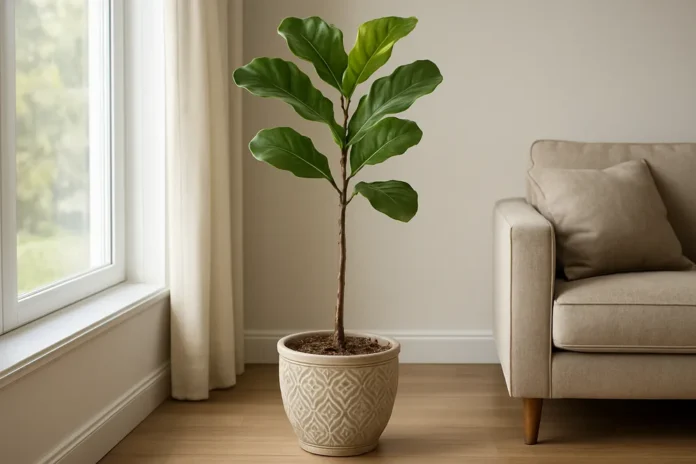
A fiddle leaf fig usually gets leggy because it is not getting enough bright light, so it stretches toward the nearest light source. Sparse growth can also come from irregular rotation, pruning habits, age, or general stress that slows leaf production.
A fiddle-leaf fig becomes leggy when it grows long stems with wide gaps between leaves, a thin silhouette, or bare lower branches. In most homes, this happens because the plant is stretching for more light, but other factors like uneven rotation, weak pruning habits, or stress can make the problem worse.
The good news is that legginess is usually fixable. Once you understand what caused the plant to put on sparse, stretched growth, you can adjust its conditions and encourage a fuller, stronger shape over time.
If your plant still has healthy leaves and a firm stem, it can often recover well with brighter light, steadier care, and a little strategic pruning. Recovery is not instant, but new growth can come in noticeably denser when the plant's environment improves.
What Leggy Growth Looks Like on a Fiddle Leaf Fig
Leggy growth is more than a plant simply getting taller. A healthy fiddle leaf fig can grow upright and still look balanced. A leggy one usually has too much bare stem, leaves clustered only at the top, or a stretched look where each new leaf appears farther apart than the last.
- Long sections of stem with few or no leaves
- Large gaps between leaves, also called long internodes
- Leaning toward a window or light source
- A top-heavy shape with sparse lower growth
- Small or weak new leaves compared with older ones
Some leaf drop on older lower stems can happen as the plant matures, especially indoors. The concern is when new growth is thin, stretched, and unable to support a full, attractive shape.
Low Light Is the Most Common Cause
The most common reason a fiddle leaf fig gets leggy is insufficient light. These plants need bright conditions indoors to produce compact, sturdy growth. When light is too weak, the plant uses its energy to stretch toward it instead of making dense, leafy growth.
Why Low Light Causes Stretching
Plants respond to poor light by elongating their stems in an attempt to capture more energy. This process, often called stretching, leads to longer internodes and fewer leaves along the stem. In a fiddle leaf fig, that creates the classic thin trunk with leaves only near the top.
Signs Your Plant Is Not Getting Enough Light
- It sits several feet away from a window
- It receives only dim ambient room light most of the day
- New growth is pale, small, or weak
- The plant leans strongly in one direction
- Growth slows dramatically in darker seasons
A fiddle leaf fig usually does best near a bright east-, south-, or west-facing window with plenty of indirect light. In many U.S. homes, a north-facing room or a spot deep inside the house is simply too dim for full growth.
Uneven Lighting and Lack of Rotation Can Create a Lopsided Plant
Even if the room is fairly bright, a fiddle leaf fig can become leggy on one side when light comes from only one direction. The plant naturally bends and expands toward the brightest source, leaving the shaded side sparse.
This is especially common when the plant sits against a wall near a single window. Over time, one side develops longer stems and the whole plant starts to lean.
- Rotate the pot a quarter turn every week or two during active growth
- Keep the brightest light as even as possible across the whole canopy
- Avoid placing the plant in a dark corner where only one side receives meaningful light
Rotation will not refill old bare stems, but it helps prevent future growth from becoming one-sided and sparse.
Natural Age and Indoor Growth Habits Can Play a Role
Sometimes a fiddle leaf fig looks leggy because it has grown upward for years without branching. Indoors, these plants often form a single stem unless they are pruned or otherwise encouraged to branch. As they age, lower leaves may also drop naturally, exposing more trunk.
That means not every bare section is a sign of immediate trouble. A mature plant can have a tree-like shape and still be healthy. The difference is whether current growth is strong and well spaced or thin and stretched.
Normal Maturity Versus True Legginess
- Normal maturity: woody lower trunk, healthy upper leaves, steady growth, sturdy structure
- True legginess: weak stems, long gaps between leaves, leaning growth, sparse canopy, small new leaves
Pruning Habits Affect How Full the Plant Becomes
If you never prune a fiddle leaf fig, it often keeps reaching upward on a single main stem. That can make it look tall and bare rather than bushy. Pruning encourages branching, which is one of the best ways to create a fuller shape.
Why Pruning Matters
When the growing tip remains untouched, the plant directs much of its energy to that top point. Cutting back a stem can signal the plant to activate buds lower down, often leading to side branches. More branches usually mean more leaves and a less leggy appearance.
When Pruning May Help Most
- The plant has a single tall stem with leaves only near the top
- It has outgrown its space and needs reshaping
- New growth is healthy enough to support branching
- You want a bushier form rather than a tree-like silhouette
The best time to prune is usually during active growing months in spring or summer. A plant that is already stressed from poor light, overwatering, or cold drafts should be stabilized first before major pruning.
Watering Stress Can Weaken Growth
Light is the main cause of legginess, but watering problems often add to it. A fiddle leaf fig that is watered too often or not often enough can struggle to produce strong leaves and stems. Instead of compact growth, it may put out weak, inconsistent growth or drop older leaves, making the plant look even more sparse.
How Overwatering Contributes
Roots need oxygen as well as moisture. When soil stays soggy, roots can become stressed or damaged, reducing the plant's ability to support healthy top growth. You may see yellowing leaves, soft spots, or leaf drop along with a thin canopy.
How Underwatering Contributes
If the plant dries out too much between waterings, it may shed lower leaves to conserve energy. Repeated drought stress can leave the stem bare and slow new growth, which makes the plant look leggy even if light is decent.
- Water when the top couple inches of soil feel dry
- Use a pot with drainage holes
- Empty saucers so roots do not sit in standing water
- Adjust frequency with the season, light level, and indoor temperature
Nutrient Issues and Small Pots Can Limit Leaf Production
A fiddle leaf fig that has been in the same potting mix for a long time may not have enough available nutrients to support lush growth. Root crowding can also limit water uptake and overall vigor. While these issues usually do not cause legginess on their own, they can make sparse growth more obvious.
If the plant grows slowly, produces smaller leaves, or dries out extremely fast, it may be rootbound or underfed. During spring and summer, a balanced fertilizer formulated for houseplants can help support active growth when used as directed.
- Repot when roots circle densely around the pot or push through drainage holes
- Refresh old potting mix if it has compacted or drains poorly
- Feed lightly during the growing season rather than heavily all at once
Temperature Swings and Dry Indoor Conditions Can Add Stress
Fiddle leaf figs prefer stable indoor conditions. Cold drafts, blasts from heating vents, sudden moves, and very dry air can all stress the plant. Stress does not always directly create leggy growth, but it can slow leaf production and trigger leaf drop, making the plant look sparse.
Keep the plant away from drafty doors, poorly insulated windows in winter, and direct air from HVAC vents. A stable room with bright light usually produces better structure than a plant that experiences repeated environmental swings.
How to Make a Leggy Fiddle Leaf Fig Fuller Again
A leggy fiddle leaf fig can improve, but old bare stems usually do not leaf out the same way a young plant does. The goal is to improve future growth and, when needed, reshape the plant so new branches fill it in over time.
Give It Better Light
Move the plant closer to a bright window where it gets strong indirect light for much of the day. If your home is naturally dim, a quality grow light can help keep internodes shorter and growth sturdier.
Prune for Branching
Cutting back a stem above a node can encourage new side shoots. This is one of the most effective ways to make a tall, bare plant look fuller over time. Always use clean pruners and avoid removing too much at once from a stressed plant.
Rotate Regularly
Turn the pot a little every week or two so all sides receive light. This helps future growth stay balanced rather than leaning and stretching in one direction.
Correct Watering and Feeding
Steady care matters. Water based on soil dryness rather than a rigid calendar, and fertilize during active growth if the plant is healthy enough to use those nutrients.
Be Patient with Recovery
The plant will not become bushy in a week. You are waiting for healthier new growth, not a quick cosmetic change. Over the next growing season, better conditions can create stronger leaves, shorter spacing, and a more attractive form.
Mistakes That Keep the Plant Looking Leggy
- Keeping it too far from a window and hoping it adapts
- Watering on a fixed schedule without checking the soil
- Ignoring a strong lean toward one light source
- Avoiding all pruning because you are worried about cutting it
- Repotting into a pot that is much too large, which can slow root health
- Expecting old bare trunk sections to quickly regrow leaves
Most leggy fiddle leaf figs improve when you fix the basics rather than trying multiple drastic changes at once. Better light and steadier care usually have the biggest impact.
When Legginess May Point to a Bigger Health Problem
Legginess is often a cultural issue, not a disease. Still, if it appears along with rapid leaf drop, mushy stems, black spots, pest damage, or a foul smell from the soil, there may be a more serious health problem affecting the plant.
- Soft or blackened stems can suggest rot
- Sticky residue or fine webbing may point to insect pests
- Sudden heavy leaf loss often means major stress
- A sour smell from the pot can indicate chronically waterlogged soil
In those cases, the plant needs more than cosmetic reshaping. It needs the underlying stress corrected before it can return to strong, compact growth.
FAQ
Will a Leggy Fiddle Leaf Fig Grow Leaves Back on a Bare Stem?
Sometimes a stem can produce new shoots after pruning, but old bare sections often stay bare. Most improvement comes from encouraging healthy new branching and fuller growth above or near those sections.
Can I Fix Legginess Without Pruning?
You can prevent future stretching by improving light and care, but pruning is often the best way to make the plant look fuller. Without pruning, a sparse plant may keep its tall, open shape.
How Much Light Does a Fiddle Leaf Fig Need to Avoid Legginess?
It needs very bright indoor light, ideally near a sunny window with plenty of indirect light. In many homes, a plant placed too far from the window will eventually stretch.
Should I Use a Grow Light for a Leggy Fiddle Leaf Fig?
Yes, a grow light can help if your home does not provide enough natural light. It is especially useful in winter or in rooms with limited sun exposure.
Does Rotating the Plant Really Help?
Yes, rotation helps keep growth balanced and reduces leaning toward one side. It will not repair old leggy growth, but it can improve the shape of future growth.
Can Overwatering Make My Fiddle Leaf Fig Look Leggy?
Yes, overwatering can stress roots and lead to weak growth or leaf drop, which makes the plant look more sparse. It usually works alongside other issues, especially low light.
Is a Tall Fiddle Leaf Fig Always Unhealthy?
No, a tall fiddle leaf fig can be perfectly healthy. The concern is not height alone, but whether the growth is strong, balanced, and leafy rather than thin and stretched.
Want a fuller, healthier houseplant? Read our guide to the best grow lights, pruning tools, and fiddle leaf fig care products to speed up recovery and prevent legginess from coming back.
