
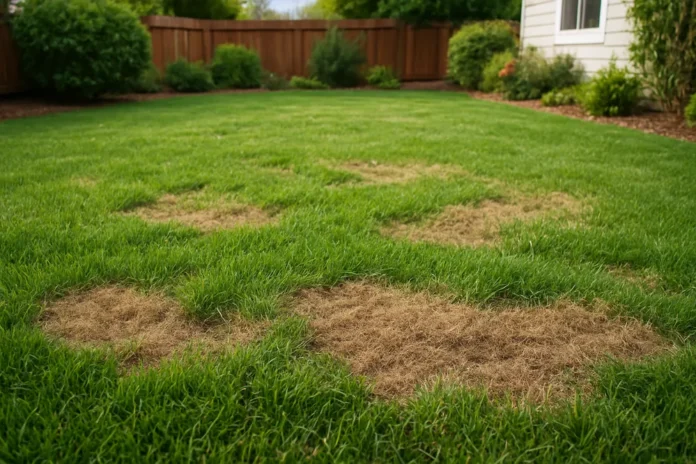
Dead patches in a lawn are usually caused by drought stress, fungal disease, pet urine, insect damage, soil compaction, or chemical burn. In some cases, the grass is not truly dead but dormant or badly weakened.
A lawn can look healthy one week and suddenly develop dry, brown, dead-looking patches the next. That change is frustrating because several very different problems can cause the same symptom, from simple watering mistakes to insects, disease, pet urine, or compacted soil.
The good news is that dead patches usually leave clues. Their shape, size, color, and location can help you narrow down the cause and decide whether the grass will recover on its own or needs repair. Once you understand what is stressing the turf, it becomes much easier to stop the spread and restore a thicker, greener lawn.
In many cases, the grass is not fully dead but severely damaged or dormant. That distinction matters, because living crowns may regrow while truly dead turf will need reseeding or patching.
What Dead Patches Usually Mean
A dead patch is any area where grass blades have turned straw-colored, brittle, or bare compared with the surrounding lawn. Some patches are caused by temporary stress, while others happen because the grass plant has been killed down to the crown and roots.
Before assuming the worst, look closely at the affected area. If you still see a little green at the base, or if the grass resists a gentle tug, it may be dormant or recovering. If it pulls up easily with no roots attached, insects, rot, or severe drought damage may be involved.
- Small, circular spots often suggest pet urine, fungus, or localized chemical burn.
- Large irregular patches often point to drought stress, compaction, shade decline, or poor irrigation coverage.
- Grass that lifts like loose carpet may indicate grub feeding.
- Dead turf along sidewalks, driveways, or curbs may be heat stress, salt injury, or reflected sun.
Watering Problems and Drought Stress
Too Little Water
One of the most common reasons for dead patches is simple drought stress. Grass that does not receive enough deep, consistent moisture begins to thin, discolor, and eventually die in the hottest or driest parts of the yard first. Slopes, shallow soils, and areas near pavement dry out especially fast.
Drought damage usually appears as irregular tan or gray-brown patches that expand during hot weather. Footprints may linger when you walk across the lawn because the blades are too dry to spring back.
Too Much Water
Overwatering can also create dead-looking spots. Constantly wet soil deprives roots of oxygen and encourages fungal disease. Shallow roots then make the lawn even more vulnerable to heat stress once temperatures rise.
- Underwatered lawns feel dry and hard, and the soil may crack.
- Overwatered areas often feel spongy, stay wet longer than the rest of the yard, and may smell musty.
- Poor sprinkler coverage can leave patchy brown zones in specific arcs or strips.
Pet Urine Damage
Dog urine is a very common cause of small dead patches, especially in backyards. Urine contains concentrated nitrogen and salts that can burn grass tissue when repeatedly deposited in the same spot.
These patches are often round, yellow, or brown in the center, sometimes with a darker green ring around the edge. That green ring forms because a little nitrogen acts like fertilizer, while the center receives too much and burns.
Female dogs often create more obvious spots because they squat in one place, but any pet can cause repeated damage if a favorite area becomes a bathroom zone.
Fungal Lawn Diseases
Several turf diseases can create brown or dead patches, particularly during warm, humid weather or when lawns are watered too often at night. Fungal issues are more likely when the lawn stays damp, thatch is heavy, and air circulation is poor.
Common Disease Patterns
- Brown patch often causes circular or irregular brown areas that can widen quickly in summer heat.
- Dollar spot creates many small straw-colored spots that can merge into larger dead patches.
- Summer patch and necrotic ring spot may form rings or arcs with dead centers.
- Snow mold can leave matted, damaged areas after snow cover melts in colder regions.
Disease damage is often easiest to spot early in the morning when leaf blades may show lesions, fuzzy growth, or water-soaked areas. Many lawn fungi do not attack every area equally, so you may see scattered circles instead of uniform browning.
Grubs and Other Insect Damage
White grubs are another major cause of dead lawn patches. These beetle larvae feed on grassroots, cutting the turf off from water and nutrients. By the time the lawn turns brown, the roots may already be badly damaged.
Grub-damaged turf often feels loose and peels back easily, almost like a section of carpet. You may also notice increased digging from birds, raccoons, or skunks looking for a meal.
Other Insects That Can Injure Turf
- Chinch bugs can cause expanding yellow-to-brown patches in sunny lawns, especially during hot, dry weather.
- Sod webworms and armyworms chew blades and can thin turf quickly.
- Billbugs damage stems and roots, often leading to patchy dieback in warm-season grasses.
Soil Compaction and Poor Drainage
Compacted soil prevents water, air, and nutrients from moving into the root zone. Grass growing in heavily trafficked areas can slowly decline until patches thin out and die, even if you water and fertilize properly.
Compaction is especially common where kids play, dogs run fence lines, lawn equipment turns repeatedly, or foot traffic follows the same path. New construction sites are also notorious for compacted subsoil that looks fine at the surface but restricts root growth.
Poor drainage causes a related problem. If water pools after rain or irrigation, roots can suffocate and rot. In those areas, grass often turns weak, patchy, and eventually bare.
Mowing, Thatch, and Heat Injury
A lawn under mowing stress can develop dead patches faster than many homeowners realize. Cutting grass too short removes too much leaf area, weakens roots, and exposes the soil to higher heat. That makes the turf less able to handle drought, traffic, and disease.
Dull mower blades can also shred grass instead of cutting it cleanly. Ragged blade tips dry out, turn brown, and make the lawn more vulnerable to infection. While dull blades alone do not usually create completely dead spots, they can worsen stress enough to tip weak areas over the edge.
Excess thatch can contribute too. A thick thatch layer blocks water movement, harbors disease and insects, and keeps roots shallow. During summer heat, those shallow roots dry out much faster.
Chemical Burn, Fertilizer Mistakes, and Salt Damage
Dead patches sometimes appear after lawn products are misapplied. Too much fertilizer, especially fast-release nitrogen, can burn turf and create sharply defined yellow or brown spots. Spills from spreaders or overlapping application passes often produce visible patterns.
Herbicides can also injure grass if the wrong product is used, if temperatures are too high, or if the lawn is already stressed. In winter climates, deicing salt splashed from sidewalks or roads may leave dead edges along pavement.
- Fertilizer burn often follows spreader tracks or spill points.
- Chemical injury may affect both lawn and nearby ornamentals.
- Salt damage is usually worst along driveways, curbs, and walkways.
Shade, Tree Roots, and Hidden Site Problems
Not every dead patch is caused by a sudden disease or pest outbreak. Some are the result of a site that simply does not support healthy turf. Dense shade reduces photosynthesis, while large tree roots compete aggressively for moisture and nutrients.
If the same areas struggle every year, especially under trees or beside buildings, the issue may be chronic competition, too little sunlight, or poor soil depth rather than a one-time event. In those places, grass often thins first and then develops bare or dead patches during summer stress.
Buried construction debris, shallow topsoil, and hardpan can create similar repeat trouble spots. When only certain sections fail again and again, underlying site conditions are worth considering.
How to Tell Which Cause Is Most Likely
The pattern of the patch is often your best clue. Lawns rarely die at random. Shape, timing, and location usually point toward the underlying cause.
- Round spots with green rings suggest pet urine.
- Loose sod that rolls back suggests grub damage.
- Wide irregular browning during heat points to drought stress or shallow roots.
- Circular patches in humid weather often suggest fungal disease.
- Damage along pavement may be heat, salt, or reflected light stress.
- Areas that stay wet, slimy, or mossy may have drainage or overwatering issues.
- Spots that match spreader paths or spray areas may be fertilizer or herbicide burn.
Also consider the season. Grubs often become obvious in late summer and early fall. Brown patch disease tends to flare in warm, muggy conditions. Snow mold shows up after winter. Drought stress peaks during prolonged hot, dry stretches.
Will the Grass Grow Back?
That depends on whether the crown and roots are still alive. Cool-season grasses like Kentucky bluegrass may spread back into small damaged spots if the cause is corrected early. Bunch grasses like tall fescue do not fill in as aggressively and often need overseeding.
Warm-season grasses such as bermudagrass and zoysiagrass can recover well from some surface damage if healthy runners remain alive. But if the area is completely dead, with dry crowns and no rooted growth, you will need to reseed, plug, or sod the patch.
If you fix the original problem but the patch stays straw-colored and bare through active growing weather, it is likely beyond natural recovery.
How to Prevent Dead Patches in the Future
Prevention usually comes down to reducing stress and avoiding conditions that favor pests or disease. A thick lawn is naturally more resilient than a thin, weak one.
- Water deeply and less often rather than lightly every day.
- Mow at the recommended height for your grass type and avoid scalping.
- Keep mower blades sharp.
- Improve compacted areas with core aeration.
- Avoid overfertilizing and clean up spills immediately.
- Water in pet urine spots when practical to dilute salts.
- Do not irrigate late in the evening if disease is a recurring issue.
- Test soil if patches return repeatedly despite good care.
- Choose shade-tolerant turf or alternative groundcovers for difficult low-light areas.
FAQ
Can Dead Lawn Patches Turn Green Again?
Sometimes. If the grass crowns and roots are still alive, damaged areas may recover once the stress is removed. If the turf is truly dead and pulls up easily or stays bare in growing season, it usually needs reseeding or patching.
How Do I Know if Dead Patches Are From Grubs?
Grub damage often makes the turf feel loose and easy to peel back. You may also see white C-shaped larvae in the soil and notice birds or raccoons digging in the area.
What Do Dog Urine Spots Look Like in Grass?
They are usually small, round yellow or brown patches with a darker green ring around the outside. Repeated urination in the same area makes the spots larger and more severe.
Can Overwatering Kill Parts of a Lawn?
Yes. Constantly wet soil can suffocate roots and encourage fungal disease, both of which can leave brown or dead patches. Overwatered lawns often feel soft or stay soggy long after irrigation.
Why Are Dead Patches Showing Up in the Same Places Every Year?
Repeated trouble spots often point to underlying site issues such as compacted soil, poor drainage, shade, tree root competition, shallow topsoil, or uneven sprinkler coverage. Chronic location-based stress is more likely than a random disease outbreak.
Should I Rake Out Dead Grass Before Reseeding a Patch?
Yes. Removing dead material helps seed reach the soil and improves contact for germination. It also gives you a better chance to see whether the area is truly dead or has some living grass left.
Can Fertilizer Create Dead Spots in a Lawn?
Yes. Too much fertilizer, especially quick-release nitrogen, can burn grass and leave yellow or brown patches. Spreader spills and overlapping passes are common causes.
Need help repairing thin or dead lawn areas fast? Read our lawn patch repair and overseeding guide to choose the best seed, soil, and treatment plan for a fuller yard.
