

Note: This article contains affiliate links. If you click on these links and make a purchase, I may earn a small commission at no extra cost to you. This helps support my research and content. Read my full affiliate disclosure here.
Growing a lemon tree indoors can reward you with fragrant blossoms and homegrown fruit, but indoor light is often the limiting factor. The right grow light supplies the spectrum and intensity citrus needs through winter and in low-light rooms, so leaves stay glossy and buds form reliably. This guide covers the top shortlisted grow lights for indoor lemon tree care and explains how we evaluated each unit for spectrum, coverage, energy use, and heat control. Read on to find a light that matches your tree size, placement, and seasonal needs.
Top Picks at a Glance
| Best Overall The best all-around choice for most situations | GLOWRIUM G2 Pro 48W Full‑Spectrum LED Floor Grow Light with Adjustable Stand |  |
| Best Quality Built to a higher standard if you want something more solid | chiphy 85" Tall Full‑Spectrum LED Grow Light, 60W |  |
| Best Value The sweet spot between price and what you get | GLOWRIUM G2 Floor Grow Light with Adjustable Stand | 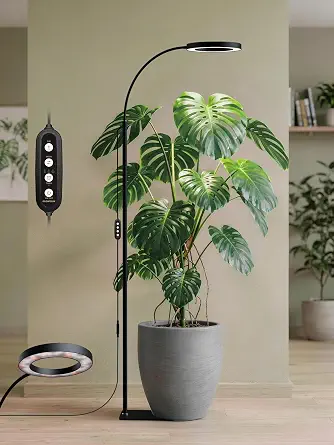 |
| Best Budget The cheapest option that still gets the job done reliably | Garpsen LED Grow Light with Telescopic Pole and Timer |  |
| Highest Rated A top-rated pick with lots of positive feedback | GLOWRIUM Dual-Head 48W Full-Spectrum Tall Grow Light (Freestanding) |  |
GLOWRIUM G2 Pro 48W Full‑Spectrum LED Floor Grow Light with Adjustable Stand

| Light Source Type | LED |
|---|---|
| Additional Features | Adjustable Height, Dimmable, Dual Heads, Full Spectrum, Timer |
| Power Source | Corded Electric |
| Voltage | 24 volts_of_direct_current |
| Mounting Type | Freestanding |
The GLOWRIUM G2 Pro is a freestanding floor grow light designed to provide consistent, full‑spectrum illumination for indoor plants from seedling through flowering. It uses LED strips and a wide lamp head on a four‑section adjustable pole so you can raise or lower the light for short seedlings or taller houseplants. Controls include stepless dimming, three color modes, and a built‑in timer with 3/9/12/16‑hour cycles, which makes daily scheduling simple. Notable extras are the plant care assistant functions such as light measurement, watering reminders, and growth records that help standardize care. The unit runs on a low‑voltage 24V supply and has an aluminum construction with a heavier base for stability, so it feels safer and more durable than cheaper clip lights. Expect good coverage for a small to medium cluster of pots, but the light is a floor lamp form factor so it takes floor space and is not ideal for mounting over wide racks or whole‑room installs. If you need app control or a wall/ceiling mounting solution, look at other form factors instead.
Best for: Buyers who prioritize a reliable, sturdily built grow light that maintains consistent schedules and plant care routines with minimal fuss, especially for small to medium indoor collections.
Less Ideal for: Growers who need ceiling or rack‑mounted fixtures to cover large multi‑shelf setups or who require integrated app/remote control for remote management.
- Full spectrum LED with stepless dimming and three modes to match seedling, vegetative, and flowering stages
- Adjustable four‑section pole and 360° gooseneck for precise positioning and wider coverage
- Built‑in timer and plant care assistant features for automated schedules and care reminders
- Aluminum construction with a heavier base and 24V low‑voltage supply for stable, durable, and safer operation
- Freestanding floor design requires floor space and is less suitable for wide or multi‑tier rack installations
- No explicit app or remote control on this model so remote scheduling options are limited
Verdict: Choose this GLOWRIUM floor grow light if you want a stable, full‑spectrum LED unit with adjustable height, dependable timer functions, and built‑in plant care tools for consistent indoor plant growth.
chiphy 85" Tall Full‑Spectrum LED Grow Light, 60W

| Wattage | 60 watts |
|---|---|
| Number of Light Sources | 288 |
| Color temperature | 2300–6500K (10 levels) |
| Height settings | 5 heights up to 85" |
| Timer | 1–23H and 8/12/16H |
This extra‑tall chiphy floor grow light is built to deliver performance for hobbyists who want consistent, full‑spectrum illumination for large or tall houseplants. The 288 high‑density LEDs run at 60W and the 9.2‑inch lamp head with a 120° beam angle provides wide, even top‑down lighting that reduces shadowed lower foliage. You can tune color temperature across 2300–6500K and choose from 10 brightness levels to match seedling, vegetative, or flowering stages, plus a high CRI 95+ makes plant inspection easy. Controls include touch, remote, and compatibility with smart plugs, along with flexible timers and memory for repeatable schedules. The five‑section pole adjusts up to 85 inches and the aluminum panel and steel base are designed for stability and faster heat dissipation for longer LED life. Limitations to note are its footprint and need for a nearby outlet because it is a freestanding, corded floor lamp, and very large multi‑shelf propagation racks may still need more concentrated fixtures for each shelf level.
Best for: Buyers who prioritize measurable lighting performance and flexible control for single‑area houseplant setups, especially owners of tall or showy plants who need even top‑down coverage and stage‑specific spectra.
Less Ideal for: People who need compact desk or multi‑shelf lighting for many small pots or who require waterproof fixtures for greenhouse or outdoor use.
- Full‑spectrum output with tunable 2300–6500K and 10 brightness levels for stage‑specific plant lighting
- Large 9.2‑inch panel and 120° beam for even top‑down coverage and reduced shadowing
- Tall adjustable height up to 85 inches to accommodate seedlings through large mature houseplants
- Multiple control methods including touch, remote, timers and memory for automated, repeatable schedules
- Aluminum panel and steel base for improved heat dissipation and stable freestanding placement
- Requires a nearby power outlet and is a freestanding lamp rather than a ceiling or rack fixture
- Not waterproof so it must be kept away from wet areas and direct water exposure
Verdict: Choose this tall full‑spectrum LED floor lamp when you want powerful, stage‑tunable, even top‑down lighting for larger houseplants and long‑term indoor growth.
GLOWRIUM G2 Floor Grow Light with Adjustable Stand

| Light Source Type | LED |
|---|---|
| Additional Features | Adjustable Height, Dimmable, Flexible, Full Spectrum, Timer |
| Wattage | 20 watts |
| Number of Light Sources | 66 |
| Controller Type | Remote Control |
The GLOWRIUM G2 is a floor-style grow lamp designed to give large indoor plants reliable supplemental light without complicated installation. It uses 66 full-spectrum LEDs in a 20W fixture mounted on a three-section aluminum stand so you can raise the lamp to match a Monstera's canopy as it grows. Controls include stepless 10 to 100% dimming across six levels, a 3/9/12-hour auto timer, and a remote plus in-line push-button operation for quick adjustments. Practical features such as a wide base, anti-slip design, 13-foot power cord, and good heat dissipation make it easy to position near living-room plants and keep running safely for long periods. The lamp offers three light modes that combine warm, cool, and red spectrums to support rooting, vegetative growth, and flowering stages. Limitations are that it is meant for indoor use only and has a freestanding footprint, so it takes floor space and is less suitable for very small apartments or for growers who need wall- or ceiling-mounted fixtures.
Best for: Houseplant owners who want a straightforward, durable lamp to give a growing Monstera reliable, adjustable supplemental light without fussing with mounts or complex setups.
Less Ideal for: People with very limited floor space, those who need ceiling- or wall-mounted lighting, or growers who require IP-rated fixtures for humid rooms.
- Adjustable three-section stand lets you raise the light to match Monstera height and changing canopy needs
- Full-spectrum LED array with warm, cool, and red modes supports all growth stages
- Stepless 10–100% dimming and 3/9/12-hour timer add automation and precise intensity control
- Aluminum construction improves heat dissipation for longer runtime and durability
- Long 13-foot power cord and stable anti-slip base make placement flexible and secure
- Freestanding design requires floor space and may not fit very tight or high-shelf setups
- Specified as indoor use only so it is not suitable for humid outdoor or unprotected patio placements
Verdict: A practical, easy-to-use floor grow light that gives Monsteras adjustable full-spectrum illumination as they grow.
Garpsen LED Grow Light with Telescopic Pole and Timer

| Light Source Type | LED |
|---|---|
| Number of Light Sources | 80 |
| Additional Features | Adjustable Height, Dimmable, Full Spectrum, Timer |
| Switch Type | Dimmer |
| Power Source | Corded Electric |
This Garpsen grow light is a plug-in LED lamp built to sit in a planter or on the floor and deliver full-spectrum light for indoor plants. It combines a telescoping pole (adjustable from about 10 to 65 inches) with a flexible gooseneck so you can aim the light at an indoor lemon tree’s canopy or lower branches. The fixture uses 80 LEDs covering 380–800 nm including added 660 nm red, offers three color modes roughly corresponding to 3000K/5000K/6500K, five brightness levels and a 6/12/16 hour timer so you can match seedling, vegetative and fruiting stages without daily switching. Aluminum housing and a translucent ring shade aid heat dissipation and light transmission. Practical benefits are simple installation into potting soil, hands-free scheduling, and adjustable height for taller house trees. Limitations are that actual light intensity (PPFD) is not specified so effectiveness for a large, fruiting lemon may require placing the lamp close or using multiple units, and the unit is not waterproof so it belongs indoors only.
Best for: Buyers looking for an inexpensive, easy-to-use lamp to supplement sunlight for a single indoor citrus or other large houseplant who value simple setup and timed daily light cycles.
Less Ideal for: Growers who need verified high-intensity output for multiple or very large fruiting trees or who plan humid or outdoor installations should consider higher-output fixtures or purpose-built setups.
- Adjustable telescoping pole and 360° gooseneck for precise placement over tall houseplants
- Full spectrum LEDs including 660 nm red to support multiple growth stages
- Built-in timer with 6/12/16H options and five dimming levels for automated daily schedules
- Aluminum housing and translucent shade improve heat dissipation and light transmission
- Manufacturer does not publish measured light output (PPFD), so coverage for a fruiting lemon is uncertain
- Designed for indoor use only and not suitable for wet environments
Verdict: A budget-friendly, adjustable full-spectrum lamp that automates daily lighting and is well suited to supplement light for a single indoor lemon tree.
GLOWRIUM Dual-Head 48W Full-Spectrum Tall Grow Light (Freestanding)

| Wattage | 48 watts |
|---|---|
| Light Source Type | LED |
| Number of Light Sources | 268 |
| Additional Features | Adjustable Arm, Adjustable Height, Dimmable, Full Spectrum, Timer |
| Power Source | Corded Electric |
The GLOWRIUM tall dual-head grow light is a freestanding LED lamp built to provide reliable, year-round supplemental light for indoor plants. It offers three preset spectrum modes for seedling, vegetative, and flowering stages and 268 LEDs driven by 48 watts for broad, efficient coverage. The pole extends to roughly 71 inches and each head has a 360° flexible gooseneck so you can direct light to multiple plants or taller specimens. The inline controller gives six preset brightness levels plus press-and-hold stepless dimming and selectable timers (3, 9, 12, 16 hours) so you can automate daily light cycles during the short days of winter. Practical advantages include a heavy iron base and metal pole for stability, a high light-transmitting cover over the LEDs, and claimed long life and energy efficiency. Important limits are that it is corded only and not water resistant, so it belongs indoors, and setup requires a small footprint for the base. For someone needing dependable, adjustable indoor lighting through winter, this model covers the essentials without complicated smart features.
Best for: Buyers who want a dependable, no-frills supplemental light that runs predictable timers and delivers adjustable coverage for winter plant care without needing app setup or complicated controls.
Less Ideal for: Growers who need outdoor-safe fixtures, integrated smart-home control, or a compact clip-on lamp for very small spaces should look elsewhere.
- Full-spectrum output with dedicated seedling, vegetative and flowering modes
- Adjustable height and dual 360° gooseneck heads for targeted coverage
- Built-in timers and multiple dimming options for automated daily schedules
- Sturdy metal pole and iron base improve stability for taller plants
- High LED count (268) and energy-efficient 48W power draw for sustained use
- Corded freestanding design is not water resistant so unsuitable for humid outdoor areas
- No smart app control for remote scheduling or grouping with other lights
Verdict: A sturdy, easy-to-use full-spectrum floor grow light that automates reliable winter lighting for indoor plants without extra smart features.
Choosing the Right Grow Light for Indoor Lemon Tree: Key Factors to Consider
Light Spectrum and Flowering Support
Citrus responds to a mix of blue and red light during different growth stages. Blue wavelengths favor strong leaf and stem growth, while red wavelengths, especially in the deep red and far-red bands, help trigger flowering and fruit set. A balanced full-spectrum fixture that includes both blue and red peaks will support lemon trees through vegetative growth and into bloom.
When choosing a grow light for indoor lemon tree use, check manufacturer spectral charts and look for units marketed as full-spectrum or horticultural-spectrum. Lights that only emit a narrow band, such as purely blue or decorative white, may keep foliage green but will often fail to stimulate reliable flowering and fruit production.
Intensity and Canopy Coverage
The usable intensity a lemon tree receives depends on both the light output and how broadly it spreads. Small tabletop lights may deliver high intensity at a tiny spot but leave much of the canopy in shade. Conversely, fixtures with broad, even distribution lower the need to constantly reposition branches.
Estimate the size of your tree canopy and match a light whose effective coverage at recommended hanging height equals or slightly exceeds that footprint. If your lemon tree is tall or multi-branched, consider fixtures that can be placed above with wide spread or combine multiple units for layered coverage.
Heat Output and Distance Management
Citrus leaves are sensitive to heat and can scorch if a light emits too much thermal energy close to foliage. Good thermal management keeps LEDs cool and allows you to place the fixture closer for stronger light without burning leaves.
Assess how the light dissipates heat and whether it includes fans, heat sinks, or passive cooling. Also plan for safe hanging distances and check whether the unit's manufacturer specifies minimum clearances for foliage. Lights that run cool extend safe run hours and reduce the risk of localized leaf damage.
Dimming, Timers, and Photoperiod Control
Flower initiation and fruit set in lemon trees are influenced by day length and light intensity. Fixtures with built-in dimming or timer compatibility make it easier to simulate seasonal day lengths and to taper light intensity during transition periods.
Look for lights that integrate with timers or have onboard controls so you can set consistent photoperiods. Gradual dimming options are useful for reducing stress during transplanting or gradual seasonal changes, while simple on/off timers are acceptable for many growers.
Mounting Options and Adjustability
Indoor citrus setups vary widely: some growers place trees on a sunny windowsill, others in a grow tent, and some keep trees as room accents under ceiling fixtures. The right mounting hardware affects how uniformly light reaches the canopy and how easy it is to raise or lower the fixture as the tree grows.
Choose a light with flexible mounting such as ratchet hangers, adjustable brackets, or easy-to-reorient panels. Fixtures that allow angle adjustment help direct light into interior branches and aid even canopy development.
Durability and Long-Term Reliability
A grow light is often a multi-season investment. Durable construction, good component quality, and accurate lifespan ratings mean fewer replacements and less maintenance. LED chips, drivers, and the integrity of the housing all influence longevity.
Check whether the unit has a sealed housing if you plan to mist or humidify around citrus, and whether replacement drivers or modular panels are available. Long-life fixtures reduce the risk of sudden output drops that can interrupt bloom cycles.
Matching Light Size to Your Tree Stage
Young potted lemon trees and full-size indoor specimens need different amounts of light. Seedlings and young saplings require less total light and benefit from a smaller, close-mounted fixture. Mature, fruiting trees with wider canopies need higher total light and broader distribution to reach inner branches where flowers form.
Consider planning for the tree's growth. If you expect the tree to expand, choose a fixture with modular expansion or position options so you do not need to replace the light as the canopy grows.
- Use a compact panel or strip for young trees and cuttings
- Choose wide panels or multiple units for multi-branched, fruiting trees
- Plan mounting so you can raise the light as the tree gets taller
Placement Tips for Indoor Citrus
Place the light centrally above the canopy whenever possible to promote even growth. If canopy shape is lopsided, angle-adjustable panels can target shaded sections and reduce leaning toward a single bright source. For trees kept near windows, supplement natural light with the grow light during short winter days rather than relying on it as the sole source unless you need year-round off-season bloom control.
Avoid placing the fixture directly against humid walls or under poorly ventilated shelves, as trapped heat and moisture can stress the tree. Maintain a small clearance for airflow and access for pruning and fruit inspection.
- Center above canopy for uniform light
- Use angled panels to fill shaded interior branches
- Supplement, do not duplicate, strong south-facing window light
Managing Photoperiods for Flowering and Fruit Set
Lemon trees typically need stable day-length cues to maintain routine growth and to transition into bloom. Many indoor growers run 12 to 14 hours of light during vegetative phases and then maintain or slightly alter photoperiod during bloom depending on tree response. Sudden changes in daily light can stress trees and reduce bud set.
Use timers or programmable controllers to establish consistent on/off cycles, and avoid frequent manual changes. If you need to force bloom, consult resources on gradual photoperiod adjustments rather than abrupt shifts.
- Start with consistent daily run times and adjust slowly
- Use timers to prevent accidental light interruptions
- Reduce light gradually if you want to mimic seasonal shortening
Heat and Humidity Considerations
Indoor lemon trees prefer moderate humidity and do not tolerate foliage that becomes too warm from close-mounted lights. Monitor leaf undersides for signs of heat stress, such as cupping or brown tips, and increase distance or ventilation if you see symptoms. Where supplemental heat is combined with lighting, keep those systems independent so light schedules do not force unnecessary warming.
For rooms with low humidity, occasional misting or a nearby humidifier can benefit flowers and young fruit, but avoid heavy mist directly under fixtures to prevent condensation on electronics.
- Keep adequate clearance for airflow around fixtures
- Separate supplemental heaters from lights
- Avoid direct misting onto electrical components
Practical Maintenance and Cleaning
Dust and residue on lenses reduce usable light output over time, so plan periodic cleaning. Use a soft cloth and manufacturer-recommended cleaning method to avoid damaging optics or coatings. Check hardware such as hangers, screws, and cable entries for corrosion if you keep the tree in humid environments.
Track runtime hours if the fixture provides that data or use a simple external timer to estimate lifespan. Replacing drivers or modules before failures occur helps avoid dark periods that can disrupt flowering cycles.
- Clean lenses every few months in dusty homes
- Inspect mounts and cables for wear
- Log runtime hours to anticipate maintenance
How We Chose the Best Grow Light for Indoor Lemon Tree
We focused on factors that directly affect indoor citrus health and fruiting. Key evaluation criteria included spectral quality to support flowering and fruit set, usable light output and coverage to reach the entire canopy, heat management to prevent leaf scorch near delicate branch tips, and energy efficiency for extended seasonal use. We also considered build quality and mounting options to fit common indoor setups such as hanging, freestanding fixtures, and adjustable-height racks. Practical usability factors included dimming or adjustable output, lifespan ratings, and ease of installation. Units with poor heat control, insufficient usable spectrum for flowering, or extremely limited coverage were excluded. We prioritized lights that perform reliably for the particular needs of indoor lemon trees rather than generic desk or decorative lamps, and we filtered out products with unverified lifespan or inadequate mounting flexibility.
FAQ
How many hours of light does an indoor lemon tree need from a grow light?
It often depends on natural light available, but many growers provide 12 to 14 hours of combined natural and supplemental light during active growth. During bloom you can maintain a similar schedule, adjusting gradually if you are trying to simulate seasonal changes.
Can I use a small decorative LED lamp for a lemon tree?
Small decorative LEDs typically lack the spectrum and usable intensity for flowering and reliable fruiting. They may keep leaves from yellowing but usually cannot stimulate blooms or support developing fruit.
Will the grow light heat the room or scorch leaves?
LED fixtures designed for horticulture usually run cool, but some higher-output units can still emit perceptible heat. Maintain the recommended clearance and monitor leaves for scorch. Good heat sinks or passive cooling help keep foliage safe.
Do I need multiple lights for a single indoor lemon tree?
It depends on canopy size and shape. A compact, single-stem tree may do fine under one well-placed panel, while larger, multi-branched specimens often benefit from two or more fixtures or adjustable angled panels to eliminate shaded pockets.
Should the light spectrum change between vegetative growth and flowering?
Many growers keep a full-spectrum fixture throughout the season since it provides a balanced output for both phases. Fixtures with adjustable spectrum can be tuned toward blue for vegetative growth and increased red during bloom if you want finer control.
How far should I hang the light above the top leaves?
Recommended distance varies by fixture output. Start at the manufacturer's suggested clearance and watch leaf response. If leaves show bleaching or cupping, move the light higher; if growth is leggy, lower it gradually to increase intensity.
Final Verdict
Choose a grow light for indoor lemon tree care by matching spectral quality and effective coverage to the tree's size and stage. Prioritize full-spectrum output that supports both foliage and flowering, reliable heat control to avoid leaf damage, and mounting flexibility so the light can be raised as the tree grows. Balance energy use and control features like dimming or timers against the canopy area you need to illuminate. With those tradeoffs in mind you can pick a fixture that encourages consistent blooms and healthy fruiting while fitting your indoor setup.
