

Note: This article contains affiliate links. If you click on these links and make a purchase, I may earn a small commission at no extra cost to you. This helps support my research and content. Read my full affiliate disclosure here.
If you want to start or expand indoor gardening without a big outlay, a budget grow tent makes controlled growing possible in a closet, spare room, or garage. The right tent gives you light-tight walls, reflective interiors, and ventilated access so you can manage light cycles, airflow, and humidity for seedlings, herbs, or compact vegetable crops. This guide covers seven shortlisted budget grow tents that meet practical gardener needs. We evaluated each option on light control, build durability, ventilation and access, and ease of setup so you can pick the tent that best fits your available space and crop goals.
Top Picks at a Glance
| Best Overall The best all-around choice for most situations | MARS HYDRO Advanced Grow Tent 30 x 18 x 36 (1680D Mylar) |  |
| Best Quality Built to a higher standard if you want something more solid | Spider Farmer SF2000 2×4 Complete Grow Tent Kit (200W) with GGS Controller |  |
| Best Value The sweet spot between price and what you get | CoolGrows 2×2 ft Mylar Hydroponic Grow Tent with Observation Window and Removable Floor Tray |  |
| Best Budget The cheapest option that still gets the job done reliably | MELONFARM 24 x 16 x 24 in Grow Tent with Double Viewing Door and Floor Tray |  |
| Highest Rated A top-rated pick with lots of positive feedback | AC Infinity CLOUDLAB 632 Advance Grow Tent (36 x 24 x 72) |  |
| Most Popular A crowd favorite that many people choose with confidence | VIVOSUN 30 x 18 x 36 in Mylar Grow Tent (S3018) |  |
| Best Seller A high-volume bestseller chosen again and again | MELONFARM Small Grow Tent for Hydroponics, 18 x 18 x 36 in |  |
MARS HYDRO Advanced Grow Tent 30 x 18 x 36 (1680D Mylar)

| Inner Material | Mylar |
|---|---|
| Frame Material | Metal, Steel |
| Canvas Thickness | 1680D |
| Capacity | 11.25 cubic feet |
This Mars Hydro Advanced Grow Tent is a small, budget-focused enclosure aimed at indoor gardeners who need a durable, lightproof space for one to two plants. It uses thick 1680D canvas and density diamond mylar to maximize internal reflectivity while a zipper flap and double-layer lining minimize light leaks. The metal poles, corner adapters and top bars provide a sturdier frame than entry-level tents and the pop-snap assembly makes setup quick for a single-person build. Practical touches include a viewing window for plant checks without opening the tent and a removable waterproof floor tray for easier cleaning. The tent is sized for compact setups and pairs with a small inline fan and recommended TS600/TS1000 lights for decent results. Limitations are inherent to its footprint: vertical and floor space restrict larger multi-plant configurations and heavy equipment, and some users may prefer heavier-duty zippers or larger access ports for frequent maintenance. For growers prioritizing light control, reflectivity and straightforward assembly in a small footprint, this tent covers the essentials without extra complexity.
Best for: Buyers who want an affordable, no-frills grow tent that prioritizes light control and durability for a compact one- to two-plant setup and value straightforward assembly and low maintenance.
Less Ideal for: Growers planning a larger multi-plant garden, heavy racks, or frequent hands-on training and maintenance should choose a larger tent with bigger access and more internal space.
- 1680D canvas and diamond mylar interior for high light reflectivity and lightproofing
- Sturdy metal pole frame with corner adapters offers more stability than basic tents
- Removable waterproof floor tray simplifies cleanup and prevents leaks
- Viewing window lets you check plants without disturbing the internal environment
- Small internal volume limits plant count and larger equipment
- Access points and zippers may be tight for frequent maintenance or bulky gear
Verdict: A durable, lightproof small grow tent that gives budget-conscious indoor growers strong reflectivity and an easy-to-assemble, low-maintenance grow space.
Spider Farmer SF2000 2×4 Complete Grow Tent Kit (200W) with GGS Controller

| Light Source Wattage | 200 watts |
|---|---|
| PPE | 2.7 µmol/J |
| Frame Material | Alloy Steel |
| Inner Material | Polyethylene Terephthalate (PET) |
| Weight Capacity Maximum | 120 pounds |
This Spider Farmer SF2000 kit bundles the essentials for a compact, high-performance indoor grow space. The 200W full-spectrum LED (200W input, 2.7 µmol/J PPE) provides adjustable light from seedling through flower, and the GGS controller lets you schedule and dim the light plus manage fan speed and connect temperature and humidity sensors for remote monitoring. The tent itself uses heavy-duty 1680D Oxford exterior, diamond mylar interior and a steel frame rated to 120 lb, giving a stable, lightproof chamber with a leak-proof floor tray and multiple ports for ducting and cables. The included 4
Best for: Growers who want a ready-to-run, performance-focused 2×4 setup that balances efficient lighting, environmental control, and durable tent construction without assembling parts separately.
Less Ideal for: Large-scale growers or those needing a higher-powered light package for bigger canopy areas should consider larger kits or higher-wattage fixtures.
- Full-spectrum 200W LED with 0–100% dimming and 2.7 µmol/J PPE for effective all-stage plant growth
- App-enabled GGS controller for scheduling, remote monitoring, and fan speed control
- Heavy-duty tent construction with reflective mylar interior and steel frame rated to 120 lb
- Kit includes matched ventilation, carbon filter, fabric pots and trellis so components work together out of the box
- Quiet 4" inline fan with activated carbon filter for odor control and decent airflow
- 200W LED is optimized for 2×4 coverage but may be undersized for larger or high-demand flowering setups
- Some buyers may prefer higher PPE or Samsung diodes for maximum light efficiency
Verdict: For a compact performance-focused grow tent kit, this Spider Farmer SF2000 bundle gives ready-to-use lighting, app control, and matched ventilation to get consistent all-stage results.
CoolGrows 2×2 ft Mylar Hydroponic Grow Tent with Observation Window and Removable Floor Tray

| Chamber Volume | 16 cubic feet |
|---|---|
| Capacity | 16 cubic feet |
| Frame Material | Metal |
| Inner Material | Metal |
| Outer Material | Metal |
The CoolGrows 2×2 ft grow tent is a small, practical enclosure for starting or maintaining a few indoor plants under controlled light and ventilation. It is lined with highly reflective Mylar to return light toward plants and help retain heat, and the tent uses a metal pole frame with heavy-duty zippers and reinforced stitching for basic durability. Typical use is for seed starts, a single small plant, or a two-shelf setup with low-clearance lights in apartments or closets. The observation window and easy-access door make checking plants simple without disturbing the environment, and the removable waterproof floor tray simplifies cleanup after watering. Ventilation ports and dual-cinching duct openings let you add an inline fan and ducting. Limitations are inherent to the compact size: it only fits very small setups and will restrict taller strains or multi-tier systems, and the thin fabric and basic frame are suitable for light to moderate use rather than heavy commercial setups. For gardeners prioritizing efficient light use and a low-cost footprint, this tent covers the essentials.
Best for: Buyers who want an inexpensive, space-efficient grow solution for starting seedlings or running one small plant indoors and who value straightforward setup and easy maintenance.
Less Ideal for: People planning multi-plant, tall-strain, or production-level grows that need larger capacity and heavier-duty construction.
- 95% reflective Mylar lining improves light efficiency and heat retention
- Removable waterproof floor tray makes cleaning and maintenance easy
- Metal pole frame, heavy-duty zippers, and double stitching provide basic durability
- Observation window and easy-access door let you check plants without fully opening the tent
- Dual ventilation ports support adding an inline fan and ducting
- Very compact interior limits plant height and the number of plants that will fit
- Materials and frame are suitable for hobby use but not heavy commercial workloads
Verdict: A low-cost, compact grow tent that maximizes light efficiency and keeps upkeep simple for small indoor gardens.
MELONFARM 24 x 16 x 24 in Grow Tent with Double Viewing Door and Floor Tray
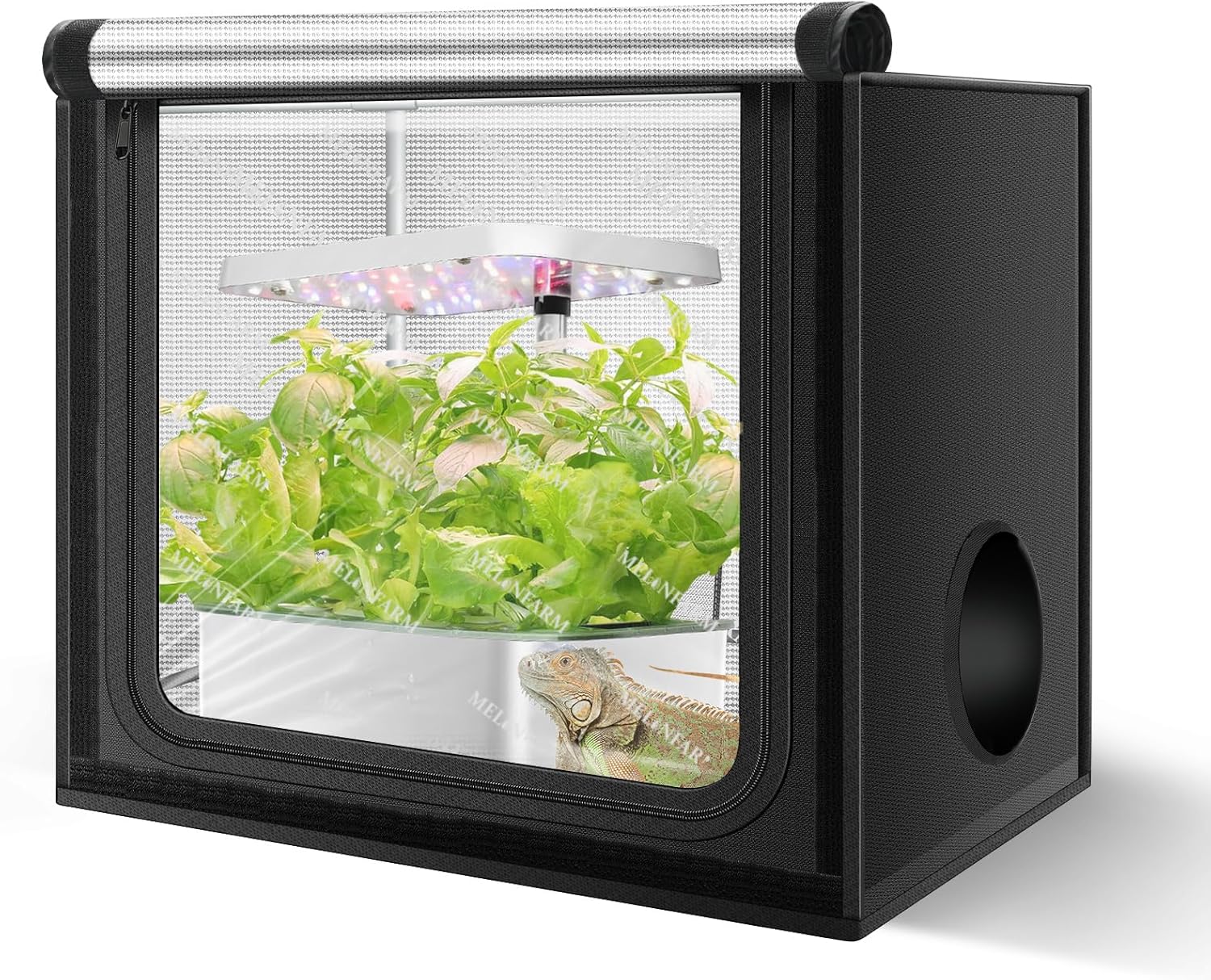
| Capacity | 7.68 cubic feet |
|---|---|
| Inner Material | Polyethylene Terephthalate (PET) |
| Frame Material | Iron |
This small grow tent provides a controlled microclimate for seedlings, herbs, and a few small plants in tight indoor spaces. The iron frame and heavy-duty canvas shell use double stitching for a sturdier structure, while the 2100D diamond-pattern PET lining boosts light reflection so LED or fluorescent fixtures deliver more usable light to plant canopies. The tent is easy to assemble without tools, has a zippered double-layer viewing door that lets you check plants without fully exposing the interior, and includes a removable floor tray to catch spills and simplify cleaning. Because it is compact, it fits in closets, dorm rooms, and small corners and is suited to hydroponic or container setups where space is the limiting factor. Limitations are its small internal volume, which constrains plant height and number, and the product listing emphasizes basic materials rather than heavy commercial-grade hardware, so buyers should plan for gentle indoor use rather than heavy equipment loads.
Best for: Buyers who need an inexpensive, compact grow space for seedlings, herbs, or one to two small plants and who prioritize maximizing light efficiency in a tight indoor spot.
Less Ideal for: Growers needing space for multiple mature plants, tall varieties, or heavy lighting and ventilation rigs should choose a larger, more robust tent.
- High-reflectivity PET lining improves light utilization from grow lamps
- Reinforced iron frame and double-stitched canvas for reasonable durability
- Double-layer observation door lets you monitor plants without fully opening the tent
- Includes a floor tray to contain spills and simplify maintenance
- Small internal volume limits number and height of plants
- Hardware and materials are suitable for hobby use but not heavy commercial setups
Verdict: A budget-friendly, compact grow tent that boosts lamp efficiency and fits small indoor spots, making it a practical starter choice for hobby growers.
AC Infinity CLOUDLAB 632 Advance Grow Tent (36 x 24 x 72)

| Chamber Volume | 36 cubic feet |
|---|---|
| Capacity | 2 load |
| Weight Capacity Maximum | 150 pounds |
| Frame Material | Alloy Steel |
| Inner Material | Metal |
The AC Infinity CLOUDLAB 632 is a sturdy 3x2x6 grow tent designed for single-plant setups and growers who prioritize long-term reliability. It uses 1-inch alloy steel poles and heavy 2000D mylar canvas to resist sagging and light leaks, while lab-tested reflective mylar maximizes usable light inside the chamber. Practical features include large zipper windows for easy monitoring, SBS zippers for smoother access, multiple duct ports and a controller mounting plate for tidy cable management and integration with fans or humidifiers, and extra hanging bars for lights and equipment. The included stain-resistant catch tray and reinforced corners add to durability and make routine cleaning easier. Expect straightforward assembly and a tent that holds its shape under common indoor ventilation setups. The trade-offs are typical for a focused single-plant tent: limited internal floor area for larger multi-plant grows and a taller, narrower footprint that may restrict some equipment layouts. For growers who want a dependable, low-maintenance enclosure built to last, this model performs well.
Best for: Growers who want a dependable, low-maintenance tent built to hold up over time and integrate with environmental controls for a reliable indoor grow.
Less Ideal for: People planning dense multi-plant gardens or those needing a wide floor area for large trays and multiple large lights.
- Thick 2000D mylar canvas and 1" alloy steel poles for strong, durable construction
- Lab-tested high-reflectivity inner mylar improves light efficiency
- Multiple duct ports and controller mount allow tidy ventilation and accessory integration
- Large zipper window and SBS zippers make inspection and access easier
- Reinforced corners, extra hanging bars, and stain-resistant catch tray simplify long-term use
- Sized for a single-plant setup, so not ideal for larger multi-plant grows
- Taller narrow footprint may limit placement of some larger equipment
Verdict: Built for durability and efficient light use, this tent is a reliable choice for a long-lasting single-plant indoor grow.
VIVOSUN 30 x 18 x 36 in Mylar Grow Tent (S3018)

| Frame Material | Metal |
|---|---|
| Inner Material | Polyethylene Terephthalate (PET) |
| Item Highlight | Metal Frame and Metal Corners, Heavy-duty Zippers, 100% Reflective Mylar Interior, Observation Window |
| Light Source Wattage | 100 watts |
This 30" x 18" x 36" VIVOSUN grow tent is a small, budget-friendly enclosure for hobby indoor gardening and seed-to-vegetative staging. It uses a metal pole frame and tool-free corner connectors for quick assembly and a stable structure, while the 100% reflective mylar interior and heavy-duty 600D Oxford canvas boost light efficiency and block leaks. Practical additions include an observation window, a removable floor tray for cleanup, multiple duct and cable ports, and upgraded SBS zippers. The top hanging bar supports typical lights and filters for a one- or two-plant setup, and the included hanging straps help mount equipment without extra hardware. Limitations are inherent to its compact footprint and light source recommendation: it is suited to single-plant or small pot setups rather than full-scale grows, and ventilation and light choices should match the tent size to avoid heat or airflow problems. For cautious buyers who value proven features and straightforward assembly, this tent delivers the essentials without costly extras.
Best for: Buyers who want a reliable, no-frills grow tent for a small indoor setup and who prioritize proven construction and easy assembly over advanced integrated controls.
Less Ideal for: People planning larger multi-plant grows or those who want an all-in-one smart grow system with included lighting and fans.
- 100% reflective mylar interior increases light efficiency
- Strong metal frame with tool-free connectors for quick, stable assembly
- Durable 600D Oxford canvas with waterproof and double-stitched construction
- Observation window and removable floor tray simplify monitoring and cleaning
- Small internal volume limits plants to a one- or two-plant configuration
- Requires appropriately sized light and ventilation components which are not included
Verdict: A durable, easy-to-assemble compact grow tent that reliably increases light efficiency for small-budget indoor grows.
MELONFARM Small Grow Tent for Hydroponics, 18 x 18 x 36 in

| Frame Material | Metal |
|---|---|
| Inner Material | Polyester |
| Outer Material | Oxford Cloth |
| Chamber Volume | 0.15 cubic feet |
The MELONFARM small grow tent provides a simple, no-frills enclosure for indoor hydroponic or soil-based plants in tight spaces. Sized for a single Aerogarden-style system or a couple of small pots, the tent uses a 600D diamond mylar canvas with a waterproof polyester film lining to reflect light and help retain heat and humidity. It has a heavy-duty zipper door, two clear observation windows and a removable floor tray for easy cleanup. Assembly is tool-free and straightforward, so you can have a working grow space set up quickly in a closet, balcony corner, or basement. Because it is compact and light, ventilation options and larger lighting rigs are limited, so it works best with low-power LED setups and small fans. Build materials are adequate for casual hobbyists but not as robust as higher-end, commercial tents, so expect normal wear if used intensively over years.
Best for: Buyers who need an affordable, compact grow space for one or two small hydroponic systems or a few starter plants and who prioritize quick setup and efficient light use.
Less Ideal for: Not a good fit for growers planning multiple larger plants, full-size lighting rigs, or heavy-duty continuous use where a sturdier, larger tent is required.
- Highly reflective 600D inner lining improves light efficiency for small LEDs
- Compact footprint fits closets, balconies, and other tight indoor spaces
- Tool-free assembly and heavy-duty zipper door make setup and access easy
- Clear observation windows let you check plants without opening the tent
- Included floor tray simplifies watering cleanup and protects surrounding surfaces
- Limited internal space restricts the size and number of plants and larger light or ventilation equipment
- Materials and frame are basic compared with premium grow tents, so longevity may be lower with heavy use
Verdict: A low-cost, compact grow tent that boosts light efficiency and sets up quickly, making it an easy choice for beginners and small-space hydroponic setups.
Choosing the Right Budget Grow Tent: Key Factors to Consider
Tent Size and Grow Space
Choose a tent size that fits the plants you intend to grow and the room where the tent will sit. A tent too small will crowd plants and force frequent training or pruning, while an oversized tent wastes heat and requires larger fans and filters.
Consider mature plant height plus clearance for lights and hangers. If you plan to use trellises or tall lighting setups, account for extra vertical space. Also measure doorways and stairwells to ensure the assembled tent can be moved into place.
Light Control and Interior Reflectivity
Effective light containment prevents external light from disrupting dark periods and keeps outgoing light inside the tent to improve lamp efficiency. Look for dense outer fabrics and tight zipper seals that minimize leaks.
Interior reflective liners concentrate lamp output back toward the canopy. Mylar or similarly reflective coatings increase usable light and can allow slightly lower wattage fixtures to do the job. Check seams and corners for coverage since poorly finished interiors reduce the benefit of reflective material.
Frame Construction and Load Capacity
The frame must support grow lights, carbon filters, and oscillating fans without bending. Steel or reinforced metal poles typically offer better long-term stability than thin tubing. Pay attention to diameter and joint design because weak connectors are common failure points on budget tents.
Verify the projected hanging weight for lights and accessories. Overloading a flimsy frame leads to sagging or collapsed corners, which makes maintenance harder and can damage equipment.
Ventilation Ports and Access Panels
Proper airflow keeps temperatures and humidity within acceptable ranges. Look for well-placed duct ports sized to match common inline fans and carbon filters, plus extra smaller ports for cables and sensor probes.
Accessible zipped doors and observation windows cut down on disturbance during inspections. Removable floor trays or linings simplify cleaning and reduce the risk of mold in spills or runoff.
Build Materials and Zipper Quality
Fabric denier, stitching quality, and zipper robustness determine how long a tent will last under repeated use. Thicker fabric resists punctures and light leaks; double-stitched seams hold up better under tension.
Heavy-duty zippers reduce the chance of splitting under repeated opening and closing. Pay attention to how zippers are sewn into the fabric and whether protective flaps cover them for extra light sealing.
Ease of Assembly and Maintenance
A tent that goes up quickly with simple parts saves time and reduces frustration. Look for clear pole-and-clip systems and labeled parts. Fewer, sturdier connections usually beat complex assemblies with many small fittings.
Maintenance considerations include how easy it is to access corners for spot cleaning, whether interior liners are removable, and if replacement parts such as poles or zippers are available separately.
Sizing Tips for Different Plants
Match tent height to crop habit. Short plants like microgreens and lettuce need less vertical clearance than flowering ornamentals or tall peppers. If you plan multiple growth stages in one tent, allow extra headroom for lights during vegetative growth and flowering.
Think about footprint efficiency. If space is tight, choose a slightly taller, narrower tent and use vertical shelving or scrog techniques to maximize canopy area without expanding the tent footprint.
- Measure mature plant height plus 6 to 12 inches for light hangers
- Use shelving for clones and seedlings to free floor area
- Allow space for fans and filters so airflow is not obstructed
Managing Heat and Humidity in Small Tents
Budget tents are more sensitive to heat buildup because thin fabrics transfer heat to the outside more readily. Use an appropriately sized inline fan and, if needed, passive ventilation to avoid hotspots near the light. Vent placement matters; exhaust near the canopy top removes heat more efficiently.
Humidity control is essential in small volumes. Monitor thoroughly and use a small dehumidifier or adjust intake airflow if moisture climbs. Keep trays and drainage clean to prevent standing water, which raises humidity and invites pests.
- Place exhaust at the top of the tent for best heat removal
- Use circulation fans to even out temperature and humidity
- Check and clean condensate or runoff trays regularly
Noise and Odor Considerations
In small living spaces, fan noise and odor can be deciding factors. Choose tents with ports that accommodate compact carbon filters and quieter inline fans. Position equipment to reduce vibration against the tent frame, using padding or rubber mounts where possible.
For odor management, ensure you have space to attach a filter and allow for straight duct runs. Bends and long flexible ducts increase static pressure and can reduce fan efficiency, so plan duct routing before buying.
- Vibrate-mounted fans reduce noise transfer to the tent frame
- Short, straight duct runs preserve airflow and filter effectiveness
- Select port sizes that match compact filtration units
Cleaning and Preventing Pests
Regular cleaning prevents pest buildup in a confined tent. Wipe down interior surfaces, clean zippers, and remove dead leaves promptly. Using a removable floor tray makes flushing substrate runoff easier and reduces mold risk.
Inspect seams and ports where pests or mold can hide. Keeping the tent sealed except for monitored access points minimizes entry opportunities and makes pest outbreaks easier to contain and treat.
- Keep a schedule for wiping interiors and checking seals
- Use removable liners or trays to collect spilled media
- Inspect zipper tracks and reinstate lightproof flaps if needed
Upgrading Accessories Over Time
Budget tents are often paired with incremental accessory upgrades. Plan which components you might upgrade first, such as swapping small inline fans for more efficient models or adding a sturdier light hanger system to reduce sag.
Consider investing in modular accessories that fit common tent sizes so you can transfer them if you replace the tent later. Upgrades should focus on improving ventilation, light efficiency, and durability rather than purely cosmetic changes.
- Start with airflow and filtration improvements if needed
- Choose universal hangers and poles for cross-compatibility
- Replace zippers or corner connectors before entire tent replacement
How We Chose the Best Budget Grow Tent
We focused on real-world grow-room needs that matter when money is limited. Primary evaluation criteria included light containment and reflectivity, because a tent must block external light and direct the lamp output back to the canopy. Structural durability and frame strength were assessed to ensure the tent holds lights, filters, and fans without sagging. Ventilation access and port placement were reviewed to support adequate airflow, filtration, and cable routing. Ease of assembly and replacement parts were considered since a complex setup adds time and maintenance for small-space growers. Material thickness and zipper quality were inspected as proxies for longevity and light leak prevention. We excluded oversized commercial tents and specialty laboratory chambers that are outside the budget hobbyist scope. We also filtered out tents that lacked basic safety or ventilation features. The result is a list of budget-class tents that balance light control, mechanical reliability, ventilation options, and straightforward setup for small-scale indoor gardening.
FAQ
What size budget grow tent do I need for a couple of potted herbs?
For a few potted herbs, a compact 2×2 or 2×3-foot tent is often sufficient. These sizes provide enough canopy space while staying easy to ventilate and maintain in a small room or closet.
How important is interior reflective material on a budget tent?
Interior reflectivity matters because it boosts usable light from your fixtures. Even on budget tents, a reflective liner helps reduce hot spots and can allow you to run slightly lower-powered lights more effectively.
Can I use a budget tent in a basement or garage?
Yes, but you need to consider temperature and humidity control. Basements can be cool and damp, so monitor conditions closely and add appropriate heating or dehumidification. Ensure the tent is on a stable, dry surface.
How do I reduce light leaks in a cheap grow tent?
Check zippers, seams, and corners for gaps and use overlapping flaps or light-blocking tape designed for fabrics if necessary. Properly seated poles and tight fabric tension also reduce light intrusion around joints.
Are replacement parts available for budget tents?
Many manufacturers offer spare poles, connectors, and zipper assemblies, but availability varies. Look for tents with standard-size poles and simple connectors to increase the chance spares will be compatible.
How often should I clean the interior of a grow tent?
Inspect and wipe high-contact areas weekly and perform a deeper cleaning monthly or between crop cycles. Promptly remove plant debris to prevent mold and pest harboring in a confined space.
Final Verdict
Prioritize light containment, ventilation, and frame stability when choosing a budget grow tent. Size the tent to your crop and room, and consider material and zipper quality as indicators of lifespan. For many small-space gardeners, reliable ports and a stout frame are more important than cosmetic features. Accept that budget tents may require incremental upgrades to fans, filters, or hangers. Focus first on matching tent dimensions and ventilation to your plants; with those tradeoffs managed, a budget tent can deliver consistent results and a dependable stepping stone for expanded indoor growing.
