
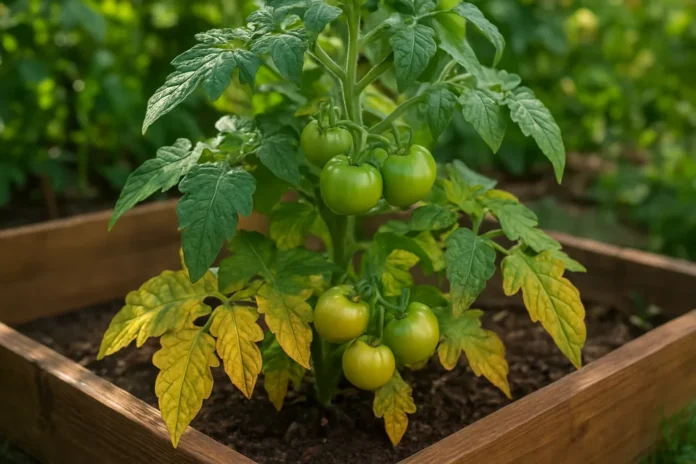
Tomato leaves usually turn yellow because of watering stress, nutrient deficiencies, pests, disease, or natural aging on older foliage. The exact cause often depends on which leaves yellow first and whether they also wilt, spot, curl, or drop.
Seeing tomato leaves turning yellow can be alarming, especially when your plants were healthy just days earlier. Yellowing foliage is one of the most common tomato complaints, but it does not always mean the plant is dying. In many cases, the problem is fixable once you match the symptom pattern to the likely cause.
Tomatoes are heavy feeders and sensitive to uneven moisture, compacted soil, and several common diseases. A few yellow leaves low on the plant may be part of normal aging, while widespread yellowing across the canopy often points to stress. The location of the yellow leaves, how fast the color change spreads, and whether you see spots, curling, or wilting all help explain what is happening.
The good news is that most home gardeners can improve the plant's health by correcting watering habits, improving nutrition, and catching pest or disease issues early. Start with the simplest causes first, then look for the more specific clues described below.
What Yellow Leaves Usually Mean on Tomato Plants
Yellow leaves are a sign that the plant is struggling to maintain healthy chlorophyll production. That struggle can come from too much water, too little water, limited nutrients, damaged roots, disease, or insect feeding. Tomatoes also naturally shed older leaves at the bottom as the plant grows and redirects energy toward new growth and fruit.
The most useful question is not just why the leaves are yellow, but which leaves are yellow. Older lower leaves often point to normal aging, nitrogen deficiency, or early foliar disease. Yellowing on newer upper leaves can suggest iron deficiency, herbicide injury, or severe root stress. If the whole plant looks pale, think about overall nutrition, root health, or watering problems.
- Lower leaves yellowing first often suggests aging, nitrogen deficiency, or fungal leaf disease.
- New growth yellowing first often suggests micronutrient deficiency or root damage.
- Yellow leaves with brown spots often point to disease.
- Yellow leaves with curling, sticky residue, or visible insects often point to pest activity.
- Yellow leaves with wilting can be caused by either underwatering or overwatering.
Overwatering and Poor Drainage
Overwatering is one of the most common reasons tomato leaves turn yellow. Tomato roots need oxygen as much as they need moisture. When soil stays soggy, oxygen levels drop, roots weaken, and the plant cannot move nutrients efficiently. The result is yellowing leaves, drooping stems, and stalled growth.
This is especially common in heavy clay soil, containers without enough drainage, or beds that receive frequent shallow watering. Yellowing from excess moisture may start on lower leaves, but the entire plant can begin to look washed out if roots remain stressed for long.
Signs That Excess Water Is the Issue
- Leaves look yellow and limp rather than crisp
- Soil stays wet for days after watering
- Plants wilt even though the ground feels damp
- Growth slows and fruit set may drop
- Roots may appear brown or mushy if exposed
Let the top inch or two of soil dry slightly before watering again, and make sure water can drain away freely. In containers, empty saucers so roots are not sitting in runoff.
Underwatering and Heat Stress
Tomatoes can also turn yellow when they do not get enough consistent moisture. In hot weather, dry soil can cause leaves to lose color, curl, and eventually crisp at the edges. The plant may sacrifice older leaves first to protect new growth and fruit.
This problem often appears when gardeners water too lightly or too infrequently, especially in raised beds and containers that dry out quickly. Large fruiting plants need more water than young transplants, and mulch makes a major difference in keeping root zones evenly moist.
Clues of Drought Stress
- Leaves droop during the day and may not fully recover by evening
- Leaf edges yellow, then brown and dry
- Soil pulls away from the sides of containers or feels dry several inches down
- Blossoms drop or fruit develops poorly during hot spells
A deep soak is better than frequent light watering. Aim for evenly moist soil, not repeated swings between very dry and very wet.
Nutrient Deficiencies That Cause Yellowing
Tomatoes are hungry plants, and yellow leaves are often linked to a nutrition problem. Some deficiencies show up on older leaves first, while others affect new growth. Poor soil, leached nutrients after heavy rain, root damage, and incorrect soil pH can all limit nutrient uptake even when fertilizer is present.
Nitrogen Deficiency
Nitrogen is the nutrient most often tied to general yellowing. Older lower leaves turn pale green, then yellow, while the plant looks weak and grows slowly. This is common in unfertilized beds, tired container mix, or after prolonged rain.
Magnesium Deficiency
Magnesium deficiency often causes interveinal chlorosis, where the tissue between veins turns yellow but the veins stay greener. It usually begins on older leaves. This problem is more common in container tomatoes and sandy soils.
Iron Deficiency
Iron deficiency typically appears on younger leaves first. New growth turns yellow while the veins remain somewhat green. This can happen when soil pH is too high, roots stay too wet, or cool conditions slow nutrient uptake.
How to Respond
- Use a balanced tomato fertilizer if the plant has not been fed recently.
- Add compost to improve nutrient holding and soil structure.
- Check whether heavy rain may have washed nutrients out of the root zone.
- Avoid overfertilizing with nitrogen once plants are fruiting heavily, since that can create lush foliage at the expense of fruit.
- If chlorosis is patterned between veins or on new growth, consider a fertilizer that includes micronutrients.
Normal Aging of Lower Leaves
Not every yellow leaf signals a serious problem. As tomato plants get taller and fuller, the oldest leaves near the base often yellow and die off naturally. These shaded leaves no longer contribute much to the plant, especially once the canopy thickens.
If only a few lower leaves are affected and the rest of the plant looks vigorous, this is usually normal. Prune those leaves off to improve airflow and reduce the chance of soil-borne disease splashing onto weakened foliage.
- Yellowing stays limited to the oldest leaves near the bottom
- Upper growth remains green and vigorous
- There are no spreading spots, major wilting, or stem collapse
Fungal and Bacterial Diseases
Disease becomes more likely when yellow leaves also develop spots, rings, blight lesions, or rapid browning. Tomatoes are prone to several common leaf diseases, especially in warm, humid weather or when foliage stays wet for long periods.
Early Blight and Septoria Leaf Spot
Early blight often starts on lower leaves with dark brown spots that may show concentric rings, followed by yellowing around the damaged areas. Septoria leaf spot causes many small circular spots, and infected leaves eventually turn yellow and fall off. Both diseases usually move upward from the bottom of the plant.
Fusarium and Verticillium Wilt
These soil-borne diseases can cause yellowing, wilting, and decline, often beginning on one side of the plant or one branch at a time. Watering does not fix the wilt because the internal vascular tissue is affected.
Bacterial Issues
Bacterial diseases may produce yellowing along with leaf spotting, stem damage, or overall collapse. They are harder for home gardeners to manage once established and are often spread by splashing water, wet handling, or infected transplants.
Disease Management Basics
- Remove badly affected lower leaves promptly
- Water at the base rather than overhead
- Space and prune plants for better airflow
- Mulch to reduce soil splash onto foliage
- Rotate tomatoes out of the same bed when possible
- Discard severely diseased plant material rather than composting it if local guidance recommends disposal
Pests That Trigger Yellow Leaves
Several common tomato pests feed on sap or damage roots, and that feeding can lead to yellowing foliage. Insect damage is more likely when leaves are mottled, stippled, curled, sticky, or visibly infested.
Aphids and Whiteflies
These pests suck plant juices and can cause leaves to yellow, curl, and weaken. They also leave behind sticky honeydew that may attract ants or lead to sooty mold.
Spider Mites
Spider mites are tiny and easy to miss, but they often cause fine yellow stippling before leaves become bronzed or dry. Hot, dusty conditions favor outbreaks.
Root-knot Nematodes
In sandy soils, root-knot nematodes can damage roots and leave plants yellow, stunted, and unproductive. The plant may look nutrient deficient because the compromised roots cannot absorb water and nutrients well.
- Check leaf undersides for clusters of insects or eggs
- Look for stippling, webbing, curling, or sticky residue
- Rinse off small pest populations early before they build
- Encourage beneficial insects by avoiding broad, routine insecticide use
Transplant Shock, Root Damage, and Temperature Swings
Tomatoes sometimes yellow soon after planting because roots were disturbed or the weather changed abruptly. Cool nights, compacted soil, rough handling, and circling roots from nursery containers can all slow establishment.
Transplant shock usually shows up within the first week or two after planting. Leaves may yellow lightly, droop, or pause in growth, but the plant often recovers as roots spread into the surrounding soil. Damage is more likely if tomatoes were planted before the soil warmed up enough for active root growth.
- Recently planted tomatoes often rebound with steady warmth and even moisture
- Cold soil can temporarily block nutrient uptake and mimic deficiency symptoms
- Cultivating too close to the stem can injure roots and trigger yellowing
Herbicide Drift and Chemical Injury
Tomatoes are very sensitive to herbicides. Drift from lawn weed killers, nearby spraying, or contaminated compost can injure leaves and cause yellowing, twisting, cupping, or distorted growth. Even small amounts can create visible symptoms.
Chemical injury is more likely if only one side of the plant is affected, if new leaves are oddly shaped, or if the problem appeared shortly after a weed treatment nearby. Unlike simple nutrient issues, herbicide damage often includes abnormal shape along with discoloration.
How to Tell Which Cause Is Most Likely
When several causes seem possible, use the pattern of symptoms to narrow it down. Start by looking at where the yellowing begins, how the soil feels, and whether there are spots or insects.
- If the oldest bottom leaves are yellow but the rest of the plant is healthy, normal aging is likely.
- If the whole plant is pale and growth is slow, think about nitrogen deficiency or root stress.
- If leaves are yellow with wet soil and drooping stems, overwatering is a strong possibility.
- If leaves are yellow with dry soil and heat, underwatering is more likely.
- If yellow leaves also have spots or blighted patches, suspect disease.
- If yellowing comes with stippling, curl, or sticky residue, inspect for pests.
- If new growth is yellow while older leaves stay greener, look at iron or other micronutrient uptake problems.
How to Prevent Yellow Leaves in the Future
The best prevention strategy is to keep tomato plants growing steadily without major stress swings. Healthy roots, even moisture, good airflow, and consistent feeding make yellow leaves much less likely.
- Plant tomatoes in full sun with well-drained soil
- Water deeply and consistently instead of lightly and often
- Mulch around the base to hold moisture and reduce soil splash
- Feed regularly with a balanced tomato fertilizer or rich compost
- Prune lower leaves to improve airflow and lower disease pressure
- Avoid wetting foliage whenever possible
- Rotate planting locations when disease has been a problem
- Inspect plants weekly so small issues are caught before they spread
If you correct the underlying problem early, new growth often returns to normal even if older yellow leaves do not recover. Focus on the health of the newest leaves and the plant's overall vigor rather than expecting every damaged leaf to turn green again.
FAQ
Should I Remove Yellow Leaves From My Tomato Plant?
Yes, if the leaves are mostly yellow, spotted, or touching the soil, it is usually helpful to remove them. This improves airflow and can reduce disease spread. Leave healthy green foliage in place so the plant can keep producing energy.
Can Yellow Tomato Leaves Turn Green Again?
Mildly stressed leaves sometimes improve, but fully yellow leaves usually do not return to deep green. The better sign is healthy new growth after you fix the cause.
Why Are Only the Bottom Leaves on My Tomato Plant Turning Yellow?
Bottom leaves often yellow first because they are the oldest and most shaded. It can be normal aging, but it can also be an early sign of nitrogen deficiency or leaf disease moving up from the soil.
Do Epsom Salts Fix Yellow Tomato Leaves?
Only if the plant actually has a magnesium deficiency. Epsom salt is not a cure-all, and using it without a real need can create nutrient imbalance. Many yellowing problems are caused by watering issues, disease, or nitrogen deficiency instead.
How Often Should I Water Tomatoes to Prevent Yellow Leaves?
There is no single schedule that fits every garden, because soil type, temperature, plant size, and containers all change water needs. In general, tomatoes do best with deep watering that keeps the soil evenly moist but never waterlogged.
Can Too Much Fertilizer Make Tomato Leaves Yellow?
Yes. Excess fertilizer can damage roots, create salt buildup, or throw nutrient balance off enough to cause yellowing and leaf burn. Follow label rates and avoid feeding stressed, very dry plants heavily.
Are Yellow Leaves a Sign My Tomato Plant Is Dying?
Not always. A few yellow leaves are common and often fixable, especially when caused by watering stress or normal aging. Widespread yellowing with wilting, stem collapse, or severe spotting is more serious.
Need the right fix fast? Read our tomato disease and deficiency guides to compare symptoms, or shop top-rated fertilizers, fungicides, and pest controls for healthier plants and better harvests.
