

Note: This article contains affiliate links. If you click on these links and make a purchase, I may earn a small commission at no extra cost to you. This helps support my research and content. Read my full affiliate disclosure here.
If you maintain multiple hedges or large privacy screens but need to control equipment spending, a budget gas hedge trimmer can deliver the power and runtime petrol tools are known for without breaking the bank. You want something robust enough to handle thick growth, easy to start and service, and dependable through a long trimming session. This guide covers the six shortlisted options that represent the best balance of cutting reach, fuel efficiency, and durability in the budget segment. We evaluated each against practical gardener concerns like blade length, engine responsiveness, vibration control, and maintenance needs so you can pick the right unit for your yard. Read on for the key decision points and practical tips before the product summaries.
Top Picks at a Glance
| Best Overall The best all-around choice for most situations | Sybrioka 26cc Gas-Powered Dual-Sided Hedge Trimmer, 24" Blade |  |
| Best Quality Built to a higher standard if you want something more solid | Husqvarna 322HD60 24-inch Gas Hedge Trimmer |  |
| Best Budget The cheapest option that still gets the job done reliably | YUNLAIGOTOP 22.5cc Gas-Powered Hedge Trimmer, 27.6 in Blade |  |
| Highest Rated A top-rated pick with lots of positive feedback | Ireliajob 26cc 2-Cycle Gas 24-inch Dual-Sided Hedge Trimmer |  |
| Most Popular A crowd favorite that many people choose with confidence | SENIX 4QL HT4QL-L 26.5cc 4-Cycle 22" Gas Hedge Trimmer | 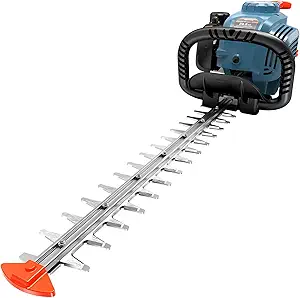 |
| Best Seller A high-volume bestseller chosen again and again | VEVOR 26CC Gas Hedge Trimmer with 23.2-inch Dual Blade and 180° Rotating Head |  |
Sybrioka 26cc Gas-Powered Dual-Sided Hedge Trimmer, 24" Blade

| Power Source | Gas Powered |
|---|---|
| Blade Length | 24 inches |
| Speed | 7500 rpm |
| Blade Material | Metal |
| Fuel Tank Capacity | 0.65L |
The Sybrioka 26cc gas hedge trimmer is built for straight trimming and heavier pruning where an electric tool may fall short. It uses a 26cc two-stroke engine that runs at about 7500 rpm and drives double-sided metal blades with a 24-inch cutting width, so you can shape long hedgerows and take on thicker stems without frequent passes. Typical use is yard and hedge maintenance on medium to large properties where portability and runtime matter: fill the 0.65L tank, pull the recoil start and work uninterrupted by cords or batteries. The trimmer is comparatively light at 14 pounds and is described with ergonomic, low-vibration features that make longer sessions less tiring. Practical benefits include wide single-pass cutting, reliable gas power for continuous work, and a metal blade set that handles tougher material. Important limits are the two-stroke engine needs mixed fuel and routine engine maintenance, and it will be noisier and require more upkeep than cordless electric models.
Best for: Homeowners and property stewards who prioritize cutting power and uninterrupted runtime for medium to large hedges and want a practical, work-focused trimmer.
Less Ideal for: People who prefer low-maintenance, quiet, or emission-free tools for small urban yards should consider electric or battery models instead.
- 24-inch double-sided metal blade allows wide single-pass trimming and cleaner shaping
- 26cc two-stroke engine provides cordless runtime and consistent power for larger yards
- Relatively lightweight design with low-vibration focus eases extended use
- 0.65L fuel tank and recoil start support long, uninterrupted work sessions
- Two-stroke gas engine requires fuel mixing and periodic maintenance
- Gas operation produces more noise and emissions than battery-electric alternatives
Verdict: Choose this trimmer when you need reliable gas power and a wide 24-inch dual-sided blade to tackle medium to large hedges efficiently.
Husqvarna 322HD60 24-inch Gas Hedge Trimmer
| Power Source | Gas Powered |
|---|---|
| Speed | 7800 rpm |
| Blade Material | Hardened Steel |
| Blade Length | 24 inches |
| Material Type | Alloy Steel |
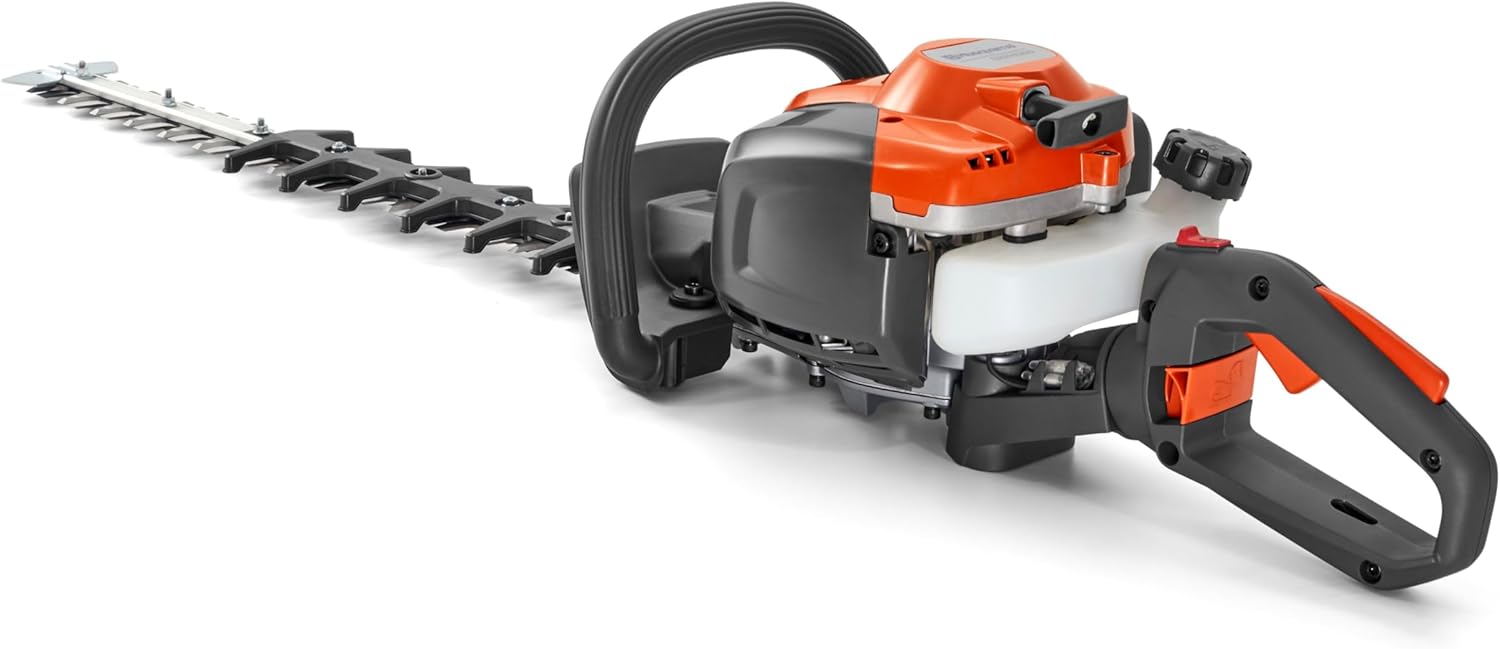
The Husqvarna 322HD60 is a gas-powered double-sided hedge trimmer built for high-capacity residential and light professional work. It uses a 21.7cc two-cycle engine that delivers strong cutting power and a 24-inch dual-action hardened-steel blade that cuts in both directions for faster shaping and fewer passes. An adjustable rear handle and relatively light overall weight make it easier to maneuver around large hedges and tight spots while the durable gearbox and professional-grade knife blades are aimed at frequent use. Typical tasks include trimming mature hedges, reducing overgrowth, and shaping long runs of shrubs where gas power and a long reach speed the job. Important limitations are the need for fuel mixing and routine engine maintenance, and the noise and vibration levels typical of gas tools compared with electric models. If you need long runtime and cutting force for thick stems, this trimmer delivers; if you prefer low-maintenance, quieter operation for smaller yards, an electric or battery model may be more suitable.
Best for: Buyers who prioritize cutting power and long runtime for heavy hedges and frequent trimming tasks and who are comfortable maintaining a gas engine.
Less Ideal for: Casual gardeners with small yards who prefer quieter, low-maintenance electric or battery trimmers.
- Powerful 21.7cc two-cycle engine for cutting thicker stems and long runs
- 24-inch dual-action hardened-steel blade that cuts in both directions for efficient shaping
- Adjustable rear handle and relatively light weight improve maneuverability during extended use
- Durable gearbox and professional-grade knife blades built for frequent residential or part-time professional work
- Requires fuel mixing and regular engine maintenance typical of gas tools
- Higher noise and vibration compared with electric or battery trimmers
Verdict: Choose the Husqvarna 322HD60 when you need gas-powered cutting power and a long dual-action blade for fast, professional-quality hedge work.
YUNLAIGOTOP 22.5cc Gas-Powered Hedge Trimmer, 27.6 in Blade

| Power Source | Gas Powered |
|---|---|
| Volume | 22.5cc |
| Power | 0.65 kW |
| Blade Length | 27.56 inches |
| Speed | 7500 rpm |
This YUNLAIGOTOP gas hedge trimmer is a budget-oriented, two-stroke tool built for straightforward pruning of hedges, shrubs, and light branches. It uses a 22.5cc single-cylinder engine that delivers about 0.65 kW and up to 7,500 rpm to drive a 27.6-inch reciprocating single-edged blade, which speeds up long, linear cuts along hedgerows. Typical use is in home yards and small landscaping jobs where mobility matters since it runs on gasoline and does not need a cord. Included accessories such as protective glasses, gloves, a fuel-mixing bottle, and a funnel make initial setup and safe operation easier for first-time users. Practical benefits are long reach from the blade length, simple hand-pull start, and a diaphragm carburetor intended for relatively low fuel consumption. Important limitations are that it is a two-stroke gas unit so it requires proper fuel/oil mixing and routine maintenance and it is rated to cut branches under about 10 mm, so it is not suited for thicker wood or heavy professional use. Noise and vibration are typical for gas trimmers and may be noticeable during extended sessions.
Best for: Buyers who need an affordable, mobile hedge trimmer for routine yard maintenance and want a straightforward gas tool with long blade reach rather than a premium commercial machine.
Less Ideal for: Professional landscapers or users who must cut thick woody branches frequently or who prefer low-noise, low-maintenance electric or battery tools.
- Long 27.6-inch blade covers more hedge per pass to reduce time spent trimming
- Gas power provides cordless mobility for yards without electrical access
- Includes basic safety and setup accessories (glasses, gloves, funnel, mixing bottle)
- Diaphragm carburetor and 7,500 rpm speed offer efficient cutting for small-diameter branches
- Single-edged blade and 10 mm branch limit make it unsuitable for thick or woody stems
- Two-stroke engine requires fuel/oil mixing and more maintenance than electric models
- Noise up to about 90 dB and vibration are inherent to this gas-powered design
Verdict: A no-frills gas hedge trimmer that delivers long-blade reach and cordless mobility at a budget price for routine home pruning.
Ireliajob 26cc 2-Cycle Gas 24-inch Dual-Sided Hedge Trimmer

| Power Source | Gas Powered |
|---|---|
| Speed | 8500 rpm |
| Blade Material | High Carbon Steel |
| Blade Length | 23.6 inches |
This Ireliajob gas hedge trimmer is a straightforward, no-frills power tool aimed at trimming medium to large hedges efficiently. It uses a 26cc two-cycle engine that spins the double-sided high carbon steel blades up to about 8500 rpm, giving a long 23.6 inch cutting width for fast passes along long runs of hedge. The rotating D-handle and balanced layout make it possible to work from multiple angles, and the reinforced blades are good for routine shaping and cutting through branches up to about 1 inch thick. As a gas unit it delivers consistent power for extended jobs without relying on batteries, but it requires mixing fuel, routine maintenance, and louder operation than electric alternatives. The trimmer is heavier than cordless models, so it is better suited to short sessions or operators comfortable handling a bulkier tool. For reliability-focused buyers who need sustained cutting power on larger properties, this model offers a practical, durable option at the budget end of gas trimmers.
Best for: Buyers who prioritize dependable, continuous cutting power for medium to large yards and prefer a simple gas-powered tool that can handle lengthy trimming sessions without battery limits.
Less Ideal for: People with very small yards who prefer quiet, low-maintenance tools or users unwilling to perform fuel mixing and routine engine upkeep.
- Long 23.6 inch double-sided blade lets you cover wide hedges in fewer passes
- Gas engine provides continuous power for extended trimming sessions without recharging
- High carbon steel blade construction for durability and cleaner cuts
- Rotating D-handle improves access and control when cutting at different angles
- Heavier and louder than electric or battery models, which can cause fatigue on long jobs
- Requires fuel mixing and regular engine maintenance
- Noisy operation may limit use in noise-sensitive neighborhoods
Verdict: A reliable, budget-friendly gas trimmer that delivers continuous power and a long dual-sided blade for fast hedge work on medium to large properties.
SENIX 4QL HT4QL-L 26.5cc 4-Cycle 22" Gas Hedge Trimmer
| Power Source | Gas Powered |
|---|---|
| Blade Length | 22 inches |
| Blade Material | Stainless Steel |
| Cutting width | 1.13 inches |
| Engine displacement | 26.5 cc |
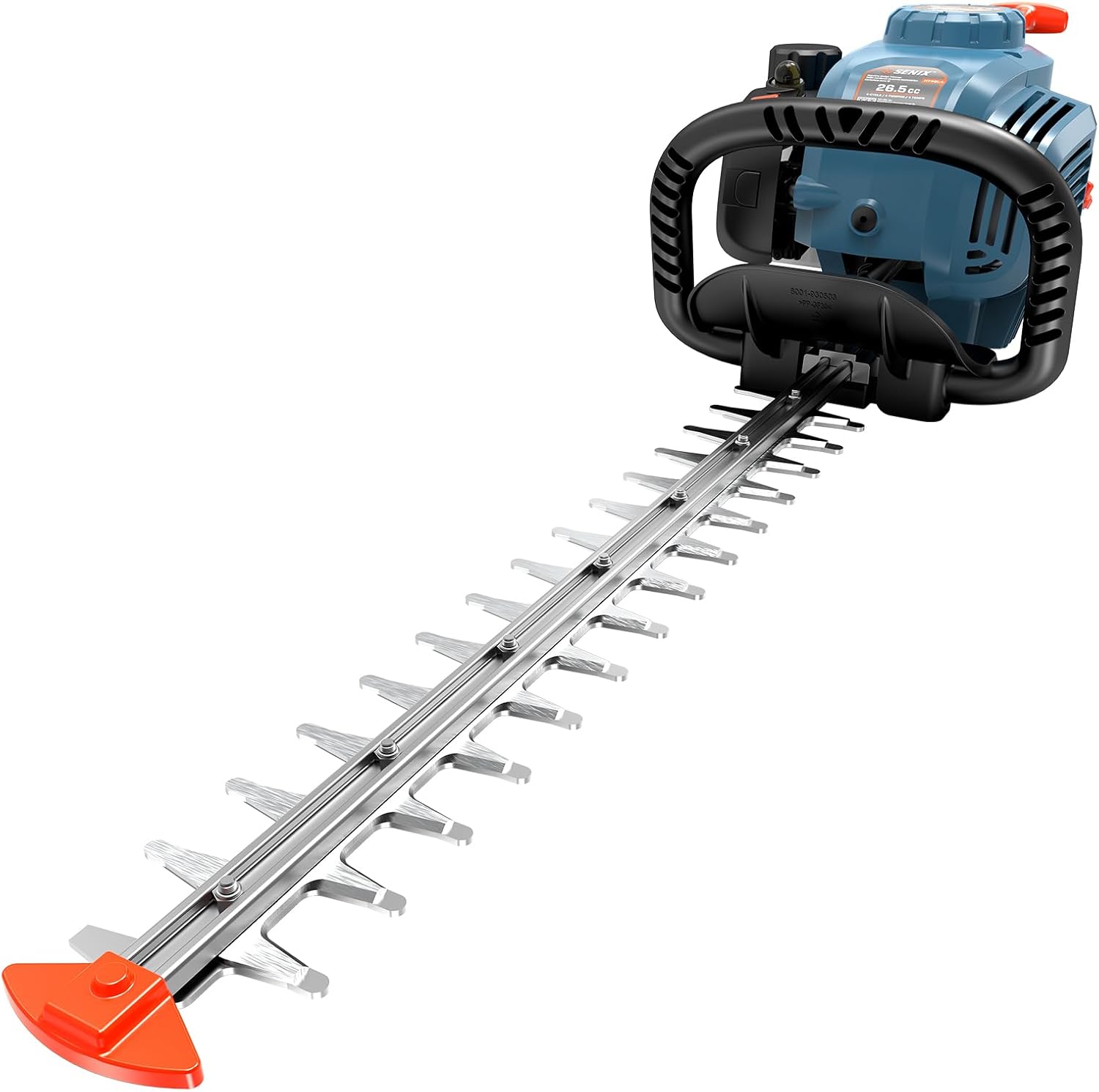
The SENIX 4QL 22-inch gas hedge trimmer is built for heavier hedge and shrub work where corded or battery tools run short. It uses a 26.5 cc 4-cycle 4QL engine that does not require premixing fuel and oil, reducing fuss and the risk of leaks while claiming lower emissions and fuel use than typical two-stroke motors. The 22-inch laser-cut dual-action stainless steel blades and 1-1/8-inch cutting capacity make quick work of thick growth, and the rotating rear handle helps you maintain comfortable angles when trimming tall or wide hedges. Included items such as a blade cover, spark plug wrench, and oil bottle let you start right away and perform basic maintenance. Expect a tool that favors power and continuous run time over lightweight portability and low noise; at about the size and weight of typical gas trimmers it can be tiring for long overhead work and requires regular engine maintenance. For buyers prioritizing simple fueling and robust cutting in commercial or heavy residential tasks, this is a practical gas option.
Best for: Buyers who need a budget-minded gas trimmer that delivers sustained cutting power for commercial or heavy residential hedge jobs and who prioritize runtime and cutting capacity over lightweight ergonomics.
Less Ideal for: If you need the quietest, lightest tool for long periods of overhead or precision topiary work, a battery or electric trimmer would be a better fit.
- Powerful 26.5 cc 4-cycle engine that runs without mixing fuel and oil
- 22-inch laser-cut dual-action stainless steel blades for efficient cutting of thick foliage
- Rotating rear handle for comfortable all-direction trimming
- Includes blade cover and basic maintenance tools to start using right away
- Heavier and bulkier than battery trimmers so it can be fatiguing for extended overhead work
- Gas engine requires regular maintenance and produces engine noise and emissions
Verdict: Choose this SENIX gas trimmer when you want a no-mix, powerful 22-inch tool that delivers continuous cutting performance for demanding hedge work.
VEVOR 26CC Gas Hedge Trimmer with 23.2-inch Dual Blade and 180° Rotating Head

| Engine displacement | 26CC |
|---|---|
| Cycle type | 2 Stroke |
| Blade length | 23.23 inches |
| Speed | 8500 rpm |
| Full fuel usage time | about 40–45 minutes |
The VEVOR 26CC gas hedge trimmer is a straightforward gas-powered tool aimed at homeowners who need a lot of cutting power without running an extension cord. It uses a 26cc 2-stroke engine that drives a dual-action 23.2-inch alloy-steel blade, giving fast cutting at up to 6500 rpm blade speed for shaping hedges, trimming shrubs, and edging fence lines. The 180° rotating head helps reach awkward angles and the included shoulder strap, gloves, and ear protection make longer sessions more manageable. Practical benefits include a nearly 40-minute runtime on a full tank under moderate load and a metal/plastic construction intended for routine yard maintenance. Important limitations to consider are the typical demands of a 2-stroke gas engine: you must mix fuel correctly, expect louder operation than cordless units, and perform basic maintenance like spark plug and air filter checks. Also the unit is heavier than battery trimmers, so prolonged overhead use can be tiring. For buyers wanting cordless convenience or very light suburban trimming, electric models may be preferable.
Best for: Buyers who want gas-level cutting power for medium to large yards and prefer a robust handheld tool they can maintain and service themselves.
Less Ideal for: Those who prioritize low noise, minimal maintenance, or very light, short-duration trimming where a cordless electric trimmer would be more convenient.
- Powerful 26cc 2-stroke engine for cutting thicker branches and dense growth
- Dual-action alloy-steel blade and 23.2-inch cutting length for faster, cleaner cuts
- 180° adjustable head to trim at multiple angles and reach awkward spots
- Comes with protective accessories and a shoulder strap for safer, more comfortable use
- Up to about 40 minutes continuous runtime on a full tank under moderate load
- Requires mixed fuel and routine 2-stroke engine maintenance
- Louder and heavier than battery-powered trimmers, which can increase fatigue and noise exposure
- Not suitable for regions where a gas-powered unit is restricted
Verdict: Choose this VEVOR 26CC gas trimmer if you need consistent gas-powered cutting performance and a 180° head for precise shaping on medium to large hedges.
Choosing the Right Budget Gas Hedge Trimmer: Key Factors to Consider
Engine Starting Reliability and Fuel Efficiency
A hedge trimmer that starts easily saves time and frustration on every job. In the budget gas category, simpler carburetor and ignition systems are common, so look for designs with clear choke and primer controls and documented reliable pull-start mechanisms.
Fuel efficiency matters for longer sessions. Engines tuned for a balance of power and economy let you trim more metres per tank, reducing refill interruptions and the need to carry spare fuel. Poorly tuned engines can flood, require frequent restarts, or consume fuel quickly, all of which increase running costs and downtime.
Cutting Reach and Blade Design
Blade length and tooth spacing determine what you can trim in one pass and how well the tool handles new growth versus established thick branches. Longer blades cover more hedge at once but can be harder to control and may need stiffer shafts or better balance.
Blade material and tooth geometry affect durability and the need for sharpening. Look for blades with hardened cutting surfaces and tooth spacing suited to the typical thickness of your hedges. Fine-toothed blades excel at shaping and tidier cuts, while wider-spacing blades manage thicker stems more easily.
Vibration Control and Ergonomics
Gas engines vibrate more than electric motors, and high vibration levels quickly fatigue wrists, arms, and shoulders. Anti-vibration mounts, well-placed handles, and balanced weight distribution make it possible to work longer with better accuracy.
Ergonomics also covers handle types and grip surfaces. A front handle that rotates or offers comfortable hand positions lets you trim vertical and horizontal faces without awkward wrist angles. Lightweight materials save effort, but too-light builds can transmit more engine shake to the user.
Durability and Ease of Maintenance
Budget tools must still survive outdoor conditions and occasional bumps against branches or fences. Robust housing, decent-quality fasteners, and accessible service points extend useful life and keep ownership costs down.
Simple maintenance matters: easy air filter access, straightforward carburetor adjustments, and replaceable spark plugs reduce service time. Parts availability and common fastener sizes are practical details that determine whether you can perform routine fixes yourself or need professional help.
Safety Features and Controls
Trimming hedges with a gas trimmer requires reliable safety controls. Features to prioritize include dual-switch kill systems, blade guards that prevent accidental contact, and accessible throttle cutoffs that stop the engine quickly if you lose control.
Control placements should be intuitive so you can operate safety cutoffs without losing grip on the tool. Consideration of exhaust placement and shielding is also important to avoid burns or fuel vapour exposure during normal use.
When a Budget Gas Trimmer Makes Sense
Gas-powered hedge trimmers are the right choice when you need sustained cutting power away from mains electricity or when trimming large, dense hedges that quickly drain battery packs. Budget gas options sacrifice some refinement and lightweight construction for lower upfront cost and simpler field servicing compared with premium models.
Bullets:
– Use on longer hedges or multiple properties where runtime and quick refuels matter.
– Useful where extension cords are impractical or batteries cannot sustain long sessions.
- Use on longer hedges or multiple properties where runtime and quick refuels matter.
- Useful where extension cords are impractical or batteries cannot sustain long sessions.
Preparing Fuel and Basic Engine Care
Follow safe handling practices when mixing or storing fuel. Inexpensive trimmers often use simple two-stroke engines that require a fuel-oil mix; get the ratio from the owner manual and mix in a clean container to avoid contamination.
Keep a small service kit with spare spark plugs, a basic set of wrenches, and a clean rag. Regularly check the air filter and clean or replace it as needed. These small steps prevent common running issues like poor starting or loss of power.
- Use the correct fuel-oil ratio specified in documentation.
- Store mixed fuel in approved containers away from heat.
Practical Trimming Techniques for Best Results
Work from the bottom up on vertical faces so cuttings fall away and you avoid re-cutting. For long hedges, take overlapping passes rather than forcing a single deep cut; this reduces strain on the engine and the blade.
Keep blades sharp and clean. A quick file after a heavy session makes the next pass smoother and reduces tearing, which stresses live plants. For very thick regrowth, make a rough pass then return for finer shaping once the bulk has been removed.
- Trim in mild weather to avoid browning at hot midday sun.
- Use both hands and a steady stance to control the cutter for even lines.
Storing and Winterizing a Budget Gas Trimmer
Before long storage periods, run the engine until the carburetor is dry or add a fuel stabilizer, then run briefly to circulate it. Drain or stabilize the tank to prevent varnish buildup that can clog jets. Remove and clean the air filter, and lightly oil the blade to prevent rust.
Store the trimmer in a dry, sheltered place off the ground. Disconnect the spark plug for safety if the unit will be stored for months and cover the tool to keep dust out. Regular checks in early spring will ensure a quick return to service.
- Drain or stabilize fuel before extended storage.
- Cover and store off concrete floors to reduce moisture exposure.
How We Chose the Best Budget Gas Hedge Trimmer
We focused on tools that offer dependable cutting power and straightforward maintenance within a conservative budget. Our selection filters prioritized engine performance suited for typical home hedges, blade design that handles both light shaping and heavier regrowth, and features that reduce user fatigue during long trimming sessions. We excluded models intended solely for professional landscaping crews or those that require proprietary fuels or special maintenance regimes. Evaluation criteria centered on measurable, garden-relevant factors: engine starting reliability and fuel economy, cutting reach and blade design, vibration and handling, build quality and ease of maintenance, and safety features. Each product had to demonstrate acceptable parts availability and simple serviceability so a homeowner can keep it running beyond the first season. We also considered real-world ergonomics such as weight distribution and grip placement, because a trimmer that is hard to hold will impact trimming accuracy and safety. Items lacking basic safety interlocks, or those with documented excessive vibration or poor starting in standard gasoline conditions, were not included. The final shortlist reflects models that balance practical field performance and low ownership complexity for budget-conscious gardeners.
FAQ
How do I know what blade length I need?
Blade length depends on hedge height and density. For medium home hedges, a 20 to 26-inch blade covers most jobs; longer blades are useful for tall or broad hedges but require better balance and handling. Choose a length that lets you reach comfortably without overextending.
Can I use automotive fuel in a two-stroke trimmer?
Many two-stroke engines run on a gasoline-oil mix and accept regular unleaded fuel. Avoid fuels with high ethanol content where the manual warns against it, and follow the correct oil ratio. Using fuel not recommended by the manufacturer can cause starting and long-term running issues.
How often should I sharpen the blades?
Sharpening frequency depends on use. Light shaping every few sessions and a more thorough sharpening once a season is common for home gardeners. Inspect the blade after each heavy job and file minor nicks promptly to prevent larger damage.
Is vibration a sign of a problem or just part of gas trimmers?
Some vibration is normal, but excessive shaking often indicates loose fasteners, a damaged blade, or engine mounting issues. Regularly check bolts and blade condition; persistent high vibration should be serviced to avoid user fatigue and component wear.
What basic maintenance can I do at home?
Home maintenance tasks include cleaning or replacing the air filter, checking and replacing the spark plug, sharpening or cleaning the blade, and ensuring screws and mounting points are tight. Simple tune-ups like carburetor adjustments are possible for confident DIYers but may need a mechanic if unfamiliar.
Final Verdict
For gardeners on a budget who still need petrol power, prioritize reliable starting, decent blade reach, and vibration controls. Those three areas most directly affect how quickly and comfortably you can shape hedges and how much maintenance you will do between seasons. Accept that some compromises on weight or refinement are normal in the budget segment. Focus on a model with accessible service points and clear safety controls so you have a tool that performs when you need it and stays serviceable over time.
