

Note: This article contains affiliate links. If you click on these links and make a purchase, I may earn a small commission at no extra cost to you. This helps support my research and content. Read my full affiliate disclosure here.
Leaf miners can spiral from a few cosmetic tunnels to damaging infestations that stunt growth and lower yield. Choosing the right insecticide for leaf miners matters because timing, mode of action, and plant safety determine whether treatments stop larvae inside the leaf or only reduce adult numbers. This guide examines six top insecticides for leaf miners shortlisted for real-garden effectiveness. We focus on how products behave in beds, containers, and landscape plants, and we evaluate contact control, systemic activity, residual protection, and safety for beneficials. Read on to understand the tradeoffs so you can pick a treatment that fits your plants and gardening style.
Top Picks at a Glance
| Best Overall The best all-around choice for most situations | Monterey Spinosad Insect Spray (Pint) |  |
| Best Quality Built to a higher standard if you want something more solid | Monterey Spinosad Insecticide, 32 oz (concentrate) |  |
| Best Value The sweet spot between price and what you get | Bonide Annual Tree & Shrub Insect Control Concentrate, 128 oz |  |
| Highest Rated A top-rated pick with lots of positive feedback | Monterey Spinosad Insecticide Concentrate, 1 Gallon |  |
| Most Popular A crowd favorite that many people choose with confidence | Bonide Captain Jack's Deadbug Brew 16 oz Concentrate |  |
| Best Seller A high-volume bestseller chosen again and again | Bonide Captain Jack's Deadbug Brew Concentrate, 32 oz |  |
Monterey Spinosad Insect Spray (Pint)
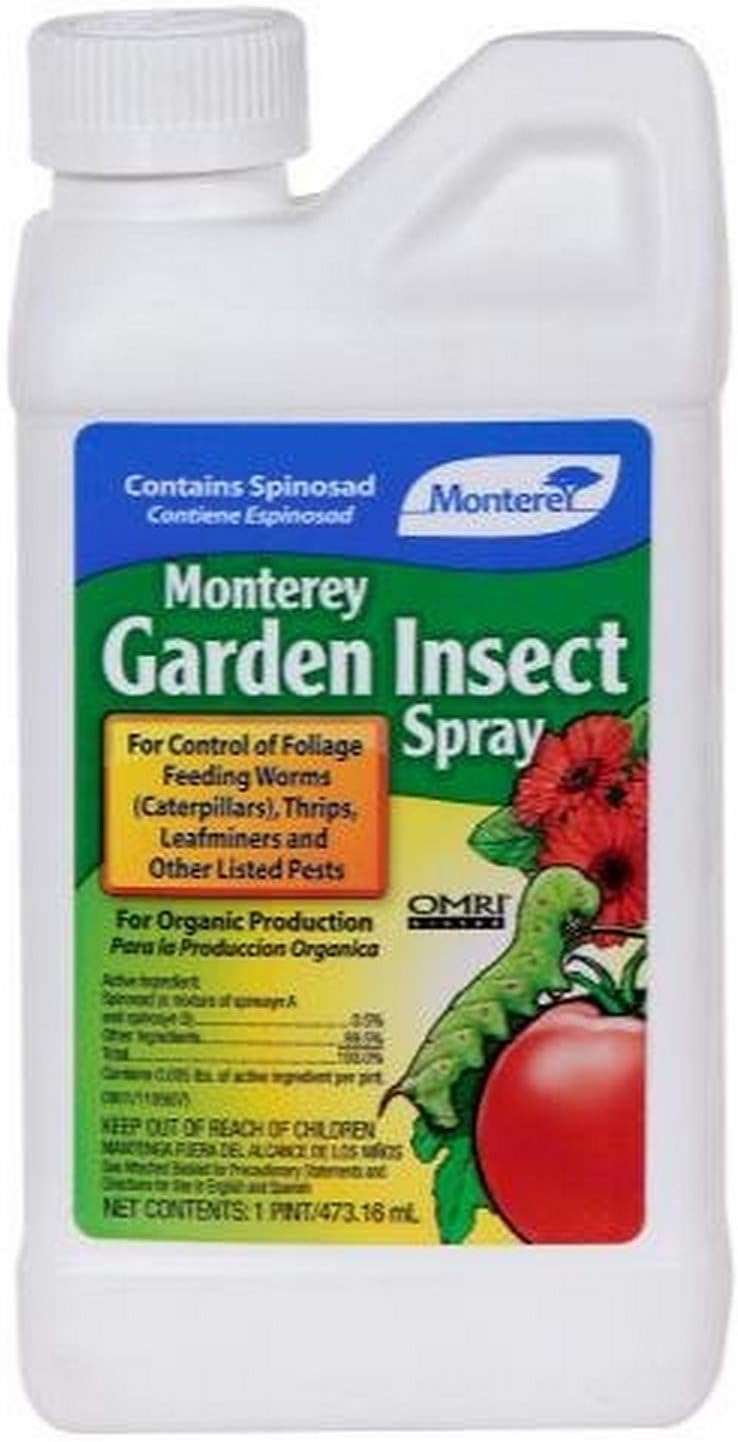
| Manufacturer | Monterey |
|---|---|
| Active ingredient | Spinosad |
| Intended use | Lawns, ornamentals, vegetables, fruit trees |
| Container size | Pint |
This Monterey spinosad spray delivers a biological insecticide option for foliage pests including caterpillars and leaf miners. It is typically applied as a foliar spray to lawns, ornamental beds, vegetable plants and fruit trees where the active ingredient, spinosad, targets chewing and certain mining insects while being labeled for food crops. The concentrate comes ready in a pint container suitable for mixing into spray equipment for spot treatments or broader coverage. Practical benefits include a mode of action different from many synthetic insecticides and labeled use on edible plants, which makes it useful for integrated pest management. Limitations are that it addresses primarily chewing and some mining pests rather than a broad spectrum of sap‑sucking insects, and effective control requires thorough coverage and correct timing relative to pest life stages. Users should follow label directions for rates and reapplication intervals to protect beneficial insects and achieve best results.
Best for: Gardeners who want a biological, crop‑safe option to manage foliage feeders and leaf miners across small lawns, vegetable beds and ornamentals and who prioritize integrated pest management practices.
Less Ideal for: People seeking a single product to eliminate a wide range of pests including sap‑sucking insects or those managing large commercial acres should consider broader or more targeted alternatives.
- Contains spinosad, a biologically derived active ingredient effective against caterpillars and leaf miners
- Labeled for use on vegetables, fruit trees, ornamentals and turf, so it fits edible and ornamental applications
- Pint size is convenient for mixing into handheld or backpack sprayers for spot or small‑plot treatments
- Controls mainly chewing insects and some miners but is not a broad‑spectrum solution for all pest types
- Requires thorough coverage and correct timing to target vulnerable life stages for best effectiveness
Verdict: Choose this spinosad spray when you want a crop‑safe, biologically based spray that targets caterpillars and leaf miners in home gardens and small landscapes.
Monterey Spinosad Insecticide, 32 oz (concentrate)

| Unit Count | 32 Fluid Ounces |
|---|---|
| Item Form | Oil |
| Target Species | Insects |
Monterey Spinosad is a concentrated, spinosad‑based insecticide designed for home garden use to control caterpillars, leafminers, borers, thrips and many other chewing and crawling pests. Mixed into a trigger, backpack, or hose‑end sprayer, it can be applied to ornamentals, vegetables, lawns, citrus and fruit trees; the concentrate format makes it easy to cover larger areas on a schedule. The product is OMRI listed, fast acting, and practically odorless since spinosad is derived from naturally occurring bacteria. Safety directions on the label are clear and recommend protective clothing and thorough washing after handling. Limitations are that it is a broad contact toxin so beneficial insects like bees and predatory insects can be affected if applied during bloom or while pollinators are active, and you must follow label rates and reentry intervals for edible crops. For gardeners who prioritize reliable, organic‑approved control of chewing insects, this concentrate is a practical tool; those wanting an ant‑specific baiting strategy or systemic option will need a different product.
Best for: Gardeners who want a reliable, organic‑approved concentrate to quickly reduce chewing and boring insect populations across vegetables, ornamentals and fruit trees and who are comfortable following label safety and mixing instructions.
Less Ideal for: People seeking a targeted ant bait or a systemic insecticide for soilborne pests or those who need a product safe to spray during active bloom are better off with specialist ant baits or systemic products.
- OMRI listed for use in organic gardening
- Effective against a wide range of chewing and boring insects including caterpillars and leafminers
- Concentrate format works with trigger, backpack, or hose‑end sprayers for flexible coverage
- Fast acting and essentially odorless when applied properly
- Contact action can harm beneficial insects if applied when pollinators are active
- Requires mixing and careful adherence to label instructions for safe use
Verdict: Choose this OMRI‑listed spinosad concentrate when you need dependable, fast control of chewing garden pests across vegetables, ornamentals and fruit trees.
Bonide Annual Tree & Shrub Insect Control Concentrate, 128 oz

| Unit Count | 128 Fluid Ounces |
|---|---|
| Item Form | Spray |
| Target Species | Insects |
| Active Ingredients | Imidacloprid 1.47% |
Bonide Annual Tree & Shrub is a concentrated imidacloprid treatment formulated to protect established trees and shrubs from a range of sap-feeding and boring insects. You mix the concentrate with water and apply it as a soil drench or spray at the base of the plant so the chemical is taken up through the roots and distributed into new and existing growth. Key features are its long-lasting, systemic action that claims up to one-year protection and a formulation designed to be rainproof once dry. For gardeners this means fewer repeat treatments over the growing season and targeted control of pests that feed internally or on new shoots. Important limitations are that it contains imidacloprid, a neonicotinoid that can affect pollinators if misused, and it is intended for listed trees and shrubs rather than for broad landscape broadcast use. Careful adherence to label directions and timing is needed to protect beneficial insects and follow safety guidance.
Best for: Gardeners who want season-long, low-maintenance protection for individual trees and shrubs and are comfortable following label directions to minimize risks to pollinators.
Less Ideal for: Homeowners seeking immediate contact-kill sprays for lawn pests or those who prefer only non-neonicotinoid or organic insect controls.
- Systemic soil-applied formulation provides long residual control up to one year
- Concentrate offers flexibility to mix volumes for multiple trees and shrubs
- Rainproof after drying so protection is not easily washed away
- Specifically labeled for fruit, nut and ornamental trees and shrubs, including roses
- Contains imidacloprid, which requires careful use to avoid harm to pollinators and non-target insects
- Not designed for instant knockdown of foliage insects that require contact sprays
Verdict: Choose this concentrate when you want a single, systemic treatment to protect trees and shrubs for an extended season with minimal repeat applications.
Monterey Spinosad Insecticide Concentrate, 1 Gallon

| Unit Count | 128 Fluid Ounces |
|---|---|
| Item Form | Oil |
| Target Species | Insects |
Monterey Spinosad Insecticide Concentrate is a 1-gallon, concentrated treatment formulated around spinosad to control caterpillars, leafminers, borers and many other chewing insects on ornamentals, vegetables and fruit trees. It is OMRI listed for organic gardening, fast acting and essentially odorless, and can be mixed into a trigger, backpack or hose-end sprayer for standard backyard or small-farm applications. For bagworm control the active ingredient targets chewing larvae effectively when applied to foliage while they are feeding. Practical benefits include a versatile application method, a large concentrate size that covers multiple treatments, and suitability for organic systems. Important limitations are that it is a contact/stomach poison so thorough coverage is required for good control and repeat applications may be needed to catch newly hatched larvae. Users must follow label safety directions and wear protective clothing when mixing and applying concentrated product.
Best for: Gardeners who prioritize effective, performance-oriented control of chewing pests and want a concentrated, organic-compatible option for treating bagworms on ornamentals and fruiting plants.
Less Ideal for: Casual users who want a ready-to-use product or those unwilling to mix concentrates and follow protective-gear instructions should consider an RTU product instead.
- Contains spinosad, a fast-acting active ingredient effective against caterpillars and other chewing insects
- OMRI listed for organic gardening, suitable for organic beds and fruit trees
- Large 1-gallon concentrate supports multiple treatments and different sprayer types
- Odorless formula that is easier to apply around people and pets when label directions are followed
- Requires thorough coverage because it is primarily a contact and stomach-active insecticide
- Concentrate requires mixing and protective gear during handling
Verdict: A high-volume, spinosad concentrate that delivers effective, organic-compatible control of bagworms and other chewing caterpillars when applied for full foliage coverage.
Bonide Captain Jack's Deadbug Brew 16 oz Concentrate

| Unit Count | 16 Ounce |
|---|---|
| Item Form | Spray |
| Target Species | Insects |
| Active Ingredients | Spinosad (Mixture of Spinosyn A and Spinosad D) |
Bonide Captain Jack's Deadbug Brew is a concentrated spinosad insecticide designed for use on vegetables, fruits, ornamentals, and other garden plants. You mix the 16 fl oz concentrate with water and apply it with a trigger, hand-held, backpack, or hose-end sprayer to target caterpillars, beetles, borers, leaf miners, and similar chewing pests. Because the active ingredient is spinosad, the product is approved for organic gardening and is selective enough that it does not significantly impact many predatory beneficial insects and mites when used as directed. In practical use it provides quick knockdown of listed pests and is suitable for protecting squash and other cucurbits from feeding damage. The main limitations are that it must be mixed and applied correctly following label rates and safety instructions and that repeated broad use can still affect non-target insects if timing and coverage are not careful. For gardeners focused on protecting food crops, it is a straightforward, effective option when integrated with scouting and spot treatments.
Best for: Gardeners who prioritize practical, effective pest control for edible gardens and want an organic-approved concentrate they can mix and apply themselves to protect squash and other crops.
Less Ideal for: Gardeners seeking a ready-to-use spray or those unwilling to follow label mixing and safety instructions should consider alternative formats or professional application.
- Contains spinosad, an active ingredient approved for organic gardening and effective against caterpillars and beetles
- Concentrate mixes with water for use with trigger, backpack, hand-held, or hose‑end sprayers
- Labeled for use on a wide range of vegetables, fruits, and ornamentals including cucurbits
- Designed to minimize impact on many predatory beneficial insects and mites when used as directed
- Requires careful mixing and application per label to avoid harming non-target insects
- Not a residual solution for all pests so repeat applications or scouting are often necessary
Verdict: A practical, organic-approved spinosad concentrate that reliably controls chewing pests on squash and other garden crops when mixed and applied correctly.
Bonide Captain Jack's Deadbug Brew Concentrate, 32 oz

| Unit Count | 32 Ounce |
|---|---|
| Item Form | Liquid |
| Target Species | Insects |
| Active Ingredients | Spinosad |
Bonide Captain Jack's Deadbug Brew is a concentrated spinosad-based insecticide designed for use on vegetables, fruits, flowers, and ornamentals in organic gardens. You mix the concentrate with water and apply it with a trigger, hand-held, backpack, or hose-end sprayer to target caterpillars, beetles, borers, leaf miners, thrips, spider mites and other listed pests. Because the active ingredient is spinosad, the product targets many chewing and some sucking insects while having limited impact on predatory beneficials when used as directed. The concentrate format keeps storage and transport compact and lets you treat multiple beds or trees from one bottle. Important limitations are following label directions closely for application rates and timing and taking normal safety precautions; like all insecticides it will not selectively remove a single pest species and repeated use can require integrated pest management strategies. For gardeners seeking a broadly effective, organic-eligible spray, this is a practical go-to option.
Best for: Gardeners who want a single, broadly effective insecticide approved for organic use to protect vegetables, fruits and ornamental beds and who prefer a concentrate that treats multiple areas.
Less Ideal for: People seeking an immediate-contact knockdown spray for household pests or those unwilling to follow dilution and safety instructions should consider other options.
- Contains spinosad, an organic-approved active ingredient effective against many caterpillars, beetles, borers and leaf-feeding pests
- Concentrate mixes easily with water and works with common sprayers including trigger, backpack and hose-end models
- Approved for use on a wide range of edible and ornamental plants, including vegetables, fruits and ornamentals
- Formulation is designed to have limited impact on predatory beneficial insects when used according to the label
- Requires careful dilution and adherence to label directions for safe and effective use
- Not selective to a single pest species and may require integration with other IPM practices
Verdict: Choose this concentrated spinosad spray if you want a versatile, organic-approved insecticide to protect a wide range of garden plants.
Choosing the Right Insecticide for Leaf Miners: Key Factors to Consider
Mode of Action and Target Stage
Leaf miners spend most of their damaging stage inside leaf tissue as larvae. Insecticides that only contact the leaf surface rarely reach those larvae, so translaminar or systemic modes of action matter. Translaminar materials move short distances into the leaf from the sprayed surface and can contact miners from beneath the epidermis. Systemic products are taken up by roots or foliage and move within the plant to reach feeding larvae.
Understanding which life stage a product affects determines timing. Products that target adults can reduce egg-laying but will not remove existing larvae. Choose a mode of action aligned with whether you need immediate knockdown of adults, suppression of future generations, or curative activity against larvae already inside leaves.
Speed of Uptake and Residual Protection
Some insecticides act quickly, delivering visible reductions in adult activity within hours but offering little lasting protection. Others require a day or more to be taken up and translocated through the plant but then provide residual control that reduces reinfestation for days to weeks. Faster-acting contact options are useful for rapid knockdown during heavy outbreaks, while slower systemic options are better when you need longer-term suppression with fewer repeat applications.
Consider the crop and growth stage. For leafy vegetables destined for harvest within days, short preharvest intervals and minimal persistence matter. For ornamentals and perennial beds, longer residual activity can reduce reapplication frequency and labor.
Plant Type and Application Method
Different plants absorb and tolerate insecticides differently. Woody shrubs and trees may take up systemic products more slowly than young annuals. Container-grown plants have limited root volume, which can affect root uptake from soil drenches. Foliar sprays reach leaves directly but rely on the chosen product's ability to penetrate or move within leaf tissue.
Match the application method to the planting situation. Use foliar sprays for quick, targeted coverage on foliage; use soil drenches or root-soak methods when a systemic, whole-plant treatment is needed. Consider repeatability and whether the method fits the scale of your garden maintenance routine.
Safety for Beneficial Insects and Pollinators
Many gardeners rely on predators and parasitoids to help control leaf miners. Broad-spectrum contact insecticides can kill helpful predators and bees if applied during bloom or when beneficials are active. Products with reduced impact on beneficials or those that are selective for leaf miners help preserve natural controls.
Read label directions about timing applications to minimize exposure to pollinators, for example applying in early morning or evening, and avoid spraying blooming plants. Prefer materials and application methods that limit drift and off-target exposure when protecting beneficial insect populations.
Residue, Preharvest Intervals, and Human Safety
For edible crops, respect preharvest intervals and labeled restrictions to keep produce safe. Some systemic products remain in leaf tissue longer, which can extend the time before safe harvest. Residue persistence also affects how often you can treat and whether successive applications are permitted.
Personal protective equipment and safe handling reduce risks during application. Choose formulations and application schedules that fit your comfort level for reentry intervals and cleanup, especially when treating small vegetable plots or container herbs used frequently in the kitchen.
Resistance Management and Rotation
Leaf miners can develop resistance to repeated use of a single active ingredient. Rotating products with different modes of action reduces selection pressure and prolongs effectiveness. Look for labels that list active ingredient groups and follow recommended rotation intervals.
Integrate insecticide use with cultural controls such as removing heavily mined leaves, using row covers when feasible, and encouraging parasitoids. A planned rotation strategy helps maintain control over multiple seasons and reduces the chance of losing options to resistance.
Timing Treatments to Match the Pest Cycle
Successful control depends on treating at the right time. Monitor plants for fresh mines and adults and target applications when adults are active or just after egg-laying to minimize new larvae entering leaf tissue. For curative control, apply products with translaminar or systemic activity early in the larval period before mines are extensive.
Regular scouting of susceptible plants reveals whether you are preventing new generations or reacting to established infestations. Track degree days or local pest alerts if available, because timing can vary with local climate and season.
- Inspect undersides of leaves and new growth for tiny puncture marks and serpentine mines.
- Record infestation hotspots and treat those areas first to reduce spread.
- Repeat monitoring after treatment to confirm effectiveness and decide on follow-up timing.
Nonchemical Controls That Reduce Chemical Need
Cultural and mechanical tactics can cut infestation levels and reduce the number of insecticide applications required. Removing and destroying heavily mined leaves reduces local pest pressure. Floating row covers prevent adult eggs from being laid on susceptible vegetables when used early in the season.
Encouraging natural enemies such as parasitoid wasps is effective over time. Avoid broad-spectrum sprays during periods when beneficials are active to allow biological control to build.
- Hand-pick and discard severely damaged foliage to remove larvae.
- Use sticky traps to monitor adult activity and help reduce populations locally.
- Plant diverse beds and include flowering plants that provide nectar for natural enemies.
Application Tips to Maximize Uptake and Coverage
For foliar sprays, ensure thorough coverage of both leaf surfaces to reach adults and optimize translaminar penetration. Apply during cooler parts of the day to reduce volatilization and avoid heat stress on plants. When using soil or root-applied systemics, follow label rates for container volume and soil type; overdosing can cause phytotoxicity, while underdosing reduces efficacy.
Calibrate sprayers and drench volumes to the scale of the planting. Small handheld sprayers are often adequate for container gardens and small beds, while larger plots may need backpack sprayers. Always mix and apply according to label instructions for concentration and spray volume.
- Wet foliage evenly without excess runoff to improve translaminar movement.
- Avoid applying during windy conditions to reduce drift and non-target exposure.
- Rinse equipment and dispose of unused solution per local regulations.
Managing Treated Plant Health and Recovery
After treatment, focus on plant recovery to restore vigor and reduce susceptibility to future attack. Trim out heavily mined leaves and improve nutrition and watering practices to encourage new, healthy foliage. Avoid stress from under- or overwatering, which can slow systemic uptake or increase sensitivity to treatments.
Watch for signs of phytotoxicity after application, especially on sensitive ornamentals and young transplants. If damage appears, document conditions and adjust future application rates or choose a gentler mode of action.
- Support recovery with balanced fertilization timed to new growth rather than during active stress.
- Provide consistent irrigation to help the plant move systemic products as intended.
- Keep treated debris away from the garden to prevent re-infestation from pupae or larvae.
Combining Biologicals and Chemical Tools
Biological insecticides and biopesticides can be part of an integrated approach. Some microbial agents and botanical extracts offer lower non-target risk and can be effective against adults or early larvae. Combining these with selective systemic or translaminar materials, rotated by mode of action, reduces resistance risk and preserves beneficial insects.
When using biologicals, apply during conditions that favor their activity, such as appropriate temperatures and humidity. Avoid tank-mixing incompatible products and follow label guidance on sequencing applications to maintain biological efficacy.
- Apply biologicals at times when natural enemies are less active to minimize overlap.
- Check compatibility before combining biological and chemical treatments.
- Use lower-risk products during bloom to protect pollinators.
How We Chose the Best Insecticide for Leaf Miners
We prioritized products that address the biology of leaf miners by either reaching larvae inside leaf tissue or rapidly reducing adult populations to prevent new eggs. Evaluation criteria focused on modes of action, speed of uptake, persistence in plant tissue, safety profile for garden use, and ease of application. We checked whether formulations are labeled for common ornamental and vegetable hosts and whether application rates and reentry intervals fit small-plot and home-garden use. We excluded products without clear labeling for leaf miner control or those whose active ingredients lack documented translaminar or systemic activity against leaf-feeding larvae. We also filtered out options that demand specialized commercial application equipment not typically available to home gardeners. The final shortlist balances reliable biological control, practical application, and minimized non-target harm so the picks reflect what gardeners can reasonably and safely use in yards, patios, and small plots.
FAQ
How soon after treatment will I see fewer leaf miner mines?
It depends on the mode of action. Contact sprays can reduce adult activity within hours but will not eliminate larvae already inside leaves. Translaminar or systemic treatments may take a day or more to reach larvae and show reduced mining within several days as affected larvae stop feeding.
Can I use the same insecticide every season without problems?
Using the same active ingredient repeatedly increases resistance risk. Rotate products with different modes of action and integrate cultural controls to maintain effectiveness over seasons. Follow label guidance on rotations and avoid back-to-back treatments of the same chemical family.
Are systemic insecticides safe for container-grown herbs and vegetables?
Systemic products can be labeled for edible crops, but safety depends on preharvest intervals and residue guidance. For herbs harvested frequently or immediately before use, choose products with short preharvest intervals or nonpersistent options and always follow label directions for food crops.
Will treatments harm pollinators and beneficial insects?
Some treatments have low impact on specific beneficials, while broad-spectrum contact insecticides can be harmful. Apply when pollinators are least active, avoid spraying blooms, and favor selective or targeted options when beneficial preservation is a priority.
How can I confirm an insecticide worked against leaf miners?
Continue scouting after treatment. Look for a reduction in new mines and presence of dead or discolored larvae in existing mines. Fewer fresh adult sightings and a decline in new egg punctures indicate effectiveness. If infestations persist, reassess timing, application method, and potential resistance.
What nonchemical options help prevent leaf miner outbreaks?
Row covers, sanitation by removing mined leaves, and encouraging parasitoids reduce outbreak pressure. Monitoring with sticky traps and targeted hand removal can also keep populations low without immediate chemical intervention.
Final Verdict
Choose an insecticide for leaf miners by matching mode of action to the pest stage you need to control, the type of plant you are treating, and your tolerance for non-target impacts. Prioritize systemic or translaminar options for curative control of larvae inside leaves, and use faster contact materials when quick adult knockdown is required. Balance timing, safety for pollinators and beneficials, and resistance management when planning applications. With proper scouting, targeted application methods, and rotation of active ingredients, you can protect foliage effectively while preserving the broader garden ecosystem.
