

Note: This article contains affiliate links. If you click on these links and make a purchase, I may earn a small commission at no extra cost to you. This helps support my research and content. Read my full affiliate disclosure here.
When pets share your living space, choosing an insecticide requires balancing effectiveness against risks to animals. The right pet safe insecticide reduces fleas, ticks, ants, and household insects while limiting acute and residual hazards to dogs, cats, and other companion animals. This guide highlights six vetted pet-safe insecticide options that suit indoor and immediate outdoor use and explains the practical tradeoffs you should expect. We shortlisted products that perform in real gardens, yards, and homes and evaluated them on measurable safety and pest-control factors. Read on to understand the criteria we used and how each option behaves in typical pet households before you examine individual product details.
Top Picks at a Glance
| Best Overall The best all-around choice for most situations | Wondercide Indoor Pest Control Spray, Peppermint, 16 fl oz |  |
| Best Quality Built to a higher standard if you want something more solid | Wondercide Outdoor Pest Control Spray — 32 oz Ready-to-Use |  |
| Best Value The sweet spot between price and what you get | Mighty Mint Peppermint Oil Insect Repellent Spray, 1 Gallon |  |
| Best Budget The cheapest option that still gets the job done reliably | STEM Plant-Based Bug Spray — Ants, Roaches & Spiders, 10 oz |  |
| Highest Rated A top-rated pick with lots of positive feedback | Syngreen Diatomaceous Earth Food Grade Powder with Peppermint, 1 lb |  |
| Most Popular A crowd favorite that many people choose with confidence | Wondercide Flea, Tick & Mosquito Spray for Pets & Home, Rosemary, 16 fl oz |  |
Wondercide Indoor Pest Control Spray, Peppermint, 16 fl oz

| Unit Count | 16 Fluid Ounces |
|---|---|
| Item Form | Spray |
| Target Species | Ants, Roaches, Spiders, Flies, Fleas, Ticks, Mosquitoes, Silverfish, Moths, Gnats |
| Active Ingredients | 4.2% Cedar Oil; 1.5% Peppermint Oil; 2.2% Sodium Lauryl Sulfate; 0.1% Sesame Oil |
Wondercide Indoor Pest Control is a ready-to-use peppermint-scented spray designed to kill and repel flying and crawling household pests including ants, roaches, spiders, flies, fleas, ticks, mosquitoes, moths, and gnats. It is typically used around baseboards, windows, doors, under sinks, in cabinets, on furniture and carpets, or sprayed directly on visible insects from 8 to 12 inches. Key features include a plant-derived active blend led by cedarwood and peppermint oils, a multi-surface sprayer with adjustable nozzle, and labeling that emphasizes safe use around people and pets when directions are followed. In practical terms this makes it a straightforward option for spot treatments and routine preventative spraying in kitchens, bathrooms, pet areas and living spaces. Limitations to keep in mind are that it must contact flying insects to kill them, surfaces can be slippery when wet, and some people may experience mild skin or eye irritation if misused. For someone looking to reduce reliance on synthetic pesticides while keeping indoor pest problems under control, this product delivers an easy, plant-based approach.
Best for: Buyers who prioritize practical, lower-toxicity solutions and want a versatile, easy-to-use indoor spray for routine spot treatment and prevention around the home and pet areas.
Less Ideal for: People who need long-duration residual control or professional-grade pesticide strength for large infestations should consider stronger or specialized treatments.
- Plant-powered formula with cedarwood and peppermint oils as primary active ingredients
- Kills and repels a broad list of common indoor pests including fleas, ants, roaches and flies
- Ready-to-use spray with adjustable nozzle for targeted or mist application
- Labeled safe for use around people and pets when directions are followed
- Must directly contact flying insects to be effective against them
- Can cause mild skin or eye irritation and surfaces may be slippery when wet
Verdict: A practical, plant-based indoor spray for homeowners who want an easy, lower-toxicity way to kill and repel common household pests while using a product safe for family and pets when used as directed.
Wondercide Outdoor Pest Control Spray — 32 oz Ready-to-Use
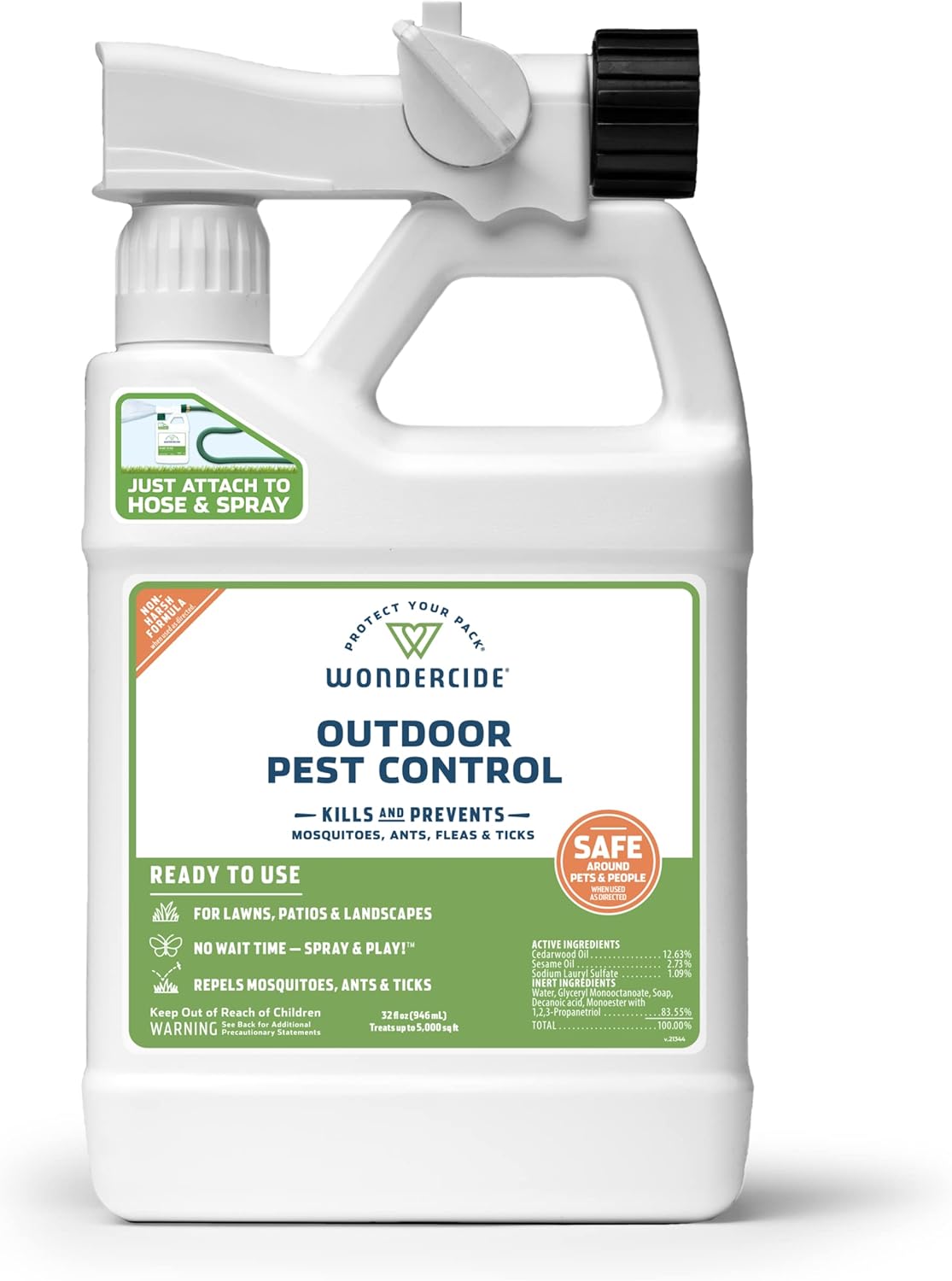
| Format | Pre-mixed, hose-end spray |
|---|---|
| Active ingredients | Cedarwood Oil 12.63%, Sesame Oil 2.73% |
| Coverage | Up to 5,000 sq ft (general); 2,500 sq ft (ticks/mosquito repel) |
Wondercide Ready-to-Use Outdoor Pest Control is a hose‑end spray designed for treating yards up to 5,000 sq ft for general pests and 2,500 sq ft for ticks and mosquito repellency. You attach the bottle to a garden hose, sweep the nozzle across lawns, patios, and foundation lines, and the cedarwood‑based formula delivers quick coverage with no dry time required. Notable features include plant-powered active ingredients (cedarwood and sesame oils), ready-to-use convenience, and instructions for both active infestations and preventative maintenance. Practical benefits are that it is safe to use around people and pets when directions are followed, residues are reported to be non-harmful to pollinators, and the hose attachment makes treating large areas fast. Important limitations are that effectiveness depends on water pressure, walking speed, and weather, heavy rain may require reapplication, and spraying in temperatures above 90°F or direct sun can cause plant burn. Users who need an all‑season, high‑durability pesticide for heavy infestations should plan on repeated applications and follow label precautions to protect sensitive plants.
Best for: Buyers who prioritize effective, plant‑based mosquito and tick control for medium to large yards and want a fast hose‑attached solution that is safe around families and pets when used as directed.
Less Ideal for: Gardeners who need a single, long‑lasting professional‑grade pesticide for severe, persistent infestations or who cannot reapply after rain should consider alternative, heavier‑duty treatments.
- Ready-to-use hose-end applicator for fast coverage of large yards
- Plant-based active ingredients (cedarwood and sesame oils) that target common yard pests
- No dry time required so kids and pets can re-enter treated areas quickly
- Covers up to 5,000 sq ft for general pest control and 2,500 sq ft for ticks/mosquito repellency
- May cause phytotoxic burning if applied in direct sun or temperatures above 90°F
- Performance depends on water pressure and user walking speed which can lead to uneven coverage
- Heavy rain can wash it away and requires reapplication
Verdict: If you want a fast, family- and pet-friendly plant‑based spray to reduce mosquitoes and ticks across a medium to large yard, this ready‑to‑use hose‑end formula delivers practical, repeatable results.
Mighty Mint Peppermint Oil Insect Repellent Spray, 1 Gallon

| Volume | 128 oz |
|---|---|
| Ingredients | Water, Glycerin, Polyglycerol Oleate, Soap, Peppermint Oil |
| Use areas | Indoor / Outdoor |
| Scent | Peppermint |
Mighty Mint’s 1-gallon peppermint oil spray is a plant-based insect repellent intended for broad indoor and outdoor use. The product is supplied as a large ready-to-use bottle with a detachable nozzle for spraying around entryways, baseboards, patios, and gardens or for refilling smaller spray bottles. Its formula lists peppermint oil along with water, glycerin, and soap, so it works by delivering a strong peppermint scent that repels spiders, ants, roaches and similar pests without synthetic pesticides. Practical benefits include the large 128 oz volume for extended coverage and a scent that many households find more pleasant than chemical sprays. The label notes it is safe for use around people and pets when used as directed, and the concentrate-style packaging simplifies repeat applications. Limitations to keep in mind are that it is a deterrent rather than a lethal insecticide, so it may not eliminate established infestations, and effectiveness can vary by pest and environmental conditions. Users should follow safety directions and reapply after heavy rain or watering for outdoor use.
Best for: Buyers who prioritize safer, plant-based pest control and want a proven, widely used product with visible social proof for routine outdoor and perimeter pest prevention.
Less Ideal for: People facing severe infestations who need a fast-acting, residual insecticide or professional pest control should consider stronger, targeted treatments instead.
- Large 128 oz ready-to-use gallon provides long-lasting coverage and value
- Plant-based formula using peppermint oil rather than synthetic pesticides
- Versatile for indoor and outdoor application and can refill smaller bottles
- Pleasant mint scent that is less intrusive than chemical alternatives
- Designed as a repellent and deterrent so it may not eradicate heavy or established infestations
- Performance can be inconsistent depending on pest type and weather conditions
Verdict: Choose this gallon peppermint spray if you want a plant-based, widely adopted repellent for routine outdoor perimeter and home pest prevention.
STEM Plant-Based Bug Spray — Ants, Roaches & Spiders, 10 oz

| Item Form | Aerosol |
|---|---|
| Target Species | Ants, Roaches, Spiders |
| Unit Count | 10 Ounce |
| Active Ingredients | Geraniol 6.0%, Lemongrass Oil 0.5% |
This STEM plant-based bug spray is an aerosol insecticide formulated with geraniol and lemongrass oil to kill ants, roaches, and spiders while avoiding strong chemical odors or added fragrances. It is used like a conventional spray: aim at visible insects, crevices, or likely harborages and apply short bursts for spot treatments inside or around entry points outdoors. The botanical active ingredients make it suitable for households looking to reduce synthetic pesticide exposure and the product is labeled for use around people and pets when directions are followed. Practical benefits include a fresh, low-odor application, entomologist testing noted by the brand, and a compact 10 oz size that is convenient to store in a utility closet. Limitations are that it is a spot-treatment aerosol rather than a long‑lasting residual solution and botanical actives can require more frequent reapplication than some conventional synthetic insecticides for ongoing control of heavy infestations.
Best for: Buyers who want an inexpensive, low-odor spray for quick indoor and perimeter spot treatments and prefer plant-based formulations over conventional chemicals.
Less Ideal for: Those facing a heavy or persistent infestation who need a long‑lasting professional‑strength residual treatment should consider alternative products or professional services.
- Plant-based active ingredients (geraniol and lemongrass oil) that reduce harsh chemical odors
- Suitable for indoor and outdoor spot treatments when used as directed
- Compact 10 oz aerosol is easy to store and handy for quick use
- Formulation is marketed as safe around people and pets when directions are followed
- Provides spot control rather than long-lasting residual protection
- May require more frequent applications than stronger synthetic insecticides
Verdict: A budget-friendly, low-odor plant-based aerosol for quick spot control of ants, roaches, and spiders around the home.
Syngreen Diatomaceous Earth Food Grade Powder with Peppermint, 1 lb

| Item Form | Powder |
|---|---|
| Target Species | Insects |
| Active Ingredients | Diatomaceous Earth Food Grade, Peppermint Oil |
This Syngreen diatomaceous earth combines food-grade silica powder with peppermint oil to control crawling insects like ants, roaches, fleas, and bed bugs without synthetic pesticides. Apply a fine dust along baseboards, under appliances, in pantry corners, or around doorways for indoor protection, or dust garden edges and planters outdoors. The powder works mechanically by abrading insect exoskeletons so pests dehydrate, while the peppermint helps deter pests and leaves a fresh scent. It is simple to use with a shaker, brush, or gloved hand and can begin reducing activity within 24 to 48 hours, lasting for weeks in dry conditions. Important limitations: it must stay dry to remain effective so reapply after cleaning or rain, and it is a contact killer rather than a bait so it will not eliminate nests or hidden colonies by itself. For use around pets and children follow the directions carefully and avoid applying where animals will inhale dust.
Best for: Pet owners and families who want a low-toxicity, non-chemical solution to reduce indoor ant activity and spot-treat problem areas while avoiding synthetic insecticides.
Less Ideal for: People who need a fast colony-level eradication method or who expect long-lasting control in wet environments without frequent reapplication should consider professional or bait-based options instead.
- Food-grade diatomaceous earth provides a non-chemical, mechanical mode of action against crawling insects
- Added peppermint oil helps deter pests and leaves a pleasant scent compared with plain DE
- Versatile for indoor and outdoor use including baseboards, pantries, planters, and perimeter barriers
- Easy application with a shaker, brush, or glove and begins working within 24–48 hours
- Effectiveness requires staying dry and will be reduced by moisture or cleaning
- Kills on contact but does not function as a nest-targeting bait to eliminate colonies
Verdict: A pet-safe, non-chemical powder that reduces indoor ant and crawling insect activity with the added deterrent of peppermint when kept dry and applied to targeted areas.
Wondercide Flea, Tick & Mosquito Spray for Pets & Home, Rosemary, 16 fl oz

| Unit Count | 16 Fluid Ounces |
|---|---|
| Item Form | Spray |
| Scent Name | Rosemary |
| Active Ingredients | 4.2% Cedar Oil; 1.5% Rosemary Oil; 0.1% Sesame Oil |
Wondercide Rosemary spray is a plant‑powered topical and household spray designed to kill and repel fleas, ticks, and mosquitoes on pets and in the home. You apply it directly to fur by misting and rubbing through the coat for spot or whole‑body use, and you can also spray bedding, furniture, and play areas from 8 to 12 inches away. The formula lists cedar oil, rosemary oil, and sesame oil as active ingredients with water and mild surfactants as carriers, which makes it a low‑chemical alternative to conventional pesticides and suitable for use around families when directions are followed. Practical benefits include a pleasant rosemary scent, non‑staining water‑based formula, and a single product that treats both pets and living spaces. Limitations are that it is a contact‑kill product rather than a systemic treatment, so thorough application and repeated use are needed to break an infestation cycle, and it is not registered with the EPA as a traditional pesticide which may concern buyers wanting regulatory oversight. Follow the label for patch testing and avoid use on birds, reptiles, aquatic environments, or pets with compromised health.
Best for: Buyers who prioritize safer, plant‑based solutions and want a single spray for spot treatment of pets and to freshen and protect pet areas in the home.
Less Ideal for: Those who need a systemic or long‑lasting prescription strength flea treatment or who prefer products with full EPA pesticide registration.
- Plant‑based active ingredients (cedar oil, rosemary oil) offer a gentler alternative to conventional pesticides
- Can be applied to both pets and home surfaces, treating bedding, furniture, and play areas
- Water‑based, non‑staining formula with a mild rosemary scent
- Suitable for puppies, kittens, and senior pets when used as directed and after patch testing
- Kills by contact only, so it requires thorough and repeated application to control established infestations
- Not registered by the EPA as a conventional pesticide, which may be a concern for buyers seeking regulatory approval
Verdict: Choose this spray if you want a plant‑based, dual pet-and-home option that reduces pests by contact while avoiding harsh chemical treatments.
Choosing the Right Pet Safe Insecticide: Key Factors to Consider
Active Ingredient and Mode of Action
What the active ingredient is matters more than marketing. Lower-toxicity actives and non-chemical modes of action reduce the risk of acute poisoning in pets. For example, materials that desiccate insects or use botanical extracts often carry lower mammalian toxicity than broad-spectrum neurotoxic compounds.
Knowing the mode of action also helps you prevent resistance and choose a product suited to your common pest. If you have recurring flea or tick problems, look for products with labeled efficacy against those species rather than generic "bug killer" claims.
Labeled Use Areas and Reentry Times
Labels tell you where it is safe to apply a product and how long pets should be kept away. Indoor-use labels, pet reentry intervals, and instructions for treating bedding or carpets are critical for minimizing exposure. A product that is labeled for spot treatments on baseboards or cracks will be more practical for pet homes than one intended only for open outdoor use.
Pay attention to any instructions about washing pet bedding or restricting pet access to treated areas until surfaces are dry. Some options have short reentry times and clear cleanup guidance, which simplifies safe use around pets.
Residual Activity and Environmental Persistence
Residual duration affects how often you must retreat and how long pets might encounter hazardous surfaces. Short-residual products may require more frequent applications but reduce the time pets are exposed to toxic residues. Longer-lasting formulas lower application frequency but can increase chronic exposure risk, especially for pets that groom themselves or lie on treated surfaces.
Consider the tradeoff between convenience and ongoing exposure. If you have indoor pets that sleep on carpets or furniture, a product with reduced environmental persistence or that can be applied to cracks rather than open surfaces may be preferable.
Application Method and Practicality
How you apply the insecticide influences both effectiveness and safety. Ready-to-use sprays, concentrates for diluting, spot-on aerosols, or perimeter granules all present different exposure pathways. Sprays can drift and land on surfaces pets contact, while granules are often safer outdoors but should not be accessible to animals.
Practicality also includes storage, mixing requirements, and the ability to apply only to problem areas. Choose a method you can use correctly and consistently. If a product requires complex dilution or special equipment, it may increase the chance of misuse in a busy household.
Target Pest Spectrum
Match the insecticide to the pests you actually face. Some formulations are optimized for crawling insects like ants and cockroaches, while others target fleas, ticks, or flying pests. Using a product aimed at the right pest reduces unnecessary exposure and improves results.
Also consider whether the product controls multiple life stages. For pests with egg or larval stages, look for options that include an insect growth regulator or a mode of action that affects immature stages to reduce repeat treatments.
Cleanup, Odor, and Pet Comfort
Residual odor and visible residues affect how quickly pets will return to treated spaces and how comfortable they will be. Low-odor formulas and those that dry clear are easier to live with in homes with pets. Follow label guidance on ventilation after indoor application to reduce respiratory irritation for animals sensitive to smells.
Think about cleanup procedures for accidental contact. Products that are easy to wash off hard surfaces and that do not stain fabrics reduce long-term risk and make it easier to maintain a safe environment for pets.
Safe Use Practices Around Pets
Apply treatments when pets are not present and keep them out of treated areas for the interval specified on the label. That often means moving animals to another room or outside until surfaces are dry and any fumes have dissipated.
Wash pet bedding and toys separately after treating nearby surfaces if the label recommends it. For spot treatments, target baseboards, cracks, and entry points rather than broad surface sprays where pets rest or groom.
- Plan applications for times when pets can be away for the full reentry period.
- Cover or remove food, water, and toys before treating indoor spaces.
- Use barriers to keep pets from treated outdoor zones until residues settle or degrade.
Integrating Nonchemical Options
Combine pet-safe insecticides with mechanical and cultural controls to lower overall chemical use. Frequent vacuuming, sticky traps, and dehumidifying damp corners reduce pest habitat and populations without exposing pets to chemicals.
For fleas and ticks, regular grooming and use of veterinarian-recommended topical or oral preventives reduce the need for heavy home treatments. Outdoor habitat modifications, such as removing leaf litter and trimming vegetation away from the house, make yard sprays less necessary.
- Vacuum carpets and upholstery before applying indoor treatments to remove eggs and larvae.
- Seal cracks and screen gaps to limit insect entry points.
- Maintain lawn and garden hygiene to reduce outdoor pest harborage.
Reading Labels for Pet Owners
Labels contain legally binding instructions and safety statements you must follow. Look for explicit statements about pet safety, reentry times, and whether treated items like bedding can be returned to use. If the label is vague about pets, choose a different product with clearer guidance.
Identify active ingredients and note any first-aid or emergency contact instructions specific to animals. Keep label information handy in case of accidental exposure so you can provide accurate details to a veterinarian.
- Check for pet-specific cautions and prohibited uses on the label.
- Record the active ingredient name for future reference and to avoid repeated use of the same mode of action.
Outdoor Perimeter Treatments and Pet Safety
When treating lawns, foundations, or perimeter plantings, focus on edges and entry points rather than blanket applications. Granules or perimeter-specific sprays can reduce drift and limit areas where pets might contact residue.
Avoid applying treatments to high-traffic pet paths, dog runs, or favorite sunning spots. Let treated areas dry completely and keep pets away until the reentry time has passed.
- Use targeted barriers such as mulch or gravel to create buffer zones between treated areas and pet play spaces.
- Rinse or hose down treated hardscape if label allows and immediate pet access is necessary after treatment.
When to Call a Professional
If infestations are large, persistent, or involve pests that pose health risks to pets or humans, a licensed pest professional can assess the situation and recommend integrated approaches that prioritize pet safety. Professionals can apply treatments in ways that reduce household exposure when label restrictions are strict.
Ask the professional about low-toxicity options, targeted applications, and post-treatment reentry times. Confirm they will provide a clear plan so you can move pets and clean areas as required.
- Request written instructions on when pets can return after treatment.
- Discuss nonchemical strategies the technician can combine with spot treatments.
How We Chose the Best Pet Safe Insecticide
We focused on formulations and application methods that reduce risk to companion animals while still providing reliable pest control. Primary evaluation criteria included documented safety profile for common pets, labeled usage for indoor and near-yard areas, and speed of knockdown against target pests. We also weighed residual activity to understand how long treated areas remain effective and hazardous, practical ease of application for busy households, and compatibility with typical pet routines such as grooming and indoor access. We excluded broad-use agricultural or industrial insecticides and any product lacking clear label instructions for use around pets or in living spaces. We prioritized products with transparent ingredient lists and those using lower-toxicity active ingredients or physical modes of action. Laboratory or manufacturer efficacy claims were considered only when supported by independent test data or consistent real-world user reports. The final list balances pest control performance with minimized acute and chronic exposure for animals and people.
FAQ
Are pet safe insecticides truly harmless to dogs and cats?
Pet safe insecticides reduce risk compared with general-use products but are not necessarily harmless. Follow label directions, respect reentry periods, and avoid letting pets lick or ingest treated surfaces to minimize risk.
How long should pets be kept away from treated areas?
Reentry times vary by product and formulation. Many pet-safe options require pets to stay away until surfaces are dry, while others specify several hours. Always follow the label for the specific product you use.
Can I use pet safe insecticide on pet bedding or toys?
Only if the label explicitly allows treatment of bedding or pet items. When in doubt, wash bedding in hot water or replace it rather than applying chemicals directly to items pets contact frequently.
Will using pet safe insecticide eliminate fleas and ticks completely?
These products can significantly reduce flea and tick populations, but complete elimination usually requires an integrated approach that includes treating the pet with veterinarian-recommended preventives, cleaning indoor environments, and repeating treatments as directed.
Are natural or botanical insecticides safer for pets?
Botanical products often have lower mammalian toxicity but can still cause irritation or allergic reactions. Safety depends on formulation, concentration, and application method, so review the label and monitor pets after first use.
What should I do if my pet contacts a treated surface?
Remove the pet from the area, rinse the contacted fur or skin with water if the label recommends, and contact your veterinarian if you notice symptoms such as vomiting, drooling, lethargy, or tremors. Keep the product label available for reference.
Final Verdict
Prioritize products and application methods that reduce direct exposure to animals while still targeting the pests you need to control. Balance knockdown speed against residual persistence so you do not trade convenience for ongoing risk. Use nonchemical controls and grooming routines to lower reliance on repeat treatments. When in doubt, follow labeled instructions strictly and choose products with clear pet-safety guidance. That approach will help you control pests effectively while keeping your pets safe and comfortable.
