

Note: This article contains affiliate links. If you click on these links and make a purchase, I may earn a small commission at no extra cost to you. This helps support my research and content. Read my full affiliate disclosure here.
If you grow plants in bags, mulch changes how often you water, how hot the root zone gets, and how quickly you need to replenish organic matter. Choosing the right mulch for grow bags matters because the confined volume and fast drainage of bags amplify moisture loss and temperature swings compared with beds. This guide shortlists seven top mulches suited to grow-bag culture and explains practical tradeoffs for moisture retention, aeration, and decomposition. We evaluated options that work with container potting mixes and common vegetables, herbs, and ornamentals. Below you will find concise guidance on how each type behaves in a bag, plus the decision factors gardeners should weigh before selecting a mulch. Read on to see how each option scored against moisture control, insulation, breakdown rate, and ease of use.
Top Picks at a Glance
| Best Overall The best all-around choice for most situations | Back to the Roots Organic Coconut Husk Mulch Block (Expands to 2 cu ft) |  |
| Best Quality Built to a higher standard if you want something more solid | Hull Farm Cocoa Bean Shell Mulch, 2 Cubic Feet |  |
| Best Value The sweet spot between price and what you get | Riare Organic Coco Coir Chips, 2-Pack Compressed Coconut Husk Bricks |  |
| Best Budget The cheapest option that still gets the job done reliably | Miuwauer Compressed Coco Coir Brick (1-Pack) |  |
| Highest Rated A top-rated pick with lots of positive feedback | Halatool Coco Coir Chips Brick Pack (2-Pack) – Compressed Organic Coconut Husk Growing Medium |  |
| Most Popular A crowd favorite that many people choose with confidence | ZeeDix Coco Coir Bricks (2-Pack) — 100% Organic Coconut Coir |  |
| Best Seller A high-volume bestseller chosen again and again | Legigo 2-Quart Organic Pine Orchid Bark Potting Mix |  |
Back to the Roots Organic Coconut Husk Mulch Block (Expands to 2 cu ft)

| Item Highlight | Compressed 10 lb coco husk mulch expands to 58 qt; peat-free; OMRI Listed |
|---|---|
| Item Type Name | Mulch |
| Brand Name | Back to the Roots |
| Volume | 2 cubic feet |
This compressed coconut husk mulch block arrives as a compact 10 lb brick that expands to roughly 2 cubic feet after adding water, making it easy to store and handle compared with bulky bags. It is OMRI listed and peat free, so gardeners can use it in vegetable beds, flower borders, and raised planters without adding peat-based material. The coarse husk chips improve surface moisture retention and aeration on the soil, which helps reduce watering frequency and supports root health. Setup is simple: break the block apart, soak, let it fluff, then spread a shallow layer around plants. Because it is lightweight when dry and made from an upcycled byproduct of coconut processing, it is a sustainable alternative to some other mulches. Limitations to note are that coconut husk mulch can float or wash away on steep slopes and may need occasional top-ups as it slowly breaks down, and its coarser texture may not form as uniform a surface as shredded bark for ornamental beds.
Best for: Gardeners who want a compact, easy-to-store organic mulch that improves moisture retention and soil aeration in vegetable beds and raised planters while prioritizing sustainable materials.
Less Ideal for: People needing a heavy, erosion-resistant mulch for steep slopes or those who want a very fine, decorative mulch finish for formal ornamental beds.
- Expands from a compact 10 lb block to about 2 cubic feet, saving storage space
- OMRI listed and peat free for organic gardening use
- Improves moisture retention and soil aeration when applied to beds and raised planters
- Made from upcycled coconut husk, offering a more sustainable option than peat
- Coarse chips can be prone to washing away on steep or exposed slopes
- Breaks down over time and requires periodic replenishing in high-traffic beds
Verdict: A space-saving, OMRI-listed coconut husk mulch block that delivers sustainable moisture retention and aeration for productive garden beds.
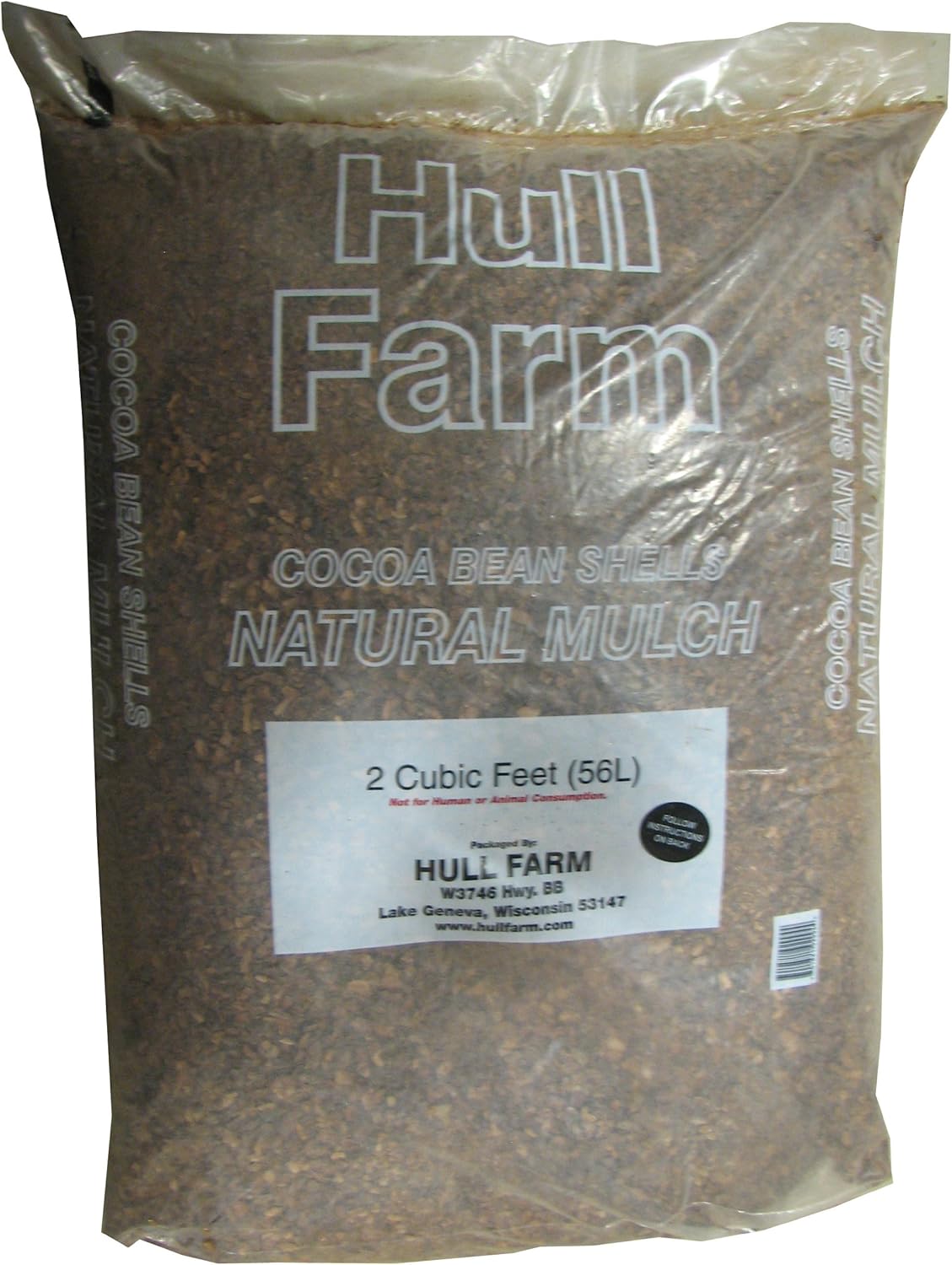
Hull Farm Cocoa Bean Shell Mulch, 2 Cubic Feet
| Brand Name | Hull Farm |
|---|---|
| Model Name | 50150 |
| Material | Plastic |
| Package Weight | 12.72 kg |
Hull Farm Cocoa Bean Shell Mulch is a bagged organic mulch made from cocoa bean shells marketed for landscape beds. It is typically applied as a 1 to 3 inch layer around ornamentals or edibles to suppress weeds, conserve soil moisture, and improve appearance; the shells also slowly break down and provide a small nutrient contribution with an approximate analysis near 2.5-1-3. The product is easy to spread from the 2 cubic foot bag and leaves a fine, attractive textured surface that is less likely to mat than some other fine mulches. Because it is organic it will decompose over time, so plan to replenish annually or as needed. Note that cocoa shell mulch can attract pets if they are tempted to eat it and should be used with care around animals and children; also its small particle size means it can compact in heavy rain and may require light fluffing. For gardeners looking for an attractive, nutrient-contributing mulch that supports moisture retention and weed suppression, this is a practical option for tomato beds when used correctly.
Best for: Gardeners who prioritize plant performance and want a decorative organic mulch that also contributes modest nutrients and conserves moisture for productive beds such as tomatoes.
Less Ideal for: Those with pets that scavenge mulch or gardeners who prefer an inert, longlasting inorganic mulch that will not decompose over a season.
- Adds a mild, slow-release nutrient contribution (approx. 2.5-1-3) as it breaks down
- Fine, attractive texture that spreads evenly and helps retain soil moisture
- Sold in a manageable 2 cubic foot bag for easy handling and targeted application
- Less likely to mat compared with very fine composts, maintaining surface airflow
- Can attract pets or wildlife that may chew or eat the shells
- Small particles can compact after heavy rain and may need occasional fluffing
Verdict: Choose this cocoa shell mulch when you want an attractive organic mulch that helps retain moisture and gives tomatoes a light nutrient boost as it decomposes.
Riare Organic Coco Coir Chips, 2-Pack Compressed Coconut Husk Bricks

| Number of Packs | 2 |
|---|---|
| Item Type Name | Garden Soil |
| Material | Coco Chips |
| Volume | 7 gallons |
These Riare coco coir chips come as two compressed bricks that expand when soaked to create a loose, airy coconut-husk substrate used for potting mixes, orchid media, and surface mulch. Typical use is rehydrating a brick in water, squeezing excess, then mixing with soil, perlite, or using as a top mulch to protect roots and conserve moisture through colder months. Notable features include low electrical conductivity and a near-neutral pH that reduce fertilizer burn risk, high water retention combined with good drainage, and a porous structure that improves root aeration. Practically, the product reduces watering frequency and helps prevent waterlogging that can cause winter root rot while also improving soil structure when blended into beds. Limitations are that each brick must be hydrated and fluffed before use and the material provides little nutrient content on its own so feeding is still required for longer-term plant growth. For winter mulch applications it works well as an insulating, breathable layer but will slowly break down over seasons and may need reapplication.
Best for: Buyers who want a natural, low-risk winter mulch or soil amendment that conserves moisture and improves aeration without adding salts or harsh chemicals, especially for potted plants, orchids, and raised beds.
Less Ideal for: Gardeners who need an all-in-one fertilizing soil or a long-lasting decorative mulch that does not decompose for years should consider alternatives.
- Low EC and pH-balanced for safe contact with roots and seed germination
- High water retention while still providing good drainage to reduce root saturation
- Lightweight, highly porous structure that improves aeration and root development
- Compressed bricks are easy to store and expand to usable volume when needed
- Compressed bricks require soaking and manual breaking apart before use
- Offers minimal nutrients by itself so regular fertilization is still necessary
Verdict: A breathable, moisture-retaining organic coco coir brick that makes a low-salt, low-risk winter mulch and potting amendment when rehydrated and mixed into soil.
Miuwauer Compressed Coco Coir Brick (1-Pack)

| Brand Name | Miuwauer |
|---|---|
| Number of Packs | 1 |
| Unit Count | 1 Count |
| Style Name | Brick,Coco Coir |
This 1-pack compressed coco coir brick is a compact, budget-friendly way to get organic mulch and a reusable growing medium for seed starting, potting mixes, and garden beds. The brick hydrates quickly and expands into a fluffy, water-retentive substrate that improves aeration around roots and reduces the need for frequent watering. It is pH neutral and contains naturally occurring minerals that support plant growth, making it suitable for flowers, vegetables, succulents, and foliage. Practical benefits include easy storage and transport while compressed, low mess when hydrated, and versatility as a soil amendment or top dressing. Important limitations are the single small brick size and the need to premix or combine with compost or potting soil for long-term container plants, since coco coir lacks substantial nutrient content on its own. Also take care to add water slowly to avoid dust and to rehydrate fully before use to reach the advertised volume.
Best for: Gardeners on a tight budget who want an affordable, organic mulch alternative or a lightweight seed-starting and potting substrate; good for small beds, containers, and starting transplants.
Less Ideal for: Large-scale landscapers or gardeners who need ready-to-use, nutrient-rich potting mixes for many containers without additional amendments.
- Expands rapidly with water into a lightweight, easy-to-handle growing medium
- Good water retention while maintaining aeration to reduce root rot risk
- pH neutral and contains natural minerals useful for a range of plants
- Compact compressed form saves storage space and shipping bulk
- Sold as a single small brick so you may need multiple packs for larger projects
- Not a complete fertilizer and should be mixed with compost or feed for long-term nutrient needs
Verdict: A low-cost, space-saving organic coco coir brick that expands into a versatile mulch and seed-starting medium ideal for budget-focused small-scale gardeners.
Halatool Coco Coir Chips Brick Pack (2-Pack) – Compressed Organic Coconut Husk Growing Medium

| Number of Packs | 2 |
|---|---|
| Unit Count | 35.2 Ounce |
| Material | coconut husk |
| Volume (expanded) | 7 quarts per brick |
These Halatool coco coir chip bricks are compressed coconut husk pieces sold as a 2-pack that expand to about 7 quarts per brick when rehydrated. You soak the bricks in water to break them apart, then mix the resulting chips into potting mixes, use them as a mulch layer, or add them to containers to improve aeration and drainage. The material is low in salts and has balanced pH, so it is suitable for sensitive vegetable roots and for improving heavy soils without altering soil chemistry. The chips hold moisture while still allowing oxygen to reach roots, which helps prevent waterlogging in containers and raised beds. Because they are lightweight and compressed, storage and transport are easy, but you will need a container and time for full expansion before planting. Also they are sold in small unit counts, so larger vegetable beds will require multiple packs or mixing with other bulk amendments. For gardeners looking to improve root health and drainage in vegetable containers or to top-dress small beds, these coir chips are a convenient organic option.
Best for: Gardeners who prioritize practical solutions to improve root health in containers and small vegetable beds and who prefer an easy-to-store organic medium to mix with potting soil or use as mulch.
Less Ideal for: Those needing bulk mulch for large in-ground vegetable rows or landscapers who require ready-to-use loose material without rehydration work.
- Low electrical conductivity and balanced pH suitable for sensitive plants
- Improves aeration and drainage while retaining some moisture for roots
- Compressed bricks are compact for storage and expand quickly with water
- 100% natural organic coconut husk, usable as mulch or mixed into potting soil
- Sold in small packs that may not be economical for large vegetable beds
- Requires soaking and manual breakup before use which adds prep time
Verdict: A compact, low-salt organic coir chip option that improves drainage and root oxygenation for containers and small vegetable beds.
ZeeDix Coco Coir Bricks (2-Pack) — 100% Organic Coconut Coir

| Number of Packs | 2 |
|---|---|
| Unit Count | 44.8 Ounce |
| Volume | 15 quarts |
| Ingredients | Coconut Fiber |
These two compressed coco coir bricks expand when soaked to produce a loose, aerated growing medium useful for potting, seed starting and amending grow bag mixes. Made from 100% coconut fiber, the bricks soak up many times their weight in water and then break apart into a fibrous mix that holds moisture while improving drainage and aeration compared with straight potting soil. Typical use is to rehydrate a brick, fluff it with a tool or fork, then mix with compost, perlite or fertilizer to tailor nutrient and drainage needs for vegetables, flowers or houseplants. The low electrical conductivity and near-neutral pH make this product a safe base for many crops and for gardeners who want to avoid high-salt substrates. Limitations are that coco coir provides little in the way of nutrients by itself so you will need to amend it for long-term grow bag use, and a single 2-pack expands to about 15 quarts so heavier feeders or larger grow bags will require additional bricks.
Best for: Gardeners who want a reliable, low-salt, easy-to-store substrate to use as a base for grow bags or potting mixes and who plan to amend with nutrients as needed.
Less Ideal for: Buyers who want an all-in-one potting mix with built-in fertilizer or those who need a pre-fortified medium for large full-season containers without additional amendments.
- 100% organic coconut fiber provides good water retention while remaining airy for root oxygenation
- Low EC and balanced pH make it suitable as a neutral base for many plants and seedlings
- Compact compressed bricks are lightweight and easy to store and rehydrate on demand
- Expands to about 15 quarts per 2-pack, enough for mixing into several small grow bags or multiple pots
- Contains no nutrients so it requires fertilization or mixing with compost for sustained feeding
- May need additional amendments for very heavy-feeding vegetables or large grow bags
Verdict: A compact, low-EC coco coir base that makes it easy to create moisture-retentive, well-aerated grow bag mixes when you plan to add your own nutrients.
Legigo 2-Quart Organic Pine Orchid Bark Potting Mix

| Unit Count | 64 Ounce |
|---|---|
| Material | Pine bark |
| pH | 5.0-6.5 |
| Application | Soil mix & planting media |
Legigo's orchid bark is a simple, single‑ingredient potting medium made from screened pine bark chips intended for orchids and other epiphytic houseplants. Use it alone for plants that need excellent air circulation around roots or mix it with coir, perlite, or potting soil to create a freer‑draining custom mix. The chips are sized to stay chunky in pots so they reduce compaction, speed drainage and help prevent root rot while still holding some moisture to slow evaporation. For gardeners, that means fewer repots and lower watering frequency for tropical potted plants. Packaging is practical for storage and the product is described as slow to decompose, making it suitable as a longer‑lasting mulch or top dressing. Important limits: the 2‑quart bag is small for large collections or outdoor beds, and bark alone does not provide nutrients so regular feeding or mixing with a more complete potting medium is necessary for long‑term growth.
Best for: Buyers who prefer low‑risk, no‑fuss growing media that reduce overwatering problems and mimic natural orchid conditions, especially those with a small indoor collection or who mix their own potting blends.
Less Ideal for: Gardeners needing large volumes for beds, those who want a nutrient‑complete potting soil out of the bag, or growers who prefer finer, moisture‑retentive media for seedlings.
- 100% natural pine bark that mimics orchids' natural growing medium
- Chunky chips maintain aeration and reduce potting mix compaction
- Drains quickly to help prevent root rot in epiphytic plants
- Slow decomposition makes it useful as a longer‑lasting mulch or top dressing
- Small 2‑quart volume which is insufficient for many pots or garden beds
Verdict: A compact, natural pine bark mix that reliably improves aeration and drainage for orchids and indoor tropicals, ideal for gardeners who want a low‑maintenance substrate.
Choosing the Right Mulch for Grow Bags: Key Factors to Consider
Moisture Retention and Watering Frequency
In a grow bag the media holds a limited volume of water, so mulch that slows evaporation can dramatically reduce how often you need to water. Dense, fine mulches form a barrier that blocks direct sun and wind from the soil surface, but they can also compact and reduce surface airflow if too fine. Choose a mulch that balances a visible moisture barrier with enough open pore space so the surface does not seal and trap water beneath.
Consider how the mulch will behave between waterings. Some mulches darken and mat when wet, which slows drying but can encourage slumping. Others shed water quickly and mainly block radiation from the sun without changing evaporation dynamics. Match mulch choice to how often you realistically can check containers and water them.
Thermal Buffering and Root-zone Temperature
Grow bags heat up faster than in-ground soil because their thin walls and small mass let heat in and out quickly. A good mulch provides a thermal buffer that reduces daytime spikes and nighttime drops, helping roots avoid stress. Materials with insulating air pockets or reflective surfaces will lower peak temperatures, while dark, dense mulches can still trap heat depending on thickness.
Think about the crop and season. Heat-sensitive seedlings and cool-season crops benefit most from insulation, while heat-loving plants may need thinner or lighter-colored mulches. Also consider the bag color and placement; a black bag on a hot patio plus a dark mulch multiplies warming effects.
Decomposition, Nutrient Cycling, and Replacement Interval
Mulches that break down quickly feed the root zone as they decompose but also require more frequent top-ups to keep the surface covered. Slow-decomposing materials maintain coverage longer but may not contribute much to soil organic matter. In a grow bag you cannot easily mix large amounts of decayed mulch into the media without repotting, so consider whether you prefer periodic top dressing or full media refreshes.
Also weigh nitrogen tie-up risk. Fresh woody mulches or high-carbon materials can temporarily immobilize nitrogen as microbes break them down. For vegetable grow bags, choose mulches that either decompose at a predictable rate or are already compost-stabilized to avoid feeding problems.
Air Exchange and Root Health
Mulch should not create a waterlogged cap that suffocates surface roots or encourages fungal issues. In grow bags, many feeder roots sit near the sides and top of the media, so the mulch must allow gas exchange while moderating moisture. Loose, chunky mulches preserve air pockets and let the surface dry between waterings; dense mats can trap moisture and reduce oxygen availability.
Inspect mulch behavior after watering. If the top layer stays soggy for days, it increases risk of damping-off on seedlings and root rot for shallow-rooted crops. Selecting a mulch that sheds excess water while holding basal moisture is often the safest choice.
Practicality: Application, Handling, and Aesthetics
You will be dealing with small volumes when mulching grow bags, so pick materials that are easy to pour, spread, and store. Lightweight mulches reduce back strain and are easier to refresh frequently; very fine materials may require a sieve or careful handling to avoid dust. Consider how the mulch looks in a container setting if aesthetics matter for patio or balcony displays.
Also think about pests and contaminants. Some mulches attract slugs or provide hiding spots for pests, while others may harbor weed seeds if not well-processed. Buy or prepare mulch that is appropriate for container use to avoid bringing surprises into your grow-bag system.
How Mulch Changes Watering Habits in Grow Bags
Mulch slows surface evaporation and can reduce the amount of water lost to wind and sun between irrigations. In grow bags, even a thin cover layer can change how quickly the top inch of media dries, which affects when you probe and water. Expect to adjust watering frequency after applying mulch and watch the weight of the bag as a practical moisture indicator.
If you use drip or soaker irrigation, mulch helps the wetted zone hold moisture longer so water stays available to roots instead of quickly evaporating. For hand-watering, start by testing moisture with a finger or meter a few days after applying mulch to set a new watering rhythm.
- Thicker mulch reduces watering frequency but may increase runoff if the surface repels water.
- Light, porous mulch moderates evaporation without drastically changing soak-in during watering.
Managing Decomposition in Small Containers
When mulch decomposes it adds organic matter to the container media, which can be beneficial but also change texture and drainage over time. In a grow bag you cannot easily incorporate bulky, decomposed material without repotting, so plan for top-dressing or media replacement on a schedule that matches the mulch breakdown rate.
If you want a low-maintenance approach, select mulch types that remain stable for the growing season. If you want steady nutrient input, choose faster-decomposing mulches but expect to refresh or partially replace media more often.
- Monitor surface depth annually and top up thin areas.
- Avoid burying decayed mulch deep where it could create dense, poorly draining pockets.
Mulch and Pest Management in Container Culture
Certain mulches can create microhabitats for slugs, sowbugs, or fungus gnats if they retain high surface moisture and are close to foliage. Keep mulch away from crowns of plants to reduce hiding spots, and choose coarser materials for crops susceptible to slug damage. For edible containers, prefer mulches that are well-processed and free of weed seeds.
Regular inspection and light disturbance of the surface can reduce pest harborage. In warm, humid climates, opt for mulches that dry on the surface between waterings to discourage pest proliferation.
- Coarse mulches reduce slug shelter compared with dense, shaded mats.
- Avoid mulches that remain constantly wet in humid conditions.
Seasonal Strategies for Grow-bag Mulching
Adjust mulch thickness and type by season. In summer, thicker insulating mulch can reduce root overheating and slow evaporation. In early spring, use thinner or slower-warming mulch so soil warms quickly for seed germination. For winter protection in cold climates, an extra layer of insulating mulch can help roots survive occasional freezes in lightweight bags.
Also consider crop cycle. Short-season crops may not need long-lasting mulch, while multi-month containers benefit from a more durable cover. Change or remove mulch if it becomes matted or starts to smell, indicating anaerobic breakdown.
- Thin mulch helps soil warm faster in spring.
- Thicker mulch provides insulation in hot summer or cold winter.
Practical Tips for Applying and Refreshing Mulch
Apply an even layer that leaves a small clear space around stems to prevent crown rot. For most grow-bag crops, aim for a surface depth that balances coverage with aeration, typically a thin band rather than a deep bedding. When refreshing, remove any compacted or foul-smelling material before adding new mulch.
Use clean tools and containers to avoid introducing weed seeds or pathogens. Store extra mulch dry and covered so it does not get soggy or moldy between uses.
- Leave a 1-inch gap around plant stems to prevent rot.
- Replace or top up mulch when depth drops noticeably or surface becomes compacted.
How We Chose the Best Mulch for Grow Bags
We focused on attributes that matter in confined grow-bag volumes where soil dries faster and roots are more exposed. Selection criteria prioritized moisture retention under frequent top watering, thermal insulation to reduce day-night swings, breathability so roots avoid waterlogging, and predictable decomposition so mulch does not foul the potting mix. We also considered ease of application and maintenance, availability in bag-sized quantities, and organic compatibility for edible containers. Our filters excluded bulk landscape-only materials that require heavy machinery or are impractical to handle at potting scale, plus any mulch types that routinely add harmful salts or persistent contaminants to container media. We tested candidate types conceptually against practical gardener needs rather than lab measures, focusing on how they alter watering cadence, root temperature, and nutrient cycling inside grow bags. Final picks reflect materials that balance moisture control, aeration, longevity, and low maintenance for typical grow-bag crops.
FAQ
How thick should mulch be in a grow bag?
A thin to moderate layer is usually best. Aim for a cover that reduces evaporation without creating a compacted cap; roughly 1/2 to 1 inch is often enough for small bags while larger containers can handle 1 to 2 inches.
Will mulch make my grow bag roots rot?
Mulch alone does not cause rot if the bag drains properly. Problems arise when mulch mats and keeps the surface constantly soggy or when mulch contacts the plant crown. Use a mulch that sheds excess water and leave space around stems to prevent moisture buildup at the crown.
How often do I need to replenish mulch in containers?
That depends on decomposition rate. Fast-breaking mulches may need topping every few months, while slow-decomposing materials can last a full season or longer. Check depth and condition seasonally and top up when coverage becomes thin or compacted.
Can I use compost as mulch in grow bags?
Compost can be used as a thin mulch if it is mature and weed-free. It adds nutrients as it breaks down, but because it can compact and retain moisture, use it sparingly and avoid placing it against plant stems.
Does mulch change how much fertilizer my plants need?
Mulch that breaks down quickly adds organic matter and can temporarily alter nutrient dynamics. High-carbon mulches may cause short-term nitrogen immobilization until they begin to decompose. Plan fertilizer timing and form to match mulch type and watch plant vigor as the season progresses.
Final Verdict
Choosing mulch for grow bags is an exercise in tradeoffs. Prioritize moisture retention and root insulation if you water infrequently or face high heat, and favor coarser, breathable mulches if you worry about surface sogginess or pests. Match decomposition rate to how often you want to top dress or refresh media, and always leave a small clear area around stems to reduce rot risk. Use the evaluation criteria above to weigh options for your crops and site. With the right mulch, you can reduce watering chores, stabilize root temperatures, and keep container media productive throughout the season.
