

Note: This article contains affiliate links. If you click on these links and make a purchase, I may earn a small commission at no extra cost to you. This helps support my research and content. Read my full affiliate disclosure here.
If you need a portable saw that delivers sustained power for trimming, limbing, and small-to-medium felling, an 18 gas chainsaw is a strong choice. You want a tool that starts reliably, cuts cleanly through seasoned and green wood, and is serviceable at the yard or workshop. This guide shortlists seven top-performing 18 gas chainsaws and explains the performance and maintenance differences that matter in real-world garden and property work. We evaluate engine torque and run time, bar and chain durability, ergonomics, and ease of routine upkeep to help you match a saw to how you work in the yard.
Top Picks at a Glance
| Best Overall The best all-around choice for most situations | Husqvarna 445S 18-inch Gas Chainsaw |  |
| Best Quality Built to a higher standard if you want something more solid | Husqvarna 445 18-Inch Gas Chainsaw (50 cc, 2.8 HP) |  |
| Best Value The sweet spot between price and what you get | PROYAMA 62cc Gas Chainsaw with 18" and 22" Guide Bars |  |
| Best Budget The cheapest option that still gets the job done reliably | DMSIDN 18" 58cc Gas-Powered Chainsaw |  |
| Highest Rated A top-rated pick with lots of positive feedback | Snoonwee 58cc Gas Chainsaw with 18" and 20" Bars |  |
| Most Popular A crowd favorite that many people choose with confidence | VEVOR 52CC Gas Chainsaw, 18-inch Bar |  |
| Best Seller A high-volume bestseller chosen again and again | Husqvarna 440 18-inch Gas Chainsaw (970612318) |  |
Husqvarna 445S 18-inch Gas Chainsaw

| Power Source | Gas Powered |
|---|---|
| Horsepower | 3 hp |
| Chain Length | 18 inches |
| Model Number | 970709038 |
The Husqvarna 445S is a performance-focused 18-inch gas chainsaw designed for demanding homeowner and light professional tasks. It pairs a 50cc, 3-horsepower X-Torq engine with an 18-inch bar and X-CUT chain to deliver fast, consistent cutting and good low-RPM torque for limbing, firewood and property maintenance. Smart Start and a combined choke/stop control make startup straightforward, while Air Injection and a transparent fuel indicator simplify maintenance and reduce downtime. LowVib dampeners and a slim-body design improve handling during longer sessions, and an automatic oiler keeps the chain lubricated for smoother cuts. Important trade-offs are its gas engine maintenance needs and heavier feel compared with battery models, and users must manage fuel mixing and routine filter care. For buyers prioritizing cutting speed and sustained power over cordless convenience, the 445S is a capable option that balances real-world performance with user-friendly features.
Best for: Buyers who prioritize fast, sustained cutting performance for regular property maintenance or heavier homeowner jobs and who accept gas-engine upkeep for power and runtime.
Less Ideal for: Those who want a low-maintenance, lightweight cordless tool for occasional small tasks or who need quiet operation in noise-restricted areas.
- Strong 50cc X-Torq engine provides sustained cutting power and good low-RPM torque
- Smart Start and combined choke/stop control for easier, more reliable starting
- LowVib anti-vibration system reduces operator fatigue during extended use
- Air Injection centrifugal cleaning helps extend air filter life and reduce maintenance
- Automatic oiler and transparent fuel indicator simplify lubrication and fuel checks
- Requires regular gas and two-stroke oil mixing and more routine maintenance than battery models
- Heavier than comparable battery chainsaws which can increase user fatigue for extended overhead work
Verdict: If you need an 18-inch chainsaw focused on cutting speed and sustained gas-powered performance, the Husqvarna 445S delivers reliable power and pro-oriented features.
Husqvarna 445 18-Inch Gas Chainsaw (50 cc, 2.8 HP)

| Power Source | Gas Powered |
|---|---|
| Horsepower | 2.8 |
| Chain Speed | 18 inch |
| Manufacturer Warranty Description | 2 years |
The Husqvarna 445 is a 50‑cc gas chainsaw built for homeowners and weekend users who need reliable, gas‑powered cutting performance. It is typically used for cutting firewood, trimming branches, and taking down small to medium trees using 13–20 inch bars, and the 18‑inch configuration here offers a good balance of reach and control. Notable features include Smart Start for easier pull starts, an inertia‑activated chain brake for kickback protection, LowVib dampening to reduce operator fatigue, and Air Injection to keep larger debris away from the air filter. The X‑Torq engine improves fuel efficiency and lowers emissions compared with older two‑stroke designs. Practical benefits are straightforward: dependable power for heavier yard work than battery models, easier starting, and reduced vibration during extended use. Important limitations are standard for gas saws — regular fuel mixing and maintenance, higher noise and emissions than electric options, and a learning curve for safe operation and upkeep.
Best for: Buyers who prioritize reliable gas power and fuel efficiency for regular yard work and light professional tasks and who prefer a chainsaw that starts easily and reduces vibration during longer sessions.
Less Ideal for: Casual users who want near‑silent, low‑maintenance operation or those restricted by noise and emissions rules should consider electric alternatives instead.
- Powerful 2.8‑HP X‑Torq engine suitable for routine felling and firewood cutting
- Smart Start and combined choke/stop for easier, more reliable starting
- LowVib technology reduces vibration and operator fatigue during longer jobs
- Air Injection centrifugal pre‑cleaning helps extend air filter life and engine longevity
- Requires regular fuel mixing and more maintenance than battery or corded saws
- No onboard anti‑vibration or convenience features beyond basic ergonomics
Verdict: Choose the Husqvarna 445 if you want a dependable 50‑cc gas chainsaw that balances strong cutting power with easier starting and reduced vibration for frequent yard and light professional use.
PROYAMA 62cc Gas Chainsaw with 18" and 22" Guide Bars

| Power Source | Gas Powered |
|---|---|
| Horsepower | 3.5 hp |
| Included Components | 18in/22in Bar, 18in/22in Chain, Chainsaw Bag, Ear Defenders, Face Shield |
| Model Number | PCS62X |
The PROYAMA 62cc gas chainsaw is a full-size, two-cycle tool built for felling, bucking, and heavier property maintenance. Its 3.5 hp 62cc engine and included 18" and 22" bars let you switch between limbing and larger tree work without buying extra bars. Practical features such as a purge/prime bulb and optimized recoil starter aim to reduce difficult pull-starts, while a transparent fuel tank makes it easy to monitor fuel during long jobs. The magnesium-style case and a 3-point spring vibration system help reduce felt vibration and improve control during extended use. It ships with basic safety accessories and a quick-release air filter for easier cleaning. Expect typical gas-saw maintenance responsibilities like mixing fuel, routine filter and chain care, and occasional tuneups; the unit is not as quiet or low-maintenance as battery options and will require safe storage and regular service to stay reliable. For homeowners and small-ranch users who need raw cutting power and bar flexibility, this model covers the essentials effectively.
Best for: Buyers who prioritize cutting power and versatility for heavy yard, farm, or storm cleanup jobs and want a single saw that handles both limbing and felling without added accessories.
Less Ideal for: Those wanting a low-noise, low-maintenance or battery-powered solution for light yard tasks or for users who cannot perform routine engine upkeep.
- Includes both 18" and 22" guide bars for versatile cutting tasks
- 62cc 3.5 hp gas engine provides strong cutting power for hardwoods and large logs
- 3-point spring vibration reduction improves comfort during prolonged use
- Transparent fuel tank lets you check gas level at a glance
- Quick-release air filter and purge bulb simplify starting and routine maintenance
- Being a 2-cycle gas engine requires mixed fuel and regular engine maintenance
- Louder and heavier than battery-powered alternatives, so not ideal for noise-sensitive areas
Verdict: If you need raw gas-powered cutting power and the flexibility to switch between limbing and felling, this PROYAMA 62cc chainsaw delivers both in one package.
DMSIDN 18" 58cc Gas-Powered Chainsaw

| Power Source | Gas Powered |
|---|---|
| Horsepower | 4.4 hp |
| Displacement | 58cc |
| Fuel Tank Volume | 550ml |
| Guide Plate Size | 18 inch |
This DMSIDN 18-inch gas chainsaw is a budget-oriented, handheld saw built around a 58cc two-stroke engine that delivers roughly 4.4 horsepower and a high chain speed for quick cuts. It is typically used for felling small trees, limbing, cutting firewood, and heavier pruning where an electric saw would struggle. Notable features include an 18-inch guide bar, a 550ml fuel tank for around 30 to 40 minutes of run time, a separate chain-oil reservoir, CDI ignition, and a jet-style precleaning system to reduce air filter maintenance. Practical benefits are strong cutting power for its price class and a full accessory kit that includes a spare chain, funnel, fuel bottle, and gloves so you can assemble and begin using it right away. Important limitations are that it uses a hand pull start which can be challenging for some users, it is heavier and louder than electric alternatives, and as a budget model it may require more frequent tuning and maintenance to stay reliable over time.
Best for: Buyers who need a capable, inexpensive gas saw for seasonal property work, firewood cutting, and occasional tree jobs and who are willing to perform basic maintenance themselves.
Less Ideal for: Users who want a lightweight, low-noise cordless or electric saw for frequent small jobs or anyone who prefers tool-free starting and minimal maintenance.
- Powerful 58cc two-stroke engine suitable for cutting up to about 8 inches in diameter
- Comes with a full accessory kit including spare chain, guide plate, fuel bottle, funnel, and gloves
- Separate chain oil tank and jet precleaning system reduce wear and maintenance on the air filter
- Relatively large fuel tank gives 30–40 minutes of continuous run time per fill
- Hand pull start only which can be difficult for some users
- Likely requires routine tuning and maintenance typical of inexpensive gas saws
Verdict: If you want an affordable, gas-powered 18-inch saw that delivers solid cutting power and a complete starter kit, this model offers strong value for budget-minded homeowners.
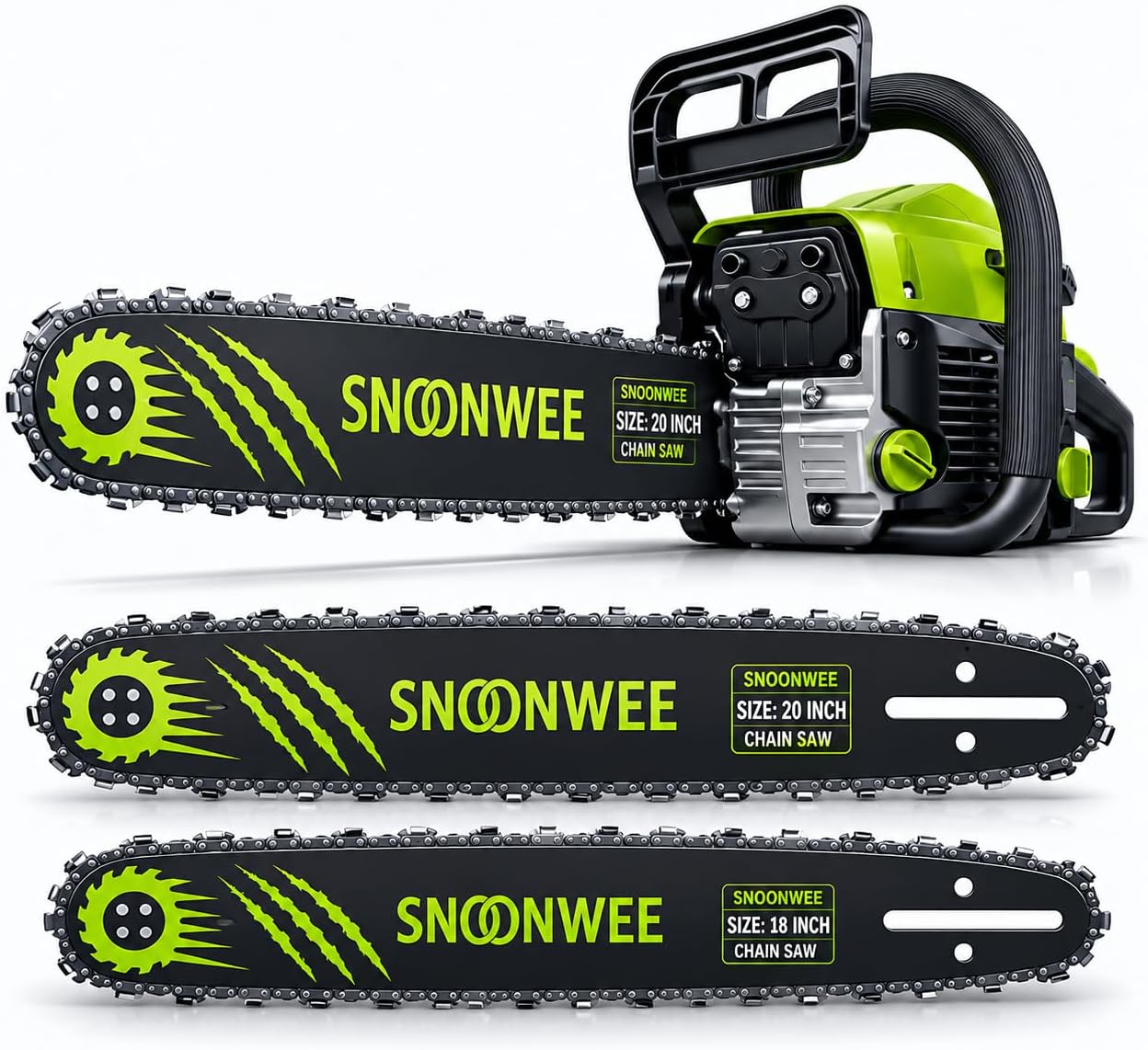
Snoonwee 58cc Gas Chainsaw with 18" and 20" Bars
| Power Source | Gas Powered |
|---|---|
| Horsepower | 3.6 hp |
| Chain Speed | 91 fg/s |
| Included Components | Two guide bars, two chains, tool kit |
This Snoonwee 58cc gas chainsaw is built for household woodcutting tasks like limb removal, cutting firewood, and storm cleanup. It pairs a 3.6 HP, 2-stroke engine that revs to 9,000 RPM with a stated chain speed of 91 ft/s and includes both 18- and 20-inch guide bars and chains so you can match bar length to the job. Practical features aimed at easier use include an easy-start recoil, cruise-control throttle for sustained cuts, a quick-stop chain brake, and an automatic bar-and-chain oiler. The saw lists low-frequency vibration reduction to improve comfort during longer sessions and comes with two chains, two guide bars, and a small tool kit. Expect solid cutting power and fewer interruptions thanks to the cruise-control and auto-oiler, but remember this is a gas two-stroke tool so it requires fuel mixing, routine maintenance, and noise and exhaust management compared with electric alternatives. For homeowners who need dependable, versatile gas power for occasional heavy cuts, this model covers the basics well.
Best for: Homeowners who prioritize dependable gas power for felling limbs, cutting firewood, or storm cleanup and want a saw that reduces startup and throttle fatigue during longer sessions.
Less Ideal for: People who need a lightweight, low-noise option for close-in yard work or those unwilling to perform routine 2-stroke engine maintenance should consider electric alternatives.
- Two included bar lengths (18" and 20") let you switch size to match the job.
- Strong claimed powertrain: 58cc, 3.6 HP engine with 91 ft/s chain speed for efficient cutting.
- Easy-start recoil and cruise-control throttle reduce user fatigue and make startup and sustained cuts simpler.
- Automatic bar-and-chain oiler and included tool kit simplify routine upkeep and chain care.
- As a 2-stroke gas saw it requires fuel mixing and regular engine maintenance.
- Noise, exhaust, and vibration will be higher than battery or corded electric alternatives.
Verdict: A practical, reliability-minded gas chainsaw that gives homeowners strong cutting power plus two bar options and user-friendly features for longer, dependable use.
VEVOR 52CC Gas Chainsaw, 18-inch Bar

| Power Source | Gas Powered |
|---|---|
| Horsepower | 2.55 hp |
| Chain Length | 18 inches |
| Engine displacement | 52CC |
The VEVOR 52CC gas chainsaw is a straightforward, no-frills 2-cycle saw built for typical yard and light-forest work. It pairs a 52CC engine rated at about 2.55 HP with an 18-inch bar and high-strength steel chain so you can tackle mid-size logs, limb trimming, and small tree felling. The saw includes user-friendly features such as an easy-start system, a large protective hand guard, a tool-free chain tension knob, and a kit of basic maintenance tools and consumable fittings. Those features make routine setup, refueling, and on-the-job adjustments quicker and less fiddly. Practical benefits include a generous fuel tank and separate chain-oil reservoir to reduce refill frequency and a vibration-damping mount that improves comfort during extended cuts. Downsides to note are the typical noise, exhaust, and maintenance needs of a two-stroke gas engine and the weight common to this power class, which may be tiring for prolonged overhead work. Expect solid cutting power for general property and firewood tasks while planning for regular fuel, oil, and spark plug upkeep.
Best for: Buyers who want a powerful, traditional gas chainsaw for routine property maintenance and occasional felling and prefer proven mechanical simplicity over battery alternatives.
Less Ideal for: People needing a lightweight, low-noise tool for frequent overhead pruning or those who want minimal maintenance and zero exhaust emissions.
- 52CC 2-cycle engine delivers robust cutting power for mid-size logs and felling
- 18-inch bar and high-strength steel chain suitable for a wide range of yard tasks
- Tool-free chain tension knob and included maintenance kit simplify setup and upkeep
- Separate fuel and chain oil reservoirs reduce the frequency of refills
- Built-in shock absorber reduces vibration for more comfortable handling
- Two-stroke gas engine requires regular fuel mixing, maintenance, and produces exhaust and noise
- Heavier than smaller models, which can be tiring for extended overhead or one-handed work
Verdict: A robust 18-inch gas chainsaw that gives reliable cutting power and practical features for homeowners who prioritize dependable performance and ease of maintenance.
Husqvarna 440 18-inch Gas Chainsaw (970612318)

| Power Source | Gas Powered |
|---|---|
| Horsepower | 2.4 |
| Chain Length | 18 inches |
The Husqvarna 440 is a workhorse-style gas chainsaw aimed at homeowners who need reliable firewood and tree-trimming performance. It pairs a 2.4-HP X-Torq two-stroke engine with an 18-inch bar, making it well suited to felling small trees, cutting logs into firewood, and routine yard cleanup. Notable features include Smart Start for easier pull-starting, LowVib vibration dampening for more comfortable handling during longer cuts, side-mounted chain tensioning for quick adjustments, and Air Injection to keep larger debris away from the air filter for longer engine life. The inertia-activated chain brake adds a safety layer against kickback. Expect solid fuel efficiency and reduced emissions compared with older two-stroke designs, but you will need to mix fuel and oil and perform routine maintenance like chain sharpening, air filter cleaning, and tension checks. At about this power level the saw is heavier and louder than battery models, so it is best for users who need sustained cutting power for regular firewood production rather than occasional light pruning.
Best for: For homeowners who cut a steady amount of firewood and value reliable gas power and easy starting over lightweight portability. It fits users who prefer a durable, serviceable saw for seasonal or frequent woodcutting.
Less Ideal for: Not the best choice for users who only do very light pruning or want a quiet, low-maintenance cordless saw for occasional use.
- 18-inch bar and 2.4-HP engine provide enough power for felling small trees and cutting firewood effectively
- Smart Start reduces effort when starting the saw
- Air Injection and side-mounted tensioning simplify maintenance and improve engine longevity
- LowVib technology reduces user fatigue during extended cutting sessions
- Requires mixing gasoline and two-stroke oil and regular engine maintenance
- Heavier and louder than cordless alternatives, so less convenient for short, infrequent jobs
Verdict: A dependable midweight gas chainsaw that delivers the sustained power and ease of starting you want for regular firewood cutting.
Choosing the Right 18 Gas Chainsaw: Key Factors to Consider
Engine Torque and Fuel Efficiency
Engine torque determines how confidently a chainsaw can bite into large-diameter limbs and maintain speed under load. Higher torque helps prevent bogging when the chain meets dense or knotty wood, reducing the need for repeated passes and lowering operator frustration.
Fuel efficiency matters for extended jobs away from refueling points. Two saws with similar peak power can feel different over a day of work if one consumes noticeably more fuel. Consider how often you want to refuel during typical jobs and whether you prefer a marginally heavier saw with better range or a lighter saw with shorter run intervals.
Bar and Chain Quality
An 18-inch bar and the chain that runs on it are central to cut performance and long-term cost. Higher-quality bars resist bending and wear, which keeps the chain straight and reduces kickback risk. Chains with better steel and heat treatment hold an edge longer and require fewer sharpenings.
Also consider compatibility with replacement chains and how easy it is to tension and replace them in the field. A robust bar-and-chain combination reduces downtime and results in cleaner cuts, which is especially important when pruning live branches or preparing firewood.
Start Reliability and Cold-Weather Behavior
A chainsaw that starts reliably saves time and frustration. For gas models, a well-designed choke, primer system, and decompression valve can make first pulls easier, especially after sitting between tasks. Cold-weather performance is relevant if you work in cooler climates; carburetor settings and choke function affect how quickly the engine catches and stays running.
Look for saws with accessible pull-start systems and straightforward choke procedures. Consistent starting behavior reduces wasted time on job sites and lowers the chance of damaging components through excessive starter rope use.
Ergonomics, Balance, and Vibration Control
Comfort matters because chainsaw work often extends beyond a few minutes. A well-balanced saw reduces wrist and shoulder strain, letting you make more accurate cuts with less fatigue. Handle shape and front-to-rear balance influence control during felling cuts and above-shoulder limbing.
Vibration damping reduces numbness in the hands and limits fatigue over long sessions. Check how handlebars, anti-vibration mounts, and overall mass distribution come together. Even small ergonomic differences become obvious after repeated use and can affect safety as well as comfort.
Maintenance Access and Serviceability
Routine maintenance keeps a gas chainsaw performing reliably. Easy access to the air filter, spark plug, and chain tensioner shortens service time and makes it more likely you will perform timely upkeep. Tool-free or simple tools for removing the bar cover and adjusting the chain are practical advantages.
Also consider parts availability for common wear items like chains, sprockets, and air filters. A saw that is easy to maintain in the field or the garage will have lower lifetime hassle and is more likely to be kept in safe working condition.
Safety Features and Chain Control
Safety features such as effective chain brakes, a well-positioned handguard, and a reliable throttle lockout matter for preventing accidental engagement and mitigating kickback events. The responsiveness of the chain brake and its activation method are important during sudden stops or if the saw kicks back.
Also evaluate the clarity of control placement and whether emergency stops are reachable while holding the saw in typical working grips. Good chain control habits combined with proper safety design reduce accident risk and contribute to confident handling.
Best Uses for an 18 Gas Chainsaw
An 18-inch gas chainsaw is a versatile middle ground between compact homeowner models and full-size professional saws. It handles mid-sized tree felling, limb removal, storm cleanup, and regular firewood cutting without the bulk of larger machines.
For property owners who regularly manage trees or clear debris, the 18-inch length offers sufficient bite to cut through common trunk sizes while remaining maneuverable for pruning and limbing work.
- Limbing and pruning medium branches
- Felling small to medium trees
- Cutting and bucking firewood
- Storm cleanup and property maintenance
Tuning and Carburetor Basics for Consistent Performance
Carburetor settings affect idle, throttle response, and how the engine handles load. If a saw feels sluggish or bogs under cut, slightly richer or leaner adjustments can restore smooth power delivery.
Regular air filter cleaning prevents lean running caused by restricted airflow. When you tune, make small incremental changes and test on timber similar to your usual work to confirm improvements.
- Check and clean air filter regularly
- Follow small adjustments when tuning
- Verify idle before heavy cutting
Field Sharpening and Chain Care
Keeping the chain sharp is one of the highest-impact maintenance tasks. A blunt chain increases cutting time, places extra load on the engine, and can increase the likelihood of kickback. Carry a round file sized to your chain and learn a consistent filing angle.
Beyond sharpening, maintain correct chain tension and keep the bar nose free of burrs. Proper lubrication with the correct oil and an intact oil pump ensure the bar and chain stay cool and wear slowly.
- Carry a compatible round file and depth gauge tool
- Check oil level before each session
- Inspect the bar rails and nose for burrs
Transport, Storage, and Winter Care
Transport chainsaws in a locked case or covered with a bar scabbard and stable fuel handling. For seasonal storage, drain the fuel or add a stabilizer and run the engine briefly to circulate treated fuel, then fog the cylinder if long-term storage is planned.
In cold weather, use fresh fuel and allow the saw to warm up before heavy cutting. Keep the battery out of the saw if it has an electric start option and follow manufacturer guidance for winterized storage practices.
- Use a scabbard for the bar during transport
- Stabilize or drain fuel for storage
- Warm the engine before heavy winter cutting
Selecting Replacement Chains and Bars
When selecting replacement chains and bars, match pitch, gauge, and the number of drive links to the saw specifications. Using the correct chain preserves performance and safety and prevents premature wear to the sprocket and clutch.
Consider choosing a few chain types for different tasks: a standard cutting chain for general work and a semi-chisel for faster cuts in clean wood, or a full-chisel if you need aggressive cutting with frequent sharpening.
- Confirm pitch, gauge, and drive link count
- Keep a spare chain sized for your bar
- Choose chain type based on typical wood condition
How We Chose the Best 18 Gas Chainsaw
We focused on attributes that affect everyday use and long-term ownership for 18-inch gas-powered chainsaws. Core evaluation criteria included engine torque and fuel efficiency because those determine how well a saw handles thick cuts and how long it runs on a tank. We also assessed bar and chain durability along with chain sharpness retention since these affect cut quality and service intervals. Ergonomics and vibration control received attention because they influence fatigue during extended pruning or limbing sessions. Start reliability and tool-free access for routine maintenance were considered to reflect real shop and field conditions. Excluded items included electric or battery models, saws with bars significantly shorter or longer than the 18-inch class, and purpose-built professional forestry machines that fall outside typical homeowner or property-maintenance use. We prioritized saws that balance power, serviceability, and safe handling for the intended 18-inch category.
FAQ
Is an 18 gas chainsaw heavy for extended use?
An 18-inch gas saw is heavier than compact electric models but lighter than large pro saws. Weight varies by engine and design, so balance and vibration dampening often matter more than raw mass for reducing fatigue.
How often should I sharpen an 18-inch chain?
Sharpening frequency depends on wood type and usage. For typical property work, you may need to touch up the chain after several hours of cutting or sooner if you notice reduced cutting efficiency or increased kickback.
Can I use any bar and chain on an 18-inch chainsaw?
You must match chain pitch, gauge, and drive link count to the saw and bar specifications. Using the wrong sizes can damage the saw and create safety hazards, so confirm compatibility before changing components.
What maintenance prevents starting problems?
Regularly clean or replace the air filter, check the spark plug and gap, and use fresh fuel mixed at the recommended ratio. Proper carburetor adjustment and a functioning decompression or primer system also help with consistent starts.
Is brand warranty important for gas chainsaws?
Warranty terms can provide reassurance, but practical factors like parts availability, ease of service, and a straightforward user manual are often more important for keeping a saw running over the long term.
Final Verdict
Choose an 18 gas chainsaw that balances the torque and run time you need with bar-and-chain durability and easy field maintenance. Prioritize starting reliability and ergonomic design if you expect extended cutting sessions, and factor in vibration control for operator comfort. Tradeoffs are common: a more powerful saw may demand more maintenance, while a lighter saw may sacrifice some cutting torque. Focus on the criteria that match your typical jobs and maintenance willingness so you can pick a dependable saw for property work and seasonal cleanup.
