

Note: This article contains affiliate links. If you click on these links and make a purchase, I may earn a small commission at no extra cost to you. This helps support my research and content. Read my full affiliate disclosure here.
A 2 Stroke hedge trimmer gives more continuous power and lighter weight than many electric alternatives, which is why gardeners tackling dense hedging, remote properties, or long trimming sessions often prefer them. Choosing the right model matters because engine reliability, blade length, and ease of handling determine how fast and neatly you can shape shrubs without frequent stops for maintenance. This guide shortlists six top options suited to everyday pruning and heavier hedge work. We evaluate each on practical yard-use criteria like engine durability, cutting reach, vibration control, and serviceability to help you pick the right tool for your garden. Read on for hands-on buying guidance and common-use tips that clarify which features matter most.
Top Picks at a Glance
| Best Overall The best all-around choice for most situations | Husqvarna 322HD60 24-inch Gas Hedge Trimmer |  |
| Best Quality Built to a higher standard if you want something more solid | ECHO HC-2020 20 in. 21.2 cc Gas 2-Stroke Hedge Trimmer |  |
| Best Value The sweet spot between price and what you get | JENPECH 26cc 2-Stroke Gas Hedge Trimmer, 24-inch Double-Sided Blade |  |
| Best Budget The cheapest option that still gets the job done reliably | HinLIaDa 22.5cc Gas-Powered 27.6in Single-Edge Hedge Trimmer |  |
| Highest Rated A top-rated pick with lots of positive feedback | ECHO HCA-2620 21" Gas Articulating Shaft Hedge Trimmer |  |
| Most Popular A crowd favorite that many people choose with confidence | VEVOR 26CC Gas Hedge Trimmer with 23.2-inch Dual Blade and 180° Rotating Head |  |
Husqvarna 322HD60 24-inch Gas Hedge Trimmer
| Power Source | Gas Powered |
|---|---|
| Speed | 7800 rpm |
| Blade Material | Hardened Steel |
| Blade Length | 24 inches |
| Material Type | Alloy Steel |
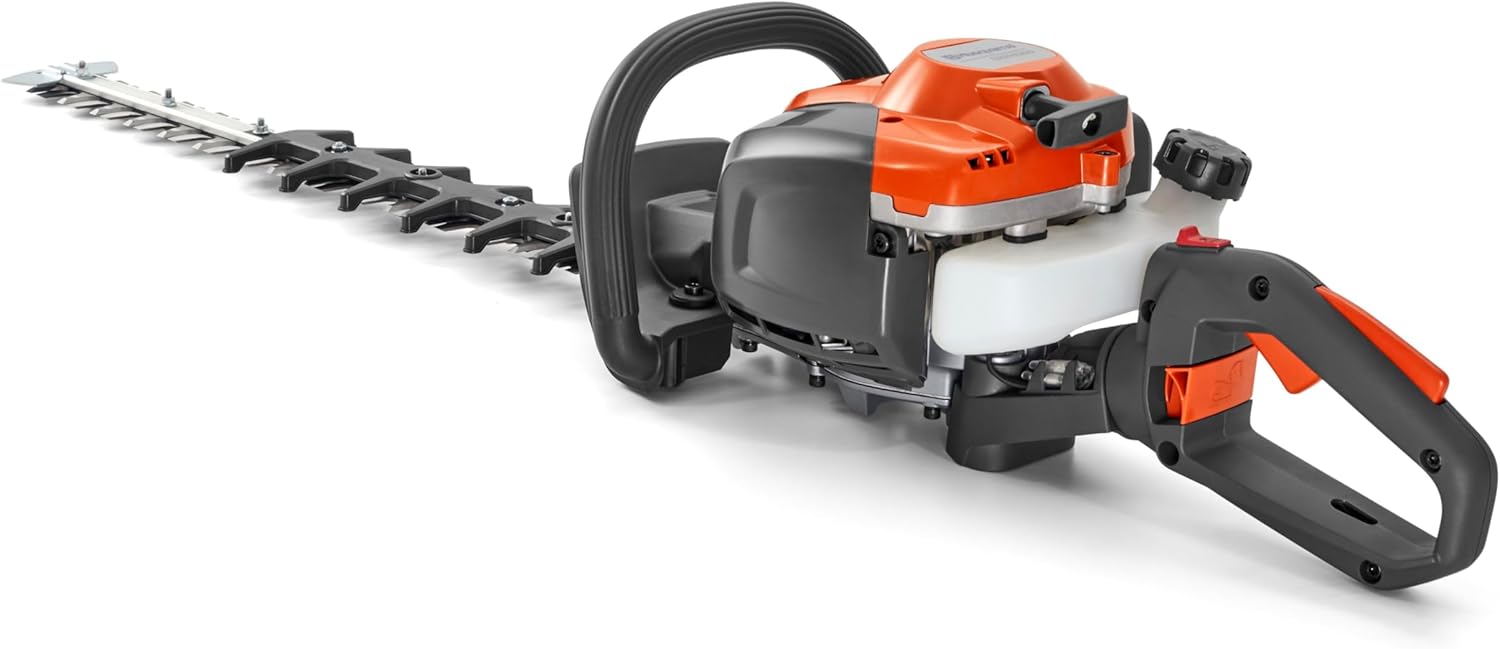
The Husqvarna 322HD60 is a gas-powered double-sided hedge trimmer built for high-capacity residential and light professional work. It uses a 21.7cc two-cycle engine that delivers strong cutting power and a 24-inch dual-action hardened-steel blade that cuts in both directions for faster shaping and fewer passes. An adjustable rear handle and relatively light overall weight make it easier to maneuver around large hedges and tight spots while the durable gearbox and professional-grade knife blades are aimed at frequent use. Typical tasks include trimming mature hedges, reducing overgrowth, and shaping long runs of shrubs where gas power and a long reach speed the job. Important limitations are the need for fuel mixing and routine engine maintenance, and the noise and vibration levels typical of gas tools compared with electric models. If you need long runtime and cutting force for thick stems, this trimmer delivers; if you prefer low-maintenance, quieter operation for smaller yards, an electric or battery model may be more suitable.
Best for: Buyers who prioritize cutting power and long runtime for heavy hedges and frequent trimming tasks and who are comfortable maintaining a gas engine.
Less Ideal for: Casual gardeners with small yards who prefer quieter, low-maintenance electric or battery trimmers.
- Powerful 21.7cc two-cycle engine for cutting thicker stems and long runs
- 24-inch dual-action hardened-steel blade that cuts in both directions for efficient shaping
- Adjustable rear handle and relatively light weight improve maneuverability during extended use
- Durable gearbox and professional-grade knife blades built for frequent residential or part-time professional work
- Requires fuel mixing and regular engine maintenance typical of gas tools
- Higher noise and vibration compared with electric or battery trimmers
Verdict: Choose the Husqvarna 322HD60 when you need gas-powered cutting power and a long dual-action blade for fast, professional-quality hedge work.
ECHO HC-2020 20 in. 21.2 cc Gas 2-Stroke Hedge Trimmer

| Blade Length | 20 inches |
|---|---|
| Power Source | Gasoline-Powered |
| Blade Material | High Carbon Steel |
The ECHO HC-2020 is a compact, performance-focused gas hedge trimmer built for frequent use on medium to large hedges. It pairs a 21.2 cc two-stroke engine with 20-inch double-sided, double-reciprocating high-carbon steel blades to deliver fast, clean cuts and the ability to trim from either side without flipping the tool. Its lightweight construction and tool-less air filter cover make it easy to handle for extended sessions and simplify routine maintenance. The unit also includes a zero-type grease fitting that reduces upkeep time for moving parts. Because it is gasoline powered, you get continuous power for dense growth and longer jobs without being tethered to an extension cord, but you should expect the usual noise, vibration, and the need for fuel mixing and periodic engine maintenance. The HC-2020 is best when you need a durable, no-compromise cutter that prioritizes cutting speed and reliability over battery convenience.
Best for: Gardeners and landscapers who prioritize cutting performance and durability for frequent or large-scale hedge work and who are comfortable with gas-powered equipment maintenance.
Less Ideal for: Casual users with small yards who prefer low-noise, low-maintenance battery or electric trimmers should consider quieter, cleaner alternatives.
- 20-inch double-sided, double-reciprocating high-carbon steel blades for fast, efficient cutting
- 21.2 cc gas two-stroke engine provides continuous power for long jobs and dense growth
- Lightweight design reduces operator fatigue during extended use
- Tool-less air filter cover and zero-type grease fitting simplify maintenance
- Requires fuel mixing and regular engine maintenance typical of two-stroke gas tools
- Produces noise and vibration compared with electric or battery trimmers
Verdict: Choose the HC-2020 if you need a lightweight yet powerful gas hedge trimmer that delivers fast, professional-grade cutting for frequent use.
JENPECH 26cc 2-Stroke Gas Hedge Trimmer, 24-inch Double-Sided Blade

| Blade Length | 24 inches |
|---|---|
| Engine Displacement | 26cc |
| Power Type | Gas powered (2-stroke, 25:1 mix) |
| Fuel Tank Capacity | 0.6L |
This JENPECH 26cc hedge trimmer is a straightforward gas-powered tool for homeowners who need more cutting power than battery models provide. It uses a 2-stroke 26cc engine with a 24-inch double-sided metal blade able to cut branches up to about 1 inch in diameter and a 24-inch cutting width. In practice it performs well on dense hedges, taller shrubs, and light branch clearing where run time and immediate power matter. The rotating rear handle and anti-slip grip make different cutting angles easier to manage, and the included back strap helps distribute weight during longer sessions. It ships with basic accessories including gloves, goggles, a funnel, and a fuel bottle for mix filling. Expect consistent power but also the usual gas-tool chores: mixing fuel at 25:1, routine spark plug and carburetor care, and louder operation and vibration compared with electric units. The unit is fairly heavy and better suited for occasional to regular yard work rather than precision, lightweight pruning jobs.
Best for: Buyers who prioritize running power and uninterrupted runtime for medium-duty hedge work and want a practical, no-frills gas tool that can tackle dense shrubs and taller hedges.
Less Ideal for: Those who need a lightweight, low-noise option for frequent fine pruning or small urban yards should consider battery or electric models instead.
- Powerful 26cc 2-stroke engine provides strong cutting performance for dense hedges
- 24-inch double-sided metal blade covers wide cutting swaths and handles branches up to about 1 inch
- Rotating rear handle and anti-slip grip improve control when cutting at different angles
- Includes useful accessories (back strap, gloves, goggles, fuel bottle and funnel) so you can start using it right away
- Requires 2-stroke fuel mixing and routine engine maintenance typical of gas tools
- Heavier than cordless or electric trimmers which can cause fatigue during extended use
Verdict: Choose this trimmer when you need a cost-effective gas-powered unit that delivers consistent cutting force for medium-duty hedges and dense growth.
HinLIaDa 22.5cc Gas-Powered 27.6in Single-Edge Hedge Trimmer

| Power Source | Gas Powered |
|---|---|
| Speed | 7500 rpm |
| Blade Material | Alloy Steel |
| Blade Length | 27.56 inches |
| Fuel Tank Capacity | 0.5L |
This HinLIaDa 22.5cc gas hedge trimmer is a straightforward, no-frills 2-stroke tool made for cutting and shaping hedges, shrubs, and small branches. It pairs a 27.6-inch single-edge alloy-steel blade with a 22.5cc, air-cooled two-stroke engine that delivers about 7,500 rpm and 0.65 kW of power, letting you tackle routine trimming and light shaping tasks efficiently. The unit includes an anti-vibration system, an ergonomic anti-slip handle and a hand-pull starter for simple operation. Practical extras such as a fuel mixing bottle, funnel, safety glasses and gloves are included, which helps a buyer get started right away. Expect comfortable mobility since it is not tethered to electricity, but be prepared for typical gas-tool tasks: mixing two-stroke oil, periodic maintenance and louder operation up to around 90 dB. The single-edge 0.5 mm blade handles branches up to roughly 10 mm in diameter, so it is best for light to moderate pruning rather than heavy woody limbs. For homeowners who want a budget gas option that comes with accessories and basic durability, this is a capable choice.
Best for: Homeowners and budget-minded gardeners who need a portable, gas-powered trimmer for regular hedge shaping and light pruning around yards and small landscapes.
Less Ideal for: Professional landscapers or users who need to cut thick woody limbs or want a quieter, low-maintenance electric alternative.
- Long 27.6-inch blade covers more hedge per pass for faster trimming
- Gas power and cordless operation provide full mobility away from outlets
- Includes starter accessories and basic safety gear so you can begin using it immediately
- Anti-vibration handle improves comfort during longer jobs
- Single-edge blade and 10 mm max cut limit make it unsuitable for thick, woody branches
- Two-stroke engine requires fuel mixing and routine maintenance
Verdict: A no-frills, budget-friendly gas hedge trimmer that delivers portable power and useful starter accessories for routine home hedge maintenance.
ECHO HCA-2620 21" Gas Articulating Shaft Hedge Trimmer

| Blade Length | 21 inches |
|---|---|
| Shaft Length | 59 inches |
| Engine Displacement | 25.4 cc |
| Fuel Capacity | 20.6 fl. oz. |
| Blade Type | Double-sided, double-reciprocating |
The ECHO HCA-2620 is a gas-powered articulating-shaft hedge trimmer built for tackling tall and dense hedges. Its 59-inch shaft and articulating gear case that pivots up to 135 degrees let you reach high or awkward angles without a ladder, while the 21-inch double-sided, double-reciprocating RazorEdge blades provide fast, clean cuts on thicker growth. The 25.4 cc two-stroke engine and large 20.6 fl. oz. fuel tank deliver long run times for multi-garden jobs, and the bellows-style fuel transfer plus two-stage air filtration improve starting and reduce field maintenance. Vibration reduction isolates the handles for steadier control and less fatigue during extended use. Expect a solid, tool-friendly service experience thanks to tool-less air filter access, but note this is a gas machine so it requires regular engine upkeep, fueling, and more noise than electric options. Its weight and engine complexity make it better suited to experienced users or professionals rather than those wanting near-silent, low-maintenance tools.
Best for: Gardeners and maintenance pros who need a powerful, reach-capable hedge trimmer for frequent or large-scale pruning and who are comfortable with routine engine upkeep.
Less Ideal for: Casual homeowners with small yards or those who prefer near-silent, low-maintenance electric or battery tools should consider lighter alternatives.
- Articulating shaft with 135° pivot for reaching tall and awkward hedges without a ladder
- 21-inch double-sided, double-reciprocating RazorEdge blades cut efficiently through thick growth
- 25.4 cc two-stroke engine and 20.6 fl. oz. fuel tank provide extended run time for larger jobs
- Tool-less air filter access and two-stage filtration reduce maintenance time
- Vibration-reduction system improves operator comfort during long use
- Requires regular two-stroke engine maintenance and fuel mixing
- Heavier and louder than electric or battery trimmers which can limit use in noise-sensitive areas
Verdict: Choose the ECHO HCA-2620 when you need a powerful, long-reach gas hedge trimmer that handles tall, heavy pruning jobs reliably.
VEVOR 26CC Gas Hedge Trimmer with 23.2-inch Dual Blade and 180° Rotating Head

| Engine displacement | 26CC |
|---|---|
| Cycle type | 2 Stroke |
| Blade length | 23.23 inches |
| Speed | 8500 rpm |
| Full fuel usage time | about 40–45 minutes |
The VEVOR 26CC gas hedge trimmer is a straightforward gas-powered tool aimed at homeowners who need a lot of cutting power without running an extension cord. It uses a 26cc 2-stroke engine that drives a dual-action 23.2-inch alloy-steel blade, giving fast cutting at up to 6500 rpm blade speed for shaping hedges, trimming shrubs, and edging fence lines. The 180° rotating head helps reach awkward angles and the included shoulder strap, gloves, and ear protection make longer sessions more manageable. Practical benefits include a nearly 40-minute runtime on a full tank under moderate load and a metal/plastic construction intended for routine yard maintenance. Important limitations to consider are the typical demands of a 2-stroke gas engine: you must mix fuel correctly, expect louder operation than cordless units, and perform basic maintenance like spark plug and air filter checks. Also the unit is heavier than battery trimmers, so prolonged overhead use can be tiring. For buyers wanting cordless convenience or very light suburban trimming, electric models may be preferable.
Best for: Buyers who want gas-level cutting power for medium to large yards and prefer a robust handheld tool they can maintain and service themselves.
Less Ideal for: Those who prioritize low noise, minimal maintenance, or very light, short-duration trimming where a cordless electric trimmer would be more convenient.
- Powerful 26cc 2-stroke engine for cutting thicker branches and dense growth
- Dual-action alloy-steel blade and 23.2-inch cutting length for faster, cleaner cuts
- 180° adjustable head to trim at multiple angles and reach awkward spots
- Comes with protective accessories and a shoulder strap for safer, more comfortable use
- Up to about 40 minutes continuous runtime on a full tank under moderate load
- Requires mixed fuel and routine 2-stroke engine maintenance
- Louder and heavier than battery-powered trimmers, which can increase fatigue and noise exposure
- Not suitable for regions where a gas-powered unit is restricted
Verdict: Choose this VEVOR 26CC gas trimmer if you need consistent gas-powered cutting performance and a 180° head for precise shaping on medium to large hedges.
Choosing the Right 2 Stroke Hedge Trimmer: Key Factors to Consider
Engine Reliability and Fuel Handling
Two-stroke engines give a high power-to-weight ratio but need correct fuel mixing and periodic top-end attention. Look for designs with accessible carburetor adjustments and straightforward fuel systems so you can tune the engine when it runs rich or lean. Reliable ignition components and a clean air intake reduce the frequency of fouling and stalls during prolonged trimming.
Fuel handling matters because stale or improperly mixed gas causes hard starting, loss of power, and excessive smoke. If you work seasonally, plan for fuel stabilization during storage and choose a trimmer with a simple primer and choke arrangement to make winter and spring starts less frustrating.
Blade Length, Tooth Spacing, and Cut Capacity
Blade length and the spacing between teeth determine how quickly you can shape large hedges and how large a stem the trimmer will bite through. Longer blades reduce pass count on broad hedges but can add weight and catch more frequently on dense growth. Tighter tooth spacing produces cleaner cuts on fine-leaved hedges, while wider spacing helps tackle thicker woody stems.
Consider the typical width and thickness of the shrubs you maintain. For tall or wide hedges, a longer blade will save time, but if your garden has many small ornamental shrubs, a shorter, lighter bar with fine tooth spacing gives better control and finish.
Vibration Control and Ergonomics
High vibration levels make two-stroke trimmers fatiguing and can lead to less precise cuts. Models with built-in anti-vibration mounts, rubberized handles, and well-balanced centers of gravity reduce arm strain during long sessions. Handle configuration that allows both horizontal and vertical grips improves access to different hedge shapes and angles.
Ergonomics also influence safety. Better balance reduces the chance of slips when cutting overhead or on ladders, and comfortable grips make it easier to maintain steady cutting lines for a cleaner look.
Starting System and Cold-Weather Performance
A trimmer that starts reliably saves time and frustration. Look for designs with easy choke/primer interplay and a pull starter that engages smoothly. Cold-weather performance matters if you prune in early spring or late fall; cold conditions thicken fuel and make starting harder.
Transparent starter covers and simple primer bulbs help you confirm fuel delivery before a pull. Some two-stroke units also have decompression valves that reduce starter resistance, which is valuable when starting a cold engine.
Maintenance Needs and Serviceability
Two-stroke hedge trimmers require more routine attention than cordless or electric units. Easy access to the air filter, spark plug, and carburetor speeds regular checks and repairs. Parts that are reachable without special tools mean you can perform basic maintenance in the yard rather than at a shop.
Also consider the availability of replacement wear parts like drive belts, blades, or anti-vibration mounts. Clear, user-friendly maintenance intervals in the manual help you schedule tune-ups to avoid sudden power loss during a big trimming job.
Weight Distribution and Reach
Overall weight matters less than where the weight sits. A heavier motor placed near the handle improves balance and reduces the perceived effort at the blade end. Conversely, too much weight at the blade makes long horizontal cuts tiring. Reach also depends on shaft length and whether extensions or pole options exist.
Think about the typical heights you trim and whether you need a lightweight tool for frequent overhead work or a longer, better-balanced unit for hedge rows. Proper weight distribution reduces wrist strain and helps maintain steady, even cuts along the hedge.
Preparing a Two-Stroke Trimmer for the Season
Before the first heavy use, perform a basic service: clean or replace the air filter, check and gap the spark plug, inspect fuel lines for cracks, and use fresh premixed fuel. Run the trimmer briefly to confirm smooth idling and steady throttle response.
Inspect the blades and sharpen or replace them if they are chipped or dull. Properly sharpened blades cut cleaner and reduce stress on the engine because the motor does not stall as often on tough stems.
- Check belt and drive couplings for wear
- Tighten or replace loose handle hardware
- Verify anti-vibration mounts are intact
Safe Handling and Personal Protective Equipment
Two-stroke hedge trimmers can eject debris and vibrate strongly, so wear eye protection, hearing protection, gloves, and sturdy footwear. Long-handled socks or pants reduce the risk of scratches from branches.
Use two hands on the tool at all times and keep bystanders well back. Plan your cuts so branches fall away from your body and avoid overreaching, which is a common cause of slips and uneven trimming lines.
- Keep the blade away from the body and avoid cutting above shoulder level when possible
- Shut the engine before clearing blade jams
Sharpening and Blade Care
Regular sharpening restores cutting efficiency and prevents vibration from developing due to uneven teeth. Use a file or grinder appropriate for hedge trimmer blades and follow the original tooth angle to maintain effective cutting action.
After sharpening, test the blade on a small branch to confirm a clean cut. Lubricate the blade and remove sap or resin deposits after each heavy session to prevent corrosion and sticking.
- Use light machine oil or a dry lubricant recommended for outdoor blades
- Store with a blade cover to protect teeth and prevent accidents
Trimming Techniques for Different Hedge Types
For dense, woody hedges, take multiple shallow passes rather than forcing through large stems. This reduces engine load and prevents blade damage. On fine-leaved hedges, hold a shallow cutting angle and make smooth, continuous strokes for a neat finish.
When shaping tall hedges, work from the bottom up to avoid trapping cuttings inside the foliage. For formal geometric shapes, use a guide string or temporary stakes to keep lines straight.
- Remove large, woody branches with pruning saws before trimming
- Clean blades between different plant species to prevent disease spread
Storage and Winterizing Tips
If you store the trimmer for months, drain the fuel or add a fuel stabilizer and run the engine briefly to circulate treated fuel. Remove the spark plug and spray a small amount of fogging oil into the cylinder for short-term storage to protect internal parts.
Keep the tool in a dry place and hang or rest it so the blade does not contact other objects. Periodically check seals and hoses during storage to catch deterioration early.
- Label the fuel mix ratio used for the unit for future reference
- Store with a blade sheath and away from direct sunlight
How We Chose the Best 2 Stroke Hedge Trimmer
We focused on attributes that affect real-world hedge trimming with two-stroke engines. Key evaluation criteria included engine reliability under load, blade length and cut capacity, vibration and balance during extended use, starting and running ease in different weather, and serviceability including easy-to-access spark plug and air filter. We also considered weight and ergonomics because less fatigue lets you finish long hedges faster. We excluded electric and cordless alternatives and any tools not purpose-built as handheld hedge trimmers. Tools with insufficient blade length for standard residential hedges or with maintenance requirements that demand frequent disassembly were removed. Final selections prioritize safe continuous cutting, straightforward maintenance, and usable power for both routine shaping and thicker growth.
FAQ
How do I mix fuel for a two-stroke hedge trimmer?
Mix fuel at the ratio specified by the engine manufacturer, typically expressed as a parts-per-volume mix. Use fresh gasoline and high-quality two-stroke oil, and mix in a clean container. Avoid long-term storage of premixed fuel unless you add a stabilizer.
Is a 2 stroke hedge trimmer harder to maintain than electric options?
Two-stroke trimmers require more regular engine maintenance such as spark plug checks, air filter cleaning, and carburetor adjustments. However, they offer easier field repairs and higher continuous power, which many gardeners trade for the extra upkeep.
Can I use a two-stroke trimmer for tall hedges and overhead work?
Yes, but consider weight and balance. Lighter, well-balanced units or those with longer shafts reduce arm fatigue for overhead trimming. For very tall hedges, combine the trimmer with safe ladders or pole extensions and follow safe handling practices.
How often should I sharpen the blades?
Sharpen blades whenever they begin to tear foliage instead of cutting cleanly, which for many gardeners is after several hours of heavy use. Inspect blades before major sessions and perform light sharpening as needed to maintain cutting efficiency.
What causes excessive smoke or poor running in a two-stroke engine?
Excessive smoke usually indicates an overly rich fuel mixture, worn piston rings, or poor combustion due to a fouled spark plug or clogged air filter. Check the fuel mix, replace the plug if fouled, and inspect the air intake before assuming major engine failure.
Final Verdict
Choose a two-stroke hedge trimmer that matches the size and density of the hedges you maintain. Prioritize engine reliability and blade geometry when you have thick, woody growth, and favor lighter, well-balanced units if you do a lot of overhead or detailed shaping. Balance the tradeoffs between power, weight, and maintenance. When you pick a trimmer with accessible service points, good vibration control, and the right blade length, you will spend less time tuning and more time producing clean, lasting cuts.
