

Note: This article contains affiliate links. If you click on these links and make a purchase, I may earn a small commission at no extra cost to you. This helps support my research and content. Read my full affiliate disclosure here.
If you want predictable, steady results for potted orchids, a balanced 20 20 20 fertilizer can simplify feeding and reduce guesswork. Orchids have different needs than typical houseplants; they benefit from precise, soluble nutrients delivered at the right frequency and concentration. This guide shortlists six top 20 20 20 fertilizer options chosen for orchid use and evaluates them on key gardener-focused criteria like nutrient balance, dilution clarity, and ease of application. Use the overview and evaluation notes to pick a formula that suits your watering routine, potting medium, and flowering goals.
Top Picks at a Glance
| Best Overall The best all-around choice for most situations | Peter's Professional 20-20-20 Water Soluble General Purpose Fertilizer (2 lb) |  |
| Best Quality Built to a higher standard if you want something more solid | Jack's Classic 20-20-20 All Purpose Water-Soluble Fertilizer (25 lb) |  |
| Best Value The sweet spot between price and what you get | Jack's Classic 20-20-20 All-Purpose Water-Soluble Fertilizer, 4 lb |  |
| Best Budget The cheapest option that still gets the job done reliably | FOVGOTAN 20-20-20 Orchid Fertilizer (1 lb) |  |
| Highest Rated A top-rated pick with lots of positive feedback | Jack's Classic 20-20-20 All Purpose Water-Soluble Fertilizer (24 oz) | 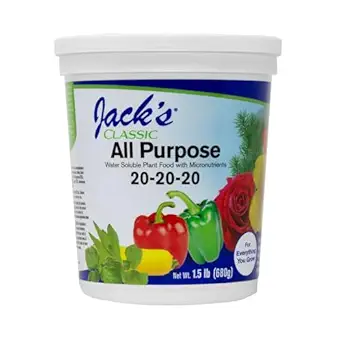 |
| Most Popular A crowd favorite that many people choose with confidence | GARDENWISE 20-20-20 Water-Soluble Fertilizer (8 oz) |  |
Peter's Professional 20-20-20 Water Soluble General Purpose Fertilizer (2 lb)

| Item Form | Powder |
|---|---|
| Application Method | Water Soluble |
| Coverage | houseplants and indoor gardens, specifically Orchids and Bromeliads |
| Mixing Ratio | 1:1:1 |
Peter's 20-20-20 is a classic, balanced powdered fertilizer you dissolve in water for routine feeding of orchids, bromeliads, and other houseplants. It supplies equal parts nitrogen, phosphorus, and potassium plus micronutrients, so it covers general growth, root development, and flowering needs without needing a complicated schedule. The powder format makes it easy to tailor dose and frequency for different pot sizes and plant stages, and the provided mixing ratio offers a simple starting point. The pouch is not resealable, so you will want to transfer the contents to an airtight container to keep it dry and easy to measure. Because it is a general-purpose formula it is not optimized for any single orchid species or specific bloom-promoting regimen, but for someone seeking a reliable, do-it-all fertilizer for an indoor collection it performs well and removes the guesswork of mixing separate nutrients.
Best for: Indoor gardeners who want a straightforward, all-purpose fertilizer to feed a mixed collection of orchids and houseplants without fuss and who prefer controlling concentration themselves.
Less Ideal for: Growers who need a specialist orchid bloom booster or a staged feeding program specific to one species should look for targeted formulations instead.
- Balanced 20-20-20 NPK with micronutrients covers general growth, root health, and flowering
- Water-soluble powder lets you adjust concentration and feeding frequency for different plants
- Clear mixing ratio simplifies preparation for everyday use
- Broadly suitable for orchids, bromeliads, and a variety of houseplants
- Pouch is not resealable so product must be stored in a separate airtight container
- General-purpose formula is not tailored for species-specific bloom or growth stages
Verdict: A reliable, easy-to-adjust 20-20-20 water-soluble fertilizer that suits most indoor orchid collections and mixed houseplant feeding routines.
Jack's Classic 20-20-20 All Purpose Water-Soluble Fertilizer (25 lb)

| Item Form | Powder |
|---|---|
| Application Method | Water-Soluble |
| Coverage | Medium |
| Target Species | All outdoor grown plants |
Jack's Classic 20-20-20 is a concentrated, water-soluble powder designed to give plants fast green-up and vigorous foliar expansion. You mix measured amounts with water to create a liquid feed, making it suitable for hand watering, hose-end applicators, or continuous liquid feed systems used in greenhouse or controlled environments. The balanced 20-20-20 formulation combines ammonium and urea nitrogen with equal phosphorus and potassium and includes micronutrients, which helps maintain steady vegetative growth and healthy root and shoot development. In real use it performs as a reliable maintenance/feed program fertilizer when you want predictable, even results across mixed plantings. The powder format stretches farther than comparable liquids, so one 25 lb bag supports many feedings, but accurate measuring and thorough dissolving are required. Also, because it contains phosphorus it may not be appropriate where local regulations restrict phosphorus use on turf and similar areas. For orchids specifically, this general-purpose mix supports growth but lacks orchid-targeted bloom or low-phosphate formulas that some growers prefer during flowering stages.
Best for: Gardeners and small-scale greenhouse growers who prioritize consistent, professional-grade nutrition and predictable vegetative performance across many plants.
Less Ideal for: Orchid growers focused exclusively on bloom enhancement or those who need a low-phosphorus or specialty orchid formula tailored to flowering stages.
- Balanced 20-20-20 N-P-K provides consistent vegetative growth and steady root development
- Includes micronutrients for fuller leaf color and overall plant health
- Concentrated powdered form mixes to make large volumes of liquid feed, improving efficiency and cost per gallon
- Not formulated specifically for orchids during bloom cycles where lower phosphorus or bloom-boosting ratios may be preferred
- Requires accurate measuring and complete dissolution to avoid salt buildup or uneven feeding
- Contains phosphorus which may be restricted in some localities for lawn/turf use
Verdict: A concentrated, professional 20-20-20 powder that delivers reliable, balanced nutrition for growers who want consistent vegetative performance.
Jack's Classic 20-20-20 All-Purpose Water-Soluble Fertilizer, 4 lb

| Item Form | Powder |
|---|---|
| Application Method | foliar or root feeding |
| Unit Count | 64 Ounce |
| Mixing Ratio | 4 lbs/gallon |
| Specific Uses For Product | Plant Growth |
Jack's Classic 20-20-20 is a powdered, water-soluble fertilizer that supplies balanced N-P-K plus micronutrients for fast green-up and leaf expansion. You mix the powder with water (mixing chart provided) to create a concentrate for foliar spray, root drench, or continuous-feed systems, which makes it versatile for greenhouse, container, and garden use. The included measuring spoon and clear directions simplify dosing, and the powder format is economical because it yields multiple gallons of ready-to-use solution. Practical users will appreciate the professional-grade formulation and the brand's long history with growers. Important limitations are that it is a general-purpose 20-20-20 rather than an orchid-specific formula, so orchid growers should pair it with orchid-appropriate feeding schedules and monitor for overfeeding on sensitive epiphytes. Also follow safety guidance when handling the concentrated powder to avoid skin and eye contact.
Best for: Buyers who prioritize efficient, no-nonsense nutrition and want a reliable, economical general-purpose fertilizer they can use across many houseplants and garden containers.
Less Ideal for: Growers seeking a dedicated orchid-specific nutrient profile or those who prefer liquid one-part orchid formulas tailored to epiphytic watering routines.
- Balanced 20-20-20 N-P-K for general growth and green-up
- Water-soluble powder that mixes to make multiple gallons of feed, making it cost-effective
- Usable as foliar spray, root feed, or in continuous-feed systems for flexible application
- Includes micronutrients so additional supplements are often unnecessary
- Comes with a measuring spoon and clear mixing instructions for consistent dosing
- Not formulated specifically for orchids so may require adjusted dilution and feeding frequency
- Concentrated powder requires careful handling and measuring to avoid overfeeding
Verdict: A versatile, economical water-soluble 20-20-20 that gives reliable general nutrition for growers who want a practical, multipurpose fertilizer.
FOVGOTAN 20-20-20 Orchid Fertilizer (1 lb)

| Unit Count | 16 Ounce |
|---|---|
| Item Form | Granules |
| Specific Uses For Product | Orchids |
| Target Species | Orchid |
This 20-20-20 granular fertilizer is marketed for orchids and supplies equal parts nitrogen, phosphorus, and potassium to support growth, root health, and flowering. It is typically applied by diluting the granules according to package directions and feeding during active growth periods to encourage steady foliage and bloom development. Notable features include a sulfate-based potassium source that is gentler for chlorine-sensitive plants and a urea-free nitrogen formulation that reduces the risk of nutrient burn. The formula also includes micronutrients to help correct deficiencies and support overall vigor. Practical benefits are straightforward: a single balanced formula covers general feeding needs across stages, the small 1 lb size is easy to store and measure for hobby growers, and the granular form is simple to apply in potting mixes or when making fertilizer solutions. Limitations are that it is a general-purpose N-P-K rather than a specialist bloom-boosting or low-nitrogen orchid mix, and larger collections or long seasons will require frequent repurchasing because of the modest bag size.
Best for: Budget-minded hobbyists or beginners who want a single, easy-to-use fertilizer to maintain healthy orchids without managing multiple specialized products.
Less Ideal for: Collectors with large numbers of orchids or growers seeking a dedicated bloom-boosting or low-nitrogen regimen should consider larger sizes or specialized orchid formulations.
- Balanced 20-20-20 formula suits all growth stages
- Sulfate of potash potassium is gentle for chlorine-sensitive orchids
- Urea-free nitrogen reduces risk of rapid nutrient burn
- Includes micronutrients to address common deficiencies
- Small 1 lb bag may not be economical for growers with many plants or long feeding seasons
- General-purpose formula may not maximize flowering compared with bloom-specific fertilizers
Verdict: A simple, balanced 20-20-20 granule fertilizer that gives budget-conscious orchid growers an all-purpose feed to maintain steady growth and root health.
Jack's Classic 20-20-20 All Purpose Water-Soluble Fertilizer (24 oz)

| Item Form | Powder |
|---|---|
| Specific Uses For Product | Plant Growth |
| Coverage | All |
| Mixing Ratio | 0.22 |
Jack's Classic 20-20-20 is a professional‑grade, water‑soluble powder fertilizer intended for general feeding of indoor and outdoor plants. You dissolve the measured spoonfuls in water and apply as a root drench or foliar spray every 7 to 14 days, or use weaker mixes for seedlings and cuttings. The even 20-20-20 NPK formula promotes quick green‑up and leaf expansion, while included micronutrients support overall plant health. Because it is a powder concentrate, a small tub makes multiple gallons of feed, which is convenient for regular maintenance across beds, containers, and ornamentals. The product ships with a measuring spoon and clear directions, so it is easy to dose consistently. Limitations to note are that it is a generalist formula rather than crop‑specific booster, so plants with specialized needs may do better with targeted blends, and it requires careful handling and dilution to avoid overfeeding. Protective handling is recommended since the powder can irritate skin and eyes.
Best for: Gardeners who want a reliable, easy-to-use all‑around fertilizer for regular maintenance of outdoor beds, containers, and ornamentals and who value predictable, balanced nutrition.
Less Ideal for: Growers seeking a specialized bloom booster or a fertilizer tailored to a single crop should choose a targeted formula instead.
- Balanced 20-20-20 NPK supports fast green-up and leaf growth across many plant types
- Water‑soluble powder stretches farther than comparable liquid feeds so one tub makes multiple gallons
- Usable as both foliar spray and root feed for flexible application
- Includes measuring spoon and clear mixing directions for consistent dosing
- Added micronutrients reduce need for separate supplements
- General all-purpose formula is not optimized for bloom or fruit boosting
- Requires accurate measuring and dilution to avoid fertilizer burn
Verdict: A straightforward, professional‑grade balanced fertilizer that delivers reliable, easy-to-dose nutrition for maintaining healthy outdoor plants.
GARDENWISE 20-20-20 Water-Soluble Fertilizer (8 oz)

| Item Form | Granules, Powder |
|---|---|
| Application Method | Water |
| Specific Uses For Product | Indoor and outdoor plants, vegetables, orchids, lawns |
| Mixing Ratio | ½ tsp per gallon (indoor); 1 tbsp per gallon (outdoor) |
This Gardenwise 20-20-20 is a water-soluble, all-purpose fertilizer that dissolves easily for liquid feeding of ornamentals, lawn grass, potted plants and hydroponic setups. Typical use is mixing the powder into watering cans at the recommended ratio (½ tsp per gallon for indoor plants; 1 tbsp per gallon for outdoor plants) and applying during the growing season for steady, balanced nutrition. The even N-P-K delivers simultaneous support for leaf growth, root development and flowering while included micronutrients like iron and manganese help prevent common deficiencies. Because it is soluble it is simple to dose for container work and spot-feeding turf or ornamental grass clumps. Limitations to consider are the small 8 oz unit which is better for small gardens or trial use rather than large lawns, and frequent applications are required compared with slow-release granulars. Users should follow mixing directions carefully to avoid overfeeding sensitive plants.
Best for: Gardeners who want a straightforward, easy-to-mix liquid feed for ornamental grasses, containers, and small lawn areas and who prioritize simple, balanced nutrition over long-duration feeding.
Less Ideal for: Large-property owners who need bulk fertilizer or gardeners who prefer low-maintenance slow-release products for season-long feeding.
- Balanced 20-20-20 N-P-K provides uniform nutrition for foliage, roots and blooms
- Water-soluble form mixes quickly for foliar and soil drench applications
- Includes micronutrients to help prevent common trace element deficiencies
- Simple, clear mixing directions make it easy to dose for pots and small lawn patches
- 8 ounce package is small for feeding large lawns or extended seasons
Verdict: A quick-mixing, balanced liquid fertilizer that gives ornamental grasses and small lawn areas an easy, reliable nutritional boost.
Choosing the Right 20 20 20 Fertilizer for Orchids: Key Factors to Consider
Nutrient Ratio and Orchid Needs
A true 20-20-20 fertilizer supplies equal parts nitrogen, phosphorus, and potassium when mixed correctly. For many orchids, balanced feeding supports steady vegetative growth and sustained energy for flowering without pushing excessive foliage growth at the expense of blooms. Knowing how a fertilizer provides those macronutrients matters because some formulations use different salt sources that affect solubility and pH.
Match feeding strength and frequency to the plant's growth cycle. During active growth or repotting, slightly stronger or more frequent feedings can help root recovery. During bloom formation and when plants are resting, gardeners often reduce concentration or frequency to avoid overstimulation.
Solubility and Mixing Clarity
Orchids are usually grown in free-draining, aerated media where undissolved fertilizer can collect and burn roots. A good 20-20-20 product dissolves completely with no residue and has straightforward mixing ratios for small volumes. Clear instructions that include ppm or EC targets are especially helpful for growers who monitor water quality.
Also consider whether the fertilizer separates or clumps in storage. A product that mixes cleanly reduces the risk of uneven dosing and stress on sensitive roots.
Micronutrients and Chelation
Balanced macronutrients are only part of the picture. Micronutrients like iron, magnesium, manganese, and zinc affect chlorophyll production, root function, and bloom color intensity. Chelated forms of micronutrients are often more available across a wider pH range, which is useful because orchid potting mixes and water sources can vary widely.
If your water is hard or alkaline, the presence of chelated trace elements and magnesium can prevent nutrient lockout. Conversely, very high micronutrient levels can accumulate in media over time, so look for clear label concentrations and recommendations for periodic leaching.
Application Method and Frequency
Orchids can be fed via root drench, foliar spray, or occasional soak. The best fertilizer for your routine will state whether it is suitable for foliar feeding and offer dilution guidance for both foliar and substrate applications. Some growers prefer frequent, weak feedings after every watering, while others do a regular dilute feed weekly or biweekly.
Consider how the fertilizer interacts with common orchid care practices such as misting, flushing, or using reverse-osmosis water. Flexibility in recommended concentrations helps you adapt feeding to different pot sizes and growth stages.
Packaging, Concentration, and Storage
Concentrated liquid fertilizers reduce storage space but require careful measurement. Packaging that includes a measuring cap or clear markings makes accurate dilution easier. Look for containers that protect contents from moisture and light to preserve stability.
Also think about package size relative to how many orchids you care for. Small growers may prefer single-use or small bottles, while larger collections benefit from bulk concentrate that remains stable between uses when stored according to label instructions.
Compatibility With Potting Media and Water
Orchid potting mixes range from bark and charcoal to sphagnum and moss, and each holds water and nutrients differently. A fertilizer that performs consistently across media types is useful when you maintain mixed collections. Consider how quickly the media dries and whether you need a feed that leaches easily to avoid salt buildup.
Water quality strongly affects nutrient availability. If you use softened, municipal, or well water, check whether the fertilizer's instruction notes on hardness adjustments or recommends leaching schedules. Some formulas work better with low-salt water and will require more frequent flushing if your source is high in dissolved minerals.
When to Use a Balanced 20-20-20 Formula
A balanced 20-20-20 formula is most useful during periods when you want steady, non-extreme nutrient supply, such as routine maintenance feeding or when establishing plants after repotting. It keeps growth even without favoring leaf mass or bloom initiation excessively.
Avoid heavy use during abrupt seasonal transitions or when plants show specific deficiencies. In those cases, targeted feeds or temporary adjustments are often more effective than a blanket balanced fertilizer.
- Use regularly during active growth for even development
- Reduce strength or frequency when plants are resting or preparing to bloom
- Pair with periodic flushing to prevent salt buildup
Adjusting Concentration for Different Growth Stages
Orchids respond to nutrient concentration. A common approach is to feed at half to quarter strength more frequently rather than full strength less often. This reduces salt stress and mimics the low but consistent nutrient availability orchids experience in nature.
When boosting root growth after repotting, slightly stronger feedings for a short period can be beneficial, but always follow label guidance and watch for leaf tip burn as a sign of overfeeding.
- Seedlings and keiki: very dilute, frequent feeds
- Active vegetative growth: moderate concentration, regular schedule
- Pre-bloom and bloom: maintain moderate feeding but avoid spikes
Reducing Salt Buildup and Flushing Protocols
Because orchids are often grown in fast-draining media, soluble salts from fertilizer can concentrate at the pot bottom. Regular flushing with plain water helps prevent root burn and maintains media health. A monthly deep flush is a good starting point for many growers, adjusted for pot size and watering frequency.
If you notice white crust on media or poor water absorption, increase flushing frequency and reduce feeding concentration until the plant recovers.
- Deep flush with low-salt water monthly
- Monitor for crusting and soggy pots as warning signs
- Combine flushing with repotting schedule when needed
Feeding Orchids in Different Potting Media
Bark mixes drain quickly and need more frequent, dilute feeding. Moss retains moisture and nutrients longer so reduce feed frequency to avoid buildup. For mounted orchids, foliar feeding and light root drenching are usually the norm because there is minimal media to hold fertilizer.
Adjust your dilution and interval based on how long the medium holds moisture and the species' preferences.
- Bark: frequent, dilute feeds
- Sphagnum moss: less frequent feeding, careful flushing
- Mounted: fine misting and light root drench
Measuring and Mixing Tips for Accurate Dosing
Use a small graduated syringe, measuring cap, or kitchen scale for precise dilution. Labels that list grams per liter or teaspoons per gallon are easier to translate into small pots. Mix concentrates into room-temperature water and stir until fully dissolved before applying.
When switching water sources or fertilizers, mix at a lower concentration initially and observe plant response for a week before increasing to the recommended strength.
- Measure carefully for small pots
- Dissolve fully and check for residue
- Start conservatively when changing products or water
How We Chose the Best 20 20 20 Fertilizer for Orchids
We focused on fertilizers formulated or commonly used for potted orchids and items that deliver a true 20-20-20 N-P-K ratio when mixed to label directions. Our selection filters prioritized soluble formulations that dissolve cleanly for foliar or substrate feeding, clear dilution guidance, and ingredient transparency so you know the nitrogen, phosphorus, and potassium sources. Evaluation criteria included nutrient balance and solubility, because orchids need evenly available macronutrients; application clarity and dosing flexibility, which affect how easy it is to match feeding to different pot sizes and media; micronutrient content, since trace elements influence bloom color and root health; and packaging that preserves product stability and is convenient to measure. We excluded granular or slow-release products that cannot be reliably converted to a 20-20-20 solution, and products lacking clear label instructions. The result is a practical selection focused on soluble, balanced feeding suited to a range of orchid species and growing setups.
FAQ
How often should I feed orchids with a 20-20-20 fertilizer?
It depends on your medium and water. Many growers use a diluted feed every one to two weeks or a very weak solution with every watering. Frequent, weak feeds reduce salt stress compared with infrequent, strong feedings.
Can I use a 20-20-20 fertilizer for all orchid types?
A balanced formula works for many common orchids, but specific species with unusual requirements may need adjusted ratios. Monitor your plants and adjust concentration or frequency to match growth response.
Is foliar feeding with 20-20-20 safe for orchids?
Foliar feeding can supplement root feeding if the product is labeled safe for leaf application. Use low concentrations and avoid spraying in direct sun to reduce leaf burn risk.
What signs show my orchid is getting too much fertilizer?
Look for brown leaf tips, reduced water uptake, white crust on the media, and stunted new growth. If these appear, flush the potting medium with low-salt water and reduce feeding strength and frequency.
Should I adjust feeding when repotting orchids?
Yes. After repotting, start with lighter feed concentrations to help roots recover. Gradually increase to normal maintenance strength as new roots establish.
Does water quality affect how I use a 20-20-20 fertilizer?
Water hardness and dissolved salts change nutrient availability and accumulation. Use lower concentrations or more frequent flushing if your water is high in dissolved minerals.
Final Verdict
Choose a 20-20-20 fertilizer that dissolves cleanly, provides clear dilution instructions, and includes useful micronutrients or chelation if your water or media vary. Prioritize solubility and accurate measuring to avoid salt buildup in fast-draining orchid mixes. Adjust concentration and frequency based on potting medium, plant growth stage, and observed response. With careful mixing and routine flushing, a balanced 20-20-20 program can support steady growth and reliable flowering across a wide range of orchid types.
