

Note: This article contains affiliate links. If you click on these links and make a purchase, I may earn a small commission at no extra cost to you. This helps support my research and content. Read my full affiliate disclosure here.
When you need to break compacted ground, lift dense root balls, or turn heavy beds, the right 4 tine digging fork makes the job far easier and faster. A proper fork gives you mechanical advantage without overtaxing your back, slices through clay and sod, and helps preserve soil structure when you lift and loosen rather than pry. This guide looks at seven shortlisted 4 tine digging forks chosen for strength, handle comfort, and field durability. We evaluate each pick on the attributes that matter in real garden work so you can pick a fork that matches your soil type, bed size, and the intensity of use. Read on to see which features matter most and how to match a fork to your tasks.
Top Picks at a Glance
| Best Overall The best all-around choice for most situations | Berry&Bird 4-Tine Stainless Steel Digging Fork with Ash Wood Y-Handle |  |
| Best Quality Built to a higher standard if you want something more solid | TABOR TOOLS J59A 4-Tine Steel Digging Fork with D-Handle |  |
| Best Value The sweet spot between price and what you get | VEVOR 4-Tine Forged Digging Fork with 45" Fiberglass Handle |  |
| Best Budget The cheapest option that still gets the job done reliably | TAILERNRUYE 4-Tine Heavy-Duty 47" Garden Pitchfork |  |
| Highest Rated A top-rated pick with lots of positive feedback | GSBLUNIE 4-Tine Garden Pitchfork with Fiberglass Handle and D-Grip |  |
| Most Popular A crowd favorite that many people choose with confidence | Truper 4-Tine Spading Fork with 30-inch Wood D-Handle |  |
| Best Seller A high-volume bestseller chosen again and again | COSITA 44-Inch Pitch Fork with Fiberglass Handle, 4-Tine Garden Fork |  |
Berry&Bird 4-Tine Stainless Steel Digging Fork with Ash Wood Y-Handle

| Material | Stainless Steel head, ASH hardwood handle |
|---|---|
| Tines | 4 steel tines |
| Total Length | 43.9 inch |
| Head Size | 7.2 x 11.8 inch |
This Berry&Bird digging fork is built for practical garden work: a polished stainless steel head with four tines for breaking compacted soil, aerating beds, and screening mulch or compost, paired with an ash wood Y-handle for leverage and control. Typical use is standing work—push the tines into soil, rock or compost, then pull back and lift or fork material free; the Y/D-style grip helps reduce wrist strain and gives good leverage when prying out roots or turning heavy soil. Notable features include corrosion-resistant stainless steel tines, a durable hardwood shaft sourced from FSC-certified forests, and visible seam welding where the head meets the shaft. Benefits are long service life in damp soil, easier soil-turning from a standing stance, and a handle shape that suits users who want more control. Important limitations are the tool's weight, which some may find heavy for prolonged light tasks, and the fixed full-length design that may be bulky to store for very small sheds. The fork is well suited to regular garden maintenance but is not a replaceable-head system for specialized jobs.
Best for: Gardeners who prioritize durable, low-maintenance tools for regular bed preparation and compost or mulch handling and who prefer working from a standing position to reduce bending.
Less Ideal for: People who need an ultra-light or compact tool for frequent overhead or prolonged hand-held work or gardeners with very limited storage space.
- Stainless steel head resists rust and holds up to regular soil and compost work.
- Four sturdy tines effectively break up compacted soil and screen debris.
- Ash wood Y-handle provides strong leverage and a secure grip for standing use.
- FSC-certified hardwood shaft supports sustainable sourcing and durability.
- Heavier weight that can tire users during extended light tasks.
- Fixed full-length design is less convenient for very tight storage spaces.
Verdict: A robust, rust-resistant digging fork with a comfortable Y-handle that makes regular soil turning and compost work faster and more controlled.
TABOR TOOLS J59A 4-Tine Steel Digging Fork with D-Handle

| Brand | TABOR TOOLS |
|---|---|
| Model | J59A |
| Head Finish | Black Oxide |
| Shank Type | Straight |
| Point Style | Diamond Point |
The TABOR TOOLS J59A is a purpose-built digging fork for heavy garden and small-farm work. Its forged high-carbon steel head and welded steel shaft are made to resist bending and splitting, so you can pry into compacted or rocky ground, lift compost, or dig potatoes without worrying about a broken handle. The four tines and diamond point profile penetrate and loosen soil efficiently, while the anti-corrosive black finish helps resist rust in regular outdoor use. The D-handle gives a secure grip and solid leverage for levering and lifting, which is helpful when double-digging new beds or working through roots. The tool is noticeably heavier than lightweight consumer forks, which translates into more digging power but can be tiring for long periods. It also lacks a wooden or cushioned grip, so gloved use is recommended for comfort. For gardeners who need a durable, no-nonsense fork that stands up to tough soil and frequent use, this model delivers reliable performance.
Best for: Gardeners and small-scale farmers who need a robust, long-lasting digging fork for tough soil, compost turning, and regular heavy use and who prioritize durability over lightweight tools.
Less Ideal for: Casual gardeners who prefer very lightweight tools for frequent short tasks or people who need an ergonomic cushioned handle for extended repetitive work.
- Forged high-carbon steel head and hardened construction resist bending in tough or rocky soil
- Welded steel shaft is more durable than wood or fiberglass handles
- Anti-corrosive black finish helps protect the head from rust
- D-handle provides secure grip and good leverage for lifting and turning soil
- Heavier overall weight can cause fatigue during extended use
- No padded or ergonomic grip which may reduce comfort for long sessions
Verdict: Buy this fork if you want a virtually unbreakable, professional-grade digging tool built to handle compacted and rocky garden soil.
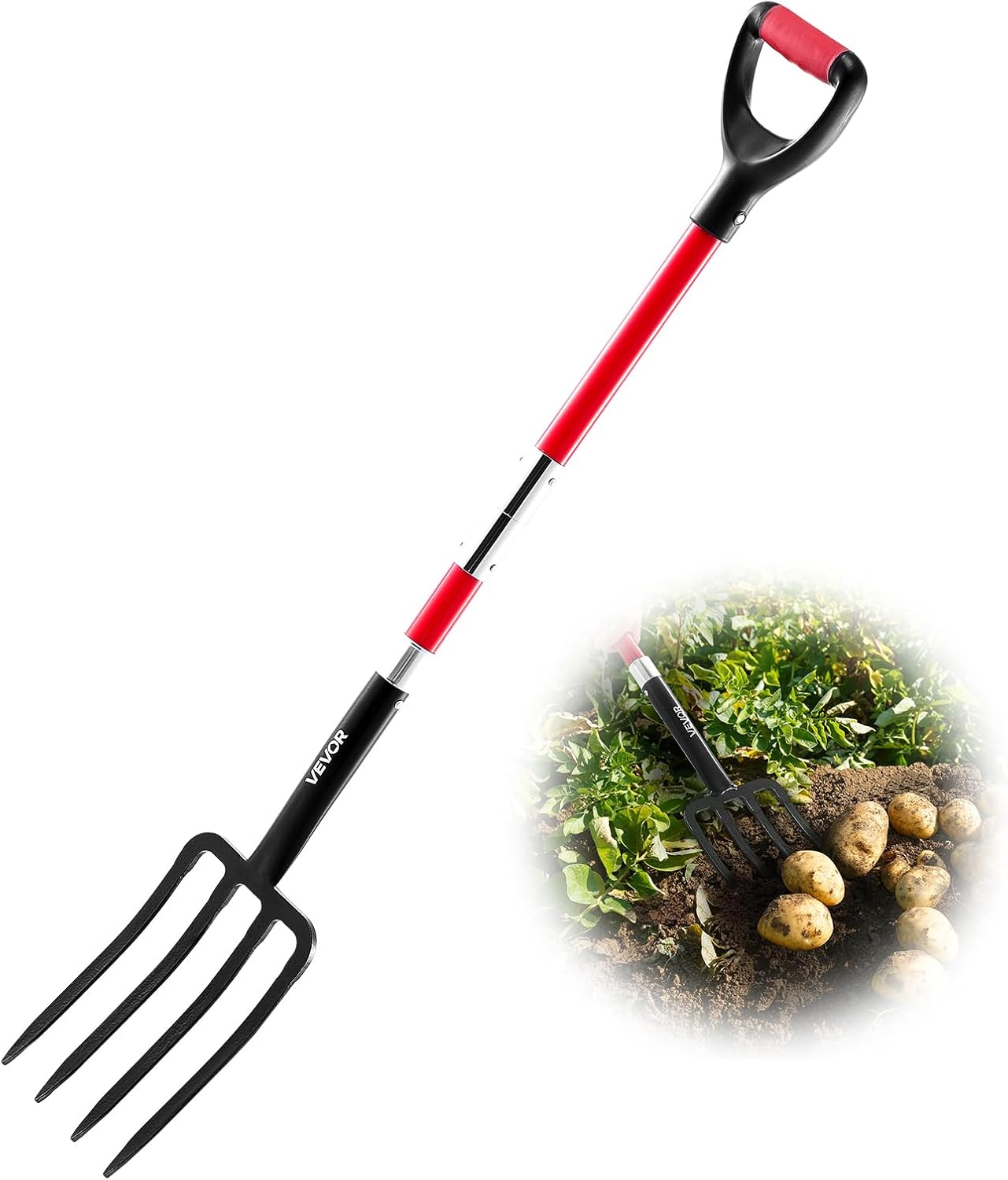
VEVOR 4-Tine Forged Digging Fork with 45" Fiberglass Handle
| Handle material | Fiberglass |
|---|---|
| Head construction | Forged steel |
| Tine count | 4 |
| Grip style | Y-shaped ergonomic |
This VEVOR digging fork pairs a forged steel 4-tine head with a fiberglass shaft and Y-grip to deliver a durable, comfortable garden tool for regular use. It is typically used for breaking compacted soil, lifting root crops, turning compost, and weeding in beds where leverage and tine strength matter. The reinforced connection between head and handle and the forged construction reduce wobble and the risk of bending under load, while the fiberglass handle resists swelling, rot, and cracking that wooden handles can suffer. The ergonomic Y-grip and non-slip surface make it easier to hold in wet conditions and help reduce hand fatigue during extended sessions. Because it is built for strength, the fork is best where robust leverage is needed rather than delicate work in tight pots. Assembly is straightforward and the 45-inch length gives good reach and control for most backyard tasks, though users who prefer very lightweight tools or need a short-handled fork for raised beds may find it larger than ideal.
Best for: Gardeners who prioritize a durable, low-maintenance tool that stands up to frequent digging and compost turning and want a comfortable grip for longer tasks.
Less Ideal for: People who mainly work in tight containers, raised beds, or want the lightest possible tool for very small-scale or delicate planting.
- Forged steel head and reinforced connection resist bending and wear under heavy use
- Fiberglass handle resists water damage and avoids swelling or cracking like wood
- Ergonomic Y-grip with non-slip surface reduces hand fatigue and improves control
- Versatile for digging, loosening soil, turning compost, and lifting root crops
- Relatively long and sturdy design is heavier than lightweight short-handled forks
Verdict: A rugged, low-maintenance digging fork built for gardeners who need reliable strength and a comfortable grip for regular heavy-duty soil work.
TAILERNRUYE 4-Tine Heavy-Duty 47" Garden Pitchfork

| Manufacturer | TAILERNRUYE |
|---|---|
| Item Weight | 4.05 pounds |
| Package Dimensions | 17.32 x 8.86 x 3.86 inches |
| ASIN | B0GGB56HQK |
This is a straightforward long-handle garden pitchfork for common digging and compost tasks. The reinforced steel 4-tine head and widened blade make it useful for loosening soil, turning compost, lifting mulch, and handling manure or harvested root crops. Its 47-inch shaft gives good reach and leverage so you can work from a more upright position, and the D-style handle with a non-slip grip improves control in wet or muddy conditions. Practical benefits include the broad foot step that reduces strain when forcing the tines into compacted soil and the thicker handle for greater durability under heavy use. Limitations to expect are its basic construction and finishes that match a budget tool rather than a premium forged fork, and its weight may be noticeable during extended use. For routine garden and small-farm chores where you want a capable long-handled fork without paying for pro-grade materials, this model is a useful, no-frills option.
Best for: Buyers seeking an affordable, durable long-handled fork for regular garden digging, compost turning, and mulch work who prioritize function over premium materials.
Less Ideal for: Users who need a lightweight specialty fork for long periods of continuous use or who want a forged commercial-grade tool for very heavy-duty farm work.
- Reinforced steel 4-tine head handles digging, compost turning, and lifting mulch.
- 47-inch long handle provides improved reach and leverage for upright work.
- Widened head with foot step increases contact and reduces effort when penetrating soil.
- D-handle with non-slip grip offers better control in wet or muddy conditions.
- Construction and finish are consistent with a budget tool rather than a professional forged fork.
- Relatively heavy for prolonged use, which may tire some users.
Verdict: A budget-friendly long-handled pitchfork that delivers solid performance for everyday garden digging and compost tasks.
GSBLUNIE 4-Tine Garden Pitchfork with Fiberglass Handle and D-Grip

| Handle Material | Fiberglass |
|---|---|
| Grip Type | D-Grip |
| Number of Tines | 4 |
The GSBLUNIE pitchfork is a straightforward, reliability-minded digging tool built around a thick 4-tine steel head and a weather-resistant fiberglass shaft. Its 5/16" heat-treated steel tines penetrate compacted soil and move compost or mulch without bending, while the fiberglass handle resists rot and absorbs shock compared with wood. Tool-free assembly screws the handle sections together quickly and the reinforced joint holds the head firmly for heavy use. The D-grip and balanced weight distribution improve control and reduce wrist strain during repetitive tasks like aerating beds, lifting compost, or digging tubers. It is not a multi-function garden gadget but a focused manual tool; users should expect a single-purpose pitchfork rather than something for precision planting or delicate root work. For gardeners who prioritize a durable, low-maintenance fork that stands up to regular outdoor work, this model covers the essentials well.
Best for: Gardeners and small-scale homesteaders who need a dependable, low-maintenance digging fork for regular soil turning, compost handling, and general heavy-duty garden chores.
Less Ideal for: People seeking a multipurpose or precision gardening tool for fine soil work, transplanting, or detailed bed preparation should consider narrower or softer-tined forks instead.
- Thick 5/16" heat-treated steel tines resist bending and handle heavy soil and compost
- Fiberglass handle resists rot and offers good shock absorption for longer use
- D-grip provides solid control and reduces wrist fatigue during repetitive tasks
- Tool-free screw-together assembly for quick setup and a reinforced joint for stable connection
- Not suited for delicate planting or fine soil work due to the coarse 4-tine design
Verdict: Choose this pitchfork if you want a tough, low-maintenance digging tool built to withstand regular compost and soil work.
Truper 4-Tine Spading Fork with 30-inch Wood D-Handle

| Handle Material | Wood |
|---|---|
| Head Material | gray-steel |
| Head Size | 4 tines |
| Included Components | 4 Tines, 30 Inch Wood & Steel D-Handle |
The Truper 4-tine spading fork is a straightforward, workmanlike digging fork built for routine garden and landscaping tasks. The forged steel head and four tines give good penetration and leverage for breaking up compacted soil, lifting compost, and aerating beds, while the 30-inch wood D-handle provides a secure two-handed grip for controlled digging and levering. In typical use you stand on the tines to drive them in, then pry and lift material or loosen roots and clods. The wood D-grip is comfortable and intuitive for gardeners who prefer traditional handles, and the durable steel head is sized to handle repeated use without bending. Important limitations are the wooden handle, which can wear or crack over many seasons if left exposed to moisture, and the fixed head-handle design that means repairs require replacement parts rather than interchangeability. For gardeners who value a proven, simple tool that performs core digging and compost-moving chores, this is a reliable option; those who need a lighter-weight or fully replaceable-handle system may prefer alternatives.
Best for: Gardeners who want a dependable, no-frills digging fork for regular bed preparation, compost turning, and soil aeration and who prefer traditional wooden-handled tools.
Less Ideal for: People who need a lightweight fork for long periods of overhead work or who want a modular tool with an easily replaceable or composite handle.
- Forged steel 4-tine head for strong penetration and leverage in compacted soil
- 30-inch wood D-handle offers a secure two-handed grip for controlled digging
- Sturdy construction suited for routine garden and landscaping work
- Simple, traditional design that is easy to use without special technique
- Wood handle can degrade over time if exposed to moisture and heavy use
- Handle and head are fixed, so individual part replacement requires buying replacement components rather than swapping modular parts
Verdict: A durable, traditional spading fork that reliably handles breaking up soil and moving compost for everyday garden work.
COSITA 44-Inch Pitch Fork with Fiberglass Handle, 4-Tine Garden Fork

| Manufacturer | COSITA |
|---|---|
| ASIN | B0DWXF8TM3 |
| Item Weight | 4.49 pounds |
| Customer Reviews | 4.3 out of 5 stars |
The COSITA 44-inch pitch fork is a straightforward long-handled digging and turning tool built around a heat-treated 4-tine steel head and a shock-absorbing fiberglass shaft. It is typically used for moving and aerating compost, mulch, straw, leaves, and other loose organic material on small farms or in backyard beds. The steel head is hardened to resist bending and corrosion, and the D-grip plus balanced weight distribution make it comfortable for prolonged use. The fiberglass handle reduces vibration compared with wood and stays weather-resistant without splintering. Assembly is tool-free and the reinforced joint keeps the head stable under normal loads. The fork is not intended for breaking compacted clay or digging in hard ground where a single-tined digging fork or spade would be better. For routine turning and lifting of organic material this pitch fork offers a durable, low-maintenance option that minimizes user strain and holds up to regular use.
Best for: Buyers who want a reliable, low-maintenance long-handled fork for routine turning and moving of compost, mulch, straw, and leaves and who prioritize comfort and durability over aggressive digging performance.
Less Ideal for: People who need a tool for breaking hard-packed soil, rocks, or intensive excavation should choose a dedicated digging fork or spade instead.
- Heat-treated 4-tine steel head resists bending and corrosion for heavy-duty use
- Fiberglass handle absorbs shock and resists splintering or warping
- Ergonomic D-grip and balanced weight distribution reduce hand and shoulder fatigue
- Tool-free assembly with a reinforced joint for a stable connection
- Not suitable for digging in compacted soil or clay where a sturdier digging fork is required
Verdict: A durable, comfortable long-handled pitch fork that makes turning and moving compost and mulch easier without the upkeep of a wooden handle.
Choosing the Right 4 Tine Digging Fork: Key Factors to Consider
Tine Material and Heat Treatment
Tines must resist bending and hold an edge when working in dense, stony, or clay-heavy soils. Higher carbon steels or heat-treated alloys are less likely to deform under load and can take repeated impacts from rocks and roots. If the tines are simply folded sheet metal or soft steel, they will spread or flop with heavy use, reducing leverage and making digging harder.
Also consider whether tines are forged from a single piece or welded to the shaft. Forged, one-piece tines tend to be stronger at the heel and less prone to failure. Surface coatings such as powder coat or galvanization add corrosion resistance, which matters if the fork is stored outdoors or used in wet soils frequently. Minimal maintenance-wiping off soil and occasional oiling-prolongs the life of quality tine steel.
Tine Shape, Thickness, and Spacing
The cross-section and taper of each tine determine how easily it penetrates compacted ground. Narrower, tapered tines cut into soil with less effort, while thicker or flatter tines provide better leverage for lifting and prying. Spacing between tines affects how much soil is lifted versus how finely it is broken. Closer spacing gives a finer lift for young beds, while wider spacing moves bigger clods and roots.
Gardeners working mostly in heavy clay should favor stout, slightly tapered tines that resist bending and can pry through dense layers. Those focused on aerating established beds or removing roots may prefer tines with a narrow profile and closer spacing for more control when extracting material.
Shaft Length and Handle Design
Shaft length affects posture and leverage. A longer shaft gives more reach and mechanical advantage when prying out roots but can be harder to control in tight beds or raised planters. Shorter shafts are easier to handle in confined spaces but require more bending. Choose a length that suits your height and the typical bed depth you work with.
Handle style influences grip security and wrist strain. D-handles give good two-handed control for heavy prying, while straight shafts with a cushioned grip work well for repeated stabbing and turning motions. Look for handles that shed water and resist slipping when wet. Padding reduces shock but can trap moisture and wear faster; dense rubber or molded synthetic grips are a practical balance.
Weight, Balance, and Maneuverability
The tool's mass determines how much effort you expend per stroke and how long you can work without fatigue. Heavier forks deliver more momentum for cutting and prying, but sustained use can tire arms and back. Balance between head and shaft is just as important. A well-balanced fork feels stable when driving the tines into soil and when levering, reducing wrist twitch and inadvertent twisting.
If you haul your fork to multiple beds or have limited upper-body strength, choose a lighter but well-built tool. For infrequent heavy digging, a heavier, sturdier fork often performs better. Consider whether you will use the fork in raised beds or containers where a long, heavy shaft might be cumbersome.
Construction of the Head-to-Shaft Join
The point where the tines meet the shaft is a common failure zone when leverage and impact are high. Look for heads that are welded, forged, or encased around the shaft rather than simply bolted. A socket-style join or a full-forge construction distributes stress more evenly and reduces the risk of the head loosening or breaking under load.
Inspect for reinforcements such as back plates or gussets that reduce flex. Even if you are not comparing brands directly, thinking about join design helps predict long-term durability, especially if you break up compacted soil or remove roots regularly.
Corrosion Resistance and Maintenance
Garden tools see wet soil, compost, and fertilizers that can accelerate corrosion. Protective finishes and rust-resistant materials slow deterioration and keep the fork functioning smoothly. A galvanized or powder-coated head will last longer than bare steel if care is minimal.
Maintenance matters too. Tools that are easy to clean-smooth finishes and open head designs-require less elbow grease after heavy use. Regular cleaning, drying, and occasional oiling of metal parts prevents rust and keeps joints from seizing, extending the tool's useful life.
Best Forks for Clay and Compacted Soils
Dense clay and compacted garden ground demand heavy-duty tines and a shaft that gives good leverage. Look for a fork with thick, slightly tapered tines and a long enough shaft to let you stand upright while levering. A strong head-to-shaft join is essential since prying roots and clods puts repeated stress on that connection.
- Tine thickness helps resist bending when forcing through clay.
- Longer shafts reduce back strain when levering out tough clods.
- Heat-treated or forged tines perform better under repeated impacts.
Forks Suited to Raised Beds and Containers
When working in raised beds or pots, maneuverability and shaft length are more important than raw brute force. A shorter shaft with a comfortable grip lets you work in confined spaces without overreaching. Narrower tine spacing can reduce disturbance in shallow soils and make it easier to lift roots and plants intact.
- Choose a compact shaft for narrow beds and deep containers.
- Narrower tines help extract plants without taking excess soil.
- Lighter head weight improves control in small areas.
Ergonomics for Extended Use
If you spend hours turning beds, ergonomics should guide your choice. A handle that fits your hand, a shaft length that allows upright posture, and a balanced head reduce fatigue and the risk of repetitive strain. Consider handle materials that cushion shock but do not trap moisture.
- D-handles are best for heavy prying and two-handed leverage.
- Cushioned or contoured grips reduce blistering during long sessions.
- Proper shaft length keeps your back neutral and shoulders relaxed.
Maintaining Your Fork to Maximize Lifespan
Routine care keeps a digging fork working well season after season. After use, scrape loose soil from the tines, dry the head to prevent rust, and oil metal parts occasionally. Tighten or inspect joins to catch early signs of loosening before failure.
If the fork has a wooden shaft, sand and oil it each season to prevent splintering and water damage. For synthetic shafts, check for cracks or structural wear where the head meets the shaft and store the tool indoors or under cover to prolong coatings.
- Wipe and dry after each use to prevent rust.
- Oil metal joints occasionally to ease movement and resist corrosion.
- Service wooden shafts with sanding and linseed oil to prevent splitting.
Using a Fork Without Damaging Soil Structure
A digging fork can be gentler on soil structure than a spade if used correctly. Instead of slicing and inverting layers, use the tines to lift and loosen clods, which preserves pore space and beneficial organisms. Work across beds in sections and avoid overworking the same spot to minimize compaction and disruption.
For soil that will be planted immediately, lift and break clods by hand or with a light rake rather than overturning entire sections. This approach keeps topsoil layers intact and helps maintain microbial and invertebrate communities that support plant health.
- Lift and loosen rather than inverting to preserve soil layers.
- Work small sections to avoid repeated compaction in the same spot.
- Use the fork to remove roots and debris while leaving stable aggregates intact.
How We Chose the Best 4 Tine Digging Fork
We shortlisted digging forks that deliver the strength and ergonomics gardeners need for regular bed preparation and heavy digging tasks. Selection prioritized steel grade and tine construction to resist bending in clay and compacted soils, handle material and shape for long‑session comfort, and the overall balance between weight and leverage so the tool is manageable without sacrificing power. We also considered the quality of the attachment between tines and shaft because weak joints are a common failure point when levering out root balls. In addition to materials and construction, we evaluated shaft length and handle style for safe posture during use, and the fork's tine spacing and taper for how well it penetrates and lifts soil without excessive disturbance. Durability under real garden conditions and ease of maintenance were included as practical filters. We excluded lightweight or ornamental forks intended only for potting or decorative work, and we did not include tools designed primarily as pitchforks for loose bedding. The final list focuses on forks suited to heavy soil, mixed garden beds, and regular dug-ground tasks.
FAQ
How deep should I drive a digging fork?
Drive the tines to the depth needed to loosen the soil without overworking lower layers. For most beds, that means penetrating to the full tine length when breaking compaction but lifting and turning in 6 to 12 inch sections rather than digging extremely deep trenches.
Can I use a digging fork to remove tree roots?
You can remove small to medium roots with a sturdy fork; use steady leverage rather than jerking motions. For large, woody roots you may need cutting tools first because forcing the fork against very thick roots can bend tines or damage the head.
Is a wooden shaft better than a metal or composite shaft?
Wooden shafts offer a traditional feel and good shock absorption but require more maintenance to prevent splitting. Metal or composite shafts are lower maintenance and resist weathering, though they can transmit more vibration. The best choice depends on how often you use the tool and how you store it.
How do I prevent a fork from rusting?
Clean off soil after use, dry the fork, and apply a light coating of oil to the metal surfaces occasionally. Store the fork in a dry place and avoid leaving it buried in wet compost or soil for long periods to minimize corrosion.
What tine spacing is best for dividing perennials?
Closer tine spacing and narrower tines make it easier to loosen soil around roots and lift clumps with minimal damage. For dividing perennials, choose a fork that lets you work delicately to separate root balls without excessive soil loss.
How should I carry a digging fork safely?
Carry the fork with tines pointed down and close to your side, holding the shaft near its midpoint to balance weight. When moving through the yard, keep the head low and avoid swinging the tool to reduce the risk of trips and accidental contact.
Final Verdict
Choose a 4 tine digging fork by matching construction and ergonomics to the work you do most. For heavy clay and frequent prying, prioritize strong, forged tines and a robust head-to-shaft join. For raised beds and container work, favor shorter shafts, narrower tines, and lighter heads for control. Balance durability against weight and choose a handle style that supports good posture. With regular maintenance and the right geometry, a well-made fork will save effort, protect soil structure, and last for many seasons.
