

Note: This article contains affiliate links. If you click on these links and make a purchase, I may earn a small commission at no extra cost to you. This helps support my research and content. Read my full affiliate disclosure here.
If you grow alocasias you know they need a potting medium that stays evenly moist without becoming waterlogged. The right Alocasia potting mix helps roots breathe, encourages quick root recovery after repotting, and reduces common problems like yellowing leaves or root rot. This guide shortlisted top-performing mixes that suit indoor plants and sheltered outdoor containers and evaluates them on the features that matter most to growers. We focus on drainage, water retention, and nutrient content so you can pick a mix that fits your watering style and container setup. Read on for an overview of the picks and the criteria we used.
Top Picks at a Glance
| Best Overall The best all-around choice for most situations | Molly's Aroid Potting Mix — Chunky Soilless Mix for Indoor Aroids, 10 Dry Quarts |  |
| Best Quality Built to a higher standard if you want something more solid | Top Tier Genetics Aroid Potting Mix for Monstera & Tropical Houseplants (8 qts) |  |
| Best Value The sweet spot between price and what you get | HydraGarden Forbidden Cereal Aroid Potting Mix, 6.5 QT |  |
| Best Budget The cheapest option that still gets the job done reliably | DUSPRO Aroid Potting Mix — Pre-Mixed Chunky 8-Ingredient Soil, 2 qt |  |
| Highest Rated A top-rated pick with lots of positive feedback | circle soil Breathable Potting Mix for Aroids, 4 Quart |  |
| Most Popular A crowd favorite that many people choose with confidence | Grow Queen Craft Aroid Potting Mix, Chunky Monstera & Tropical Plant Soil, 2 qt |  |
| Best Seller A high-volume bestseller chosen again and again | Rosy Soil Aroid Potting Mix, Chunky Biochar Soil, 4 Quarts |  |
Molly's Aroid Potting Mix — Chunky Soilless Mix for Indoor Aroids, 10 Dry Quarts

| Volume | 11 liters |
|---|---|
| Style Name | Houseplants & Aroids |
| Ingredients | Orchiata Bark, Coco Chips, Worm Castings, Horticultural Charcoal, Mycorrhizae |
Molly's Aroid Potting Mix is a chunky, soilless blend intended for Monstera, Philodendron and similar tropical houseplants. You use it straight from the bag as a container medium or when repotting to replace heavy garden soils. The mix combines coco chips, orchid bark, perlite and worm castings with horticultural charcoal and mycorrhizae to keep the root zone airy and well drained, which reduces the chance of soggy roots and root rot. Because it contains organic amendments and mycorrizal fungi, it supports steady root development and nutrient uptake without needing frequent amendment. The resealable bag and heat-sealed packaging help keep the mix fresh between uses. Limits to be aware of are that it is a soilless potting medium so you may need to supplement with slow-release or liquid fertilizer for heavy feeders over time, and the chunky texture can dry faster so watering cadence may need adjustment compared with standard potting soils. For growers who prioritize clean, fast-draining media for aroids, this mix is a reliable option.
Best for: Growers who want a dependable, clean potting medium that reduces overwatering risk for Monstera and other tropical houseplants and who value steady root health over time.
Less Ideal for: People who prefer a moisture-retentive, soil-based mix or those who want an all-in-one fertilized medium without planning to top up nutrients.
- Chunky, soilless formula drains quickly and resists compaction
- Includes mycorrhizae to aid root nutrient and water uptake
- Contains organic amendments like worm castings for gradual nutrition
- Resealable, heat-sealed bag preserves freshness between uses
- May require supplemental fertilization for heavy-feeding plants
- Chunky texture can dry faster than traditional potting soil, requiring more frequent watering
Verdict: Choose this mix when you need a clean, fast-draining, mycorrhizae‑boosted medium that reliably protects Monstera roots from overwatering.
Top Tier Genetics Aroid Potting Mix for Monstera & Tropical Houseplants (8 qts)
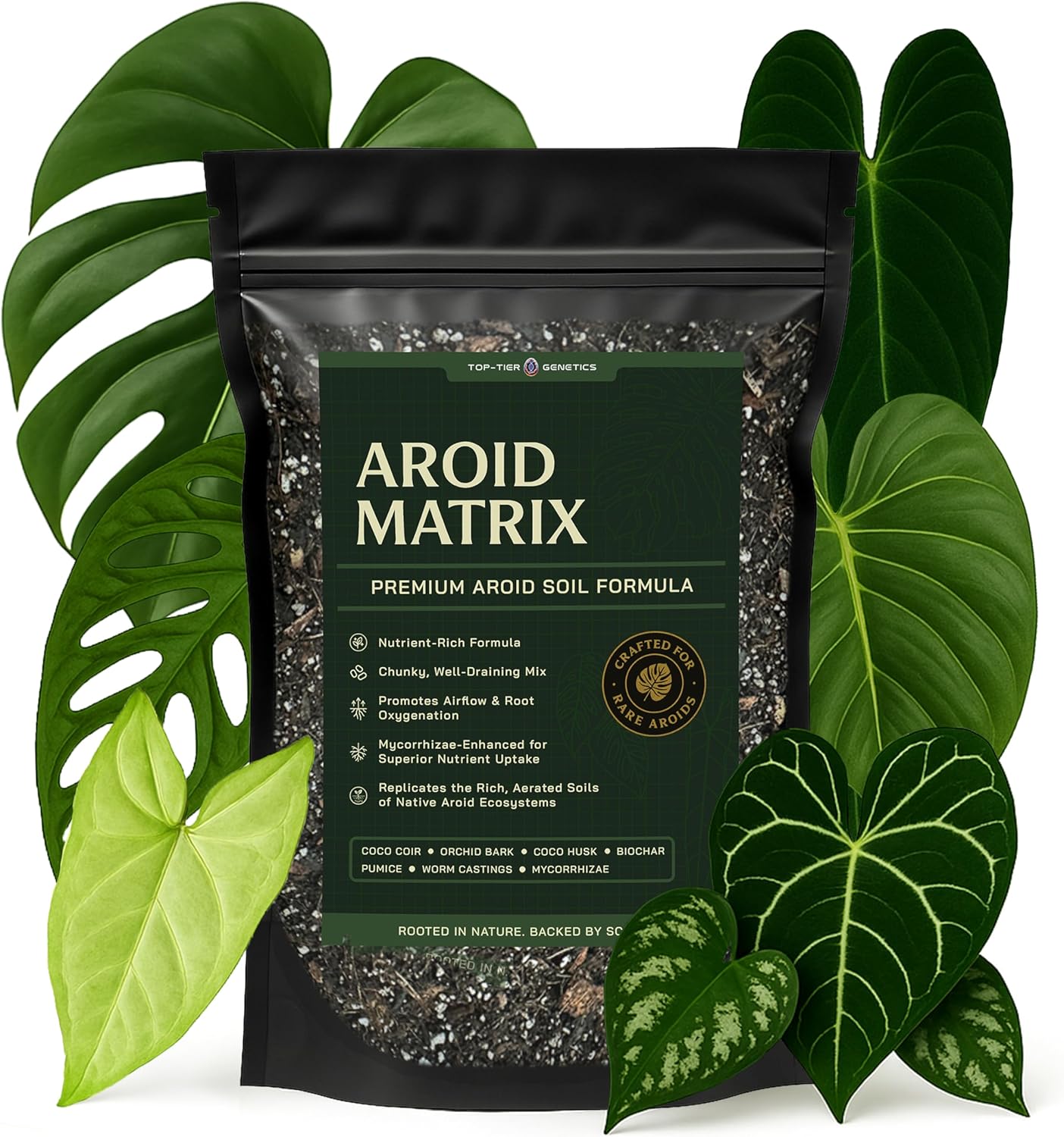
| Volume | 8 quarts |
|---|---|
| Ingredients | Orchid bark, coco coir, pumice, coco husk, worm castings, biochar, mycorrhizae |
| Style Name | Nutrient-rich, moisture-retaining |
This aroid-specific potting mix is designed for Monstera and similar tropical houseplants, providing chunky aeration and organized moisture retention straight from the bag. The blend uses orchid bark, coco husk and pumice to keep the medium open so roots get oxygen and excess water drains quickly, while coco coir and worm castings supply steady moisture and nutrients. Biochar and mycorrhizae help build microbial life and improve nutrient availability over time, which can support stronger root systems and fuller foliage. It is convenient for repotting or top-ups because no additional mixing is required, and the organic ingredients make it appealing for growers who prefer natural amendments. Limitations are mainly pack size and precision: the 8-quart bag is convenient for one or two small to medium plants but means frequent repurchases for larger collections, and the ready mix does not allow heavy customization of drainage versus moisture for very particular setups.
Best for: Plant owners who want a reliable, low-effort potting mix tailored to Monstera and other aroids and who value organic amendments and biological support for steady growth.
Less Ideal for: Growers who prefer to create custom mixes for precise moisture control or those managing large collections who need bulk quantities in a single purchase.
- Chunky components (orchid bark, pumice, coco husk) provide excellent aeration and fast drainage to reduce root rot risk
- Contains worm castings and biochar to supply nutrients and support long-term soil health
- Includes mycorrhizae to improve root establishment and nutrient uptake
- Ready to use out of the bag, making repotting faster and simpler
- 8-quart bag is relatively small for people with multiple or large plants
- Pre-mixed formula limits ability to fine-tune drainage or moisture for very specific setups
Verdict: A convenient, ready-made organic mix that gives Monstera and other aroids the chunky drainage and biological boost they need for healthy roots and foliage.
HydraGarden Forbidden Cereal Aroid Potting Mix, 6.5 QT

| Unit Count | 6.5 Ounce |
|---|---|
| Brand Name | HydraGarden |
| Style Name | Houseplants & Aroids |
| Ingredients | Orchid Bark, Charcoal, Perlite, Coco Chunks, Coco Coir, LECA Clay Pebbles, Worm Castings, Sphagnum Moss |
HydraGarden Forbidden Cereal is a high-drainage, soilless potting mix built from chunky components like orchid bark, coco coir, coco chips, perlite, biochar, worm castings and LECA clay pebbles with a small bag of New Zealand sphagnum moss layered on top. It is used as a repotting and growing medium for aroids and many common houseplants where preventing waterlogging and improving root oxygenation are priorities. The mix’s large particle profile lets water move quickly through containers, reduces the chance of root rot, and keeps roots from becoming compacted while still offering organic matter and nutrients from castings and charcoal. The separated sphagnum allows you to add a moisture-retaining topper when needed without compromising overall drainage. Practical limits are that its chunky texture holds less water than peat-rich mixes so watering frequency will increase for moisture-loving species, and the soilless formula may require more frequent feeding compared with a loam-based soil. For growers who prioritize fast drainage, root health, and a lightweight, peat-free blend, this mix delivers predictable, performance-focused results.
Best for: Serious growers who prioritize root health and fast drainage for aroids and tropical houseplants and who monitor watering and feeding closely to maximize plant performance.
Less Ideal for: Casual owners who want a low-maintenance, moisture-retentive potting medium or growers of very moisture-loving species that require consistently damp substrate.
- Very high drainage and aeration from chunky ingredients reduces risk of root rot
- Peat-free, soilless organic components including worm castings and biochar for nutrient support
- Layered sphagnum moss gives flexible moisture retention as a topper or propagation aid
- Includes LECA clay pebbles for improved structure and long-term stability
- Holds less moisture than peat-based mixes so plants may need more frequent watering
- Soilless formula typically requires more regular fertilizing for sustained nutrient supply
Verdict: Choose this mix if you need a chunky, peat-free medium that maximizes drainage and root aeration for high-performance aroid growing.
DUSPRO Aroid Potting Mix — Pre-Mixed Chunky 8-Ingredient Soil, 2 qt

| Brand | Duspro |
|---|---|
| Volume | 2 quarts |
| Suitable for | Aroid plants (Monstera, Alocasia, Philodendron, etc.) |
| Key ingredients | Pine bark, pumice, coir, coco chips, LECA, perlite, zeolite, worm castings |
This ready-to-use aroid potting mix is designed specifically for Monstera, Alocasia and similar indoor aroid species, saving the time and guesswork of sourcing and blending individual components. The chunky texture comes from pine bark, coco chips, pumice and LECA, which creates air pockets and fast drainage useful for Alocasia roots that dislike soggy media. Coco coir, zeolite and worm castings help retain a modest amount of moisture and provide gentle nutrient buffering between waterings. In practice the bag works well for repotting small to medium aroids and for refreshing potting media in containers with drainage. The product can be dusty when opened, so take care when pouring and avoid inhaling dust. Because this is a premixed 2 quart bag, buyers who need larger volumes for big specimens or multiple repots will need several bags or a larger size option. For gardeners on a budget it removes the need to buy multiple amendments while still delivering the airy structure Alocasia prefers.
Best for: Buyers who want a ready-to-use, aroid-specific soil that saves time and avoids mixing multiple amendments and who are repotting one or a few small to medium Alocasia or similar indoor plants.
Less Ideal for: People needing large volumes for multiple big plants or outdoor beds should choose bulk soil options or larger mixes tailored for high-volume repotting.
- Pre-mixed 8-ingredient formula removes need to buy and measure separate amendments
- Chunky components (pine bark, pumice, LECA, coco chips) create good airflow and fast drainage
- Includes moisture-buffering ingredients (coir, zeolite, worm castings) for balanced moisture
- Small 2 qt size is convenient for single repots or testing a new mix
- 2 quart bag is a small volume that may require multiple bags for larger pots or collections
- Fine dust can be present in the bag and may require caution when handling
Verdict: A convenient, pre-mixed chunky soil that gives Alocasia and other aroids the airy drainage they need without buying and mixing separate amendments.
circle soil Breathable Potting Mix for Aroids, 4 Quart

| Unit Count | 48 Ounce |
|---|---|
| Volume | 4 quarts |
| Style Name | Breathable Potting Mix |
| Ingredients | Biochar, Coconut Coir, Coconut Husks, Compost, Worm Castings, Volcanic Minerals |
This breathable mix is built for aroids such as Monstera, Philodendron, and Alocasia that need fast drainage and an open root environment. It combines chunky biochar, coconut husk and coir, local compost, worm castings and volcanic minerals to provide structure, some nutrient content, and microbial support straight from the bag. In practice the coarse particles and biochar keep the soil from compacting, so water passes through rather than pooling at the crown, which reduces root rot risk and helps repotted plants establish faster. The resealable 4-quart bag is convenient for small repots and top-ups. Because it is peat-free and relatively chunky the mix holds balanced moisture without staying soggy, but it will dry faster than denser blends so plants in dry microclimates or high light may need more frequent watering. The small bag size is ideal for hobbyists and individual plants but not for large-scale potting projects.
Best for: Plant owners who prioritize reliable root health for single aroids and want a ready-to-use, peat-free mix that prevents compaction and reduces risk of root rot during repotting.
Less Ideal for: Growers needing bulk soil for many plants or large pots, or those who prefer a moisture-retentive, fine-textured houseplant mix.
- Chunky biochar and coconut husk create high airflow and resist compaction
- Contains compost and worm castings for on-delivery nutrient support
- Peat-free formula for a more sustainable alternative to peat mixes
- Resealable 4-quart bag is convenient for small repots and storage
- Small 4-quart volume is insufficient for multiple large repots
- Chunky, fast-draining texture may require more frequent watering in dry conditions
Verdict: Choose this mix when you want a compact-resistant, peat-free soil that reliably improves drainage and root health for Monstera and other aroids.
Grow Queen Craft Aroid Potting Mix, Chunky Monstera & Tropical Plant Soil, 2 qt

| Brand | Grow Queen |
|---|---|
| Volume | 2 quarts |
| Ingredients | Tree fern fiber, earthworm castings, lava rock, biochar, coco coir, gypsum, alfalfa meal |
| Designed for | Monstera, Alocasia, Philodendron, Anthurium and tropical houseplants |
This Grow Queen Craft Aroid Mix is a ready-to-use, chunky potting soil built to replicate a rainforest floor for Monsteras, Alocasias and similar tropical houseplants. The blend combines large bark pieces, pumice and lava rock for fast drainage and aeration, while coco coir and charged biochar retain modest moisture so the mix does not go bone dry between waterings. It also includes earthworm castings, alfalfa meal and gypsum to support beneficial microbes and provide gentle nutrition out of the bag. The mix arrives pre‑moistened and is straightforward for repotting, especially when you want to reduce compaction and lower the risk of overwatering. Notable limitations are the small 2 quart bag size for larger repotting jobs and the absence of perlite if you prefer that specific amendment. This is a practical, botanist‑informed option for people who want a sustainable, peat‑free alternative tailored to aroids and other chunky‑soil‑loving houseplants.
Best for: Buyers who want a ready-made, sustainable potting mix that mimics tropical forest soil for Monsteras and other aroids and who value drainage with living amendments over DIY mixing.
Less Ideal for: Growers repotting many large plants at once or those who prefer to fully customize their own soil recipe with specific additives like perlite or added fertilizer concentrates.
- Chunky, well aerated formula with bark, pumice and lava rock to improve drainage and prevent compaction
- Includes charged biochar and earthworm castings to support microbes and provide starter nutrients
- Peat free and perlite free, using coco coir and natural porous aggregates for sustainability
- Pre‑moistened and ready to use straight from the bag for easy repotting
- Small 2 quart volume may be impractical for repotting multiple or large plants
- Does not contain perlite, which some growers prefer for a lighter texture
Verdict: Choose this mix if you want a peat‑free, botanist‑designed chunky soil that gives Monsteras and other aroids the fast drainage and living nutrition they need straight from the bag.
Rosy Soil Aroid Potting Mix, Chunky Biochar Soil, 4 Quarts

| Unit Count | 128 Ounce |
|---|---|
| Volume | 4 quarts |
| Item Highlight | Peat-Free, Microbially Active, Superior Aeration & Drainage |
| Style Name | Aroid Soil |
Rosy Soil Aroid Potting Mix is designed specifically for Monsteras, philodendrons, anthuriums and other tropical aroids that need fast-draining, airy media. The mix combines pine bark fines, pumice and biochar to give a chunky structure that resists compaction and lets roots breathe while water moves through quickly. It is also enriched with worm castings, mycorrhizae and compost to create a microbially active medium that supports nutrient uptake and root vigor over time. Because it is peat-free and formulated to be carbon negative, it is a good choice for growers who want an environmentally friendlier alternative to peat-based mixes. In practical use the mix fills multiple small pots from a 4-quart bag, comes in a resealable bag to stay fresh, and is well-suited for repotting and top-ups where drainage and aeration are priorities. Limitations are the small package size for larger collections and the chunky texture may dry faster than peat blends, requiring more frequent watering for some indoor conditions.
Best for: Buyers who prioritize plant performance and root health for Monsteras and other tropical aroids and who want a fast-draining, microbially active soil that keeps roots airy.
Less Ideal for: Casual plant owners who prefer low-maintenance, moisture-retentive peat blends or who need large volumes for many pots should consider other options.
- Chunky mix with pine bark and pumice provides excellent drainage and prevents compaction
- Includes biochar and beneficial microbes to boost nutrient availability and root health
- Peat-free, designed to reduce carbon impact compared with traditional peat mixes
- Resealable bag and 4-quart volume convenient for repotting multiple small houseplants
- 4-quart bag is small for larger collections or multiple repots
- Chunky texture dries faster than peat-based mixes and may require more frequent watering
Verdict: Choose this mix if you want a high-performance, chunky potting medium that gives Monsteras and other aroids superior drainage, aeration, and microbial support.
Choosing the Right Alocasia Potting Mix: Key Factors to Consider
Drainage and Aeration
Alocasias need a medium that drains freely but still leaves pockets of air around roots. Good drainage prevents prolonged saturation, which reduces the risk of root rot and fungal problems.
Look for mixes that include coarse components such as perlite, pumice, or coarse bark. These materials create voids and help water move through the container rather than pooling around the crown. Drainage also affects how often you need to water; a faster-draining mix requires more frequent checks but reduces long-term wetness-related stress.
Moisture Retention
While drainage is important, Alocasia roots also appreciate consistent moisture. The trick is a mix that retains enough water within the finer particles and organic matter without staying soggy.
Ingredients like coconut coir or well-aged compost provide water-holding capacity while still releasing moisture to roots. Peat moss also retains water but can compact over time, so mixes that blend peat with coarse materials strike a better balance. Consider your local humidity and watering routine when judging how much retention you need.
Nutrient Content and Feeding Support
A balanced nutrient profile helps Alocasias develop strong foliage and rapid root growth. Some mixes include slow-release fertilizers or composted material that supplies nutrients for several weeks to months.
For longer-term feeding, choose mixes with modest built-in fertility and plan to supplement with regular liquid fertilization during the growing season. Avoid mixes that are so rich they risk burning sensitive root systems, or so inert they require heavy feeding immediately after potting.
Particle Size and Structure
Particle size shapes how a mix behaves physically. Chunky, varied particle sizes create stable structure, improve aeration, and resist compaction when watered repeatedly.
Fine, dusty mixes compact quickly and can suffocate roots, especially in taller pots. A mix with a range of particle sizes, including visible coarse pieces, keeps channels for air and water and generally supports healthier root architecture.
pH and Salt Levels
Soil reaction and soluble salts influence nutrient availability and root health. Alocasias typically prefer a slightly acidic to neutral pH and low soluble salt levels.
High salt content from unwashed amendments or excess fertilizer can cause leaf edge scorch and root stress. If you reuse potting mixes or source bulk materials, consider rinsing or pre-soaking them and monitor plant response, adjusting feeding and irrigation as needed.
Longevity and Reuse
Some mixes break down faster than others, losing structure and drainage as organic components decompose. Longevity matters if you want to repot less often and maintain stable watering routines.
Choose mixes with durable aeration components and modest amounts of fast-decomposing fines. When mixing your own blend, include a higher proportion of stable materials like bark or pumice to extend the time between full substrate replacements.
Mixing Your Own Alocasia Potting Blend
If you prefer to mix components yourself you can tailor a recipe to your climate and containers. A common starting point is combining a chunky base of orchid bark or coconut chips with a moisture-retentive element like coir and a mineral porosity improver such as pumice or perlite.
Adjust ratios by pot size and watering frequency. Larger containers can handle a higher proportion of water-retentive material because the overall volume buffers moisture swings. Small pots benefit from more coarse material to prevent the root ball from staying too wet.
- Starter ratio: 40% coarse bark or pumice, 35% coir or peat, 25% perlite or grit.
- Add a small amount of well-aged compost for nutrients, but avoid fresh manure or uncomposted greens.
- Sterilize reused materials if disease or pests were present previously.
Container Choice and Its Effect on Mix Performance
The type and size of container strongly influence how a potting mix performs. Terracotta pots wick moisture and can help a moisture-retentive mix dry between waterings, while plastic pots retain more water and work better with faster-draining blends.
Depth also matters: shallow containers dry faster and may need more organic moisture-holding content, whereas deep pots require mixes that maintain structure to avoid compaction at the bottom.
- Ensure adequate drainage holes regardless of pot material.
- Use a potting mix appropriate to both the pot material and your watering habits.
Watering Strategy with Different Mixes
Match your watering routine to the mix you choose. Fast-draining mixes demand more frequent, thorough waterings while water-retentive mixes can be watered less often but should be monitored for surface dryness and signs of overwatering.
Always check the lower root zone rather than relying solely on surface dryness. Lift the pot to gauge weight or slide a finger into the root ball to test moisture before watering.
- For mixed blends, allow the top 1 to 2 inches to dry slightly depending on pot size and plant vigor.
- Consider bottom-watering for short bursts of moisture without saturating the surface.
Amending Existing Potting Soil
If you are repurposing old potting soil, refresh it by folding in chunky amendments to restore aeration and drainage. Adding coarse bark, perlite, or pumice will open up dense mixes and improve oxygen flow to roots.
Replace more than half the mix if it is compacted or smells sour. Partial amendment works when the soil is still structurally sound but needs better water-holding balance or nutrient replenishment.
- Screen out fine dust and replace with coarse material at roughly a 1:1 ratio when amending.
- Topdress with slow-release organic feed if nutrient levels seem low after amending.
Common Problems and How Mix Choice Helps
Yellowing leaves, slow growth, and root rot often indicate mismatched substrate properties. A mix that stays too wet will promote fungal issues, while a mix that dries too fast can stress the plant and slow leaf expansion.
Pick a mix that corrects the specific problem you face: improve aeration to combat root rot, increase organic retention for slow growth, or adjust mineral content if leaf discoloration suggests nutrient imbalance.
- Root-bound plants may need repotting into a similar mix with slightly more aeration.
- Always investigate watering and light before changing fertilizers or amending aggressively.
How We Chose the Best Alocasia Potting Mix
We selected mixes that match the needs of Alocasia species across typical houseplant and sheltered outdoor situations. Our editorial filters prioritized mixes formulated to hold consistent moisture while allowing excess water to drain so roots get oxygen. We evaluated ingredient balance, looking for components such as chunky aerating materials, organic matter that retains moisture, and stable mineral amendments that supply essential elements. Key evaluation criteria included drainage and aeration, water retention capacity, nutrient profile and slow-release feeding potential, and physical stability of the mix over time. We also tested ease of use in repotting scenarios and how mixes behave in common container types. Mixes that compact excessively, contain a high proportion of fine dust, or lack any coarse component were excluded. We rejected blends geared only to succulents or straight potting soil with no aeration elements. The final shortlist favors balanced mixes that support healthy root systems and predictable watering for Alocasias.
FAQ
Can I use standard indoor potting soil for Alocasias?
Standard indoor potting soil can work for Alocasias if amended to improve aeration and drainage. Plain potting mixes often contain fine particles that compact, so fold in coarse bark, perlite, or pumice to prevent waterlogging and improve root oxygenation.
How often should I repot an Alocasia based on the mix I use?
Repotting frequency depends on mix stability and plant growth. Mixes that hold structure well may only need repotting every two to three years, while mixes that break down quickly or become compacted should be refreshed more frequently.
Is peat moss or coconut coir better for moisture retention?
Both peat and coir retain moisture but behave differently. Peat holds water effectively but can compact over time and has a lower renewal profile. Coir is more sustainable and resists compaction better, making it a practical alternative in many blends.
Do I need to add fertilizer to a potting mix for Alocasias?
Most Alocasias benefit from regular feeding during the growing season. Choose a mix with modest baseline fertility and supplement with balanced liquid feeds as new growth appears. Avoid overfertilizing, which can lead to leaf burn and salt buildup.
Will adding perlite prevent root rot entirely?
Perlite improves aeration and drainage but will not prevent root rot on its own. Proper irrigation, container drainage, and monitoring for signs of overwatering are equally important to keep roots healthy.
Final Verdict
Choose an Alocasia potting mix that balances drainage with moisture retention as your top priority. Favor blends with coarse components to maintain aeration, plus enough organic matter to supply steady moisture and some nutrients. Consider your pot material, container size, and watering routine when deciding on a ready-made mix or custom blend. Ultimately prioritize root oxygenation and stable structure over mixes that simply lock in water. When you match mix characteristics to your environment and care style, you will wind up with healthier roots and more vigorous foliage growth.
