

Note: This article contains affiliate links. If you click on these links and make a purchase, I may earn a small commission at no extra cost to you. This helps support my research and content. Read my full affiliate disclosure here.
Ants inside the house are more than a nuisance. They can contaminate food, trail through living spaces, and reappear unless you address both visible insects and hidden nests. Choosing the right ant killer in home matters because some treatments act quickly at trails while others offer long-lasting baiting that targets colonies. This guide shortlists seven strong indoor ant-control options and explains how we evaluated them for safety, indoor use, and lasting control. Expect practical advice on application, where to place treatments, and which product features matter most for kitchens, pantries, and living areas.
Top Picks at a Glance
| Best Overall The best all-around choice for most situations | Ortho Home Defense Insect Killer for Indoor & Perimeter, 1.33 gal. with Comfort Wand |  |
| Best Quality Built to a higher standard if you want something more solid | Syngenta Advion Ant Gel (4 Tubes, 30 g each) |  |
| Best Value The sweet spot between price and what you get | TERRO Multi-Surface Liquid Ant Baits, 4-Pack |  |
| Best Budget The cheapest option that still gets the job done reliably | Raid Ant & Roach Killer, Fragrance Free, 17.5 oz |  |
| Highest Rated A top-rated pick with lots of positive feedback | NCSIFDD Ant Away Ant Repellent Gel, 6-Pack |  |
| Most Popular A crowd favorite that many people choose with confidence | TERRO Liquid Ant Killer Bait Stations, 12-Pack (T300B) |  |
| Best Seller A high-volume bestseller chosen again and again | HOT SHOT Total Release Fogger with Odor Neutralizer, 2 oz cans (12-count) |  |
Ortho Home Defense Insect Killer for Indoor & Perimeter, 1.33 gal. with Comfort Wand

| Item Form | Spray |
|---|---|
| Target Species | Insects |
| Liquid Volume | 1.33 gallons |
| Active Ingredients | Bifenthrin 0.05%, Zeta-Cypermethrin 0.0125% |
This 1.33 gallon Ortho Home Defense spray is designed to treat both indoor problem spots and the outdoor perimeter of a home to reduce ants, roaches, spiders and many other crawling and flying insects. It comes with a battery-powered Comfort Wand that delivers a continuous spray so you can apply a uniform band around foundations, patios and entry points without bending or pumping. The formula with bifenthrin and zeta-cypermethrin is intended to kill on contact and establish a barrier that the manufacturer says lasts up to 12 months for ants, roaches and spiders on non-porous indoor surfaces. In real-world use that means fewer repeat treatments in busy yard perimeters and around doors and windows. The spray dries clear with minimal fumes which helps for indoor use near kitchens and living areas. Limitations are that this is a chemical insecticide so users should follow safety directions around children, pets and plants and it is not a specific solution for pests not listed on the label. For homeowners focused on strong, perimeter-level protection this product simplifies application and covers a large area per container.
Best for: Homeowners who want a performance-focused perimeter treatment to reduce recurring yard and entry-point insect problems and prefer a ready-to-use product that is easy to apply.
Less Ideal for: People seeking organic or non-chemical control methods or those who need a targeted solution for pests not listed on the label should consider alternative products.
- Includes battery-powered Comfort Wand for continuous, fatigue-free application
- Ready-to-use 1.33 gallon container covers large perimeters without mixing
- Formula creates a barrier claimed to provide up to 12 months protection against ants, roaches and spiders on non-porous indoor surfaces
- Dries clear and gives off minimal fumes, making indoor use more practical
- Contains synthetic insecticides so precautions are required around children, pets and ornamentals
- Protection claims are specific to certain species and surfaces so results vary by pest and conditions
Verdict: A powerful, ready-to-use perimeter and indoor spray for homeowners who want long-lasting, performance-oriented protection against common yard and household insects.
Syngenta Advion Ant Gel (4 Tubes, 30 g each)

| Unit Count | 4.23 Ounce |
|---|---|
| Included Components | 4 Tubes x 30-Grams, 1 Plunger and 2 Tips |
| Item Form | Gel |
| Active Ingredients | 0.05% indoxacarb |
| Target Species | Insects |
Advion Ant Gel is a user-friendly gel bait intended to control common household and structural ant species by exploiting worker foraging behavior. You apply small spots or short lines of the odorless gel along active trails, in cracks and crevices, and near entry points; foraging workers consume the bait and carry it back to the nest where it is shared, helping to eliminate the queen and other nestmates. The kit ships with four 30 g tubes plus an applicator plunger and tips for precise placement, which makes targeting tight spaces straightforward. Its non-repellent formula with 0.05% indoxacarb is formulated to be attractive to a range of species including Argentine and carpenter ants, and it is labeled for both indoor and outdoor use. Limitations to note are that it is a chemical bait so safety precautions are needed around children and pets and efficacy depends on ants accepting the bait matrix versus other available food sources.
Best for: Homeowners and renters who want a targeted, easy-to-apply solution to eliminate established ant infestations and prefer a bait that works via worker-mediated transfer to treat whole colonies.
Less Ideal for: People seeking non-chemical or immediate-contact kill methods or those who need a one-time spray rather than ongoing baiting strategies should consider other options.
- Non-repellent gel formulation designed for worker ants to feed and transfer bait to the colony
- Includes four 30 g tubes plus a plunger and application tips for precise placement
- Labelled for both indoor and outdoor use, suitable for common pest species
- Odorless formula that is easy to place along trails, cracks, and crevices
- Contains a chemical active ingredient so it must be kept away from children and pets
- Effectiveness depends on ants preferring the bait over other available food sources
Verdict: Choose Advion Ant Gel when you want a precise, bait-based solution that encourages workers to carry poison back to the nest for colony-level control.
TERRO Multi-Surface Liquid Ant Baits, 4-Pack

| Included Components | 4 ant bait stations plus adhesive strips |
|---|---|
| Target Species | Ant |
| Material Type | Plastic |
| Active Ingredient | Sodium Tetraborate Decahydrate (Borax) 5.40% |
TERRO Multi-Surface Liquid Ant Baits are small, pre-filled stations designed to control household ants by attracting foragers with a sweet liquid they carry back to the nest. You open the tab and either lay a station flat or use the included adhesive strip to mount it on walls, under cabinets, or other discreet indoor spots where ants travel. The active ingredient is borax, which works slowly so worker ants continue visiting the bait and spread it through the colony, often producing noticeable reductions in activity within days and fuller control over 2 to 4 weeks. The kit is easy to deploy and low maintenance — monitor and replace stations when the bait is gone — and the slim, unobtrusive design keeps them out of sight. Limitations are that this is a targeted bait solution rather than a quick-contact spray, so you may see increased ant activity initially and total elimination can take several weeks depending on colony size and access to the bait.
Best for: Buyers who want a low-effort, long-term indoor solution to reduce and eliminate ant colonies by placing discreet baits in specific entry points and travel paths.
Less Ideal for: People who need a fast-contact insecticide for instant knockdown or who require outdoor perimeter control should consider other product types.
- Multi-surface design lets you lay flat or adhere stations to walls and under cabinets for discreet placement
- Ready-to-use prefilled stations require no mixing or setup
- Slow-acting borax formulation is carried back to the colony to treat the source of the infestation
- Includes adhesive strips so placements stay put and out of reach of children and pets
- Not an immediate kill method so you may see more ants at first and must wait days to weeks for full control
Verdict: Choose these ready-to-use multi-surface bait stations when you want a simple, discreet indoor bait that eliminates ant colonies by letting workers carry borax back to the nest.
Raid Ant & Roach Killer, Fragrance Free, 17.5 oz
| Unit Count | 17.5 Ounce |
|---|---|
| Item Form | LIQUID |
| Target Species | Insects |
| Liquid Volume | 1 deciliters |
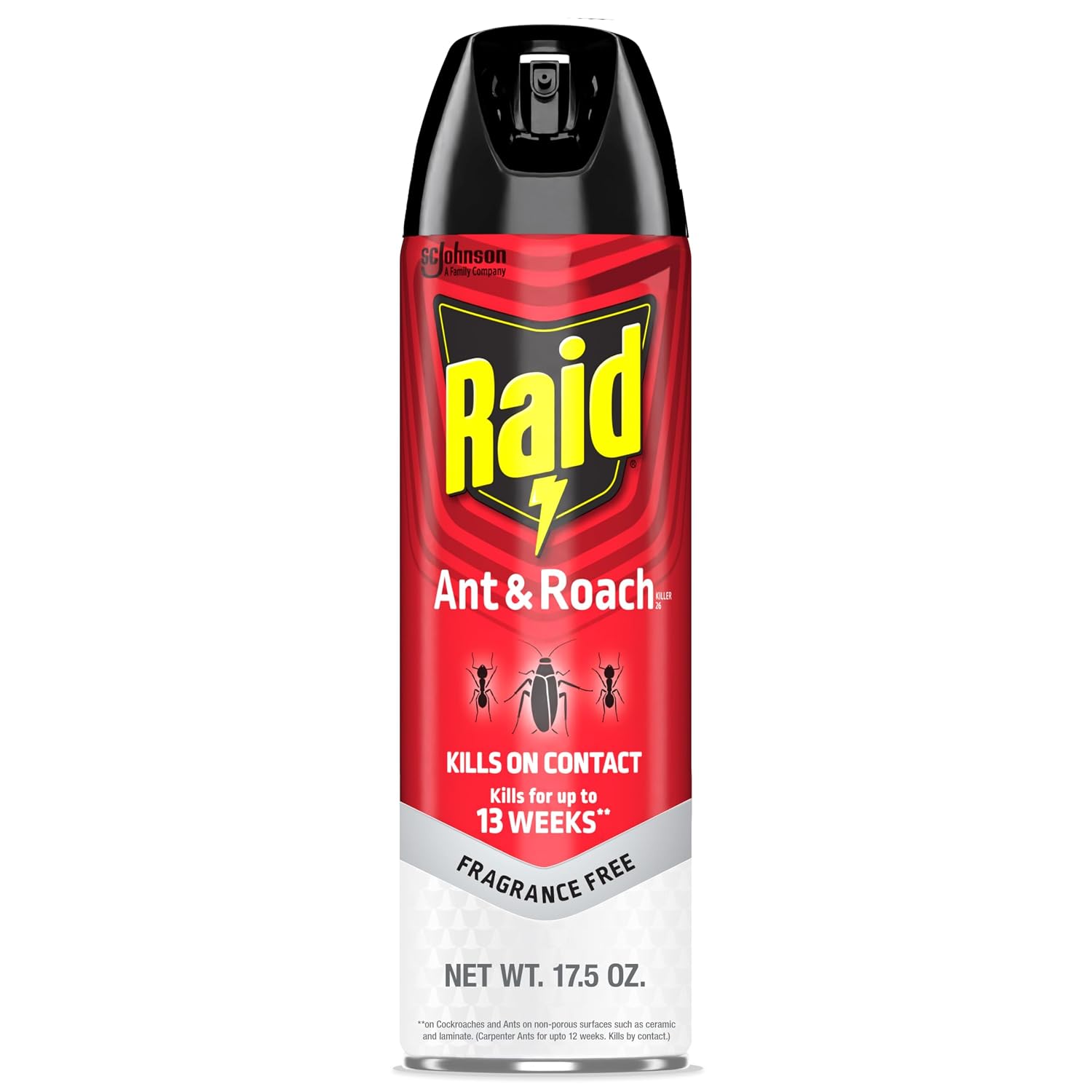
Raid Ant & Roach Killer is an easy-to-use aerosol that kills on contact and leaves a residual insecticide layer meant to keep killing crawling pests for up to 13 weeks. Typical use is spraying along floors, baseboards, garbage cans, under sinks and in basements or garages where ants and roaches travel. The formula targets a broad list of insects including roaches, ants, silverfish, crickets and some spiders, and the fragrance-free version avoids leaving a noticeable chemical smell. Practical benefits include quick knockdown of visible bugs, a clear application pattern for treating infestation sites, and a long residual window between treatments. Important limitations are that it is flammable and packaged under pressure so it must be stored and applied carefully, and aerosol application is suitable for spot and perimeter treatments but not for treating food-contact surfaces or for people seeking non-chemical or pet-safe long-term options.
Best for: Homeowners who want a straightforward, no-frills insect spray to quickly eliminate visible ants and roaches and to reduce returns between treatments.
Less Ideal for: People wanting non-chemical pest control methods or those needing treatments safe for constant use around unattended pets and infants should consider alternatives.
- Kills on contact and provides residual control for weeks after application
- Fragrance-free formula minimizes lingering odor in treated areas
- Broad-spectrum effectiveness against many common crawling insects
- Aerosol can is flammable and must be stored and used with caution
- Not intended for use on food-contact surfaces or where children and pets directly access treated areas
Verdict: If you need an affordable, fragrance-free aerosol that kills crawling insects on contact and keeps working for weeks, this is a practical choice.
NCSIFDD Ant Away Ant Repellent Gel, 6-Pack

| Unit Count | 12 Count |
|---|---|
| Number of Pieces | 1 |
This ant repellent gel is a concentrated applicator product intended for targeted spot treatments around entry points, baseboards, window frames, and known ant trails. You remove the cap, attach the precision tip, and apply pea‑sized drops into crevices or along trails; the manufacturer notes it can take 3–5 days to work through a colony and helps keep ants away for up to 60 days in treated areas. Practical benefits include the narrow applicator for neat placement in tight gaps, suitability for both indoor and outdoor problem spots, and a formulation presented as family and pet safe when used as directed. Important limitations are that results are not instantaneous and multiple applications or placements may be needed to control larger or multiple colonies, and effectiveness depends on correctly locating trails and nest access points. For someone who wants a low‑mess, targeted solution rather than broad broadcast treatments, this gel is a convenient option.
Best for: Buyers who prioritize dependable, low‑mess spot treatment for recurring ant sightings and prefer a product they can place precisely where ants travel.
Less Ideal for: People needing rapid elimination of very large or widespread infestations or those who prefer broadcast sprays or professional colony eradication services.
- Precision applicator allows neat, pea‑sized placements in tight crevices and along ant trails
- Labeled for both indoor and outdoor use so the same product can treat kitchens, baseboards, and patios
- Formulation described as family and pet safe when used according to directions
- Single placements can provide protection in treated areas for up to 60 days
- Not an immediate knockdown—can take 3–5 days to affect a colony
- May require several placements and correct trail identification to fully control larger infestations
Verdict: Use this precision gel when you want a neat, family‑safe spot treatment that targets ant trails and entry points rather than a broad spray solution.
TERRO Liquid Ant Killer Bait Stations, 12-Pack (T300B)

| Unit Count | 12 Count |
|---|---|
| Item Form | Liquid |
| Target Species | Insects |
| Active Ingredients | Sodium Tetraborate Decahydrate (Borax), 5.40% |
Terro Liquid Ant Killer bait stations are prefilled, single-use traps designed for indoor control of common sugar-loving ants. You place the small stations along baseboards, in corners, under appliances, or on countertops where you see ant activity. Worker ants are drawn to the sweet liquid, feed on it, and take it back to the nest so the borax-based active ingredient can eliminate the colony over days to weeks. The product is easy to use with no mixing or setup and the 12-pack gives coverage for several rooms. Because the bait is contained inside a low-profile plastic station, it reduces incidental contact risk compared with loose sprays or powders and lasts for weeks while ants continue to visit. Limitations are that the formula targets sugar-preferring species so very protein- or grease-attracted ants may ignore it, and control can take 2 to 4 weeks for larger infestations. Also stations should be placed away from pets and children despite the contained design since the bait contains borax.
Best for: Homeowners who prioritize an easy, low-hassle indoor solution and want a bait that works at the colony level with minimal hands-on pest handling.
Less Ideal for: People who need immediate knockdown of ants or who have pets or children that frequently access treated areas and cannot reliably keep them away from placed stations.
- Ready-to-use stations require no mixing or setup
- Designed to be carried back to the nest for colony-level control
- Low-profile enclosed bait reduces messy exposure compared with loose liquids or sprays
- 12 stations provide coverage for multiple rooms or hotspots
- Formulation is sugar-based so less effective on ants that prefer protein or grease
- Control can take 2–4 weeks for large or established colonies
Verdict: A simple, low-contact indoor bait system that reliably reduces sugar-loving ant infestations by getting worker ants to carry borax back to the colony.
HOT SHOT Total Release Fogger with Odor Neutralizer, 2 oz cans (12-count)
| Item Form | Aerosol |
|---|---|
| Target Species | Insects |
| Unit Count | 12 Ounce |
| Active Ingredients | Tetramethrin, Cypermethrin |
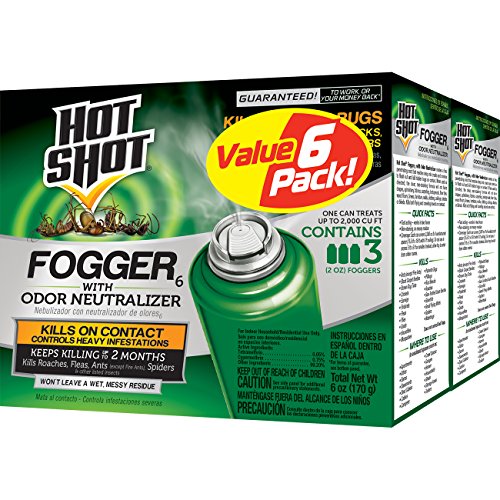
The HOT SHOT Total Release Fogger delivers a fine aerosol mist that penetrates cracks and crevices to kill many common household insects on contact and provide residual control for up to two months. It is used by placing a covered stand in the center of the room, activating a single can, exiting the area, and allowing the mist to settle and work in enclosed spaces such as basements, attics, garages, sheds and campers. Notable features include a clear, non-staining formula that the manufacturer says will not harm fabrics or most furnishings and an odor neutralizer to reduce lingering smell. Practical benefits are rapid knockdown of visible infestations, reach into hidden hiding spots, and a long residual effect that helps suppress re-emergence. Important limitations are that it is a broad-spectrum insecticide containing tetramethrin and cypermethrin so safety precautions are required, it is not labeled for bed bug control, and it should not be used in very small or poorly ventilated spaces or near ignition sources. Follow all label directions before use.
Best for: A cautious homeowner who wants a product that quickly treats visible and hidden infestations in enclosed rooms and values a non-staining formula and reduced odor.
Less Ideal for: People seeking a pesticide-free, low-toxicity option or a targeted solution for bed bugs should consider alternative control methods or specialist treatments.
- Penetrating fine mist reaches cracks and crevices to target hidden insects.
- Clears a wide range of flying and crawling pests on contact and provides up to two months residual activity.
- Clear non-staining formula safe for most fabrics and household surfaces when used as directed.
- Includes an odor neutralizer to reduce chemical smell after application.
- Contains synthetic insecticides (tetramethrin and cypermethrin) requiring strict safety and ventilation precautions.
- Not effective or labeled for bed bug control.
Verdict: Choose this fogger when you need a fast, wide-reaching treatment that knocks down and helps suppress common household spiders and other insects in enclosed spaces.
Choosing the Right Ant Killer in Home: Key Factors to Consider
Mode of Action
How an ant control option works affects where and when you should use it. Contact sprays kill visible workers quickly but often do not reach the colony, so you may still see re-emergence unless you also treat nest sites or use bait. Baits rely on ants feeding and sharing the toxicant with nestmates, which can take several days but targets the entire colony when successful.
Knowing whether a product is contact-only, bait-based, or a combination will shape expectations for speed and durability. In kitchens and food-prep areas, choose products whose active mechanism and formulation minimize direct contamination of surfaces used for food handling.
Safety Around People and Pets
Indoor treatments must be chosen with occupants in mind. Look for formulations labeled for indoor use and clear instructions on re-entry times, surface contact restrictions, and whether treated areas should be wiped after a set period. Some bait stations provide physical barriers that reduce accidental contact by children or pets, making them a safer choice in mixed households.
Consider also volatile ingredients and odors; in small or poorly ventilated rooms, strong sprays can irritate sensitive occupants. If you have infants, immunocompromised people, or curious pets, err toward lower-toxicity baits or targeted, contained applications rather than wide-area aerosol sprays.
Application Location and Format
Where ants are active dictates format choice. In pantries and along baseboards, granular baits or small gel syringes placed near trails are often most practical. For ant lines entering through windows or gaps, spot sprays or dusts applied carefully into voids may be more effective. Large-area aerosols can be useful for surface knockdown but are less effective for long-term control.
Also consider how easy it is to place and maintain the treatment. Refillable or long-lasting stations reduce the need to reapply, while single-use packets might be better for short-term control or rental properties where you do not want to leave devices behind.
Residual Effect and Reapplication Frequency
Residual activity determines how long a product prevents new foraging after application. Some formulations leave a small residue that repels or kills ants on contact for weeks, while baits continue to work only while ants accept and carry the bait back to the colony. Durable residuals can reduce the need for frequent reapplication but may also increase the chance of surface contamination.
Understand the expected service interval and plan for follow-up monitoring. In heavy-infestation scenarios, you may need combined approaches: immediate knockdown to reduce visible ants and sustained baiting to collapse the colony over time.
Placement Practicalities and Aesthetics
Indoor pest control must fit into living spaces without creating hazards or eyesores. Low-profile bait stations and discrete gel placements are easier to conceal along baseboards and under appliances. Products that require drilling or invasive installation are usually unnecessary for typical home ant problems and can create additional maintenance tasks.
Also assess how placement affects effectiveness. Ants prefer narrow travel lanes and edges, so placing treatments directly on trails, near entry points, and behind appliances often yields better results than open-floor placement.
Compatibility With Food Areas
Treatments used near food preparation and storage need careful consideration. Choose baits and stations specifically designed for use around pantries and counters, and avoid broad sprays on food-contact surfaces. When applying near food, remove or cover exposed items and follow label guidance on cleanup times.
If you prefer not to treat countertops directly, focus on perimeter placements, inside cabinets, and along baseboards adjacent to food storage. Keeping treatments out of direct food-contact zones reduces the risk of contamination while still interrupting foraging paths.
Understanding Ant Behavior Indoors
Ants inside homes follow pheromone trails and consistently travel between food sources and nests. Identifying the trail and the points of entry helps you place treatments where they will be discovered and carried back to the colony or where contact sprays will intercept workers.
Minor worker activity along windows or doors can indicate outdoor scouting, while repeated sightings in a pantry often point to an indoor food source or a nearby nest. Observing the time of day when ants are most active can also guide when to apply baits for maximum uptake.
- Watch trails for consistent traffic to determine placement
- Note entry points to seal or focus treatment
- Time bait placement when ants are actively foraging
Safe Application Tips for Kitchens and Living Areas
Always read and follow label instructions, especially regarding contact with food surfaces and re-entry times. For light daily cleaning areas, place bait stations inside cabinets or behind appliances rather than on countertops.
When using contact sprays, apply small, targeted bursts to cracks and crevices rather than sweeping the whole room. After the recommended waiting period, wipe treated surfaces if labels advise doing so before resuming food prep.
- Use bait stations to reduce accidental contact
- Avoid spraying directly on food-contact surfaces
- Clean or ventilate treated areas per label guidance
Combining Fast Knockdown and Long-Term Control
A practical in-home strategy blends a rapid contact treatment for visible workers with a bait or station that targets the colony. The contact treatment reduces immediate nuisance and visible trails, while the bait works over days to collapse the nest.
Stagger applications so baits remain attractive. Avoid spraying directly onto bait placements or wiping residue over stations until the colony is controlled. Monitor activity and reapply or replace baits according to observed uptake rather than on a rigid schedule.
- Use spot spray for visible ants and baits for colony control
- Keep bait stations undisturbed for several days to weeks
- Replace baits when uptake ceases or stations are depleted
Preventive Measures to Reduce Reinfestation
Simple sanitation and exclusion practices reduce the need for repeated treatments. Keep food sealed, clean crumbs promptly, and store pet food off the floor. Fix minor moisture issues since some ant species are attracted to damp areas.
Sealing gaps around doors, windows, and baseboards limits easy entry. Exterior maintenance such as trimming vegetation away from foundation walls can reduce outdoor nesting sites that serve as sources for indoor incursions.
- Seal entry points and maintain screens
- Store food in airtight containers
- Control moisture and remove debris near foundation
When to Call a Professional
If ant activity persists despite combined baiting and targeted treatments, or if you find numerous nest sites indoors, a professional assessment can locate hidden colonies and recommend structural interventions. Professionals can also advise on species-specific control when identification is uncertain.
Consider professional help if there is a large or rapidly expanding infestation, if occupants are highly sensitive to pesticides, or if structural modifications are needed to eliminate nest sites.
- Persistent activity after proper home treatments
- Multiple indoor nests or extensive infestation
- Household sensitivity to pesticide exposure
How We Chose the Best Ant Killer in Home
We focused on solutions formulated or intended specifically for indoor use and evaluated items by criteria that matter to people living with pets, children, or limited ventilation. Key evaluation dimensions included knockdown speed at bait or contact points, residual activity that prevents quick re-infestation, safety profile for occupied indoor spaces, ease of placement and cleanup, and flexibility for different house locations such as kitchens, baseboards, and window sills. We also considered clarity of application instructions and whether the product allows targeted use rather than broadcasting treatments across living areas. Products were excluded if they were labeled only for outdoor use, required specialized equipment to apply, or depended on heavy ventilation not typical of homes. We prioritized options that balance effective colony control with realistic in-home safety and convenience. Where tradeoffs exist, such as slower-acting baits versus rapid contact sprays, we noted how that affects likely results for everyday households.
FAQ
How long does it typically take for indoor ant baits to work?
Baits often take several days to a few weeks to reduce colony activity because workers must feed on the bait and carry it back to nestmates. Results vary by species, colony size, and bait acceptance, so monitor stations and allow time before concluding a product failed.
Are bait stations safe around pets and children?
Many bait stations are designed to reduce accidental access and are safer than loose granular or liquid treatments. However, safety depends on correct placement and following label directions. Keep stations where curious hands and paws cannot reach them.
Can I spray visible ants and still use baits at the same time?
Yes, but avoid spraying directly onto bait placements because residues or repellant ingredients can make baits unattractive. Use targeted spot sprays away from stations to knock down visible workers while preserving bait uptake.
Will indoor treatments stain or damage surfaces?
Some formulations can leave residues or cause surface marks if misapplied. Use small test applications in inconspicuous areas and follow cleanup instructions on the label. Many baits and contained stations avoid surface contact altogether.
How do I know where to place bait stations for best effect?
Place bait stations near active trails, along baseboards, and close to entry points where ants are most frequently seen. Inside cabinets, put stations near the back or corners where ants travel rather than in open center areas.
Are there non-chemical options that help control indoor ants?
Exclusion, sanitation, and moisture control reduce ant attraction and can lower infestation pressure. Manual removal of trails, caulking entry points, and removing food sources are effective complements to treatments but usually do not eliminate established colonies on their own.
Final Verdict
Choose ant-control options that match the problem you observe indoors. For quick relief of visible workers, use targeted contact treatments. For lasting control, rely on baiting strategies that reach the colony. Prioritize products with clear indoor safety guidance and formats that keep pets and children protected. Balance speed and safety by combining approaches where appropriate, monitor activity closely, and focus on placement and sanitation to prevent re-infestation. With the right combination, you can stop current ant activity and reduce the chance of future indoor incursions.
