

Note: This article contains affiliate links. If you click on these links and make a purchase, I may earn a small commission at no extra cost to you. This helps support my research and content. Read my full affiliate disclosure here.
Living in an apartment does not mean you have to send food scraps to the trash. The right apartment compost system keeps kitchen waste contained, reduces odors, and gives you a steady stream of nutrient-rich material for balcony plants or municipal organics collection. This guide covers a shortlist of top-performing options that suit compact kitchens, tight storage, and occasional outdoor access. We evaluated choices for odor control, footprint, maintenance effort, and how well they integrate into apartment routines. Below are our top picks, followed by practical advice on choosing and using an apartment compost system.
Top Picks at a Glance
| Best Overall The best all-around choice for most situations | OXO Good Grips Easy-Clean Compost Bin, 1.75 Gal |  |
| Best Quality Built to a higher standard if you want something more solid | RED FACTOR Stainless Steel Kitchen Compost Bin with Dual Charcoal Filters (1.3 Gal) |  |
| Best Value The sweet spot between price and what you get | Utopia Kitchen Countertop Compost Bin, 1.3 Gallon Stainless Steel |  |
| Best Budget The cheapest option that still gets the job done reliably | stonespace 1.3 Gal Hanging Kitchen Compost Bin with Sealed Lid |  |
| Highest Rated A top-rated pick with lots of positive feedback | Saluna 4L Electric Kitchen Composter with LED Display and Visible Window |  |
| Most Popular A crowd favorite that many people choose with confidence | Epica 1.3 Gallon Stainless Steel Kitchen Compost Bin |  |
OXO Good Grips Easy-Clean Compost Bin, 1.75 Gal

| Capacity | 6.62 liters |
|---|---|
| Material Type | Plastic |
The OXO Good Grips Easy-Clean Compost Bin is a countertop container designed to make daily food-scrap collection tidy and low-effort. It holds about 1.75 gallons, sits on the counter, and uses a soft-close lid that contains odors while allowing some airflow to reduce pests. The removable inner bucket and smooth plastic interior mean you can quickly empty scraps, wipe it clean, or run the bucket through the dishwasher. A folding handle makes it easy to carry to an outdoor compost pile or larger bin and tucks away when not needed. Typical use is collecting veggie peelings, coffee grounds, and other approved kitchen scraps while you cook, with the stay-open lid handy for frequent tossing. Limitations are the small capacity, which will require regular emptying in very active kitchens, and the manufacturer recommendation to avoid meat, fish, and dairy, so it is best for plant-based kitchen waste. The design favors countertop convenience and low maintenance rather than large-volume or hot composting tasks.
Best for: Buyers who want a low-maintenance, countertop solution for daily vegetable and coffee-scrap collection and prioritize cleanliness and easy cleaning.
Less Ideal for: People who need a large-capacity indoor bin for heavy food-waste households or those who plan to compost meat, fish, or dairy should consider larger or specialty systems.
- Compact countertop size that keeps scraps within easy reach while cooking
- Stay-open and soft-close lid for easy frequent use and better odor control
- Removable inner bucket with smooth interior that is dishwasher safe for easy cleaning
- Fold-down handle for simple transport to an outdoor compost pile or larger bin
- Small 1.75 gallon capacity requires frequent emptying in busy kitchens
- Not intended for meat, fish, or dairy so it only handles plant-based scraps safely
Verdict: A tidy, easy-to-clean countertop compost bin that makes collecting everyday plant-based kitchen scraps simple and convenient.
RED FACTOR Stainless Steel Kitchen Compost Bin with Dual Charcoal Filters (1.3 Gal)

| Capacity | 5 liters |
|---|---|
| Material Type | Stainless Steel |
| Filter | Dual active charcoal filters (includes spare) |
This RED FACTOR countertop compost bin is built for everyday kitchen use: hold your fruit and vegetable peelings, coffee grounds, eggshells and tea bags in a neat 1.3 gallon pail until you transfer them to an outdoor compost pile. The stainless steel single-sheet construction feels sturdy and resists rust while the dome lid and soft-grip handle make it easy to open, carry and empty. Its standout feature is the dual active charcoal filters plus a vented lid, which together reduce odors and help keep fruit flies at bay so you can keep the bin on the counter even in warm weather. The kit includes spare filters and a stainless filter protector that extends filter life, though the manufacturer warns against overfilling because scraps touching the filter can reduce effectiveness. It cleans with soapy water but is not dishwasher-safe. For someone who prioritizes reliable odor control and a durable, attractive container, this is a practical countertop solution; if you need a much larger capacity or a hands-free operation, a bigger or pedal-operated model would be a better choice.
Best for: Buyers who want a reliable, stylish countertop solution that minimizes odor and keeps kitchen scraps handy between trips to an outdoor compost pile.
Less Ideal for: People who need a high-capacity indoor composter or a hands-free pedal bin should consider larger or different-style models instead.
- Durable stainless steel single-sheet construction resists rust and looks finished on a countertop
- Dual active charcoal filters plus vented lid significantly reduce smells and deter fruit flies
- Compact 1.3 gallon capacity reduces trips outside while taking up minimal counter space
- Includes spare filters and a stainless filter protector to extend filter life
- Not dishwasher-safe so must be hand cleaned
- Limited capacity requires frequent emptying for larger households
Verdict: A compact, well-built countertop compost pail that keeps kitchen scraps contained and largely odor-free with dual charcoal filtration.
Utopia Kitchen Countertop Compost Bin, 1.3 Gallon Stainless Steel

| Capacity | 4.92 liters |
|---|---|
| Material Type | Stainless Steel |
| Item Highlight | Odorless countertop compost bin with charcoal filter |
| Item Type Name | Kitchen Compost Bin for Kitchen Countertop – 1.3 |
This stainless steel countertop compost bin is designed for everyday kitchen use as a small, tidy container for food scraps until they move to an outdoor pile or municipal collection. It holds roughly 1.3 gallons, enough to collect a week of typical household fruit and vegetable peelings or coffee grounds for one to two people. The cylindrical stainless steel body looks neat on a counter and resists chips or cracks that plastic bins can show. A tight-fitting lid and replaceable charcoal filter reduce odors so you can keep the bin in the kitchen without noticeable smells for several days. Cleaning is straightforward: line with paper or rinse with mild soap as needed. The main limitations are capacity and active composting functions; this is a holding bin not a hot composter, so you still need to empty it regularly and manage moisture by draining liquids or using absorbent liners. If you need a larger or processing-capable unit this will not replace that role, but as a clean, low-maintenance countertop catcher it performs well.
Best for: Buyers who want a low-maintenance, odor-controlled way to collect daily kitchen scraps on the counter and prefer a durable, attractive container over hidden plastic buckets.
Less Ideal for: Households that generate large volumes of food waste or want a single device that actively processes compost rather than temporarily storing scraps.
- Stainless steel construction resists scratching and looks tidy on a countertop
- Charcoal filter and tight lid help control odors for several days
- Compact 1.3 gallon capacity fits small kitchens and does not take much prep-space
- Easy to clean by rinsing or lining with paper to absorb liquids
- Small capacity requires frequent emptying for larger households
- Does not accelerate decomposition or perform active composting
Verdict: A compact, durable countertop catcher with a charcoal filter that keeps kitchen scraps contained and largely odor-free for users who want simple, low-effort indoor compost storage.
stonespace 1.3 Gal Hanging Kitchen Compost Bin with Sealed Lid

| Material Type | Plastic |
|---|---|
| Opening Mechanism | Open-Top |
| Additional Features | Removable Lid |
| Capacity | 1.3 gallons |
This small compost bin is designed for apartment kitchens and other tight spaces. It hooks over standard cabinet doors or sticks to a clean flat surface, keeping peels, coffee grounds, and daily scraps within easy reach while you prepare food. The sealed, removable lid helps contain odors and keep fruit flies out, and the lid can hang on the side for hands‑free scooping. At about 1.3 gallons it is sized for daily use rather than bulk composting, so you will empty it frequently into an outdoor compost pile or municipal organics bin. Made of smooth plastic, the interior wipes clean and the lightweight body lifts out easily. The simple design and included hook make installation fast, but the plastic construction and small capacity mean it is not intended as a long‑term storage solution for large households or high volumes of waste.
Best for: Apartment dwellers or anyone with limited counter and cabinet space who wants an inexpensive, no‑fuss way to collect daily kitchen scraps for regular composting.
Less Ideal for: Large households, frequent home cooks, or those who want to store large amounts of food waste between disposals should choose a larger, higher‑capacity solution.
- Space-saving hang-or-mount design keeps scraps at counter height for convenient prep cleanup
- Sealed removable lid limits odors and deters fruit flies without extra filters
- Smooth plastic interior is easy to wipe or wash
- Lightweight and easy to lift and empty
- Small 1.3 gallon capacity requires frequent emptying for regular meal prep
Verdict: A budget-friendly, compact indoor compost bin that hooks or mounts in small kitchens to keep daily food scraps contained and odor-controlled.
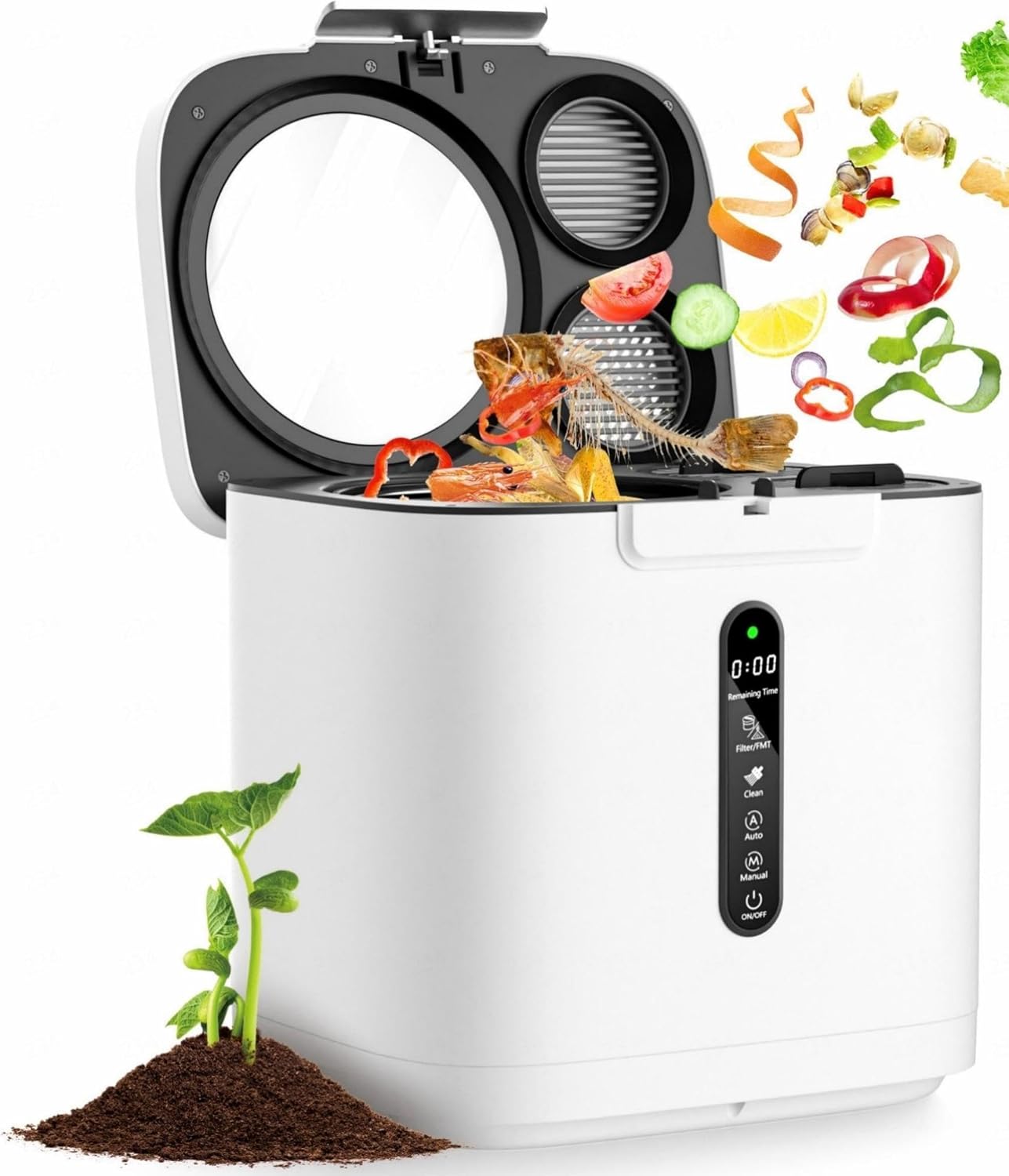
Saluna 4L Electric Kitchen Composter with LED Display and Visible Window
| Capacity | 4 liters |
|---|---|
| Material Type | Metal, Stainless Steel |
| Item Highlight | One-Touch Produces Dry Pre-Compost, LED Display, Odorless & Auto-Cleaning |
| Model Number | Fc-385w |
This Saluna 4L electric kitchen composter is designed for daily indoor use on a countertop to reduce food waste into a dry pre-compost product. It offers three programmable composting modes shown on an LED panel so you can set cycle time and monitor progress through the clear viewing lid without breaking the seal. Practical features include dual activated carbon filters for odor control, a removable stainless steel bucket that is dishwasher-safe, and a one-touch auto-cleaning rinse to simplify maintenance. The unit’s 4 liter capacity fits typical household scrap volumes for one to a few people but will require more frequent emptying in larger households. Because it concentrates material into a dry pre-compost rather than finished garden-ready compost, you will still need a backyard compost pile, worm bin, or municipal collection for final decomposition. The build appears aimed at durability with metal and stainless components, and the visible window and simple controls make it easy to integrate into a reliable kitchen routine.
Best for: A buyer who wants a dependable, low-fuss indoor system to reduce daily kitchen waste and prefers predictable, easy-to-use controls for routine composting.
Less Ideal for: Not well suited for households that need large-volume processing or gardeners who expect finished, soil-ready compost straight from the machine.
- Compact 4 L capacity suited to countertop placement and everyday kitchen scraps
- Three LED-controlled modes and visible lid let you monitor and customize cycles
- Dual activated carbon filters reduce kitchen odors during operation
- Removable stainless steel bucket is dishwasher-safe for easier cleaning
- One-touch auto-cleaning simplifies maintenance between uses
- 4 liter capacity requires frequent emptying for larger households or heavy cooking
- Produces dry pre-compost rather than finished compost, so further processing is needed
Verdict: Choose this compact electric composter if you want a reliable, low-maintenance countertop unit that turns daily scraps into dry pre-compost with straightforward controls and built-in odor control.
Epica 1.3 Gallon Stainless Steel Kitchen Compost Bin

| Capacity | 1.3 gallons |
|---|---|
| Material Type | Stainless Steel |
| Item Highlight | Airtight lid with replaceable activated charcoal filter |
The Epica 1.3 gallon kitchen compost bin is a small, well-made countertop container for collecting food scraps between trips to an outdoor compost pile or municipal collection. It uses a stainless steel, one-piece body and an airtight, leak-resistant lid to keep moisture contained, and an activated charcoal filter in the lid to control odors. Typical use is simple: deposit peels, coffee grounds, and vegetable scraps during meal prep, empty the bin weekly, hand-wash the interior, and replace or gently rinse the charcoal filter every few months. The stainless construction resists rust and scratches and makes the bin easy to wipe clean. It is sized for couples or small families who want to keep composting accessible without a large outdoor setup. The main limitations are capacity and filter maintenance: at 1.3 gallons it requires frequent emptying for larger households, and the carbon filter needs periodic replacement to remain effective. The design is practical and unobtrusive, and it prioritizes odor control and durability for indoor kitchen use.
Best for: Buyers who want a durable, odor-conscious countertop solution for daily kitchen scraps and who value social proof and low-risk purchases backed by many positive reviews.
Less Ideal for: Not a good fit for large families or households that generate heavy daily food waste who need a higher-capacity or hands-off indoor composter.
- Stainless steel one-piece body resists rust and is easy to clean
- Airtight, leak-resistant lid contains moisture and reduces mess
- Replaceable activated charcoal filter reduces kitchen odors
- Compact 1.3 gallon capacity fits easily on most countertops
- Small capacity requires frequent emptying for larger households
- Charcoal filter needs periodic replacement or gentle rinsing to stay effective
Verdict: A compact, durable countertop compost bin that keeps kitchen odors in check and is ideal for small households wanting a reliable indoor compost solution.
Choosing the Right Apartment Compost: Key Factors to Consider
Odor Management
Kitchen odor is the single most common reason apartment composting fails. A system that seals well, uses activated carbon or other odor-absorbing layers, or promotes rapid aerobic processing will make it practical to store scraps indoors. Poor odor control attracts pests, triggers complaints from roommates or neighbors, and forces more frequent emptying.
When evaluating odor features, consider lid seals, filter access and replacement frequency, and whether the system encourages airflow patterns that keep materials aerobic. Also note how the system handles wet food and citrus, which are common in urban food waste and can create strong smells if left in an airtight container without proper treatment.
Size and Storage Footprint
Apartment kitchens have limited counter and cabinet space, so capacity and shape matter. A compact countertop canister is convenient for short-term holding, while a slightly larger bin stored under the sink may reduce trips outdoors but must still fit plumbing and cleaning supplies.
Think about where you will keep the compost container during the week and how often you can realistically empty it. Vertical units or slim-profile designs can save space, but check access for emptying and cleaning. If you have a balcony or small outdoor area, consider a model designed for quick transport to an outdoor collection or drop-off point.
Maintenance and Cleaning
Ease of cleaning determines whether a system stays sanitary and useful. Look for smooth, nonporous interiors, removable liners or trays, and parts that can be rinsed quickly. Complex assemblies with many small parts increase the chance that users will skip cleaning, which leads to odor and pest issues.
Also evaluate how often you need to replace filters, add absorbent materials, or turn the contents. Systems that allow simple rinsing of primary components and require minimal ongoing consumables are better for busy apartment residents.
Composting Speed and Material Acceptance
Some apartment systems are designed primarily as holding containers and rely on municipal composting for final breakdown. Others actively process scraps through aerobic decomposition, bokashi fermentation, or small-scale vermicomposting. Understand what materials each approach accepts-bokashi handles cooked food and meat when fermented correctly, while traditional aerobic bins are better for fruit and vegetable scraps but not meat.
Faster processing reduces smell and the need for frequent emptying, but active systems may require more attention. Match the processing style to your routine and the types of scraps you generate most often.
Pest and Hygiene Considerations
Apartment composting increases the risk of pests if not managed carefully. Look for features that deter fruit flies and rodents, such as tight seals, internal baffles, or contained fermentation methods. Consider how easy it is to inspect and clean the unit to remove residues that attract insects.
Also assess whether the design keeps runoff contained. Liquid from decomposing scraps can cause odors and messes, so models that separate or absorb leachate are preferable in indoor environments. Regular cleaning schedules and liners can reduce hygiene issues and make composting compatible with shared living spaces.
Composting Methods Suited To Apartments
Apartment composting can be done several ways, and the method you pick affects routine, space, and what scraps can be handled. Passive holding bins are simplest: you collect scraps in a sealed container and empty it into a building organics bin or take it to a drop-off. These require minimal upkeep but rely on regular removal to avoid odors.
Active indoor systems use aerobic airflow, heat, or microbial mixes to break down scraps faster. They reduce volume and smell but usually need electricity, periodic turning, or regular additions of dry carbon-rich material. Fermentation methods like bokashi accept a wider range of food waste including meat and dairy but require a separate maturation step before use in soil.
Vermicomposting uses worms to process scraps into rich castings. It can work in apartments if sized correctly and maintained for moisture and feeding rates. Worm bins need more attention to feeding balance and temperature, but they produce valuable soil amendment for potted plants.
- Passive holding bins are low-maintenance but need frequent emptying.
- Active systems reduce volume faster but may require power or more intervention.
- Bokashi handles cooked foods and meat but needs post-treatment before use in soil.
- Vermicompost is productive but requires steady care and temperature control.
Where To Keep Your Apartment Compost
Location affects usability and nuisance potential. A countertop canister is handy while cooking but should have strong odor control. Under-sink placement hides the container but exposes it to moisture and makes emptying less convenient. A small balcony or porch provides a place to store larger processing units outdoors when weather and building rules allow.
If your building offers weekly organics pickup, choose a container sized to hold scraps between collections. If you plan to transport compost to a community drop-off, prioritize portability features such as handles and secure lids. Consider where you will clean the unit as well; access to a sink or hose can simplify maintenance.
- Countertop for convenience and frequent emptying.
- Under-sink for out-of-sight storage if space allows.
- Balcony or outdoor spot for larger processing units or temporary storage.
Integrating Apartment Compost Into Daily Routines
Make composting effortless by locating the primary container where food prep happens and keeping a small transfer container near the sink. Emptying frequency should match your schedule and the unit's odor control. Use a lined compost pail or washable container to minimize mess during transfers.
Establish simple habits like adding a dry layer of shredded paper or sawdust to absorb moisture, or portioning scraps into smaller sealed bags if you cannot empty often. For active systems, create a short maintenance checklist so tasks like turning, checking filters, or feeding worms do not get missed. Regular routines prevent buildup and keep the system functioning reliably.
- Keep the main container where you generate scraps most often.
- Use a short maintenance checklist for active systems.
- Match emptying frequency to your lifestyle and building pickup schedule.
Using Compost Outputs in Apartments
Even small-scale composting can yield useful material for houseplants and balcony gardens. Fermented bokashi brine should be diluted before use or added to a soil mix after maturation. Worm castings and well-rotted compost improve water retention and nutrient supply for container plants.
If you do not use the compost at home, consider community gardens or local urban farms that accept finished material. Make sure any material you apply to potted plants is fully processed and free of pathogens; immature compost can harm plants and produce smells.
- Use worm castings and finished compost for potted plants and balcony boxes.
- Dilute fermentation liquids before applying to plants or soil.
- Donate finished compost to community garden programs if you cannot use it at home.
How We Chose the Best Apartment Compost
We screened options that are practical for apartment living and excluded bulky outdoor-only systems, backyard tumblers, and setups that require large outdoor space. Selection focused on systems sized and styled for indoor kitchen use, small patios, or balcony setups. Evaluation criteria emphasized odor management, compactness and storage footprint, ease of emptying and cleaning, material acceptance (what scraps the system reliably handles), and durability for daily kitchen use. We considered how each system performs with typical apartment constraints such as limited countertop space, irregular composting schedules, and seasonal access to outdoor collection points. We also checked how intuitive assembly and routine care are, because many apartment users need low-effort solutions. Systems requiring frequent, technical maintenance or large volumes of amendments were excluded. Finally, we prioritized products and designs that reduce pest risk when used correctly and that fit common apartment waste routines like weekly organics pickup or occasional outdoor drop-off.
FAQ
Can I compost meat and dairy in an apartment?
It depends on the method. Traditional aerobic bins usually advise against meat and dairy because they attract pests and smell. Fermentation systems like bokashi can process those items safely if you follow the method and allow proper maturation before using the material in soil.
How often should I empty an apartment compost container?
Emptying frequency depends on capacity and odor control. Small countertop pails may need daily or every-few-days emptying, while sealed systems with good odor filters can go a week or longer. Match the schedule to your unit's performance and building pickup frequency.
Will composting attract pests in my apartment?
Pests are a risk if the system is poorly sealed or not cleaned. Use tight lids, filters, and practices that limit exposed food and moisture. Regular cleaning and prompt emptying reduce the chance of flies or rodents becoming a problem.
Is vermicomposting safe in small apartments?
Vermicomposting can work well if you control temperature, moisture, and feeding rates. Keep the bin compact, avoid overfeeding, and place it where odors or excess moisture are unlikely. Properly maintained worm bins are generally low-odor and productive.
Do I need electricity for apartment composting?
Not always. Many passive and bokashi systems do not need power. Some active indoor composters use electricity to speed processing or aerate the pile, but those are optional and depend on how quickly you want breakdown and how much maintenance you are willing to do.
Final Verdict
Apartment composting is practical when you balance space, effort, and the types of scraps you generate. Prioritize odor control, a footprint that fits your kitchen routine, and a maintenance level you can sustain. Consider whether you want an active processor, a fermentation method, or a simple sealed holding container based on how often you can empty and clean it. Choose the approach that fits your lifestyle and building logistics, and be realistic about maintenance and emptying schedules. With reasonable expectations and the right features prioritized, composting in an apartment can reduce waste and support balcony or community gardening without creating nuisance problems.
