

Note: This article contains affiliate links. If you click on these links and make a purchase, I may earn a small commission at no extra cost to you. This helps support my research and content. Read my full affiliate disclosure here.
Choosing the right axe for chopping trees matters in ways that go beyond raw power. The tool needs a head that bites cleanly into standing timber, a handle that absorbs shock and resists breakage, and a shape that helps you keep safe, controlled swings over long sessions. This guide covers seven shortlisted axes for chopping trees that perform well in real yards and woodlots. We evaluate them on head steel and edge geometry, balance and swing efficiency, handle material and durability, and overall user comfort so you can pick the best fit for your felling needs.
Top Picks at a Glance
| Best Overall The best all-around choice for most situations | Gränsfors Bruks Scandinavian Forest Axe, 25" (Model 430) |  |
| Best Quality Built to a higher standard if you want something more solid | 1844 Helko Werk Forester Full-Size Felling Axe (Made in Germany) |  |
| Best Value The sweet spot between price and what you get | Fiskars 28" A-Series Chopping Axe |  |
| Best Budget The cheapest option that still gets the job done reliably | INTERTOOL 36-inch Felling Axe HT-0264 with Fiberglass Handle |  |
| Highest Rated A top-rated pick with lots of positive feedback | Fiskars 28-Inch Chopping Axe with Axe and Knife Sharpener |  |
Gränsfors Bruks Scandinavian Forest Axe, 25" (Model 430)

| Head Weight | 2.6 pounds |
|---|---|
| Handle Material | Hickory Wood |
| Blade Material | Stainless Steel |
| Head Type | Forest |
| Blade Edge | curved |
The Gränsfors Bruks Scandinavian Forest Axe is a professional-grade felling and limbing tool designed for heavy outdoor use. With a 25-inch hickory handle and a forged curved bit, this axe bites into fresh spruce and pine and pulls cleanly through limb cuts. It is typically used for falling medium to large trees and for limbing after a tree is down; the curved blade profile helps control the cut and reduce binding when chopping resinous wood. Notable features include a stainless steel head finished for durability, a balanced head-to-handle weight for efficient swings, and a vegetable-tanned leather sheath for safe transport. In practice it delivers reliable, repeatable performance and feels well-balanced in two-handed swings, which reduces fatigue during extended work sessions. Important limitations are that it is a single-purpose forest axe rather than a compact camp or carving tool and requires basic maintenance like sharpening and occasional handle care to keep peak performance.
Best for: A buyer who prioritizes cutting performance and durability for serious felling and limbing tasks and who values a traditional, well-made tool for hands-on forestry work.
Less Ideal for: Casual campers or gardeners seeking a compact, multiuse hatchet should consider smaller, lighter alternatives that are easier to carry and maneuver.
- Forged curved bit designed for cutting fresh, resinous wood with reduced binding
- Balanced 25-inch hickory handle provides powerful two-handed swings and good control
- Stainless steel head and quality finish for long-term durability
- Includes vegetable-tanned leather sheath for safe carry and storage
- Not intended as a lightweight or multiuse camp axe
- Requires regular sharpening and handle maintenance to preserve performance
Verdict: Choose this axe if you want a professional, high-performance forest axe built for reliable felling and limbing of larger trees.
1844 Helko Werk Forester Full-Size Felling Axe (Made in Germany)

| Head Material | C50 high carbon steel |
|---|---|
| Head Type | Felling |
| Head Weight | 3.5 lb |
| Handle Material | American hickory |
| Handle Length | 31 in |
The Helko Werk Forester is a purpose-built full-size felling axe that brings a hand-forged C50 high carbon steel head and a carefully selected American hickory handle to demanding tree work. With a roughly 3.5 lb head and a 31 inch handle it delivers the mass and reach needed to fell medium and large trees while remaining manageable for a single user. The polished finish on the head reduces cutting friction and helps resist surface rust, and the handle is sanded and treated with boiled linseed oil for a comfortable grip. Included leather sheath and a small bottle of protective Axe Guard oil make basic care and transport straightforward. Because it is a premium handmade tool, the Forester emphasizes edge retention and balance over low cost and requires routine sharpening and proper storage to protect the wooden handle and carbon steel. It is not lightweight for casual pruning but shines when you need a reliable, well-balanced axe that holds an edge for sustained chopping tasks.
Best for: A buyer who prioritizes chopping performance and durability for regular tree-felling or heavy-duty yard work and wants a precision-forged tool that holds an edge and feels balanced under swing.
Less Ideal for: Not a good fit for casual gardeners, light pruning, or ultralight backpacking where a smaller hatchet or lightweight saw would be easier to handle.
- Hand-forged C50 high carbon steel head for strong edge retention and durability
- Balanced full-size design (3.5 lb head, 31 in handle) suited to felling medium and large trees
- Premium grade A American hickory handle finished with boiled linseed oil for comfort and shock absorption
- Polished head finish reduces cutting friction and helps resist surface rust
- Includes leather sheath and Axe Guard oil for protection and basic maintenance
- Requires regular sharpening and oiling to maintain the carbon steel head and prevent rust
- Heavier and longer than compact axes, so it is less suitable for tight spaces or extended backpacking carries
Verdict: Buy this axe if you want a high-performance, hand-forged felling axe that combines weight, balance, and premium materials for reliable tree-chopping results.
Fiskars 28" A-Series Chopping Axe

| Head Type | Felling |
|---|---|
| Blade Edge | Hardened, non-stick |
| Handle Material | Steel,Wood |
| Blade Material | Alloy Steel |
The Fiskars 28" A-Series Chopping Axe is built for heavy backyard chopping and light tree felling. It pairs a low-friction, hardened alloy-steel blade with a precision-balanced head that helps the blade bite deeper on each swing, so you get cleaner cuts and fewer stuck strikes when felling small trees or splitting logs. The handle combines steel and wood construction with a shock-absorbing FiberComp-style design to reduce vibration and make repeated swings less fatiguing. Practical benefits include an ultra-sharp edge that stays effective through routine use and a balanced feel that multiplies swing power for faster work. Limitations are that this is a midweight, 28-inch tool intended for small to medium trunks rather than heavy timber, and its mixed-material handle may require occasional care compared with full-composite or all-wood traditional designs. For routine firewood prep, campsite work, and clearing small trees, it offers a reliable, user-friendly chopping performance.
Best for: Buyers who want a dependable, easy-to-swing axe for routine tree felling, firewood prep, and yard cleanup and who value tools with solid real-world performance evidence.
Less Ideal for: Professional arborists or anyone who regularly needs to fell very large trunks should choose a heavier, longer-handled felling axe or specialized chainsaw instead.
- Balanced head design increases swing power and cutting efficiency
- Hardened alloy-steel blade with low-friction coating reduces sticking
- Shock-absorbing handle reduces vibration during repeated swings
- Sharp edge and blade geometry suitable for clean felling and log splitting
- 28-inch length and midweight construction are not ideal for very large or old-growth trees
- Handle uses mixed materials that may need occasional maintenance
Verdict: A well-balanced, sharp 28-inch axe that delivers efficient, low-sticking cuts for felling small trees and prepping firewood.
INTERTOOL 36-inch Felling Axe HT-0264 with Fiberglass Handle
| Head Weight | 2.8 pounds |
|---|---|
| Blade Length | 5.1 inches |
| Handle Material | Fiberglass |
| Included Components | Sheath |
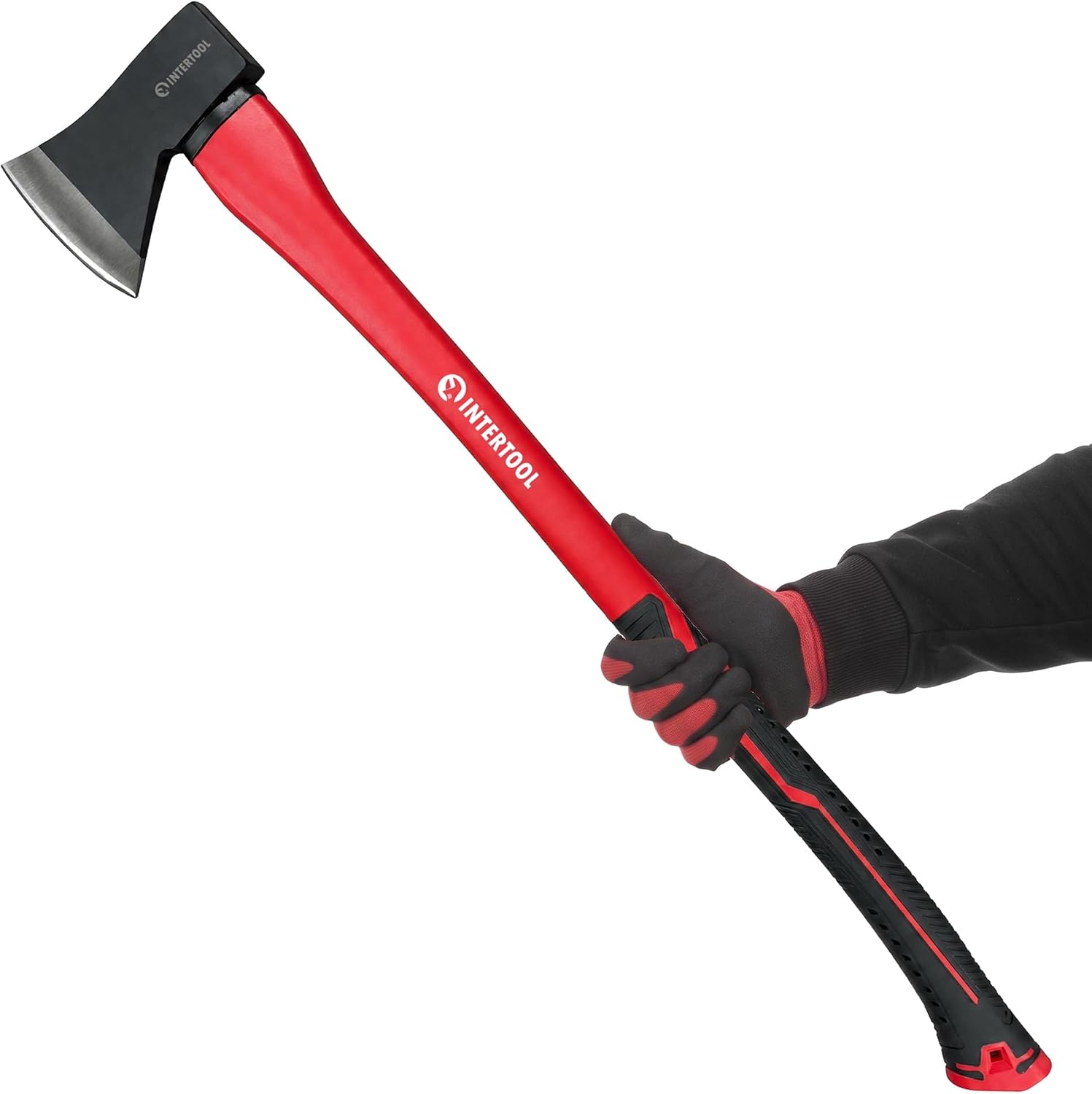
The INTERTOOL HT-0264 is a long-handled felling axe built for cutting firewood, felling smaller trees, and general yard clearing. Its 36-inch fiberglass handle gives extra leverage for deeper swings while the 2.8 pound forged carbon steel head arrives pre-sharpened and coated to resist rust. The textured rubber grip and shock-absorbing handle reduce vibration and improve control during repeated strikes, and a supplied sheath makes storage and transport safer. In practical use the long handle makes chopping and splitting larger rounds easier than a short hatchet, and the balanced head-to-handle ratio helps keep swings on target. Expect the blade to need occasional sharpening for sustained performance, and the fiberglass handle, while durable, will not have the same traditional feel as a wooden haft. This is a straightforward, value-focused tool that performs well for typical homeowner tasks but is not aimed at heavy commercial logging.
Best for: Buyers who want an affordable, no-frills felling axe for occasional firewood cutting, yard cleanup, and light tree work and who prioritize value over premium materials.
Less Ideal for: Professional loggers or users who need a heavy-duty splitting maul or a premium wooden-handled axe for extended daily use.
- Long 36-inch fiberglass handle provides strong leverage for chopping larger logs
- 2.8 lb forged carbon steel head is pre-sharpened and coated to resist corrosion
- Textured rubber grip and shock-absorbing handle reduce vibration and improve control
- Includes durable sheath for safer storage and transport
- Fiberglass handle lacks the traditional feel some users prefer over wood
- Blade will require periodic sharpening for heavy or prolonged use
Verdict: A budget-friendly long-handled felling axe that delivers good chopping power and low vibration for typical homeowner firewood and yard tasks.
Fiskars 28-Inch Chopping Axe with Axe and Knife Sharpener

| Handle Material | Fiberglass |
|---|---|
| Blade Material | Ceramic |
| Head Type | Felling |
This Fiskars 28-inch chopping axe is built for consistent performance when felling trees and cutting firewood. The axe combines a perfected weight distribution and FiberComp handle that delivers higher swing speed with less user fatigue, while the proprietary blade geometry and low-friction coating help the edge bite deeper and resist sticking. The head is insert-molded to the handle for a virtually inseparable connection that reduces the risk of head loosening or overstrike breakage. The included ceramic axe and knife sharpener holds a precise 30 degree angle and has a safety guard for quick edge touch-ups in the field. In use this set gives you reliable one-strike splits on medium to large logs and an easy way to maintain the edge without stones. Important limitations are that the axe is a dedicated chopping/felling tool rather than a multi-purpose camp tool, and the sharpener is a simple handheld ceramic roller best suited for basic maintenance rather than full blade re-profiling.
Best for: Buyers who prioritize a durable, low-maintenance felling axe that holds up to heavy use and reduces the chance of head or handle failure when chopping trees.
Less Ideal for: People seeking a lightweight multi-tool for backpacking, carving, or detailed work should consider smaller, more versatile axes instead.
- Balanced weight distribution increases swing speed and chopping power
- FiberComp handle and insert-molded head provide a virtually unbreakable connection
- Advanced blade geometry and low-friction coating improve penetration and reduce sticking
- Includes a ceramic sharpener with a fixed 30 degree angle and safety guard for quick maintenance
- Sharpener is for touch-ups and not intended for full blade re-profiling
- Designed specifically for chopping/felling so it is bulky for light camp tasks
Verdict: Choose this Fiskars chopping axe and sharpener when you want a virtually unbreakable, reliably powerful tool for chopping and felling trees with easy field sharpening.
Choosing the Right Axe for Chopping Trees: Key Factors to Consider
Head Steel and Heat Treatment
The steel used for the axe head and how it is heat treated determine how long an edge stays sharp and how resistant the head is to chipping when it strikes knots or frozen wood. Harder steels can hold a keen edge but may be more brittle if not tempered correctly. A properly balanced heat treatment gives a hard cutting edge with a tougher body behind it so the head will survive repeated impacts during felling.
Knowing the steel type helps you plan maintenance. Higher-carbon steels are easier to re-sharpen in the field but require rust prevention. Forged heads with visible grain structure often indicate traditional construction and can be a sign of durable performance when properly finished.
Edge Geometry and Bevel Shape
Edge angle, bevel width, and the overall profile of the axe head affect how it bites into wood and how easily it extracts after each swing. A narrower, acute bevel slices deeply and is efficient for cutting green or softer timber, while a slightly blunter, wedge-shaped profile resists pinching and is better at splitting larger sections. The right geometry balances bite with extraction so you do not spend extra swings levering the head free.
Consider whether you will be felling standing trees, working on limb removal, or splitting rounds later. A head optimized for chopping trees will usually pair a slicing bevel with a controlled wedge behind it to reduce binding on straight cuts.
Balance, Weight and Swing Efficiency
How the head and handle distribute mass influences the axe's swing and how much energy transfers into the cut. Heavier heads deliver more impact with each swing but demand more exertion and faster fatigue. Lighter heads allow quicker, repeated swings but may need more hits to complete a notch. Balance point, often located near the poll or slightly forward of the eye, determines whether the tool feels nimble or sluggish in use.
Try to match axe weight to your size and the typical tree diameter you will fell. A well-balanced axe reduces wasted motion and minimizes strain on shoulders and back during long sessions.
Handle Material and Construction
Handle choice affects shock absorption, grip comfort, and how the tool behaves over years of use. Wood handles, especially ash or hickory, provide natural flex and good feedback but require periodic inspection for cracks and occasional replacement. Fiberglass or composite handles resist weather and splitting and often feature vibration-damping cores, but a poorly bonded head-seat can be difficult to repair in the field.
Look at how the head is attached to the handle and whether the design allows easy replacement. Comfortable profile, secure grip surfaces, and length appropriate to chopping versus limbing are all part of selecting a handle that will perform under repeated heavy swings.
Head Attachment and Safety Features
A securely attached head is essential for safe felling. Traditional wedged and pinned heads can last decades if driven and maintained correctly. Modern bonded heads with mechanical retainers add redundancy, reducing the chance of separation under repeated shock. Check for well-fitted eyes, proper wedges, and a poll design that stands up to striking when needed.
Additional safety considerations include a clean poll for secondary striking, a head shape that minimizes unexpected glancing blows, and a handle finish that preserves grip when wet. Those elements reduce the likelihood of accidents while working at height or on uneven ground.
Edge Maintenance and Sharpening Ease
How easy it is to sharpen the axe in the field affects how long it will stay useful between shop sessions. Some heads take and hold an edge longer but require more aggressive grinding if nicked. Others are designed for quick stropping and touch-ups with handheld stones. Consider whether you want a tool that accepts simple field sharpening or one that benefits from occasional professional re-profiling.
Also think about corrosion resistance and protective finishes. Bare carbon steel heads need regular oiling; painted or coated heads reduce maintenance but can hide damage until it becomes severe.
Matching Axe Weight to Tree Size and User Strength
A practical approach to choosing an axe weight is to balance the typical trunk diameter you will tackle with your own physical capacity. Small-diameter trees and saplings respond well to lighter axes that allow controlled, repeated swings. Medium to large trunks require heavier heads to transfer sufficient energy per blow to cleave hardwood grain.
If you plan prolonged felling sessions, prioritize swing efficiency and balance over raw mass. A slightly lighter, well-balanced tool often reduces fatigue and yields faster overall progress than a heavy axe that slows swing speed.
- Lighter axes: better for quick work and smaller diameter trees
- Midweight axes: versatile for most yard and woodlot tasks
- Heavy axes: useful for large trunks but increase fatigue risk
Handle Length and Stance Considerations
Handle length changes leverage and control. Longer handles add reach and generate more head speed, which helps with bigger cuts. Shorter handles give more control for precise notches and working in tight spaces. Choose a length that fits your stance and swing arc so you can maintain consistent contact and avoid overreaching.
Also consider how you will transport and store the tool. A too-long handle may be awkward for moving around a property or transporting in a truck bed.
- Long handles improve leverage but need more clearance
- Short handles are easier to maneuver and store
Maintaining Sharpness and Edge Profiles in the Field
Routine sharpening and minor edge repairs keep an axe cutting predictably. Carry a compact file or sharpening stone to address burrs and dents encountered while felling. Learning basic stropping and maintaining a consistent bevel angle preserves cutting efficiency and reduces the number of swings required per cut.
Keep a small repair kit for handle wedges and a protective edge cover to prevent dings during transport. Regular inspection for cracks at the handle shoulder and eye can prevent failures that occur during heavy use.
- Carry a file or stone for field touch-ups
- Use a sheath to protect the edge and bystanders during transport
Working Safely When Chopping Trees
Safe tree felling depends on tool condition and technique. Maintain a clear escape path and never stand directly behind the cutting arc. Position yourself to allow controlled swings with a stable footing and consider cutting a small notch first to guide the tree's fall direction. Inspect the tree for hidden hazards like rot or overhead branches that could change the fall.
Personal protective equipment such as eye protection, sturdy gloves, and hearing protection during prolonged use reduces risk. A well-maintained axe with a secure head and comfortable handle reduces the chance of tool-related incidents.
- Prepare an escape route before the final cut
- Inspect trees for defects that could cause unpredictable behavior
- Wear proper PPE and maintain the tool before use
When to Choose a Replaceable-Handle Design
Consider a replaceable-handle axe if you expect heavy, repeated use or if you prefer the ability to service the tool without specialized shop work. Replaceable handles allow you to swap out damaged shafts quickly in the field or workshop and can extend the life of a premium head for decades.
However, ensure replacement parts are widely available for the design you choose and inspect the head-seat fit before purchase. A poorly fitting replacement can reduce safety and change balance characteristics.
- Replaceable handles extend tool life
- Verify fit and availability of spare handles before committing
How We Chose the Best Axe for Chopping Trees
We shortlisted axes based on practical, field-focused performance factors that matter when felling trees. Key evaluation criteria included head steel composition and heat treatment to judge edge retention and toughness; head geometry and poll design to assess cutting efficiency, splitting ability, and safe re-strikes; handle material and construction for shock absorption and long-term durability; tool balance and swing feel to measure effort per cut and fatigue over extended use; and user safety features such as secure head attachment and a reliable striking surface. We excluded lightweight hatchets and tools designed only for limbing or splitting small rounds, because chopping standing trees demands different geometry and weight. We also avoided decorative or novelty axes that lack the construction required for regular felling. Our focus was on tools with documented materials and construction methods that align with safe, repeatable tree-chopping performance.
FAQ
What weight axe is best for chopping medium-sized hardwoods?
For medium hardwoods, many gardeners prefer a midweight axe because it balances power and swing speed. This weight class reduces fatigue while still delivering effective cutting force on typical yard trees.
How often should I sharpen an axe used for felling trees?
Frequency depends on wood type and how often you work. Expect to do quick touch-ups with a file after a few hours of heavy use and more thorough sharpening after several sessions. Hard, knotty, or frozen wood accelerates dulling.
Are fiberglass handles a good choice for tree-felling axes?
Fiberglass handles resist weather and are less likely to split than wood, which is useful if the tool is stored outdoors. They can transmit more vibration if poorly designed, so choose one with a comfortable grip profile and proven head-seat construction.
Can I use a splitting axe for chopping down trees?
A splitting axe has a wider wedge profile optimized for riving rounds and may not slice cleanly for felling cuts. It can work in a pinch, but a chopping-oriented head geometry is generally more efficient for cutting standing timber.
How do I tell if an axe head is securely attached?
Inspect the junction between the head and handle for tightness, consistent wedges, and absence of movement. A slight play, cracked eye, or loose wedge indicates the head may need re-wedging or replacement. Regular checks before use are important for safety.
Is a heavier head always better for larger trees?
Heavier heads deliver more energy per swing, which helps with big trunks, but they also increase user fatigue and slow swing cadence. Often a balanced choice matched to user strength and technique yields better overall productivity than simply choosing the heaviest head available.
Final Verdict
When choosing an axe for chopping trees, prioritize head steel and edge geometry first, then match weight and balance to the trees you will fell and your physical strength. Handle material and attachment method determine durability and safety, so select a construction you can maintain and inspect easily. Tradeoffs are inevitable: heavier heads cut more per swing but increase fatigue; replaceable handles add serviceability at the cost of slightly different balance. Focus on the criteria that matter for your yard and work style to pick a tool that will be efficient, safe, and reliable.
