

Note: This article contains affiliate links. If you click on these links and make a purchase, I may earn a small commission at no extra cost to you. This helps support my research and content. Read my full affiliate disclosure here.
Picking the right bagged soil for planting vegetables changes how quickly seedlings establish and how reliably plants produce through the season. The wrong mix can compact, retain too much water, or fail to supply critical nutrients, while a good bagged soil will give you consistent texture, decent fertility, and predictable moisture for containers, raised beds, and in-ground improvements. This guide covers seven carefully shortlisted bagged soils for vegetable gardens, chosen for real garden performance across common situations from containers to raised beds. Below we explain the practical criteria used to evaluate mixes and what to expect when you use them in your garden.
Top Picks at a Glance
| Best Overall The best all-around choice for most situations | Espoma Organic Vegetable & Flower Garden Soil, 1 cu ft |  |
| Best Quality Built to a higher standard if you want something more solid | FoxFarm Happy Frog Potting Soil, 2 cu ft (Container Garden) with 2 Plant Tags |  |
| Best Value The sweet spot between price and what you get | Back to the Roots All-Purpose Peat-Free Potting Mix, 2-Pack (12 qt) |  |
| Best Budget The cheapest option that still gets the job done reliably | Back to the Roots 3-in-1 Seed Starting Mix, 6 Qt, Organic Peat-Free |  |
| Highest Rated A top-rated pick with lots of positive feedback | Miracle-Gro Potting Mix, 16 qt. (2-Pack) |  |
| Most Popular A crowd favorite that many people choose with confidence | Miracle-Gro Organic Outdoor Potting Mix, 16 qt. |  |
| Best Seller A high-volume bestseller chosen again and again | Back to the Roots Organic Expanding Coco Coir Potting Soil Brick |  |
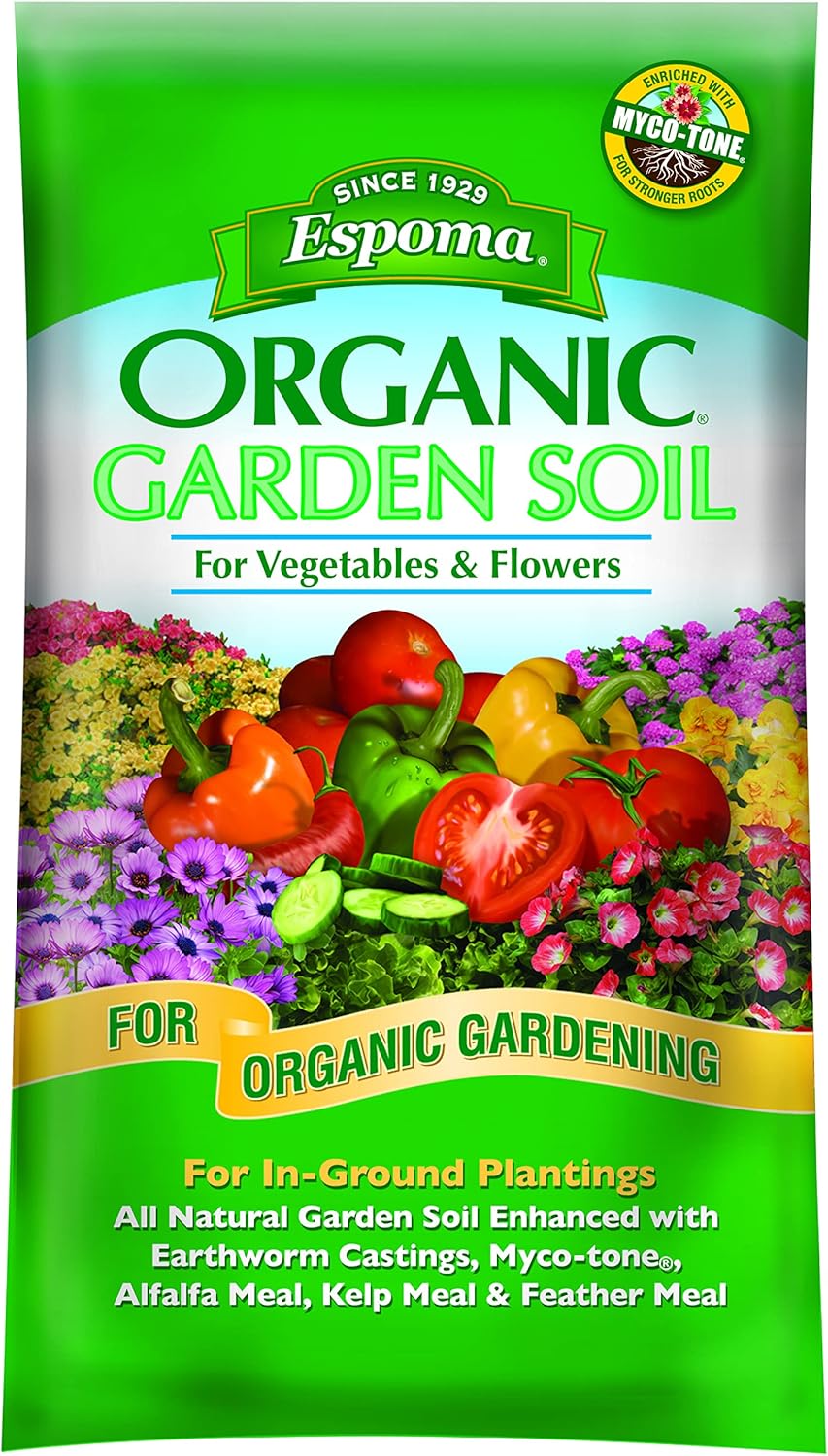
Espoma Organic Vegetable & Flower Garden Soil, 1 cu ft
| Volume | 1 cubic feet |
|---|---|
| Contains | Peat moss, aged forest products, composted rice hulls, earthworm castings, alfalfa meal, kelp meal, feather meal, yucca extract |
| Mycorrhizae | Proprietary endo and ecto mycorrhizae blend |
| Intended use | Use when planting and transplanting to improve native soil |
This 1 cubic foot bag of Espoma Organic Vegetable & Flower Garden Soil is a premixed, organic planting medium meant to be blended into native garden soil when planting or transplanting. It combines Canadian sphagnum peat moss with aged forest products, composted rice hulls, earthworm castings and organic meals (alfalfa, kelp, feather) plus a proprietary mycorrhizae blend to support early root establishment. In practice you work it into the planting hole or mix it with existing soil to improve texture, moisture retention and biological activity without synthetic fertilizers. The inclusion of earthworm castings and mycorrhizae is useful for vegetable beds where establishing a healthy root zone matters. Because it is a bagged amendment rather than a complete potting soil, you should plan to mix it with your garden soil rather than rely on it alone for large fills. Also the 1 cu ft bag is convenient for small vegetable patches or individual beds but you will need multiple bags for larger gardens.
Best for: Gardeners who want an organic, biology-forward soil amendment to mix into beds and transplant areas for healthier vegetable and flower starts. Ideal for small to medium veggie patches and raised beds where targeted improvement of root zone soil is the priority.
Less Ideal for: Not the best choice for filling large garden areas or for gardeners seeking a peat-free or bulk soil amendment solution.
- Formulated for organic gardening with natural amendments and no synthetic fertilizers
- Contains earthworm castings and a mycorrhizae blend to support root health
- Improves soil texture and moisture retention when mixed with native soil
- Convenient 1 cu ft bag size for small beds, transplanting, and spot improvements
- Small volume per bag means multiple bags are required for larger vegetable gardens
- Contains peat moss which some gardeners avoid for environmental reasons
Verdict: A compact, organic soil mix that boosts root health and soil biology when mixed into vegetable beds or transplant holes.
FoxFarm Happy Frog Potting Soil, 2 cu ft (Container Garden) with 2 Plant Tags

| Brand | FoxFarm |
|---|---|
| Unit Count | 600 Ounce |
| Volume | 2 cubic feet |
| Style Name | Container Garden |
FoxFarm Happy Frog Potting Soil is a pre-mixed container blend designed to give potted vegetables and other container plants a nutrient-rich, biologically active rooting medium. It is typically used to fill containers, grow bags, and large pots where plants cannot access ground soil. The formula lists earthworm castings, bat guano, aged forest products, and a custom microbe blend and is pH adjusted to support nutrient uptake. For vegetable gardeners this means stronger root development, improved nutrient release from organic matter, and better flowering and fruiting potential without needing to mix amendments yourself. The bag is ready to use straight from the package and includes two plant tags for tracking varieties or planting dates. Limitations are that it is a container-specific mix rather than a garden bed topsoil so it is not intended to bulk-fill raised beds or replace in-ground soil, and heavier-feeding crops may still require periodic fertilizer applications over the season.
Best for: Gardeners who grow vegetables in pots, grow bags, or small container plots and prioritize biologically active, ready-to-use soil that supports vigorous root and fruit development.
Less Ideal for: Gardeners who need large volumes of soil for filling raised beds or for amending in-ground garden beds should consider bulk garden soil or topsoil options instead.
- Formulated for containers with beneficial microbes and mycorrhizae to support root health
- Contains organic amendments like earthworm castings and bat guano for slow-release nutrients
- pH adjusted for improved nutrient uptake
- Ready-to-use straight from the bag, saving prep time
- Includes plant tags for labeling varieties and dates
- Specifically blended for containers so it is not a direct substitute for in-ground garden soil or bulk raised-bed fill
- Volume per bag may require multiple bags for many containers or larger vegetables
Verdict: Choose this potting soil when you want a ready-made, microbe-rich container mix that boosts root health and supports better vegetable flowering and fruiting.
Back to the Roots All-Purpose Peat-Free Potting Mix, 2-Pack (12 qt)

| Brand Name | Back to the Roots |
|---|---|
| Number of Packs | 2 |
| Item Type Name | Natural & Organic All-Purpose Peat-Free Potting Mix |
| Volume | 12 quarts |
| Style Name | Specialty Potting Mix |
This peat-free potting mix is designed as an everyday growing medium for container vegetables, herbs, and bedding plants. It combines coconut coir for water retention, mycorrhizae to encourage stronger root systems, yucca extract to help move moisture and nutrients into roots, and dolomitic limestone to balance pH. That makes it easy to use straight from the bag for potting up seedlings, topping off containers, or refreshing planter soil. Practical benefits include better moisture control than plain bark or compost, built-in biological support for root establishment, and a neutral pH that reduces the need for immediate amendments. Because it is a lightweight, bagged mix and sold as two 6-quart bags, it is convenient for small to medium vegetable container setups. Important limitations are the relatively small total volume for larger raised beds and that concentrated feeding needs of heavy feeders may still require supplemental fertilizer over the season.
Best for: Gardeners who want an easy, eco-conscious potting mix for containers and small vegetable plots and who prioritize plant establishment and moisture control.
Less Ideal for: People planting large raised beds or high-yield vegetable rows who need bulk soil or a long-term fertilizing mix without added amendments.
- Peat-free organic formula with coconut coir for reliable moisture retention
- Contains mycorrhizae to support root development for transplants and seedlings
- Includes dolomitic limestone to help balance pH out of the bag
- Convenient 2-pack of 6-quart bags suitable for container and small-scale vegetable use
- Total volume (12 quarts) is limited for larger gardens or multiple raised beds
- Not formulated as a complete long-term fertilizer for heavy-feeding vegetables
Verdict: A ready-to-use, peat-free potting mix that makes container vegetable gardening simpler and more sustainable.
Back to the Roots 3-in-1 Seed Starting Mix, 6 Qt, Organic Peat-Free

| Unit Count | 192 Fluid Ounces |
|---|---|
| Style Name | 3-in-1 Seed Starting Mix |
| Brand Name | Back to the Roots |
This 6-quart Back to the Roots 3-in-1 Seed Starting Mix is a peat-free, organic potting medium intended for starting seeds and young vegetable transplants. It blends coconut coir, mycorrhizae, dolomitic limestone and nutrient-rich amendments so seedlings get an aerated, pH-balanced environment that encourages root development. Use it to fill seed trays, small pots, or to top up starter cells before transplanting into larger beds or containers. Notable features include added worm castings and yucca extract for moisture control and root uptake, plus a formula designed to reduce overwatering problems thanks to good drainage and aeration. For budget-focused vegetable gardeners this bag is convenient for starting multiple flats without mixing your own medium, and its peat-free composition is a plus for eco-minded growers. Limitations are the small 6-quart volume, which means you will need multiple bags to cover larger seed-starting runs or to repot many seedlings, and it is a starter mix rather than a finished garden soil so it is not intended to replace bulk vegetable garden amendments.
Best for: Budget-minded growers who need a reliable, ready-to-use seed starting mix for a season of vegetable seedlings and prefer an organic, peat-free option.
Less Ideal for: Gardeners who need large volumes of finished garden soil or who prefer to custom-blend their own seed-starting media for specific crops.
- Peat-free organic formula suitable for eco-conscious gardeners
- Includes mycorrhizae and worm castings to support early root and nutrient uptake
- Balanced pH with dolomitic limestone to reduce nutrient lock-up
- Designed for good drainage and aeration to help prevent overwatering issues
- Small 6-quart bag requires buying multiple units for larger seed batches or many seedlings
Verdict: A compact, peat-free organic seed-starting mix that makes it easy and affordable to start vegetable seedlings without mixing your own medium.
Miracle-Gro Potting Mix, 16 qt. (2-Pack)

| Feeds Plants | Up to 6 months |
|---|---|
| Volume | 16 quarts |
| Number of Packs | 2 |
| Ingredients | Sphagnum Peat Moss, Perlite, Compost, Fertilizer |
Miracle-Gro Potting Mix is a pre-mixed container soil designed to fill pots, planters, and hanging baskets for outdoor vegetables, herbs, and flowers. It is used by filling a pot roughly one third with mix, setting the plant, topping off, and watering through so excess drains away. The formula combines peat-based media with perlite and compost plus a built-in fertilizer that the maker says feeds plants for up to six months, which reduces how often you need to add nutrients during a growing season. The mix is described as fast-draining and light enough for roots to establish without compacting, which helps keep container vegetables productive. Practical limits to note are that this is formulated for containers rather than in-ground beds and will need to be refreshed or replaced at repotting time to avoid compaction and depleted nutrients. Also the product safety guidance means basic handling precautions are recommended when mixing and potting.
Best for: Gardeners who want a reliable, ready-made potting mix for outdoor containers and value a product that reduces how often they must fertilize during the growing season.
Less Ideal for: People preparing or amending in-ground vegetable beds or those who prefer fully organic certified mixes should consider garden soil blends formulated for in-ground use or organic alternatives.
- Formulated specifically for outdoor containers so it suits potted vegetables and herbs
- Includes fertilizer that feeds plants up to six months, reducing mid-season feeding
- Light, fast-draining blend (peat, perlite, compost) helps prevent root compaction and waterlogging
- Comes as a two-pack of 16 qt. bags, convenient for multiple pots or seasonal repotting
- Not intended for in-ground garden beds where denser garden soil is preferred
Verdict: A dependable potting mix for outdoor containers that supplies built-in nutrition for up to six months, making it a low-maintenance choice for growing vegetables in pots.
Miracle-Gro Organic Outdoor Potting Mix, 16 qt.

| Unit Count | 1 Count |
|---|---|
| Item Highlight | Plant Soil For Outdoor Container Plants, Contains Quick-Release Natural Fertilizer, OMRI Listed |
| Manufacturer | Scotts Miracle Gro |
| Volume | 1 cubic feet |
Miracle-Gro Organic Outdoor Potting Mix is a ready-to-use potting soil designed for outdoor containers and works well for vegetables, herbs, annuals, and perennials grown in pots. The bag is formulated with responsibly sourced peat and upcycled green waste and includes a quick-release natural fertilizer that the brand says feeds plants for up to two months. In practice this makes planting and early growth easier since seedlings and transplants get an initial nutrient boost without immediate additional feeding. The mix is intended to retain moisture and resist compaction in exposed outdoor conditions, and the OMRI listing means it is approved for organic use. For container vegetable gardeners this mix is convenient for repotting and starting new pots; the manufacturer notes one bag fills a typical 12-inch container. Limitations to consider are that the bag is modest in volume for larger raised beds or many pots and nutrients are time-limited, so plan on refeeding or refreshing soil biannually for sustained production.
Best for: Gardeners who grow vegetables and herbs in containers and want an organic-certified, ready-made mix that simplifies potting and early-season nutrition.
Less Ideal for: Those establishing in-ground beds or managing many large containers who need bulk soil or longer-term fertility without frequent top-ups.
- OMRI listed for organic gardening use
- Contains quick-release natural fertilizer that feeds for up to two months
- Blended to retain moisture and resist compaction in outdoor containers
- Includes responsibly sourced peat and upcycled green waste
- 16 qt. bag is small for multiple containers or larger vegetable plots
- Fertilizer benefit is temporary, requiring follow-up feeding or soil refresh
Verdict: A compact, OMRI-listed potting mix that gives container vegetables a quick nutrient and moisture-holding start so you can plant and get growing without custom mixing.
Back to the Roots Organic Expanding Coco Coir Potting Soil Brick

| Item Highlight | 10 lb compressed coco coir brick; peat-free; OMRI Listed |
|---|---|
| Item Type Name | Coconut Coir |
| Volume | 2 cubic feet |
This compressed coco coir brick from Back to the Roots expands with water into a light, fluffy growing medium suitable for vegetables, herbs, and seedlings. It is peat-free and OMRI listed, so you get an organic substrate that holds moisture and improves aeration when mixed into garden beds or used alone in containers. The block is easy to store and transport compared with loose bags, and expanding it requires only water and a bucket, which is convenient for small-scale vegetable gardeners. Because it is mostly coconut coir, it is low in nutrients on its own so most users will mix it with compost or an organic fertilizer before planting heavy-feeding crops. The uniform texture helps reduce compaction, but if you need an all-in-one bagged mix with built-in fertilizer you will need to add amendments. For gardeners who prefer peat-free, sustainable options and want a reliable, simple base medium, this coir brick is a practical choice.
Best for: Gardeners who want a sustainable, peat-free soil base for vegetable pots or raised beds and prefer a product that is easy to store and prepare when needed.
Less Ideal for: Buyers who want a ready-to-plant, fertilizer-amended mix or who need an immediate all-in-one soil without additional compost or feeding.
- Expands to about 2 cubic feet from a compact 10 lb brick for easy storage
- Peat-free and OMRI listed, suitable for organic vegetable gardening
- Improves water retention and aeration when mixed into soil or used in containers
- Simple to prepare with just water, making it beginner-friendly
- Contains no nutrients so you must add compost or fertilizer for productive vegetable beds
- Single-block format requires rehydration and breaking up which adds a prep step compared with ready-to-use mixes
Verdict: Choose this expanding organic coco coir brick when you want a compact, peat-free base that improves moisture retention and aeration for vegetable containers or amended garden beds.
Choosing the Right Bagged Soil for Vegetable Gardens: Key Factors to Consider
Drainage and Water Retention
Vegetable roots need oxygen as well as moisture. A bagged soil that holds too much water will suffocate roots and promote disease, while a mix that drains too quickly will leave young plants stressed between waterings.
Assess how the mix balances particle sizes. Coarse components like coarse compost, coconut coir, or composted bark help drainage and structure, while finer materials and stable organic matter retain moisture. Think about your local climate and container size when deciding how much retention you need.
Nutrient Content and Starter Fertility
Many gardeners expect bagged soil to provide enough nutrients for the first weeks of growth. Look for clear labeling on nitrogen, phosphorus, and potassium or for an included starter amendment such as compost or an organic fertilizer.
For long-season crops or larger beds you will still plan on side-dressing or applying a longer-term amendment, but good starter fertility reduces transplant shock and gives seedlings the boost they need to establish.
Organic Matter Level and Texture
Organic matter improves structure, feeds soil biology, and holds nutrients. The type and stability of organic matter matters: well-composted material is preferable to raw plant waste or highly woody composts that can tie up nitrogen.
Feel and particle size matter for workability. A light, crumbly texture is easier to mix into beds and to fill containers evenly. Very fibrous or chunky mixes can create air pockets or uneven settling, while overly fine mixes can compact after watering.
pH and Salt Levels
Vegetables generally prefer slightly acidic to neutral soil. Bagged mixes that show a neutral pH or list a pH range are easier to manage. High salt levels can stress seedlings and reduce germination, so mixes intended for ornamentals or for heavy-duty landscaping may not be ideal for edible crops.
If you are gardening in containers or raised beds, salt buildup from water or amendments is more rapid, so choose mixes labeled for edibles or low-salt use when possible.
Suitability for Containers and Raised Beds
Not every bagged soil behaves the same in shallow pots versus deep raised beds. Container mixes typically need lighter texture and better drainage, while mixes meant for in-ground topdressing can include denser compost that integrates with native soil.
Consider the intended use and pick a product formulated for that purpose, or plan to amend a general mix with perlite or compost to tune drainage and weight.
Handling, Packaging, and Volume
Practical considerations like bag weight, resealable packaging, and how many cubic feet a bag contains affect how easily you can mobilize soil for beds. Heavy bags are harder to lift and spread but may contain more dense, high-organic mixes.
Also think about storage: if you only use small amounts seasonally, resealable or tear-top bags reduce mess and pest access. Calculating how many bags you need based on bag volume prevents last-minute shortages during planting.
When to Use Bagged Soil Vs Onsite Soil
Bagged soil is most useful when existing garden soil is poor, contaminated, or when you need a consistent, sterile medium for containers and raised beds. It gives a predictable starting point for seedlings and short-season crops.
If your native soil is workable and fertile, amending in place with compost and targeted mineral supplements may be more economical. Use bagged mixes to top-dress, to fill new raised beds, or to create potting and container blends that avoid dragging weed seeds or soil-borne disease into sensitive planting areas.
- Use bagged soil for new raised beds and container gardens to ensure consistent texture.
- Top-dress compacted beds with lighter bagged mixes to improve rootability.
- Avoid heavy reliance on bagged soil for large in-ground renovations; blend with native soil for long-term structure.
How to Adjust a Bagged Mix for Specific Crops
Different vegetables have different root and fertility needs. Shallow-rooted crops like lettuce and radishes do well in lighter mixes with good drainage, while deep-rooted crops like tomatoes benefit from mixes with higher water-holding capacity and more organic matter.
Make small adjustments: add perlite or coarse sand to improve drainage for shallow pots, or fold in extra compost and a balanced slow-release fertilizer for heavy-feeding crops. For container tomatoes, adding a slice of well-composted material and a higher cation exchange mix improves fertility retention over the season.
- Lettuce and herbs: lean, fast-draining mixes.
- Tomatoes and peppers: richer mixes with extra organic matter.
- Root crops: loose, deep, well-structured mixes to allow root expansion.
Storing and Preparing Bagged Soil Before Use
Store bags in a dry, cool spot out of direct sun to prevent breakdown and overheating. Opened bags should be resealed or covered to avoid moisture uptake and pest access.
Before planting, loosen the mix in the bag and screen out any large debris if a uniform texture is needed for shallow containers. If mixing with native soil, combine thoroughly to avoid layers that hold water differently and can create perched water tables.
- Keep bags off the ground on pallets to reduce moisture wicking.
- Work the mix when slightly moist rather than soaking wet for better handling.
- Pre-moisten mixes for seed starting to avoid dry spots around seeds.
Sourcing Organic and Sustainable Mixes
If organic certification is important, look for labeled organic mixes or ingredient lists showing compost, coconut coir, and organic amendments. Certification gives assurance about inputs but also tends to affect cost and availability.
Consider the sustainability of the organic matter source. Coconut coir and well-composted green waste are common alternatives to peat. Read labels for peat-free claims or clear descriptions of compost sources if you wish to avoid peat extraction impacts.
- Peat-free mixes often use coir or compost as the primary medium.
- Certified organic mixes include verified inputs but check for completeness of nutrient information.
- Local compost-based mixes reduce transport footprint and often perform well in beds.
Troubleshooting Common Problems After Planting
If seedlings show slow growth, test moisture and nutrient inputs first. Overwatering in a dense mix can mimic nutrient deficiency by reducing root function. Adjust irrigation and consider a light foliar feed or soil side-dressing for rapid green-up.
If you see salt burn on leaf edges in containers, flush the soil with extra water to leach salts and refrain from high-salt fertilizers. Compaction over time is often solved by blending in coarse organic matter and avoiding crushing the soil with heavy foot traffic.
- Slow growth: check moisture, then fertility; side-dress with balanced fertilizer if needed.
- Salt buildup: flush and switch to lower-salt amendments.
- Compaction: incorporate coarse compost or perlite and avoid stomping beds.
How We Chose the Best Bagged Soil for Vegetable Gardens
We focused on attributes that directly affect vegetable growth and gardener workflow across containers, raised beds, and small in-ground patches. Selection emphasized soil mixes formulated for vegetables or labeled as general-purpose garden mixes with documented ingredient lists. We evaluated drainage behavior, nutrient profile and starter fertility, organic matter content and texture, and how the mix performs in common container and bed depths. We also considered bag weight and packaging usability because handling and spreading influence how easily you can build or refresh beds. Products were excluded if ingredient lists were vague, if the mix was specialized away from edible crops, or if the formulation relied primarily on inert fillers with no listed organic matter or starter nutrients. The shortlist favors mixes that balance water retention and drainage, contain predictable amounts of compost or peat alternatives, and have transparent nutrient information. Laboratory testing data and long-term trials were not required; instead we relied on specification clarity, gardener-focused performance characteristics, and suitability across the typical vegetable garden scenarios described in this guide.
FAQ
Can I use general-purpose bagged soil for vegetables?
Often you can, but check the label for organic matter, pH range, and nutrient content. General-purpose mixes may need extra starter fertility or amendments to meet the higher demands of heavy-feeding vegetable crops.
How much bagged soil do I need for a raised bed?
Calculate volume by multiplying bed length, width, and depth. Bags list cubic feet per bag, so divide the bed volume by bag volume and add a small buffer for settling. Deeper beds and larger soil depths increase the number of bags quickly.
Will bagged soil compact over time in containers?
Yes, some settling and compaction are normal. Use mixes with stable organic matter and incorporate perlite or coarse amendments to reduce compaction. Refresh top layers annually and repot plants when roots become crowded.
Is bagged soil safe for edible crops regarding contaminants?
Reputable manufacturers will list ingredient sources. Avoid mixes with vague descriptions or industrial composts if contamination is a concern. For direct-seed or baby greens, choose mixes labeled for edibles or certified organic when possible.
Should I fertilize bagged soil immediately after planting?
It depends on the listed starter fertility. If the mix includes a balanced starter fertilizer or compost, initial fertilization may not be necessary. For mixes without listed nutrients, apply a light starter feed at planting and plan for regular side-dressing during the season.
Final Verdict
Choosing the right bagged soil for vegetable gardens is about balancing drainage, nutrient supply, and texture for your specific planting situation. Prioritize mixes that list organic matter and starter fertility if you want quicker establishment, and choose lighter, well-draining blends for containers. Consider handling and bag volume so you can install beds without unnecessary strain. Focus on the tradeoffs between moisture retention and drainage, and tune any mix with small amendments to match particular crops. With the practical criteria above, you can pick a bagged soil that makes planting easier and supports steady, productive vegetable harvests.
