

Note: This article contains affiliate links. If you click on these links and make a purchase, I may earn a small commission at no extra cost to you. This helps support my research and content. Read my full affiliate disclosure here.
Succulents are a go-to choice when you want drama and texture with minimal fuss. The right beautiful succulent plants can brighten a windowsill, anchor a mixed container, or create a drought-tolerant border without demanding constant attention. In this guide we shortlisted seven top options that perform well in typical home and patio conditions. We evaluated each plant for cold tolerance, light and water needs, growth habit, and resilience to common pests. Read on to understand which varieties fit bright indoor displays, outdoor rock gardens, or low-water planter layouts before you pick the best specimens for your space.
Top Picks at a Glance
| Best Overall The best all-around choice for most situations | Costa Farms Mini Succulents (10-Pack) Live Indoor Plants |  |
| Best Quality Built to a higher standard if you want something more solid | Altman Plants 8" Sempervivum Succulent Bowl (Hens and Chicks) |  |
| Best Value The sweet spot between price and what you get | Plants for Pets Assorted 2" Succulent 20-Pack |  |
| Best Budget The cheapest option that still gets the job done reliably | THE NEXT GARDENER.COM Succulent Plants, 4-Pack, Fully Rooted in 2" Pots |  |
| Highest Rated A top-rated pick with lots of positive feedback | THE ONE BLOOM Echeveria 'Pink Peony' Live Succulent (1.5-inch) |  |
| Most Popular A crowd favorite that many people choose with confidence | Altman Plants 2" Live Succulent 6-Pack (Assorted) |  |
| Best Seller A high-volume bestseller chosen again and again | THE NEXT GARDENER.COM Live Succulent Plants Pink Lady, 4-inch, Fully Rooted |  |
Costa Farms Mini Succulents (10-Pack) Live Indoor Plants

| Indoor Outdoor Usage | Indoor |
|---|---|
| Other Special Features of the Product | Air Purification |
| Sunlight Exposure | Partial Sun |
| USDA Hardiness Zone | 3-11 |
| Moisture Needs | Little To No Watering |
These Costa Farms mini succulents are a ready-to-display assortment of small, slow-growing succulents grown and shipped from the grower in plastic grower pots. They are meant for bright, direct sunlight and minimal watering—about 1/4 cup every two weeks—so they are easy to maintain on a windowsill, desk, or tabletop. The pack typically includes a mix of common genera such as Haworthia and Echeveria, which offers variety for crafting, centerpieces, or gifting. Practical benefits include low moisture needs, small size that fits tight spaces, and pre-potted presentation that makes them usable straight out of the box. Limitations are that these are starter plants in small grower pots with limited root space, so plan to repot into larger containers as they grow or for longer-term health. The assortment is grower choice so you cannot pick exact varieties, and a small proportion of plants may need a short acclimation period after shipping.
Best for: Buyers who want low-effort, attractive indoor succulents for decor, gifts, or event favors and value plants that require minimal weekly care.
Less Ideal for: Gardeners seeking mature, specimen-sized succulents or those who need specific cultivars for a collection should look for larger, named plants instead.
- Low maintenance watering schedule suitable for beginners
- Comes pre-potted and ready to display on windowsills or tabletops
- Assorted varieties create visual interest for decor or craft projects
- Grown and shipped from a commercial grower which supports consistent quality
- Plants arrive in small grower pots and will need repotting for long-term growth
- Varieties are selected by the grower so exact species are not guaranteed
Verdict: A hassle-free 10-pack of small, attractive succulents that deliver instant decor and minimal care for busy or new plant owners.
Altman Plants 8" Sempervivum Succulent Bowl (Hens and Chicks)

| Indoor Outdoor Usage | Indoor, Outdoor |
|---|---|
| Sunlight Exposure | Full Sun |
| USDA Hardiness Zone | 4, 5, 6, 7, 8 |
| Other Special Features | Compact, Deer Resistant, Low Maintenance, Pet Friendly |
| Material Features | Compostable |
This 8" Sempervivum bowl brings a ready-made cluster of hardy "hens and chicks" succulents in a decorative plastic planter with drainage. It is intended as an easy decor piece or gift: plants arrive fully rooted and will tolerate bright direct sun or adapt to partial light, and they need infrequent watering with the soil allowed to dry between waterings. Notable features include cold tolerance across USDA zones 4 to 8, compostable material attributes, and a compact arrangement that works on windowsills, patios, or desks. In practice the bowl is convenient for buyers who want an instant succulent display without potting or propagation; the drainage holes reduce overwatering risk and the established rosettes provide immediate visual impact. Limitations to expect are the fixed arrangement and small pot size, which will eventually require repotting or thinning as the plants grow, and the plastic decorative bowl may not suit collectors who prefer ceramic or fiberclay pots. For anyone seeking a low-fuss, attractive succulent gift or starter accent, this is a solid, low-maintenance option.
Best for: Buyers who want an attractive, low-effort succulent arrangement as a gift or instant decor piece and prefer plants that are forgiving and easy to care for.
Less Ideal for: Collectors seeking rare cultivars or buyers who want a large long-term container planting without future repotting maintenance.
- Arrives fully rooted in an 8" decorative bowl ready for immediate display
- Hardy Sempervivum varieties tolerate cold and perform in USDA zones 4 through 8
- Low maintenance care: prefers bright light and infrequent watering with good drainage
- Compact, attractive rosette arrangement suited to desks, windowsills, and small patios
- Small fixed planter will require repotting or thinning as plants mature
- Plastic decorative bowl may feel less premium than ceramic options
Verdict: A ready-to-display, low-maintenance Sempervivum bowl that gives instant, hardy succulent style for windowsills, desks, or small outdoor spaces.
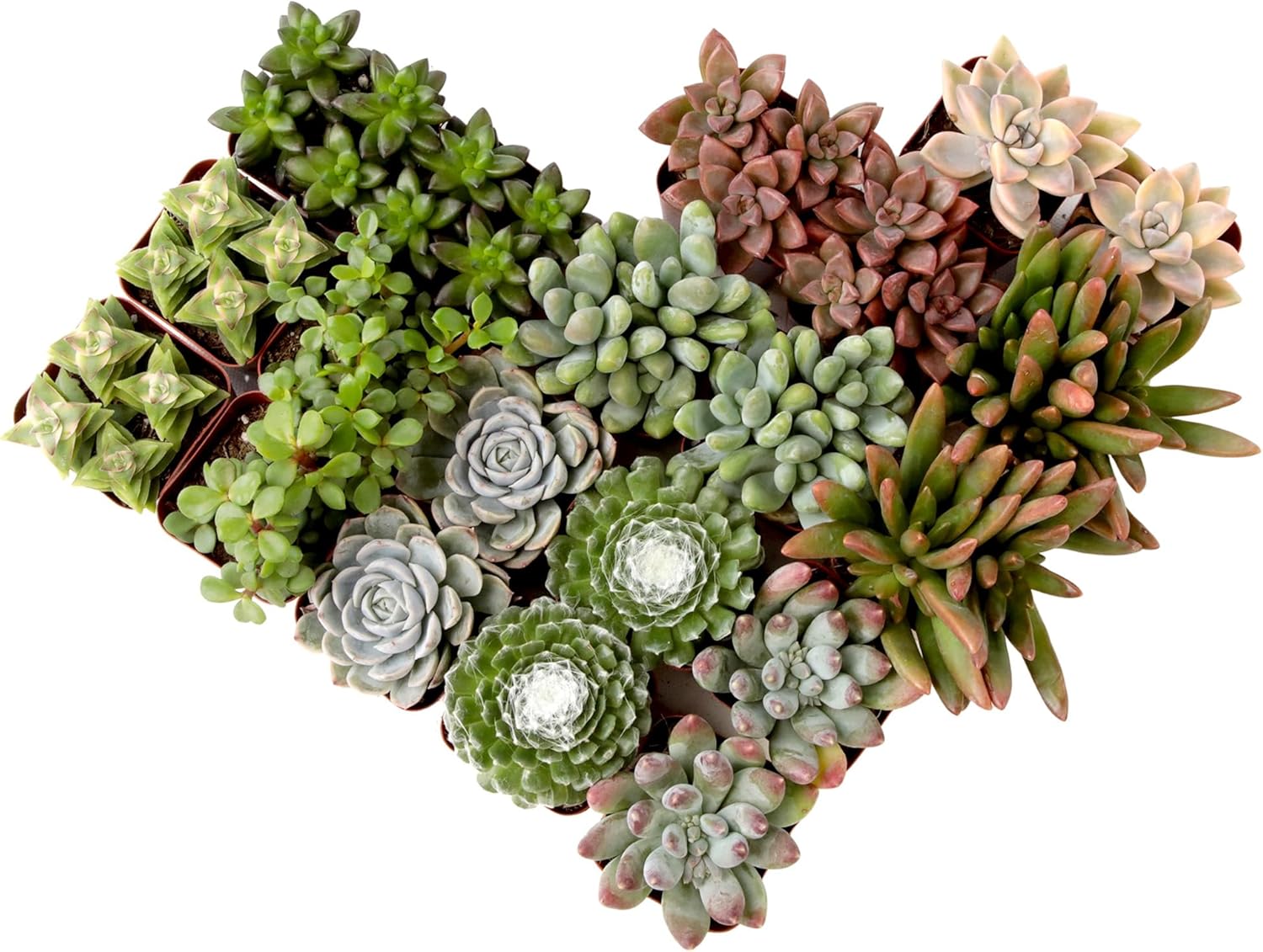
Plants for Pets Assorted 2" Succulent 20-Pack
| Indoor Outdoor Usage | Indoor, Outdoor |
|---|---|
| Sunlight Exposure | Full Sun |
| USDA Hardiness Zone | 10, 11, 9 |
| Moisture Needs | Little To No Watering |
| Unit Count | 20 Count |
This 20-pack from Plants for Pets supplies a rotating assortment of fully rooted 2-inch succulents that work well for small containers, desk displays, party favors, and beginner collections. The mix typically includes common rosette and trailing types such as Echeveria, Crassula, Sedum, and Portulacaria, giving varied shapes and colors across the set. Plants arrive potted and packaged to limit soil disruption and the brand advises simple care: bright indirect light, sandy soil, and watering only when the soil is dry. Practical benefits are clear: you get instant variety without repotting larger specimens, a compact size that fits tiny planters or craft projects, and low watering needs that suit busy owners. Limitations to expect are the small 2" pot size, which means plants will need repotting sooner if you want them to grow large, and seasonal variation in varieties so you may not receive specific cultivars shown in images. Also several common succulents in the assortment are toxic to pets, so placement matters for households with cats or dogs.
Best for: Buyers who want an easy, ready-made collection of small succulents for indoor décor, DIY projects, or to start a beginner collection and who value visible customer feedback when choosing products.
Less Ideal for: Growers seeking mature specimens ready for large containers or those who need guaranteed specific cultivars should look for larger individual plants or nursery-grade stock.
- Large assortment gives immediate variety for displays and projects
- Plants shipped fully rooted and potted to simplify setup
- Low water and light needs make them beginner-friendly
- Compact 2" size is convenient for favors, terrariums, or small containers
- 2" pots restrict growth and require repotting for long-term health
- Varieties are seasonal so exact cultivars are not guaranteed
Verdict: If you want an inexpensive, low-maintenance way to add instant variety to small indoor displays or projects, this 20-pack delivers a ready-to-use collection of fully rooted succulents.
THE NEXT GARDENER.COM Succulent Plants, 4-Pack, Fully Rooted in 2" Pots

| Indoor Outdoor Usage | Indoor |
|---|---|
| Expected Blooming Period | Fall |
| Sunlight Exposure | Partial Sun |
| Moisture Needs | Moderate Watering |
| Unit Count | 4 Count |
This 4-pack supplies four common succulents already rooted in 2" grower pots, which makes them a convenient pick for starting a small indoor collection or filling a windowsill. Plants arrive potted in a well-draining mix so you can transfer them to decorative pots or keep them as-is for low-effort display. The listing emphasizes low maintenance and moderate watering needs, so typical use is simple: bright, partial sun and water only when the soil dries. Practical benefits are that you get four different plants in one purchase, they tolerate occasional neglect, and the small pot size keeps them compact for crowded spaces. Limitations are the tiny pot size and young plant stage, so expect to repot within a few months as they grow and plan for minimal initial foliage rather than mature specimens. This set is best when you want an inexpensive, low-care starter grouping rather than established, larger plants.
Best for: Buyers wanting an inexpensive, low-effort way to start a small indoor succulent collection or fill compact spots with live plants.
Less Ideal for: Gardeners seeking mature, showy specimens or specific named varieties should look for larger potted plants or nursery-grown options.
- Sold as a four-pack so you receive multiple plants in one purchase
- Shipped in 2" grower pots with soil and established roots for immediate display
- Low maintenance and tolerant of infrequent watering
- Suitable for indoor use and small spaces like windowsills or desks
- Plants are small and will need repotting relatively soon
- Limited variety detail provided so specific cultivars may vary
Verdict: A practical, low-cost way to add four easy-care succulents to small indoor spaces with minimal fuss.
THE ONE BLOOM Echeveria 'Pink Peony' Live Succulent (1.5-inch)

| Indoor Outdoor Usage | Indoor, Outdoor |
|---|---|
| Other Special Features of the Product | Low Maintenance |
| Sunlight Exposure | Partial Sun |
| Moisture Needs | Moderate Watering |
| Unit Count | 1 Count |
This Echeveria 'Pink Peony' is a compact rosette succulent meant for collectors and hobbyists who want an attractive, low-effort plant. It ships bare root so you plant it into your own well-draining succulent mix and container; that packaging reduces shipping stress and makes acclimation easier. The plant prefers bright indirect light or partial sun and only moderate watering, so it suits windowsills, tabletop planters, and small mixed arrangements. Notable features include its soft pink-toned foliage and tidy, symmetrical form that adds visual interest to modern or rustic displays. Because it is a single, small head, it integrates well into multi-plant compositions or as a delicate accent piece. Important limitations to know are that it arrives without soil or a pot and is small in size, so you need suitable potting mix and basic transplanting care to establish it. Also color and exact shape can vary naturally between specimens, which is normal for living plants.
Best for: Buyers who want a reliable, easy-care accent succulent for decorative displays and are comfortable potting bare-root plants into their own well-draining soil.
Less Ideal for: People who want a ready-to-display potted plant or a large mature specimen right away should consider larger, potted options instead.
- Attractive pink-toned rosette adds decorative interest to small displays
- Low-maintenance care: tolerates moderate watering and partial sun
- Ships bare root to reduce transit stress and simplify repotting into well-draining soil
- Compact single-head form fits easily into mixed succulent arrangements or small planters
- Sold without pot or soil so buyers must supply well-draining mix and a container
- Single small head may be too small for buyers seeking an instant, full planter display
Verdict: A petite, low-maintenance rosette succulent that reliably adds elegant pink color to small displays when you are prepared to pot and care for a bare-root plant.
Altman Plants 2" Live Succulent 6-Pack (Assorted)

| Indoor Outdoor Usage | Indoor, Outdoor |
|---|---|
| Other Special Features of the Product | Compact, Drought Tolerant, Low Maintenance |
| Sunlight Exposure | Full Sun |
| USDA Hardiness Zone | 10, 9 |
| Moisture Needs | Little To No Watering |
This 6-pack from Altman Plants provides six different fully rooted 2-inch succulents ready for pots, terrariums, or small container gardens. Plants arrive dry to avoid shipping rot and only need a light drink and bright sun to establish, making them a low-effort choice for busy owners. The assortment spans common genera such as Kalanchoe, Crassula, Sedum, and Graptosedum, so you get visual variety for a mixed pot or grouped tabletop display. Because each plant is shipped in a small nursery pot, it is easy to replant into decorative containers or use directly in DIY projects like wedding favors. These succulents are drought tolerant and recommended for full sun and sandy soil, which suits simple pot setups and minimal watering schedules. Limitations are the small initial pot size and seasonal variety changes, so you may need to repot into larger containers as they grow and you cannot guarantee specific cultivars in every pack.
Best for: Buyers who want a low-maintenance, ready-to-display assortment for small pots, beginner-friendly container gardens, or quick décor projects and prefer plants that require little daily care.
Less Ideal for: Gardeners seeking specific named cultivars, mature specimen plants, or large, long-term landscape plantings should look for larger, single-variety specimens instead.
- Six distinct, fully rooted succulents for immediate planting or display
- Arrives dry to reduce shipping damage and requires minimal initial watering
- Assorted varieties provide color and texture contrast in a single purchase
- Small nursery pots make it easy to replant into decorative containers or use in DIY projects
- Plants come in 2-inch nursery pots and will need repotting for long-term growth
- Assortment varies by season so exact varieties are not guaranteed
Verdict: A convenient, low-maintenance six-pack that gives quick, varied color and texture for small pots and simple container displays.
THE NEXT GARDENER.COM Live Succulent Plants Pink Lady, 4-inch, Fully Rooted

| Indoor Outdoor Usage | Indoor |
|---|---|
| Other Special Features of the Product | Drought Tolerant |
| Sunlight Exposure | Partial Sun |
| USDA Hardiness Zone | 3 |
| Moisture Needs | Moderate Watering |
This 4-inch Pink Lady succulent is sold fully rooted in a grower pot and intended for indoor tabletop or windowsill display. It follows classic succulent care: bright indirect light, moderate watering only after the soil dries, and a sandy, well-draining mix. The listing highlights drought tolerance, low maintenance and a fall blooming period, so it works well as a low-effort accent that can tolerate occasional missed waterings. Practical benefits include the small, ready-to-display size, simple care instructions and the plant arriving established rather than as a cutting. Limitations are that succulents need bright light to keep their color and shape and may require relocation or supplemental light in dim rooms. Shipping and handling can cause cosmetic leaf damage, so expect to trim damaged leaves and allow the plant a few weeks to acclimate. For buyers who prefer predictable, low-care houseplants this is straightforward; those wanting a larger specimen or specific cultivar guarantees may need to look elsewhere.
Best for: Buyers who want a low-maintenance, ready-to-display succulent for a windowsill or tabletop and prioritize predictable, easy care over rarity or large size.
Less Ideal for: Not a good fit for collectors seeking large specimens or specific named cultivars that require guaranteed provenance.
- Sold fully rooted and ready to display in a 4-inch grower pot
- Drought-tolerant and low maintenance care suited to busy owners
- Clear care guidance: bright indirect light and water when soil is dry
- Small 4-inch size may be too tiny for buyers seeking a statement plant
- Color and vigor depend on getting enough bright light
- May show transit-related cosmetic damage that needs trimming
Verdict: A small, fully rooted Pink Lady succulent that delivers low-maintenance, reliable indoor greenery for buyers who want an easy-care houseplant.
Choosing the Right Beautiful Succulent Plants: Key Factors to Consider
Light Requirements
Succulents vary from low-light tolerant species to sun-loving rosettes that need bright, direct rays. Match a plant's natural light preference to the spot you have available. Indoor windows that face south or west typically provide the strongest light, while north-facing windows and shaded patios will require plants known to tolerate lower levels.
Light affects leaf color, compactness, and flowering. Many succulents stretch and lose their distinct shape in low light. If you cannot give strong sun, choose types that naturally stay compact in shade or plan for supplemental grow lighting during darker months.
Watering and Soil
Most succulents prefer a fast-draining, gritty mix and infrequent watering. Overwatering is the top cause of decline, so look for soil and containers that shed moisture quickly. Allow the potting medium to dry between thorough waterings, and reduce frequency in cooler seasons.
Watering technique matters too. Water at the base of the plant rather than misting leaves for long-term health. For outdoor plantings, choose sites or raised beds where excess rain drains away to prevent root rots.
Cold Tolerance and Microclimate
Different succulents tolerate different minimum temperatures. Some are hardy to light frosts while others need protection or indoor overwintering. Consider your hardiness zone and the specific microclimate of the planting site, such as heat-reflecting walls or sheltered courtyards that reduce cold damage risk.
For containers that move indoors in winter, size and ease of transport are practical concerns. For garden beds, pick varieties known to re-sprout after brief cold spells rather than species that die back completely.
Growth Habit and Display Goals
Succulents come as low groundcovers, upright rosettes, trailing stems, and architectural columns. Choose growth habits that suit your design: dense groundcovers for filling a rock garden, trailing types for hanging baskets, or sculptural rosettes as focal points. Consider mature size so plants do not overcrowd containers or neighbors.
Propagation ease ties into display plans. Plants that root readily from leaf or stem cuttings let you expand a planting or replace damaged sections quickly without buying new specimens.
Pest and Disease Resilience
While succulents are generally hardy, they can be susceptible to mealybugs, scale, fungal rots, and root nematodes in poor conditions. Choose varieties with thick, tough leaves and open growth that dry quickly after rain to reduce fungal issues. Inspect new plants and maintain good airflow in dense displays to limit outbreaks.
Routine checks and prompt isolation of suspect specimens help prevent spread. Resilient species reduce maintenance time and the need for chemical controls.
Maintenance and Longevity
Think about how much time you want to spend on grooming, repotting, and dividing plants. Some succulents form tight, tidy clumps that require little upkeep, while others produce long stems that need pruning to maintain shape. Longevity is affected by site fit: plants grown within their preferred light, water, and temperature ranges will remain attractive for years.
Also consider flowering behavior. A plant that blooms annually can add seasonal interest but may need slightly different care to encourage blooms without sacrificing health.
Best Plants for Bright Indoor Displays
Several succulent types thrive on sunny windowsills and bring architectural shape or colorful foliage indoors. Choose compact rosettes and upright growers that hold their form in direct light. Place pots where they receive at least four to six hours of bright light to maintain tight leaf arrangement and brilliant tones.
Pair these plants with well-draining potting mixes and shallow containers that show off the foliage. Rotate containers periodically so growth stays even and remove spent leaves to keep the display tidy.
- Use shallow wide pots to encourage rosette formation.
- Supplement light in winter with a warm-spectrum grow light if leaves start stretching.
- Provide airflow to prevent fungal spots in humid interiors.
Suitable Choices for Shaded Patios and Terraces
Not all succulents need full sun. Some species tolerate dappled shade or morning sun followed by afternoon protection. On covered patios and terraces, select varieties that maintain compact habits and slow growth in lower light to avoid leggy, weak stems.
Group plants with similar light and moisture needs together so you can water and shelter them efficiently during wet weather or occasional cold snaps.
- Avoid placing sun-loving types under dense eaves that block most light.
- Use mixed containers to combine shade-tolerant succulents with ferns or other low-light companions.
Using Succulents in Outdoor Rock Gardens
Rock gardens are a natural fit for many succulents because they replicate the gritty, fast-draining soils these plants prefer. When planting, create pockets of amended soil with coarse sand or gravel for drainage and position plants on slight mounds so water runs away from the crowns.
Consider spacing that allows for seasonal spread while maintaining an attractive mosaic of textures and colors.
- Place taller columnar types toward the back and low mats in the front.
- Check drainage after heavy rains and lift plants if water pools in low spots.
Container Combinations and Arrangement Tips
Combine upright, trailing, and mounding succulents for contrast in a single container. Use a low, wide planter for mixed arrangements and coordinate leaf shapes and colors for visual balance. Keep soil depth appropriate to the root systems of included plants so shallow-rooted species do not get waterlogged.
Top-dress soil with decorative gravel to restrict evaporation and give a finished look. Remember that trailing varieties may benefit from staggered planting heights to let stems cascade naturally.
- Group by water needs to avoid overwatering drought-tolerant types.
- Use thicker-walled pots for outdoor groups to reduce heat stress in full sun.
Propagation and Rejuvenation Techniques
Many succulents propagate easily from leaves, offsets, or stem cuttings. For leaf propagation, remove a healthy leaf, let the end callus, then place it on a gritty medium until roots form. Offsets can be gently separated and replanted with minimal disturbance.
Rejuvenate older clumps by dividing and replanting healthy sections. Prune away weak growth and allow wounds to dry before potting to reduce rot risk. Regular propagation lets you replace aging specimens and expand displays without added expense.
- Allow cuttings to callus 24 to 72 hours before planting.
- Avoid heavy feeding immediately after propagation to prevent rot.
How We Chose the Best Beautiful Succulent Plants
We focused on traits that matter to gardeners looking for attractive, reliable succulents. Selection began with species and cultivars known for distinctive foliage or habit, then filtered by practical garden performance. We prioritized plants that tolerate a range of light conditions, recover from typical watering mistakes, and maintain ornamental value over multiple seasons. Evaluation criteria included cold hardiness and heat tolerance, because surviving local climate extremes determines longevity. We assessed light and placement flexibility so plants work both indoors and on shaded patios. Watering tolerance and drought resistance were judged to reflect beginner- and low-maintenance care. Growth habit and propagation ease were considered to help gardeners shape displays and expand collections. Pest and disease resistance rounded out our filters to avoid highly finicky specimens. We excluded plants that need specialized greenhouse conditions, constant high humidity, or aggressive grafting to look good. Our shortlist emphasizes varieties that deliver visual impact without unusual technical care.
FAQ
How often should I water beautiful succulent plants indoors?
Watering depends on light and temperature but usually ranges from every 2 to 4 weeks. Allow the potting medium to dry between thorough waterings and reduce frequency in winter when growth slows.
Can succulents tolerate regular household humidity?
Most succulents do fine in typical indoor humidity levels. High, persistent humidity combined with low light can encourage rot, so ensure good airflow and avoid overwatering in humid spaces.
Will succulents bloom in containers on a balcony?
Many succulents will flower when they receive enough light and appropriate seasonal cues. Flowering depends on species, age, and site conditions, with brighter locations and stable care increasing the chances of blooms.
How do I protect outdoor succulents from frost?
Move potted succulents indoors or into a sheltered microclimate when frost threatens. For planted beds, cover sensitive specimens with frost cloth and ensure they are planted in well-draining soil to reduce freeze-thaw damage.
What should I do if my succulent develops soft, discolored leaves?
Soft, discolored leaves often indicate overwatering or rot. Reduce water immediately, improve drainage, and remove affected leaves. If rot is advanced, save healthy offsets or cuttings and propagate them separately.
How can I encourage compact growth instead of stretching?
Increase the light exposure gradually and ensure plants get several hours of bright direct or bright indirect light. Avoid sudden changes that can stress plants, and consider supplemental lighting during darker months.
Final Verdict
When choosing beautiful succulent plants, prioritize light match, drainage, and growth habit to suit your display and maintenance preferences. Tradeoffs include choosing faster-growing types for quick impact versus slow-growing, more architectural specimens that require less frequent attention. Focus on plants that fit your microclimate and the containers or beds you plan to use. With the right placement and basic care, these succulents will provide long-lasting texture and seasonal interest with minimal upkeep.
