

Note: This article contains affiliate links. If you click on these links and make a purchase, I may earn a small commission at no extra cost to you. This helps support my research and content. Read my full affiliate disclosure here.
Persistent brush and woody regrowth can take over a fence line, pasture edge, or neglected lot if you do not choose the right treatment. The correct brush killer makes it practical to remove unwanted shrubs, saplings, and heavy stems while limiting harm to desirable plants and the surrounding soil. This guide summarizes seven top-rated brush killers shortlisted for effectiveness, application flexibility, and persistence in typical garden, acreage, and rural settings. We evaluate each option for coverage, residual activity, and application method so you can pick a product that fits the size of the infestation and the site conditions.
Top Picks at a Glance
| Best Overall The best all-around choice for most situations | Roundup Poison Ivy Plus Tough Brush Killer with Comfort Wand, 1 gal. |  |
| Best Quality Built to a higher standard if you want something more solid | Remedy Ultra Concentrated Herbicide for Brush and Pasture, 1 Gallon |  |
| Best Value The sweet spot between price and what you get | RM43 Total Veg Control Glyph Imazapyr Weed Preventer, 32 oz |  |
| Best Budget The cheapest option that still gets the job done reliably | Bonide Stump-Out Stump & Vine Killer, 8 oz with Applicator | 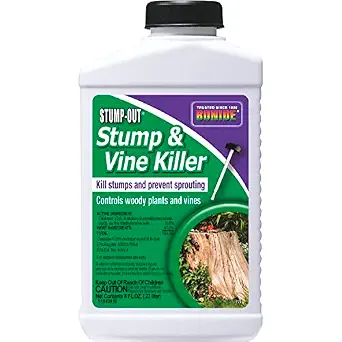 |
| Highest Rated A top-rated pick with lots of positive feedback | Honcho K6 Glyphosate Herbicide Concentrate, 2.5 Gallon |  |
| Most Popular A crowd favorite that many people choose with confidence | BioAdvanced Brush Killer Plus Concentrate (32 fl oz) |  |
| Best Seller A high-volume bestseller chosen again and again | Roundup Weed & Grass Killer with Comfort Wand, 1.33 gal. |  |
Roundup Poison Ivy Plus Tough Brush Killer with Comfort Wand, 1 gal.

| Unit Count | 128 Fluid Ounces |
|---|---|
| Coverage | 300 square feet |
| Item Form | Spray |
| Liquid Volume | 1 gallons |
This one-gallon Roundup formula targets tough woody weeds and vines such as poison ivy, poison oak, poison sumac, wild blackberry and kudzu and is packaged with a reusable Comfort Wand for easier, more precise spraying. The product is ready to use and is rainproof in about 30 minutes, producing visible wilting in hours and allowing replanting 1 to 30 days after treatment depending on the plant. The Comfort Wand reduces bending and lets you apply product to vines up poles or into fence lines with more control than a pump sprayer alone. Coverage is listed at about 300 sq. ft., which makes the jug suited for spot treatments, fence rows and around foundations rather than treating large acreage. Important practical limits are the safety precautions: keep people and pets away until spray is dry and follow label directions closely. The formula contains multiple active ingredients aimed at both broadleaf brush and grasses which helps with mixed weed stands, but you should plan application where non-target plants will not be exposed.
Best for: Homeowners who need a reliable spot-treatment solution for stubborn brush and vine infestations and value a built-in wand for easier, targeted spraying.
Less Ideal for: Large-property owners or landscape contractors who need product for wide-area weed control or who prefer concentrates for flexible dilution and lower cost per acre.
- Effective on tough woody weeds and vines including poison ivy, oak and kudzu
- Rainproof in about 30 minutes with visible results in hours
- Includes a reusable Comfort Wand for precise, upright application
- Ready-to-use one-gallon container suitable for spot treatments up to 300 sq. ft.
- Coverage is limited to about 300 sq. ft., so not ideal for large-area treatments
- Contains potent active ingredients that require strict safety precautions after application
Verdict: A convenient, ready-to-use brush killer with a precision wand that makes spot-removal of poison ivy and other tough vines fast and easy.
Remedy Ultra Concentrated Herbicide for Brush and Pasture, 1 Gallon

| Unit Count | 128 Fluid Ounces |
|---|---|
| Item Form | Liquid |
| Coverage | Selective coverage for brush and mid-size trees |
| Liquid Volume | 1 gallons |
Remedy Ultra is a one-gallon concentrated herbicide designed to kill brush and mid-size trees while allowing grass recovery in pastures and fence rows. It is typically mixed and applied as a spot or broadcast treatment to areas with brush encroachment; the formula targets both tops and roots for longer-lasting control compared with simple foliar sprays. Notable features include a low-odor formulation intended for large-area pasture restoration, selective coverage that spares desirable grasses, and suitability for tank mixing with other pasture herbicides. In practice the product is effective for reclaiming grazing land and reducing mechanical clearing needs, and its concentration makes it economical for repeated or large treatments. Limitations to consider are the need to follow label safety directions carefully, potential non-target damage if misapplied, and that it requires proper mixing and application equipment for even results across larger acreage.
Best for: Buyers who need an effective, professional-strength solution to reclaim pasture or maintain fence lines and who prioritize long-term brush control over cosmetic or quick spot treatments.
Less Ideal for: Homeowners with only small ornamental beds or gardeners seeking an all-purpose lawn weedkiller should consider gentler, smaller-scale products instead.
- Concentrated 1-gallon formulation is economical for large-area pasture or fence-line treatments
- Targets both top growth and roots for longer-lasting brush control
- Selective action designed to allow grass recovery while removing brush
- Low-odor formula reduces immediate application discomfort compared with stronger-smelling mixes
- Requires careful mixing and proper application equipment for consistent coverage
- Risk of non-target plant injury if applied outside label instructions
Verdict: Choose Remedy Ultra when you want a concentrated, pasture-grade herbicide that kills brush down to the roots for reliable pasture and fence-line restoration.
RM43 Total Veg Control Glyph Imazapyr Weed Preventer, 32 oz

| Unit Count | 32 Ounce |
|---|---|
| Item Form | Spray |
| Coverage | 4324 square foot |
| Liquid Volume | 0.25 gallons |
| Active Ingredients | surfactant |
RM43 Total Veg Control combines glyphosate and imazapyr with a surfactant to provide a long-lasting bare-ground treatment and spot control for brush, vines, and weeds. It is typically mixed to make spray solutions for treating fence rows, around farm buildings, vacant lots, and other noncrop areas where no vegetation is wanted. Notable features include a 32-ounce concentrate that treats up to about 4,324 square feet, a rainfast formula in roughly two hours, and no entry restrictions once treated areas are dry. In practice the product delivers deep control that can prevent regrowth for many months, reducing repeat applications and labor. Important limitations are that it should not be applied in the root zone of desirable trees, plants, or shrubs and it is intended only for locations where all vegetation removal is acceptable; careful spot application and protective gear are necessary because active ingredients are persistent in soil. For someone managing fence lines, driveways, or large noncrop patches this is a workhorse option for season-long control, but it is not suitable where selective or quick-recovery treatments are needed.
Best for: Buyers who need a reliable, long-lasting brush and vegetation killer for noncropped areas and prioritize reducing repeat treatments and maintenance time.
Less Ideal for: Home gardeners seeking selective weed control around ornamentals or turf, or anyone who needs a fast-recovery, short-term knockdown solution.
- Combination of glyphosate and imazapyr offers both immediate kill and long residual prevention
- 32-ounce concentrate covers a large area (listed coverage ~4,324 sq ft) allowing multiple spot treatments
- Rainfast in about two hours so treatments are less likely to wash off
- No entry restrictions after spray has dried which simplifies site management
- Not selective so it will kill desirable vegetation if contacted
- Contains persistent active ingredients that can remain in soil so careful placement is required
- Intended only for noncrop or bare-ground areas, not for use in planted beds or lawns where regrowth is desired
Verdict: Choose this concentrate when you need a durable, season-long solution to eliminate brush and unwanted vegetation on noncrop areas.
Bonide Stump-Out Stump & Vine Killer, 8 oz with Applicator

| Unit Count | 8 Ounce |
|---|---|
| Item Form | Spray |
| Coverage | Stumps, woody plants, vines, broadleaf weeds |
| Active Ingredients | 3,5,6-Tricloro-2-Pyridinyloxyacetic Acid |
Bonide Stump-Out is a small, concentrated herbicide formulated to kill stumps, woody plants, vines and many broadleaf weeds. It is supplied as an 8 ounce concentrate with a brush applicator for direct application to cut stumps or regrowth, and it can also be applied as a foliar spray using a hose-end or tank sprayer. The product works relatively quickly for a stump killer, with results often seen within a few weeks, and the brush applicator helps target treatment while minimizing spray drift onto turf or desirable plants. Because it is intended for spot treatment and stump paint, it uses less product than broad broadcast herbicides and can be economical for small jobs. Important limitations are that it is not a general lawn weed control solution and must be applied carefully to avoid contact with desirable vegetation, and larger or deeply rooted stumps may require repeat treatments. Follow label directions for safe use and proper dilution when using sprayers.
Best for: Gardeners who need an affordable, targeted solution for removing individual stumps, vines or persistent woody weeds and who prefer spot treatments over broad lawn sprays.
Less Ideal for: Homeowners seeking a general-purpose lawn weed killer or those who need to treat large acreage quickly should consider other products or professional removal.
- Concentrated formula for targeted stump and vine killing
- Includes brush applicator for precise, low-drift application
- Can be applied undiluted as stump paint or diluted for foliar spray with hose-end or tank sprayer
- Effective on poison ivy, poison oak and other woody broadleaf species
- Not intended for broadcast lawn weed control or grassy weeds
- Larger stumps or extensive root systems may need multiple treatments
Verdict: A compact, cost-effective concentrate that lets you paint or spot-spray stumps and woody vines for precise, economical removal.
Honcho K6 Glyphosate Herbicide Concentrate, 2.5 Gallon

| Active Ingredients | Glyphosate (potassium salt) 48.7% |
|---|---|
| Form | Liquid concentrate |
| Unit Count | 320 Fluid Ounces |
Honcho K6 is a high-load glyphosate concentrate designed for post-emergent control of a wide range of weeds, brush, vines, and woody plants. It is applied by mixing with water or other carriers and spraying foliage where the active ingredient is absorbed and translocated to roots, so it addresses both top growth and below-ground regrowth. The formula includes built-in surfactant technology to improve leaf coverage and uptake, which helps produce consistent kill in targeted areas such as fence rows, shrub beds, turf renovation sites, and farmsteads. Because it has no soil residual activity, it reduces risk of off-target persistence after application when label directions are followed. Important practical limits are typical of concentrated glyphosates: it will injure or kill desirable plants on contact, requires careful mixing and personal protective equipment, and is restricted in some states, so check local regulations and the label before use. For users who need reliable systemic brush control over large areas, the 2.5 gallon jug supplies enough product for multiple applications and for use with industrial or field sprayers.
Best for: Buyers who prioritize dependable, systemic control of established brush and persistent weeds across larger areas and who are prepared to follow label instructions and safety precautions.
Less Ideal for: Casual gardeners with small ornamental beds or users unwilling to use protective equipment or comply with local restrictions should consider more targeted or non-chemical options.
- High-load glyphosate formulation effective against annual and perennial weeds plus woody brush
- Built-in surfactant to improve leaf coverage and uptake for more consistent results
- Systemic action controls both top growth and root systems rather than only above-ground foliage
- Large 2.5 gallon concentrate supply suitable for multiple applications and use with sprayers
- Non-selective and will damage desirable plants on contact
- Contains a powerful herbicide restricted in some states and requires PPE and careful handling
- No soil residual activity means follow-up applications may be needed for re-emerging seedlings
Verdict: Choose Honcho K6 when you need a reliable, high-strength systemic herbicide to knock down tough brush and persistent weeds over large areas.
BioAdvanced Brush Killer Plus Concentrate (32 fl oz)

| Unit Count | 32 Fluid Ounces |
|---|---|
| Coverage | 4000 square_feet |
| Item Form | Spray |
| Active Ingredients | triclopyr |
BioAdvanced Brush Killer Plus is a concentrated spray herbicide built to penetrate and kill stubborn brush like poison ivy, kudzu, and blackberry. You mix the concentrate into a tank sprayer and apply when target plants are actively growing; the formula is systemic, so it moves through leaves and roots to prevent regrowth. Visible wilting and yellowing typically appear within 1 to 6 weeks, and the product becomes rainproof about four hours after application, which helps if weather is unpredictable. The bottle includes a measuring cup and coverage is listed at up to 4,000 sq ft per container when diluted properly. Practical strengths are its broad list of labeled species and root-killing systemic action, which reduces repeat treatments. Limitations are the slow visible timeline on large woody plants and the need for careful mixing and targeted application to avoid harming desirable vegetation. As with all concentrated herbicides, use protective gear and follow label directions for timing and site restrictions.
Best for: Buyers who want a proven, professional-style solution for persistent brush and vines and who prioritize products with documented effectiveness and labeled species lists.
Less Ideal for: People who need an instant kill for small weeds, those unwilling to wear protective gear, or gardeners who must treat weeds close to desirable plants without risk of drift.
- Systemic formula that moves to roots to prevent regrowth
- Effective on an extensive list of tough brush and vines including poison ivy and kudzu
- Concentrate treats up to 4,000 sq ft when mixed, useful for larger patches
- Rainproof in about four hours so light rain soon after application is less likely to wash it away
- Visible control can take 1 to 6 weeks on some plants, so results are not immediate
- Requires mixing and a separate tank sprayer which adds setup time and potential for dosing error
Verdict: Choose this concentrate when you need a reliable, root-killing herbicide for stubborn brush and vines over large areas.
Roundup Weed & Grass Killer with Comfort Wand, 1.33 gal.

| Item Form | Liquid |
|---|---|
| Coverage | 400 sq. ft. |
| Liquid Volume | 1.33 gallons |
This Roundup product is a 1.33 gallon liquid herbicide formulated to kill tough broadleaf weeds and grasses down to the root while offering an integrated Comfort Wand for easier spraying. It is typically used around flower beds, along fences, on driveways and walkways, and edging near foundations where you want fast, reliable weed control. Notable features include one-touch continuous spray for less hand strain, rainproofing in as fast as 30 minutes, and claimed visible results within hours. Practical benefits are straightforward application without mixing, convenience from the built-in wand, and coverage of up to about 400 square feet per container. Important limitations are that it is a non-selective herbicide so it will damage desirable plants if drift or overspray occurs, treated areas must remain off-limits to people and pets until spray dries, and planting timelines vary by use so you must follow label directions before replanting. For risk-averse gardeners, careful application on calm, warm days and strict adherence to the label are essential to avoid accidental damage.
Best for: Gardeners and homeowners who want a straightforward, ready-to-use solution to eliminate persistent weeds and prefer an easy-to-use wand for spot treatments around hardscapes and beds.
Less Ideal for: People who need selective weed control in lawns or mixed planting beds where nearby desirable plants could be harmed should consider targeted or selective products instead.
- Integrated Comfort Wand with one-touch continuous spray reduces hand fatigue and simplifies application.
- Fast-acting formula that can show visible results in hours and becomes rainproof in about 30 minutes.
- Ready-to-use liquid requires no measuring or mixing for immediate use.
- Claims to kill a wide range of common tough weeds and grasses to the root.
- Non-selective formulation will harm any desirable plants if oversprayed or drift occurs.
- Requires keeping people and pets away from treated areas until spray has dried and following replanting wait times.
Verdict: Choose this ready-to-use Roundup when you want a fast, no-mix herbicide with an easy comfort wand for reliable spot and edge weed removal.
Choosing the Right Brush Killer: Key Factors to Consider
Active Ingredient and Target Species
Knowing the active ingredient is the first practical step. Different chemistries are more effective on certain groups of woody plants. Some actives are systemic, moving into the root system to reduce resprouting, while others mainly desiccate foliage and are best for small stems.
Match the product to the species you need to control. Tough shrub species and small trees often require systemic actives or cut-stump treatments. Annual woody seedlings and very small stems can be managed with foliar-applied contact products, but those may not prevent regrowth from roots.
Application Method and Formulation
Brush killers come as soluble concentrates, ready-to-use sprays, or mixes intended for basal bark or cut-stump work. The right formulation affects how you apply the product and how well it penetrates bark or moves into roots.
If you need to treat isolated stems without harming nearby plants, look for basal bark or cut-stump options that focus the chemistry on target tissue. For widespread infestations, broadcast foliar sprays or backpack sprayers provide faster coverage but require more careful timing and drift control.
Residual Activity and Timing
Residual activity determines how long the product suppresses regrowth and affects re-treatment schedules. Some treatments provide season-long control, while others break down quickly and require follow-up applications.
Apply systemic products when plants are actively transporting carbohydrates, typically late spring through early fall, so the active ingredient moves into roots. For products with significant residuals, consider proximity to water and desirable plants because longer persistence increases off-target risk.
Coverage, Mixing, and Equipment
Effective control depends on accurate mixing and thorough coverage. Concentrates require correct dilution rates; over-diluting reduces efficacy and under-diluting increases risk to non-target plants and the environment.
Use the appropriate nozzle and pressure for your sprayer to achieve even coverage without excessive drift. For cut-stump or basal applications, a low-volume applicator or paintbrush gives better control. Keep measuring tools and calibration notes handy for consistent results across treatments.
Environmental and Site Restrictions
Consider proximity to wells, streams, and desirable vegetation. Some active ingredients carry buffer zone or runoff precautions and are restricted near water or sensitive habitats.
Read label restrictions related to soil type, slope, and replanting intervals. On sloped or sandy sites, choose products and application methods that minimize leaching and runoff risk. Where pollinator exposure is a concern, avoid treatments that require spraying flowering plants and time applications to reduce non-target impacts.
Safety, Personal Protection, and Disposal
Handling concentrated products safely is a practical necessity. Labels specify personal protective equipment such as gloves, eye protection, and respirators for certain formulations.
Store and dispose of leftover concentrate and rinsate according to label instructions. Triple-rinsing containers and using rinsate in the spray tank as allowed helps minimize waste. Always follow local regulations for disposal of pesticides and adhere to re-entry intervals for treated areas.
When To Use Basal Bark Versus Cut-Stump Treatments
Basal bark treatments work well on stems with thin or smooth bark by applying a low-volume oil-based mix to the lower trunk so the chemical moves inward. This method is low-drift and good for treating individual stems near desirable plants because it limits airborne exposure.
Cut-stump treatment is best when you can first remove the top growth. Apply a concentrated chemical to the freshly cut surface immediately to deliver systemic activity into the root collar, reducing the chance of resprouting. This is often the most reliable approach for larger stems.
- Choose basal bark for standing stems you do not want to cut or where access is limited.
- Use cut-stump when stems are easily felled and you want immediate visual improvement.
- Both methods reduce off-target spray compared with broadcast foliar applications.
Best Timing and Weather For Application
Apply systemic brush killers when plants are actively moving sugars to the roots, typically late spring through early fall. Avoid application during drought stress or immediately after heavy rains when uptake can be reduced or chemicals can wash away.
Calm, dry conditions reduce drift and improve efficacy. Windy days increase the risk of off-target damage, and high temperatures near midday can increase volatilization for some formulations.
- Target late morning to early afternoon on calm days for good uptake.
- Avoid applications before forecast rain unless label allows, to prevent runoff.
Minimizing Harm to Desirable Plants
Containment and precision are essential when treating brush near desirable trees, ornamentals, or garden beds. Use low-volume methods like basal bark or cut-stump on individual stems, and shield nearby plants when broadcasting sprays.
Consider temporary barriers, spray shields, or hand-wick applicators to limit contact. When using foliar sprays, reduce nozzle pressure and choose wide-angle nozzles that deposit droplets close to targets rather than creating fine driftable mist.
- Remove or cover sensitive plants when practical.
- Rinse equipment away from desirable vegetation and water sources.
Managing Large Infestations Over Time
Large areas with dense brush often require an integrated plan: mechanical removal followed by targeted chemical treatment to prevent resprouting and seedling establishment. Repeated treatments in fall or the following spring are common for complete control.
Map treated areas and keep notes on application dates, methods, and observed regrowth. That record helps time follow-up treatments efficiently and reduces unnecessary repeat applications.
- Rotate methods between mechanical and chemical control to reduce labor and chemical use.
- Monitor regrowth and spot-treat seedlings before they become established.
Waterway and Wildlife Considerations
When working near streams or ponds, select products with label directions for aquatic buffers and avoid formulations marked as unsafe for aquatic environments. Many labels specify minimum setbacks and restrictions to protect fish and amphibians.
Be mindful of nesting birds and foraging bees. Do not spray flowering plants and follow label guidance on pollinator protection. Use targeted techniques to limit exposure of non-target wildlife.
- Follow buffer zone requirements exactly and avoid drift toward water.
- Time applications to avoid peak pollinator activity when possible.
How We Chose the Best Brush Killer
We prioritized products that deliver reliable control of woody plants while offering clear application directions and predictable persistence. Key evaluation criteria included active ingredient efficacy against broadleaf woody stems and resprouting, labeled application methods for spot and broadcast use, and documented residual activity that matches common management goals such as single-season control or multi-season suppression. We also assessed formulation versatility, including suitability for foliar spray, basal bark, and cut-stump treatments, plus tank-mix compatibility for users who need to combine products safely. Safety and label clarity were important filters: we excluded any options with unclear use instructions, missing site restrictions, or formulations unsuited to homeowner or landowner use. Finally, we considered ease of measurement and mixing for accurate application and the clarity of environmental precautions so gardeners can protect desirable plants and water sources.
FAQ
Can I use a brush killer around young trees and shrubs in my landscape?
Often you can, but it depends on the application method. Basal bark and cut-stump techniques allow you to treat individual unwanted stems with minimal drift. Broadcast foliar sprays near young desirable plants increase the risk of damage and require careful shielding and timing.
How long does it take to see results after applying a brush killer?
Results vary by active ingredient and application method. Contact-type products can show leaf yellowing within days, while systemic treatments that move to roots may take several weeks for full top-kill and longer to reduce resprouting. Expect follow-up treatment if regrowth occurs.
Is it safe to apply brush killer in rainy climates or on wet soil?
Timing matters. Applying during or immediately before heavy rain risks runoff and reduced uptake. Many labels recommend waiting for dry conditions to ensure the active ingredient is absorbed and not washed away. Check label instructions for site-specific guidance.
Will brush killers harm grass or groundcover near targets?
Some brush killers are selective for woody broadleaves and spare grasses, but others are nonselective and can damage turf or groundcovers. Use application methods and mixtures that minimize contact with non-target plants and follow label rate guidance for safe use near desirable vegetation.
Can I plant desirable trees or shrubs in a treated area the same season?
That depends on the product's residual activity and label replanting intervals. Some treatments have short persistence and allow planting the same season, while others require waiting months. Always consult the label for replanting guidance to avoid harm to new plantings.
Do I need special protective equipment to apply brush killers?
Most concentrated formulations require gloves and eye protection at a minimum, and some labels call for more extensive PPE such as respirators or long-sleeved coveralls. Follow label PPE instructions closely to reduce exposure risks.
Final Verdict
Match your choice to the site and the plants you need to control. For isolated stems near desirable vegetation, favor targeted basal bark or cut-stump methods. For wide infestations, choose a formulation and application method that balance thorough coverage with measures to reduce drift and runoff. Prioritize label instructions, timing, and safety gear. Expect some tradeoffs between speed of visible control and longer-term root suppression. With correct timing and technique you can remove persistent brush while protecting nearby plants and water resources.
