

Note: This article contains affiliate links. If you click on these links and make a purchase, I may earn a small commission at no extra cost to you. This helps support my research and content. Read my full affiliate disclosure here.
If you maintain multiple yards, rentals, or a busy residential landscape on a tight budget, the right budget commercial string trimmer makes a big difference in daily efficiency and long-term costs. You need something tough enough to run for hours, simple to maintain between jobs, and precise enough to finish close to foundations and beds. This guide shortlists five top options that balance cost-conscious buying with commercial-grade features. We evaluated each model on power delivery, build durability, ease of maintenance, and operator comfort to surface tools suited to regular, repeated use. Read on for practical notes that will help you pick the best trimmer for your schedule and workload.
Top Picks at a Glance
| Best Overall The best all-around choice for most situations | PROYAMA 42.7cc 5-in-1 Gas Multi-Tool (Hedge Trimmer, Pole Saw, String Trimmer) |  |
| Best Value The sweet spot between price and what you get | PROYAMA PBC43 42.7cc 3-in-1 Gas Brush Cutter and String Trimmer | 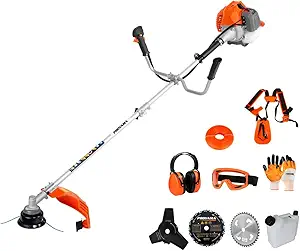 |
| Best Budget The cheapest option that still gets the job done reliably | WORKIT 25.4cc 3-in-1 Gas String Trimmer with 17" Cutting Swath and Brush Cutter Blades |  |
| Highest Rated A top-rated pick with lots of positive feedback | NEO-TEC 52cc 6-in-1 Gas Brush Cutter with Multi-Attachment Powerhead |  |
| Most Popular A crowd favorite that many people choose with confidence | Wild Badger Power 26cc 3-in-1 Gas String Trimmer with Brush Cutter |  |
PROYAMA 42.7cc 5-in-1 Gas Multi-Tool (Hedge Trimmer, Pole Saw, String Trimmer)

| Power Source | Gas Powered |
|---|---|
| Blade Material | Metal |
| Blade Length | 25 centimeters |
| Cutting width | 18 inches |
The PROYAMA 42.7cc 5-in-1 multi-tool is a gas-powered system that replaces several separate machines by swapping interchangeable heads for trimming grass and weeds, cutting brush, trimming hedges and pruning higher branches with a pole saw. In use you start the two-stroke engine and attach the appropriate head—triangle blade or chain-tooth for weeds and brush, a 40-tooth serrated blade for thick vegetation, a hedge trimmer blade, or the pole saw with the included extension for raised limbs. The engine is relatively powerful for a backyard unit and the quick-start system helps get it running after routine warm-up. Practical benefits include consolidated storage, fewer separate purchases, and the reach provided by the 38-inch extension pole and adjustable pole length for pruning without a ladder. Important limitations are the usual two-stroke maintenance needs such as fuel/oil mixing, periodic carburetor and air-filter adjustments, and the fact that heavier professional tree work may exceed this machine’s capacity. Expect to follow the manufacturer troubleshooting tips if idle or starting issues occur.
Best for: Buyers who want one gas-powered tool to handle a range of seasonal yard tasks and prefer consolidated equipment backed by user feedback and manufacturer support.
Less Ideal for: Professionals who need large-capacity commercial-grade pruning or landscapers who prefer dedicated machines for continuous heavy use should look elsewhere.
- Multi-head system replaces several tools for trimming, edging, hedge cutting and pole pruning
- 42.7cc two-stroke engine delivers enough power for heavier yard work than consumer electric trimmers
- Includes extension pole and pole saw attachment for reach without climbing
- Quick-start system designed to make startup easier after warm-up
- Variety of cutting heads (triangle, serrated, chain-tooth and hedge blade) for different vegetation
- Requires two-stroke fuel mixing and routine carburetor/air filter maintenance
- May stall or need adjustments under certain conditions and requires following startup and troubleshooting steps
- Not intended for heavy commercial tree work beyond its rated cutting capacity
Verdict: Choose this PROYAMA if you want a single gas-powered system that realistically replaces several yard tools and reaches high branches with an included pole attachment.
PROYAMA PBC43 42.7cc 3-in-1 Gas Brush Cutter and String Trimmer

| Power Source | Gas Powered |
|---|---|
| Cutting width | 18 inches |
| Speed | 10000 rpm |
| Size | 42.7cc |
The PROYAMA PBC43 pairs a 42.7cc two-cycle gas engine with a straight steel shaft and multiple cutting attachments so you can move between lawn edging, light trimming, and heavy brush clearing without buying separate machines. Typical use is garden maintenance on medium to large lots: fit the trimmer head for grass near fences and trees, then swap to the 3T or 40T metal blades or chain blade for thick weeds, brush, and small woody stems. Notable features include an ergonomic harness and a U-shaped bike handle that improve control during extended runs, and a claimed easy-start system that reduces starter cord resistance. In practice the metal blades make quick work of dense vegetation, while the straight shaft gives reach for awkward spots. Expect some learning curve for correct starting and carburetor adjustments and occasional tuning if the engine stalls under load. It is a heavier, louder tool best suited to established mower-operator workflows rather than casual backyard trimming.
Best for: Buyers who need a single, gas-powered tool to handle both regular trimming and aggressive brush cutting on medium to large properties and who value robust cutting power over low noise.
Less Ideal for: Not a good fit for users who want a lightweight, low-maintenance electric trimmer or who need a quiet tool for small urban yards.
- Powerful 42.7cc two-cycle engine for cutting thick weeds and brush
- Four cutting attachments (trimmer head plus metal blades and chain) for versatile tasks
- Straight steel shaft and bike-style handle give good reach and control
- Included harness reduces operator fatigue on longer jobs
- Requires regular carburetor tuning and proper fuel mix for reliable starting and idle
- Heavier and louder than electric models, so less suitable for small yards or noise-restricted areas
Verdict: Choose this PROYAMA if you want a single gas machine that shifts from lawn trimming to heavy brush clearing without swapping tools.
WORKIT 25.4cc 3-in-1 Gas String Trimmer with 17" Cutting Swath and Brush Cutter Blades

| Power Source | Gas Powered |
|---|---|
| Cutting width | 17 inches |
| Size | 3 IN 1-25.4CC |
The WORKIT 25.4cc 3-in-1 string trimmer is a commercial-style, gas-powered yard tool designed to handle thick weeds, edging, and brush cutting without needing multiple machines. It uses a 25.4cc two-cycle engine with a 17-inch cutting swath and 0.095" dual-line bump-feed for general trimming, plus interchangeable 10" brush cutter blades (3T and 40T) for heavier growth. Typical use is rotating between trimming, edging, and brush cutting across a medium-to-large property; the quick-start ignition and included shoulder strap make it easier to start and more comfortable for longer sessions. Notable features include the multi-head system, auto bump-feed line, and a padded shoulder strap for reduced fatigue. Practical benefits are strong cutting power for heavy vegetation, fewer tool swaps thanks to the 3-in-1 design, and faster workflow with the bump-feed. Important limitations are the inherent upkeep of a 2-cycle gas engine such as fuel mixing, periodic maintenance, and louder operation compared with battery models, and the product is relatively heavy which can affect all-day handheld comfort.
Best for: Buyers who need a budget-conscious commercial-style trimmer that can handle heavy weeds and occasional brush without buying separate tools, and who accept gasoline upkeep for stronger cutting power.
Less Ideal for: Users who prioritize low noise, zero-emission operation, or very long continuous commercial shifts where lighter battery or professional high-displacement commercial rigs are preferred.
- 25.4cc two-cycle engine provides strong torque for thick weeds and brush
- Three-in-one design (string trimmer, edger, brush cutter) reduces need for multiple tools
- 17-inch cutting width and 0.095" dual-line bump-feed speed up trimming tasks
- Includes heavy-duty 10" brush cutter blades for tackling dense overgrowth
- Padded shoulder strap and ergonomic balance reduce fatigue during extended use
- Requires 2-cycle fuel mixing and routine engine maintenance
- Heavier than typical battery trimmers which can be tiring over very long commercial shifts
Verdict: A cost-conscious commercial-style 3-in-1 gas trimmer that delivers strong cutting power and versatility for heavy-yard work without buying multiple tools.
NEO-TEC 52cc 6-in-1 Gas Brush Cutter with Multi-Attachment Powerhead

| Power Source | hand_powered |
|---|---|
| Cutting width | 16 inches |
| Size | 6-in- 1 |
The NEO-TEC 52cc 6-in-1 brush cutter is a performance-focused gas powerhead that replaces several standalone tools by swapping quick-connect attachments. In use the 2-stroke 52cc engine delivers strong torque and high RPM for cutting dense brush, tall weeds, and small saplings, while the pull-cord start and leak-proof fuel tank make starting and fueling straightforward. The kit includes a 16-inch string trimmer head, multi-angle hedge trimmer with 180 degree rotation, 3-tooth and 40-tooth metal blades for heavy brush, a telescopic pole saw, and a 33-inch extension rod so you can work at ground level or reach higher branches without changing machines. The tool-free quick-connect system and telescoping pole speed setup and reduce downtime between tasks. Expect the unit to be loud and require the usual 2-stroke fuel mixing and maintenance for carburetor and spark plug care, and the attachments add weight and leverage that can be tiring on long jobs. For someone who wants one gas engine to handle trimming, hedging, cutting brush, and light pruning, this is a versatile, hard-working option.
Best for: Gardeners and property owners who prioritize cutting power and versatility and want one gas engine to replace multiple outdoor tools for heavy-duty trimming and brush clearing.
Less Ideal for: Small-yard owners, occasional users, or those who prefer low-noise, low-maintenance electric tools should consider simpler or battery options instead.
- Powerful 52cc 2-stroke engine suited for thick brush and heavy weeds
- Six interchangeable attachments let one powerhead handle trimming, hedging, brush cutting, pole saw work, and extended reach tasks
- Tool-free quick-connect system and telescopic pole speed assembly changes and reach adjustments
- 180° adjustable hedge head for precise angled trimming under patios, along fences, and on slopes
- Requires 2-stroke fuel mixing and routine engine maintenance typical of gas tools
- Heavier and more physical to use than electric alternatives, especially with long attachments
Verdict: Buy this if you need a single, gas-powered machine that delivers strong cutting power and swaps quickly between trimming, hedging, brush cutting, and pole saw tasks.
Wild Badger Power 26cc 3-in-1 Gas String Trimmer with Brush Cutter

| Power Source | Gas Powered |
|---|---|
| Cutting width | 17 inches |
| Speed | 9000 rpm |
| Style Name | 26CC |
The Wild Badger Power 26cc 3-in-1 combines a 17-inch string trimmer/edger and a 10-inch brush cutter on a straight shaft powered by a 26cc full-crank two-cycle gas engine. It is typically used for regular lawn edging, light brush clearing and cutting thicker weeds where a string alone would struggle. Notable features include the full-crank engine for smoother operation and claimed longer life than half-crank designs, a tool-free air filter cover for easier maintenance, a rubber handle and shoulder strap for more comfortable handling during longer jobs, and compatibility with bolt-on attachments to extend functionality. Practical benefits are strong cutting power compared with battery trimmers, the ability to switch between string and blade for different vegetation, and relatively simple maintenance features for a gas unit. Important limitations are the typical noise, vibration, and emissions of a two-cycle gas tool and the need to mix fuel and maintain the engine; the unit is heavier than cordless options and demands more upkeep than electric models.
Best for: Buyers who prioritize cutting power and versatility on a budget and want a single gas tool that handles both edging and thicker brush without paying for pro-brand pricing.
Less Ideal for: Those who prefer low-noise, low-maintenance cordless tools or who need a very lightweight trimmer for frequent short sessions should consider electric alternatives.
- Two cutting options (17" string trimmer/edger and 10" brush cutter) cover both grass and thicker weeds
- Full-crank 26cc engine delivers stronger, more consistent power than typical half-crank consumer engines
- Tool-free air filter access and a quick-start design reduce downtime for basic maintenance and starting
- Includes rubber handle and shoulder strap to improve comfort and control during extended use
- Accepts compatible attachments to expand the tool's functions beyond trimming and cutting
- Requires mixing and maintaining two-cycle gas which increases operating complexity compared with battery units
- Heavier and louder than cordless electric trimmers, making it less suited to small or noise-sensitive yards
Verdict: If you need a budget-friendly gas trimmer that doubles as an edger and brush cutter, this 26cc multi-tool delivers the raw power and attachment flexibility to handle tougher yard jobs.
Choosing the Right Budget Commercial String Trimmer: Key Factors to Consider
Engine or Motor Power and Torque
Power determines how cleanly the trimmer slices through thick grass, weeds, and light brush and affects how much you need to slow down on tough passes. For gas models, look for torque characteristics that keep RPMs stable under load so you do not bog down in dense patches.
For battery models, motor power combined with battery capacity determines runtime and cutting consistency across a shift. Consider how long you need to run between charges or refuels and whether power delivery stays strong as charge drops. In frequent-use scenarios, slightly higher continuous power can reduce clipping time and operator fatigue.
Cutting Head and Line System
The design of the cutting head affects how quickly you can reload line, how often you need to replace the head, and how the line feeds during trimming. Bump-feed heads are common and fast to reload in the field, while automatic-feed heads reduce interruptions but can be heavier or less robust.
Also consider compatibility with thicker-diameter trimmer line for tougher vegetation. A head that accepts a variety of line sizes and is easy to service limits downtime and lets you adapt the tool to different site conditions without needing multiple machines.
Shaft and Gearbox Construction
The shaft and gearbox transfer power from the motor to the cutting head and are frequent points of failure under heavy use. A straight, thick-walled shaft resists bending from impacts and heavy loads, while a well-sealed gearbox protects internal gears from grass clippings, grit, and moisture.
Look for units with replaceable gearboxes or easily serviceable seals. In commercial contexts, a trimmer that can be stripped and rebuilt in the field or at a shop will save time and money compared with sealed, throwaway assemblies.
Ergonomics and Vibration Control
You will often use these trimmers for long stretches, so handle shape, weight distribution, and vibration isolation strongly influence comfort and accuracy. A balanced tool with an adjustable handle and harness-compatible mounts reduces strain on shoulders and lower back.
Vibration dampening in the grip and throttle area reduces hand fatigue and improves control when maneuvering around beds, trees, and obstacles. Consider whether the control layout allows single-hand transitions and if the throttle response is smooth for precise edging.
Maintenance Accessibility and Parts Availability
Regular maintenance keeps a trimmer operating reliably. Features like tool-free air filter covers, easily accessible spark plugs or filters, and simple head removal speed routine service and limit downtime.
Parts availability matters as much as initial durability. Choose a trimmer whose replacement lines, spools, gearbox components, and common wear items are widely available from multiple sources. That ensures you can repair quickly between jobs instead of retiring a unit for lack of parts.
Weight, Balance, and Portability
Even if a trimmer has strong power and a robust build, poor balance or excessive weight will slow work and increase fatigue. Consider both total weight and how it is distributed: a heavy motor at the front can feel different from a rear-heavy design.
Portability matters when you carry equipment between jobs or load multiple units onto a van or trailer. Check whether the trimmer disassembles or folds for transport and how simple it is to reassemble in the field without special tools.
Gas Versus Battery for Budget Commercial Use
Gas and battery trimmers both appear in budget commercial toolsets, but they suit different workflows. Gas models still lead for continuous high-power needs and long runs between refuels. They are often quicker to refuel on site and can keep cutting power steady under heavy loads. However, they carry fuel handling, more frequent maintenance intervals, and higher vibration levels in some designs.
Battery trimmers excel for lighter commercial routes, properties close to access points, or crews that value low-noise and lower maintenance. Modern batteries can deliver surprisingly long runtimes, but you need an operational plan for swapping batteries or recharging between jobs. Consider whether your daily routes allow for battery charging or if a mixed fleet makes more sense.
- Gas: sustained high power, quick refuel, more routine maintenance
- Battery: quieter, lower vibration, needs charge and battery swaps
Line Diameter and Cutting Strategy
Choosing the right line diameter and cut strategy reduces time and remakes. Thicker monofilament line cuts thicker weeds and resists breakage, but it demands more torque and burns through battery or fuel faster. For mixed vegetation, plan two line setups: a thicker line for dense areas and a thinner line for edging and fine trimming.
Bulleted maintenance of line types helps crews adapt quickly during a job without carrying multiple heads.
- Thicker line for heavy weeds and brambles
- Thinner line for edging near beds and fences
- Keep spare spools preloaded to minimize downtime
Routine Field Maintenance Checklist
Creating a short field checklist speeds turnaround and extends machine life. Include inspection of the guard, quick check of the cutting head, cleaning around the intake and cooling fins, and a brief run to confirm smooth throttle response. For gas units, add a quick fuel filter and spark plug visual check between long shifts.
A standardized pre- and post-shift routine reduces unexpected failures and helps newer crew members learn the machines faster.
- Check guards and shields for cracks or missing fasteners
- Verify line length and head retention before each shift
- Clean cooling fins and air intakes daily for gas engines
Transport and On-Site Storage Tips
When you move multiple trimmers between properties, protect shafts and heads from knocks and keep cutting heads secured. Use shaft covers or foam separators in transit and store tools vertically when possible to prevent oil or fuel leaks. Battery packs should be stored at partial charge in a cool place to preserve long-term battery life.
A small parts kit with spare trimmer line, replacement nuts, and a basic multi-tool will let you fix most minor field issues without returning to the shop.
- Use shaft sleeves or strap separators in transport
- Store batteries away from heat and at recommended charge levels
- Carry a compact field-repair kit with common spares
How We Chose the Best Budget Commercial String Trimmer
We focused on identifying string trimmers designed to handle frequent residential and light commercial tasks while keeping initial outlay and operating cost reasonable. Selection began by filtering for units with engines or motors sized and spec'd for sustained runs and common landscaping tasks. Durability indicators were next: gearbox type, shaft material, head durability, and reinforced mount points that reduce downtime from failures. Operator factors were central in our evaluation. We prioritized trimmers with ergonomic grips, adjustable harness or shoulder-strap compatibility, and vibration damping that reduce fatigue during multi-hour shifts. Maintenance and serviceability were also decisive: easy-access air filters, head replacement or line-loading systems, and commonly available replacement parts scored higher. Fuel efficiency and emissions controls were considered for gas models; battery runtime and recharge strategy mattered for battery-powered options. Units with poor parts availability, single-use head designs, or documented gearbox failures were excluded. We also excluded light-duty homeowner trimmers that lack the component robustness expected for repeat commercial use. The final list balances endurance, reparability, and sensible running costs suitable for pros and heavy-duty homeowners.
FAQ
How long will a single battery run a trimmer during typical commercial work?
Runtime often depends on motor power and battery capacity. For moderate trimming, a high-capacity battery can last from 30 minutes to over an hour; heavier cutting or thicker line reduces runtime. Many crews plan on swapping batteries or carrying multiple packs to maintain continuous work.
Is a straight shaft or curved shaft better for repeated commercial use?
Straight shafts are generally preferred for commercial use because they offer better reach, balance when used with a harness, and a more durable drivetrain for heavy-duty attachments. Curved shafts are lighter and can be easier for tight spots, but they typically transfer less torque and are harder to service for intense daily use.
What maintenance tasks should I perform daily on a busy route?
Daily checks should include inspecting the cutting head and guard, cleaning cooling fins and air intakes for gas engines, verifying throttle operation, and confirming secure fasteners. Quick filter and spark plug visuals for gas units help spot potential problems before they cause failure.
Can I use thicker line to reduce pass counts on dense weeds?
Yes, thicker line cuts through tougher vegetation and reduces the number of passes, but it increases load on the motor or engine and may reduce runtime or fuel efficiency. Balance line thickness with the trimmer's power and consider alternating heads if you have varied site conditions.
How important is vibration damping for commercial operators?
Vibration damping is very important for multi-hour shifts because it reduces hand and arm fatigue, improves comfort, and helps maintain control for precise trimming. Good damping can also lower the risk of repetitive strain issues over a season.
Final Verdict
When choosing a Budget Commercial String Trimmer, prioritize the combination of consistent cutting power and a durable drivetrain. Decide whether gas or battery fits your route and logistics, then match line system, shaft construction, and ergonomics to your crew's daily routine. Every choice involves tradeoffs between runtime, maintenance frequency, and upfront simplicity. Focus on serviceability and parts availability for long-term reliability. With those priorities, you can pick a tool that stays productive on a commercial schedule without excessive operating headaches.
