

Note: This article contains affiliate links. If you click on these links and make a purchase, I may earn a small commission at no extra cost to you. This helps support my research and content. Read my full affiliate disclosure here.
Picking the right budget pond pump matters more than you might expect. A pump that is undersized or struggles with debris will short-circuit filtration, create stagnant spots, and raise maintenance time for you. Conversely, a reliable low-cost pump can keep water moving, support filtration and waterfalls, and do it without high electricity bills. This guide covers a short list of the top picks that balance affordability with the real-world needs of garden ponds. We evaluated each option for flow performance, energy efficiency, ability to handle debris, and durability so you can quickly find an economical pump suited to your pond. Read on for the practical factors that shaped our shortlist and what to consider for your setup.
Top Picks at a Glance
| Best Overall The best all-around choice for most situations | VIVOHOME 100W 1600GPH Submersible Pond Pump |  |
| Best Quality Built to a higher standard if you want something more solid | Hurmovae 1800 GPH 100W Submersible Pond Pump |  |
| Best Value The sweet spot between price and what you get | FREESEA 800GPH Submersible Pond Pump (45W) |  |
| Best Budget The cheapest option that still gets the job done reliably | Jhua 300GPH (1100 L/h) Submersible Fountain Pump, 21W |  |
| Highest Rated A top-rated pick with lots of positive feedback | OYO WATER PSA2400 2400 GPH Adjustable Submersible Pond Pump |  |
| Most Popular A crowd favorite that many people choose with confidence | VIVOSUN Submersible Fountain Water Pump (800 GPH) |  |
| Best Seller A high-volume bestseller chosen again and again | GROWNEER 550GPH Submersible Water Pump (30W) |  |
VIVOHOME 100W 1600GPH Submersible Pond Pump

| Power | 100W |
|---|---|
| Output | 1600 GPH |
| Maximum Lifting Height | 15 feet |
| Power Source | ac |
| Material Type | PC+ABS |
The VIVOHOME 100W 1600GPH submersible pump is built for continuous pond circulation and small-to-medium water features. It moves a lot of water for its size and can lift water up to about 13.7 to 15 feet, so it suits koi ponds, waterfalls, fountains, and simple filtration setups. The unit includes two hose adapters and a five-position adjustable outlet so you can point flow where you need it, and the 20-foot power cord and four suction cups make placement flexible. Construction uses ABS with a ceramic shaft and silicon carbide drive ring for wear resistance, and the motor is epoxy sealed to IPX8 standards for reliable wet operation. It runs quietly and is relatively energy efficient for steady circulation, and the included filter bag helps keep large debris out. Limitations are typical of mid-range pumps: it is not intended for very large ponds or heavy pressurized filtration without pairing a larger unit, and the plastic housing requires basic seasonal maintenance to avoid clogging and premature wear.
Best for: Buyers who want a reliable, reasonably quiet pump to maintain circulation in a small-to-medium koi pond or run a modest waterfall while keeping energy use and setup fuss low.
Less Ideal for: Owners of large koi ponds, multi-stage pressurized filters, or installations requiring very high head and flow should choose a higher-capacity or purpose-built pump.
- High flow rate of 1600 GPH suitable for medium koi ponds, waterfalls, and fountains
- Adjustable 5-position outlet and two adapter sizes for versatile plumbing and flow direction
- Durable components including ceramic shaft and silicon carbide drive ring for extended service life
- IPX8 epoxy-sealed motor and included filter bag reduce water ingress and large debris entry
- Long 20.3 ft power cord and suction-cup base simplify placement and reduce vibration
- Not powerful enough for large ponds or heavy pressurized filter systems
- Plastic ABS housing may need regular cleaning to prevent clogging and wear
Verdict: A practical, energy-efficient choice for steady circulation in small-to-medium koi ponds and garden water features.
Hurmovae 1800 GPH 100W Submersible Pond Pump

| Power Source | Corded Electric |
|---|---|
| Flow Rate | 30 gpm |
| Maximum Lifting Height | 14 feet |
| Voltage | 120 volts |
| Horsepower | 0.13 hp |
The Hurmovae 100W pond pump is built to move a lot of water quietly for small to medium water features. It provides up to 1800 GPH and a 14-foot maximum lift, so it can run a fountain head, feed a waterfall, or circulate pond water efficiently. The pump is submersible and uses a magnetic-drive, oil-free motor with a copper winding and ceramic shaft for reduced noise and longer service life. Practical touches include a 180° rotatable outlet for easy plumbing alignment, a mesh cover plus removable nylon filter bag to reduce clogging, and tool-free access to the rotor for straightforward cleaning. IPX8 epoxy sealing and thermal protection improve durability during continuous operation. Expect actual flow to drop with higher lift, long tubing, or restrictive fittings, and note that this model is optimized for performance rather than ultra-compact size or premium materials. For buyers focused on reliable flow and quiet running on a budget, it offers a strong balance of power and low maintenance.
Best for: Buyers who prioritize strong, quiet water movement on a budget and need dependable performance for fountains, small waterfalls, or pond circulation.
Less Ideal for: Not the best choice for very large koi ponds or installations that need heavy industrial durability or metal-bodied commercial pumps.
- High maximum flow of up to 1800 GPH suitable for fountains, waterfalls, and pond circulation
- 14-foot maximum lift handles moderate elevation differences to feed water features
- Quiet magnetic-drive motor with copper winding and ceramic shaft for longer life
- Dual filtration with mesh cover and removable nylon bag reduces clogging and simplifies maintenance
- Tool-free disassembly and 180° adjustable outlet make installation and alignment easier
- Flow decreases substantially as lift height and tubing length increase
- Plastic ABS housing may show wear faster than heavier-duty metal pumps
Verdict: If you want a budget-friendly pump that pushes high flow quietly for ponds and water features, this Hurmovae 100W unit delivers solid performance and easy maintenance.
FREESEA 800GPH Submersible Pond Pump (45W)

| Power Source | Corded Electric |
|---|---|
| Flow Rate | 13.33 gpm |
| Maximum Lifting Height | 10 feet |
| Voltage | 110 |
| Horsepower | 45 watts |
The FREESEA 800GPH submersible pond pump is built for small outdoor ponds, fountains, and garden waterfalls where steady circulation and quiet operation matter. It delivers up to 800 gallons per hour with an adjustable outlet and a 10 foot maximum lift, so you can use it for surface fountains, small waterfalls, or continuous pond turnover. The unit is compact and fully submersible, installs easily with included nozzles and suction cups, and is designed for 24/7 operation with dry-burn and overheat protection. Its 45 watt motor is rated for low power draw and the manufacturer highlights tool-free disassembly which simplifies cleaning and maintenance. Practical benefits include near-silent running that keeps backyard noise low and a small footprint that hides under rocks or in ponds without disrupting the landscape. Limitations are that it is a plastic-bodied, side-suction pump intended for small systems only and will not replace larger or heavy-debris-capable pond pumps for bigger koi ponds or high-head applications.
Best for: Buyers who want a quiet, easy-to-install circulation pump for a small backyard pond, fountain, or waterfall and prefer low-maintenance continuous operation.
Less Ideal for: Those managing larger ponds, systems with significant debris load, or who need heavy-duty, metal-bodied high-head pumps for larger koi setups should consider a more powerful commercial model.
- High flow for small ponds up to about 800 GPH suitable for fountains and waterfalls
- Adjustable flow and 10 foot max lift for flexible fountain or waterfall setups
- Quiet operation (advertised ~20 dB) lets it run 24/7 without disturbing outdoor spaces
- Includes multiple nozzle sizes and suction cups for easy installation and connection
- Built-in dry-burn and overheat protection plus tool-free disassembly for simpler maintenance
- Plastic construction may be less durable long term compared with metal-bodied pumps
- Not designed for heavy solids handling or large koi ponds
- Limited to 110V corded electric use without battery or DC options
Verdict: A compact, quiet 45W pump that reliably circulates and supplies fountains for small ponds while keeping maintenance and noise to a minimum.
Jhua 300GPH (1100 L/h) Submersible Fountain Pump, 21W

| Flow Rate | 1100 liters per hour |
|---|---|
| Maximum Lifting Height | 5.9 feet |
| Power | 21 watts |
| Power Source | Corded Electric |
| Material Type | Stainless Steel |
The Jhua 300GPH submersible pump is a budget-friendly unit for circulating and aerating water in small ponds, tabletop fountains, aquariums and hydroponic rigs. It plugs into standard 120V power and uses a 21W motor to push up to 300 gallons per hour and lift water roughly 6.5 feet. Installation is straightforward: attach one of the three included nozzles, mount with the suction cups or a rope, and use the onboard flow-control knob to fine-tune output. The pump is small and easy to hide, and the housing disassembles without tools for routine cleaning. Practical benefits include low energy draw, multiple nozzle sizes for different spout styles, and a long cord for flexible placement. Expect quiet operation when fully submerged, but keep it under water during use and clean the impeller periodically to avoid clogging. For larger ponds or heavy-duty continuous duty you will need a higher-capacity, higher-wattage model since this unit is aimed at light to moderate circulation tasks.
Best for: A budget-focused gardener or small-pond owner who needs an inexpensive, low-energy pump for modest circulation, aeration, or decorative fountain use.
Less Ideal for: Large pond owners, heavy waterfall installers, or anyone needing industrial-scale flow and continuous heavy-duty operation should choose a higher-capacity pump.
- Compact, easy-to-hide form factor for small ponds and fountains
- Adjustable flow control knob lets you dial in water pressure
- Includes three nozzle sizes for different spray styles
- Low power consumption (21W) suitable for continuous small-scale circulation
- Not powerful enough for large ponds or heavy waterfall features
- Requires regular cleaning to prevent debris-related stoppage
Verdict: If you want the cheapest reliable option to circulate and aerate a small pond or fountain with low energy use, this compact 300GPH pump delivers the essentials.
OYO WATER PSA2400 2400 GPH Adjustable Submersible Pond Pump
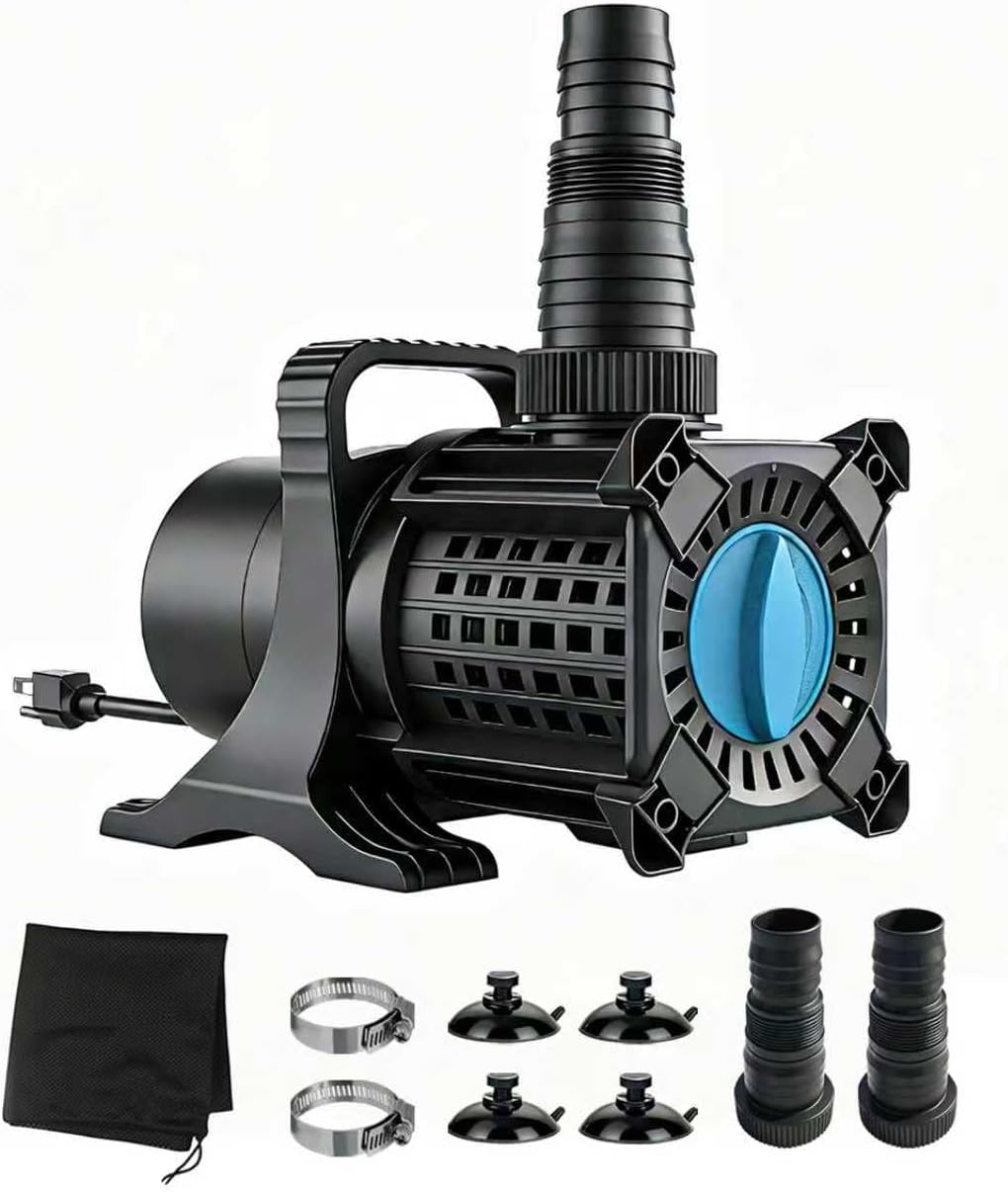
| Power Source | Corded Electric |
|---|---|
| Maximum Lifting Height | 16.5 feet |
| Horsepower | 180 watts |
The OYO WATER PSA2400 is a 2400 GPH-class submersible pump built for continual outdoor use in ponds, waterfalls, fountains, and irrigation. It delivers adjustable flow from a light trickle up to a strong surge so you can fine-tune circulation for koi ponds or water features without swapping pumps. The unit is UL listed and uses a copper motor with dry-burn protection, which helps prevent motor damage if water levels fall. Practical touches include a 20.3 foot power cord that reduces the need for extension cables, a mesh barrier bag and filter shroud to block debris, and multiple threaded adapters for common hose sizes so you can install it vertically or horizontally. In real use it promises quiet operation thanks to a ceramic shaft and epoxy-potted motor, but like many high-flow submersibles it will require occasional cleaning of the mesh bag and intake when working in debris-heavy environments. This pump is aimed at owners who prioritize dependable, continuous circulation and straightforward installation rather than ultra-compact or decorative units.
Best for: Koi pond and water feature owners who need a reliable, continuously running pump with safety features and adjustable flow for steady circulation and waterfalls.
Less Ideal for: Buyers wanting a tiny, decorative fountain pump or a completely maintenance-free unit should consider smaller low-flow models or external filtration systems instead.
- UL listed and copper motor with dry-burn protection for safer, longer operation
- Wide adjustable flow control (10%–90%) to match pond, waterfall, or irrigation needs
- 20.3 ft power cord gives flexible placement without extension cords
- Includes mesh barrier bag, filter shroud, and multiple hose adapters for debris protection and easy hookups
- Capable of submersible or inline orientation for versatile installation
- Requires periodic cleaning of the mesh bag and intake in dirty ponds
- Relatively large physical footprint may be less convenient in very compact setups
Verdict: Choose this pump when you want a robust, safety-focused pond pump with precise flow control and built-in debris protection for dependable koi pond circulation.
VIVOSUN Submersible Fountain Water Pump (800 GPH)

| Flow Rate | 3000 liters per hour |
|---|---|
| Maximum Lifting Height | 10 feet |
| Voltage | 110 volts |
| Horsepower | 0.07 hp |
This VIVOSUN submersible pump delivers up to 800 GPH (3000 L/H) and is primarily used to circulate water for small ponds, fountains, and indoor water features. It has an adjustable flow knob and three interchangeable nozzles so you can tune spray height and pressure as lift height changes, and the unit supports a maximum lift of about 10 feet. The plastic housing keeps it lightweight and the internal design is serviceable — the pump disassembles without tools for routine cleaning. It runs on standard 110–120V and is relatively quiet in typical installations, making it suitable for backyard ponds where noise matters. Important limitations are its plastic construction and modest wattage, which make it best for small to medium water features rather than large ponds or heavy waterfall loads, and flow falls off as lift increases so output depends on placement. Overall, it is a practical, adjustable option if you need a compact, easy-to-clean pump for a small pond or fountain.
Best for: Buyers who want a compact, easy-to-maintain pump for a small pond or fountain and who prioritize reliable, proven performance backed by many user reviews.
Less Ideal for: Not a good fit for owners of larger ponds or those needing heavy waterfall or high-head pumping where a more powerful, metal-bodied pump is required.
- High maximum flow rate rated at 800 GPH (3000 L/H) suitable for small ponds and fountains
- Adjustable flow control and three nozzle options let you match spray pattern and pressure to the feature
- Tool-free disassembly for easy cleaning and maintenance
- Quiet operation appropriate for backyard or indoor water features
- Plastic construction may be less durable long term compared with metal-bodied pond pumps
- Performance decreases noticeably as lift height increases, reducing flow at higher heads
Verdict: A high-flow, adjustable and easy-to-service submersible pump that reliably handles small ponds and fountains.
GROWNEER 550GPH Submersible Water Pump (30W)

| Power Source | ac |
|---|---|
| Flow Rate | 33 liters per minute |
| Maximum Lifting Height | 7.2 feet |
| Voltage | 110 volts |
| Horsepower | 30 watts |
The GROWNEER 550GPH is a small, versatile submersible pump aimed at circulating water in aquaria, small ponds, fountains, and hydroponic setups. It uses a 30W motor to deliver up to about 550 gallons per hour and includes a flow-control knob so you can dial the output to the feature you are running. Three threaded nozzles are supplied for different tubing sizes and spray patterns, and four suction cups make vertical or horizontal mounting straightforward. Practical touches include a nearly 6 foot power cord and guidance on avoiding debris and freezing. Expect reliable water movement and decent lift for modest pond features, but note this is a plastic-bodied, cold-water pump intended for clean water only and not rated for high-temperature liquids. Regular cleaning is required to prevent noise and flow loss from clogging, and its compact size limits use to small to medium installations rather than large landscape ponds.
Best for: Buyers who need an affordable, compact pump to power a small pond feature, fountain, or hydroponic system and prefer a unit they can tune and maintain themselves.
Less Ideal for: Not a good choice for large garden ponds, heavily silty or debris-filled water, or users who want a maintenance-free, heavy-duty metal pump.
- Adjustable flow control for matching output to fountains or filters
- Includes three threaded nozzles to fit different tubing and spray needs
- Decent maximum lift of 7.2 feet suitable for small pond features
- Compact and easy to mount with four suction cups and a long power cord
- Made of plastic and intended for clean, cold water only so not ideal for heavy debris or hot liquids
- Requires regular disassembly and cleaning to prevent clogging and noise
Verdict: If you want an adjustable, budget-friendly pump to circulate water and run small pond fountains, this compact 30W unit delivers practical performance and easy installation.
Choosing the Right Budget Pond Pump: Key Factors to Consider
Flow Rate Versus Pond Size
Flow rate determines how much water the pump moves per hour and directly affects oxygenation, filtration effectiveness, and visual features like waterfalls or fountains. Estimate pond turnover needs by volume and intended use; a typical guideline is to aim for complete turnover every one to two hours for ponds with fish, and slower turnover for planted or low-stock ponds.
Choosing a pump with too low a flow leaves dead zones that promote algae and muck. Selecting a pump with excessively high flow can overwhelm filters and create unwanted turbulence. Also factor in plumbing losses and head height when matching the pump's rated flow to your installation.
Head Height and System Resistance
Static head height is the vertical distance the pump must push water, but real installations include friction from hoses, filters, and fittings. Pumps list a maximum head and a flow curve; use those curves to estimate actual flow at your system's head. Small waterfalls or filter boxes several feet above the pond will reduce delivered flow substantially compared to the pump's maximum rating.
Sizing for head prevents undersized performance at the feature you want to run. Account for any elevation to filters or UV clarifiers and the length and diameter of supply tubing. Conservative planning helps avoid surprise underperformance after installation.
Energy Consumption and Running Cost
A low upfront cost can be offset by high daily energy use, so compare watts relative to delivered flow. Efficient pumps provide more gallons per watt and keep monthly operating costs down, which matters for pumps that run 24/7. Also consider whether the pump offers variable speed or adjustable flow, which can save energy when full flow is not required.
Look at the long-term picture: a slightly more efficient pump can pay for itself in reduced electricity bills, especially in climates where pumps run continuously during warm months.
Debris Tolerance and Intake Protection
Outdoor ponds collect leaves, twigs, and algae. Pumps that clog frequently increase maintenance time and can burn out if starved or blocked. Choose pumps with larger intakes, integrated prefilters, or compatible external skimmers to reduce clogging. Some budget models are submersible and designed to tolerate moderate debris loads, while others require a separate prefilter.
Assess how often you want to clean the pump and whether your location sheds a lot of leaves. Easy-access lids and washable screens simplify upkeep and reduce the risk of impeller damage from trapped debris.
Materials and Corrosion Resistance
Pond pumps are exposed to wet environments and fluctuating temperatures. Materials like stainless fasteners, engineered plastics, and corrosion-resistant coatings extend service life. Metal components in contact with water should resist rust and electrochemical wear. Rubber seals and gaskets must tolerate sunlight and ozone without cracking.
Budget pumps may use less costly materials, so check for signs of reinforced housings or replaceable internal parts. A pump that lasts several seasons without frequent repairs is usually the better investment even at a lower purchase price.
Installation Flexibility and Fittings
Compatibility with common plumbing sizes and the availability of adapters matter for an easier install. Pumps that include multiple hose barb sizes, threaded outlets, or removable fittings fit a broader range of setups. Submersible and inline styles each have installation tradeoffs: submersibles sit in the pond and are quieter, while inline pumps sit outside the water and are often easier to access for maintenance.
Consider whether you need a pump that supports multiple outlet directions or one with an integrated quick-disconnect for winter storage. Simpler installs reduce the chance of leaks and make seasonal maintenance less onerous.
Sizing Tips for Small and Medium Garden Ponds
Calculate your pond volume first using length, width, and average depth. Convert that volume into gallons or liters; most pump guidelines use gallons per hour. For a pond with fish, target a turnover every one to two hours. For planted or wildlife ponds, slower turnover can be acceptable.
After determining desired turnover, use the pump's flow curve to find a model that delivers the required gallons at your system head. Factor in hose length, fittings, and any elevation to surface features. If you plan seasonal changes like adding a waterfall, account for that extra head now to avoid repurchasing later.
- Measure pond volume before pump selection
- Account for friction loss from hoses and fittings
- Plan for future features like fountains or filters
Submersible Versus Inline Pump Placement
Submersible pumps sit in the water and are typically quieter and easier to hide. They are convenient for small ponds and offer straightforward installation. However, access for cleaning can mean pulling the unit out of the pond periodically.
Inline pumps are mounted outside the water and are easier to service without disturbing the pond, but they may require priming and are often louder. Choose based on how frequently you want to access the pump and the visual impact in your garden.
- Submersible: quieter, compact, visible in pond
- Inline: easier service access, may need priming
Managing Leaves, Algae, and Seasonal Debris
A practical debris management plan reduces pump failures and saves time. Use prefilters, skimmers, or a coarse basket upstream of the pump to trap larger leaves. Positioning a mesh leaf net over the pond in high-shed seasons helps too.
Regular maintenance intervals are crucial. Check and clean intake screens and impellers often during fall and during algae blooms. For winter, follow local recommendations for whether to remove the pump or maintain a low-flow setup to support wildlife and prevent freezing damage.
- Install prefilter or skimmer ahead of pump
- Clean intake screens regularly, especially in fall
- Adjust flow seasonally to reduce stress on equipment
Noise, Vibration, and Quiet Garden Operation
Noise matters in small gardens where a fountain or cascade is meant to be relaxing. Submerged pumps are generally quieter, while poorly mounted inline pumps can transmit vibration to structures. Soft mounts and rubber grommets can reduce transmitted noise.
Consider expected noise levels during installation and test any pump quietly before finalizing landscaping. Even budget pumps vary in sound, so mounting and placement choices can make a big difference.
- Submerged pumps for quiet operation
- Use vibration-damping mounts for inline models
- Install away from seating areas when possible
Seasonal Care and Winterizing
How you treat a pump for winter depends on climate and pond use. In mild climates, continuous low-flow operation may be fine. In freezing regions, removing pumps to a frost-free area or using a heater can prevent damage. Drain and dry pumps stored for winter to prolong seal life.
Plan for easier winter maintenance by choosing pumps with simple disassembly and replaceable seals. Clear documentation and accessible parts reduce the risk of moisture intrusion during cold months.
- Remove or protect pumps in freezing climates
- Store dry and clean for long-term durability
- Choose pumps with replaceable seals for easier servicing
How We Chose the Best Budget Pond Pump
We focused on practical, garden-focused criteria that matter for everyday pond owners shopping on a budget. Primary evaluation dimensions included flow rate and head height performance, because a pump must deliver the right volume of water at the elevation required by your fountain, filter, or waterfall. Energy efficiency was measured by comparing power draw relative to flow, since running costs determine whether a cheap pump stays affordable over time. Debris handling and prefiltering were assessed to determine how pumps cope with leaves, string algae, and grit in an outdoor setting. Build quality and corrosion resistance were inspected to ensure a pump can survive wet, variable-weather conditions. Ease of installation and routine maintenance were also considered, covering access to seals and impellers and the simplicity of plumbing hookups. We excluded units clearly designed only for aquaria or indoor use and any pumps lacking basic waterproof ratings or without clear flow/head specifications. We also avoided specialized high-end pond models whose features and price points fall outside a tight budget scope. The final picks balance measured performance with realistic gardener needs for outdoor ponds, prioritizing durable, low-energy, and easy-to-service pumps.
FAQ
How do I match a pond pump to my pond volume?
Calculate the pond volume and decide how many hours per turnover you want. For fish ponds, aim for a turnover every one to two hours. Use the pump's flow curve to select a model that delivers the required gallons per hour at your system head.
Can a budget pump handle leaves and twigs without extra equipment?
Some budget submersible pumps tolerate moderate debris but most benefit from a prefilter or skimmer. Heavy leaf fall usually requires an upstream basket or regular cleaning to prevent frequent clogs and impeller damage.
Is a submersible pump better than an inline pump for garden ponds?
Submersible pumps are quieter and simpler to install, while inline pumps are easier to access for maintenance and may be more appropriate when keeping the pump outside the water is desired. The best choice depends on noise preferences and how you plan to service the unit.
How much will a pump affect my electricity bill?
Energy use depends on the pump's wattage and runtime. Compare watts per gallon delivered to estimate running cost. Pumps that run 24/7 will have the largest impact, so efficiency and adjustable speed options can reduce monthly bills.
What routine maintenance does a pond pump need?
Regularly clear intake screens, remove debris from impellers, and inspect seals and cords. Frequency depends on leaf load and algae levels but plan for more attention during fall and warm months when algae growth accelerates.
Can I use a garden hose with my pond pump outlet?
Many pumps accept common hose sizes with included adapters or fittings, but check compatibility before buying. Larger-diameter plumbing reduces friction loss and usually performs better for higher flow rates.
Final Verdict
When choosing a Budget Pond Pump, prioritize matching the pump's flow and head performance to your pond volume and any elevation to waterfalls or filters. Balance upfront cost against energy efficiency and debris tolerance so the pump is economical to run and simple to maintain. Focus on durable materials and easy access to intake screens and impellers. With these tradeoffs in mind, select a pump that fits your pond size, handles the expected debris load, and offers the lowest long-term hassle for season-to-season operation.
