

Note: This article contains affiliate links. If you click on these links and make a purchase, I may earn a small commission at no extra cost to you. This helps support my research and content. Read my full affiliate disclosure here.
If you want an easier mowing routine without overspending, choosing the right budget self propelled lawn mower matters. The wrong model makes uneven passes, stalls on slopes, or needs constant adjustment. This guide covers seven shortlisted options that perform well for budget-minded homeowners and small yards. We evaluated machines for how they handle real lawn conditions, how consistent their cut is, and how simple they are to maintain. Below are our top picks, followed by what to watch for when buying and practical tips for getting the most life from a value mower.
Top Picks at a Glance
| Best Quality Built to a higher standard if you want something more solid | PowerSmart EasyDrive Pro 22-Inch 170cc Self-Propelled Gas Lawn Mower |  |
| Best Value The sweet spot between price and what you get | LTIGOAW 5HP Self-Propelled Gas Lawn Mower, 20-inch Cutting Deck, 60L Grass Bag |  |
| Best Budget The cheapest option that still gets the job done reliably | Rodiuiu 131cc 18" Self-Propelled Gas Lawn Mower with 3-in-1 Deck and 50L Bag |  |
| Highest Rated A top-rated pick with lots of positive feedback | TANAUT 140cc Self-Propelled Gas Lawn Mower, 20 in. |  |
| Most Popular A crowd favorite that many people choose with confidence | SENIX 201cc 22" 3-in-1 Variable Speed Self-Propelled Gas Lawn Mower |  |
| Best Seller A high-volume bestseller chosen again and again | BILT HARD 21" Self-Propelled Gas Lawn Mower, 201cc 4-Cycle OHV, 3-in-1 |  |
PowerSmart EasyDrive Pro 22-Inch 170cc Self-Propelled Gas Lawn Mower

| Engine displacement | 170cc |
|---|---|
| Cutting width | 22 in. |
| Drive type | Self-Propelled Rear-Wheel Drive |
| Cutting options | Mulch / Rear Bag / Side Discharge |
| Cutting height range | 1.5 in to 3.9 in |
This PowerSmart EasyDrive Pro is a straightforward gas walk-behind mower aimed at homeowners who want reliable, no-frills lawn care. Its 170cc OHV 4-stroke engine and 22-inch steel deck provide enough power and cutting width to handle lawns up to about half an acre, and the rear-wheel self-propel system eases forward motion on slight slopes and uneven ground. You get three cutting modes — mulch, rear bag, or side discharge — plus a 60L grass bag so you can switch between neat collection and returning clippings to the lawn. Six height positions from 1.5 to 3.9 inches let you dial the finish for seasonal needs. Practical touches include a pull-cord recoil start and a compact folded footprint for storage. Expect typical gas-mower upkeep such as fuel, oil, and spark plug service and some assembly at first use. This mower is solid for someone prioritizing cutting performance and durability over battery convenience or ultra-quiet operation.
Best for: Best for homeowners who want a durable, gas-powered mower that covers medium-sized yards efficiently and minimizes pushing effort while delivering solid cut quality.
Less Ideal for: Not a good fit for buyers who need a low-noise, low-maintenance electric or cordless solution or for very small yards where a lighter mower would suffice.
- 170cc OHV 4-stroke engine provides consistent power for thicker grass and larger yards
- 22-inch steel deck covers ground efficiently for faster mowing passes
- Self-propelled rear-wheel drive reduces physical effort on slopes and uneven terrain
- 3-in-1 cutting (mulch, rear bag, side discharge) offers flexible grass management
- Six cutting-height positions let you quickly adjust lawn finish
- Requires regular gas-engine maintenance and storage care
- Pull-cord start may be harder for users who prefer push-button or electric start
- Heavier and louder than battery-powered alternatives
Verdict: A practical, powerful gas self-propelled mower that delivers efficient cutting and flexible disposal options for medium-sized yards.
LTIGOAW 5HP Self-Propelled Gas Lawn Mower, 20-inch Cutting Deck, 60L Grass Bag

| Power Source | Gas Powered |
|---|---|
| Engine | 140CC 4-stroke OHV |
| Cutting width | 20 inches |
| Grass Catch Bag Capacity | 60L |
| Mowing Height Adjustment | 8 positions (25–80mm) |
This LTIGOAW mower pairs a 140cc 4-stroke OHV engine with a self-propelled drive to make routine mowing quicker and less tiring. It cuts a 20-inch swath and offers eight height settings (25–80mm) so you can switch between a close trim and a taller, healthier cut. The 60L bag reduces how often you stop to empty clippings, and larger rear wheels help it roll over bumps and modest slopes. Construction combines steel and manganese steel with protective finishing to resist wear, and the foldable handle lowers storage footprint in a garage or shed. Expect a pull-start and basic, practical controls rather than advanced electronics, and the roughly 70dB noise level is reasonable for a gas mower but not as quiet as electric models. The 1.6L fuel tank supports longer runs between refills, though the unit’s weight means one person may find lifting for storage awkward. For buyers who want straightforward gas power and wide cutting coverage on a budget, this mower delivers sensible performance without frills.
Best for: Practical homeowners who want a powerful, no-frills gas mower that speeds up mowing and minimizes stops for bag emptying on medium to large yards.
Less Ideal for: People who prioritize the quietest operation, zero-emission running, or very lightweight equipment for frequent lifting and transport should consider electric alternatives.
- Self-propelled drive reduces pushing effort on medium to large lawns
- 140cc 4-stroke OHV engine provides consistent power for thick grass
- Eight height positions (25–80mm) for flexible lawn finishes
- Large 60L grass collection bag cuts down on emptying frequency
- Foldable handle and durable steel construction for easier storage and longevity
- Pull-start only so cold starts may require effort
- Noise level around 70dB is louder than battery mowers
Verdict: A budget-friendly gas mower that delivers strong, self-propelled performance and large grass capacity for efficient mowing of medium to large lawns.
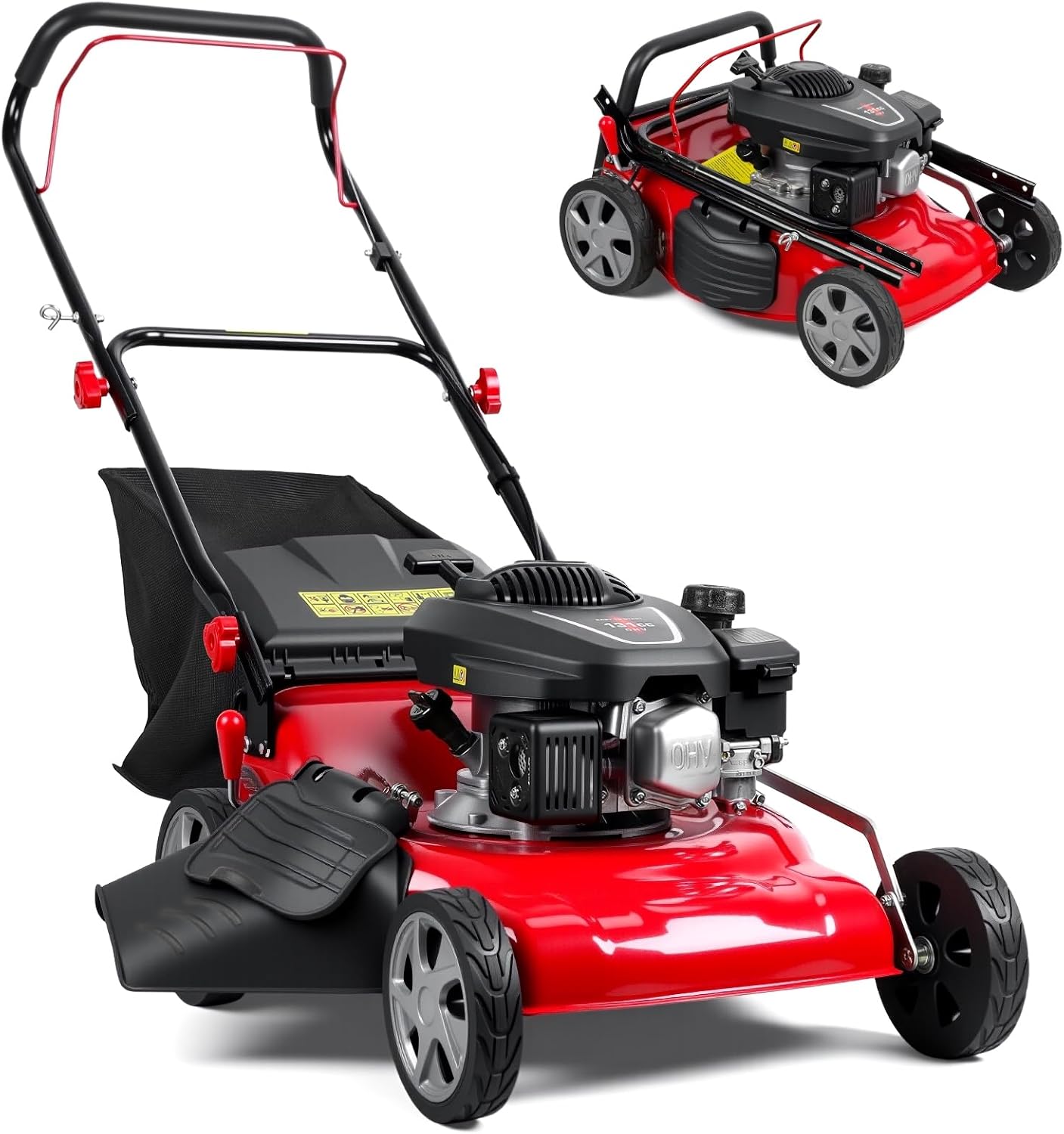
Rodiuiu 131cc 18" Self-Propelled Gas Lawn Mower with 3-in-1 Deck and 50L Bag
| Power Source | Gas Powered |
|---|---|
| Cutting width | 18 inches |
| Number of Positions | 8 |
| Maximum Adjustable Cutting Height | 7.5 centimeters |
| Minimum Adjustable Cutting Height | 25 millimeters |
This Rodiuiu mower is a budget-oriented self-propelled gas mower designed for homeowners who need reliable cutting power without premium pricing. It uses a 131cc OHV 4-stroke engine and an 18-inch steel deck that converts between mulching, side discharge, and rear bagging to handle different grass conditions. The self-propelled rear-wheel drive and large wheels make it easier to push across modest slopes and medium lawns, while the single lever synchronizes eight cutting heights for quick deck adjustments. A 50L grass collection bag with a wide opening reduces stops to empty clippings. The unit folds for storage and transport, which helps tight garages or seasonal storage. Expect straightforward starting with its simplified choke/primer claims but plan for normal gas engine maintenance such as oil, spark plug, and fuel care. Buyers should also be ready to assemble the mower and accept that fit and long-term durability may reflect the mower's cost-class rather than premium models.
Best for: Homeowners looking for an affordable, gas-powered self-propelled mower that covers medium-size lawns efficiently and values practical features over premium build refinements.
Less Ideal for: Those who want a maintenance-free electric or battery mower, need very wide cutting swaths for large commercial lawns, or prioritize top-tier long-term durability and dealer support.
- Powerful 131cc OHV 4-stroke engine for consistent cutting performance
- 3-in-1 steel deck lets you mulch, side discharge, or bag clippings
- Self-propelled rear-wheel drive and large wheels ease maneuvering on uneven yards
- Single-lever eight-position height adjustment for quick, uniform changes
- Foldable design and large 50L bag simplify storage and reduce emptying frequency
- As a budget model, long-term durability and component fit may not match premium brands
- Requires regular gas-engine maintenance and storage care
- No battery or electric start option for users who prefer cordless convenience
Verdict: If you want an affordable self-propelled gas mower that mulches, bags, and adjusts easily, this Rodiuiu 131cc 18-inch model delivers straightforward performance and useful features for typical home lawns.
TANAUT 140cc Self-Propelled Gas Lawn Mower, 20 in.

| Engine displacement | 140cc |
|---|---|
| Power | 5HP at 2800rpm |
| Cutting width | 20 inch |
| Fuel tank capacity | 0.42 gallon |
| Grass bag capacity | 15.9 gallon |
This TANAUT mower is a budget-oriented, self-propelled walk-behind designed to handle medium to large yards with minimal fuss. Its 140cc four-stroke engine produces about 5 HP at 2800 rpm, which provides steady power for cutting dense grass and finishing runs quickly. The 20-inch cutting deck and manganese steel quenched blade are built for durability and clean cuts, while 8 height settings (1 to 3.2 inches) let you adapt to different grass types. A 15.9 gallon grass bag and a 0.42 gallon fuel tank reduce interruptions for emptying and refueling, making longer passes practical. Assembly is straightforward with included parts and instructions, and the self-propelled front-wheel drive reduces user strain for extended use. Expect a basic but functional machine: controls are manual and the finish is utilitarian rather than premium, and the relatively small fuel tank means refilling on very large properties. For buyers prioritizing straightforward, reliable mechanical performance at a lower price point, this mower offers a solid value.
Best for: A buyer who wants a dependable, no-frills self-propelled mower for regular lawn maintenance and values straightforward mechanical reliability over premium amenities.
Less Ideal for: Not the best choice for users who need commercial-grade features, advanced ergonomics, or very large acreage that demands a larger fuel capacity.
- Robust 140cc four-stroke engine providing consistent cutting power for dense turf
- Durable manganese steel quenched blade for cleaner cuts and longer life
- Self-propelled front-wheel drive reduces operator effort on longer lawns
- Large 15.9 gallon grass collection bag lowers frequency of stops
- Multiple height settings (8 gears) let you tailor cut height to grass conditions
- Fuel tank is modest at 0.42 gallon which may require refilling on very large properties
- Operation is manual with basic controls and fewer comfort features than premium models
Verdict: A dependable, budget-friendly self-propelled mower that delivers solid cutting power and low-maintenance durability for regular residential lawns.
SENIX 201cc 22" 3-in-1 Variable Speed Self-Propelled Gas Lawn Mower

| Power Source | Gas Powered |
|---|---|
| Cutting width | 22 inches |
| Operation Mode | Automatic |
| Number of Positions | 6 |
| Material Type | Stainless Steel |
This SENIX mower pairs a 201cc four-cycle OHV engine with a 22-inch steel deck to tackle medium to large lawns efficiently. It is self-propelled with large 11-inch rear wheels, so it eases forward motion on slopes and thicker turf while letting you control pace with variable drive. The mower offers a 3-in-1 system so you can bag clippings, mulch them back into the lawn, or side-discharge depending on grass conditions. Height is adjusted quickly with a single lever across six positions from 1.25 to 4 inches to suit seasonal needs. The steel construction and sizeable cutting width help you finish jobs faster than a typical 20-inch push mower. Expect routine maintenance typical of gas machines such as fuel, oil, spark plug checks, and occasional blade sharpening; it is heavier and louder than electric models and needs winter storage to avoid carburetor issues. For buyers prioritizing proven mechanical performance and versatility, this mower delivers a substantial, practical package for regular lawn care.
Best for: Homeowners who value reliable gas power and versatility for maintaining medium to large yards and who prefer equipment with established mechanical performance and visible user feedback.
Less Ideal for: People who prioritize low-noise, low-maintenance electric options or have very small yards where a lighter push mower or battery model would be more convenient.
- Powerful 201cc OHV engine provides consistent cutting performance for medium to large lawns
- 22-inch steel cutting deck covers more ground per pass than 20-inch mowers
- Rear-wheel self-propelled drive with 11-inch wheels improves traction and handling on slopes
- 3-in-1 cutting system (bag, mulch, side discharge) adapts to different lawn care needs
- Single-lever, six-position height adjustment lets you change cutting height quickly
- Gas engine requires regular maintenance and winter storage to avoid fuel system issues
- Heavier and louder than electric alternatives which may affect maneuverability and noise sensitivity
Verdict: Choose this mower if you want a tough, gas-powered 22-inch self-propelled machine that handles larger lawns and offers bagging, mulching, and side-discharge versatility.
BILT HARD 21" Self-Propelled Gas Lawn Mower, 201cc 4-Cycle OHV, 3-in-1

| Cutting width | 21 inches |
|---|---|
| Engine | 201cc 4-stroke OHV |
| Mowing modes | Mulch, rear bagging, side discharge |
| Number of positions | 8 |
The BILT HARD 21-inch mower is a gas-powered, self-propelled walk-behind designed for homeowners who need a dependable, straightforward mower for small to medium yards. It uses a 201cc 4-stroke OHV engine paired with a steel cutting deck and offers mulching, rear bagging, or side discharge so you can handle different grass conditions. The self-propelled drive holds a fixed walking speed to reduce pushing effort on flat or gently sloped lawns, while a single lever adjusts all four wheels across eight cutting heights for quick setup. In practice this mower favors reliability and ease of use rather than advanced features: its robust engine and simple controls make routine mowing predictable, and the 21-inch cut width balances maneuverability with decent coverage. Important limitations are its heavy listed weight, which affects transport and storage, and the fixed drive speed that may not suit users who want variable pace control. Assembly and routine maintenance are typical for a gas mower but necessary to keep performance consistent.
Best for: Homeowners who prioritize reliable, no-frills performance and want an easy-to-use gas mower for routine maintenance of small to medium lawns.
Less Ideal for: People who need frequent transport of the mower, prefer very lightweight or electric models, or require variable-speed traction for steep or highly uneven terrain.
- 201cc 4-stroke OHV engine provides consistent power for regular residential mowing
- Three mowing options (mulch, rear bag, side discharge) adapt to different lawn conditions
- Self-propelled drive reduces physical effort on flat and gently sloped yards
- Single-lever, 8-position height adjustment makes changing cut height quick and uniform
- Heavier unit makes lifting into storage or onto trailers more difficult
- Fixed walking speed drive offers less control than variable-speed systems
Verdict: A solid, easy-to-use gas mower that delivers dependable power and 3-in-1 versatility for routine residential lawn care.
Choosing the Right Budget Self Propelled Lawn Mower: Key Factors to Consider
Cut Quality and Deck Design
A mower's deck shape and material greatly influence how well it lifts and ejects clippings. A well-shaped deck encourages an even airflow that keeps grass blades upright for a clean cut and prevents clumping. Thin or poorly formed decks can leave stripes, leave clumps in wetter grass, or require multiple passes to look tidy.
Deck material affects long-term performance. Steel decks resist warping and hold up to impacts but can corrode if not finished well. Polymer decks resist rust and are lighter, which helps traction on delicate lawns, but may flex under heavy use. For a budget self-propelled mower, look for a deck that balances rigidity with a protective coating and a design that promotes consistent clipping discharge or mulching.
Drive System and Handling
How the self-propelled system engages changes the mowing experience more than raw engine power. Responsive, variable-drive controls let you match forward speed to grass conditions and slope, reducing the need to push or fight the machine. Some systems use a single lever to engage drive while others offer variable speed control; the latter gives finer control on hills and around obstacles.
Traction and wheel size factor into how easily the mower moves across different turf types. Larger rear wheels provide smoother rolling over bumps and make steering on uneven lawns simpler. For budget models, check that the drive engages smoothly from a standstill and that drive linkages are protected against grass and debris to reduce wear.
Engine Power and Efficiency
Engine size and design influence how the mower handles thick, tall, or damp grass. A modest but efficient engine can mow residential lawns effectively if paired with a good deck and proper blade. Overpowered engines on light decks may waste fuel, while underpowered engines struggle on heavy growth and slopes, which stresses the drivetrain.
Fuel efficiency and how easy it is to start are important practical considerations. A mower that starts reliably and runs smoothly reduces frustration and maintenance time. For budget options, prefer engines with a reputation for consistent starts and accessible spark plugs and filters for routine care.
Blade System and Maintenance Access
A sharp, well-balanced blade is central to a clean cut. Consider whether the mower supports easy blade removal and replacement without complex tools. Deck access for blade sharpening or replacement, belt changes, and filter servicing should be straightforward to minimize downtime.
Budget mowers that simplify routine tasks save money and keep performance high. Check for user-friendly access points and clear instructions for common maintenance chores, such as lifting the deck for blade work or reaching the air filter and spark plug without removing multiple covers.
Bagging, Mulching, and Discharge Options
Different yards benefit from different clipping handling. A reliable rear bagger collects clippings for composting, while a mulching option chops clippings finely and returns nutrients to the lawn. Side discharge works well for very tall or wet material that clogs mulching chambers.
Inspect how easy it is to switch between modes and whether attachments are secure. On budget models, check that the bagging cloth holds up to regular use and that the mulching plug is simple to insert and remove. Practical versatility reduces the need for additional equipment.
Storage, Weight, and Portability
If you store the mower in a small shed or garage, overall footprint and whether the handle folds matter. Heavier mowers can be harder to lift into a shed or onto a truck but often track better on slopes. Lighter polymer-bodied mowers are easier to manage but may feel less stable.
Consider where you will store the mower and whether you need to move it between locations. Handles that fold without tools and compact deck profiles make storage easier. Also factor in wheel locks or transport latches that keep the mower secure during movement.
Best Uses for Budget Self Propelled Mowers
Budget self-propelled mowers shine for small to medium urban and suburban lawns where reduced effort matters more than heavy-duty longevity. They cut down pushing work, especially on slightly rolling yards, and are typically lighter and easier to maneuver around tight landscaping.
They are not ideal for very large properties that benefit from wider decks or for frequent commercial use. For most homeowners who mow weekly during the growing season, a well-chosen budget self-propelled model balances convenience, cutting quality, and low running costs.
- Small to medium lawns with moderate slopes
- Gardens with multiple obstacles and tight turns
- Homeowners who prioritize low effort and straightforward maintenance
Setting Up and First-Time Maintenance
When you receive a new mower, spend time setting the drive control and checking tire pressure and blade tightness before the first cut. Read the deck and drive setup instructions so you understand how the self-propel system engages and how to adjust speed controls if provided.
Performing an initial blade balance check and verifying that all fasteners are snug will prevent vibration and uneven cutting. Break-in procedures vary by engine type; follow the manufacturer guidance for oil changes and initial service intervals to avoid early wear.
- Check drive engagement and adjust cable tension if the machine lurches on start
- Confirm blade torque and balance to avoid stripes or vibration
- Verify bagging and discharge attachments are secure before first use
Mowing Technique to Get the Best Cut
Use overlapping passes and keep a steady forward speed that matches the grass height and engine load. On taller growth, take slightly slower passes to allow the mower to lift and cut the grass cleanly. Avoid trying to cut too low in a single pass, which can scalp lawns and stress turf.
Change mowing direction periodically to prevent soil compaction and encourage upright grass growth. When using mulch mode, avoid cutting when the grass is wet to reduce clumping and maintain the quality of the mulch return.
- Overlap passes by about a third of the deck width
- Slow down for thicker patches or slopes rather than increasing engine throttle
- Alternate direction every few cuts for even wear and healthier turf
Maintaining a Budget Self Propelled Mower Through the Seasons
Seasonal care lengthens lifespan. In spring, inspect belts, blades, and drive linkages and change engine oil if required. During the mowing season, sharpen blades regularly and clear grass buildup under the deck after each few uses to prevent corrosion and maintain airflow.
Before winter storage, clean the deck, treat any bare metal with a light coat of protective spray, and store the mower in a dry area with fuel stabilizer or with fuel drained, depending on the engine type. Regular basic maintenance avoids costly repairs and preserves cutting quality in subsequent seasons.
- Sharpen blades two to four times per season depending on wear
- Clear clippings from under the deck after wet weeks to prevent rust
- Inspect and, if necessary, replace belts before heavy-use months
Troubleshooting Common Problems
If the drive slips or the mower hesitates, check for loose cables, worn belts, or clogged cooling fins on the engine. A mower that bogs down under load often needs a service check on the air filter, spark plug, or carburetor adjustments. Regular maintenance reduces the frequency of these issues.
Uneven cutting usually points to blade issues, deck damage, or incorrect wheel height adjustments. Vibrations often indicate an unbalanced blade or a bent blade. Addressing these items promptly keeps the mower safe and effective.
- Drive slipping: inspect and adjust cables and check belt condition
- Bogging under load: check air filter, spark plug, and blade sharpness
- Vibration or uneven cut: balance or replace blade and inspect deck
How We Chose the Best Budget Self Propelled Lawn Mower
We focused on practical, real-world performance measures that matter to gardeners on a budget. Key evaluation criteria included cutting quality and deck design, which determine how even and consistent the lawn looks after each pass. Ease of use was assessed by how intuitive the self-propelled drive engages, how adjustable the speed is, and whether push or cruise operation feels controlled on varying terrain. Durability focused on build materials, deck corrosion resistance, and drivetrain robustness for everyday suburban use. Maintenance and serviceability examined how accessible common wear items are, such as blades, belts, and air filters. Finally, storage and footprint were considered for gardeners with limited shed or garage space. We excluded heavy-duty commercial machines and electric-only experimental prototypes that do not fit the budget-oriented homeowner profile. Only mowers with documented user reliability in typical residential conditions and clear serviceability were included. The scoring emphasized cut quality, handling, durability, and ease of maintenance to align with what matters most for a budget self-propelled mower.
FAQ
Is a budget self-propelled mower worth it for a small yard?
Often yes. For small yards with modest slopes, a budget self-propelled mower reduces physical effort and improves maneuverability. Expect tradeoffs in long-term durability compared with higher-end units, but many budget models perform well with basic seasonal maintenance.
How often should I sharpen the blade on a budget mower?
Usually two to four times per mowing season, depending on wear from debris and soil type. Sharper blades give cleaner cuts and reduce stress on the engine.
Can a budget self-propelled mower handle slopes?
It depends on slope steepness and wheel traction. Most handle gentle to moderate slopes fine, especially models with larger rear wheels and adjustable drive engagement. Avoid steep slopes and consider safety when mowing inclines.
What maintenance is most important to extend a mower's life?
Regular blade care, clean deck and cooling fins, timely oil changes, and keeping air and fuel systems clean are the most impactful. Simple seasonal checks prevent common failures.
Should I use mulch or bag clippings with a budget mower?
It depends on lawn health and preference. Mulching returns nutrients and reduces yard waste, while bagging gives a cleaner finish when grass is long or wet. Choose the method that fits your lawn condition and composting plans.
Final Verdict
A Budget Self Propelled Lawn Mower can deliver most homeowners a big improvement in comfort and consistency without a large outlay. Prioritize cut quality, a dependable drive system, and ease of maintenance when choosing among budget options. Expect tradeoffs between long-term durability and initial cost, and plan routine seasonal care to extend service life. Focusing on these decision points will help you pick a model that keeps your lawn looking good with less effort.
