

Note: This article contains affiliate links. If you click on these links and make a purchase, I may earn a small commission at no extra cost to you. This helps support my research and content. Read my full affiliate disclosure here.
If you share your living space with cats, dogs, or other companion animals, choosing the right bug spray matters for both pest control and pet safety. The wrong formula can irritate sensitive noses, leave residues pets lick, or require long ventilation times that complicate normal household routines. This guide shortlists seven top-rated bug sprays for home with pets and explains how each option performs on safety, indoor use, and duration of protection. You will find products selected for practical home situations, with notes on application method, residue potential, and how long treatments last. Below we summarize the evaluation criteria we used and outline what to consider before applying any spray around animals.
Top Picks at a Glance
| Best Overall The best all-around choice for most situations | Wondercide Flea, Tick & Mosquito Spray for Pets & Home, Rosemary, 16 fl oz |  |
| Best Quality Built to a higher standard if you want something more solid | ZEVO Flying Insect Aerosol Spray, 30 fl oz |  |
| Best Value The sweet spot between price and what you get | Safer Home Indoor Pest Control Multi-Insect Spray, 24 fl oz |  |
| Best Budget The cheapest option that still gets the job done reliably | STEM Plant-Based Bug Spray — Ants, Roaches & Spiders, 10 oz |  |
| Highest Rated A top-rated pick with lots of positive feedback | Migdracy Plant-Based Bed Bug Spray, 16 oz |  |
| Most Popular A crowd favorite that many people choose with confidence | Vet's Best Flea & Tick Home Spray for Dogs, Cotton Spice, 32 oz |  |
| Best Seller A high-volume bestseller chosen again and again | Vet's Best Flea & Tick Home Spray for Cats, Cotton Spice, 32 oz |  |
Wondercide Flea, Tick & Mosquito Spray for Pets & Home, Rosemary, 16 fl oz

| Unit Count | 16 Fluid Ounces |
|---|---|
| Item Form | Spray |
| Scent Name | Rosemary |
| Active Ingredients | 4.2% Cedar Oil; 1.5% Rosemary Oil; 0.1% Sesame Oil |
Wondercide Rosemary spray is a plant‑powered topical and household spray designed to kill and repel fleas, ticks, and mosquitoes on pets and in the home. You apply it directly to fur by misting and rubbing through the coat for spot or whole‑body use, and you can also spray bedding, furniture, and play areas from 8 to 12 inches away. The formula lists cedar oil, rosemary oil, and sesame oil as active ingredients with water and mild surfactants as carriers, which makes it a low‑chemical alternative to conventional pesticides and suitable for use around families when directions are followed. Practical benefits include a pleasant rosemary scent, non‑staining water‑based formula, and a single product that treats both pets and living spaces. Limitations are that it is a contact‑kill product rather than a systemic treatment, so thorough application and repeated use are needed to break an infestation cycle, and it is not registered with the EPA as a traditional pesticide which may concern buyers wanting regulatory oversight. Follow the label for patch testing and avoid use on birds, reptiles, aquatic environments, or pets with compromised health.
Best for: Buyers who prioritize safer, plant‑based solutions and want a single spray for spot treatment of pets and to freshen and protect pet areas in the home.
Less Ideal for: Those who need a systemic or long‑lasting prescription strength flea treatment or who prefer products with full EPA pesticide registration.
- Plant‑based active ingredients (cedar oil, rosemary oil) offer a gentler alternative to conventional pesticides
- Can be applied to both pets and home surfaces, treating bedding, furniture, and play areas
- Water‑based, non‑staining formula with a mild rosemary scent
- Suitable for puppies, kittens, and senior pets when used as directed and after patch testing
- Kills by contact only, so it requires thorough and repeated application to control established infestations
- Not registered by the EPA as a conventional pesticide, which may be a concern for buyers seeking regulatory approval
Verdict: Choose this spray if you want a plant‑based, dual pet-and-home option that reduces pests by contact while avoiding harsh chemical treatments.
ZEVO Flying Insect Aerosol Spray, 30 fl oz

| Item Volume | 30 fluid ounces |
|---|---|
| Target Species | Fly, Fruit Fly, Gnat, Mosquito |
| Included Components | Sprays |
| Brand Name | ZEVO |
ZEVO Flying Insect Aerosol is a ready-to-use spray designed to kill common flying pests on contact. You use it as a targeted aerosol: wait for the insect to land or spot it in flight, then spray directly until the insect is wet and wipe away any residue if needed. The formula uses rosemary and cornmint oils rather than a heavy synthetic odor, so it smells milder than many conventional aerosols while still delivering quick knockdown of flies, fruit flies, gnats, and mosquitoes. The product is intended for indoor and outdoor spot treatments around kitchens, bathrooms, living spaces, and patios and comes in a large 30 fl oz can that reduces the need for frequent repurchase. Important limitations are that it must be applied directly to visible insects to be effective and should not be used near food, electrical wiring, people, pets, or plants; surfaces may stain and ventilation is recommended. For someone who wants a fast, aromatic alternative to harsher sprays, this performs well when used as directed.
Best for: Buyers who prioritize quick, reliable knockdown of visible flying insects and prefer a less harsh-smelling aerosol for spot treatments in and around the home.
Less Ideal for: People seeking long-lasting residual protection, broad-area fogging, or a product they can safely apply around food prep surfaces or sensitive plants should consider other options.
- Fast-acting contact kill for flies, fruit flies, gnats, and mosquitoes
- Formula powered by rosemary and cornmint oils gives a milder scent than many conventional aerosols
- Suitable for indoor and outdoor spot treatments around living spaces
- Large 30 fl oz size reduces how often you need to replace the can
- Requires direct spray on visible insects to be effective rather than providing residual control
- Not safe for use on or around food, people, pets, or plants and can stain porous surfaces
Verdict: Choose this spray if you want fast, on‑contact elimination of indoor mosquitoes and other flying pests with a milder, plant‑oil based scent.
Safer Home Indoor Pest Control Multi-Insect Spray, 24 fl oz

| Item model number | SH110 |
|---|---|
| Ingredients | Clove Oil 0.05%, Cottonseed Oil 0.05%, Inert Ingredients 99.90% |
| Volume | 24 fl oz |
| Manufacturer | Woodstream Corporation |
Safer Home Indoor Pest Control Spray is a ready-to-use contact insecticide formulated with natural oils like clove and cottonseed to tackle ants, roaches, flies, spiders, fleas, mosquitoes, ticks, wasps and many other indoor pests. You use it by switching the nozzle between a spray setting for general areas and a stream setting for crack-and-crevice work, holding the bottle about 8 to 12 inches from the target. The formula claims fast knockdown, killing ants, flies, and roaches within minutes, and it dries without leaving a residue so no wiping is required. Its main practical benefit is offering a broad-spectrum, easy application for spot treatments around kitchens, baseboards, windows, doors and crawl spaces while relying on naturally derived active ingredients that are presented as safer for homes with children and pets when directions are followed. The limitations are that it is a contact killer rather than a residual barrier product and effectiveness against heavy infestations may be slower than synthetic insecticides, so repeated or complementary measures may be needed for persistent problems.
Best for: Households that prioritize practical, lower-toxicity solutions for spot-treating common indoor pests and want an easy, no-mess spray safe for use around kids and pets when directions are followed.
Less Ideal for: Homes facing severe or persistent infestations that need long-lasting residual control or professional-strength treatments should consider stronger or specialized options.
- Made with naturally derived oils (clove oil and cottonseed oil) instead of harsh synthetic chemicals
- Ready-to-use spray with adjustable nozzle for both general spray and crack-and-crevice stream
- Fast contact kill for common pests with no residue to wipe up after application
- Broad-spectrum label covering many common indoor insects including ants, roaches, flies, spiders, fleas and mosquitoes
- Contact-only action offers limited residual protection, so repeat applications may be necessary
- May be less effective than conventional synthetic insecticides on heavy infestations
Verdict: A convenient, low-toxicity indoor spray for quick spot control of common household pests in pet-friendly homes.
STEM Plant-Based Bug Spray — Ants, Roaches & Spiders, 10 oz

| Item Form | Aerosol |
|---|---|
| Target Species | Ants, Roaches, Spiders |
| Unit Count | 10 Ounce |
| Active Ingredients | Geraniol 6.0%, Lemongrass Oil 0.5% |
This STEM plant-based bug spray is an aerosol insecticide formulated with geraniol and lemongrass oil to kill ants, roaches, and spiders while avoiding strong chemical odors or added fragrances. It is used like a conventional spray: aim at visible insects, crevices, or likely harborages and apply short bursts for spot treatments inside or around entry points outdoors. The botanical active ingredients make it suitable for households looking to reduce synthetic pesticide exposure and the product is labeled for use around people and pets when directions are followed. Practical benefits include a fresh, low-odor application, entomologist testing noted by the brand, and a compact 10 oz size that is convenient to store in a utility closet. Limitations are that it is a spot-treatment aerosol rather than a long‑lasting residual solution and botanical actives can require more frequent reapplication than some conventional synthetic insecticides for ongoing control of heavy infestations.
Best for: Buyers who want an inexpensive, low-odor spray for quick indoor and perimeter spot treatments and prefer plant-based formulations over conventional chemicals.
Less Ideal for: Those facing a heavy or persistent infestation who need a long‑lasting professional‑strength residual treatment should consider alternative products or professional services.
- Plant-based active ingredients (geraniol and lemongrass oil) that reduce harsh chemical odors
- Suitable for indoor and outdoor spot treatments when used as directed
- Compact 10 oz aerosol is easy to store and handy for quick use
- Formulation is marketed as safe around people and pets when directions are followed
- Provides spot control rather than long-lasting residual protection
- May require more frequent applications than stronger synthetic insecticides
Verdict: A budget-friendly, low-odor plant-based aerosol for quick spot control of ants, roaches, and spiders around the home.
Migdracy Plant-Based Bed Bug Spray, 16 oz

| Volume | 16 oz |
|---|---|
| Scent | Light citrus |
| Intended use | Bed bugs and eggs |
| Formulation | Plant-based, non-toxic |
The Migdracy 16 oz plant-based bed bug spray is a ready-to-use treatment aimed at reducing bed bug activity in mattresses, furniture, baseboards, and other common hiding spots. Its spray bottle makes spot treatments straightforward: apply to seams, crevices, and surrounding areas where bugs hide and repeat as directed to disrupt the pest life cycle. The formula is based on naturally derived ingredients and is marketed as safe for homes with children and pets when used according to instructions, and it leaves a mild lemon-orange scent rather than strong chemical fumes. Practical benefits include easy application, suitability for routine home maintenance, and a formulation designed to target both adults and eggs to lower chances of reinfestation. Important limitations are that this is a consumer spray intended for localized treatment rather than full structural eradication, and persistent or heavy infestations may still require professional inspection or complementary methods such as laundering, vacuuming, or heat treatment.
Best for: Buyers who prioritize a safer, low-odor option for routine spot treatment and want a product they can use themselves to reduce bed bug activity around the home.
Less Ideal for: People facing a heavy or widespread infestation or who want a single-step structural solution should consult professionals or use integrated methods beyond a consumer spray.
- Ready-to-use 16 oz spray for simple spot treatments
- Plant-based, naturally derived ingredients suited for household use
- Formulated to target bed bugs and their eggs to help reduce recurrence
- Light citrus scent that avoids strong chemical odors
- Not designed as a standalone solution for large or severe infestations
Verdict: A convenient, plant-based spray for homeowners who want a low-odor, family-friendly product to treat and help control light bed bug activity.
Vet's Best Flea & Tick Home Spray for Dogs, Cotton Spice, 32 oz

| Unit Count | 32 Fluid Ounces |
|---|---|
| Item Form | Spray |
| Scent Name | Cotton Spice |
| Target Species | Dog |
| Active Ingredients | Clove Oil 0.05%, Cottonseed Oil 0.05% |
Vet's Best Flea & Tick Home Spray is a plant-powered spray intended for use on dogs 12 weeks and older and on household surfaces like bedding, carpets, crates, and furniture. The formula uses small amounts of clove oil and cottonseed oil to kill fleas, flea eggs, ticks, mosquitoes and several common household pests on contact. Typical use is to spot-test fabrics, then apply a light, even spray to pet bedding and low-traffic areas one to two times per week for prevention and two times per week for active infestations, and to mist dogs lightly when treating pets directly. Practical benefits include a gentle cotton spice scent, a non-staining formula for most fabrics, and clear label directions with safety precautions for children, pregnant or nursing animals and sensitive pets. Important limitations are that results are contact-based so repeated applications may be needed to break an infestation and the active ingredients are low-percentage essential oils rather than conventional pesticides, which some users may find slower to control heavy infestations. Follow label warnings carefully to avoid eye or skin irritation and do not use on animals under 12 weeks without veterinary advice.
Best for: Pet owners who prefer a gentler, plant-derived approach and want a product safe enough to use around the home while still treating pets directly, and who will use it regularly as part of an integrated prevention routine.
Less Ideal for: Households confronting a severe, fast-moving flea or tick outbreak that need immediate knockdown from stronger synthetic insecticides or veterinary-prescribed systemic treatments.
- Plant-based formula that targets fleas, ticks, mosquitoes and other household pests
- Can be applied to both dogs (12 weeks and older) and household surfaces including bedding and carpets
- Non-staining formulation with a mild cotton spice scent
- Clear usage instructions and safety guidance for monitoring sensitivity on pets
- Low concentrations of active oils mean it works by contact and may require repeated applications for heavy infestations
- Not recommended for puppies under 12 weeks or for use on species not listed on the label
- May cause eye or skin irritation in some people or pets if misapplied
Verdict: Choose this plant-based home and dog spray if you want a gentler, family-safe option to manage fleas and ticks that can be used on pets and around the house when used consistently.
Vet's Best Flea & Tick Home Spray for Cats, Cotton Spice, 32 oz
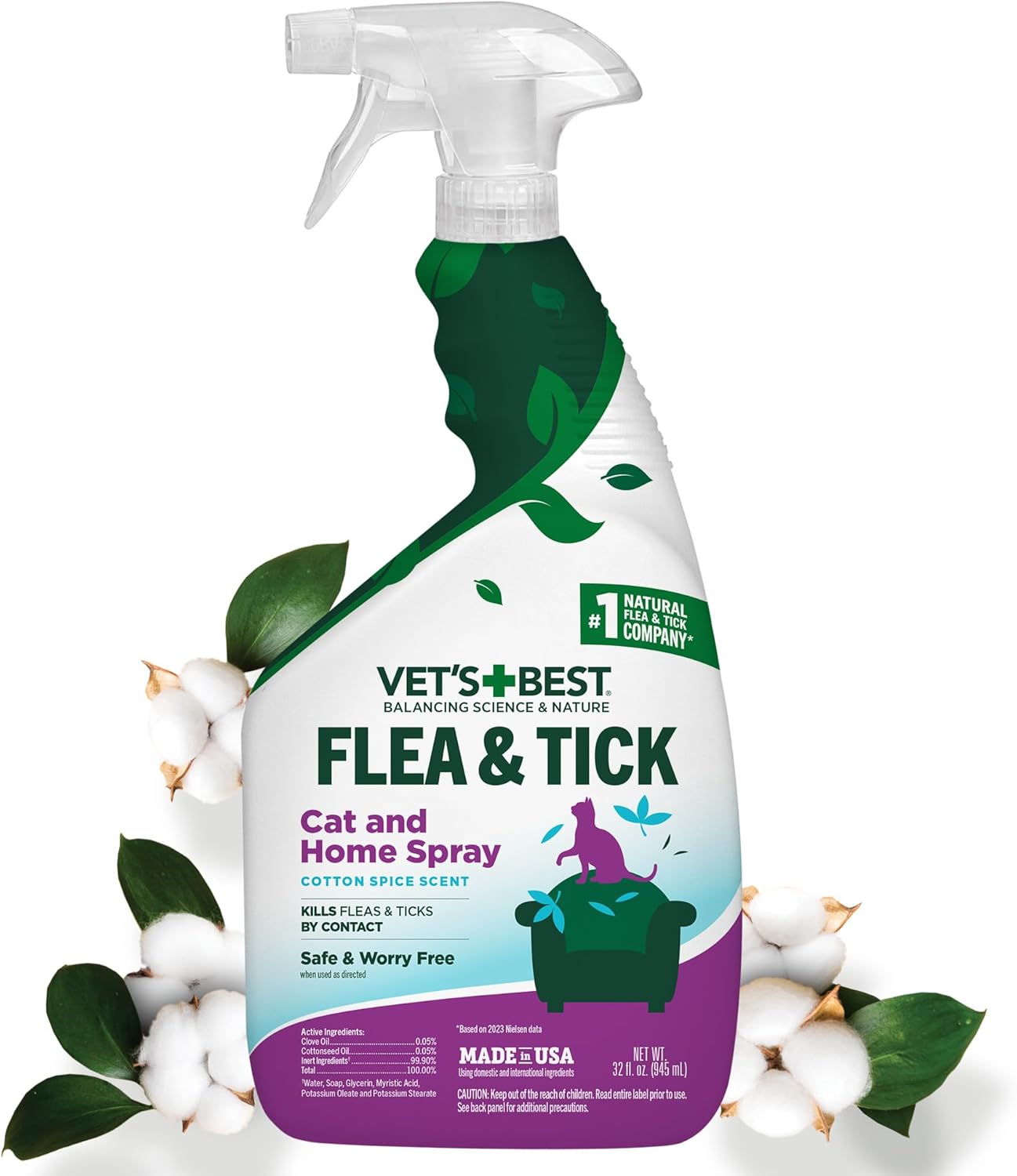
| Unit Count | 32 Fluid Ounces |
|---|---|
| Item Form | Spray |
| Scent Name | Cotton Spice |
| Target Species | Cat |
| Active Ingredients | Clove Oil 0.05% Cottonseed Oil 0.05% |
This 32 oz Vet's Best home spray uses a plant-powered formula (cottonseed and clove oils) to target fleas, flea eggs, ticks and mosquitoes on contact and can be applied lightly to a cat's coat or sprayed on bedding, carpets and furniture. Typical use is a short patch test on the cat, then two weekly applications for active infestations or once weekly for maintenance; the label includes directions for treating surfaces without staining. Practical benefits include a gentler alternative to chemical treatments, a pleasant cotton spice scent, and versatility to treat both pets and their environment so you can break the flea life cycle. Important limitations are that active ingredients are present at very low concentrations so it is best used alongside veterinary prevention for robust, long-term control, and the product can cause sensitivity in some animals or mild eye and skin irritation in people if misused. Follow label guidance for kittens, pregnant or medicated cats and consult your veterinarian for severe infestations.
Best for: Buyers who want a veterinarian-formulated, gentler alternative to chemical sprays and who prioritize treating both the pet and the home as part of an integrated flea control plan.
Less Ideal for: Owners dealing with a severe, established infestation who need a single, high-potency medical treatment or those who prefer systemic prescription options for long-term prevention.
- Plant-based formula that kills fleas, flea eggs, ticks and mosquitoes on contact
- Can be used on cats 12 weeks and older and on bedding, carpets and furniture for environment treatment
- 32 fluid ounce size suitable for multi-room or multi-cat use
- Cotton spice scent leaves a pleasant aroma and is formulated to be non-staining
- Active ingredients are low concentration so may be less effective as a standalone solution for heavy infestations
- Some cats or household members may show sensitivity or irritation after use
Verdict: A vet-formulated, plant-based indoor spray that lets you treat cats and their environment for routine flea and tick control while avoiding harsher chemicals.
Choosing the Right Bug Spray for Home with Pets: Key Factors to Consider
Pet Safety & Ingredient Transparency
Knowing which active and inactive ingredients are in a spray is the first step to protecting animals. Some insecticides are formulated specifically with lower toxicity to mammals, while others can cause irritation, neurological effects, or increased grooming that raises ingestion risk. Pay attention to signal words, veterinary guidance, and whether the manufacturer lists known risks for common companion species.
Ingredient transparency also helps you match a product to specific pets. For example, households with birds, small mammals, or reptiles may need different precautions than dog-only homes. When in doubt, choose formulations with clear instructions about reentry time, surface contact, and recommendations for exposed or sensitive animals.
Application Method and Indoor Suitability
How you apply a spray determines how much residue and airborne exposure pets will encounter. Ready-to-use trigger sprays allow targeted spot treatment of baseboards, doorframes, and furniture seams, while aerosol mists and foggers disperse more widely and can increase inhalation risk. Pump or foam applicators often leave less airborne residue but may take longer to treat large areas.
Consider whether you can temporarily remove pets from treated rooms, how long ventilation is required, and whether the spray is safe for fabrics and pet bedding. Select products designed for indoor use and follow the label on recommended drying or reentry intervals to reduce exposure.
Residual Effectiveness and Pest Spectrum
Residual repellency determines how often you must reapply and how well treatments control recurring infestations. Long-lasting residuals reduce the need for frequent reapplication but can increase the window during which a pet might contact treated surfaces. Shorter-duration sprays can be useful for spot treatments or immediately removing active pests without long-term residues.
Match residual claims to the pests you face. Some sprays target a broad spectrum of insects such as ants, roaches, and spiders, while others focus on flies or mosquitoes. A home with seasonal infestations may prefer a longer-lasting option, while homes with constant pet activity might favor quick-drying, lower-residue products.
Surface Compatibility and Residue Cleanup
Sprays contact floors, furniture, baseboards, and fabrics-places pets touch or lie on. Some formulations can stain or degrade finishes, while others leave an oily or powdery residue that attracts dirt or hair. Consider whether treated surfaces are washable and how easy it is to remove residue before allowing pets back into the area.
If you plan to treat areas where pets sleep or eat, choose products with clear cleaning instructions. Also consider whether the spray binds tightly to porous surfaces, which affects long-term exposure risk and the labor required to keep pet spaces clean.
Scent, Volatility, and Air Quality
Odor strength and vapor release matter for animal comfort and for people with sensitivities. Strong-smelling sprays can cause sneezing, eye irritation, or behavioral avoidance in pets. Volatile formulations may require longer ventilation times and can linger in carpets and fabrics.
Look for lower-odor or low-VOC options when treating high-traffic pet areas. Even with milder scents, give treated rooms adequate air exchange and follow the label for recommended wait times before letting animals reenter.
Ease of Use and Application Safety
A product you can apply safely and accurately reduces the chance of accidental overexposure. Ergonomic triggers, precise spray patterns, and clear dose instructions matter when treating narrow crevices around baseboards or furniture legs. Products that require dilution add complexity and increase the risk of mixing errors, which can alter effectiveness and safety profiles.
Also consider storage and childproofing. Pet owners should keep products locked away and clearly labeled to prevent accidental access by curious animals or household members.
Treating Pet Bedding and Sleeping Areas
Treating bedding and sleeping zones requires extra caution because animals spend long periods in these spaces. Instead of spraying bedding directly, treat surrounding areas like baseboards and floor perimeters and allow treated surfaces to fully dry before replacing bedding. For washable materials, remove covers and launder them regularly using hot water when appropriate.
If a direct bedding treatment is unavoidable, choose a product with explicit instructions for fabric use and a short reentry time. Alternatively, opt for mechanical controls such as vacuuming and laundering combined with targeted spot treatments of nearby cracks and crevices.
- Avoid direct spray on pet beds unless label explicitly permits fabric application.
- Ventilate treated rooms thoroughly and wait for surfaces to dry before returning pets.
- Vacuum and wash bedding frequently during active infestations.
Protecting Indoor Plants and Aquariums
Indoor plants and aquariums can be sensitive to insecticidal sprays. Keep aquariums covered and electrical components sealed before applying any aerosol or mist indoors. Move potted plants away from spray zones or shield them to avoid contact with wet residues, which can stress foliage or alter soil chemistry.
When treating near aquariums, avoid spraying directly above tanks and consider shutting down air pumps or filters briefly while ventilating the room. For planted areas, spot treat soil edges and baseboards rather than foliage whenever possible.
- Cover aquarium surfaces and electronics before spraying.
- Shield potted plants or move them out of the treatment area.
- Use targeted spot treatments to avoid plant stress.
Short-Term Vs Long-Term Strategies
Short-term sprays are best for quickly stopping visible pests and are useful when you need immediate control with minimal residue. These are practical for one-off encounters with flies or a single roach sighting. Long-term residual options reduce reapplication frequency but may require stricter precautions around pets and longer drying or airing times.
Many households combine approaches: use a short-duration spray for living areas and a longer-lasting treatment in less-accessible zones like wall voids or exterior entry points. Pair chemical approaches with sanitation, sealing entry points, and regular vacuuming to reduce reliance on chemicals.
- Use short-duration sprays for quick, localized control.
- Reserve longer-residual treatments for perimeter and hidden areas.
- Combine sprays with nonchemical measures for sustainable control.
Managing Application Timing and Pet Routines
Plan treatments around pet schedules to minimize exposure. Temporarily relocating animals during application and ventilation reduces inhalation and grooming risks. If removal is not possible, treat during times when pets are naturally less present, such as when dogs are on walks or cats are in a closed room you can ventilate and clean afterward.
Record the time of application and the recommended reentry interval from the product label. Allow extra ventilation in homes with multiple pets, young animals, or birds, which are often more sensitive to airborne chemicals.
- Apply sprays when pets can be out of the room for the specified reentry time.
- Increase ventilation beyond label minimums for multi-pet households.
- Keep treated areas off-limits until surfaces are fully dry.
Nonchemical Partner Strategies
Nonchemical tactics reduce the need for frequent spraying and are especially helpful in pet households. Regular vacuuming, sticky traps, sealing cracks and gaps, and reducing food and water attractants cut pest pressure and make chemical treatments more effective when used sparingly.
Consider using mechanical traps for rodent or insect monitoring and removing hotspots of infestation through sanitation measures. These methods also lower the total amount of insecticide needed, minimizing risk to pets and family members.
- Use sealing and exclusion to prevent pest entry.
- Vacuum regularly to remove eggs and larvae from carpets.
- Combine traps with targeted sprays for hard-to-reach areas.
How We Chose the Best Bug Spray for Home with Pets
We focused editorial selection on real-world safety and indoor usability for homes that include animals. Primary evaluation criteria included pet-safe labeling and ingredient transparency, how the product is applied indoors, and demonstrated residual repellency for common household pests. We also assessed formulation type and scent intensity because those affect animal comfort, and the potential for surface residues that pets might lick off. We excluded outdoor-only formulations, foggers and structural fumigants that are not intended for regular indoor use, and products lacking clear ingredient lists or safety instructions for animals. We prioritized products that balance effective pest control with clear guidance for pet owners, and that offer practical application methods such as ready-to-use sprays or low-residue misting. The shortlisted items represent options suitable for a range of pet households and indoor environments.
FAQ
Are all bug sprays safe to use around cats and dogs?
Not all bug sprays are equally safe. Safety depends on active ingredients, formulation, and how the product is used. Read labels for species-specific warnings and follow reentry and ventilation instructions. When in doubt, consult a veterinarian before using a new insecticide around sensitive animals.
How long should pets be kept out of a room after spraying?
Reentry times vary by product and formulation. Many ready-to-use sprays advise waiting until surfaces are dry and the room is ventilated, which can range from minutes to several hours. Use the label guidance as a minimum and allow extra time in homes with multiple or young animals.
Can I spray pet bedding directly to kill fleas or ticks?
Directly spraying bedding is generally not recommended unless the product label explicitly permits fabric treatment. Washing bedding in hot water and using targeted perimeter treatments is a safer approach. For heavy pest loads on bedding, consider mechanical cleaning combined with a product formulated for fabric use.
What should I do if my pet licks a recently treated surface?
If a pet licks a treated area, remove access to the surface and rinse the pet's mouth with water if possible. Monitor for signs of distress such as drooling, vomiting, or lethargy and contact a veterinarian if symptoms appear. Keep product containers available to share ingredient information if needed.
Are natural or botanical sprays safer for pets?
Botanical options can be less persistent and may have lower mammalian toxicity, but they are not inherently risk-free. Some essential oils are toxic to cats or sensitive birds. Evaluate botanical products for labeled pet safety and follow application instructions and ventilation guidance.
How can I reduce residue on floors and furniture after treatment?
Wipe down nonporous surfaces with a damp cloth after the recommended drying period if the label allows cleaning. Use spot treatments rather than whole-room applications when possible, and avoid spraying high-contact areas where pets frequently rest. Regular cleaning and vacuuming also reduce residue build-up.
Final Verdict
Prioritize pet safety, application method, and residue risk when choosing a bug spray for homes with animals. Decide whether you need quick, low-residue control for living spaces or longer residual protection in hidden or perimeter areas, and plan treatments around pet routines to reduce exposure. Work these tradeoffs into your pest plan: combine targeted sprays with nonchemical measures like sealing, cleaning, and trapping to keep pests down while minimizing chemical contact for pets. Following label instructions and allowing adequate ventilation will help you protect both your household and companion animals.
