

Note: This article contains affiliate links. If you click on these links and make a purchase, I may earn a small commission at no extra cost to you. This helps support my research and content. Read my full affiliate disclosure here.
Spending time outdoors should not mean constant swatting and ruined evenings. A bug zapper for camping can cut down on biting insects around your tent or picnic area while you relax, cook, or sleep. The right unit for camping needs to be easy to carry, run on a suitable power source, and cover the area you use most. This guide shortlists six top options built for campsite use and evaluates them across practical criteria gardeners and campers care about, including power and insect control effectiveness. Read on to see which features matter most for overnight trips and weekend outings.
Top Picks at a Glance
| Best Overall The best all-around choice for most situations | Sayneep Cordless Rechargeable Bug Zapper with 10000mAh Battery and Auto Night Mode |  |
| Best Quality Built to a higher standard if you want something more solid | GARUTED Rechargeable Outdoor Bug Zapper with 5000mAh Battery and LED Night Light |  |
| Best Value The sweet spot between price and what you get | Stansport Insect Zapper & 180-Lumen USB Rechargeable Lantern Combo |  |
| Best Budget The cheapest option that still gets the job done reliably | JUSENWDSL Outdoor Bug Zapper with 4000mAh Rechargeable Battery |  |
| Highest Rated A top-rated pick with lots of positive feedback | MKNXYD 4-in-1 Rechargeable Outdoor Bug Zapper with 4200V Grid and 5000mAh Battery |  |
| Best Seller A high-volume bestseller chosen again and again | YISSVIC Electric Fly Swatter 4000V Bug Zapper Racket (1 Pack) |  |
Sayneep Cordless Rechargeable Bug Zapper with 10000mAh Battery and Auto Night Mode

| Power Source | Battery Powered |
|---|---|
| Battery Capacity | 10000mAh |
| Ingress Protection | IPX5 |
| Material Type | Plastic |
The Sayneep cordless bug zapper is built for flexible, performance-focused use around patios, porches, RVs, and campsites. It combines a 10000mAh rechargeable battery with USB-C charging so you can run it all evening without a plug and move it to where insects concentrate. The unit uses an attraction light, internal airflow system, and an electric grid to lure and eliminate flies and mosquitos, while a brushless motor keeps operation quieter than typical fan-based traps. A light-sensing Auto Mode switches the unit on at dusk and off at dawn for hands-off night operation. IPX5 water resistance and a protective outer housing let you leave it in ordinary outdoor conditions without immediate damage, and the included brush simplifies cleaning of the collection area. Limitations to note are that performance depends on placement and surrounding competing lights, and it is not intended as a sealed weatherproof unit for exposure in heavy rain or submersion. Expect best results when placed away from porch lights and at typical insect flight height for your area.
Best for: Buyers who want a high-runtime, portable zapper to control flying insects around outdoor living spaces, campsites, and RVs and who prioritize quiet, automatic night operation.
Less Ideal for: People needing an all-weather, permanently mounted outdoor fixture or those who require insect control for very large, open fields where a single portable unit will be insufficient.
- Large 10000mAh rechargeable battery for extended cordless run time
- Auto Mode with light sensor for automatic dusk-to-dawn operation
- Integrated attraction light plus airflow and electric grid for active insect capture and elimination
- Brushless motor for quieter operation compared with traditional fan traps
- IPX5 water-resistant construction and protective housing for everyday outdoor exposure
- Effectiveness depends on correct placement and will decrease near competing light sources or in very large open areas
- Not rated for full waterproofing so prolonged exposure to heavy rain could damage electronics
Verdict: A high-capacity, rechargeable cordless zapper that delivers quiet, automatic dusk-to-dawn performance for patios, porches, and portable outdoor use.
GARUTED Rechargeable Outdoor Bug Zapper with 5000mAh Battery and LED Night Light
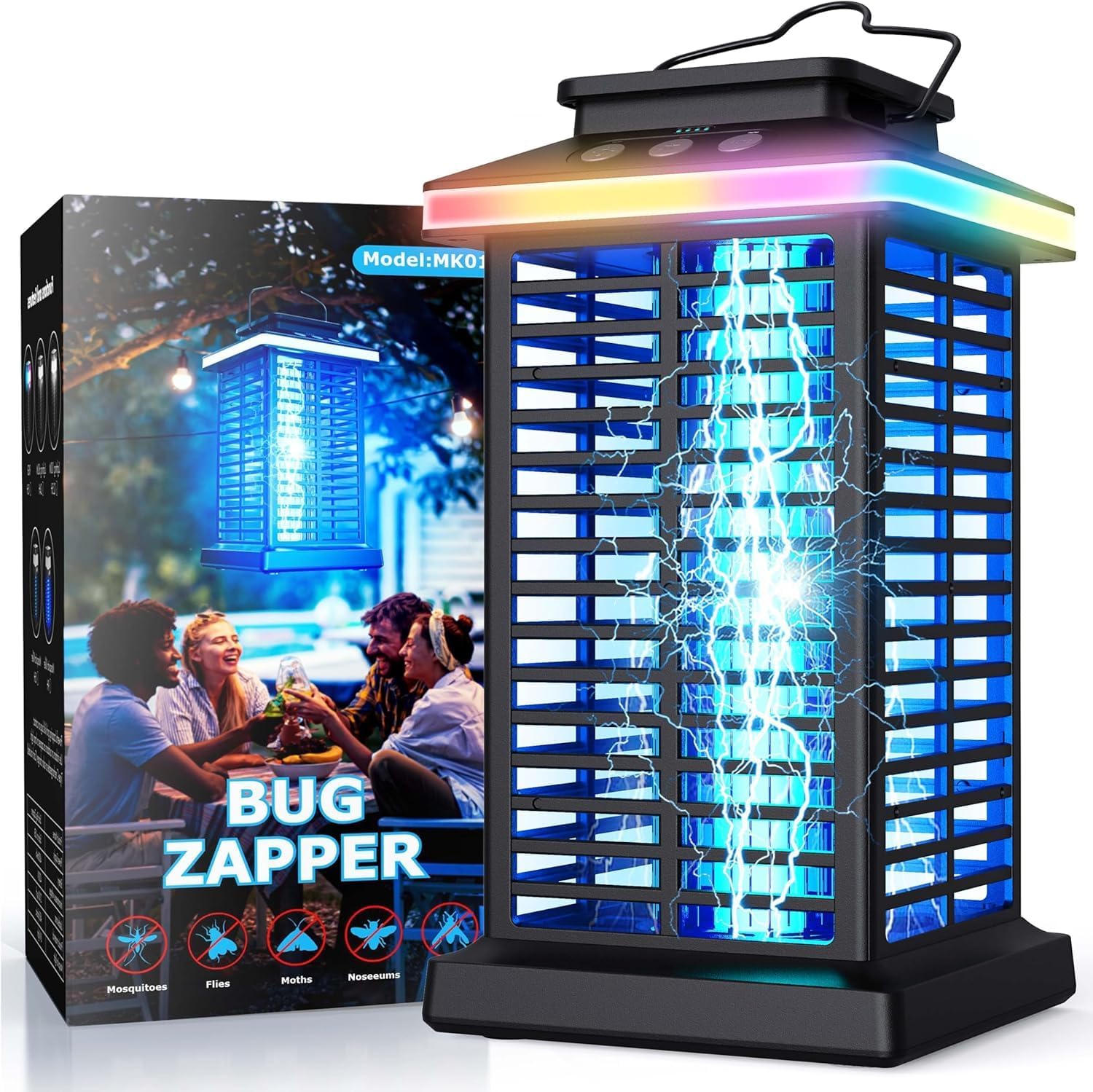
| Power Source | Battery Powered |
|---|---|
| Battery Capacity | 5000mAh |
| Voltage | 4000V |
| Coverage Area | Up to 2100 sq. Ft. |
| Waterproof Rating | IP66 |
This GARUTED bug zapper is built for outdoor use and for people who want a portable, battery-powered way to reduce flying pests while camping or entertaining. It attracts insects with 365–400 nm UV LEDs across a 360° array and electrocutes them on a 4000V grid, then collects debris in a housing that is designed to be easy to clean. The built-in 5000mAh rechargeable battery runs the zapper for several hours on a single charge and recharges over USB in a few hours. A light sensor enables automatic on/off in low light, and an LED night light adds useful ambient illumination at a campsite. The unit is IP66-rated for weather resistance and has a hanging loop so you can suspend it from a tent or branch. Expect reliable insect control for small to medium outdoor areas, but note it relies on light attraction so performance drops in bright daylight and it is optimized for flying insects rather than crawling pests.
Best for: Campers and outdoor hosts who prioritize portable, battery-powered insect control and want an easy-to-hang, hands-off device for evenings away from fixed power sources.
Less Ideal for: People needing daytime or large-area pest control or those who require solutions for crawling insects should look at other pest-control options.
- Rechargeable 5000mAh battery provides multi-hour runtime for overnight camping use
- 360° UV LED array and 4000V grid target a wide range of flying insects
- IP66 waterproof rating and rugged ABS housing suitable for outdoor conditions
- Automatic light-sensor mode switches the unit on at dusk and off at dawn for hands-free use
- Relies on UV light attraction so effectiveness decreases in well-lit areas or bright moonlight
- Designed for flying insects only and will not address crawling pests
Verdict: A rugged, rechargeable bug zapper built for campers who want reliable, portable night-time protection from flying insects.
Stansport Insect Zapper & 180-Lumen USB Rechargeable Lantern Combo

| Power Source | Battery Powered |
|---|---|
| Light Output | 180 lumens |
| Electrified Grid Voltage | 500V |
| Rechargeable | USB rechargeable |
| Recommended Uses For Product | Camping |
This Stansport combo pairs a 180-lumen LED lantern with an integrated ultraviolet insect attractor and a 500V electrified grid, so you get light and active pest control from one compact unit. It offers three brightness settings for the lantern and run times varying by setting, while the zapper can operate up to 24 hours per charge. A retractable hanging hook and lightweight design make it easy to mount in a tent, on a branch, or hang over a picnic table, and USB rechargeability means you can top it up from a power bank or vehicle. Practical benefits include fewer mosquitoes near your sleeping area without sprays and the convenience of one device replacing separate lantern and zapper gear. Limitations are that the zapper targets flying insects drawn to UV light so it will not catch all pests and the 500V grid is sized for close-range use rather than clearing a wide campsite perimeter. The construction and runtime are suited to weekend trips and emergency kits but heavy-duty continuous commercial use is outside its intended scope.
Best for: Buyers who prioritize packing light and practical multifunction gear for weekend camping, car camping, or emergency kits and want easy-to-charge, hangable solutions that reduce nearby flying insects.
Less Ideal for: People who need wide-area mosquito control for large gatherings or those who require non-UV trapping methods for specific pest species.
- Two-in-one design replaces separate lantern and bug zapper for lighter packing
- Three brightness settings let you balance light output and battery life
- USB rechargeable for easy charging from power banks or car ports
- Retractable hanging hook improves hands-free placement in tents or from branches
- Attracts insects primarily with UV so effectiveness varies by species and local conditions
- Coverage is best for a small area immediately around the device rather than a large campsite
Verdict: A compact, rechargeable lantern that also zaps nearby flying insects, ideal for campers who want one reliable multipurpose light-and-bug-control tool.
JUSENWDSL Outdoor Bug Zapper with 4000mAh Rechargeable Battery

| Target Species | Mosquitoes, Gnats, Flying Pests |
|---|---|
| Power Source | Battery Powered |
| Material Type | Plastic |
This compact JUSENWDSL bug zapper is built for outdoor use and camping thanks to its waterproof housing and large rechargeable battery. In practice you can set it on a picnic table, hang it in a tent area, or tuck it on a patio where the built-in 4000mAh cell provides extended runtime without a cord. The unit uses a high-voltage grid to kill mosquitoes and flying pests on contact and drops debris into a removable tray that rinses clean. Four modes cover typical outdoor needs: automatic attraction, active zapper, warm night light, and an SOS flashing beacon for emergencies. The plastic shell and outer safety mesh keep fingers and pets away from the grid, and the silent operation avoids fumes or sprays. Expect straightforward, chemical-free pest control, but be aware this is a consumer-grade device so coverage and runtime will vary with insect pressure and mode choice.
Best for: Campers and backyard hosts who need a portable, rechargeable insect control device that is easy to move and clean and prioritizes straightforward, chemical-free operation.
Less Ideal for: People who need industrial-strength coverage for very large or heavily infested outdoor areas should consider higher-capacity commercial units instead.
- IPX6 waterproof rating suitable for rain and outdoor cleanup
- Large 4000mAh rechargeable battery enables cordless use for camping and gatherings
- High-voltage grid with removable collection tray for easy cleaning
- Four modes including auto attract, zapper, night light, and SOS beacon
- Protective outer mesh minimizes risk to fingers and pets while operating silently
- Consumer-grade coverage may be limited in heavy insect infestations
- Plastic construction is lightweight but less rugged than metal-bodied units
Verdict: A portable, waterproof rechargeable zapper that gives budget-minded campers simple, chemical-free protection and flexible lighting modes for outdoor trips.
MKNXYD 4-in-1 Rechargeable Outdoor Bug Zapper with 4200V Grid and 5000mAh Battery

| Power Source | Battery Powered |
|---|---|
| Voltage | 4200V |
| Battery Capacity | 5000mAh |
| Ingress Protection | IP68 |
This MKNXYD bug zapper is built for cordless outdoor use and blends insect control with ambient lighting. It uses a 4200V electric grid to kill mosquitoes and flies while offering three light modes—white for visibility, blue to attract insects, and RGB for atmosphere—so you can run attraction and lighting separately or together. The internal 5000mAh battery charges in about two hours and provides roughly 12 to 13 hours of runtime, making it practical for evening patios, camping, or balcony use without nearby power. The unit is IP68 rated and includes a removable tray and cleaning brush to simplify maintenance after use. A protective outer grid reduces accidental contact by children or pets and a smart auto mode turns the device on at dusk and off by day. Trade-offs are that the kill radius is typical of a single portable unit rather than a whole-yard solution and continuous effectiveness depends on placement and insect density. For users who need a simple, weatherproof, rechargeable zapper with built-in lighting, this is a dependable choice.
Best for: Buyers who prioritize a reliable, weatherproof cordless zapper for evening outdoor activities and want a unit that runs all night without access to power and is simple to maintain.
Less Ideal for: People seeking a device that covers large yards or replaces professional pest control should look for higher-capacity or multiple-unit solutions.
- High-voltage 4200V grid for effective insect elimination
- Long-lasting 5000mAh rechargeable battery with about 12–13 hours of runtime
- IP68 waterproof housing suitable for use in rain or damp outdoor spaces
- Multiple light modes (white, blue, RGB) let you combine attraction and ambient lighting
- Removable tray and included brush make cleaning straightforward
- Portable single-unit coverage is limited compared with larger or multiple zappers
- Effectiveness depends on correct placement and local insect pressure
Verdict: Choose this IP68-rated rechargeable zapper when you need a dependable, all-night cordless insect control solution for patios and camping.
YISSVIC Electric Fly Swatter 4000V Bug Zapper Racket (1 Pack)

| Power Source | Battery Powered |
|---|---|
| Material Type | Stainless Steel |
| Number of Pieces | 1 |
This YISSVIC fly swatter combines a handheld electric racket with a small stand-and-attract base so you can either swing to zap bugs or leave it plugged in for automatic attraction and zapping. It runs from a built-in rechargeable battery with a visible charge-level indicator and also accepts USB power so the unit can be used away from outlets or kept on the base for continuous auto mode. The 4000V grid and a 365nm attractant light make it effective on mosquitoes, flies, gnats and moths that come near the lamp, and the triple-layer protective mesh helps reduce accidental contact with the live inner grid. Practical touches include a long charging cable and an easy-to-clean surface so insect remains do not get trapped. Expect reliable short-term use for evening patio sessions or indoor spots where flying pests gather, but know the battery is nonremovable and the auto mode requires the unit to be plugged in to run all night, which limits uninterrupted cordless operation.
Best for: Buyers who want a low-effort, tried-and-true solution for reducing mosquitoes and other flying pests around small outdoor seating areas or indoors and prefer the safety of protective nets and visible charge indicators.
Less Ideal for: People who need an all-night cordless zapper without plugging in or those who prefer replaceable batteries or integrated insect-trapping containers rather than an electric grid.
- Dual use as a handheld swatter and a hands-free attractant zapper
- Rechargeable battery with visible charge-level indicator for easy monitoring
- 365nm attractant light plus 4000V grid for effective killing of mosquitoes and flies
- Triple-layer protective mesh reduces the chance of accidental contact
- Long USB charging cable and detachable base increase placement flexibility
- Battery is built-in and nonremovable, so replacing it requires service or a new unit
- Auto mode only operates continuously when plugged in, limiting cordless overnight use
Verdict: Choose this model if you want a safe, rechargeable 2-in-1 racket and hands-free zapper that reliably downs mosquitoes with a bright attractant light and strong 4000V grid.
Choosing the Right Bug Zapper for Camping: Key Factors to Consider
Power Source and Runtime
How a bug zapper is powered directly affects where you can use it at camp. Battery-powered and rechargeable models let you place the unit away from picnic tables and tents, while USB-chargeable units can draw from power banks for multi-night trips. Consider both single-charge runtime and how long the battery holds a charge in cold conditions.
Also think about recharge options on extended trips. Units that accept standard USB power banks or vehicle 12-volt adapters give more flexibility than models that require proprietary chargers. If you expect to camp in remote areas, prioritize long runtime and the ability to top up from common power sources.
Coverage Area and Attractant Type
Coverage area tells you how much open space a zapper can reliably protect. For campsite use you should match coverage to typical activity zones: a small tent vestibule needs less reach than a 15-by-15-foot common area. Some units list square-foot coverage or effective radius; use those numbers as a starting point but allow for reduced effectiveness in windy or heavily vegetated sites.
Attractant method matters too. UV and blue LEDs are common and draw many flying pests, while additional features like CO2 mimicry or scent lures change performance. Outdoors, airflow and competing light sources reduce lure effectiveness, so choose a unit with proven outdoor attractants or stronger coverage for open spaces.
Build Quality and Weather Resistance
Camping gear takes knocks and exposure to moisture. Look for zappers with sturdy housings, impact-resistant cages, and some level of water resistance. IP ratings are useful when present, but simple design details like sealed charging ports, removable trays that keep internal wiring away from debris, and corrosion-resistant metals also matter.
Windblown dirt, rain, and condensation are common at campsites. A device that is easy to dry and clean will last longer and maintain consistent performance. If you plan backpacking, factor weight against durability – ultralight options may sacrifice ruggedness for portability.
Ease of Use and Maintenance
At camp you want a device that sets up and breaks down quickly. Simple hanging hooks, stake mounts for ground placement, or stable freestanding bases reduce fuss. Removable collection trays or screens make cleaning carcasses straightforward and limit handling of dead insects.
Maintenance also includes safe handling features. Look for models that prevent accidental contact with the electrified grid, and prefer units with clear access for emptying and battery replacement. Units that require minimal tools and no complex assembly are best for frequent use.
Noise Level and Nighttime Disturbance
A loud zapper can be disruptive around a tent or when trying to sleep. Some units operate quietly and rely mostly on trapping rather than audible zapping. Consider whether you prefer immediate kill sounds that confirm performance or near-silent operation to preserve campsite ambiance.
Also consider light pollution. Bright attractant LEDs can make it harder to sleep or enjoy stargazing. Many camping-focused units allow you to dim or shield the light while maintaining electric grid function to limit disturbance.
Size, Weight, and Packability
How easily the zapper fits into your camping kit affects whether you bring it at all. Backpackers will prioritize compact, lightweight designs that fit into external pockets or small compartments. Car campers can accept larger units with greater coverage.
Look for foldable handles, compact shapes, and weight-to-coverage tradeoffs. A slightly heavier unit that covers more area might be worth it for family camps, while solo hikers will want the smallest effective footprint.
Best Power Options for Off-Grid Camping
Choosing the right power system is the single biggest practical decision for camping zappers. Rechargeable battery units and USB-chargeable designs offer the most flexibility because they can be topped off from power banks, solar chargers, or vehicle outlets. If you usually camp at developed sites with 120-volt hookups, mains-capable units are fine, but they lose appeal in remote trips.
Consider bringing a dedicated power bank sized to handle the zapper's draw for the number of nights you expect to be away. Also think about cold-weather performance because batteries drain faster in low temperatures; carrying a spare or using insulated storage helps extend runtime.
- USB-compatible zappers can be recharged from common power banks
- Replaceable AA or D cell models are easy to swap in the field
- Units designed to run from 12V sources work well at car camps
Placement Strategies at the Campsite
Where you position a zapper affects how well it protects people while minimizing nuisance lighting. Place the unit several feet away from high-traffic areas and sleep zones so insects are drawn away rather than toward you. Hanging the device at about head height from a shelter or nearby tree usually gives good coverage for a cooking or seating area.
Use the zapper as a perimeter tool by setting multiple smaller units around a campsite if protection for a larger area is needed. Avoid placing units too close to food preparation surfaces to limit dead insects near meals.
- Hang or stake zappers 4 to 6 feet off the ground for effective draw
- Keep units 10 to 15 feet from sleeping areas to reduce light disturbance
- Position to take advantage of natural airflow rather than blocking wind
Safety and Wildlife Considerations
A bug zapper is an electrical device used in a natural setting, so safety precautions matter. Ensure the unit is stable and cannot fall into a tent or campfire. Keep cords away from walkways to prevent trips and consider using protective cages on units with exposed grids to prevent accidental contact by children or curious wildlife.
Do not place zappers where they might attract animals that feed on insects into food storage areas. The device can alter local insect activity and may draw predators like bats or attracted birds. Use scent-free lure options and situate the zapper to minimize unintended wildlife interactions.
- Secure hanging cords and mounting hardware to prevent falls
- Avoid placing zappers near food storage or cooking surfaces
- Use enclosed designs to limit access by small animals
Managing Light and Atmosphere Around Camp
Many campers want insect control without ruining the mood. Choose zappers with adjustable or shielded lights to reduce glare and maintain stargazing or quiet evenings. Some units let you run the electric grid while dimming the attractant LED to cut visible light.
Consider pairing the zapper with campsite lighting that directs light downward and away from the sleeping area. That way insects are drawn to the zapper instead of general camp lamps, improving effectiveness without making the site too bright.
- Look for dimmable attractant LEDs or shielded housings
- Use directional lanterns to keep general camp light separate
- Turn off unnecessary lights at night to increase zapper draw
Packing and Caring for a Camping Bug Zapper
Treat the zapper like other camp electronics. Clean removable trays after each trip to prevent buildup, and dry the unit thoroughly before storage to avoid corrosion. Pack small spares like replacement fuses, extra o-rings for seals, or a compact brush for the grid.
When transporting, use padded compartments to protect the cage from bending and keep charging ports sealed. If camping in damp climates, store the unit in a breathable bag with moisture absorbers between uses to preserve battery and metal components.
- Clean collection trays and grids after use to maintain performance
- Store with charging ports sealed and batteries removed for long storage
- Carry small maintenance tools to handle field repairs
How We Chose the Best Bug Zapper for Camping
We focused on features that matter specifically for campsite use and excluded units meant only for permanent patio or indoor installation. Selection began by filtering for portability, multiple power options, and documented insect control approaches suitable for outdoor transient use. We prioritized battery and low-voltage performance because many campsites lack mains power, and we favored designs that balance coverage area with compact form factors. Key evaluation criteria included power source versatility, area coverage and attractant effectiveness, durability for outdoor exposure, ease of setup and maintenance, and quiet operation or low nighttime disturbance. We excluded large grid-only yard units, decorative-only lights, and devices relying solely on chemical attractants. Final picks represent a cross-section of battery, USB, and rechargeable options that perform reliably in real campsite conditions.
FAQ
Can a bug zapper work effectively in windy or smoky campsite conditions?
Effectiveness often drops in strong wind because attractant plumes disperse. Smoke can also interfere with insect activity and lure signals. In these conditions, place the unit in a sheltered but ventilated spot to improve draw, and consider multiple units for larger or more turbulent sites.
Is a zapper safe to use inside a tent vestibule or enclosed shelter?
Using an electrified grid inside an enclosed space increases the chance of contact and can attract insects into the shelter. If you must use it, keep it well away from sleeping areas and ensure it is secured so it cannot fall. Prefer low-light, enclosed designs and follow all manufacturer safety guidance.
How long do rechargeable zappers typically run between charges while camping?
Runtime varies widely based on battery capacity and intensity settings. Many compact units provide several hours to an entire night on a full charge, while higher-output devices may run less. Cold weather reduces runtime, so expect shorter service in low temperatures and plan for backup power if needed.
Will a zapper eliminate mosquitoes completely at a campsite?
No single device will remove all mosquitoes, especially in areas with heavy breeding. A zapper reduces local flying insect numbers and can lower bites in a focused area, but combining it with netting, topical repellents, and habitat management yields better overall protection.
Are LED light-only traps better than electrified grids for camping?
LED traps that capture insects without an electric grid are quieter and safer, but they often require closer proximity or longer operation to reduce pest numbers. Electrified grids give immediate kills and can be more effective in busy outdoor settings, depending on coverage and attractant strength.
Final Verdict
For camping use, prioritize power flexibility, durable outdoor construction, and a real coverage rating that matches your typical campsite footprint. Expect tradeoffs between packability and effective area: ultralight units are great for solo hikers but may not protect a family site, while larger models cover more ground at the cost of weight and bulk. Decide first how and where you will camp, then choose a zapper whose runtime, mounting options, and weather resistance match that plan. That approach will give the reliable, low-disturbance insect control most campers need.
