

Note: This article contains affiliate links. If you click on these links and make a purchase, I may earn a small commission at no extra cost to you. This helps support my research and content. Read my full affiliate disclosure here.
Picking the right bulb fertilizer for tulips matters because these spring bulbs rely on stored nutrients to set big blooms and healthy offsets. The wrong feed or poor timing can lead to weak stems, small flowers, and smaller bulbs next year. This guide reviews seven shortlisted bulb fertilizers chosen for gardeners who want stronger spring displays and longer-term bulb vigor. We evaluate each option for nutrient balance, ease of use in beds and containers, and how well applications fit common tulip planting and maintenance schedules. Read on to find a fertilizer suited to your soil, planting style, and effort level.
Top Picks at a Glance
| Best Overall The best all-around choice for most situations | Espoma Bulb-Tone Organic Bulb Fertilizer, 18 lb |  |
| Best Quality Built to a higher standard if you want something more solid | Jobe's Organics Granular Bulb Fertilizer, 4 lb | 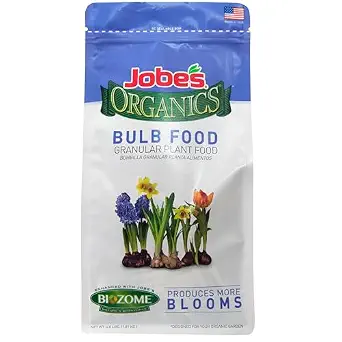 |
| Best Value The sweet spot between price and what you get | Lilly Miller Bulb & Bloom Food 4-10-10 (4 lb) |  |
| Best Budget The cheapest option that still gets the job done reliably | SouthernGRO Dutch Bulb Food 7-8-5, 4 lb |  |
| Highest Rated A top-rated pick with lots of positive feedback | Cz Garden Supply Bulb & Bloom Fertilizer 4-10-10 (64 oz) |  |
| Most Popular A crowd favorite that many people choose with confidence | Burpee Bone Meal Fertilizer, 3 lb |  |
| Best Seller A high-volume bestseller chosen again and again | Espoma Bulb-Tone Organic Fertilizer (4 lb) |  |
Espoma Bulb-Tone Organic Bulb Fertilizer, 18 lb

| Item Form | Granules |
|---|---|
| Application Method | Sprinkle on soil surface or mix into planting hole |
| Target Species | Bulbs |
| Mixing Ratio | 3:5:3 |
Espoma Bulb-Tone is an organic granular fertilizer designed specifically for bulbs such as tulips, daffodils, crocus and hyacinths. You apply it directly in the planting hole for new bulbs or sprinkle over the soil for established bulbs and then water in; the product is ready to use and requires no on-site mixing. Its 3-5-3 nutrient blend and added calcium support bloom development and bulb health, while the Bio-tone formula and organic ingredients aim to improve soil biology over time. Practical benefits include simple application, suitability for organic gardens, and a medium coverage that works well for small beds or multiple planting rounds. Important limitations are that granules release nutrients slowly so you should not expect an immediate leafy surge, and an 18 lb bag is a one-size offering that may be more than needed for very small spaces. For tulip growers the clear planting and feeding instructions make it an easy, low-maintenance way to encourage consistent spring blooms.
Best for: Gardeners who want an easy, organic fertilizer tailored to spring and fall flowering bulbs and prefer simple, low-maintenance feeding when planting or after bloom.
Less Ideal for: Growers who need a fast-acting soluble feed for immediate green-up or those who only have a few bulbs and prefer to buy in much smaller quantities.
- Formulated specifically for bulbs with a 3-5-3 N-P-K to promote flowering
- Organic ingredients and certified for use in organic gardening
- Ready-to-use granular form that can be placed in planting holes or sprinkled on the soil
- Contains added calcium which helps bulb development and reduces common deficiencies
- Slow-release granular formula so results are gradual rather than immediate
- Sold only in an 18 lb bag which may be excessive for very small plantings
Verdict: Choose Espoma Bulb-Tone if you want a ready-to-use organic fertilizer made to support healthy, consistent blooms from tulips and other spring bulbs.
Jobe's Organics Granular Bulb Fertilizer, 4 lb

| Item Form | Granules |
|---|---|
| Specific Uses For Product | Plant Growth, Root Development, Seed Development, Soil Conditioning |
| Target Species | bulbs, flowers |
| Mixing Ratio | 3-5-4 |
Jobe's Organics Granular Bulb Fertilizer is a pet- and kid-friendly organic granular formula designed to feed tulips, daffodils and other bulb flowers through the growing season. Applied every 3 to 5 weeks, its 3-5-4 NPK mix emphasizes phosphorus for bloom development while still supporting leafy growth and root health. The granules are easy to measure and scatter into beds or around individual bulbs, and because the product is OMRI listed it can be used in organic gardens and certified production. Practical benefits include reduced risk of burning compared with synthetic fertilizers and straightforward repeat applications during bloom season. Limitations are that granular feeding requires periodic reapplication rather than a single long-release treatment and it does not replace a soil test or broader garden fertility plan when addressing nutrient deficiencies. For gardeners focused on reliable bloom performance in tulips, this product delivers targeted nutrients in an organic format.
Best for: Gardeners who prioritize strong bloom performance for tulips and other bulbs and prefer organic, low-burn fertilizers they can apply and control throughout the season.
Less Ideal for: People seeking a no-maintenance, single-application slow-release solution or those who need a tailored fertilizer based on a recent soil test.
- OMRI listed and formulated without synthetic chemicals for organic gardening
- 3-5-4 NPK ratio emphasizes bloom development for bulbs
- Granular form is easy to measure and apply to beds or individual bulbs
- Safe for use around children and pets when used as directed
- Requires repeated applications every 3–5 weeks rather than a single long-lasting feed
- Does not substitute for soil testing when correcting specific nutrient imbalances
Verdict: Choose this OMRI-listed granular fertilizer when you want an organic, bloom-focused feed to consistently boost tulip flowering throughout the season.
Lilly Miller Bulb & Bloom Food 4-10-10 (4 lb)

| Item Form | Powder |
|---|---|
| Specific Uses For Product | plant care |
| Coverage | Medium |
| Target Species | bulbs |
| Mixing Ratio | 4:10:10 |
Lilly Miller Bulb & Bloom Food is a powdered, slow‑release fertilizer designed for flowering bulbs. With a 4-10-10 NPK and a mixing ratio provided, it is applied by mixing into the soil around the bulb at planting or at the start of the growing season to boost phosphorus and potassium for brighter, more vigorous blooms. The formula includes bone meal and other natural ingredients intended to provide steady feeding rather than a quick spike, which helps sustain bloom quality over the season. Practical use is straightforward for gardeners who already prepare beds: wear gloves, follow the manufacturer directions, and avoid overapplication near water sources because of phosphorus runoff concerns. The product comes in a 4 pound unit count that covers medium areas and is aimed at bulbs rather than general turf. Limitations are its single NPK profile so it may not meet growers seeking higher nitrogen for foliage or a fully balanced program, and local regulations may restrict phosphorus use on lawns in some areas.
Best for: Gardeners who want a straightforward, bloom‑focused fertilizer for spring bulbs and prefer a slow‑release, easy to mix product to improve flower size and color.
Less Ideal for: Growers who need a high‑nitrogen feed for leafy growth, those managing large lawns where phosphorus is restricted, or those who want an all‑purpose granular fertilizer for mixed beds.
- Bulb-focused 4-10-10 formula that supports bloom development
- Slow-release powder for steady nutrient delivery over the season
- Includes natural ingredients such as bone meal for root and flower support
- Clear mixing ratio and directions make application simple for planting and seasonal feedings
- Contains phosphorus which may be restricted in some areas and can contribute to runoff if misapplied
Verdict: A simple, slow‑release bulb fertilizer that reliably boosts flower development for gardeners focused on better blooms.
SouthernGRO Dutch Bulb Food 7-8-5, 4 lb

| Item Form | Granules |
|---|---|
| Specific Uses For Product | Root Development |
| Coverage | Bulb flowers such as Tulips, Daffodils, Iris, Crocus, Hyacinths, Lilies |
| Mixing Ratio | 7:8:5 |
SouthernGRO Dutch Bulb Food is a granular 7-8-5 fertilizer made for in-ground bulb plants like tulips, daffodils, iris and hyacinths. You apply it to soil around bulbs at planting or seasonally to supply the primary nutrients that support root development and larger flowers. The formula is derived from common nutrient sources such as diammonium phosphate, urea and muriate of potash, and the product is sold as a simple, single 4 lb bag with a mixing ratio provided for application. Practical benefits include clear targeting for bulb crops and an easy granular form that is straightforward to work into garden soil. Important limitations are that it is not intended for container use and the bag size is modest, so larger beds will need multiple bags. If you want a no-frills, bulb-specific feed to add during planting or spring top-dress, this product covers the basics without specialty additives.
Best for: Buyers who want an affordable, straightforward bulb fertilizer for in-ground tulips and other spring bulbs and who prefer a simple granular feed to use at planting or seasonal top-dressing.
Less Ideal for: Gardeners who primarily grow bulbs in pots or who need a large-volume fertilizer for extensive beds should consider other products or bulk options.
- Bulb-focused 7-8-5 NPK ratio formulated to encourage root development and flowering
- Granular form is easy to apply around in-ground bulbs at planting or as a top-dress
- Contains standard, widely used nutrient sources for predictable performance
- Suitable for a range of common bulb species including tulips, daffodils and iris
- Not intended for container use
- 4 lb bag offers limited coverage for larger planting areas
Verdict: A budget-friendly, no-frills granular bulb fertilizer that supplies the basic nutrients tulip growers need for stronger roots and bigger blooms.
Cz Garden Supply Bulb & Bloom Fertilizer 4-10-10 (64 oz)

| Item Form | Granules |
|---|---|
| Coverage | Vegetable gardens, lawns, flower gardens, and indoor/outdoor plants |
| Target Species | Flowers |
| Mixing Ratio | 4:10:10 |
| Unit Count | 64 Ounce |
This granular 4-10-10 fertilizer is designed for bulb-forming flowers and general garden use, supplying a bloom-focused balance of phosphorus with nitrogen and potassium plus micronutrients and 2% iron. It is typically applied by mixing at the stated ratio and worked into soil at planting or fed during the growing season to encourage stronger root development and fuller blooms in tulips, daffodils, lilies and similar bulbs. The product comes in a resealable pouch for straightforward measuring and storage, and the US-made formulation is oriented toward reliable, repeatable results rather than novelty additives. Practical benefits include versatile coverage for containers and beds and a clear mixing ratio that helps standardize applications. Limitations are that it is a synthetic granular formula, so gardeners seeking organic certification or slow-release organics will need an alternative, and specific application rates for every bulb species are not listed on the product details so some experience or reference to bulb feeding guidelines is helpful.
Best for: Gardeners who prioritize predictable, repeatable feeding for tulips and other spring bulbs and want a straightforward granular fertilizer to promote strong blooms.
Less Ideal for: Growers who require organic-certified products or those who prefer a long‑term slow‑release amendment tailored to specific bulb species.
- Bloom-focused N-P-K (4-10-10) supports flower and bulb development
- Includes micronutrients and 2% iron to address common nutrient deficiencies
- Resealable pouch makes measuring and storing easy
- Made in the USA with a clear mixing ratio for consistent application
- Granular synthetic formula is not certified organic
- Packaging and listing omit detailed species-specific application rates
Verdict: A dependable, bloom-focused granular fertilizer for tulips and other bulbs when you want consistent, repeatable feeding to boost flower production.
Burpee Bone Meal Fertilizer, 3 lb

| Item Form | Powder |
|---|---|
| Specific Uses For Product | Plant Growth, Root Development |
| Coverage | 240 Sqaure Feet |
| Target Species | tomatoes, peppers, and bulbs |
Burpee Bone Meal is a slow-release, powder-style fertilizer intended to boost early root development and bulb growth. You apply it by working the granules into soil or potting mix at planting or as a supplement during the growing season; the product description and directions advise following package rates. Because it is high in phosphorus and calcium and breaks down slowly, it helps establish stronger roots and supports better blooms and fruit set without burning plants. The OMRI listing makes it suitable for organic gardening and practical for use with tulips, other spring bulbs, tomatoes, and peppers. Coverage is listed for about 240 square feet from this 3 lb package, so it is convenient for small beds, containers, and fall bulb planting. Limitations are that it is a single-nutrient amendment focused on phosphorus/calcium rather than a balanced NPK formula, so gardeners wanting a full-season, all-purpose fertilizer may need to supplement with additional nitrogen or micronutrients.
Best for: Gardeners who prioritize organic, targeted support for bulbs and root crops and who value proven products with broad positive feedback.
Less Ideal for: Those looking for a complete all-purpose feed for an entire growing season or gardeners with large landscapes who need bulk fertilizer solutions.
- OMRI-listed organic ingredient suitable for certified organic gardens
- Designed to promote strong root and bulb development for tulips and other bulbs
- Slow-release granules that lower burn risk compared with soluble fertilizers
- Convenient 3 lb package with stated coverage for small beds and containers
- Not a balanced NPK fertilizer so it will not supply all-season nitrogen or trace nutrients
- Limited quantity per bag for larger gardens requiring repeated applications
Verdict: Choose this OMRI-listed bone meal when you want an organic, phosphorus-rich amendment to establish stronger roots and better tulip blooms.
Espoma Bulb-Tone Organic Fertilizer (4 lb)

| Item Form | Granules |
|---|---|
| Specific Uses For Product | Gardening, Organic, Plant Food |
| Coverage | Medium |
| Target Species | bulbs |
| Mixing Ratio | 3:5:3 |
Espoma Bulb-Tone is an organic granular fertilizer made specifically for bulbs such as tulips, daffodils, crocus and lilies. It is applied at planting by placing granules in the planting hole for new bulbs or sprinkled on the soil surface and watered in for established bulbs. The 3-5-3 N-P-K balance and added calcium support strong root development and vibrant blooms without synthetic chemicals, and the formula is approved for organic gardening. Its ready-to-use granules mean no measuring or mixing is required for typical home-garden use. Practical benefits include predictable bloom support for spring-flowering bulbs and the reassurance of organic ingredients for risk-averse gardeners. Limitations are that the bag is a modest 4 lb unit so larger beds will need multiple bags, and this product is focused on bulbs so it is not a general-purpose feed for lawns or many non-blooming perennials.
Best for: Gardeners who want a simple, low-risk organic fertilizer to encourage reliable tulip blooms and prefer products certified for organic use.
Less Ideal for: Gardeners needing a large-volume, multi-purpose fertilizer for lawns or broad garden feeding should consider larger or different formulations.
- Formulated specifically for bulbs with a 3-5-3 N-P-K for bloom and root support
- Organic ingredients and certified for use in organic gardens
- Ready-to-use granules require no mixing or special preparation
- Small 4 lb bag may not cover large planting areas without multiple purchases
Verdict: Choose Espoma Bulb-Tone when you want a ready-to-use organic fertilizer tailored to produce consistent, healthy tulip blooms.
Choosing the Right Bulb Fertilizer for Tulips: Key Factors to Consider
Nutrient Ratio and Phosphorus Strength
Tulip bulbs need a fertilizer that supports root development and flower formation more than leafy growth. Look for a formula with modest nitrogen, clear phosphorus content, and adequate potassium. Phosphorus helps buds and root systems develop, which is important during the fall planting period and again when bulbs wake in spring.
Excess nitrogen in fall can encourage foliage at the expense of bulb buildup, so products with lower nitrogen relative to phosphorus and potassium are preferred. Gardeners should also check guaranteed analysis on labels to confirm the N-P-K balance and consider supplemental calcium or magnesium if soil tests show deficiencies.
Formulation and Handling
Fertilizers come as granules, slow-release pellets, liquids, or water-soluble powders. Granular and slow-release forms are convenient for fall application at planting time and provide longer feeding without frequent reapplication. Liquids and water-soluble fertilizers are useful for quick spring feeds when foliage emerges, but they require more frequent applications and careful dilution.
Handling matters for small-scale gardeners and container growers. Granules are easy to broadcast in beds, while liquids are better for precise dosing in pots. Consider storage, measuring tools, and the physical effort required for the chosen format.
Salt Index and Bulb Safety
Bulbs are vulnerable to high-salt fertilizers, which can desiccate roots and damage bulb tissues. Check product instructions for bulb-safe rates and whether the label warns about salt-sensitive plants. Slow-release and low-salt formulations are generally gentler, especially when planting newly set bulbs or working in lighter soils.
If you are unsure of soil salinity, apply at reduced rates and water well after application to move salts away from bulb tissue. For established bulbs, follow seasonal timing to avoid applying concentrated feeds when bulbs are dormant and unable to take up nutrients.
Timing and Longevity of Effect
Timing feeds to bulb growth cycles improves results. A fall application at planting helps with root establishment, while a light spring feed when shoots appear supports bloom size. Some products are designed for a single application that releases nutrients over months, which simplifies care. Others require repeated spring applications to maintain soil fertility through the bloom period.
Gardeners should match the fertilizer longevity to how often they can apply. Long-release options reduce labor but may be slower to correct deficiencies. Quick-acting liquids can rescue weak growth but need proper timing and repeated doses.
Suitability for Containers and Raised Beds
Containers and raised beds dry out and leach nutrients faster than in-ground plantings, so fertilizer choice must account for those conditions. Water-soluble feeds let you correct deficiencies quickly in pots, while slow-release granules help maintain steady nutrient levels between waterings.
Container mixes often have limited buffering capacity, so lower-salt, slower-release fertilizers are safer for potted tulips. Also consider how the fertilizer interacts with potting medium and whether it can be applied as a top-dress without disturbing bulbs.
When To Fertilize Tulips
The two most useful windows for feeding tulips are at planting in the fall and again in early spring as shoots emerge. A fall application helps roots establish before winter while a spring feed supports bud development and bloom size.
Avoid heavy feeding during peak summer dormancy. At that time bulbs are resting and unable to use nutrients, so late-season applications can raise salt levels around the bulb and create risk for next season. Time applications with soil temperature and shoot emergence rather than a calendar date.
- Fall: apply low-nitrogen, phosphorus-rich fertilizer at planting
- Spring: give a light, quick-acting feed when shoots are 1-3 inches tall
- Avoid mid-summer feeding when bulbs are dormant
Adjusting Fertilizer By Soil Type
Heavy clay soils hold nutrients longer and may require lower application rates, while sandy soils leach nutrients and often need more frequent feeding. Conduct a basic soil test to determine phosphorus and potassium levels before committing to a program.
If soil tests show adequate phosphorus, focus on maintenance feeds with balanced N-P-K or slow-release formulas. In low-phosphorus soils, a targeted phosphorus-containing feed at planting can make a noticeable difference in root and bud formation.
- Clay soils: reduce rates, monitor for salt buildup
- Sandy soils: consider split applications or slow-release products
- Neutral to alkaline soils: check micronutrients like iron and magnesium
Fertilizer Practices for Container Tulips
Containers need a different approach because potting mixes lack long-term nutrient reserves and salts can build up quickly. Use lower-salt or slow-release formulations at planting and supplement with light water-soluble feeds during active growth to maintain bloom quality.
Flush containers occasionally with clear water to prevent salt accumulation. When repotting or refreshing potting medium after a season, incorporate a controlled-release product to reduce the need for frequent liquid feedings.
- Top-dress with slow-release granules at planting
- Use diluted liquid feeds every 2-3 weeks in spring when necessary
- Water thoroughly to reduce salt concentration after feeding
Organic Versus Synthetic Options
Organic fertilizers can improve soil structure and microbial life over time, supplying nutrients more slowly and gently. Composted amendments and bone meal are common organic approaches for bulbs, but they release phosphorus slowly and may not act quickly enough to correct immediate deficiencies.
Synthetic fertilizers provide fast, predictable nutrient delivery and are available in forms tailored to bulbs. Choose products with clear application rates and avoid high-nitrogen blends in fall. Many gardeners combine both approaches: an organic soil amendment for long-term health and a targeted synthetic feed for bloom-season support.
- Organic: builds long-term soil health, slower nutrient release
- Synthetic: predictable results, fast-acting spring boosts
- Consider combining for best of both worlds
Application Tips to Protect Bulbs
Apply granular fertilizers around bulbs at recommended distances to avoid direct contact with bulb tissue. Water in thoroughly after application to move nutrients into the root zone and reduce burn risk. For liquids, always dilute to label directions and avoid pouring concentrated solutions over bulbs.
Use a small test area when trying a new product in the garden, especially with container-grown bulbs. Observe growth and adjust rates accordingly. Keep records of application dates and outcomes to refine your program for future seasons.
- Keep dry granules away from direct bulb contact
- Water after application to reduce salt concentration
- Record timing and results to fine-tune future feeds
How We Chose the Best Bulb Fertilizer for Tulips
We started by focusing on products formulated for spring-flowering bulbs and then filtered for options that match typical tulip needs. Key criteria included the nutrient ratio and presence of phosphorus and potassium to support root and flower development, clarity of application instructions and timing for fall planting and spring feeding, and suitability for both in-ground beds and container-grown tulips. We examined physical form and handling because granular, liquid, and slow-release formulas behave differently in garden soil and containers. Salinity risk and labeled bulb safety were assessed to avoid burning or stunting bulbs. Longevity of effect and reapplication schedule mattered for gardeners who prefer low-effort feeds versus those who plan multiple targeted applications. We excluded general-purpose lawn or houseplant fertilizers without bulb-specific guidance, products that lacked clear nutrient breakdowns, and any formulations intended only for foliage plants. Final selections balance nutrient design, user instructions, and practical garden handling for tulip culture.
FAQ
Can I use general-purpose fertilizer for tulip bulbs?
General-purpose fertilizers can work in a pinch but often have higher nitrogen levels that encourage foliage instead of flowers. Choose a formula with lower nitrogen and a clear phosphorus component for better bulb and bloom development.
Is bone meal necessary for tulips?
Bone meal supplies slow-release phosphorus which can help root and bud formation in low-phosphorus soils. It is not always necessary if soil tests show adequate phosphorus or if you use a balanced bulb-specific fertilizer.
How often should I feed tulips in containers?
Containers typically benefit from a light liquid feed every two to three weeks during active spring growth, supplemented by a slow-release product at planting. Monitor for signs of overfeeding such as leaf burn or stunted growth.
Will fertilizing in the fall harm dormant bulbs?
A proper fall application at planting time is beneficial for root establishment, but heavy or high-salt feeding when bulbs are fully dormant can be harmful. Use bulb-safe rates and water in after application to reduce salt concentration.
Should I fertilize tulips after they finish blooming?
After bloom, allow foliage to die back naturally while giving a light feed if the soil is low in nutrients. This helps bulbs replenish energy reserves. Do not remove all foliage immediately because it continues to photosynthesize and support the bulb.
Final Verdict
Choose a bulb fertilizer for tulips that matches your soil conditions, planting style, and willingness to reapply. Prioritize a nutrient balance that favors phosphorus and potassium over high nitrogen, and select a formulation that fits your bed or container routine. Consider salt risk and timing: fall planting feeds and light spring boosts will give the most reliable improvement in bloom size and bulb health. Aim for steady, measured feeding rather than heavy doses. With the right balance of timing, form, and nutrient profile, you can increase flower quality while protecting bulbs for future seasons.
