

Note: This article contains affiliate links. If you click on these links and make a purchase, I may earn a small commission at no extra cost to you. This helps support my research and content. Read my full affiliate disclosure here.
Choosing the right bypass pruning shears matters because thin mistakes at the blade can turn routine pruning into plant stress. For gardeners working on shrubs, perennials, and small branches, a good pair of bypass shears gives clean, angled cuts that heal quickly and reduce disease risk. This guide covers six top picks in the category, each shortlisted for real garden performance rather than marketing claims. We evaluate each option for cutting capacity, blade longevity, ergonomics, and corrosion resistance so you can match the right tool to the jobs in your yard. Read on for concise, practical guidance that highlights what to watch for and which features truly affect everyday pruning work.
Top Picks at a Glance
| Best Overall The best all-around choice for most situations | Corona BP 3180D Forged Classic Bypass Pruner (1" Cutting Capacity) |  |
| Best Value The sweet spot between price and what you get | gonicc 8" Professional Titanium-Coated Bypass Pruning Shears |  |
| Best Budget The cheapest option that still gets the job done reliably | Amazon Basics Bypass Pruning Shears, 7-inch |  |
| Highest Rated A top-rated pick with lots of positive feedback | BYANE 8.5" Bypass Pruning Shears with SK5 Titanium-Coated Blade |  |
| Most Popular A crowd favorite that many people choose with confidence | Fiskars Bypass Pruning Shears (5/8" Cut Capacity) |  |
| Best Seller A high-volume bestseller chosen again and again | Decerk 8.5" Bypass Pruning Shears with Titanium-Coated SK5 Blade |  |
Corona BP 3180D Forged Classic Bypass Pruner (1" Cutting Capacity)

| Cutting width | 1 inches |
|---|---|
| Blade Edge | Serrated |
| Blade Type | Bypass |
| Blade Material | Alloy Steel, Carbon Steel |
| Hand Orientation | Ambidextrous |
The Corona BP 3180D is a traditional forged bypass pruner built for repeated garden use. Its precision-honed alloy/carbon steel blade slices live stems and small branches up to 1 inch thick, producing clean cuts that reduce plant damage and encourage healthy regrowth. The tool's forged-steel construction and serrated blade edge give it durability and reliable cutting power for tasks like shaping shrubs, pruning roses, and light orchard work. Ergonomic non-slip handles and an ambidextrous design make it comfortable for extended sessions, while the sap groove helps prevent blade sticking during wet or sappy cuts. A spring-loaded action and a simple safety lock keep the tool quick to operate and safe to carry. The pruner is a straightforward, no-frills professional-style tool, but it lacks replaceable-blade convenience found on some modern models and is metal-handled rather than cushioned, which may be less comfortable for users with hand sensitivity. For gardeners who want a robust, long-lasting bypass shear that emphasizes cutting performance, this is a solid choice.
Best for: Gardeners and landscapers who want a durable, performance-focused bypass pruner for routine pruning, shaping, and light orchard work and who prioritize clean cuts and long service life.
Less Ideal for: People who need cushioned-grip tools for hand sensitivity, gardeners who frequently cut branches larger than 1 inch, or those who prefer shears with user-replaceable blades.
- Forged alloy/carbon steel blade for durable, clean bypass cuts up to 1 inch.
- Serrated blade edge and sap groove reduce slipping and sticking when cutting.
- Ergonomic, non-slip ambidextrous handles for better control during extended use.
- Heavy-duty forged construction designed for frequent garden and professional tasks.
- Handles are metal without thick cushioning, which may be less comfortable for users with hand pain.
- Blade is not listed as user-replaceable, limiting long-term serviceability.
- Cutting capacity capped at 1 inch, so not suitable for larger branches.
Verdict: A rugged, professional forged bypass pruner that delivers clean 1-inch cuts and long-lasting performance for serious gardeners.
gonicc 8" Professional Titanium-Coated Bypass Pruning Shears

| Cutting width | 0.75 inches |
|---|---|
| Blade Edge | Serrated |
| Blade Type | Bypass |
| Blade Material | Alloy Steel |
| Hand Orientation | Ambidextrous |
These gonicc 8" bypass pruning shears are built for everyday gardening tasks where a sharp, reliable snip matters. The SK-5 steel blades receive a titanium coating and fine polishing so cuts are clean and the blade resists corrosion; a serrated edge and sap groove help hold material and reduce sticking during repeated cuts. The ambidextrous bypass action is best for live stems and light woody pruning up to about 3/4 inch in diameter. Construction is sturdy thanks to drop-forged alloy handles wrapped in PVC that give a sure non-slip grip and reduce hand fatigue during longer sessions. Practical gardeners will appreciate the lightweight feel combined with professional-grade cutting performance, though these are not intended for thick limbs or heavy-duty woody work. A light anti-rust oil may be present on delivery and should be wiped before use. For routine shrub, rose, and bonsai trimming this shears delivers precise, dependable cuts with minimal fuss.
Best for: Gardeners who want a dependable, low-maintenance pruning tool for routine trimming, roses, shrubs, and bonsai tasks and who prioritize sharp, consistent cuts and ease of use.
Less Ideal for: Users who need shears for heavy woody pruning or cutting branches larger than 3/4 inch should choose a larger lopper or pruning saw instead.
- Titanium-coated SK-5 steel blade for sharp, corrosion-resistant cutting
- Serrated edge and sap groove reduce slipping and blade sticking during repeated cuts
- Ergonomic non-slip handles wrapped in PVC lower hand fatigue and improve grip
- Ambidextrous bypass design produces clean cuts on live stems up to 3/4 inch
- Cut capacity limited to about 3/4 inch so not suitable for thicker branches
- Alloy handle construction is sturdy but not as cushioned as some dedicated soft-grip models
Verdict: A compact, professional-grade bypass shear that gives sharp, low-stick cuts for everyday pruning up to three quarters of an inch.
Amazon Basics Bypass Pruning Shears, 7-inch

| Blade Type | Bypass |
|---|---|
| Blade Material | Stainless Steel |
| Hand Orientation | Ambidextrous |
| Handle Material | Aluminum, Thermoplastic Rubber (TPR) |
These Amazon Basics bypass pruning shears are a straightforward, no-frills tool for everyday trimming of flowers, stems, and small branches. The 7-inch pruners use a stainless-steel bypass blade paired with a high-tension coil spring to deliver smooth, low-effort cuts on live growth up to their listed cutting width. The forged aluminum body keeps weight down so the tool is comfortable for repeated use, and the TPR non-slip handle improves grip in damp conditions. Ambidextrous orientation makes them usable for left- or right-handed gardeners and the round-point blades are suited to general pruning rather than precision topiary work. Expect reliable basic performance for routine garden tasks, but these are not built as heavy-duty loppers for large hardwood branches and the simple design lacks features like an adjustable tension collar or replaceable blades. For light to moderate pruning, they are a practical, affordable choice that balances cutting performance with low weight and easy handling.
Best for: Buyers who want an inexpensive, reliable pruner for routine garden maintenance and seasonal trimming and prefer a lightweight, easy-to-handle tool.
Less Ideal for: Gardeners who regularly cut thick hardwood branches or need pro-grade features like replaceable blades and fine tension adjustment should look at more heavy-duty models.
- Stainless-steel bypass blade for clean cuts on live stems
- Lightweight forged aluminum body reduces hand fatigue
- High-tension coil spring enables smooth, low-effort cutting
- Non-slip TPR handle improves grip in wet or sweaty conditions
- Ambidextrous design works for left- and right-handed users
- No adjustable tension mechanism or easy blade replacement option
- Not intended for heavy hardwood branches or professional high-volume pruning
Verdict: A lightweight, budget-friendly bypass pruner that delivers dependable everyday cutting performance for general garden trimming.
BYANE 8.5" Bypass Pruning Shears with SK5 Titanium-Coated Blade

| Blade Material | SK5 high-carbon steel, titanium-coated |
|---|---|
| Blade Type | Bypass |
| Hand Orientation | Ambidextrous |
| Included Components | Spare spring, one-handed safety lock |
| Cutting width | 0.75 inches |
These BYANE 8.5-inch bypass pruning shears are built for routine garden pruning where reliable, clean cuts matter. The Japanese SK5 high-carbon blade is nano-polished and finished with a three-layer titanium coating to resist corrosion and slice live stems with less drag. A lever-assisted mechanism reduces hand effort so you can cut branches up to about 3/4 inch thick more comfortably, and the included spare spring and one-hand safety lock simplify maintenance and storage. Aluminum handles keep the tool light while rubberized, cushioned grips improve control and support both right- and left-handed use. In practice the shears are best for tasks like deadheading roses, shaping bonsai, harvesting herbs, and light shrub or fruit tree pruning; very hard or oversized wood will approach the stated capacity and require a larger tool. Keep the blade clean and lightly oiled to maintain cutting performance and corrosion resistance. For gardeners who value dependable construction and straightforward upkeep, these shears deliver consistent, precise cuts in everyday use.
Best for: Gardeners who prioritize a dependable, low-effort hand pruner for regular maintenance tasks like roses, herbs, bonsai and light shrub pruning and who prefer tools that are easy to maintain.
Less Ideal for: People who need to cut very thick or old hardwood branches frequently should choose a larger ratchet or lopper instead.
- SK5 high-carbon steel blade with three-layer titanium coating for smoother cuts and improved corrosion resistance
- Lever-assisted cutting reduces hand effort for branches up to 3/4 inch
- Ambidextrous, cushioned non-slip grips on lightweight aluminum handles for comfortable repeated use
- Includes spare spring and one-handed safety lock for easier maintenance and secure storage
- Rated cutting capacity (3/4 inch) may struggle on very hard or dry wood
- Blade material is high-carbon steel so it requires regular cleaning and oiling to prevent rust over time
Verdict: A well-made, low-effort bypass pruner designed to deliver reliable, precise cuts for everyday garden trimming and easy upkeep.
Fiskars Bypass Pruning Shears (5/8" Cut Capacity)
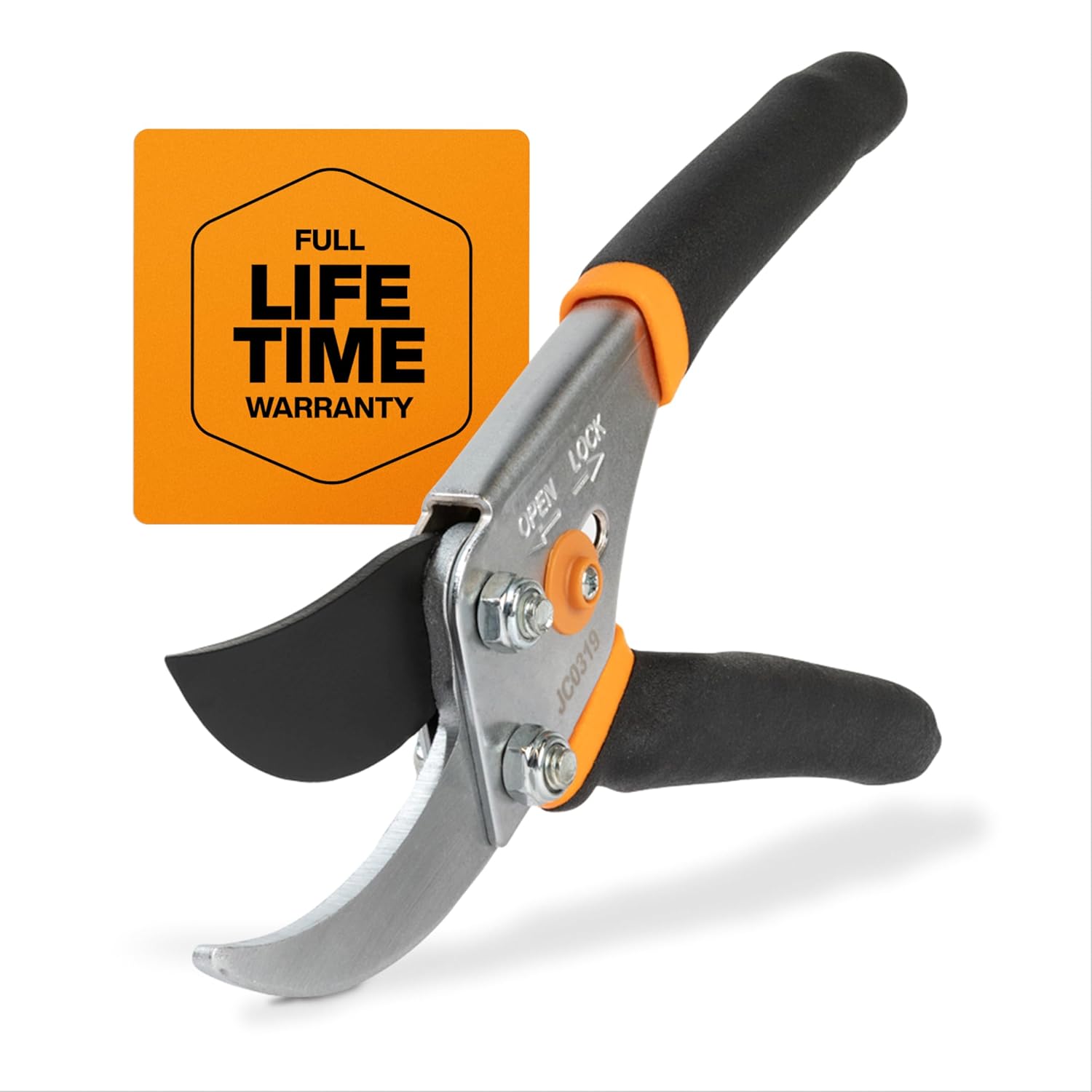
| Cutting width | 0.63 inches |
|---|---|
| Blade Material | Alloy Steel |
| Blade Edge | Serrated |
| Hand Orientation | Ambidextrous |
| Item Highlight | Self-Cleaning Sap Groove; Non-Slip Grip; Low-Friction Coating |
These Fiskars bypass pruning shears are built as a dependable everyday tool for trimming flower stems, shaping shrubs, and light branch pruning up to 5/8 inch diameter. The precision-ground alloy-steel blades and bypass action deliver clean, shearing cuts that reduce crushing on live growth, while the low-friction coating and sap groove help prevent sticking and resist rust in regular outdoor use. The all-steel construction feels durable and the ergonomic non-slip handle gives good control during repetitive tasks; an easy safety lock keeps the blades closed for storage. In practice these pruners are best for routine garden maintenance and detail work rather than heavy lopping; stems near the 5/8 inch limit may require careful positioning to avoid pinching. They are straightforward to clean and maintain with occasional oiling. Given the simple design and lifetime warranty, these pruners offer reliable, low-maintenance performance for most home gardeners but are not a substitute for loppers on thicker branches.
Best for: Home gardeners who want a durable, easy-to-use pruner for regular stem and shrub maintenance and who prioritize reliable cutting performance and long-term value.
Less Ideal for: Landscapers or gardeners who frequently need to cut branches thicker than 5/8 inch should choose loppers or a heavier-duty pruner instead.
- Bypass blade and precision-ground steel produce clean cuts that minimize plant damage
- Low-friction blade coating and sap groove reduce sticking and improve rust resistance
- Ergonomic non-slip handle offers comfortable control for repetitive pruning
- All-steel construction feels durable for frequent garden use
- 5/8 inch cut capacity limits use to stems and small branches rather than larger limbs
Verdict: A sturdy, low-maintenance bypass pruner that delivers clean cuts and dependable day-to-day performance for most home gardeners.
Decerk 8.5" Bypass Pruning Shears with Titanium-Coated SK5 Blade

| Blade Material | Titanium coated SK5 |
|---|---|
| Blade Type | Bypass |
| Cutting width | 20 millimeters |
| Hand Orientation | Ambidextrous |
| Included Components | Pruner, Replacement Spring |
These Decerk pruning shears are designed for regular garden use where clean, controlled cuts matter. The SK5 high-carbon steel blades are nano-polished and titanium-coated to resist corrosion and hold an edge, and the bypass design makes them suitable for cutting live stems and green growth up to roughly 3/4 inch. An optimized lever-action multiplies cutting force so thicker stems require less hand strength, and the ambidextrous aluminum handles with rubber grips reduce wrist strain for longer sessions. Practical touches include a one-hand safety lock and a spare spring in the box. The tool is built for durability with hardened fasteners and anodized handles, but like all hand tools it needs basic maintenance—wipe sap after use and oil occasionally—to preserve the coating and pivot action. Also, the cutting capacity limits very thick woody branches, so you will still need loppers for heavy pruning. For buyers who prioritize reliable, low-effort pruning and long blade life, these shears make a sensible everyday choice.
Best for: A cautious gardener who wants a dependable, low-effort pruner for routine tasks like roses, shrubs, and fruit tree maintenance and values easy handling and long blade life.
Less Ideal for: Not the best choice for landscapers or homeowners who need to cut large diameter woody limbs frequently; loppers or pruning saws are better for heavy-duty pruning.
- Titanium-coated SK5 blade for longer edge life and rust resistance
- Lever-action design multiplies cutting force for easier cuts on thicker stems
- Ergonomic rubberized handles reduce hand and wrist fatigue
- Ambidextrous bypass blades provide clean cuts on live growth
- Includes spare spring and one-hand safety lock for convenience and safety
- Maximum cut capacity (about 3/4 inch) is not suitable for large woody branches
Verdict: A durable, arthritis-friendly bypass pruner built to deliver clean everyday cuts with less hand effort and long-lasting blade performance.
Choosing the Right Bypass Pruning Shears: Key Factors to Consider
Cutting Capacity and Intended Use
Cutting capacity defines the maximum branch diameter a pair of bypass pruning shears can cut cleanly without damaging the blade or the plant. Gardeners who mostly trim herbaceous perennials and soft-stemmed shrubs can choose lighter, smaller shears with a smaller cutting capacity, which are easier to manipulate and sharpen. If you plan to take on woody stems or occasional small branches, pick shears rated for larger diameters or plan to supplement with a small lopper.
Choosing an undersized shear and forcing it through thick wood can cause crushed plant tissue and a ragged cut that invites pests and disease. Conversely, oversized tools can be unwieldy for detail work like deadheading or shaping small shrubs. Match the cutting capacity to the typical stems you encounter in your beds and borders.
Blade Material, Edge Retention, and Sharpening
Blade material affects how long the edge stays sharp, how easy it is to sharpen, and how the blade reacts to garden sap and moisture. High-carbon steels often take and hold a keener edge but can be more prone to rust without a protective finish. Stainless steels resist corrosion better but vary in edge retention depending on alloy and heat treatment.
Also consider blade geometry: a thin, finely beveled cutting edge slices cleanly through living tissue while a blunter bevel can crush stems. Check whether the blades are replaceable and how simple sharpening will be for you. Regular upkeep-wiping sap, honing, and occasional regrinding-keeps shears cutting well over seasons.
Handle Ergonomics and Repetitive Use Comfort
Ergonomics determine how a shear feels during extended sessions. Handle shape, grip padding, and overall weight all influence wrist comfort and the risk of fatigue or repetitive strain. For growers with smaller hands, slim handles and shorter blade-to-handle ratios improve control. Larger hands may benefit from longer handles and a more generous grip circumference.
Look for features like non-slip textures and handles contoured to support the palm. Some designs include a curved spring or shock-absorbing stops that reduce jarring when the blades close. If you have arthritis or other hand issues, lighter materials and well-spaced handles reduce strain during long pruning tasks.
Corrosion Resistance and Finish
Outdoor tools meet water, sap, and soil regularly, so corrosion resistance matters for longevity and hygiene. A good finish-such as protective plating, high-quality stainless steel, or a rust-inhibiting coating-helps prevent pitting that ruins blade alignment and edge sharpness. Corrosion around the joint can stiffen action and make maintenance harder.
Beyond coatings, consider maintenance practices you will follow. Regular cleaning, drying, and light oiling extend life, but if you frequently work in humid climates or near salty air, prioritize shears with superior corrosion protection to reduce upkeep and unexpected replacement.
Joint Construction and Adjustment
The joint is where a shear's long-term performance is determined. A secure, adjustable pivot keeps the blade alignment precise; a loose or riveted joint that cannot be tightened will degrade cutting quality over time. Look for a joint that allows easy tension adjustment so you can compensate for wear without professional tools.
Smooth rivets or bolts with a locking nut often allow both a precise action and straightforward maintenance. Poorly designed joints can wobble, cause uneven cuts, and make sharpening more difficult because the blades do not sit flush during use.
Safety Features and Locking Mechanisms
A reliable locking mechanism keeps blades closed during storage and transport, reducing accidental injury and blade damage. The lock should be easy to operate with one hand yet secure enough not to open under slight pressure when stored in a tool bag. Some locks sit near the handles while others are integrated into the hinge area; choose a style that works with how you carry and access your tools.
Safety also includes blade covers, rounded handle ends that prevent slipping, and spares for replacement springs or mechanisms. A tool that is safe to handle reduces the chance of drops and the resulting nicks or misalignment that degrade cutting performance.
Matching Shears to Common Garden Tasks
Different pruning tasks demand different shears. Fine deadheading and light trimming need precise, nimble blades that let you see and angle cuts; heavier tasks like cutting woody stems require stronger blades and more robust handles.
For mixed gardens, many gardeners prefer a general-purpose bypass shear with moderate cutting capacity that handles a wide range of everyday work while saving dedicated loppers for thicker branches.
- Detail work: choose narrower blades and a slimmer head profile for visibility.
- Woody stems: prioritize higher cutting capacity and durable blade steel.
- Seasonal work: heavier duty shears lessen the chance of overworking and dulling a lighter pair.
Maintenance Routine to Extend Tool Life
Simple maintenance after each session keeps bypass shears functioning. Wipe sap off blades with a cloth, use a mild solvent for sticky residue, and dry thoroughly. A light coating of oil on the pivot and blades prevents rust.
Sharpening frequently maintains clean cuts; use a fine file or sharpening stone at the original bevel angle and check blade alignment after reassembly. Replace worn springs and felt washers before they accelerate wear elsewhere.
- Clean blades after use and before storage.
- Sharpen the edge regularly to avoid crushing stems.
- Lubricate the pivot and inspect the lock annually.
Ergonomic Options for Hand Health
If you prune frequently, consider ergonomically designed handles that reduce pressure points and wrist bend. Options include cushioned grips, offset handles that keep the wrist straighter, and anti-shock features that absorb impact when blades close.
Test the grip size and balance if possible. Even small differences in handle spacing or spring tension can significantly affect comfort during long pruning sessions.
- Offset handles reduce ulnar deviation during cutting.
- Lighter materials lower fatigue but must still be durable.
- Adjustable springs let you set tension for your strength level.
Blade Geometry and Cut Quality
The bevel and blade shape control how a blade slices living tissue. A narrow cutting bevel slices cleanly and encourages quick healing, while a thicker cross-section may be more durable but can crush softer stems.
Also consider the head profile. Slim heads reach tight spaces in dense shrubs, while wider heads can offer more leverage for thicker material. For most garden pruning tasks, a balance of a keen bevel and a slim profile yields the best combination of precision and durability.
- Thin bevels for clean cuts on live stems.
- Slim head profiles improve access in tight plantings.
- Stronger cross-sections resist chipping on occasional hard wood.
Storing and Transporting Shears Safely
Proper storage prevents blade damage and reduces accidents. Keep shears locked and stored in a dry place. A hanging spot in the shed or a dedicated pocket in your tool apron protects edges and keeps them accessible.
When transporting in a bag, cover the blades or store them in a sheath to avoid dulling from contact with other tools. Regular inspections before use catch loose fasteners or worn springs that could lead to failure in the garden.
- Use a blade cover or sheath when carrying in a bag.
- Store in a dry, ventilated spot to minimize rust.
- Inspect for loose screws and replace worn parts promptly.
How We Chose the Best Bypass Pruning Shears
We selected the six bypass pruning shears on this list using practical, garden-focused filters to reflect real-world use. Primary evaluation centered on cutting capacity and blade construction because these determine what stems and small branches a shear can handle and how long it will hold an edge. Ergonomics and handle design were given equal weight since comfortable grips and correct handle length reduce wrist strain during repetitive pruning. Corrosion resistance and finish were assessed to identify tools that tolerate wet conditions and acidic sap without rapid deterioration. Locking mechanism reliability and maintenance needs were included to measure day-to-day usability and longevity. Excluded from the shortlist were tools designed primarily for hedge trimming, anvil-style cutting, or powered pruning devices, because bypass shears serve different pruning techniques. We also filtered out products with unclear material specifications or inconsistent reported durability. The dimensions we emphasized reflect what gardeners can verify: maximum recommended cutting diameter, blade steel type and coating, joint construction, handle ergonomics, and ease of blade replacement and sharpening.
FAQ
What size stems should bypass pruning shears cut cleanly?
Most bypass shears are designed for stems up to about 1 inch in diameter, but recommended cutting capacity varies. For regular woody pruning beyond that, use a lopper or saw to avoid damaging the shear and the plant.
How often should I sharpen my bypass shear blades?
Sharpening frequency depends on use. For regular garden tasks, a light sharpening every few weeks during the pruning season keeps cuts clean. If you notice crushing or increased effort, sharpen immediately.
Can I use bypass shears on green wood and dry wood?
Bypass shears are best for green, living stems where a clean slice promotes healing. Cutting dry, dead wood occasionally is fine, but frequent use on hard, dry wood can dull blades faster and increase the risk of chipping.
How do I prevent sap buildup and stickiness on blades?
Wipe blades with a cloth after each use and clean sticky sap with a mild solvent or warm soapy water. Dry blades thoroughly and apply a light coat of oil to prevent further buildup and corrosion.
Are replacement parts like springs and blades commonly available?
Many bypass shears have replaceable springs, blades, and pivot bolts, but availability varies. Choose a design with accessible parts and straightforward assembly if long-term repairability matters to you.
Is one-handed or two-handed operation better for bypass shears?
Bypass shears are typically one-handed tools and are designed for single-hand use. If you need more leverage for thicker stems, use a two-handed lopper or saw instead of overworking a one-handed shear.
Final Verdict
Prioritize clean-cutting ability, blade durability, and comfortable ergonomics when choosing bypass pruning shears. Match cutting capacity to the stems you prune most often, and favor blade materials and finishes that suit your climate and maintenance routine. Tradeoffs are common: lighter shears are easier to handle for detail work but may not last as long on woody stems, while heavier construction boosts durability at the cost of some finesse. Focus on the factors that directly affect cut quality and hand comfort to choose shears that will become reliable tools in your regular garden care.
