

Note: This article contains affiliate links. If you click on these links and make a purchase, I may earn a small commission at no extra cost to you. This helps support my research and content. Read my full affiliate disclosure here.
If you have bugs living in or damaging your carpets, picking the right carpet insect killer matters for convenience, indoor air quality, and long-term pest control. You want something that attacks both larvae and adults, treats hidden spots like seams and under furniture, and does not leave strong odors or sticky residues that attract dust. This guide covers six shortlisted carpet insect killers chosen for common household infestations. We evaluate each pick on real gardener- and homeowner-focused criteria like kill speed, residual protection, and safety for people and pets. Read on to understand how these products behave on different carpet types and in high-traffic rooms before the product summaries that follow.
Top Picks at a Glance
| Best Overall The best all-around choice for most situations | ADAMS Plus Flea & Tick Carpet Spray, 16 oz |  |
| Best Quality Built to a higher standard if you want something more solid | Ortho Home Defense Insect Killer for Indoor & Perimeter, 1.33 gal. with Comfort Wand |  |
| Best Value The sweet spot between price and what you get | Ortho Home Defense Insect Killer for Indoor & Perimeter, 24 oz (2-Pack) |  |
| Best Budget The cheapest option that still gets the job done reliably | Harris Diatomaceous Earth Crawling Insect Killer, 8 oz |  |
| Highest Rated A top-rated pick with lots of positive feedback | Ortho Home Defense Insect Killer Refill, 1 gal. |  |
| Most Popular A crowd favorite that many people choose with confidence | ADAMS Flea & Tick Home Spray, 24 oz |  |
ADAMS Plus Flea & Tick Carpet Spray, 16 oz
| Unit Count | 16 Ounce |
|---|---|
| Item Form | Liquid |
| Scent Name | Fragrance Free |
| Active Ingredients | Etofenprox, S-Methoprene, Prallethrin |
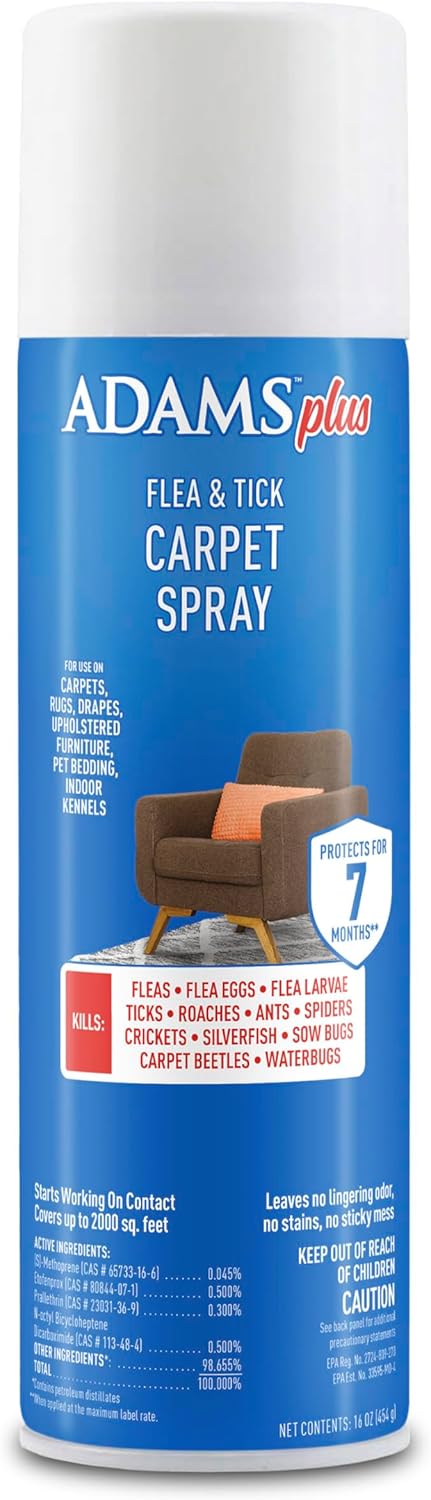
ADAMS Plus Flea & Tick Carpet Spray is a ready-to-use liquid designed to treat carpets, rugs, upholstery and pet bedding for fleas and ticks. You simply shake and spray a fine mist over the target area from 2 to 3 feet away; one canister claims coverage up to 2,000 square feet when used according to directions. The formula combines an adulticide and an insect growth regulator so it kills adults on contact while interrupting the flea life cycle by treating eggs and larvae for extended control. It is fragrance free, leaves no sticky residue or stains and is marketed to provide protection for up to seven months when applied at the maximum rate. Practical benefits include easy application, broad indoor surface compatibility and multi-stage pest control so you can treat problem areas where pets spend time. Important limitations are that it is for indoor fabric and carpet use only so avoid wood floors and finished surfaces, and it contains active pesticides and petroleum distillates so follow label instructions and keep children and pets away during application and drying.
Best for: Buyers who want an easy, single-product solution to reduce fleas and ticks in indoor carpets and upholstery and who plan to include home treatment as part of a broader pest control routine.
Less Ideal for: People looking for an all-surface insecticide or products safe to spray on finished wood floors or those who prefer non-chemical or pet-applied-only approaches.
- Ready-to-use spray for quick spot or room treatments
- Dual-action formula that kills adults on contact and treats eggs and larvae
- Leaves no odor, stains, or sticky residue on fabrics when used as directed
- Formulated with pesticidal ingredients and petroleum distillates requiring careful handling and adherence to label instructions
Verdict: A straightforward ready-to-use carpet spray that combines immediate adult flea and tick knockdown with egg and larvae control for long-lasting indoor protection.
Ortho Home Defense Insect Killer for Indoor & Perimeter, 1.33 gal. with Comfort Wand

| Item Form | Spray |
|---|---|
| Target Species | Insects |
| Liquid Volume | 1.33 gallons |
| Active Ingredients | Bifenthrin 0.05%, Zeta-Cypermethrin 0.0125% |
This 1.33 gallon Ortho Home Defense spray is designed to treat both indoor problem spots and the outdoor perimeter of a home to reduce ants, roaches, spiders and many other crawling and flying insects. It comes with a battery-powered Comfort Wand that delivers a continuous spray so you can apply a uniform band around foundations, patios and entry points without bending or pumping. The formula with bifenthrin and zeta-cypermethrin is intended to kill on contact and establish a barrier that the manufacturer says lasts up to 12 months for ants, roaches and spiders on non-porous indoor surfaces. In real-world use that means fewer repeat treatments in busy yard perimeters and around doors and windows. The spray dries clear with minimal fumes which helps for indoor use near kitchens and living areas. Limitations are that this is a chemical insecticide so users should follow safety directions around children, pets and plants and it is not a specific solution for pests not listed on the label. For homeowners focused on strong, perimeter-level protection this product simplifies application and covers a large area per container.
Best for: Homeowners who want a performance-focused perimeter treatment to reduce recurring yard and entry-point insect problems and prefer a ready-to-use product that is easy to apply.
Less Ideal for: People seeking organic or non-chemical control methods or those who need a targeted solution for pests not listed on the label should consider alternative products.
- Includes battery-powered Comfort Wand for continuous, fatigue-free application
- Ready-to-use 1.33 gallon container covers large perimeters without mixing
- Formula creates a barrier claimed to provide up to 12 months protection against ants, roaches and spiders on non-porous indoor surfaces
- Dries clear and gives off minimal fumes, making indoor use more practical
- Contains synthetic insecticides so precautions are required around children, pets and ornamentals
- Protection claims are specific to certain species and surfaces so results vary by pest and conditions
Verdict: A powerful, ready-to-use perimeter and indoor spray for homeowners who want long-lasting, performance-oriented protection against common yard and household insects.
Ortho Home Defense Insect Killer for Indoor & Perimeter, 24 oz (2-Pack)

| Unit Count | 48 Fluid Ounces |
|---|---|
| Item Form | Liquid |
| Target Species | Ants, Beetles, Ticks, Cockroaches |
| Active Ingredients | Bifenthrin, Zeta-Cypermethrin |
Ortho Home Defense is a ready-to-use spray intended for both indoor spot treatments and outdoor perimeter applications to reduce household pest pressure. You use the trigger sprayer to apply a 4-inch band indoors or a 12-inch band outdoors along foundations, doorways, patios and garages; the formula dries clear and gives long-lasting control for listed pests. The product lists bifenthrin and zeta-cypermethrin as active ingredients so it kills ants, roaches, spiders and many other insects on contact and helps prevent reinfestation when applied as directed. Practical benefits include easy application without dilution, a fast-drying, low-odor formula that lets people and pets re-enter once dry, and a sizable 2-pack for repeat treatments. Limitations are that it is a chemical insecticide so care is needed around plants and treated surfaces, label directions must be followed for safe use, and the 12-month claim applies to indoor non-porous surfaces for specific pests rather than every situation. For routine perimeter defense and targeted indoor control, this bottle-style spray is a convenient, effective option for DIY homeowners.
Best for: Homeowners who want a straightforward, no-mix spray to establish a perimeter barrier and treat problem spots inside the house with minimal fuss and repeat purchases.
Less Ideal for: People seeking organic or non-chemical pest control methods or those who need treatments specifically labeled for use on plants, edible gardens, or porous surfaces.
- Ready-to-use trigger sprayer for easy application with no mixing
- Broad-spectrum active ingredients (bifenthrin and zeta-cypermethrin) that target many common indoor and perimeter pests
- Dries clear with low odor so people and pets can re-enter treated areas once dry
- Provides up to 12 months of barrier protection on indoor non-porous surfaces for ants, roaches and spiders
- Two 24 oz. containers in the pack reduce trips to repurchase
- Chemical insecticide that requires careful handling and adherence to label precautions
- Long-lasting protection claim applies specifically to indoor non-porous surfaces and to certain pests, not universally
Verdict: A convenient ready-to-use spray that gives DIY homeowners an easy way to create a long-lasting indoor barrier and perimeter defense against common household insects.
Harris Diatomaceous Earth Crawling Insect Killer, 8 oz

| EPA registration | No. 3-18 |
|---|---|
| Active ingredient | 100% freshwater diatomaceous earth |
| Intended use | Indoor & outdoor |
This ready-to-use diatomaceous earth product provides a non-chemical way to control ants and other crawling pests around the home. You apply the fine powder in cracks, along baseboards, near entry points, or in crawlspaces using the included puffer tip for targeted placement. The diatomaceous earth works mechanically by abrading insect exoskeletons and causing dehydration, so insects that contact the dust typically die within 48 hours. Because the material is 100% freshwater diatomaceous earth with no additives and is EPA registered, it is a good fit when you want a low-toxicity option usable near people and pets when directions are followed. It stays effective indefinitely as long as it stays dry, making it a convenient barrier treatment in attics, basements, garages, and around foundations. Limitations are that it must remain dry to work and it is a contact-only control method, so heavy infestations or nesting insects may require repeated application or combined methods for faster results.
Best for: Practical households that prioritize low-toxicity, long-lasting ant control and want a simple, targeted treatment they can apply themselves around entry points and inside cracks.
Less Ideal for: People facing severe or widespread infestations who need rapid knockdown or prefer liquid chemical treatments should consider professional services or a different product.
- 100% freshwater diatomaceous earth with no additives for a non-chemical control option
- Built-in puffer tip allows precise application into cracks and crevices
- Remains effective indefinitely when kept dry, providing long-lasting barrier protection
- Mechanically kills a wide range of crawling insects including ants, roaches, fleas, and bed bugs
- Only effective on insects that contact the powder and must stay dry to work
- Not a fast-acting spray alternative for large, established infestations
Verdict: Choose this product if you want a low-toxicity, long-lasting mechanical barrier to control ants and other crawling insects around the home.
Ortho Home Defense Insect Killer Refill, 1 gal.

| Unit Count | 128 Fluid Ounces |
|---|---|
| Item Form | Liquid |
| Target Species | Insects |
| Active Ingredients | Bifenthrin, Zeta-Cypermethrin |
This 1-gallon Ortho Home Defense refill is formulated to replenish a reusable applicator for indoor and perimeter pest control. It kills a broad list of pests including ants, roaches, spiders, ticks and mosquitoes and is intended for application along foundation perimeters, patios, decks and indoor problem areas like kitchens and bathrooms. The formula uses bifenthrin and zeta-cypermethrin and features Invisi-Shield Technology so it dries clear with no noticeable fumes. According to the manufacturer it provides residual barrier protection up to 12 months for ants, roaches and spiders on non-porous indoor surfaces, and the refill format is economical for homeowners who already own the sprayer wand. Important limitations are that the long-lasting claim applies only to certain pests and surfaces, and this product contains synthetic pyrethroids so it requires careful handling and adherence to label directions around children, pets and treated plants. It is best used as part of a perimeter and spot-treatment routine rather than an indoor surface cleaner.
Best for: Homeowners who want a cost-effective, heavy-duty refill to maintain a long-lasting perimeter and spot-control program and who already own or plan to reuse Ortho applicators.
Less Ideal for: People seeking an all-natural or non-chemical solution or those who need a product safe for repeated use directly on edible plants or where strict organic approvals are required.
- Covers a broad range of common household and perimeter pests
- Economical 1-gallon refill for reuse with existing applicator
- Invisi-Shield formula dries clear and is designed to give off no fumes
- Manufacturer states up to 12 months residual control for ants, roaches and spiders on non-porous indoor surfaces
- Long residual protection is limited to specific pests and surface types rather than all insects
- Contains synthetic insecticides so it needs careful storage and label-following for safety
Verdict: Buy this refill if you want an economical, professional-strength insecticide to sustain a long-lasting indoor and perimeter barrier against common household pests.
ADAMS Flea & Tick Home Spray, 24 oz

| Unit Count | 24 Fluid Ounces |
|---|---|
| Item Form | Liquid |
| Scent Name | Fragrance Free |
| Target Species | Dog |
| Active Ingredients | Piperonyl Butoxide; Etofenprox; (S)-Methoprene 0.01% |
This 24-ounce ADAMS Home Spray is a trigger-spray insecticide formulated for indoor use on carpets, rugs, upholstery and pet bedding. It delivers fast knockdown of fleas and other listed pests and contains an insect growth regulator to interrupt the flea life cycle so treated areas can remain protected for months. Typical use is a light, uniform mist across carpeted rooms and furniture surfaces, then vacating the area for the recommended time. Notable features include a fragrance-free, non-staining formula and coverage sufficient for several rooms from one bottle. Practical benefits are that it treats both adults and immature stages to reduce repeat infestations and that it is versatile enough for multiple surfaces. Important limitations are that it must not be applied to people or pets, requires following label safety and reentry instructions, and some situations may need repeat applications or broader integrated pest control if infestations are heavy.
Best for: Buyers who prioritize proven indoor pest control and want a product with documented long‑term flea prevention for home and furniture areas.
Less Ideal for: People looking for a pet-applied solution or an immediate single-application cure for heavy, widespread infestations should consider treatments that are applied to animals or professional services instead.
- Kills a broad list of indoor pests including fleas, ticks and bed bugs
- Contains insect growth regulator to prevent flea reinfestation for up to 7 months
- Fragrance-free, non-staining formula suitable for carpets and upholstery
- Ready-to-use trigger bottle for straightforward application
- Not for use directly on pets or people and requires vacating treated areas per label
- May require repeat treatments or additional products for severe infestations
Verdict: Choose this spray if you want a ready-to-use indoor treatment that kills listed pests and helps prevent flea reinfestation for months.
Choosing the Right Carpet Insect Killer: Key Factors to Consider
Targeted Life Stages
Different carpet pests cause damage at different life stages. Larvae often feed on fibers and create the most visible damage over time, while adults reproduce and spread the infestation. Choosing a product that lists both larvicidal and adulticidal activity is important because treating only adults will often lead to reinfestation as eggs hatch.
Look for formulations that interrupt the life cycle and specify residual activity against newly hatched larvae. That reduces the need for repeated treatments and makes a single application more effective in living rooms, bedrooms, and other carpeted areas.
Residual Effect and Reapplication Interval
Residual activity determines how long a treated area remains hostile to pests. A longer residual means fewer reapplications and less disruption to the room. However, extended residuals can increase exposure risk for pets and small children, and some products lose effectiveness on porous or heavily soiled carpets.
Balance residual duration with safety: if you need long-term protection in storage or rarely used rooms, choose a longer-lasting option. For high-traffic living areas, prefer shorter residuals that are easier to clean or that have low odor to avoid daily discomfort.
Compatibility With Carpet Fibers and Finishes
Carpets vary from synthetic nylon and polyester to natural wool. Some insect control formulations can discolor, mat, or leave sticky residues that attract dirt on certain fibers. Check whether a product is suitable for the fiber type and for colorfast or delicate finishes.
Test any treatment in an inconspicuous area first and follow label guidance about application volumes and dwell times. Avoid products that instruct aggressive scrubbing for removal; those can damage pile structure and shorten carpet life.
Indoor Safety and Odor
Using insect control products inside living spaces raises concerns about inhalation, skin contact, and residue transfer to hands and pets. Low-odor formulations lower immediate discomfort, while clear drying and minimal residue reduce long-term exposure. Products with strong persistent smells can be disruptive and may indicate higher volatile chemical content.
Review label precautions, required ventilation, and recommended reentry times after application. For homes with infants, elderly residents, or multiple pets, prioritize options with explicit instructions for minimizing exposure and methods for decontaminating treated surfaces if needed.
Application Method and Accessibility
Different application formats exist such as aerosols, pump sprays, foams, and ready-to-use powders. Each has practical pros and cons: aerosols and sprays reach seams and crevices easily while powders can cling in untouchable spots but may be harder to remove. Foam can be useful for spot treatments where liquid would run off.
Choose an application form that matches the infestation pattern and your comfort with the equipment. Consider whether you can apply evenly across large rooms, whether the product requires specialized applicators, and how easy it is to treat edges, under furniture, and stairs.
Cleanup and Long-Term Maintenance
Post-application care affects both safety and aesthetic outcomes. Some products require vacuuming after a set dwell time, while others leave a visible protective layer. Understand required cleanup steps to avoid removing the active ingredient prematurely or leaving residues that attract dust.
Plan a maintenance schedule that aligns with the product's reapplication interval and with routine cleaning. Regular vacuuming and targeted spot treatments can prevent small outbreaks from becoming widespread without heavy use of chemicals.
How Carpet Pests Behave Indoors
Many common carpet pests prefer dark, undisturbed areas such as under furniture, along baseboards, and in carpet seams. Larvae often feed at night and hide in folds and edges during the day, which makes early detection difficult. Understanding where insects live and lay eggs helps you focus treatment on hotspots rather than treating entire rooms indiscriminately.
Environmental conditions also affect infestations. High humidity, food sources like pet dander or spilled food, and long intervals between vacuuming create favorable conditions. Addressing those factors alongside chemical treatment improves outcomes and reduces the chance of return.
- Inspect seams, edges, and high-pile transition areas for frass or damage
- Pay attention to stored rugs, closets, and under beds where larvae can hide
- Reduce humidity and vacuum regularly to remove food sources and eggs
Preparing a Room for Treatment
Clear the treatment area of toys, bedding, and pet bowls before applying any product. Vacuum thoroughly to remove loose debris and reduce the pest population so the applied insecticide contacts more insects directly. Move light furniture to expose baseboards and carpet edges.
Follow label instructions on whether to vacuum again after a set dwell period. Some products require the surface to remain undisturbed until fully dry, while others ask for light vacuuming to remove dead insects and loose residue after treatment.
- Vacuum along baseboards and under furniture seams
- Test product in a small hidden area for colorfastness
- Keep pets and people out of the room until recommended reentry time
Nonchemical and Integrated Options
Physical controls and good housekeeping reduce reliance on chemical treatments. Frequent vacuuming, heat treatments like steam cleaning, and laundering small rugs and removable covers in hot water can significantly lower pest numbers. For sensitive households, these steps combined with targeted spot treatments often provide satisfactory control.
Integrated pest management uses a combination of sanitation, exclusion, and targeted use of insect control products. Use mechanical removal for visible insects, isolate infested items when possible, and apply chemical controls only where monitoring shows an active problem.
- Use steam cleaners on high-heat settings for local infestations
- Wash removable textiles in hot water and dry on high heat
- Combine mechanical removal with spot chemical treatments for persistent hotspots
Treating High-Traffic Areas and Stairs
High-traffic areas typically get more wear and are vacuumed more often, which can reduce residual effectiveness if the product binds to loose fibers. For stairs and entryways, use formulations that dry clear and do not leave slippery residues. Apply lower volumes more frequently rather than heavy applications that require long drying times in busy rooms.
Edge treatments often work better than blanket coverage in these spots. Apply products to seams and baseboards where insects congregate while avoiding saturating visible carpet surfaces that will be walked on before fully dry.
- Focus treatment along edges and stair noses rather than center of high-traffic carpeting
- Use quick-dry formulations or smaller, repeatable treatments for busy rooms
- Coordinate treatment timing with household schedules to allow safe reentry
When to Call a Professional
If infestations persist after several properly applied treatments or if damage is widespread across multiple rooms, a professional assessment can identify hidden sources and recommend different control strategies. Professionals can confirm pest species and suggest specialized treatments not typically used by homeowners.
Consider professional help if there are safety concerns, extensive damage, or if household members are medically vulnerable to chemical exposure. A targeted service can also advise on remediation steps to prevent reinfestation.
- Seek professional identification for unknown or persistent pests
- Request a treatment plan that minimizes disruption and exposure
- Ask about follow-up inspections and targeted monitoring
How We Chose the Best Carpet Insect Killer
We shortlisted products that provide reliable control of carpet-dwelling insects in indoor settings and that have clear instructions for carpet application. Our selection favored formulations that target multiple life stages, including larval stages that cause the most long-term damage. We prioritized products with documented residual activity to reduce the need for frequent reapplication, and we checked efficacy claims against typical indoor use recommendations. Safety and indoor compatibility were critical filters. We excluded sprays and powders that leave persistent, strong odors or heavy residues that are difficult to vacuum. We also removed products without clear guidance for use around pets, children, or porous surfaces like natural-fiber carpets. Practical application factors such as ease of application, required drying or dwell time, and cleanup instructions were considered. Final inclusion required clear label directions for carpet application, multi-stage efficacy, and reasonable safety precautions. The scoring criteria below reflect the dimensions we used to compare how well each product will perform in real homes and apartments.
FAQ
How long should I wait to reenter a room after applying a carpet insect treatment?
Reentry time depends on the product formulation and ventilation. Many ready-to-use sprays dry within 30 to 60 minutes, but label instructions can require longer for enclosed spaces. Always follow the product label for recommended reentry and ventilate the room well when you return.
Will treatments damage natural-fiber carpets like wool?
Some formulations can affect delicate fibers or dyes. Test treatments in a hidden area first and follow any label guidance about fiber compatibility. For valuable natural-fiber carpets, consider spot treatment or professional advice to avoid discoloration or pile damage.
Can I vacuum immediately after applying a product?
Not usually. Vacuuming too soon can remove the active ingredient before it has a chance to act or to provide residual protection. Many products recommend waiting until the product is fully dry and sometimes performing a vacuum only after a specified interval. Follow the product label for exact timing.
Are low-odor products safer for homes with pets and children?
Low-odor formulations reduce immediate discomfort but safety depends on active ingredients and residue behavior. Look for products with clear guidance on pet reentry times and surface contact precautions, and combine treatment with restricted access until the product has dried and any required reentry time has passed.
How often should I reapply treatments to prevent reinfestation?
Reapplication intervals depend on residual claims and household conditions. Homes with heavy foot traffic or ongoing food sources for pests may need more frequent spot treatments, while sealed, low-traffic rooms can go longer between applications. Follow label reapplication guidance and monitor for new activity before reapplying.
Final Verdict
Prioritize treatments that match the infestation pattern in your home: choose larvicidal options for hidden, breeding populations and faster knockdown for visible adults. Balance residual protection and indoor safety based on pet exposure, foot traffic, and carpet fiber type. A thoughtful approach pairs targeted treatments with good cleaning and monitoring. Use products with clear application instructions and acceptable safety profiles for your household, and focus on treating hotspots rather than saturating entire rooms for more effective, lower-risk control.
