

Note: This article contains affiliate links. If you click on these links and make a purchase, I may earn a small commission at no extra cost to you. This helps support my research and content. Read my full affiliate disclosure here.
If you plan to turn felled logs into usable lumber, the right chainsaw chain for milling makes the difference between rough sawn boards and smooth, dimensionally consistent cuts. Milling puts sustained load on cutters and requires teeth that maintain sharpness, resist heat, and slice cleanly through grain. In this guide we shortlisted seven chains that perform well for milling setups and portable sawmills. You will see practical notes on cutter types, pitch and gauge choices, durability, and compatibility so you can match a chain to your saw and milling method. The shortlisted products were evaluated against clear performance and safety criteria to help you find the best fit for heavy cutting and accurate results.
Top Picks at a Glance
| Best Overall The best all-around choice for most situations | Granberg G7290-84 24" 3/8" Pitch .050 Gauge Ripping Chainsaw Chain (84 Drive Links) |  |
| Best Quality Built to a higher standard if you want something more solid | Granberg G7293-97 30" Ripping Chainsaw Chain, 3/8" Pitch .063 Gauge, 97 Drive Links |  |
| Best Value The sweet spot between price and what you get | 8TEN 20" Ripping Chainsaw Chain .050 Gauge 3/8 Pitch (72 Drive Links) — 2-Pack |  |
| Best Budget The cheapest option that still gets the job done reliably | 8TEN 18" Ripping Chainsaw Chain .050 Gauge .325 Pitch, 72 Drive Links |  |
| Highest Rated A top-rated pick with lots of positive feedback | 8TEN 28" Ripping Chainsaw Chain .063 Gauge 3/8 Pitch (92 Drive Links) — 2 Pack |  |
| Most Popular A crowd favorite that many people choose with confidence | 8TEN 20" Ripping Chainsaw Chain .063 Gauge .325 Pitch 81 Drive Links |  |
| Best Seller A high-volume bestseller chosen again and again | 8TEN 24" Ripping Chainsaw Chain (.050 Gauge, 3/8" Pitch, 84 Drive Links) |  |
Granberg G7290-84 24" 3/8" Pitch .050 Gauge Ripping Chainsaw Chain (84 Drive Links)
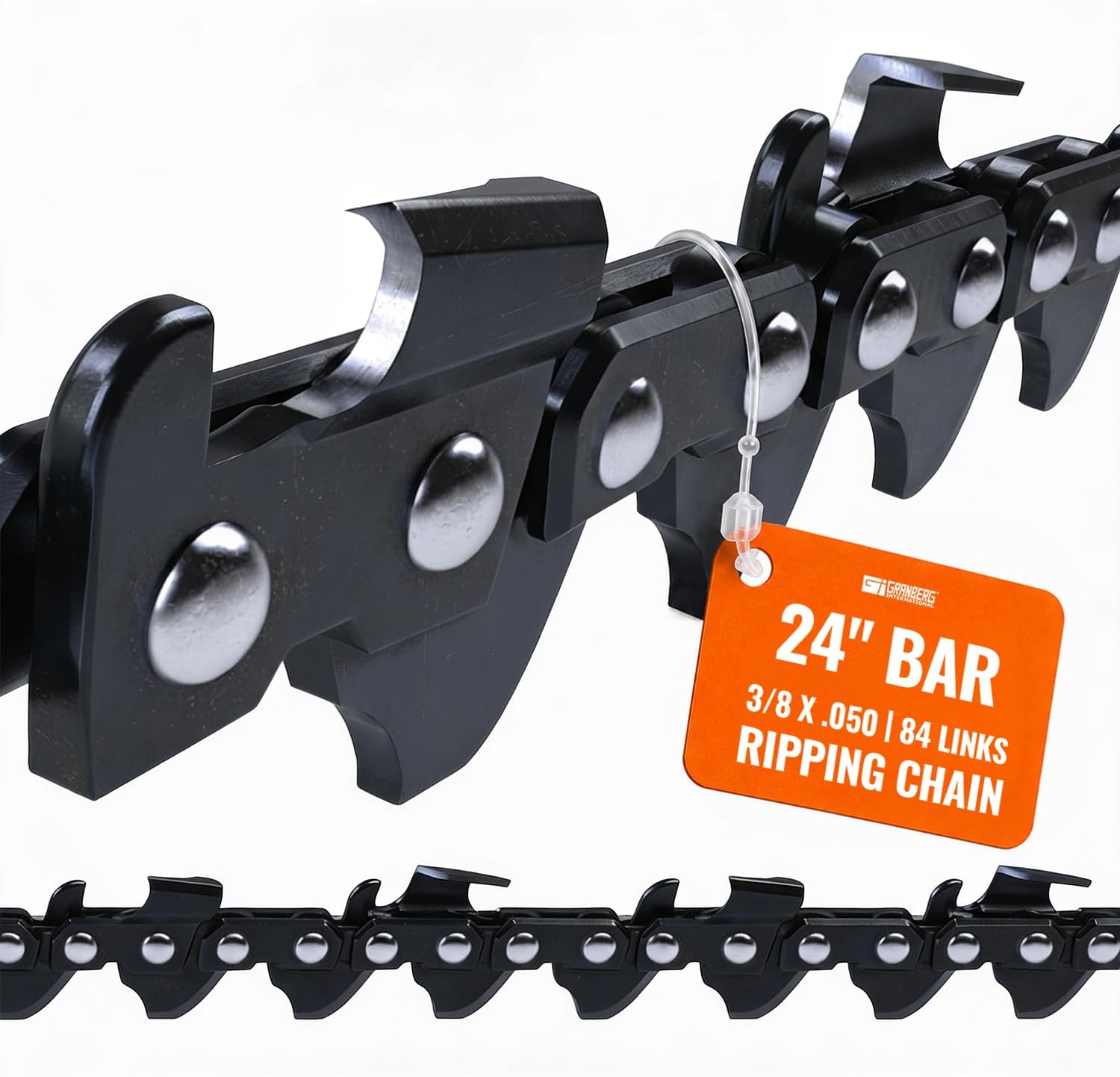
| Pitch | 0.38 inches |
|---|---|
| Chain Type | Ripping Chain |
| Gauge | 0.05 |
| Drive Link Count | 84 |
The Granberg G7290-84 is a purpose-built ripping chain for milling lumber with a 3/8" pitch and .050 gauge in a pre-cut loop of 84 drive links. It is used primarily for producing slabs and boards by cutting with the grain, thanks to a ripping cutter geometry and a scoring and clearing cutter sequence that smooths the cut and helps control tear-out when milling. Buyers will appreciate that it ships looped and ready to install and that the .050 gauge keeps drag lower for easier handling on mid-size bars. Practical benefits include consistent ripping angle preparation at 10 degrees and compatibility with common chainsaw milling setups made by the same brand. Limitations are that it only fits bars that match pitch, gauge, and drive-link count, and the .050 gauge is aimed at standard-duty milling rather than heavy industrial ripping where thicker gauges are preferred. Expect to sharpen at the specified angle and file size to maintain cutting performance over repeated milling sessions.
Best for: Gardeners and hobbyist woodworkers who mill small to medium lumber and want a chain optimized for controlled ripping cuts and easier handling during slab production.
Less Ideal for: Professional sawyers or anyone planning high-volume, heavy-duty ripping who need thicker-gauge chains and maximum durability for continuous industrial use.
- Ripping-specific cutter pattern and 10° ripping angle for smoother cuts when milling with the grain
- Pre-cut looped chain ready to install saves time during setup
- 3/8" pitch combined with .050 gauge balances cutting power and reduced drag for easier handling
- Includes scoring and clearing cutters to help control tear-out on slab and board milling
- Only fits chainsaw bars that match 3/8" pitch, .050 gauge, and 84 drive links
- .050 gauge is not ideal for very heavy ripping where a thicker gauge would be more durable
Verdict: Choose this Granberg ripping chain if you want a pre-looped, milling-optimized chain that balances cutting power and easier handling for small to medium lumber production.
Granberg G7293-97 30" Ripping Chainsaw Chain, 3/8" Pitch .063 Gauge, 97 Drive Links

| Pitch | 0.38 inches |
|---|---|
| Chain Type | Ripping Chain |
| Gauge | 0.06 |
| Drive Link Count | 97 |
The Granberg G7293-97 is a purpose-built ripping chain for milling that arrives looped and ready to install on a 30-inch guide bar. It uses a 3/8" pitch with .063 gauge and a 97 drive-link loop configured with scoring and clearing cutters and a 10 degree ripping angle, which produces steady, aggressive cuts when converting logs to slabs or lumber. Typical use is on high-power chainsaws during milling, slabbing, or heavy rip cutting where chip removal and consistent kerf are important. The pre-assembled loop saves setup time and the heavier gauge and cutter sequence improve stability under load, reducing chatter on large-diameter wood. Important limitations are that it is specialized for ripping with the grain and requires a matching bar pitch, gauge, and drive-link count, and it is not intended for cross-cutting or general-purpose chainsaw work. Operators should also maintain the specified filing angle and use appropriate file size for sharpening to keep the ripping geometry and performance.
Best for: Serious DIYers or small-scale millers who prioritize aggressive, consistent rip performance when producing slabs or lumber from large logs and already run high-power chainsaws.
Less Ideal for: Casual chainsaw users who need a multi-purpose chain for pruning, limb work, or cross-cutting should choose a general-purpose or cross-cut chain instead.
- Pre-assembled loop ready to install for fast setup
- Designed specifically for ripping with scoring and clearing cutters for milling
- .063 gauge and 3/8" pitch provide durability and aggressive cutting on high-power saws
- 10° ripping angle improves feed and produces consistent kerf for lumber production
- Specialized for rip cutting only and not suitable for cross-cut or general-purpose use
- Requires an exact match of bar pitch, gauge, and drive-link count which limits compatibility
Verdict: Buy this if you need a ready-to-install, heavy-gauge ripping chain that delivers aggressive, stable cuts for milling large logs into lumber.
8TEN 20" Ripping Chainsaw Chain .050 Gauge 3/8 Pitch (72 Drive Links) — 2-Pack

| Pitch | 0.38 inches |
|---|---|
| Chain Type | Ripping Chain |
| Drive Link Count | 72 |
| Included Components | (2) Chainsaw Chains |
This 8TEN two-pack supplies 20-inch ripping chains built for milling and ripping boards from large timbers. Each chain has 72 drive links, a 3/8-inch pitch and a .050-inch gauge, which are typical fitments for many mid-size professional and homeowner saws. Ripping chains cut parallel to the grain for a smoother face and straighter boards, so these are useful when you want cleaner surfaces for milling or resawing logs into lumber. The chains are made from heat-treated alloy steel with hardened rivets, which supports durability during repetitive cross-grain slicing and planing-style cuts. Because they are specialized for ripping rather than fast felling, they cut more slowly but leave a finer finish, reducing downstream sanding or planing. You should verify fitment against your bar and sprocket before swapping; these chains will not perform like full-chisel chains when speed through dirty or knotty wood is the priority. Expect to keep them sharp for the best finish, and remember ripping work benefits from careful setup and reduced feed pressure to avoid binding.
Best for: Buyers who prioritize clean, straight cuts for milling or converting logs into boards and want a durable, ready-to-fit replacement chain set for mid-size saws.
Less Ideal for: Those needing maximum cutting speed for felling, frequent work in very dirty or knotty wood, or users with saws that do not accept 20" 72-link 3/8" pitch .050" chains should consider other chain types or sizes.
- Ripping tooth pattern designed to cut parallel to the grain for smoother, straighter boards suitable for milling.
- Sold as a two-pack which gives a spare chain or lets you keep a fresh chain ready during long jobs.
- Made from hardened alloy steels and rivets for better wear resistance in milling applications.
- Matches common specification set (20" length, 72 drive links, 3/8" pitch, .050" gauge) for many mid-size saws, simplifying replacements.
- Specialized ripping geometry cuts slower than general-purpose chains, so it is not the fastest option for felling or rough cutting.
- Requires correct fitment verification and routine sharpening to maintain the finer finish expected from ripping chains.
Verdict: If you need cleaner, mill-ready cuts from mid-size chainsaws, this two-pack of 20" ripping chains delivers the fitment and cutting geometry to produce straighter, smoother boards.
8TEN 18" Ripping Chainsaw Chain .050 Gauge .325 Pitch, 72 Drive Links

| Pitch | 0.33 inches |
|---|---|
| Chain Type | Full Chisel Ripping |
| Drive Link Count | 72 |
| Gauge | .050 Inch |
This 8TEN chainsaw chain is a ripping-style replacement made for 18-inch bars and 72 drive links, built to produce smoother, parallel cuts when converting logs into boards. Typical use is on gas chainsaws that accept .325 pitch, .050 gauge chains; it is intended for milling and ripping along the grain rather than general felling. The chain is specified as a full chisel/ripping type made from 68CrNiMo33 steel with hardened rivets, which should hold an edge for clean, fine cuts and give a good surface finish on lumber. Because it is a ripping chain, cutting is slower than standard chains but yields straighter cuts and less tear-out—useful when producing planks or through-feed milling. Expect more frequent sharpening than large tooth patterns and be mindful that full-chisel style can be more prone to kickback and is less forgiving on dirty or knotty wood. Fitment notes and a long compatibility list are provided so buyers can verify match to their saw and bar before installation.
Best for: Buyers who need a budget-friendly milling-focused chain for converting logs into boards and who prioritize cleaner parallel cuts over cutting speed.
Less Ideal for: Casual users who mostly do felling, cutting dirty or knotty firewood, or those who want the safest low-kickback option for occasional yard work.
- Ripping chain geometry produces cleaner, straighter cuts for milling.
- 18-inch length with 72 drive links matches many common bar sizes.
- Constructed from hardened alloy steel for durable edge retention.
- Broad compatibility list for many popular saw brands and models.
- Ripping/full-chisel cutters cut slower than standard chains and require more precise handling.
- Less forgiving on dirty, knotty, or abrasive wood and higher kickback risk.
Verdict: A cost-conscious choice for hobbyist millers who want a ripping chain that delivers cleaner, straighter boards from an 18-inch bar.
8TEN 28" Ripping Chainsaw Chain .063 Gauge 3/8 Pitch (92 Drive Links) — 2 Pack

| Chain Type | Ripping |
|---|---|
| Drive Link Count | 92 |
| Pitch | 3/8 Inch |
| Gauge | .063 Inch |
This 8TEN two-pack of 28-inch ripping chains is aimed at users who need clean, straight cuts when milling logs into boards. The chains are built from 68CrNiMo33 steel with GCr15 rivets and a 3/8-inch pitch, which is the typical spec for larger saws used in milling. Ripping chains cut along the grain to produce flat, smooth faces for lumber rather than fast crosscuts, so expect slower but finer cuts suited to producing boards and slabs. The 92 drive links match common 28-inch guide bars for popular saw models including a range of Stihl and Husqvarna saws, making fitment straightforward if you confirm compatibility. Because these are purpose-built ripping cutters, you will get a cleaner surface with less tear-out when preparing stock for planing. Limitations are that ripping chains cut slower than standard chains and require careful sharpening to keep that fine edge; they are not ideal for general-purpose limbing or dirty wood. For anyone milling at home or doing regular resaw work, these chains provide the consistent, milling-oriented cut you want as long as you maintain sharpness.
Best for: A homeowner or small-scale miller who prioritizes consistent, clean ripping cuts for producing boards and wants dependable replacement chains for routine milling tasks.
Less Ideal for: People who need a fast all-purpose chain for limbing, storm cleanup, or cutting dirty wood should choose a different chain type designed for general cutting rather than milling.
- Ripping chain profile yields cleaner, flatter cuts for milling and making boards
- Constructed from 68CrNiMo33 steel with GCr15 rivets for durability under milling loads
- 92 drive links and 3/8" pitch fit common 28" bars used on Stihl and Husqvarna saws
- Sold as a two-pack which reduces downtime by keeping a ready spare
- Slower cutting speed compared with standard crosscut chains, so milling takes more time
- Requires regular, precise sharpening to maintain the fine ripping edge
Verdict: Choose these 28" ripping chains if you need reliable, milling-oriented cuts and want ready spares to keep a small sawmill or milling workflow running smoothly.
8TEN 20" Ripping Chainsaw Chain .063 Gauge .325 Pitch 81 Drive Links

| Chain length | 20 Inch |
|---|---|
| Drive links | 81 |
| Pitch | .325 Inch |
| Gauge | .063 Inch |
| Chain material | 68CrNiMo33 Steel |
This 8TEN chain is a ripping chain intended for milling and fast, smooth cutting along the grain. It is a 20-inch chain with .325 inch pitch, .063 inch gauge and 81 drive links, made from 68CrNiMo33 steel with GCr15 steel rivets. In practice that means the cutters are shaped for low‑tearout ripping cuts and the steel grade is a heavier alloy meant to resist wear during long milling sessions. Use it on compatible Stihl and Husqvarna saws listed by the manufacturer and make sure bar and sprocket match the pitch and gauge. Notable benefits include the ripping profile for cleaner cant and slab cuts and the broad compatibility with common OEM part numbers. Important limitations are that it requires careful setup and tensioning for safe milling, it is a single replacement pack so frequent sharpenings will be necessary during heavy use, and it does not include installation accessories. For buyers focused on milling, the chain delivers the cutter geometry and material typically sought for smoother rip cuts but you should verify fitment and be prepared to sharpen and maintain it between milling runs.
Best for: Buyers who plan to do milling or ripping with compatible Stihl or Husqvarna chainsaws and prioritize a chain shaped for smoother, low‑tearout rip cuts and durable cutter steel.
Less Ideal for: Casual users who only need occasional crosscutting or who do not want to perform regular sharpening and maintenance should consider non‑ripping chains or professional installation services instead.
- Ripping tooth profile designed for cleaner, low‑tearout rip cuts in milling
- Made from a high‑alloy steel intended for wear resistance during heavy cutting
- Fits a wide range of Stihl and Husqvarna models and matches common OEM part numbers
- Standard .325 pitch and .063 gauge for compatibility with many bars and sprockets
- Sold as a single pack with no sharpening or installation hardware included
- Requires proper matching to bar/sprocket and careful tensioning before milling
Verdict: If you need a milling‑oriented replacement chain for Stihl or Husqvarna saws, this 20" ripping chain delivers the cutter profile and alloy needed for cleaner rip cuts.
8TEN 24" Ripping Chainsaw Chain (.050 Gauge, 3/8" Pitch, 84 Drive Links)

| Chain Type | Ripping |
|---|---|
| Drive Link Count | 84 |
| Gauge | .050 Inch |
| Pitch | 3/8 Inch |
This 8TEN 24" ripping chain is built for milling and making boards from large logs rather than general felling work. It is a full-ripping design with 84 drive links, .050" gauge and 3/8" pitch, made from hardened alloy steel intended to hold edge geometry suited to smooth, parallel cuts. Typical use is on a larger bar-equipped saw when you want cleaner faces and straighter boards during milling. The chain lists broad compatibility with Husqvarna, Stihl, Echo and other common brands, which helps reduce fitment worry for common models. Practical benefits include a finer, smoother cut on tangential sawing and reduced tear-out compared with standard cutting chains. Important limitations are that ripping chains cut more slowly than standard chains and require correct sharpening and tensioning to avoid poor performance; they are not ideal for dirty or abrasive wood and carry the same higher kickback risk as full-chisel style cutters. Buyers should confirm fitment to their bar and sprocket before use and be prepared for maintenance to keep the chain cutting well.
Best for: A buyer who prioritizes low-risk, dependable milling results and wants a purpose-built chain for turning logs into boards on a larger saw; they value predictable, cleaner cuts over maximum cutting speed.
Less Ideal for: Not a good choice for users who need fast felling or frequent cutting of dirty, frozen, or abrasive wood or for owners of smaller saws that cannot safely run a 24" bar.
- Designed specifically for ripping and milling so it produces smoother, straighter boards when cutting parallel to the grain
- 24-inch length with 84 drive links fits larger bar setups used for milling
- Constructed from hardened alloy steel materials intended to retain edge geometry for fine cuts
- Compatible with many common chainsaw brands and models which simplifies replacement selection
- Ripping chains cut slower than general-purpose chains, increasing job time
- Requires correct sharpening, tensioning, and more careful maintenance to perform well
Verdict: Choose this chain if you want a purpose-built ripping chain that delivers cleaner, straighter cuts for milling on a 24-inch bar.
Choosing the Right Chainsaw Chain for Milling: Key Factors to Consider
Cutter Geometry and Tooth Profile
Cutter shape controls how the chain removes wood during a long rip cut. Rip-style cutters have a steeper top-plate angle and are designed to slice along the grain with less aggressive chisel action, producing smoother faces and reducing tear-out.
Choosing the right geometry matters because milling demands continuous, predictable chip formation. Aggressive chisel cutters can cut faster in crosscutting tasks but are harder to control in long mill cuts and can increase kickback risk when used improperly. Inspect cutter angles and whether a chain is described for rip or crosscut work when planning milling use.
Pitch and Gauge Compatibility
Pitch and gauge determine whether a chain will fit your saw bar and drive sprocket. Common pitches used for milling on portable mills include larger pitches that handle higher loads and thicker gauges that tolerate heavier cutting forces.
Using the wrong pitch or gauge can cause poor chain seating, accelerated wear, or dangerous failures. Always match chain pitch and gauge to your saw and bar specifications, and confirm the drive link count and bar length compatibility for the milling cuts you intend to make.
Material Hardness and Heat Treatment
Milling generates sustained friction and heat, which can soften cutter steel if the chain is not properly heat-treated or made from robust alloys. Chains built from higher-grade steels with effective heat treatment maintain edge hardness longer between sharpenings.
This factor affects how often you will need to resharpen during a milling session and the chain's resistance to chip formation and microscopic edge deformation. For heavy milling, prioritize chains with documented heat-treatment processes or hardened cutter material to reduce downtime.
Rivet and Drive-Link Strength
Continuous milling puts high stress on rivets and drive links as they pass repeatedly over the bar and sprocket under load. Strong rivets and reinforced drive links reduce the chance of elongation, breakage, or jump-off during strenuous milling cuts.
Inspect chain specifications for rivet design, link thickness, and any reinforced components. Chains with robust drive links also tend to hold tension better, which improves cut consistency and reduces maintenance during long milling runs.
Ease and Frequency of Sharpening
Milling dulls cutters more slowly than abrasive crosscutting, but when the edge does go, resharpening quality determines board surface finish and cut accuracy. Some cutter profiles are easier to file or grind to correct angles, while others require more skill or specialized tooling.
Consider how comfortable you are with regular sharpening and whether you prefer cutters that accept standard round and flat files. Accessibility of replacement cutters or modular designs can also influence downtime and long-term costs.
Corrosion Resistance and Lubrication Needs
Chains stored or used outdoors can corrode, and milling often uses bar oil more heavily to reduce wear and heat. Corrosion-resistant coatings or finishes help preserve link geometry and sliding surfaces between sessions.
Lubrication needs affect how often you top up oil during milling and whether you must use specific oils to protect coatings. A chain that resists rust will retain tighter tolerances and reduce binding risk on the bar during long projects.
Understanding Rip Vs Crosscut Cutters
Chainsaw cutters are shaped for either ripping along the grain or cutting across it. Rip cutters have a shallower rake and a top-plate angle tuned to slice fiber longitudinally, which helps produce flat, smooth mill faces. Crosscut or chisel cutters remove more material aggressively and can leave rougher surfaces when used for milling.
- Rip cutters reduce tear-out on long cuts
- Chisel cutters are faster on crosscuts but less predictable for milling
- Match cutter type to your intended milling cut and finishing goals
Choosing Pitch and Gauge for Portable Milling
Your saw and mill setup dictate safe pitch and gauge ranges. Larger pitches and thicker gauges handle higher torque and chain stress, common during long, deep cuts. Smaller-pitch chains work on lighter saws but may wear faster when pushed hard.
- Confirm pitch and gauge on your bar and sprocket
- Use thicker gauges for heavy-duty milling to reduce chain flex
- Count drive links to ensure proper fit and tension range
Sharpening Techniques for Milling Chains
Consistent sharpening maintains flat board surfaces and reduces forcing the saw. Use the correct round file diameter for curved cutter faces and a flat file for rakers or depth gauges. Maintain angles recommended for rip cutting to preserve milling performance. When grinding, work with light, controlled passes to avoid overheating cutters and altering heat treatment properties. Periodically check depth gauges after several sharpenings and file them back to spec to keep the chain cutting evenly.
- Use a file guide for consistent top-plate angles
- Measure depth gauges regularly when resharpening
- Avoid heavy grinding that overheats and softens cutters
Bar and Sprocket Maintenance During Milling
A straight, correctly sized bar and a well-matched sprocket reduce vibration and wear when milling. Milling sessions often expose small bar defects quickly, so inspect the bar rail, nose, and groove periodically and replace or dress rails showing uneven wear. Proper chain tension and lubrication are equally important. Keep the chain tensioned within the range recommended for your bar length and use a steady supply of bar oil to reduce heat buildup and wear.
- Rotate bars when wear becomes uneven to extend life
- Replace sprockets in matched sets with chain changes
- Keep bar oil reservoir topped during long milling runs
Safety Practices Specific to Milling
Milling concentrates forces in a predictable line, but that does not eliminate hazards. Use secure log fixation, stable mill beds, and a clear stop procedure for the saw. Wear full PPE including eye protection, hearing protection, gloves, and leg protection rated for chainsaw use. Avoid freehand milling unless you have the right jig and experience. Keep bystanders well away, and use anti-kickback measures where possible. Regularly inspect the chain for cracks, burrs, or missing drive links that could cause failure under load.
- Always secure the log before taking the first cut
- Use protective gear rated for chainsaw operations
- Inspect chain and hardware between passes to catch problems early
How We Chose the Best Chainsaw Chain for Milling
Our selection process emphasized real-world milling demands rather than vague marketing claims. We focused on cutter geometry suited to long, controlled rip cuts, durable construction to resist heat and wear, and compatibility across common saw and bar configurations. Key evaluation criteria included tooth profile and cutter shape for clean milling cuts, material hardness and heat-treatment for edge retention, pitch and gauge options for chain-bar-saw matching, and rivet and drive-link strength for continuous heavy use. We excluded chains intended mainly for light pruning, ornamental trimming, or specialty forestry work where milling performance is not a primary design goal. We also filtered out chains that lacked clear specification on pitch, gauge, or cutter type, since those specs determine whether a chain will fit a mill setup and perform safely. The final list emphasizes chains that balance slicing efficiency, durability, and ease of resharpening for repeated milling sessions.
FAQ
What cutter profile is best for smooth lumber when milling with a chainsaw?
Rip-style cutters are generally best for smooth lumber because their geometry slices along the grain, producing flatter faces and less tear-out than chisel-style cutters when used for long rip cuts.
How often should I sharpen a chain during a milling session?
Frequency depends on wood species and chain material, but expect to check and touch up cutters more often with abrasive or dirty wood and less often with clean, softwood logs. Monitor cut quality and increase sharpening when you see more force required or visible dulling.
Can I use a standard chainsaw chain on a portable mill?
Sometimes, but only if the chain pitch and gauge match your bar and sprocket and the cutter geometry is appropriate. Standard crosscut chains may not produce the surface quality desired for milling and can wear faster under continuous rip loads.
Does chain lubrication differ for milling compared with normal cutting?
Milling often requires more consistent oiling because of the sustained contact and heat buildup. Use a reliable bar oil and keep the reservoir full during long runs to reduce friction and protect cutter hardness.
Are there safety changes to make when switching from general cutting to milling?
Yes. Milling needs more secure log fastening, stricter chain and bar inspection, and careful control of feed rates. Also adopt full personal protective equipment and consider mechanical guards or jigs to reduce the risk of pinching and kickback.
How important is chain corrosion resistance for milling gear?
Corrosion resistance matters if chains are stored outdoors or used in damp conditions. Rust can alter link geometry and increase friction, making sustained milling cuts less predictable and increasing wear on bar and sprocket.
Final Verdict
Choosing the right chainsaw chain for milling is about matching cutter geometry, material toughness, and correct pitch and gauge to your saw and milling method. Prioritize rip-style teeth, hardened cutter steel, and robust drive links when planning repeated, heavy rip cuts. Balance ease of sharpening with durability to minimize downtime during long milling sessions. Focus on compatibility and maintenance routines as much as cutter specs. If you select a chain that fits your bar and saw, keep it well-oiled and sharpened to the appropriate angles, and you will get smoother boards and safer, more predictable milling performance.
