

Note: This article contains affiliate links. If you click on these links and make a purchase, I may earn a small commission at no extra cost to you. This helps support my research and content. Read my full affiliate disclosure here.
If you split and stack your own fuel, the right chainsaw for bucking firewood makes the job faster, safer, and less tiring. You need a tool that delivers steady cutting power, stays controllable through long sessions, and is simple to maintain at the landing or in the yard. This guide shortlists six top options suited to commercial-length logs, backyard woodlots, and seasonal storm cleanup. We evaluated each saw on cutting performance, safety features, ergonomics, and ease of maintenance so you can quickly compare which tool fits how you work in the woods or on the property. Read on for the criteria that mattered and practical advice for putting a chainsaw to work safely while bucking firewood.
Top Picks at a Glance
| Best Overall The best all-around choice for most situations | Husqvarna 460 Rancher 24-Inch Gas Chainsaw |  |
| Best Quality Built to a higher standard if you want something more solid | Husqvarna 450 Rancher 20" Gas Chainsaw (50.2 cc, 3.2 HP) |  |
| Best Value The sweet spot between price and what you get | GTHAN STORE 62cc Gas-Powered Chainsaw with 20" Guide Bar |  |
| Best Budget The cheapest option that still gets the job done reliably | GARWINNER 62cc Gas-Powered Chainsaw with 20-Inch Bar |  |
| Highest Rated A top-rated pick with lots of positive feedback | Snoonwee 58cc Gas Chainsaw with 18" and 20" Bars |  |
| Most Popular A crowd favorite that many people choose with confidence | PROYAMA 62cc Gas Chainsaw with 18" and 22" Guide Bars |  |
Husqvarna 460 Rancher 24-Inch Gas Chainsaw

| Power Source | Gas Powered |
|---|---|
| Horsepower | 3.6 |
| Chain Length | 24 inches |
The Husqvarna 460 Rancher is a workhorse 24-inch gas chainsaw designed for heavy cutting jobs like felling medium to large trees and preparing firewood on acreage. It uses a 60.3-cc, 3.6-HP X-Torq two-stroke engine with Smart Start for easier ignition and an Air Injection centrifugal system that helps keep the air filter cleaner for longer service intervals. Ergonomic touches such as LowVib anti-vibration, a 7-degree offset front handle, side-mounted chain tensioning and an inertia-activated chain brake make long sessions more manageable and adjustments quicker in the field. Practical benefits include strong cutting power at low RPM, replaceable bar and chain, and an adjustable oil pump for proper lubrication during heavy use. Expect typical gas-saw care needs such as fuel mixing, periodic filter and spark plug maintenance, and the added noise and emissions of a gas engine. This is a substantial saw that performs well for owners who need sustained power and durability rather than a lightweight occasional-use option.
Best for: Landowners, small farm operators, and homeowners with extensive woodcutting needs who want a durable, high‑power saw for sustained felling and firewood preparation.
Less Ideal for: Casual users with light pruning or occasional cutting needs and those who prefer low-noise, low-maintenance electric or battery options.
- High power 60.3-cc X-Torq engine delivers strong cutting performance for large logs
- Smart Start and combined choke/stop control make starting quicker and reduce flooding
- Air Injection centrifugal system helps extend air filter life under dusty conditions
- Ergonomic design with LowVib technology and offset front handle reduces user fatigue
- Gas engine requires fuel mixing and regular maintenance compared with battery models
- Large 24-inch bar makes the saw heavier and less maneuverable for tight or overhead work
Verdict: Choose the 460 Rancher if you need a powerful, durable gas chainsaw built to handle large logs and sustained heavy-duty cutting.
Husqvarna 450 Rancher 20" Gas Chainsaw (50.2 cc, 3.2 HP)

| Power Source | Gas Powered |
|---|---|
| Horsepower | 3.2 hp |
| Chain Length | 20 inches |
The Husqvarna 450 Rancher is a workhorse gas chainsaw aimed at users who need reliable power for pruning, yard cleanup, and firewood cutting. It pairs a 50.2-cc X-Torq two-stroke engine with a 20-inch bar to deliver strong cutting performance and steady torque under load. Practical features include Smart Start and an air purge for easier, quicker startups and an Air Injection centrifugal pre-cleaning system that reduces debris reaching the air filter to help engine longevity. LowVib technology, an ergonomic rear handle and soft inlay improve comfort during extended use, and an inertia-activated chain brake adds a safety layer against kickback. Expect robust power and professional handling, but also the usual maintenance needs of a gas saw such as fuel mixing, routine filter and spark plug service, and higher noise and emissions compared with battery models. For buyers wanting consistent heavy-duty cutting and proven engine performance, this model is a solid choice; for very light occasional jobs, it may be more saw than necessary.
Best for: Experienced homeowners and semi-pro users who prioritize sustained cutting power and durability for frequent tree work, firewood cutting, and heavy yard cleanup.
Less Ideal for: Casual users with only occasional light trimming needs or those who prefer low-noise, low-maintenance battery tools.
- Powerful 50.2-cc X-Torq engine delivers strong cutting performance for heavy tasks
- Smart Start and air purge make starting quicker and less finicky
- Air Injection centrifugal system reduces debris in the air filter for longer service intervals
- Ergonomic design with LowVib and soft inlay improves comfort during extended use
- Requires regular gas and two-stroke oil mixing and routine maintenance inherent to gas engines
- Heavier and louder than cordless electric alternatives
Verdict: Choose the Husqvarna 450 Rancher when you need a durable, high‑power gas chainsaw for frequent heavy cutting tasks.
GTHAN STORE 62cc Gas-Powered Chainsaw with 20" Guide Bar

| Power Source | Gas Powered |
|---|---|
| Horsepower | 4.2 hp |
| Chain Speed | 8500 Rpm/Min |
| Chain Length | 20 inches |
This GTHAN STORE chainsaw pairs a 62cc 2-cycle engine with a 20-inch guide bar to tackle larger logs, fallen trees, and heavy pruning. Typical use is property maintenance and firewood cutting where longer reach and raw power reduce the number of cuts needed. Notable features include a claimed 4.2 horsepower motor and an 8500 rpm chain speed for sustained cutting performance, plus an easy-start design and accessible controls that simplify day-to-day operation and maintenance. The included installation toolkit helps get the saw ready for first use. In practice the saw is best for homeowners and landowners who need a robust gasoline tool rather than a lightweight occasional trimmer. Expect solid cutting throughput on medium to large-diameter wood, but also plan for routine fuel mixing, vibration, noise, and regular chain sharpening and tensioning. The unit is fairly heavy and sized for adults comfortable handling gas equipment, so it is not aimed at casual users who prefer low-maintenance electric options.
Best for: Buyers who prioritize practical, powerful cutting performance for regular property work and want a gas tool that handles larger logs and frequent use.
Less Ideal for: If you need a lightweight, low-maintenance saw for occasional small jobs or prefer near-silent operation, an electric or battery model is a better choice.
- Powerful 62cc 2-cycle engine providing up to 4.2 hp for demanding cutting jobs
- 20-inch guide bar extends reach and reduces the number of passes on larger logs
- High chain speed (8500 rpm/min) for efficient, continuous cutting
- Easy-start design and accessible controls simplify regular use and maintenance
- Gas engine requires fuel mixing, more maintenance, and produces noise and vibration
- Relatively heavy and large compared with battery or small electric saws
Verdict: Choose this chainsaw if you need a practical, gas-powered 20-inch tool that delivers strong cutting power for regular yard and farm work.
GARWINNER 62cc Gas-Powered Chainsaw with 20-Inch Bar

| Power Source | Gas Powered |
|---|---|
| Horsepower | 3.26 |
| Model Number | 6220G |
This GARWINNER gas chainsaw pairs a 62cc, 3.26 hp two-stroke engine with a 20-inch bar to tackle bucking and larger firewood rounds. It is intended for outdoor cutting tasks like felling small trees and sectioning logs; the automatic oil injection keeps the chain lubricated during prolonged cuts and the dual throttle switches plus a brake baffle help reduce accidental starts and improve operator safety. The kit emphasizes power and continuous work: the manufacturer claims improved fuel efficiency versus earlier engines and supplies a professional-style saw chain for faster, wear-resistant cutting. Expect a useful balance of power and portability for weekend firewood work, though as a budget-oriented model it may require basic setup, routine tune-ups, and occasional replacement parts over time. Noise, vibration, and maintenance typical of 62cc two-stroke saws are present, and buyers should be comfortable mixing fuel and performing basic engine care for reliable results.
Best for: Buyers who need an affordable, powerful saw for cutting and bucking firewood on weekends and who are willing to perform basic engine maintenance.
Less Ideal for: Users seeking a low-maintenance electric or battery option or those who require ultra-quiet, pro-grade vibration reduction should look elsewhere.
- High displacement 62cc two-stroke engine offers strong cutting power for bucking larger logs
- 20-inch bar is suitable for mid-to-large firewood rounds
- Automatic oil injection maintains chain lubrication during extended cuts
- Safety features include dual throttle switches and a brake baffle to reduce accidental starts
- As a budget model it will need regular engine tuning and maintenance to maintain peak performance
- Heavier vibration and noise compared with smaller or higher-end models
Verdict: If you want a budget-conscious gas saw that delivers the power to buck mid-to-large firewood rounds, this 62cc GARWINNER is a practical choice.
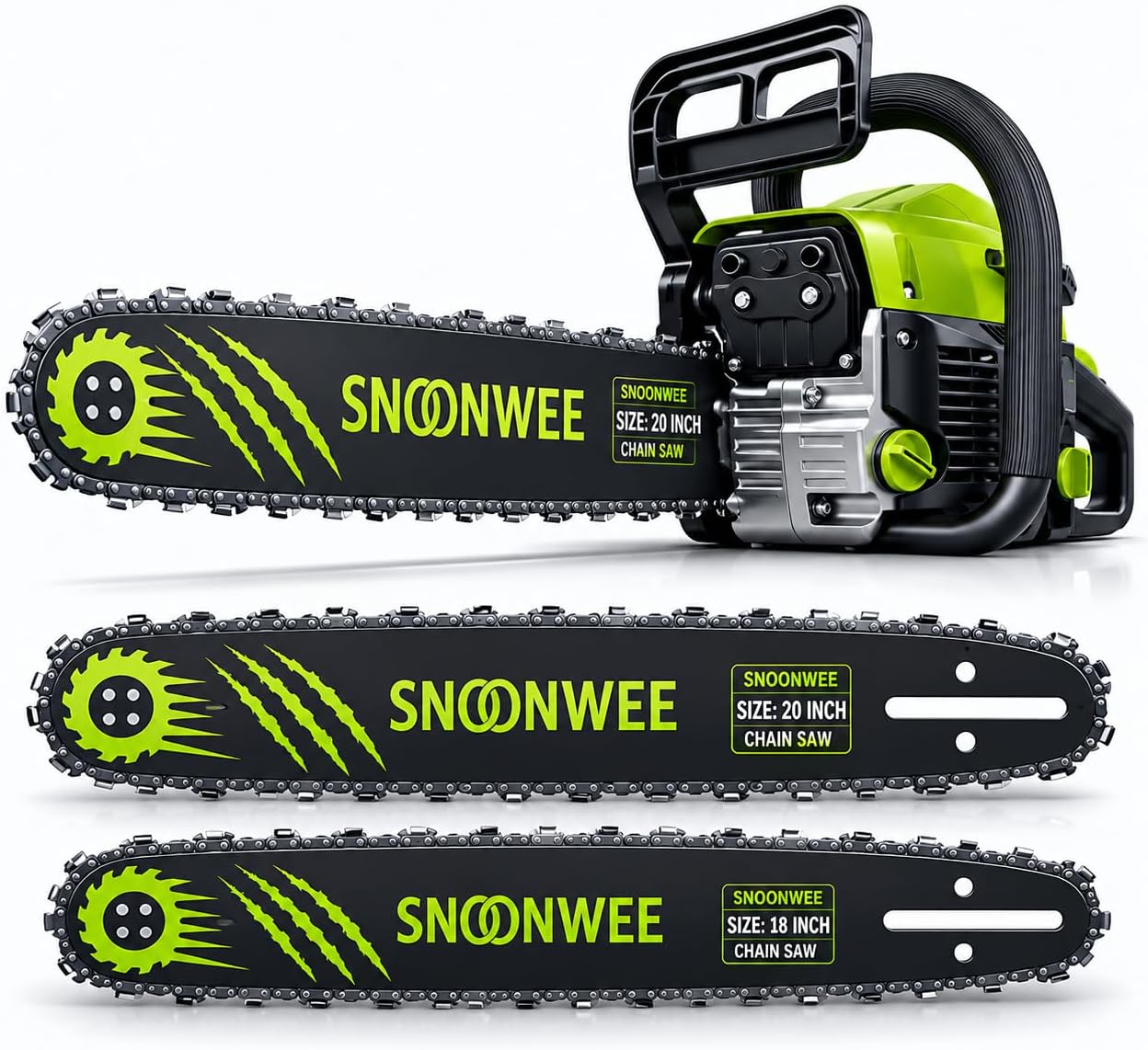
Snoonwee 58cc Gas Chainsaw with 18" and 20" Bars
| Power Source | Gas Powered |
|---|---|
| Horsepower | 3.6 hp |
| Chain Speed | 91 fg/s |
| Included Components | Two guide bars, two chains, tool kit |
This Snoonwee 58cc gas chainsaw is built for household woodcutting tasks like limb removal, cutting firewood, and storm cleanup. It pairs a 3.6 HP, 2-stroke engine that revs to 9,000 RPM with a stated chain speed of 91 ft/s and includes both 18- and 20-inch guide bars and chains so you can match bar length to the job. Practical features aimed at easier use include an easy-start recoil, cruise-control throttle for sustained cuts, a quick-stop chain brake, and an automatic bar-and-chain oiler. The saw lists low-frequency vibration reduction to improve comfort during longer sessions and comes with two chains, two guide bars, and a small tool kit. Expect solid cutting power and fewer interruptions thanks to the cruise-control and auto-oiler, but remember this is a gas two-stroke tool so it requires fuel mixing, routine maintenance, and noise and exhaust management compared with electric alternatives. For homeowners who need dependable, versatile gas power for occasional heavy cuts, this model covers the basics well.
Best for: Homeowners who prioritize dependable gas power for felling limbs, cutting firewood, or storm cleanup and want a saw that reduces startup and throttle fatigue during longer sessions.
Less Ideal for: People who need a lightweight, low-noise option for close-in yard work or those unwilling to perform routine 2-stroke engine maintenance should consider electric alternatives.
- Two included bar lengths (18" and 20") let you switch size to match the job.
- Strong claimed powertrain: 58cc, 3.6 HP engine with 91 ft/s chain speed for efficient cutting.
- Easy-start recoil and cruise-control throttle reduce user fatigue and make startup and sustained cuts simpler.
- Automatic bar-and-chain oiler and included tool kit simplify routine upkeep and chain care.
- As a 2-stroke gas saw it requires fuel mixing and regular engine maintenance.
- Noise, exhaust, and vibration will be higher than battery or corded electric alternatives.
Verdict: A practical, reliability-minded gas chainsaw that gives homeowners strong cutting power plus two bar options and user-friendly features for longer, dependable use.
PROYAMA 62cc Gas Chainsaw with 18" and 22" Guide Bars

| Power Source | Gas Powered |
|---|---|
| Horsepower | 3.5 hp |
| Included Components | 18in/22in Bar, 18in/22in Chain, Chainsaw Bag, Ear Defenders, Face Shield |
| Model Number | PCS62X |
The PROYAMA 62cc gas chainsaw is a full-size, two-cycle tool built for felling, bucking, and heavier property maintenance. Its 3.5 hp 62cc engine and included 18" and 22" bars let you switch between limbing and larger tree work without buying extra bars. Practical features such as a purge/prime bulb and optimized recoil starter aim to reduce difficult pull-starts, while a transparent fuel tank makes it easy to monitor fuel during long jobs. The magnesium-style case and a 3-point spring vibration system help reduce felt vibration and improve control during extended use. It ships with basic safety accessories and a quick-release air filter for easier cleaning. Expect typical gas-saw maintenance responsibilities like mixing fuel, routine filter and chain care, and occasional tuneups; the unit is not as quiet or low-maintenance as battery options and will require safe storage and regular service to stay reliable. For homeowners and small-ranch users who need raw cutting power and bar flexibility, this model covers the essentials effectively.
Best for: Buyers who prioritize cutting power and versatility for heavy yard, farm, or storm cleanup jobs and want a single saw that handles both limbing and felling without added accessories.
Less Ideal for: Those wanting a low-noise, low-maintenance or battery-powered solution for light yard tasks or for users who cannot perform routine engine upkeep.
- Includes both 18" and 22" guide bars for versatile cutting tasks
- 62cc 3.5 hp gas engine provides strong cutting power for hardwoods and large logs
- 3-point spring vibration reduction improves comfort during prolonged use
- Transparent fuel tank lets you check gas level at a glance
- Quick-release air filter and purge bulb simplify starting and routine maintenance
- Being a 2-cycle gas engine requires mixed fuel and regular engine maintenance
- Louder and heavier than battery-powered alternatives, so not ideal for noise-sensitive areas
Verdict: If you need raw gas-powered cutting power and the flexibility to switch between limbing and felling, this PROYAMA 62cc chainsaw delivers both in one package.
Choosing the Right Chainsaw for Bucking Firewood: Key Factors to Consider
Cutting Power and Bar Length
Cutting power determines how quickly a saw slices through different species and diameters of logs. For bucking firewood you will often work with varying wood density and occasional knots; a chainsaw with sufficient torque and an appropriate bar length reduces the number of passes and limits chain stalling. Longer bars allow you to cut larger logs in a single pass but add weight and affect balance, so choose the shortest bar that comfortably handles your biggest frequent logs.
Bar length also affects the saws you can safely operate from the ground versus requiring a bucking stand. Consider the common diameters you process and pick bar length and power that match that workload to avoid unnecessary fatigue and keep cutting efficient.
Ergonomics and Handling
Ergonomics matter when you are making many repetitive cuts. A well-balanced saw with comfortable front and rear handles reduces wrist strain and helps you control the chain through the last part of each cut. Weight distribution matters more than absolute weight for bucking because a heavy saw that is balanced can feel easier to manage than a lighter, off-balance unit.
Look for anti-vibration systems, textured grips, and handle shapes that allow a secure two-handed hold. Slide or slope work, awkward log positions, and working on uneven ground make good handling essential for precision and safety over a long session.
Safety Features and Kickback Reduction
Bucking often exposes you to chain-reaction kickback when the nose contacts wood or when cutting through binding logs. Effective safety design includes responsive chain brakes, low-kickback chains, and a protective handguard. A quick and reliable chain brake can prevent many common injuries during a misstep or sudden kickback.
Also evaluate throttle lockouts and chain catchers that prevent the chain from contacting the operator in case of breakage. Safety is about both passive design and how intuitively the controls function when you need them under stress.
Maintenance Accessibility and Field Serviceability
A saw that is easy to maintain keeps you cutting longer with less downtime. For bucking firewood you will likely need to sharpen chains, retension them, clean air filters, and clear debris frequently. Quick-access tensioners, tool-free air filter covers, and simple spark plug and chain replacement procedures matter for backyard use.
Consider how easy it is to obtain replacement chains and bars, and whether the saw accepts common chain types. Simpler maintenance procedures also reduce the temptation to skip preventive care that preserves cutting performance and safety.
Fuel Type, Runtime, and Noise
Whether you choose gas, battery, or corded-electric affects runtime, fueling behavior, and perceived noise at the worksite. Gas models typically offer longer continuous power and faster refueling but require mixing or fueling and more hands-on maintenance. Battery saws give quieter operation and low vibration during many home sessions but require spare batteries for prolonged bucking.
Runtime expectations, recharge logistics, and noise constraints for your neighborhood or job site will influence which type fits your workflow. Consider whether you need extended run times for large cordwood projects or prefer quieter, low-maintenance operation for smaller batches.
Best Practices for Bucking Firewood
Position logs on a stable surface or use a dedicated bucking stand to keep the cut at a comfortable height and reduce the chance of the bar pinching. Cutting at waist height with good footing improves control and reduces back strain.
Plan cut sequences to avoid binding. Make relief cuts if the log is under tension, and always assess where the log is supported so the cut does not close unexpectedly on the chain.
- Use wedges to keep the kerf open on heavy or bound logs
- Secure the log to prevent rolling before the final pass
- Maintain a clear escape path and stable footing
Sharpening and Chain Care for Consistent Cuts
A sharp chain is essential for efficient bucking. Dull teeth increase operator fatigue and raise the chance of inappropriate chain feeds or stalling. Carry a round file and guide or a compact grinder if you do long sessions away from a workshop.
Monitor chain tension frequently and adjust when the chain heats and expands. Cleaning sawdust and sap from the bar groove and oil ports preserves lubrication and prevents premature wear.
- Check depth gauges after several sharpenings
- Inspect rivets and links for wear before long shifts
Working Safely Around Bound or Split Logs
Bound or split logs create unpredictable loads. Before cutting, examine the log for tension points and decide whether to undercut or overcut. When in doubt, make smaller, controlled cuts rather than forcing one large pass.
Keep helpers at a safe distance and communicate hand signals when moving large sections. Use wedges to relieve compression slowly and avoid sudden releases of energy that can fling wood or pull the saw.
- Wear visible clothing and clear the area of bystanders
- Plan where sections will fall or roll after each cut
Storage and Winter Care for Saw Longevity
Drain or stabilize fuel for extended storage, and clean the saw thoroughly to remove sap and sawdust that can harden over time. A light coating of oil on exposed metal helps prevent corrosion during damp months.
For battery saws, store batteries at recommended charge and temperature ranges. Remove the battery from the tool during storage and check contacts for corrosion before the next use.
- Run a quick maintenance checklist at season start
- Use protective covers for bars and chains during storage
How We Chose the Best Chainsaw for Bucking Firewood
We prioritized attributes that directly affect daily bucking tasks and long shifts in the yard. Cutting power and bar length were top filters because they determine how efficiently a saw moves through different log diameters. We tested for handling and balance by considering weight distribution and grip ergonomics that reduce fatigue and improve control while making repetitive crosscuts. Safety features such as chain brake responsiveness, low-kickback bars, and accessible throttle interlocks were essential; these reduce risk during common bucking scenarios. Maintenance needs and tool-free adjustments were assessed because quick chain tensioning, chain changes, and air-filter access keep a saw working through a long day of firewood processing. Fuel efficiency and run time or battery life were evaluated for continuous productivity, plus vibration and noise levels for user comfort. We excluded specialized demolition or tree-climbing saws that are not built for ground-level bucking. Our shortlist reflects tools best suited for frequent firewood bucking, balancing cutting performance, safety, and upkeep in real yard conditions.
FAQ
What bar length is best for cutting firewood logs?
Bar length depends on the largest log diameter you cut frequently. A bar slightly longer than that diameter lets you make single-pass cuts. For general backyard bucking, moderate bar lengths balance cutting capability and control without adding excessive weight.
Can a battery chainsaw handle a full day of bucking?
It often depends on battery capacity and whether you have spare batteries. Modern battery saws can handle many small to moderate sessions, but for full days of continuous bucking you may need multiple batteries or prefer a gas model for uninterrupted runtime.
How often should I sharpen the chain when bucking firewood?
Sharpening frequency depends on wood species and how much abrasive material the chain encounters. A good rule is to inspect the cut quality every hour of heavy work and sharpen when you notice increased effort, larger wood chips, or tearing instead of clean chips.
Is anti-vibration important for long bucking sessions?
Yes. Reduced vibration lowers fatigue and hand numbness, letting you keep control and maintain accuracy through long shifts. It also decreases the cumulative strain on joints, making repetitive cutting safer and more comfortable.
How do I avoid bar pinching when making crosscuts?
Support the log so that its weight does not close the kerf. Use a bucking stand or supports to hold the log off the ground. If the log is under tension, make relief cuts or use wedges to keep the cut open until the log is fully separated.
Final Verdict
When choosing a chainsaw for bucking firewood, prioritize the combination of cutting power, appropriate bar length, and ergonomic handling that matches the size and volume of wood you process. Pay close attention to safety features and maintenance accessibility because those two areas keep you cutting safely and reduce downtime. Balance runtime needs against weight and noise to fit your typical workday. By focusing on the practical tradeoffs outlined here, you can pick a saw that meets your bucking workload and keeps you productive through whole-season firewood projects.
