

Note: This article contains affiliate links. If you click on these links and make a purchase, I may earn a small commission at no extra cost to you. This helps support my research and content. Read my full affiliate disclosure here.
If you need a chainsaw for cutting pine trees, picking the right tool matters for safety, speed, and stem quality. Pine can be resinous, fast-growing, and sometimes tall or brittle, so a saw with steady cutting power and corrosion-resistant components helps you work with fewer interruptions. This guide covers the top shortlisted chainsaws for cutting pine trees, focusing on motor performance, bar-and-chain durability, ease of servicing, and user safety. Below are the picks we evaluated and the criteria used to compare them, plus guidance on matching a saw to your specific pine work and maintenance routine.
Top Picks at a Glance
| Best Overall The best all-around choice for most situations | EGO POWER+ CS1611 16" Cordless Chainsaw with 56V 2.5Ah Battery and Charger |  |
| Best Quality Built to a higher standard if you want something more solid | Husqvarna 460 Rancher 24-Inch Gas Chainsaw |  |
| Best Value The sweet spot between price and what you get | Oregon CS1500 18" Corded Electric Chainsaw with PowerSharp Self-Sharpening |  |
| Best Budget The cheapest option that still gets the job done reliably | VEVOR 62cc Gas-Powered Chainsaw, 20-inch Guide Bar |  |
| Highest Rated A top-rated pick with lots of positive feedback | DEWALT 20V MAX 12" Brushless Cordless Chainsaw Kit (DCCS621P1) |  |
| Most Popular A crowd favorite that many people choose with confidence | Echo CS-590 20" Rear-Handle Gas Chainsaw (59.8 cc) |  |
| Best Seller A high-volume bestseller chosen again and again | SEESII 12-Inch Cordless Brushless Chainsaw |  |
EGO POWER+ CS1611 16" Cordless Chainsaw with 56V 2.5Ah Battery and Charger
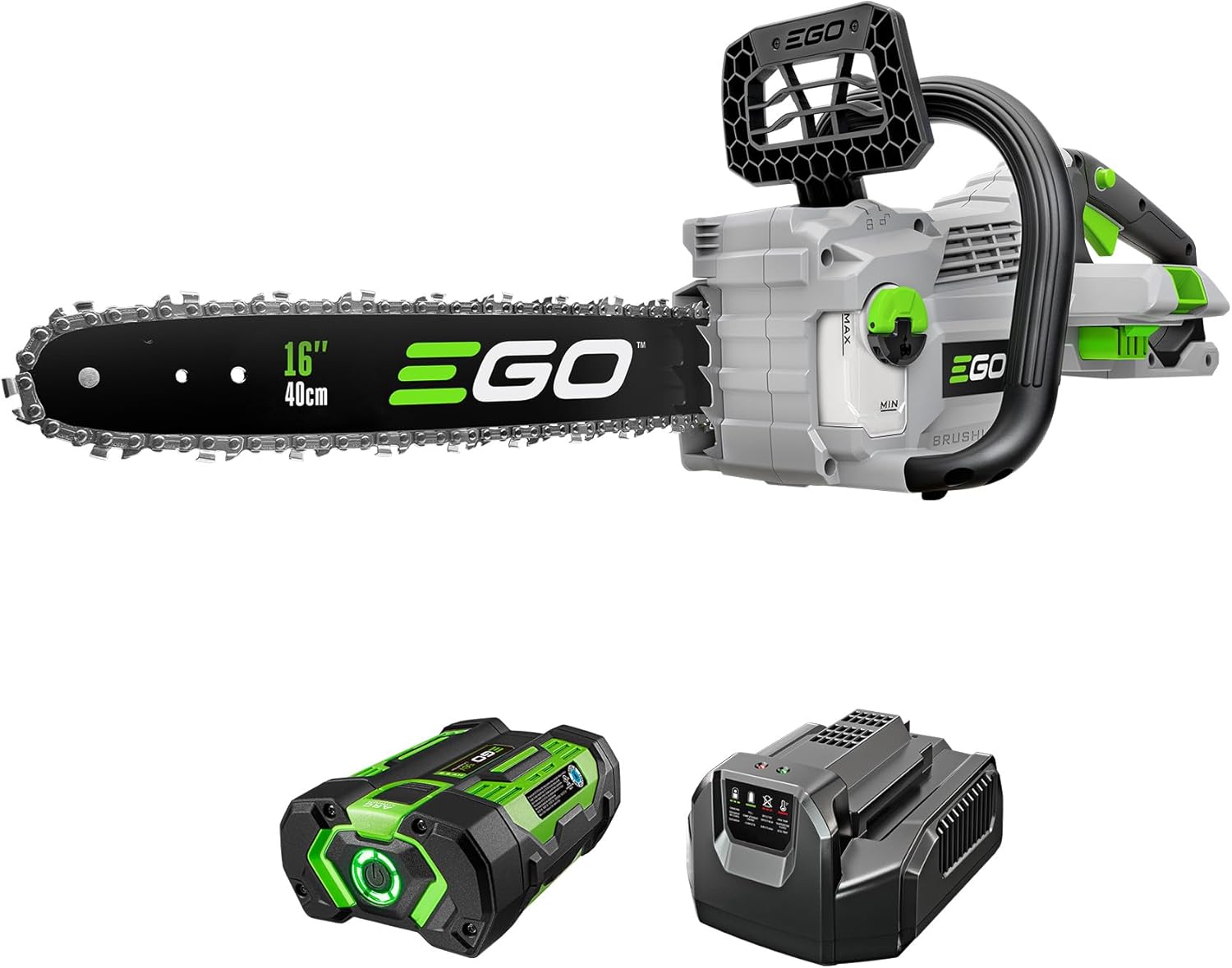
| Power Source | Battery Powered |
|---|---|
| Horsepower | 2.3 |
| Chain Length | 16 inches |
| Included Components | 2.5Ah Battery and Standard Charger |
| Chain Speed | 20 m/s |
The EGO POWER+ CS1611 is a battery-powered 16-inch chainsaw built to give prosumer-level cutting performance without gas. It uses a high-efficiency brushless motor rated as a 40CC equivalent and runs on the included 56V 2.5Ah ARC Lithium battery, which the manufacturer says delivers up to about 130 cuts through a 4×4 on a single charge. Notable features include a 20 m/s chain speed for efficient cuts, a tool-free chain-tensioning dial for quick on-the-job adjustments, automatic oiling with a spill-free reservoir, metal bucking spikes for secure cutting, and an IPX4 weather resistance rating. In real use this means quieter, low-maintenance operation compared with gas saws, fast setup between cuts, and enough runtime for routine property work like limb removal, small tree felling, and firewood prep. Limitations are battery runtime for very heavy or continuous commercial use and the saw’s 16-inch bar, which restricts maximum cut diameter compared with larger pro gas models.
Best for: Buyers wanting a low-maintenance, gas-free alternative that still delivers near-gas power for regular property maintenance, pruning, and medium-duty cutting tasks.
Less Ideal for: Users who need long uninterrupted runtime for commercial logging or must cut very large-diameter timber should consider larger gas or higher-capacity battery systems.
- Brushless motor with 40CC gas-equivalent power for strong cutting performance
- Includes 56V 2.5Ah battery and charger so it is ready to use out of the box
- Tool-free chain tensioning lets you adjust the chain quickly on site
- Automatic oiling with a spill-free reservoir keeps the chain lubricated during work
- IPX4 weather resistance and metal bucking spikes add durability and control in outdoor conditions
- 16-inch bar limits maximum cut diameter compared with larger pro chainsaws
- Runtime depends on battery capacity and may be insufficient for long, continuous heavy-duty jobs
Verdict: A ready-to-use cordless chainsaw that gives near-gas power and easy on-the-job adjustments, ideal for homeowners and pros doing regular medium-duty cutting.
Husqvarna 460 Rancher 24-Inch Gas Chainsaw

| Power Source | Gas Powered |
|---|---|
| Horsepower | 3.6 |
| Chain Length | 24 inches |
The Husqvarna 460 Rancher is a workhorse 24-inch gas chainsaw designed for heavy cutting jobs like felling medium to large trees and preparing firewood on acreage. It uses a 60.3-cc, 3.6-HP X-Torq two-stroke engine with Smart Start for easier ignition and an Air Injection centrifugal system that helps keep the air filter cleaner for longer service intervals. Ergonomic touches such as LowVib anti-vibration, a 7-degree offset front handle, side-mounted chain tensioning and an inertia-activated chain brake make long sessions more manageable and adjustments quicker in the field. Practical benefits include strong cutting power at low RPM, replaceable bar and chain, and an adjustable oil pump for proper lubrication during heavy use. Expect typical gas-saw care needs such as fuel mixing, periodic filter and spark plug maintenance, and the added noise and emissions of a gas engine. This is a substantial saw that performs well for owners who need sustained power and durability rather than a lightweight occasional-use option.
Best for: Landowners, small farm operators, and homeowners with extensive woodcutting needs who want a durable, high‑power saw for sustained felling and firewood preparation.
Less Ideal for: Casual users with light pruning or occasional cutting needs and those who prefer low-noise, low-maintenance electric or battery options.
- High power 60.3-cc X-Torq engine delivers strong cutting performance for large logs
- Smart Start and combined choke/stop control make starting quicker and reduce flooding
- Air Injection centrifugal system helps extend air filter life under dusty conditions
- Ergonomic design with LowVib technology and offset front handle reduces user fatigue
- Gas engine requires fuel mixing and regular maintenance compared with battery models
- Large 24-inch bar makes the saw heavier and less maneuverable for tight or overhead work
Verdict: Choose the 460 Rancher if you need a powerful, durable gas chainsaw built to handle large logs and sustained heavy-duty cutting.
Oregon CS1500 18" Corded Electric Chainsaw with PowerSharp Self-Sharpening

| Power Source | Corded Electric |
|---|---|
| Horsepower | 2400 watts |
| Chain Length | 18 inches |
| Manufacturer Warranty Description | 2 year |
The Oregon CS1500 is a homeowner-focused corded electric chainsaw designed for regular tree trimming, limb removal, and general yard cleanup. It delivers strong electric power and starts instantly so you avoid engine maintenance or gas mixing. The standout feature is the integrated PowerSharp self-sharpening system that sharpens the chain in a few seconds without removing it, which cuts downtime and keeps cuts consistent. Tool-less chain tensioning and an automatic oiler simplify upkeep, making the saw easy to maintain between uses. Safety-oriented elements such as a chain brake and a lower-noise corded motor suit suburban settings and neighbors. Limitations include dependence on a power cord, which restricts reach compared with cordless or gas saws, and a fixed 18-inch bar that is less suitable for very large trunks. For routine tree cutting on a small to medium property this model balances power, low maintenance, and safety in a package aimed at cautious, practical users.
Best for: Homeowners who want a reliable, low-maintenance chainsaw for regular pruning, limb removal, and small-to-medium tree cutting without dealing with gas engines.
Less Ideal for: Landscapers, remote jobs, or users who need cordless portability or a saw for frequent heavy-duty felling of very large trees.
- Integrated PowerSharp self-sharpening sharpens the chain in seconds without removal
- Instant corded electric start avoids gas mixing and engine maintenance
- Automatic oiler keeps bar and chain lubricated during use
- Tool-less tensioning makes chain adjustments quick and simple
- Lower noise and built-in chain brake improve safety for residential use
- Corded power limits mobility and requires access to an extension cord
- 18-inch bar is not ideal for cutting very large tree trunks
Verdict: If you want a safe, low-maintenance chainsaw for routine tree cutting around the yard, the Oregon CS1500 delivers instant corded power and a unique self-sharpening chain that keeps you cutting with minimal fuss.
VEVOR 62cc Gas-Powered Chainsaw, 20-inch Guide Bar

| Engine displacement | 62CC |
|---|---|
| Horsepower | 3.8 hp |
| Chain pitch | 0.325 in |
| Chain links | 76 links |
| Fuel tank capacity | 550 ml |
The VEVOR 62cc gas-powered chainsaw is built to tackle medium to large jobs like felling small trees, cutting firewood, and heavy pruning. Its 3.8 hp two-stroke engine and 20-inch guide bar can cut logs up to about 18 inches in diameter, and a high-revving 12,000 rpm top speed helps it chew through dense wood. The saw includes practical touches such as a longer pull rope and cold/hot start settings to help with starting in varied temperatures, an emergency stop lever, and a corrosion-resistant 45# steel guide bar with a 0.325-inch pitch chain (76 links). The PA6 composite body and separate fuel and chain-oil tanks aim to reduce leaks and withstand outdoor conditions. Expect a substantial tool weight and the usual maintenance demands of a gas saw: you will need proper fuel mixing, routine chain tensioning, sharpening, and periodic engine tuneups. Also plan for noise, vibration, and protective gear when operating. For buyers who prioritize power and cut capacity, this VEVOR delivers straightforward performance, but it requires the typical hands-on upkeep of a 2-stroke gas machine.
Best for: Buyers who need brute cutting power for frequent medium-to-large tree work and accept hands-on maintenance and safety protocols to keep a gas saw performing reliably.
Less Ideal for: Casual gardeners, those who prefer low-maintenance tools, or users who need a quiet, vibration-minimized option should consider electric or battery alternatives instead.
- High cutting capacity with a 20-inch guide bar suitable for logs up to about 18 inches in diameter
- Strong 62cc two-stroke engine rated at 3.8 hp for demanding yard and light-logging tasks
- Cold and hot start options plus an extended pull rope to improve starting reliability in different conditions
- Separate chain oil tank and chain adjuster for on-the-job lubrication and easy tensioning
- Emergency stop and guard design to help limit flying debris and improve operator safety
- Requires regular gas/oil mixing, carburetor adjustments, chain sharpening, and general 2-stroke maintenance
- Relatively heavy and produces typical gas-saw noise and vibration which mandate PPE during use
Verdict: If you want a powerful 20-inch gas chainsaw that handles large-diameter cuts and you are prepared for routine 2-stroke upkeep, this VEVOR is a work-oriented choice.
DEWALT 20V MAX 12" Brushless Cordless Chainsaw Kit (DCCS621P1)

| Power Source | Battery Powered |
|---|---|
| Horsepower | 0.7 hp |
| Chain Length | 12 inches |
| Included Components | (1) DCCS621 | (1) Sheath | (1) DCB205 Battery and Charger |
The DEWALT 20V MAX 12" cordless chainsaw kit is a compact, battery-powered saw intended for cutting tree limbs, small logs, and light construction tasks. It uses a brushless motor for improved efficiency and claims up to 100 cuts per charge with the included 20V battery and charger, which makes it useful for weekend yard work or jobsite trimming without the fuss of gas maintenance. The low-kickback 12" bar and chain improve safety and make controlled cuts easier for less experienced users, while the lightweight design helps reduce fatigue during extended use. Being battery powered eliminates fumes, cold starts, and carburetor upkeep common to gas saws, but it is not aimed at heavy felling or large-diameter logs where longer runtime and more power are required. For buyers who want a tidy, lower-maintenance alternative to small gas saws, this kit balances portability, runtime, and practical cutting power in a familiar DEWALT platform.
Best for: Buyers who want a low-maintenance, portable chainsaw for routine yard work, limb trimming, and light construction cutting and who prioritize convenience and predictable runtime over maximum power.
Less Ideal for: Users who regularly need to fell large trees or process thick firewood should consider higher-power gas or larger battery saws designed for heavy-duty cutting.
- Brushless motor for better efficiency and longer runtime
- Includes battery and charger so it is ready to use out of the box
- Low-kickback 12" bar and chain for safer, more controlled cutting
- Compact, lightweight design reduces user fatigue and improves maneuverability
- 0.7 hp and a 12" chain limit suitability for heavy felling or very large logs
- Runtime depends on included battery capacity so extended work may require spare batteries
Verdict: A convenient, low-maintenance cordless option that delivers solid performance for routine yard and light construction cutting tasks.
Echo CS-590 20" Rear-Handle Gas Chainsaw (59.8 cc)

| Power Source | gasoline-powered |
|---|---|
| Horsepower | 5.3 hp |
| Chain Length | 20 inches |
The Echo CS-590 is a rear-handle gasoline chainsaw built for demanding cutting jobs such as splitting and bucking firewood. Its 59.8 cc engine delivers strong torque and a 20-inch chain that lets you make long, through-cuts in medium to large logs without frequent repositioning. Typical use is one-operator felling, limbing, and sectioning larger rounds at a home or small farm. Notable features include a professional-grade powerplant and a rear-handle layout that aids control when making overhead or precision cuts. Practical benefits are robust cutting power and an extended bar length that reduce the number of cuts needed for large pieces of firewood, saving time during firewood processing sessions. Important limitations are the higher noise, vibration, and maintenance requirements of a gasoline saw compared with battery or electric models, and the rear-handle design is less comfortable for very long jobs where an anti-vibration front-handle saw might feel steadier for both operators and occasional users.
Best for: Buyers who need a capable, time-saving saw for processing large amounts of firewood and who prioritize cutting power and longer bar length over lowest noise or minimal maintenance.
Less Ideal for: Casual users who only cut small logs, those who prefer low-maintenance or quieter battery/electric saws, or people who need the lightest possible tool for extended carry work.
- Powerful 59.8 cc engine suitable for cutting medium to large logs
- 20-inch chain reduces the number of passes on long rounds
- Rear-handle layout provides good control for felling and precision cuts
- Professional-grade construction intended for frequent heavy use
- Gasoline power requires regular fueling, tuning, and higher maintenance
- Heavier and louder than battery or electric alternatives
Verdict: If you need strong, professional-level cutting power and a 20-inch bar to process large firewood efficiently, this Echo CS-590 is a solid choice.
SEESII 12-Inch Cordless Brushless Chainsaw

| Power Source | Battery Powered |
|---|---|
| Horsepower | 1200 watts |
| Chain Length | 12 inches |
| Included Components | chainsaw |
The SEESII 12-inch cordless chainsaw is designed for homeowners and pros who need portable, high-power cutting without a generator. It pairs a 1200W brushless motor with two 4.0Ah batteries to deliver sustained cutting power for pruning, cutting storm debris, and working on small to medium logs. The tool-free chain tension system and automatic lubrication reduce downtime and routine maintenance, and the 60 mL oil tank helps keep the chain running smoothly during longer sessions. Because it is cordless and relatively lightweight for its class, it is easy to move around the yard or use at remote sites where cords are impractical. Important limits to note are the 12-inch bar, which constrains maximum log diameter compared with full-size saws, and battery reliance for very long jobs where alternating charged packs or a backup power source is needed. For straightforward woodcutting tasks this model balances cutting performance, convenience, and low maintenance.
Best for: Buyers who prioritize efficient, portable wood cutting for yard cleanup, pruning, and medium DIY projects and want a low-maintenance cordless saw they can move around the property easily.
Less Ideal for: Contractors or users who regularly need to fell large trees or process large-diameter logs should choose a full-size gas or professional electric chainsaw instead.
- 1200W brushless motor provides strong, efficient cutting power for hardwood and storm debris
- Two 4.0Ah batteries extend runtime for longer jobs and include a built-in charge indicator
- Automatic oiling with a 60 mL tank reduces frequent stops for lubrication
- Tool-free chain tensioning simplifies on-the-job adjustments
- Cordless, relatively lightweight design improves portability and use at remote sites
- 12-inch bar limits the maximum log diameter compared with larger professional chainsaws
- Runtime depends on battery swapping for extended heavy-duty cutting sessions
Verdict: A powerful, low-maintenance cordless 12-inch saw that maximizes portable cutting performance for homeowners and weekend woodworkers.
Choosing the Right Chainsaw for Cutting Pine Trees: Key Factors to Consider
Bar Length and Cutting Capacity
Bar length determines the maximum diameter you can safely cut in a single pass and affects weight and balance. Longer bars let you tackle larger trunks but add torque demand and increase fatigue during extended work. For pines, choose a bar that matches the typical stem sizes you encounter: a shorter bar for pruning and limb work, a mid-length bar for small to medium trunks, and a longer bar only if you expect frequent larger-diameter cuts.
Bar length also influences chain selection and feed. A properly matched chain for the bar helps the saw maintain speed under load and reduces bogging when cutting resin- and sap-rich pinewood. Think about transport and storage too, since longer bars require larger protective scabbards and take up more space.
Engine Type and Power Delivery
Engine or motor power determines how the saw behaves when biting into resinous pine. Gas engines offer sustained high torque for heavy cuts and are better for long felling jobs, while battery electric saws deliver smooth throttle response and lower maintenance for shorter sessions. If you work far from power sources or expect long shifts, prioritize continuous torque and fuel/runtime. For intermittent backyard pruning, battery models with high peak power can be sufficient.
Consider how the saw maintains RPM under load. A saw that holds speed through a thick cut reduces the need for multiple passes and lowers the chance of pinching. Cold starts or high-humidity conditions can affect starting behavior on some engines, so reliable starting systems and fuel or battery management matter for consistent field performance.
Chain Quality and Resistance to Pitch
Pine sap and pitch quickly gum up lower-quality chains and can accelerate dulling. Chains that are chrome- or heat-treated resist wear and stay sharper longer when cutting resinous wood. Look for chains with plate designs that shed sap and allow easier cleaning. Chain pitch and gauge must match the bar and sprocket; mismatches increase wear and can be dangerous.
Maintenance routines play into chain longevity. A chain that is easy to remove, clean, and re-tension in the field will reduce downtime. Also consider chain lubrication systems and oil reservoir capacity, because consistent oiling prevents overheating and premature wear when cutting many pine logs in sequence.
Kickback Risk and Safety Systems
Cutting limbs and felling trees can expose you to sudden kickback, especially when using the nose of the bar or when a cut binds. Effective chain brakes, low-kickback chain designs, and hands-on anti-vibration handles help reduce the risk. Chain brakes that engage quickly and reliably are particularly valuable when working overhead or on ladders.
Other safety considerations include a clear and reachable stop switch, front and rear hand guards, and operator presence controls that prevent accidental throttle engagement. For gardeners who work alone, features that simplify safe one-person felling and limb removal are important for reducing incident risk.
Serviceability and Field Maintenance
Chainsaws used for pine must be easy to service because sap and debris can clog filters and chain systems rapidly. Tools-free access to the air filter, side-mounted chain tensioners, and straightforward sprocket cover removal save time. Consider how simple it is to tension the chain, replace the spark plug or battery, and clean the bar groove and oil passages.
Spare part availability and clear maintenance instructions also matter. Saws that require specialized tools or hard-to-find replacement parts add downtime and hidden cost. For frequent pine work, plan a basic maintenance kit including spare chains, a sharpening file, and a small bottle of chain lubricant.
Weight, Balance, and User Comfort
A well-balanced saw reduces fatigue and improves control when lifting and making repeated cuts. Weight matters more for overhead limbing and long sessions. Lightweight saws are easier to maneuver but may sacrifice some cutting capacity. The placement of the fuel tank, handle ergonomics, and vibration damping influence how quickly you tire and how precise your cuts are.
Consider also handle grip materials and the presence of anti-vibration mounts. These features lower hand numbness during long pruning sessions and help maintain control when making fine cuts near the bole or branches.
Matching Saw Power to Pine Size and Task
Decide whether you will mostly prune branches, cut small trunks, or fell mature trees. Pruning and light limb work favor compact saws with nimble handling and fast throttle response. Medium trunk work requires more continuous torque and a mid-length bar. Large-diameter pines need sustained power, a longer bar, and a machine built for frequent heavy cuts.
Think in terms of cutting cycles. For intermittent pruning you can trade some maximum cutting capacity for lighter weight. For repeated trunk cuts, prioritize a powertrain that maintains RPM under load and a bar-and-chain setup that stays sharp through resin contact.
- Pruning and limbing: shorter bar, lighter saw, quick throttle response
- Small to medium trunks: mid-length bar, higher torque, robust chain
- Large trunks and felling: sustained power, longer bar, heavy-duty chain
Battery Versus Gas for Pine Work
Battery saws are quieter and require less maintenance, which is helpful for quick cleanups and yard work. Modern battery packs can deliver high peak power but may limit continuous runtime on long felling jobs. If your pine work is mostly daytime yard chores, battery models give predictable starts and lower operator vibration.
Gas saws provide longer runtime and higher sustained torque, which is valuable for cutting large-diameter pines or long days of work. They require more maintenance and proper fuel handling but excel where charging is impractical or where power demands are consistently high.
- Battery: low maintenance, quiet, limited continuous runtime
- Gas: high sustained torque, longer runtime, more upkeep
Keeping Sap and Pitch From Slowing Work
Pine sap clogs chains and dulls edges faster than some hardwoods. Regular cleaning during breaks, using solvent or warm water where appropriate, and using chains with protective treatments reduce downtime. Carry a small brush and a spare chain so you can swap and clean quickly in the field.
Consistent bar and chain oiling is critical. Choose saws with reliable automatic oilers and sufficient reservoir capacity to avoid frequent refills when processing multiple logs. Checking the bar groove and oil ports before a shift prevents unexpected slowdowns.
- Carry cleaning supplies and a spare chain
- Prioritize models with reliable oiling systems and accessible oil ports
When to Choose Longer Bars and When to Avoid Them
Long bars increase reach and let you cut larger diameters in one pass but add weight and leverage that can make kickback worse. Use longer bars when you have stable footing and the saw provides sufficient torque. Avoid long bars for overhead limbing or when working from ladders.
For most homeowners and small-scale gardeners, a mid-length bar provides a good balance of capability and control. Professionals or landowners clearing large pines will more often need the longer reach combined with a higher-powered engine.
- Long bars: better for large trunks, require more torque and control
- Mid-length bars: versatile for most yard and property work
- Short bars: best for pruning, limbing, and tight spaces
Transport, Storage, and Safe Handling
Think about how you will store and transport the saw between jobs. Bars should be fitted with a scabbard and stored dry to prevent rust and sap buildup. Secure the saw in a rack or case when transporting on a truck or trailer to prevent damage and accidental contact.
Safe handling includes regular inspection of the chain tension, checking the anti-kickback systems, and making sure fuel or battery compartments are secure. Keep a basic first-aid kit and protective gear close at hand when working with pine trees, and plan an escape route when felling larger stems.
- Always use a bar scabbard during transport
- Inspect chain tension and safety systems before each use
- Store in a dry place away from direct sunlight and extreme temperatures
How We Chose the Best Chainsaw for Cutting Pine Trees
We focused on features and real-world performance traits that affect cutting pine trees specifically. Our evaluation prioritized cutting power and torque for clean cross-cuts through resinous wood, bar-and-chain durability against sap and pitch, chain sharpness retention and ease of re-tensioning in the field, starting reliability under varied temperatures, and user safety systems that reduce kickback risk when working on limbs and standing stems. We also considered maintenance access, including how simple it is to clean air filters, change the chain, and sharpen or replace the bar without specialized tools. Noise and vibration levels were assessed for prolonged use, since extended pruning or limbing requires user comfort features. Products were excluded if they lacked sufficient documented cutting capacity for medium to large pine stems or if they used low-quality bar or chain materials prone to rapid dulling. We filtered out units with inaccessible maintenance points or minimal safety features. The final shortlist reflects saws that balance field serviceability, cutting efficiency, and long-term durability for pine-specific tasks.
FAQ
What bar length is best for cutting small to medium pine trees?
For small to medium pines, a mid-length bar in the 14 to 18 inch range often provides the best balance of control and cutting capacity. It lets you handle most homeowner and property tasks without adding excessive weight or torque demand.
How often should I sharpen the chain when cutting a lot of pine?
Chains used heavily on pine should be checked and sharpened after every few hours of continuous cutting or whenever you notice smoke, slow cutting, or excessive vibration. Resin build-up speeds dulling, so frequent inspection and quick sharpening preserve cut quality.
Is a battery chainsaw powerful enough for felling pine trees?
Battery saws can be powerful enough for small to medium pines, especially with modern high-output packs. For large-diameter trunks or extended felling work, gas-powered saws usually offer better sustained torque and runtime.
How do I prevent sap from gumming up the chain?
Prevent sap build-up by cleaning the chain and bar at regular intervals, using appropriate solvents sparingly, and keeping the chain well-lubricated. Using a treated or hardened chain and removing excess resin during breaks reduces downtime.
What safety gear is essential when cutting pine trees?
Essential safety gear includes cut-resistant chaps or pants, eye and ear protection, gloves with good grip, and a helmet with face protection for falling debris. Sturdy boots and a clear escape route are also critical when felling trees.
Final Verdict
Select a chainsaw for cutting pine trees by prioritizing the features that match the size of the trees and the type of work you do. Focus on cutting power and a durable bar-and-chain setup if you will fell larger trunks, or choose lighter, more maneuverable options for pruning and limbing. Balance weight, maintenance access, and safety systems to suit how often you will work on pines. Your final pick should reflect a tradeoff between continuous power and operator comfort. Emphasize reliable starting, good chain durability against pitch, and accessible maintenance to keep the saw working smoothly through repeated pine cuts.
