

Note: This article contains affiliate links. If you click on these links and make a purchase, I may earn a small commission at no extra cost to you. This helps support my research and content. Read my full affiliate disclosure here.
Picking the right chemical fertilizer changes how quickly plants respond and how easy it is to apply nutrients across beds, containers, or lawns. You want predictable nutrient ratios, a feeding method that fits your schedule, and minimal risk of burning young roots or causing runoff. This guide shortlists seven top chemical fertilizer options that suit common garden uses and soil situations. Each pick was evaluated for nutrient formulation, ease of application, longevity, and gardener safety so you can choose a product that matches your patch and planting plan.
Top Picks at a Glance
| Best Overall The best all-around choice for most situations | Miracle-Gro Water Soluble All Purpose Plant Food, 3 lb |  |
| Best Quality Built to a higher standard if you want something more solid | Osmocote Smart‑Release Plant Food Plus Outdoor & Indoor, 2 lb |  |
| Best Value The sweet spot between price and what you get | Miracle-Gro Water Soluble All Purpose Plant Food, 10 lb | 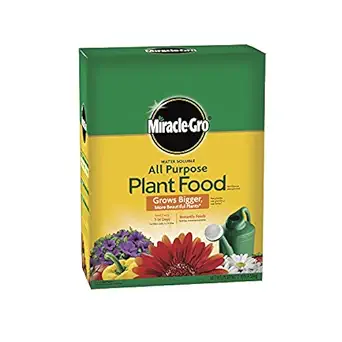 |
| Best Budget The cheapest option that still gets the job done reliably | Miracle-Gro Water Soluble All Purpose Plant Food, 1.5 lb |  |
| Highest Rated A top-rated pick with lots of positive feedback | Miracle-Gro Watering Can Singles All Purpose Plant Food, 24 Packets | 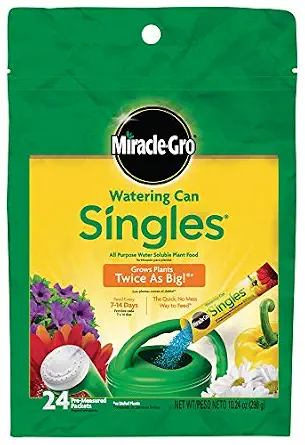 |
| Most Popular A crowd favorite that many people choose with confidence | Miracle-Gro Indoor Plant Food for All Plants, Liquid, 8 fl. oz. (2-Pack) |  |
| Best Seller A high-volume bestseller chosen again and again | TPS NUTRIENTS Indoor Plant Food Liquid Fertilizer, 8 fl oz |  |
Miracle-Gro Water Soluble All Purpose Plant Food, 3 lb

| Item Form | Powder |
|---|---|
| Application Method | Mix with water in a watering can |
| Fertilizer Analysis (N‑P‑K) | 24-8-16 |
| Unit Count | 48 Ounce |
| Coverage | Feeds approximately 1,200 sq. ft. |
Miracle‑Gro Water Soluble All Purpose Plant Food is a powdered NPK 24‑8‑16 formula that dissolves in water to give plants a quick nutrient boost. You mix measured scoops into a watering can and apply to the soil at the base of plants every 7–14 days for outdoor use or every 14 days for houseplants. Notable features include a high nitrogen content for leafy growth, compatibility with containers and in‑ground beds, and guidance for use with a Miracle‑Gro Garden Feeder for larger areas. In practical terms this is a fast‑acting feed that encourages bigger, greener foliage and works well in regular maintenance of perennials like hostas. Limitations are that it is a fast‑release fertilizer rather than a slow‑release option, so it requires regular reapplication and careful measuring to avoid overfeeding. Also, the 24‑8‑16 balance is geared toward vegetative growth, so it is not optimized if you want to prioritize flowering or bloom boosting.
Best for: Buyers who want a reliable, fast‑acting feed to maintain lush, leafy perennials and container plants and who value proven products with broad user endorsement.
Less Ideal for: Gardeners seeking a single, long‑lasting granular fertilizer or a bloom‑focused formula should consider alternative slow‑release or high‑phosphorus products.
- Water‑soluble powder mixes easily for quick uptake by roots
- High nitrogen formula promotes robust leafy growth ideal for shade plants
- Clear mixing and application instructions for both indoor and outdoor use
- Suitable for containers and in‑ground gardens and compatible with garden feeders
- Requires frequent applications so it is not a low‑maintenance, slow‑release option
- High nitrogen ratio is less suitable when the primary goal is more flowers than foliage
Verdict: A fast‑acting, water‑soluble fertilizer that reliably produces bigger, greener hosta leaves when used as directed.
Osmocote Smart‑Release Plant Food Plus Outdoor & Indoor, 2 lb

| Item Form | Granules |
|---|---|
| Application Method | Sprinkle |
| Target Species | All plants |
| Mixing Ratio | 1 capful (3 tablespoons) per 2 gallons soil or per 4 sq. ft. |
| Unit Count | 32 Ounce |
Osmocote Smart‑Release Plant Food Plus is a granular, resin‑coated fertilizer designed to feed flowers and other plants steadily for up to six months with 11 essential nutrients. You apply it by sprinkling the recommended amount into the top inch or two of potting mix or garden soil, watering it in, and reapplying every six months; indoor plants use about half the outdoor rate. The resin coating times nutrient release to moisture and temperature, which reduces the need for frequent feedings and lowers the risk of fertilizer burn when used as directed. It works across containers, raised beds, and in‑ground flower beds and covers up to roughly 75 square feet per 2 lb container. Limitations are that a single 2 lb container is only enough for small gardens or several pots, and the slow‑release formula is not suitable when an immediate corrective boost is needed for acute nutrient deficiencies. For gardeners focused on steady, maintenance feeding for flowering plants this is an easy, low‑effort option.
Best for: Gardeners who want reliable, low‑maintenance feeding for flowers and mixed plantings and prefer a consistent supply of nutrients over months rather than frequent liquid feedings.
Less Ideal for: Growers who need fast corrective feeding for visible nutrient deficiencies or those managing very large beds who want bulk fertilizer options to reduce trips to reapply.
- Feeds continuously up to six months with a single application
- Resin coating times nutrient release to plant needs based on moisture and temperature
- Formulated with 11 essential nutrients suitable for a wide range of flowering plants
- No-burn pledge when used as directed reduces risk of overfeeding
- 2 lb container only covers about 75 sq. ft., so frequent repurchase is needed for larger gardens
- Slow‑release formulation does not provide a rapid corrective nutrient boost
Verdict: Choose this product if you want a hands-off, long‑lasting fertilizer that keeps flowering plants fed for months with a single application.
Miracle-Gro Water Soluble All Purpose Plant Food, 10 lb

| Item Form | Granules, Powder |
|---|---|
| Application Method | watering can |
| Target Species | For all flowers, vegetables, trees, shrubs and houseplants |
| Fertilizer Analysis | 24-8-16 |
Miracle-Gro Water Soluble All Purpose Plant Food is a fast-acting granular formula that dissolves in water to feed shrubs, flowers, vegetables and houseplants. You mix measured scoops into a watering can or garden feeder and apply at the soil line every 1 to 2 weeks; the water-soluble format delivers nutrients quickly to roots, which can produce visibly fuller growth compared with unfed plants. The product is labeled safe for all common plant types when used as directed and includes guidance for indoor and outdoor dilution rates. Notable features are the broad target list (shrubs included), the 24-8-16 NPK balance that favors leafy growth, and a large 10 lb container that covers extensive garden area. Practical benefits for shrub care are rapid nutrient availability during the growing season and easy application with routine watering. Important limitations are the relatively high nitrogen proportion, which is ideal for leaf development but may be less suitable when the goal is to limit vegetative growth or to force blooms or fruit without adjusting timing or concentration. Follow the package directions to avoid overfeeding and protect nearby sensitive plants.
Best for: Gardeners who want a reliable, quick-feed fertilizer to boost shrub vigor and see noticeable growth within weeks and who value products with extensive customer use and guidance.
Less Ideal for: Growers seeking a low-nitrogen bloom booster or a slow-release, low-maintenance fertilizer for seasonal feeding should consider more specialized formulas.
- Water-soluble formula delivers nutrients quickly to roots for faster response
- Broadly labeled for indoor and outdoor use including shrubs, trees, flowers and vegetables
- Clear dilution and application instructions for watering can or garden feeder
- High-coverage 10 lb container suitable for large gardens
- High nitrogen ratio may encourage leafy growth over blooms or fruiting if used during flowering
- Requires regular reapplication every 1–2 weeks rather than long-term slow feeding
Verdict: A dependable, fast-acting water-soluble fertilizer that reliably boosts shrub growth when used as directed.
Miracle-Gro Water Soluble All Purpose Plant Food, 1.5 lb

| Item Form | Powder |
|---|---|
| Application Method | Watering Can |
| Target Species | For all flowers, vegetables, trees, shrubs and houseplants |
| Mixing Ratio | 24-8-16 |
Miracle-Gro Water Soluble All Purpose Plant Food is a powdered, water-soluble fertilizer formulated to deliver fast nutrition to a broad mix of plants. You mix the powder into a watering can or a garden feeder and apply every 1 to 2 weeks depending on whether plants are indoors or out. The 24-8-16 NPK ratio supplies a strong nitrogen boost for leafy growth along with phosphorus and potassium to support flowering and fruit set. For pepper growers this means it can help produce vigorous plants and encourage fruit development when used at the recommended strengths. Notable features include clear mixing guidance for both indoor and outdoor use and compatibility with container and in-ground plantings. Practical benefits are quick uptake by roots and flexible application options. Important limitations are the high nitrogen proportion, which can favor foliage over fruit if overused, and the need to follow dilution instructions to avoid nutrient burn. This product is best used as a regular boost within a balanced feeding plan rather than the only fertility source for long-term soil health.
Best for: Home gardeners looking for an affordable, easy-to-use boost to support vigorous pepper plant growth and quick results in both containers and garden beds.
Less Ideal for: Growers who want a low-nitrogen or slow-release fertility plan for long-term soil building should consider specialized or organic alternatives.
- Water-soluble powder that feeds plants quickly through the roots
- Clear mixing instructions for indoor and outdoor applications
- Broadly labeled for use on flowers, vegetables, trees, shrubs and houseplants
- Feeds approximately 600 sq. ft. from the 1.5 lb container
- High nitrogen ratio may encourage foliage more than fruit if used too frequently
Verdict: A budget-friendly, fast-acting soluble fertilizer that gives bell pepper plants a regular nitrogen-rich boost to promote vigorous growth and quicker results.
Miracle-Gro Watering Can Singles All Purpose Plant Food, 24 Packets

| Number of Packs | 24 |
|---|---|
| Unit Count | 10.24 Ounce |
| Item Form | SOLID |
| Application Method | watering can |
| Mixing Ratio | 1 teaspoon per 1 gallon of water |
Miracle-Gro Watering Can Singles are single-use, pre-measured fertilizer packets intended to make feeding roses and other garden plants simple and reliable. To use, tear a packet into a watering can, add the specified amount of water, then apply the solution while watering; the manufacturer recommends feeding every 7 to 14 days during active growth. The packets remove measuring errors and mess, which helps prevent accidental overfeeding. Because the formula is labeled for all flowers, vegetables, trees and shrubs, it fits into regular rose care routines for bloom and bush development. Practical benefits include instant solubility, clear application instructions for outdoor and indoor containers, and consistent coverage per packet for about 10 sq. ft. of garden. Limitations are that you must keep up with the every-1–2-week schedule for best results and that the product is sold as a general-purpose feed rather than a rose-specific bloom booster, so dedicated rosarians seeking targeted NPK ratios might prefer a specialized rose fertilizer.
Best for: Gardeners who want a low-risk, no-mess way to feed roses and mixed flower beds as part of routine watering and prefer simple, foolproof dosing.
Less Ideal for: Specialist rose growers seeking a targeted bloom-boosting formula or those who want a single, slow-release application instead of frequent liquid feedings.
- Pre-measured packets eliminate measuring and reduce mess and dosing errors
- Water-soluble formula mixes quickly in a watering can for immediate application
- Labeled for use on flowers, roses, shrubs, trees and vegetables so it suits mixed beds
- Clear directions for indoor and outdoor application and coverage per packet
- General all-purpose formula rather than a rose-specific NPK for bloom boosting
- Requires regular reapplication every 7–14 days to maintain results
Verdict: If you want a safe, fuss-free way to feed roses while you water, these pre-measured soluble packets make regular feeding simple and consistent.
Miracle-Gro Indoor Plant Food for All Plants, Liquid, 8 fl. oz. (2-Pack)

| Item Form | Liquid |
|---|---|
| Application Method | Apply directly to soil or mix with water |
| Target Species | Houseplants |
| Liquid Volume | 8 fluid ounces |
| Mixing Ratio | 4 pumps per 1 quart of water |
Miracle-Gro Indoor Plant Food is a ready-to-use liquid fertilizer for indoor potted plants that you apply either directly to soil or diluted in water. It is typically used every two weeks by mixing the recommended number of pumps into a quart of water or by applying a few pumps for larger pots, making it easy to add to a regular watering routine. The product feeds quickly because nutrients are water-soluble and the pump dispenser gives repeatable doses without measuring spoons. Practical benefits include broad compatibility with most houseplants and a compact bottle size that is convenient for small indoor gardens. Limitations are that the label lists only N, P, K without a full nutrient breakdown, so growers wanting precise NPK ratios or micronutrient profiles may prefer a more detailed formula. Also the 8 fl. oz. bottles are best for hobbyists or small collections rather than large indoor plantings because frequent repurchasing will be necessary for heavy users.
Best for: Buyers who want a simple, low-effort fertilizer to add to a regular watering routine and who prioritize straightforward dosing and broad houseplant compatibility.
Less Ideal for: Specialist growers who need exact NPK ratios, detailed micronutrient information, or bulk quantities for many plants should consider a different product.
- Liquid formula feeds instantly when mixed with water or applied to soil
- Pump dispenser provides simple, repeatable dosing without measuring
- Designed for use with a wide range of indoor plants including herbs, flowers and vegetables
- Full NPK ratio and micronutrient details are not shown on the product summary
- Small 8 fl. oz. bottle size may require frequent replacement for larger collections
Verdict: A convenient, pump-dosed liquid fertilizer that makes fortnightly feeding simple for casual indoor plant owners.
TPS NUTRIENTS Indoor Plant Food Liquid Fertilizer, 8 fl oz

| Item Form | Liquid |
|---|---|
| Specific Uses For Product | Plant Food |
| Application Method | Watering can |
| Mixing Ratio | 2:1 (oz/gallon) or 1:64 (tbsp/gallon) |
TPS NUTRIENTS Indoor Plant Food is a concentrated liquid fertilizer made for regular use with houseplants. You mix the measured dose into water and apply it with your usual watering can; the label gives an easy mixing ratio for household use. Its kelp-enriched formula is pitched at improving leaf color, encouraging steady new growth, and supporting root health, so expect glossier foliage and more frequent leaf production when plants are fed consistently. The 8 fl oz bottle is portable and fits on a plant shelf or utility area, and the liquid form dissolves readily for even application. It is intended for medium coverage and labeled as gentle for weekly feeding, which simplifies care for busy owners. Important limitations are that this is a small bottle meant for regular top-up feedings rather than long-term bulk use, and it assumes you will follow dilution directions to avoid overfeeding. Keep it away from children and pets and avoid skin or eye contact when handling.
Best for: Plant owners who want a simple, low-effort weekly fertilizer to keep indoor foliage vibrant and encourage steady new leaf growth. Good for people who prefer an easy liquid mix applied during regular watering routines.
Less Ideal for: Gardeners needing a bulk or multi-season fertilizer for outdoor beds or large collections should consider larger-capacity or specialized products instead.
- Liquid concentrate mixes easily for even application with a watering can
- Kelp-enriched formula aimed at improving foliage color and encouraging new growth
- Gentle enough for weekly feedings according to product guidance
- Clear mixing instructions for home use
- Small 8 fl oz volume limits how many plants you can feed before repurchasing
- Not formulated or labeled for outdoor or large-scale garden use
Verdict: A convenient kelp-enriched liquid concentrate that makes weekly feeding easy for anyone who wants healthier, more vibrant indoor foliage.
Choosing the Right Chemical Fertilizer: Key Factors to Consider
Nutrient Ratio and Guaranteed Analysis
The N-P-K ratio and the full guaranteed analysis tell you exactly what nutrients the fertilizer supplies and in what proportion. Different plants and garden stages need different balances: foliage-driven growth needs higher nitrogen, flowering and fruiting benefit from higher phosphorus and potassium. Look beyond the simple three-number ratio to secondary nutrients and micronutrients when growing nutrient-demanding crops or correcting known soil deficiencies.
Knowing the guaranteed analysis helps you calculate application rates and avoid underfeeding or overfeeding. It also allows you to match a fertilizer to soil test results so you are supplying the nutrients your soil actually lacks instead of repeating deficiencies or excesses.
Solubility and Release Profile
Solubility determines how fast plants can access the nutrients after application. Water-soluble chemical fertilizers provide quick, predictable delivery and are useful for fast corrections, foliar feeding, or container culture. Granular or coated formulations can be slow-release and reduce application frequency but vary widely in how steadily they supply nutrients.
Consider the crop and timing when choosing release profile. Fast-release products are good for quick green-up or corrective feeds but raise the risk of salt buildup and root burn if overapplied. Slow-release formulations smooth nutrient availability for longer-season crops and reduce maintenance for casual gardeners.
Application Method and Ease
Chemical fertilizers come as water-soluble powders, liquid concentrates, broadcast granules, and coated slow-release pellets. The form affects how you apply it and what tools you need. Soluble powders and liquids work well with watering cans, hose-end sprayers, or fertigation systems. Granules are easy to broadcast by hand or spreader and are convenient for larger areas.
Application ease also includes clarity of label instructions, measuring aids, and packaging that resists moisture. If a product lacks clear dosage guidelines for common garden tasks, you will spend time calculating rates or risk misuse.
Risk of Root Burn and Salt Accumulation
Many chemical fertilizers raise soil soluble salts while delivering nutrients. High salt levels near roots can cause dehydration and burn, especially in seedlings, transplants, and container plants with limited soil volume. The salt index or guidelines on safe rates are useful indicators when applying concentrated formulations.
To reduce risk, gardeners often dilute soluble feeds, follow label rate reductions for young plants, or choose lower-salinity formulations. Consider your irrigation pattern and soil drainage because poor leaching increases the chance of buildup over time.
Compatibility With Soil and Water Conditions
Your soil type and irrigation water affect how a chemical fertilizer behaves. Sandy soils leach soluble nutrients quickly and may need more frequent, smaller applications. Clay soils hold nutrients but may bind some elements, altering availability. Water with high pH or high bicarbonate levels can reduce the uptake of micronutrients supplied by some fertilizers.
Match fertilizer choice to your local conditions and consider combining chemical feeds with occasional soil amendments like gypsum or organic matter to improve nutrient retention and buffer extremes.
Environmental Impact and Runoff Risk
Chemical fertilizers can contribute to nutrient runoff and waterway pollution when applied heavily or before heavy rain. The timing of application, the form of the fertilizer, and proximity to drainage pathways matter for reducing environmental impact. Slow-release forms and targeted banding reduce the amount of mobile nutrient at the soil surface.
Adopt conservative rates based on soil tests, avoid application before storms, and use buffer planting or ground cover to trap potential runoff. Responsible application protects nearby aquatic systems and maintains long-term soil health.
Matching Fertilizer Type to Garden Tasks
Different garden tasks call for different fertilizer forms. Quick green-up of a tired lawn or a vegetable bed before transplanting benefits from a water-soluble feed that acts within days. In contrast, seasonal maintenance of flower borders or slow-growing shrubs is often better handled with a granular or coated slow-release chemical that reduces reapplication frequency.
Think about how much time you want to spend feeding and what equipment you have. Container gardening typically favors soluble feeds applied more often because pots have limited soil and nutrients are used up or leached. Beds and lawns can handle broadcast granules or spreader applications that save time over the season.
- Soluble fertilizers for rapid correction and foliar feeding
- Granules and coated pellets for lower-frequency maintenance
- Liquids for precise, measured applications and fertigation
Application Timing and Seasonal Strategies
Timing matters more than frequency in many cases. Apply concentrates early in the growing season to support vegetative growth, then switch to formulations higher in phosphorus and potassium for bloom and fruit set as plants progress. Avoid heavy nitrogen applications late in the season for woody plants that need to harden off.
Plan around weather and irrigation. Apply soluble feeds after soil has warmed and plants are actively growing. Delay applications if heavy rain is expected to prevent nutrient loss to runoff.
- Start with a lighter nitrogen feed at transplanting to avoid burn
- Use higher phosphorus mixes around planting time to support roots
- Reduce nitrogen late season for trees and shrubs
Using Chemical Fertilizers Safely in Containers
Containers concentrate salts and limit natural leaching, so dilute soluble chemical fertilizers and feed more often at lower concentrations. Flush pots periodically with plain water to remove accumulated salts from the root zone. Choose formulations with micronutrients included to avoid deficiencies in container mixes that lack natural soil reserves.
When repotting, incorporate a measured amount of a balanced granular fertilizer into the fresh potting mix rather than large doses of concentrated liquid. That gives new transplants a steady nutrient supply without immediate stress from high salt concentrations.
- Dilute soluble feeds and apply on a regular schedule
- Periodically leach containers to prevent salt buildup
- Prefer balanced formulas with micronutrients for potting mixes
Correcting Specific Nutrient Deficiencies
Symptom-based feeding is efficient when guided by a soil test. Yellowing between leaf veins often signals magnesium or iron issues, while stunted growth with pale leaves points to nitrogen shortage. Chemical fertilizers formulated to address a particular deficiency let you target treatments without overloading the soil with other nutrients.
Foliar sprays of readily soluble formulations can correct micronutrient shortages quickly, but they are a short-term fix. Combine foliar correction with soil amendments appropriate to the deficiency to achieve lasting balance.
- Use soil tests to confirm suspected deficiencies
- Apply targeted chemicals for quick correction, then follow up in soil
- Monitor plant response and adjust subsequent feedings
Storing and Handling Chemical Fertilizers
Proper storage keeps chemical fertilizers effective and reduces safety risks. Store dry granules and powders in a cool, dry place in sealed containers to prevent caking and moisture absorption. Liquids and concentrates should be kept upright and away from extreme temperatures to avoid degradation or container rupture.
Always use appropriate protective gear when handling concentrated chemical fertilizers and measure doses carefully. Keep fertilizers out of reach of children and pets and avoid storing them near seed or food items.
- Keep dry products sealed and moisture-free
- Store liquids upright in stable conditions
- Use gloves and measuring tools to avoid skin contact and spills
How We Chose the Best Chemical Fertilizer
We prioritized practicality for everyday gardeners and measured products against concrete, garden-focused dimensions. Our evaluation emphasized nutrient formulation accuracy and labeled N-P-K ratios because those determine what the fertilizer will actually deliver to plants. We assessed application methods and dosing flexibility since spreadability, solubility, and available concentrations affect how easily you can feed beds, containers, or turf. Solubility and release profile were considered so faster-acting versus steadier-release options were weighed for different use cases. Safety and environmental risk mattered: we considered salt index, potential for root burn, and runoff risk for typical backyard application. Packaging and dosing clarity were also scored because confusing labels or poor dispensers increase the chance of misuse. We excluded specialty blends intended only for commercial scale or industrial turf management, organic-only amendments, and products without clear guaranteed analysis on the label. The shortlist therefore focuses on commonly available chemical fertilizer formats that gardeners can reasonably use in home vegetable plots, flower beds, containers, and small lawns.
FAQ
When should I use a water-soluble chemical fertilizer instead of a granular product?
Use water-soluble formulas when you need a quick nutrient boost, during foliar feeding, or for container plants that need frequent, precise feeding. Granular products are better for longer-term maintenance and larger areas where frequent application is impractical.
How do I avoid burning seedlings with chemical fertilizers?
Start with reduced rates for seedlings and transplants, use diluted soluble feeds, and apply to moist soil rather than dry. Choose lower-salinity formulations or small, frequent applications to reduce the risk of root burn.
Can chemical fertilizers supply micronutrients as well as primary N-P-K?
Many chemical fertilizers include secondary nutrients and micronutrients, but not all do. Check the guaranteed analysis for elements such as magnesium, sulfur, iron, and trace metals if you suspect or want to prevent specific deficiencies.
Is there an environmental concern with using chemical fertilizers in a home garden?
Yes. Excess or poorly timed application can cause nutrient runoff and harm nearby water bodies. Reduce risk by applying conservative rates based on soil tests, avoiding application before heavy rain, and choosing slow-release formulations when appropriate.
How often should I apply chemical fertilizer to container plants?
Containers often need lighter, more frequent feeding because nutrients leach with irrigation and plant uptake is concentrated. A common approach is a half-strength soluble feed every one to two weeks, but adjust based on plant response and the specific product instructions.
Do I need to do a soil test before using chemical fertilizers?
A soil test is highly recommended because it identifies existing nutrient levels and pH, allowing you to choose a formulation and rate that corrects deficiencies without overapplying. Tests prevent unnecessary additions and help target treatment.
Final Verdict
Choose a chemical fertilizer by matching nutrient ratios and release profile to your crops and schedule. Prioritize clear guaranteed analysis, appropriate solubility for the planting situation, and a low risk of salt-related root stress. Balance quick-acting feeds for corrective work with slower-release options for routine maintenance. A careful, needs-based approach plus proper timing and safe handling will give predictable growth without excess runoff or plant damage. Focus on the factors discussed here to pick the fertilizer type that fits your garden and seasonal plan with confidence.
