

Note: This article contains affiliate links. If you click on these links and make a purchase, I may earn a small commission at no extra cost to you. This helps support my research and content. Read my full affiliate disclosure here.
Working aloft changes how a chainsaw performs and what you need from the tool. A climbing chainsaw must be compact, balance well when suspended, and offer predictable throttle and chain control so you can make clean cuts without compromising safety. This guide shortlists seven climbing chainsaws that suit arborists and serious tree workers, then evaluates each on the real-world factors that matter in a rope-and-harness environment. You'll get clear explanations of safety features, cutting capability, and handling so you can pick the right saw for pruning, limb removal, or topping tasks from a climb.
Top Picks at a Glance
| Best Overall The best all-around choice for most situations | Husqvarna T435 12 in. Top-Handle Gas Chainsaw |  |
| Best Quality Built to a higher standard if you want something more solid | ECHO CS-2511T-12 X Series 12" Top-Handle Gas Chainsaw |  |
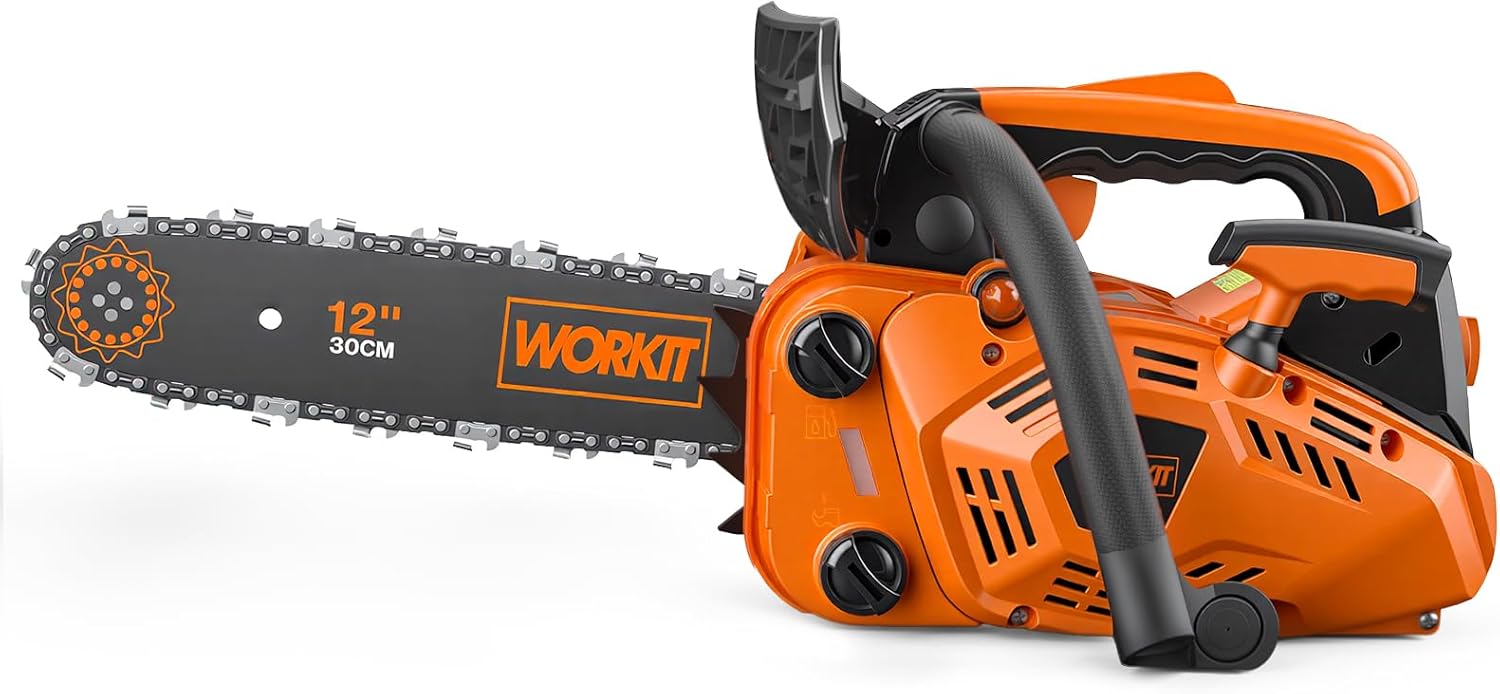
| Best Value The sweet spot between price and what you get | WORKIT 25.4CC 12" Top-Handle Gas Chainsaw (WX112) |  |
| Best Budget The cheapest option that still gets the job done reliably | TECHMOO 25CC 2-Stroke Top-Handle Gas Chainsaw, 12-Inch |  |
| Highest Rated A top-rated pick with lots of positive feedback | NEO-TEC 25cc 12" Top-Handle Small Gas Chainsaw |  |
| Most Popular A crowd favorite that many people choose with confidence | VEVOR 25.4cc Top-Handle Gas Chainsaw, 12-Inch Bar |  |
| Best Seller A high-volume bestseller chosen again and again | V-MODEST 12" Top-Handle 25cc Gas Chainsaw (Model VM2511) |  |
Husqvarna T435 12 in. Top-Handle Gas Chainsaw

| Power Source | Gas Powered |
|---|---|
| Horsepower | 2.01 hp |
| Chain Length | 14 inches |
The Husqvarna T435 is a top-handle gas chainsaw designed for tree care professionals who need a light, maneuverable tool for pruning, limbing, and work in the canopy. It delivers 2.01 horsepower from a 35.2 cc X-Torq engine that maintains torque at low RPMs, making controlled cuts easier when working overhead. The unit is unusually light for its power, improving balance and reducing operator fatigue during long shifts. Practical user-focused features include Smart Start for easier pulls, LowVib anti-vibration isolation, an inertia-activated chain brake for safety, adjustable oil pump for different weather or cutting conditions, and simple maintenance with a quick-release air filter and side-mounted chain tensioning. The top-handle layout and heavy-duty rope attachment point make it straightforward to hoist and position in trees. Limitations are the inherent requirements of a gas saw: routine fuel and oil maintenance and higher noise and emissions than battery alternatives, plus a learning curve for safe top-handle operation in tight canopy situations.
Best for: Aimed at professional arborists or serious tree-care contractors who prioritize maneuverability, quick responsiveness, and minimal operator fatigue when working aloft.
Less Ideal for: Homeowners who want a low-maintenance, quiet saw or casual users uncomfortable with top-handle operation should consider simpler rear-handle or battery options.
- Excellent power-to-weight ratio for overhead and canopy work
- X-Torq engine for good low-RPM torque and improved fuel efficiency
- Smart Start and LowVib reduce startup effort and operator fatigue
- Adjustable oil pump and easy-access maintenance features speed field servicing
- Top-handle design with rope attachment simplifies hoisting into trees
- Requires regular gasoline maintenance and produces more noise and emissions than battery saws
- Top-handle layout is less forgiving for inexperienced users and demands careful handling
Verdict: Buy this if you need a lightweight, professional-grade top-handle saw that balances strong low-end power with excellent maneuverability for canopy and pruning work.
ECHO CS-2511T-12 X Series 12" Top-Handle Gas Chainsaw

| Power Source | gasoline-powered |
|---|---|
| Horsepower | 5.3 hp |
| Chain Length | 12 inches |
The ECHO CS-2511T-12 X Series is a purpose-built top-handle gas chainsaw aimed at arborists and climbers who need a powerful, compact saw for working in trees. With a 5.3 horsepower gasoline engine and a 12-inch chain, it delivers strong cutting power in a short bar length that makes it easier to maneuver on limbs and in tight canopy spaces. Typical use is overhead pruning, limb removal, and other tree-care tasks where portability and immediate power matter more than long bars. Notable features in the listing include its gasoline power source and X Series performance tuning, which translate to reliable acceleration and consistent cutting on demanding cuts. Practical benefits are quick cuts, good bite for a 12-inch bar, and the top-handle layout that keeps controls accessible while clipped into climbing gear. Important limitations are the short bar length, which restricts maximum cutting diameter, and the need for routine fuel and two-stroke maintenance typical of gas saws; it also requires experience to operate safely in the canopy.
Best for: Serious climbers and professional arborists who prioritize cutting power and maneuverability for overhead pruning and limb removal while working in trees.
Less Ideal for: Casual homeowners, low-budget buyers, or anyone who prefers low-maintenance electric tools for occasional yard work should consider other options.
- Powerful 5.3 hp gasoline engine suitable for demanding cuts in the canopy
- 12-inch bar balances cutting ability with maneuverability for climbing work
- Top-handle configuration optimized for arborist positioning and tethering
- Built for professional use with performance-focused X Series tuning
- Short 12-inch bar limits the diameter of limbs you can cut in one pass
- Requires regular two-stroke fuel mixing and more maintenance than electric alternatives
Verdict: If you need a compact, high-power top-handle saw for professional climbing and fast overhead cuts, the ECHO CS-2511T-12 delivers strong performance in a maneuverable package.
WORKIT 25.4CC 12" Top-Handle Gas Chainsaw (WX112)
| Power Source | Gas Powered |
|---|---|
| Horsepower | 1.2 hp |
| Chain Length | 12 inches |
The WORKIT WX112 is a lightweight top-handle gas chainsaw built for precision work in tight spaces. Its 25.4CC Xtreme two-cycle engine and 12-inch guide bar give it enough punch to cut hardwood, prune limbs, and handle routine storm cleanup while remaining nimble for high work or nursery tasks. Practical features include an OptiSpark ignition and an easy-start system to reduce pull-start frustration, an automatic stop switch to help avoid engine flooding, and an automatic oiler to keep the chain lubricated during extended runs. The reinforced body, heavy-duty bearings, and upgraded clutch aim to improve durability compared with entry-level units. Safety touches such as a chain brake, protective baffle, dual safety locks, and a one-stop engine switch make it suitable for pros who need a compact tool and for homeowners who value built-in protections. Expect some noise and the usual maintenance for a gas engine like fuel mixing and periodic spark plug/chain tuneups, and its 12-inch bar limits it to smaller-diameter cutting rather than full-size felling or large logs.
Best for: Buyers who need a compact, commercially styled top-handle saw for pruning, high work, and cleanup where maneuverability and dependable starts matter most.
Less Ideal for: Not a good choice for users who need a full-size felling saw or those who prefer low-maintenance electric or battery chainsaws for quiet, occasional yard chores.
- Compact, lightweight design for easy maneuvering in tight or overhead work
- 25.4CC Xtreme engine provides enough power for pruning, storm cleanup, and cutting hardwood up to small diameters
- Easy-start OptiSpark ignition and engine stop switch reduce starting problems and flooding
- Reinforced body, heavy-duty bearings, and improved clutch target better durability under heavier use
- Includes safety gear and protective features such as chain brake, dual safety locks, and protective baffle
- 12-inch bar restricts use to smaller limbs and logs rather than large-tree felling
- Being gas-powered requires routine maintenance, fuel mixing, and generates more noise and emissions than electric alternatives
Verdict: If you want a nimble, commercially oriented top-handle chainsaw for pruning and tight-space cutting, the WORKIT 25.4CC delivers dependable starts and durability in a compact package.
TECHMOO 25CC 2-Stroke Top-Handle Gas Chainsaw, 12-Inch

| Power Source | Battery Powered |
|---|---|
| Horsepower | 1.2 hp |
| Model Number | 2512S |
The TECHMOO 25CC top-handle gas chainsaw is a lightweight, handheld tool aimed at basic tree work and branch pruning. It uses a 25cc two-stroke engine rated around 1.2 hp and a short 12-inch guide bar, which makes it easy to maneuver in tight spots and up in the canopy. Safety features include a rapid kick-back brake, hand guard, safety trigger and safety switch, while a cushioned wrap handle improves balance and grip for climbing or overhead work. It starts with a pull rope and is intended for fuel mixing typical of small gas saws, delivering the higher sustained power of petrol versus battery models. Practical benefits are portability, strong low-end power for cutting small limbs and saplings, and a compact profile suited to climbers. Limitations are that it is a basic budget model so it lacks advanced anti-vibration systems and professional-grade durability, and it requires regular fuel mixing, maintenance and proper safety gear for safe use aloft.
Best for: Climbers or homeowners seeking an inexpensive, portable gas saw for occasional pruning and small limb removal who prioritize maneuverability and straightforward petrol power over professional durability.
Less Ideal for: Professional arborists who need heavy-duty, long-lasting equipment for daily use or buyers who prefer low-maintenance battery electric saws for noise and emissions reasons.
- Compact 12-inch bar and top-handle layout suitable for trimming and working in tight canopy spaces
- 25cc two-stroke engine provides higher sustained power than small electric saws for cutting limbs
- Safety features include kick-back brake, hand guard, safety trigger and safety switch
- Cushioned full-wrap handle improves balance and grip for overhead and climbing use
- Requires mixed gasoline and routine maintenance typical of 2-stroke engines
- Basic construction aimed at budget buyers may not hold up under heavy professional use
Verdict: A budget-friendly, compact top-handle gas chainsaw that gives climbers and weekend pruners portable petrol power for light tree work.
NEO-TEC 25cc 12" Top-Handle Small Gas Chainsaw

| Power Source | Gas Powered |
|---|---|
| Horsepower | 1.2 hp |
| Chain Length | 12 inches |
The NEO-TEC 25cc top-handle chainsaw is a compact gas-powered saw built for pruning, limbing, and light felling where portability and quick starts matter. It pairs a 1.2 hp 2-stroke engine with a 12-inch bar to deliver high-revving performance up to 12,000 RPM, while a spring-assisted ignition and quick-start system make it easy to get running in the field. The wrap-around ergonomic handle and low vibration design support comfortable single-handed operation for tree climbing and tight cuts, and a metal lanyard ring improves safety when working at height. The carburetor tuning and claimed fuel-efficiency mean longer run times between refills compared with less refined small saws. Important limitations are its small bar length and top-handle layout, which restrict it to lighter-duty work and users comfortable operating a saw with one hand; heavier cutting or prolonged felling of large trees will require a full-size rear-handle saw. Routine 2-stroke maintenance and correct fuel mix are necessary to keep the engine reliable over time.
Best for: Buyers who prioritize a reliable, easy-to-start small gas saw for pruning, limbing, and climbing tasks and who value portability and consistent field performance.
Less Ideal for: Do not choose this if you need a saw for heavy felling, prolonged multi-day lumber work, or prefer a two-handed rear-handle saw for maximum control.
- Compact, lightweight top-handle design for easy single-handed use and climbing
- Spring-assisted ignition provides fast, consistent one-pull starts in the field
- 1.2 hp 2-stroke engine with high RPM delivers strong cutting power for a small saw
- Ergonomic wrap-around handle and reduced vibration for more comfortable extended use
- Precision carburetor and tuned combustion for improved fuel efficiency
- 12-inch bar limits capacity for large-diameter felling and deep cuts
- Top-handle configuration is less stable for two-handed heavy cutting and better suited to experienced climbers
Verdict: Choose this compact top-handle chainsaw when you need a dependable, easy-starting gas saw for pruning, limbing, and climbing jobs.
VEVOR 25.4cc Top-Handle Gas Chainsaw, 12-Inch Bar

| Power Source | Gas Powered |
|---|---|
| Horsepower | 1.2 hp |
| Chain Length | 12 inches |
| Model Number | CN-25 |
The VEVOR 25.4cc top-handle gas chainsaw is a compact, handheld saw built for pruning, light felling and general property maintenance. It uses a 2-cycle 25.4cc engine rated at about 1.2 hp and drives a 12-inch bar and high-strength steel chain that handles branches and small logs up to roughly 9.8 inches in diameter. Practical features include an easy-start system, a tool-free chain tension knob, a protective guard to reduce sawdust spray and onboard tanks for fuel and chain oil to limit downtime. At roughly 9 to 10 pounds the saw is relatively nimble for one-handed trimming and working in trees when combined with proper climbing gear. Important limitations are its modest power and short bar, which make it unsuitable for heavy felling or cutting large logs, and the usual maintenance needs of a 2-cycle gas engine such as mixing fuel and regular spark plug and carburetor care. For users who need a portable, serviceable saw for routine yard and tree work, it delivers sensible capability for its class.
Best for: Buyers who want a portable, serviceable gas saw for regular pruning, tree trimming and light felling and who value straightforward features and ease of use over maximum cutting power.
Less Ideal for: Not a good fit for landowners who need a saw for heavy timber work, milling logs, or frequent long-duration cutting where a larger bar and higher horsepower are required.
- Compact and lightweight for easier handling during pruning and above-ground work
- 12-inch steel bar and chain suited to trimming, limb work and small log cutting
- Tool-free chain tensioning for quick adjustments in the field
- Easy-start system and included maintenance kit simplify setup and upkeep
- 12-inch bar and 1.2 hp output limit use to light-duty cutting and small trees
- Requires routine 2-stroke engine maintenance and fuel mixing
Verdict: A lightweight, easy-to-use top-handle gas chainsaw that reliably handles pruning and light felling for homeowners and tree care hobbyists.
V-MODEST 12" Top-Handle 25cc Gas Chainsaw (Model VM2511)

| Power Source | Gas Powered |
|---|---|
| Horsepower | 1.51 hp |
| Chain Speed | 26.7ft/s |
| Chain Length | 12 inches |
The V-MODEST VM2511 is a compact top-handle chainsaw made for tree work and tight-space cutting. Its 25cc two-stroke engine produces about 1.5 hp and spins the 12-inch, 3/8" LP chain at a brisk speed, which makes clean cuts on branches, limbs, and small logs. The saw’s very light weight and ergonomic top handle improve balance during elevated or climbing tasks, while an anti-vibration system and textured grip reduce fatigue on longer jobs. Safety and serviceability are addressed with a dual-post chain brake, adjustable chain tension, an easy-start system, and a fine-mesh air filter. The adjustable oil pump is useful when switching between pruning and heavier cuts, and the included toolkit, gloves, fuel-mixing bottle, and bar cover help get you started. Expect ordinary small-engine maintenance like mixing 25:1 fuel and routine chain/air-filter care; as a compact gas saw it will have more noise, vibration, and emissions than cordless or electric alternatives and requires fuel handling and periodic tuneups.
Best for: A cautious buyer who wants a light, controllable gas-powered top-handle saw for routine pruning and climbing work and values safety features and easy starting.
Less Ideal for: People who prefer near-silent, low-maintenance electric tools or who want to avoid mixing fuel and doing small-engine upkeep.
- Very lightweight top-handle design for easier balance during climbing and elevated cuts
- Easy-start system and adjustable chain tension for quicker setup and less frustration
- Dual-post chain brake and textured ergonomic handle for safer control during tree work
- Adjustable oil pump and fine-mesh air filter support smoother chain lubrication and longer engine life
- Includes useful starter kit components such as fuel mixing bottle, gloves, bar cover, and basic tools
- Requires a 25:1 gas-to-oil mix and routine two-stroke engine maintenance
- Being gas powered it is louder and produces emissions compared with electric alternatives
Verdict: Buy this if you need a lightweight, safety-focused top-handle gas saw that balances climbing control with professional pruning capability.
Choosing the Right Climbing Chainsaw: Key Factors to Consider
Power-to-Weight Ratio
Climbers need a saw that delivers enough cutting torque without being too heavy to manage on a rope. A favorable power-to-weight ratio reduces fatigue during long climbs and improves control when making one-handed or awkward-angle cuts. Consider engine displacement or motor wattage together with total weight including bar and chain. A heavier saw with excess power may be harder to stabilize, while a lighter saw with insufficient torque will bog down on thicker limbs.
Also think about how power curves behave under load. Some saws hold rpm better during thick cuts, which minimizes the need to reapply pressure and helps maintain safe balance on branch work.
Suspension and Tie-In Compatibility
A climbing chainsaw must attach securely to a harness or lanyard using designated tie-in points or approved suspension hooks. Check whether the saw offers robust fixed points for a retention tether and whether the manufacturer specifies load ratings for those fittings. Integration with common carabiners and quick links used in arboriculture makes rigging faster and safer.
Placement of the tie-in point affects how the saw sits when suspended. A well-placed attachment keeps the tool stable against your body and reduces swinging, which lowers the risk of accidental contact with branches or yourself while moving between positions.
Stopping Safety and Chain Brake Behavior
An effective chain brake and rapid stopping response are critical when working at height. If the saw contacts a branch unexpectedly or you lose balance, the brake should halt the chain almost immediately. Evaluate both inertial and hand-activated brake types and how reliably they operate under real climbing motions.
Also consider brake reset behavior and how accessible the controls are while wearing gloves. A brake that is too stiff or hard to reset can be a nuisance; one that trips too easily can interrupt work at inconvenient times. Look for predictable, consistent action that aligns with common arborist practices.
Balance and Handling Aloft
How a saw balances when suspended changes how easily you can position the bar for precise cuts. Center-of-gravity design, handle placement, and overall length influence whether you can use the saw comfortably with one hand or need to reposition frequently. Low vibration and ergonomic grips reduce hand fatigue and help maintain secure holds on ropes or branches.
Think about how the saw behaves when you pass it between rigging points or secure it temporarily to your harness. A tool that hangs awkwardly increases swing and complicates movement in tight canopy spaces.
Ease of On-Tree Maintenance
Climbers benefit from saws that are simple to service without descending. Tool-free chain tensioners, easily reachable spark plug access, and straightforward carburetor adjustments cut down on trips to the ground. Consider whether common maintenance tasks can be done while the saw is tied off and whether replacement parts like chains and bars are commonly available.
Also weigh how easy it is to clean the saw after cutting resinous or wet wood. Air intake placement and removable covers that open without tools make routine maintenance faster during a busy day of climbs.
Exhaust Placement and Debris Resistance
Exhaust and intake locations influence how much dust, sawdust, and leaf debris enter the engine and choke filters. For climbing use, configurations that direct exhaust away from the operator and place intakes in less exposed positions reduce clogging and inhalation of particles. Filters that are easy to remove and clean help keep performance steady across multiple climbs.
Also check for protective screens or baffling that limit large debris ingress when cutting in dense canopies. A design that sheds debris rather than trapping it extends service intervals and preserves power delivery.
Safety Practices When Using a Climbing Chainsaw
A climbing chainsaw adds complexity to routine cutting because you must manage both a working rope system and a running saw. Prioritize securing the saw with an appropriate retention tether whenever you are not actively cutting. Keep the chain brake engaged while raising or lowering the saw and train on rapid brake resets in a controlled setting before using the tool aloft.
Wear cut-resistant gloves, helmet with face protection, and leg protection designed for arborist work. Always inspect rope anchors and harness hardware before cutting, and never make overhead cuts that could detach the branch toward your lanyard or mainline.
- Tether saw to harness at all times except when cutting
- Engage chain brake before any repositioning
- Practice controlled brake resets while grounded
- Inspect rope anchors after any significant cuts
Bar and Chain Size Choices for Climbing Work
Shorter bars reduce leverage and swing, making them easier to control in tight canopy spaces. Many climbers prefer bars in the 10 to 14 inch range for pruning and limb work because they balance reach and manageability. Longer bars increase cutting capacity but add weight and make the tool harder to steady when suspended.
Chain pitch and gauge affect cutting speed and the availability of replacement chains. Choose a chain size commonly used in arborist circles to simplify sourcing spares and sharpening services.
- Short bars improve control in dense canopy
- Match chain pitch to commonly available replacement links
- Consider carrying a spare short bar and chain for heavy days
Vibration, Comfort, and Fatigue Management
Vibration transfer matters when you are gripping a saw while on a harness or moving between holds. Anti-vibration mounts, cushioned handles, and balanced rotating assemblies reduce hand and arm fatigue. Over a long day of climbs, these small comfort features can preserve precision and reduce the risk of sloppy cuts caused by tired grips.
Plan climbs to limit continuous cutting time. Take short breaks to re-secure tether points, rest hands, and inspect equipment. Even well-balanced saws will transmit vibration, so rotating tasks or alternating tools helps manage cumulative strain.
- Look for cushioned or rubberized handle sections
- Rotate tasks to reduce continuous cutting time
- Inspect anti-vibration mounts periodically for wear
Transport, Storage, and On-Site Readiness
How a saw is transported affects readiness on site. A compact case or wrap that protects the chain and bar prevents accidental contact with other gear in a bag. Securely stowing a climbing chainsaw so it is easy to access while rigging saves time and reduces the temptation to grab it in an unsafe configuration.
Keep a small maintenance kit with spare links, a compact file or sharpener, and basic tools for quick adjustments. Portions of maintenance that require tools should be designed so they can be performed while the saw is tied off and stable.
- Use a protective cover for the bar in packs
- Organize a compact maintenance kit for quick repairs
- Store with fuel and oil properly sealed and labeled
Fuel and Power Options for Climbing Conditions
Gas-powered saws provide runtime and refill convenience for long jobs but add fuel weight and fumes. Battery-powered models remove fumes and can be lighter, but runtime and torque under load are key concerns. Consider the typical duration of your climbs and whether you can easily swap batteries or carry small fuel containers safely in your kit.
Think about cold-weather starts and how temperature affects battery output or carburetor behavior. Reliable starting and consistent power delivery reduce unexpected stops while you are suspended.
- Bring spare batteries or plan fuel access for long shifts
- Factor cold-weather performance into power-type decisions
- Test any power option on representative cuts before relying on it aloft
How We Chose the Best Climbing Chainsaw
We focused on attributes that matter for rope-access tree work rather than general homeowner use. Primary evaluation criteria included suspension compatibility and secure tie-in points to ensure the saw integrates safely with common harness systems. We assessed power-to-weight ratio and usable torque at typical working revs to judge cutting performance while aloft. Handling and balance under suspension were reviewed by examining ergonomics, center-of-gravity design, and vibration damping. Stopping systems and chain-brake response were evaluated because rapid stop performance matters when a saw is moving on a rope. Ease of maintenance at height was considered, including chain tensioning access and tool-free adjustments that reduce the need to descend for minor tasks. Exhaust and intake placement was inspected for worker comfort and to limit clogging from canopy debris. We excluded general-purpose, heavy-duty felling saws not intended for suspension, as well as micro garden trimmers that lack sufficient cutting torque. Products had to demonstrate purpose-built features for climbing use or clear manufacturer guidance for rope work. The final list emphasizes gear suited to professional or advanced amateur climbers who need dependable stopping behavior, manageable weight, and accessible service points while working off the ground.
FAQ
Is a shorter bar always better for climbing work?
Shorter bars improve control and reduce swing when working in tight canopy spaces, but they limit cutting capacity. Choose a bar length that balances reach for the cuts you anticipate with the need for precise handling while suspended.
Can I use a regular chainsaw for climbing tasks?
Some general-purpose saws can be adapted, but purpose-built climbing saws typically have dedicated tie-in points, better balance for suspension, and features that make maintenance easier aloft. If using a regular saw, verify secure attachment options and test handling rigged in a safe environment.
How important is chain-brake responsiveness when working at height?
Chain-brake responsiveness is critical. A fast, predictable stop reduces the risk of injury if the saw contacts a branch unexpectedly or if you lose control. Evaluate both hand and inertial brakes and practice using them while suspended in controlled conditions.
What should I carry for on-tree maintenance of a climbing chainsaw?
Carry a compact toolkit with a chain file or sharpener, spare master links, tools for tensioning if not tool-free, and basic cleaning supplies. A small spare chain or bar can be useful for long jobs where rapid replacement is preferable to repeated sharpening.
Are battery-powered climbing chainsaws practical for professional use?
Battery models can be practical for many climbing tasks, especially where fumes are a concern and climbs are short. Their viability depends on torque under load and battery swap logistics. For long shifts or heavy cutting, confirm runtime and carry spare batteries or a charging plan.
Final Verdict
When choosing a climbing chainsaw, prioritize safety features and handling characteristics that matter while suspended. Balance power-to-weight ratio, secure suspension points, and reliable chain-brake behavior against the kinds of cuts and daily workload you expect. Think about maintenance accessibility and transport so the saw stays serviceable during multi-site work. By focusing on these tradeoffs, you can select a climbing chainsaw that minimizes risk, reduces fatigue, and performs predictably for arborist-level tasks.
