

Note: This article contains affiliate links. If you click on these links and make a purchase, I may earn a small commission at no extra cost to you. This helps support my research and content. Read my full affiliate disclosure here.
Choosing the right Commercial Compost matters when you need predictable results across large beds, containers, or landscape projects. High-quality commercial mixes speed decomposition, add stable nutrients, and avoid contaminants that can harm young plants or soil biology. This guide shortlists the top options suited to larger-scale and demanding gardening situations, with an emphasis on nutrient consistency, particle size, and contaminant controls. Below we summarize the evaluation criteria used and highlight practical differences gardeners should expect. The following picks are the leading Commercial Compost options for landscapers, community gardens, and serious home growers who need dependable performance.
Top Picks at a Glance
| Best Overall The best all-around choice for most situations | Espoma Organic Land and Sea Gourmet Compost with Lobster & Crab Meal, 1 cu ft |  |
| Best Quality Built to a higher standard if you want something more solid | Coast of Maine Quoddy Blend Organic Compost (1 cu ft, 2 pack) |  |
| Best Budget The cheapest option that still gets the job done reliably | Gantessa Stone Premium Organic Compost, 2 lb |  |
| Highest Rated A top-rated pick with lots of positive feedback | Brut Worm Farms Organic Worm Castings, 30 lb |  |
| Most Popular A crowd favorite that many people choose with confidence | Wiggle Worm 100% Pure Organic Worm Castings Fertilizer, 30 lb |  |
| Best Seller A high-volume bestseller chosen again and again | Garden Magic Michigan Peat Compost & Manure Blend, 40 lb |  |
Espoma Organic Land and Sea Gourmet Compost with Lobster & Crab Meal, 1 cu ft

| Item Form | Granules |
|---|---|
| Specific Uses For Product | Soil Conditioning, Plant Growth, Seed Development, Root Development |
| Included Components | Lobster and crab meal |
| Ingredients | Aged forest products, sphagnum peat moss, humus, limestone, lobster meal & crab meal |
Espoma Organic Land and Sea is a premium, ready-to-use compost intended for amending garden beds, planters, and transplant holes. The mix combines aged forest products, sphagnum peat moss, humus, limestone for pH adjustment, and lobster and crab meal to deliver organic nutrients and slow-release nitrogen. It also includes a mycorrhizae blend to help root establishment and nutrient uptake. In practice this product is mixed into native soil when planting or used to refresh container mixes, and it noticeably improves moisture retention and soil texture while adding a food source for vegetables, flowers, trees, and shrubs. Because it is a finished compost you do not need to wait for further decomposition before planting. Limitations are typical of peat-containing mixes: it is somewhat bulky to handle and not a concentrated fertilizer for rapid greening, so heavy feeders may still need supplemental feedings during the season. Overall it is a convenient, performance-focused soil amendment for gardeners who want an organic, biologically active boost at planting time.
Best for: Gardeners who prioritize reliable, organic soil improvement at planting time and want a biologically active amendment that supports root development and steady plant performance.
Less Ideal for: Buyers seeking an instant, high-nitrogen fertilizer or those who strictly avoid peat-based products should consider alternatives.
- Finished, ready-to-use compost suitable for immediate planting
- Contains lobster and crab meal for slow-release organic nutrients
- Includes endo and ecto mycorrhizae to support root growth and nutrient uptake
- Improves soil texture and moisture retention for containers and beds
- Contains peat moss which some gardeners avoid for sustainability reasons
- Not formulated as a high-concentration fertilizer for rapid greening
Verdict: A ready-to-use organic compost that boosts soil biology and root performance at planting for gardeners focused on steady, long-term results.
Coast of Maine Quoddy Blend Organic Compost (1 cu ft, 2 pack)

| Unit Count | 768 Ounce |
|---|---|
| Volume | 1 cubic feet |
| Style Name | 2 Pack |
Coast of Maine Quoddy Blend is a bagged organic compost mix intended for improving garden soil and supporting healthier plant growth. It combines compost, sphagnum peat moss, aged bark and chitin-rich lobster and crab meal to add organic matter, feed soil microbes and improve drainage in beds or containers. Typical uses are top-dressing vegetable plots, amending in-ground garden soil before planting and mixing into raised beds to increase water retention without creating heavy, poorly draining soil. Notable features include OMRI-listed organic inputs, a formula that encourages microbial life and inclusion of marine-derived nutrients that release slowly. Practical benefits are richer soil structure, better root development and a sustainable ingredient profile that reuses byproducts. Limitations are typical of bagged mixes: one cubic foot per bag covers a small area so larger projects need many bags, and peat content means gardeners concerned about peat extraction may prefer peat-free alternatives. Also the product is a soil amendment rather than a complete potting mix, so additional fertilizer may be needed for high-demand crops.
Best for: Gardeners who prioritize reliable, organic soil improvement for vegetables, flowers or raised beds and want a proven amendment that supports soil life.
Less Ideal for: People doing large-scale landscaping who need bulk volume or gardeners seeking a peat-free amendment should consider alternative products.
- OMRI-listed organic ingredients that support sustainable gardening
- Contains compost and chitin-rich lobster and crab meal to feed microbes and provide slow-release nutrients
- Loose texture that improves drainage and root penetration
- Suitable for in-ground beds and raised beds as a soil amendment
- Small volume per bag makes it less efficient for large landscape projects
- Contains peat moss which some gardeners avoid for environmental reasons
Verdict: A dependable organic compost blend that reliably improves soil structure and feeds soil biology for healthier garden beds.
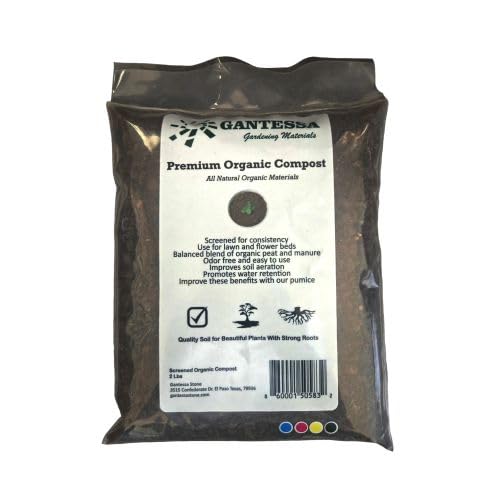
Gantessa Stone Premium Organic Compost, 2 lb
| Item Form | Solid |
|---|---|
| Application Method | Soil Amendment, Top Dressing, Compost Tea |
| Coverage | Medium |
| Target Species | flowers, vegetables, herbs, and more |
| Unit Count | 32 Ounce |
This 2 lb bag of Gantessa Stone premium organic compost is a screened, manure-based amendment meant to boost soil structure and moisture retention in small vegetable garden beds or containers. Typical uses are mixing into potting mixes at the recommended 1:2 ratio, top-dressing established beds, or brewing compost tea. The product emphasizes improved porosity and water holding capacity and supplies a range of organic nutrients and beneficial microbes rather than concentrated NPK values. Because it is screened and sold in a compact unit, it is handy for hobby gardeners, balcony growers, and patch repairs where hauling large bags is impractical. Limitations are the small unit size and lack of guaranteed nutrient analysis, so it is best used to build organic matter rather than as a primary fertilizer for heavy-feeding crops. For larger beds you will need multiple bags or a bulk compost source, but for spot applications and seedling mixes this is a convenient, low-effort option.
Best for: Gardeners working on small vegetable beds, containers, or seedlings who want an easy-to-use organic amendment without hauling bulk compost.
Less Ideal for: Large-scale vegetable gardeners or those who need a measured fertilizer program for heavy-feeding crops should choose bulk compost or a product with a guaranteed nutrient analysis.
- Screened organic compost improves soil structure and water retention
- Suitable for multiple application methods: soil amendment, top dressing, or compost tea
- Compact 2 lb bag is convenient for container gardeners and small repairs
- Small 2 lb unit requires buying multiple bags for larger vegetable beds
- No detailed NPK or guaranteed nutrient analysis provided
Verdict: A handy screened organic compost for small vegetable gardens and containers when you want to quickly add organic matter without buying bulk.
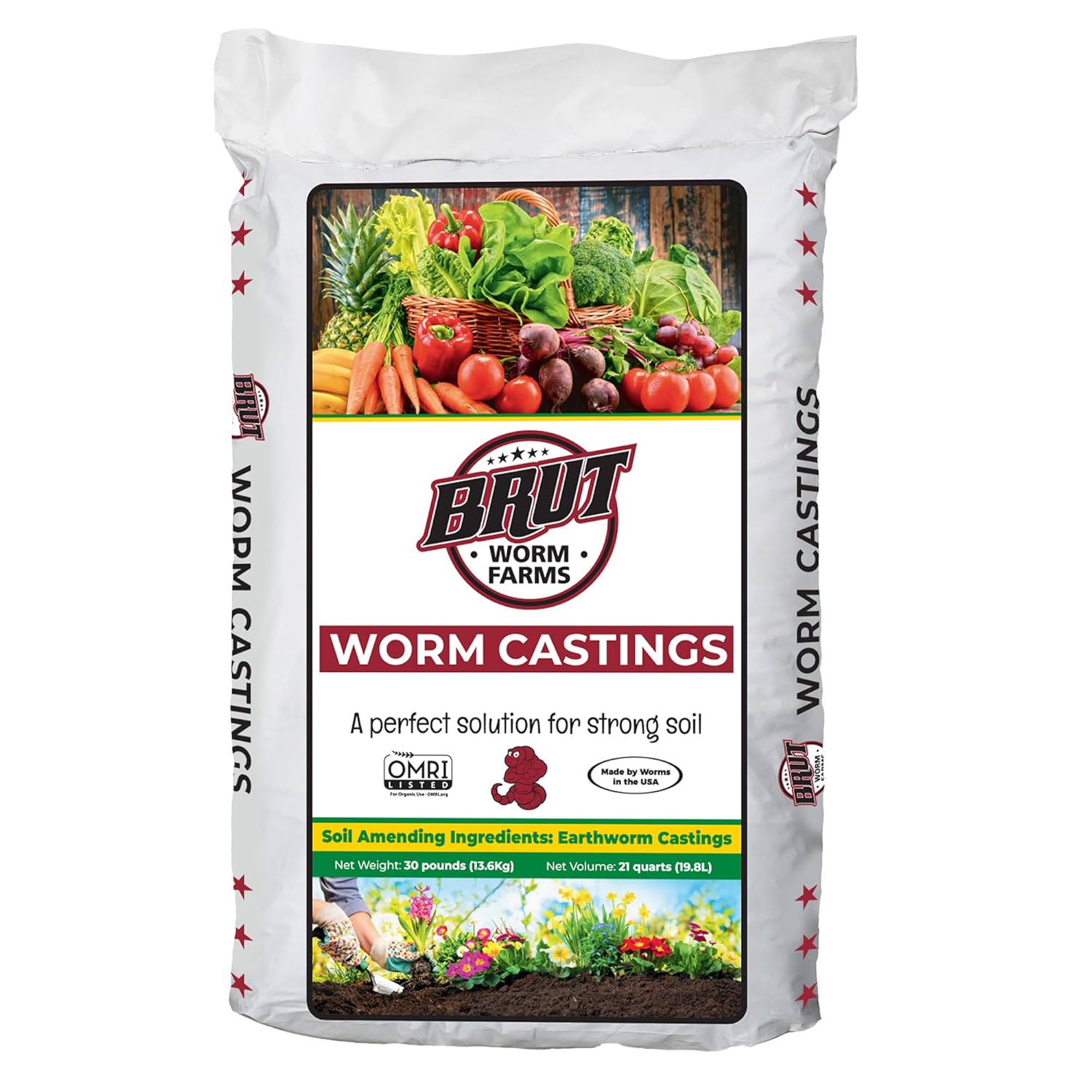
Brut Worm Farms Organic Worm Castings, 30 lb
| Item Form | bag |
|---|---|
| Specific Uses For Product | Gardening,Potting |
| Coverage | 30 |
| Target Species | houseplants, plants, shrubs, vegetables |
| Mixing Ratio | 1:5 |
Brut Worm Farms Organic Worm Castings are a ready-to-use soil amendment sold in a large 30 lb bag for gardeners who want to add nutrient-dense organic matter to potting mixes, containers, and garden beds. Use it as a top dressing, mix into potting soil at the recommended 1:5 ratio, or work a light amount into existing garden soil to improve aeration and water retention. The product is made from earthworm-processed organic material, so it delivers beneficial microbes and soluble nutrients without the risk of burning plants. Practical benefits include improved seedling vigor, healthier root development, and better moisture management in both indoor houseplants and outdoor vegetables or shrubs. Limitations are mostly logistical: a 30 lb bag is bulky to store and handle, and results are gradual since castings release nutrients slowly rather than providing a quick NPK spike. Also, users should follow handling guidance to avoid inhaling dust and keep the bag dry to preserve microbial life.
Best for: Gardeners seeking a reliable, organic soil amendment to steadily improve soil health and support a wide range of plants in containers and beds.
Less Ideal for: People who need a fast-acting chemical fertilizer for immediate greening or those who prefer small, easy-to-handle packages for occasional houseplant use.
- High in beneficial microbes and soluble nutrients that support root health
- Versatile application as a mix-in, top dressing, or soil amendment for indoor and outdoor plants
- Organic, slow-release nutrient profile that reduces risk of fertilizer burn
- Large 30 lb bag covers multiple containers or garden beds for season-long use
- Large bag can be heavy and awkward to move or store
- Nutrient delivery is gradual, so it is not a quick fix for severely deficient plants
Verdict: A large, organic worm-casting product that steadily builds healthier soil and stronger plants across indoor and outdoor gardens.
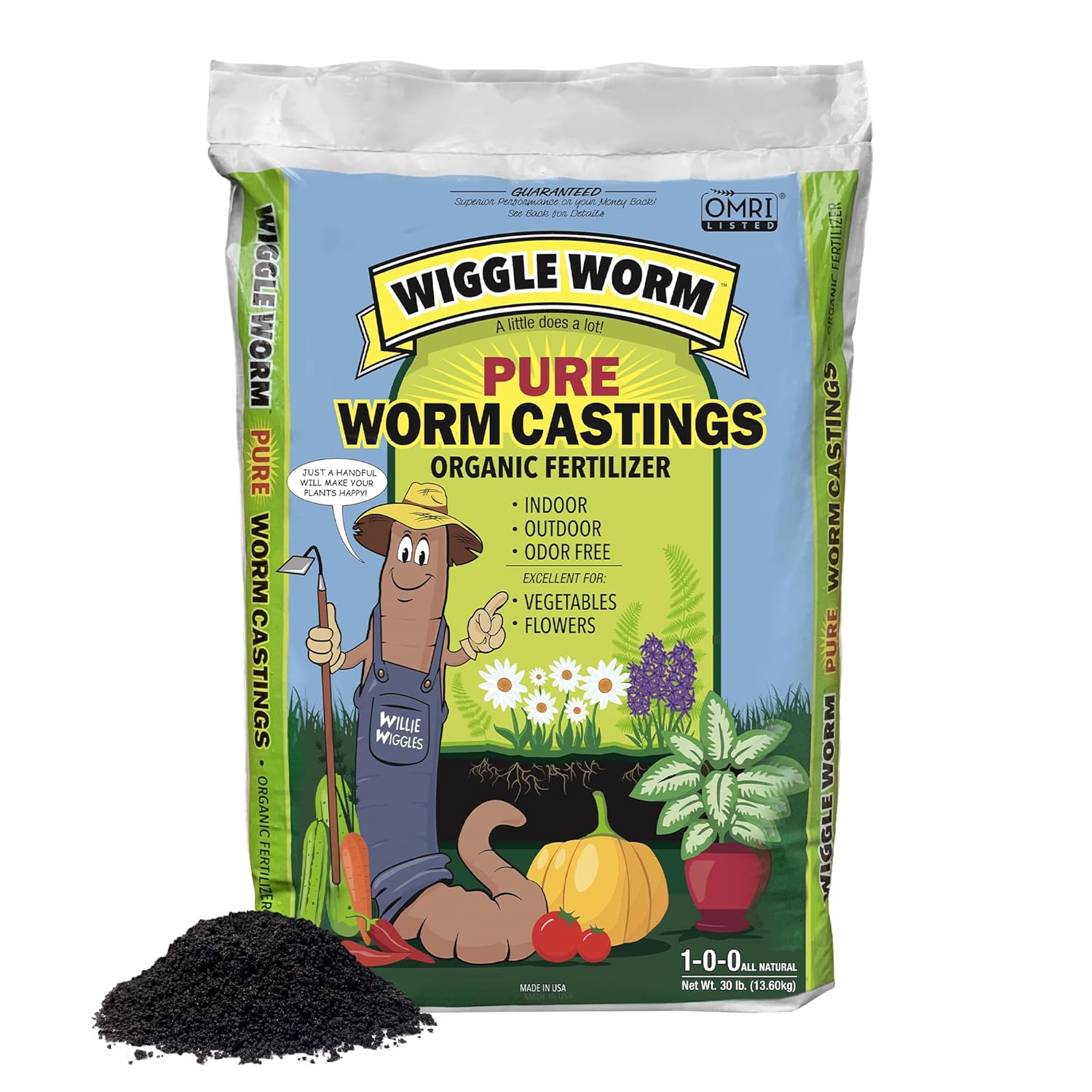
Wiggle Worm 100% Pure Organic Worm Castings Fertilizer, 30 lb
| Item Form | Granules |
|---|---|
| Specific Uses For Product | Soil Conditioning |
| Unit Count | 480 Ounce |
| OMRI Listed | Yes |
Wiggle Worm Pure Worm Castings are a straightforward organic soil amendment designed to strengthen soil biology and feed vegetable beds without risk of burning roots. Typically used as a top dressing, mixed into potting mixes, or added to planting holes, the product supplies water-soluble nutrients plus slow-release minerals and beneficial microbes that support root development and improved water retention. Notable features include OMRI listing for organic use, a screened product free of bedding and eggs, and clear application guidance for containers, raised beds, lawns, and transplanting. Practical benefits for a vegetable garden are faster nutrient uptake, better soil aeration, and reduced need for frequent synthetic feedings. The main limitations are that it is a low-NPK, gentle amendment rather than a complete, high-nitrogen fertilizer and you need to apply periodically or combine with higher-nutrient feeds for heavy-feeding crops. For gardeners focused on building long-term soil health it is a reliable, low-risk addition but expect incremental improvements rather than instant, dramatic growth spurts.
Best for: Gardeners who prioritize dependable, organic soil-building products for vegetables and want a safe, no-risk amendment to improve long-term fertility and plant health.
Less Ideal for: Growers who need a quick, high-nitrogen boost for leafy heavy feeders or those seeking a single-product, complete fertilizer solution should look elsewhere.
- OMRI listed and made from 100% screened worm castings suitable for organic vegetable gardens
- Boosts soil microbial activity and improves aeration and water retention
- Odorless and non-burning so safe for direct use around roots and in containers
- Versatile application: top dress, mix into potting soil, use in planting holes, or brew as tea
- Not a high-NPK fertilizer so may not meet immediate nutrient demands of heavy-feeding crops
Verdict: A reliably safe, OMRI-listed soil builder that steadily improves soil biology and structure for healthier vegetable gardens.
Garden Magic Michigan Peat Compost & Manure Blend, 40 lb

| Unit Count | 640 Ounce |
|---|---|
| Included Components | Michigan Peat – 5240 – 40lb |
| Item Type Name | Manure |
| Manufacturer | Michigan Peat |
This 40 lb Garden Magic Michigan Peat Compost & Manure Blend is a pre-mixed, odor-reduced soil amendment intended to boost nutrients and organic matter in raised beds and containers. It combines reed sedge peat with composted animal manure so you can work it into existing bed soil or use it to refresh potting mixes without additional processing. The bag is easy to scoop and spread around planting holes, top-dress beds, or mix into the top few inches of soil for vegetables, flowers, and lawns. Notable features are the organic compost content, manure-derived nutrients, and the claim of being odor-free, which makes handling more pleasant than raw manure. Because it is a blend rather than a complete potting soil, expect it to act as an amendment that improves texture and fertility rather than a standalone, soilless potting mix. If you need large volumes for deep beds you will likely need multiple bags, but for small raised beds and container refreshes this provides a straightforward, no-mix option to add organic matter and feed plants.
Best for: Ideal for gardeners updating small raised beds or refreshing container soil who prioritize value and a simple, ready-to-use organic amendment.
Less Ideal for: Not the best choice for growers who need a full premium potting mix formulated for seed starting or for large-scale bed builds where bulk soil or compost deliveries are more economical.
- Ready-to-use blend that can be applied directly to raised beds and containers
- Contains composted animal manure for added nutrients to support plant growth
- Odor-reduced reed sedge peat makes handling more pleasant than raw manures
- 40 lb bag provides a manageable amount for small beds and planter refreshes
- Sold as a soil amendment rather than a complete soilless potting mix
- One 40 lb bag covers a limited volume so larger projects require multiple bags
Verdict: A convenient, budget-friendly organic amendment that quickly boosts fertility and structure in small raised beds and containers.
Choosing the Right Commercial Compost: Key Factors to Consider
Nutrient Balance and Consistency
Nutrient content affects how you schedule plantings and subsequent fertilizer applications. Commercial composts with lab-verified NPK values let you plan for crops that need steady nitrogen or phosphorus without unexpected growth flushes. Consistency across batches is important for repeat jobs or seasonal supply so that soil test results remain meaningful over time.
Variability can force corrective fertilizing or uneven plant growth. For larger gardens and landscape work, predictable nutrient levels reduce the need for ad-hoc amendments and simplify maintenance plans.
Contaminant Screening and Source Materials
Screening removes plastics, glass, large sticks, and stones that interfere with planting and irrigation. It also reduces viable weed seeds and foreign debris that increase maintenance work. Knowing feedstock sources helps assess risk: yard trimmings and food-waste streams have different contamination profiles and regulatory oversight.
For commercial or community garden use, look for compost made from monitored feedstocks with routine testing for heavy metals and pathogens. That lowers long-term risk to soil health and food crops and saves labor spent picking debris or reworking beds.
Particle Size, Texture, and Ease of Incorporation
Texture influences how the compost mixes into existing soil and how well it holds water. Finer, well-screened compost blends readily into topsoil and is ideal for seedbeds and container mixes. Coarser composts are useful for improving drainage, creating raised beds, or as a mulch layer.
Consistent particle size saves time during tilling or mixing and prevents clumping in potting mixes. For mechanized or bulk applications, consider how the material feeds through spreaders or loaders.
Maturity, Microbial Activity, and Stability
Mature compost has completed the active decomposition phase and will not compete with plants for nitrogen. Immature or hot compost may generate heat, tie up nutrients, or harm seedlings. Indicators of maturity include stable temperature history, absence of foul odors, and documented respiration or germination tests.
Understanding microbial activity is also useful because active biology improves nutrient cycling and soil structure. However, very fresh compost can be unpredictable, so for planting times that demand immediate growth, choose compost labeled as fully mature.
Moisture Retention and Water Management
Compost improves a soil's ability to hold water and reduces irrigation frequency, but different mixes have different water-holding characteristics. Compost with higher organic matter and finer particles retains more moisture, which benefits container plants and sandy soils. Coarser materials drain faster and suit heavy clay or situations where waterlogging is a concern.
Think about your local climate and irrigation system when choosing a mix. In hot, dry areas, a moisture-retentive commercial compost reduces stress on young plants and shrink-swell cycles in the soil.
Supply Consistency and Handling Options
For landscapers and community projects, predictable supply and delivery or bulk pickup options are practical necessities. Compost sold in standardized bulk loads or uniform bag sizes simplifies job planning. Consistent packaging and clear labeling on moisture content and particle size reduce onsite surprises.
Also consider how easy the material is to spread, load, and store. Some mixes compact during storage or require mechanical agitation to re-loosen, which affects labor and equipment choices.
How Commercial Compost Benefits Soil Structure
Commercial compost improves soil aggregation by binding mineral particles into crumb-like clumps that increase porosity and root penetration. Over time regular applications can reduce compaction in clay soils and improve water infiltration in heavy ground.
For sandy soils, compost adds organic matter that increases water-holding capacity and nutrient exchange. In both cases the result is a more resilient planting medium that supports healthier root systems and reduces erosion on slopes and new installations.
- Improves aeration and root growth
- Enhances water infiltration and retention
- Reduces compaction when used over time
Using Commercial Compost in Raised Beds and Containers
When filling raised beds or mixing container soil, choose a screened, fine-textured commercial compost that blends easily with native soil or potting mixes. Fine particles help create a uniform medium that supports seeds and transplants without creating voids.
Aim for a mix ratio that balances drainage and water retention. For most vegetable beds, incorporating 1 to 3 inches of compost into the top 6 to 8 inches of soil improves fertility and structure without overwhelming the existing soil chemistry.
- Screened compost reduces clogs in container drainage
- Blend with other amendments to adjust pH or nutrients
Applying Commercial Compost to Lawns and Large Landscapes
Topdressing lawns with a thin layer of screened compost improves soil contact with grassroots and boosts microbial activity without smothering grass. For large landscapes, spreading small, regular applications is better than a single heavy dress to avoid crusting and uneven results.
Use a spreader for even coverage and choose particle sizes that will not clump or block irrigation emitters. Compost also helps establish young turf by improving seed-to-soil contact and moisture retention during germination.
- Apply thin, frequent layers instead of thick single applications
- Use screened, uniform compost to avoid clogging irrigation
Storage, Handling, and On-Site Best Practices
Store bulk compost on a flat, well-drained surface and cover if prolonged storage is expected to prevent nutrient leaching or saturation. Keep material aerated to avoid anaerobic pockets that can generate odors and reduce quality.
When moving compost, avoid contaminating it with soil or construction debris. For small jobs, use tarps or bins to stage material and protect stockpiles from runoff that could carry fines into storm drains.
- Keep stockpiles off bare soil and covered when possible
- Rotate inventory to use older material first and reduce compaction
Testing and Monitoring After Application
Run soil tests before and after significant compost applications to track changes in nutrient levels and organic matter. This helps you adjust supplemental fertilization and avoid unintended nutrient buildups.
Observe plant performance over a season and test for soluble salts if using composts made from concentrated feedstocks. Adjust application rates based on crop response and soil test recommendations.
- Use periodic soil tests to guide repeat applications
- Monitor plants for signs of nutrient imbalance or salt stress
How We Chose the Best Commercial Compost
We evaluated candidates using criteria that reflect how Commercial Compost actually performs in large-scale and intensive garden use. Key dimensions included nutrient balance and consistency, because predictable nitrogen, phosphorus, and potassium levels matter for scheduling plantings and avoiding growth spikes. We checked contamination controls and screening practices to reduce weed seeds, glass, plastic, and heavy metals that can come from mixed-source feedstocks. Particle size and texture were assessed for ease of incorporation, mulching behavior, and water retention. Microbial activity and maturity indicators were considered to avoid fresh, unstable compost that can tie up nitrogen or harm seedlings. Finally, supply reliability and packaging or bulk-handling options were reviewed to ensure gardeners and landscapers can source consistent material over repeated orders. We excluded untested backyard or anecdotal mixes and any compost without clear source or screening information. Products that lacked lab analysis or maturity testing were not considered. The final selections emphasize measurable specs and practical handling details that matter in real garden and landscape applications.
FAQ
How much Commercial Compost should I add to a garden bed?
Amount depends on current soil condition and planting goals. For general improvement, incorporate 1 to 3 inches into the top 6 to 8 inches of soil. For new beds or poor soils, deeper incorporation or higher rates over multiple seasons is often better.
Is commercially produced compost safe for vegetable gardens?
Often it is safe when produced from monitored feedstocks and tested for contaminants. Choose compost with documented screening and lab reports for heavy metals and pathogens if you plan to grow edible crops. Avoid materials without source transparency.
Can I use Commercial Compost as a mulch?
Yes, screened compost can work as a mulch to conserve moisture and slowly release nutrients. Use a thinner layer than wood mulch to avoid smothering low-growing plants and reapply as it decomposes. For weed suppression, combine with other mulches when needed.
How do I tell if compost is mature enough to use?
Mature compost is dark, crumbly, and earthy-smelling with no hot spots or ammonia odor. Professional indicators include stable temperature records, respiration tests, or seed germination assays. If in doubt, let it cure until odors disappear and temperature stabilizes.
Will Commercial Compost change my soil pH?
Compost can modestly buffer soil pH over time but is not a quick fix for extreme pH problems. Most well-made composts are near neutral and slowly improve pH stability by adding organic matter. Use targeted amendments for significant pH correction.
How often should I reapply Commercial Compost?
A common approach is an annual light topdressing or incorporation every one to three years depending on soil condition and crop intensity. High-demand vegetable beds may benefit from more frequent light additions, while established ornamental beds can use yearly maintenance applications.
Final Verdict
For larger-scale or intensive gardening, prioritize commercial compost that offers consistent nutrient analysis, clear contaminant screening, and the right particle size for your application. Expect tradeoffs: finer, moisture-retentive mixes are great for containers and seedbeds but may require more frequent irrigation, while coarser blends improve drainage in heavy soils. Decide first on the handling and source requirements that fit your operation, then match nutrient and maturity specifications to planting schedules. That approach will deliver reliable performance across seasons and minimize surprises in large projects.
