

Note: This article contains affiliate links. If you click on these links and make a purchase, I may earn a small commission at no extra cost to you. This helps support my research and content. Read my full affiliate disclosure here.
Begonia tubers need a specific soil environment to sprout reliably and produce vigorous foliage and blooms. Using the right compost helps control moisture around the tuber, supplies gentle nutrients for early growth, and reduces rot risk in pots or containers. This guide shortlists six top composts suited for begonia tubers and explains the practical differences you will encounter in a garden, patio, or greenhouse. We evaluated mixes for drainage, nutrient retention, texture, and disease hygiene so you can pick a compost that supports clean, steady sprouting and healthy tuber development. Read on for the factors that matter and the editorial approach behind the selections.
Top Picks at a Glance
| Best Overall The best all-around choice for most situations | Gardenera Organic Begonia Potting Mix, 5 Quart |  |
| Best Quality Built to a higher standard if you want something more solid | Espoma Organic Land and Sea Gourmet Compost with Lobster & Crab Meal, 1 cu ft |  |
| Best Value The sweet spot between price and what you get | Brut Organic Worm Castings, 5 lb |  |
| Best Budget The cheapest option that still gets the job done reliably | Espoma Organic Potting Soil Mix, 8 qt |  |
| Highest Rated A top-rated pick with lots of positive feedback | DEEP ROOTS Living Soil Soil Reviver All-in-One Soil Amendment, 2 qt |  |
| Best Seller A high-volume bestseller chosen again and again | Back to the Roots Organic Expanding Coco Coir Potting Soil Brick (10 lb) |  |
Gardenera Organic Begonia Potting Mix, 5 Quart
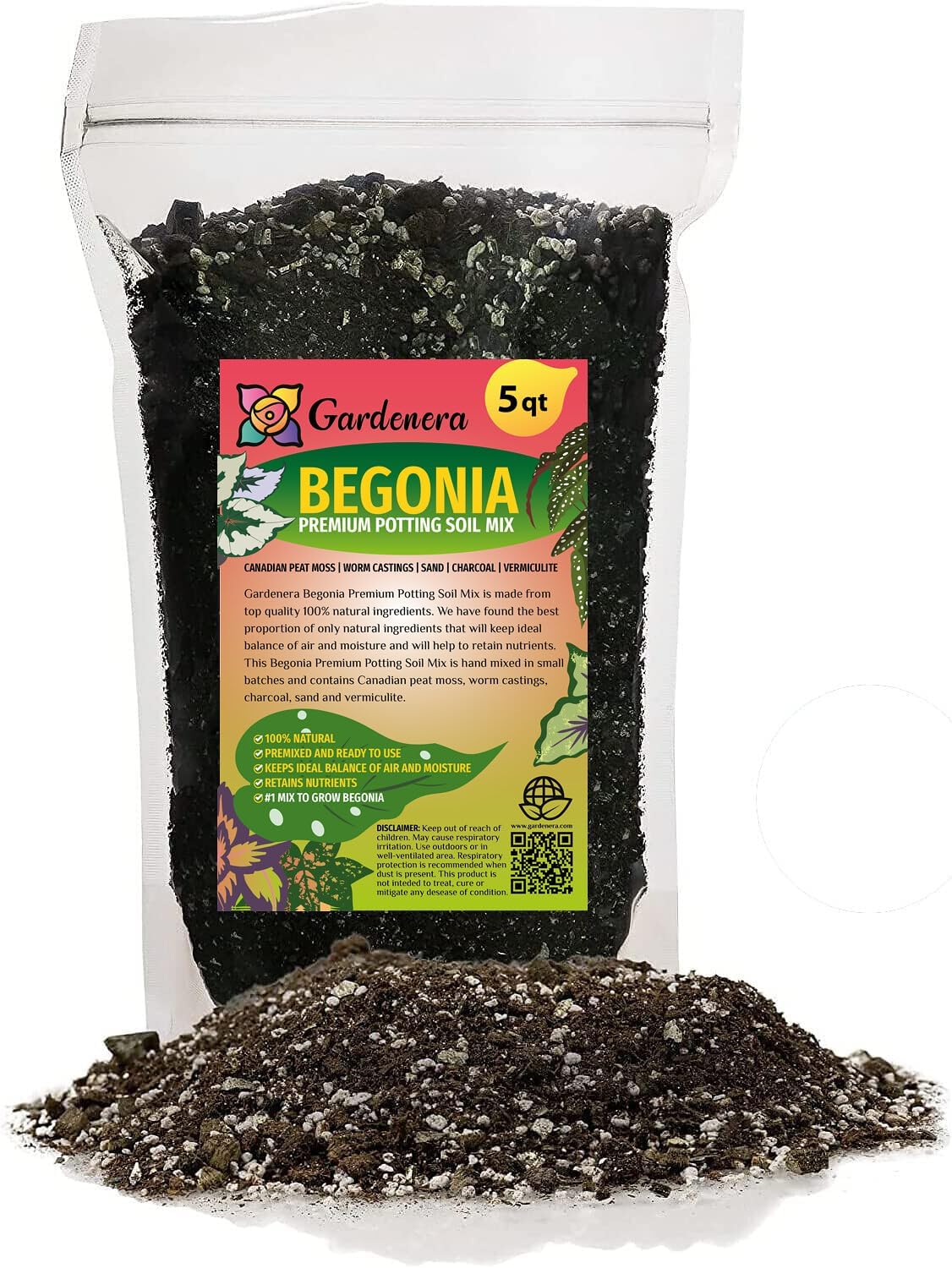
| Brand Name | Gardenera |
|---|---|
| Item Type Name | Soil Mix |
| Volume | 5 quarts |
Gardenera's Begonia Potting Mix is a ready-to-use soil blend tuned for begonias and other moisture-sensitive flowering houseplants. The formula combines Canadian peat moss and vermiculite for steady moisture retention while sand and charcoal improve drainage and soil cleanliness; worm castings add organic nutrients to support foliage and tuber development. You would typically use it to pot or repot begonias, fill small containers, or refresh the top layer around tubers before the growing season. The mix's components mean you get a balance of hydration and aeration that helps prevent waterlogging without drying out too quickly. Because it is a pre-mixed 5-quart bag, it is convenient for hobbyists and container gardeners who want a begonia-focused medium without blending ingredients themselves. Limitations are predictable: the small bag size is meant for a few plants and you may need to supplement with fertilizer over time since this is a potting medium rather than a complete, long-term feed solution.
Best for: Indoor and container gardeners who want a purpose-made potting medium to repot or maintain a few begonia tubers with minimal mixing or guesswork.
Less Ideal for: Gardeners repotting large numbers of plants, creating bulk soil mixes, or those who prefer to tailor nutrient levels and texture themselves should look for larger or customizable options.
- Formulated specifically for begonias with ingredients that balance moisture retention and drainage
- Includes worm castings for an immediate boost of organic nutrients
- Charcoal and sand improve soil cleanliness and prevent waterlogging
- Ready-to-use 5 quart bag convenient for potting and small container projects
- Small volume suitable only for a few pots or touch-ups rather than large-scale potting
- Not a long-term fertilizer so periodic feeding will be needed for sustained growth
Verdict: Pick this mix if you want a small, ready-made potting medium optimized to give begonia tubers balanced moisture, drainage, and an organic nutrient boost.
Espoma Organic Land and Sea Gourmet Compost with Lobster & Crab Meal, 1 cu ft

| Item Form | Granules |
|---|---|
| Specific Uses For Product | Soil Conditioning, Plant Growth, Seed Development, Root Development |
| Included Components | Lobster and crab meal |
| Ingredients | Aged forest products, sphagnum peat moss, humus, limestone, lobster meal & crab meal |
Espoma Organic Land and Sea is a premium, ready-to-use compost intended for amending garden beds, planters, and transplant holes. The mix combines aged forest products, sphagnum peat moss, humus, limestone for pH adjustment, and lobster and crab meal to deliver organic nutrients and slow-release nitrogen. It also includes a mycorrhizae blend to help root establishment and nutrient uptake. In practice this product is mixed into native soil when planting or used to refresh container mixes, and it noticeably improves moisture retention and soil texture while adding a food source for vegetables, flowers, trees, and shrubs. Because it is a finished compost you do not need to wait for further decomposition before planting. Limitations are typical of peat-containing mixes: it is somewhat bulky to handle and not a concentrated fertilizer for rapid greening, so heavy feeders may still need supplemental feedings during the season. Overall it is a convenient, performance-focused soil amendment for gardeners who want an organic, biologically active boost at planting time.
Best for: Gardeners who prioritize reliable, organic soil improvement at planting time and want a biologically active amendment that supports root development and steady plant performance.
Less Ideal for: Buyers seeking an instant, high-nitrogen fertilizer or those who strictly avoid peat-based products should consider alternatives.
- Finished, ready-to-use compost suitable for immediate planting
- Contains lobster and crab meal for slow-release organic nutrients
- Includes endo and ecto mycorrhizae to support root growth and nutrient uptake
- Improves soil texture and moisture retention for containers and beds
- Contains peat moss which some gardeners avoid for sustainability reasons
- Not formulated as a high-concentration fertilizer for rapid greening
Verdict: A ready-to-use organic compost that boosts soil biology and root performance at planting for gardeners focused on steady, long-term results.
Brut Organic Worm Castings, 5 lb

| Item Form | Granules |
|---|---|
| Specific Uses For Product | Gardening,Organic |
| Target Species | All plants |
| Mixing Ratio | 1:5 |
Brut Organic Worm Castings function as a concentrated, natural soil amendment you mix into potting mixes or top-dress garden beds and raised beds. Typical use is mixing at the recommended 1:5 ratio for new indoor plants, sprinkling a cup around established houseplants, or working into outdoor planting holes and beds according to the brand directions. The product is OMRI/CDFA listed and produced in controlled conditions, which supports consistent nutrient content and beneficial microbial life that help roots establish, improve soil structure, and increase moisture retention without burning plants. Practical benefits for raised garden beds include improved aeration, slow-release nutrients, and a boost in microbial activity that supports long-term fertility. Limitations are that it is not a complete NPK fertilizer for immediate heavy feeding needs and larger beds require significant quantities to hit the suggested per-square-foot rates, so frequent applications or bulk purchases may be needed for big projects.
Best for: Gardeners who prioritize dependable, organic soil improvement for raised beds and container gardens and prefer predictable, low-risk amendments that support long-term soil health.
Less Ideal for: Those needing immediate, high-NPK feeding for heavy-feeding crops or gardeners who want to amend very large beds without buying supplemental bulk material.
- Certified organic and produced indoors for consistent purity
- Rich in beneficial microbes that improve soil structure and plant vigor
- Easy-to-use granular form suitable for mixing or top-dressing
- Not a standalone high-NPK fertilizer for rapid nutrient correction
- Five-pound bag may be small for large raised beds and repeated seasonal use
Verdict: Use this OMRI/CDFA-listed worm castings product to reliably build long-term fertility and microbial health in raised beds and containers.
Espoma Organic Potting Soil Mix, 8 qt

| Brand Name | Espoma |
|---|---|
| Unit Count | 256 Ounce |
| Volume | 8 liters |
| Style Name | Mix |
Espoma Organic Potting Soil Mix is a ready-to-use, organic container mix designed for indoor and outdoor pots, including vegetables and herbs such as jalapenos. It blends sphagnum peat moss, humus and perlite to give a light, well-draining texture while added earthworm castings, alfalfa meal, kelp meal and feather meal supply slow-release nutrients. The included Myco-Tone mycorrhizae can help young roots establish and improve nutrient uptake, which is useful when starting pepper seedlings or repotting into larger containers. Typical use is filling 1–5 gallon pots or containers, planting transplants, and topping up as plants grow. Because it is formulated without synthetic fertilizers, you get a more natural fertility baseline but may need to supplement with a balanced organic fertilizer for heavy-feeding pepper plants during peak fruiting. The 8 quart volume is convenient for small batches and container gardening but means you will need multiple bags for several plants. For jalapenos this mix provides the drainage, structure, and organic matter peppers prefer while supporting steady growth with minimal prep.
Best for: Home gardeners who grow jalapenos in containers and want an organic, ready-made mix that supports healthy root development and steady growth without DIY blending.
Less Ideal for: Large-scale growers or those who prefer a single bag to supply many plants should consider larger volume commercial mixes or bulk soil options.
- Organic formula with peat moss, humus and perlite for good drainage and aeration
- Contains earthworm castings and plant meals for slow-release organic nutrients
- Includes Myco-Tone mycorrhizae to help root establishment and nutrient uptake
- Suitable for both indoor and outdoor container vegetables and herbs
- Small 8 qt volume requires multiple bags for several pepper plants
- No synthetic fertilizer included so extra feeding may be needed for heavy fruiting
Verdict: A convenient organic potting mix that gives jalapeno plants good drainage, natural fertility, and beneficial mycorrhizae for strong container growth.
DEEP ROOTS Living Soil Soil Reviver All-in-One Soil Amendment, 2 qt

| Net volume | 2 qt |
|---|
Soil Reviver is designed as a ready-to-use soil conditioner you can mix into beds or use as a top-dressing to rebuild tired planting media. It combines living compost and worm castings to add organic matter and slow-release nutrients, biochar and humic substances to help soils hold water and move nutrients, plus mycorrhizal fungi to boost root access to moisture and nutrients. In practice this product is most useful when working into rose beds or renewing container mixes where improved structure and microbial activity are priorities. Because it targets biology and moisture retention rather than fast-release fertilizer, you should expect gradual improvements over weeks to months rather than immediate leaf greening. The 2 qt size is convenient for spot applications or small beds but may require multiple bags for larger gardens. Easy to apply and versatile, it is a practical choice for gardeners who want a single organic amendment to support longer term soil health in rose plantings.
Best for: Gardeners who prioritize building reliable, long‑term soil health for roses and want a single organic amendment to improve structure, moisture retention, and root function.
Less Ideal for: Growers needing a quick, high‑nitrogen boost for rapid top growth or those managing large beds who prefer bulk commercial amendments.
- Contains living compost and worm castings to increase organic matter and slow‑release nutrients
- Includes biochar and humic acids to improve water retention and nutrient availability
- Contains mycorrhizal fungi to support stronger root development and nutrient uptake
- Versatile for garden beds, containers, or as a top‑dressing
- Small 2 qt package means multiple purchases for larger rose beds
- Formulated to improve soil biology slowly so plants may not show immediate nutrient responses
Verdict: Choose Soil Reviver when you want a compact, organic all‑in‑one amendment to steadily rebuild soil biology and moisture retention for healthier rose roots.
Back to the Roots Organic Expanding Coco Coir Potting Soil Brick (10 lb)

| Item Highlight | 10 lb compressed coco coir brick; peat-free; OMRI Listed |
|---|---|
| Item Type Name | Coconut Coir |
| Volume | 2 cubic feet |
| Ingredients | Coconut Coir |
| Style Name | Expanding Potting Soil |
This compressed coco coir brick provides a lightweight, peat-free potting medium that expands when you add water to create loose, airy substrate for containers and seed flats. It is typically used by hydrating the 10 lb block to about 2 cubic feet of coir and then using it alone for potted plants, mixing it into garden soil to improve drainage and aeration, or blending with compost for starting seeds. Notable features include OMRI listing for organic use, a balanced pH suited to a wide range of plants, and compact storage before expansion which saves space. Practical benefits are improved root aeration and water retention compared with heavy garden loam, easier handling than bulky bags, and versatility across vegetables, herbs, and ornamentals. Important limitations are that coco coir is a soilless substrate and does not supply significant nutrients on its own so you will need to add fertilizer or compost for long-term potted herbs like rosemary, and the product requires time and a water source to expand before use.
Best for: Buyers who prioritize low-risk, easy-to-handle, organic potting media and want a versatile base for container herbs and seed starting without dealing with heavy bags.
Less Ideal for: Gardeners who want a ready-to-plant, nutrient-rich potting mix out of the box or those who prefer soil with built-in slow-release fertilizer.
- Peat-free OMRI listed organic coco coir suitable for organic growing
- Expands from a compact brick to about 2 cubic feet for easy storage and transport
- pH balanced and airy texture that improves drainage and root aeration
- Versatile use: can be used alone, for seed starting, or mixed into existing soil
- Provides little inherent fertility so supplemental feeding or compost is needed for nutrient-hungry plants
Verdict: A compact, peat-free coco coir brick that expands into an airy, pH-balanced base ideal for low-risk organic container gardening and seed starting when paired with fertilizer or compost.
Choosing the Right Compost for Begonia Tubers: Key Factors to Consider
Drainage and Aeration
Begonia tubers rot when they sit in cold, soggy soil. A compost that drains quickly and maintains air pockets around the tuber reduces rot risk and encourages roots to grow. Look for mixes with coarse components such as coarse grit, perlite, or well-aged bark that keep the structure open without drying out immediately.
Good aeration also helps beneficial microbes that protect tubers from pathogens. In containers the balance between drainage and moisture retention is especially important because limited volume heats and cools faster and can swing between too wet and too dry.
Nutrient Release Profile
Begonia tubers need mild, steady nutrition during sprouting and early leaf development rather than a high initial nutrient flush. Compost blended with stable organic matter or slow-release components supports steady growth and reduces the chance of pushing weak foliage with excessive nitrogen.
Avoid mixes formulated for heavy-feeding annuals or bulbs that require high phosphorus. A balanced, low-to-moderate nutrient profile gives tubers room to produce roots and shoots without stressing the plant or encouraging fungal problems from lush, soft tissue.
Texture and Tuber Contact
The physical feel of the compost matters because tubers need good contact with the planting medium for reliable root emergence. A too-fibrous or chunky mix can leave air gaps that prevent root establishment, while a too-fine, compacting mix will suffocate the tuber.
Aim for a crumbly, free-draining texture that can be gently pressed around the tuber. That improves moisture transfer and gives the young roots a balanced environment to explore the medium immediately after sprouting.
Disease Hygiene and Pathogen Risk
Begonia tubers are vulnerable to rots and fungal infections, especially in reused or unsterilized compost. Clean production processes, peat-free or well-composted ingredients, and heat-treated or sterilized mixes reduce the likelihood of sowing in contaminated media.
Inspect labels and product descriptions for mentions of pathogen control, screened ingredients, or production hygiene. In propagation scenarios, choosing a compost with lower disease risk can be more important than slight differences in nutrient content.
Moisture Retention Versus Dry-Down Rate
Begonias like consistent but not waterlogged moisture. The ideal compost holds enough moisture to steady the tuber between waterings while allowing the surface to dry slightly so the tuber does not sit in saturated conditions.
Consider the local climate and container size: hot, exposed patios need mixes with a bit more water-holding capacity, while cool greenhouses and shaded interiors favor faster-draining blends that still retain minimal moisture to prevent desiccation.
Particle Size and Component Stability
Over time, some composts break down and compact, changing drainage and aeration properties. Choose a mix with components that remain stable through at least one growing season so you do not lose structure around developing tubers.
Stable particles like fired clay granules, coarse bark, or horticultural grit help maintain long-term porosity. This matters especially if tubers are left in pots for extended periods or if the same compost is reused in subsequent seasons.
Preparing Soil for Planting Begonia Tubers
Before planting, lightly moisten the compost and fill containers so tubers sit at the recommended depth with the planting eye facing up. Firm the mix gently around the tuber to ensure contact without compacting the medium.
In-ground planting benefits from raised beds or mounded soil to improve drainage. If your garden soil is heavy, blend the chosen compost with coarse grit or horticultural sand to avoid waterlogging around the tuber.
- Moisten but do not saturate the compost before planting
- Press gently for good tuber-to-soil contact
- Improve garden beds with added grit for better drainage
Adjusting Feed and Watering Once Sprouts Appear
After shoots emerge, begin a light feeding program using a balanced, dilute fertilizer suited to flowering tuberous plants. Start at a lower concentration and increase slowly so roots and foliage strengthen together.
Water on a schedule that keeps the compost evenly moist but never waterlogged. Check containers by feel; the top inch should be allowed to dry slightly between waterings to reduce rot risk.
- Use low-concentration balanced feeds early in growth
- Water to maintain even moisture without saturation
- Monitor containers more frequently during heat spells
Container Versus In-Ground Considerations
Containers warm and cool faster than garden soil, so compost for tubs and pots should emphasize drainage while retaining enough moisture for short intervals between watering. Smaller pots need mixes with slightly higher water-holding capacity or more frequent watering.
In the ground, mixes can be blended more liberally into the planting hole to improve structure; however, ensure the surrounding garden soil drains well. Avoid burying tubers too deep when soil is cold or wet in early spring.
- Choose drainage-focused mixes for pots
- Blend compost into heavy garden soil before planting
- Consider pot size when selecting moisture-retentive components
Overwintering Tubers and Long-Term Care
When tubers are lifted for winter storage, remove most compost from the roots and store tubers in a cool, frost-free place on slightly drier medium like coarse dry peat or vermiculite. Do not store tubers while they are wet or in compacted compost because that increases rot risk.
For tubers left in pots over winter, reduce watering and move containers to a sheltered spot with minimal temperature swings. Ensure the compost remains free-draining so thaw cycles do not saturate the tubers.
- Store lifted tubers dry on a breathable medium
- Reduce watering for potted tubers in winter
- Avoid frost exposure and repeated freeze-thaw in pots
Amending Compost for Specific Conditions
You can tailor a ready mix with additions like coarse grit, perlite, or aged bark to increase drainage, or add modest amounts of well-rotted organic matter to boost steady nutrient release. Make small test batches before committing a full pot to a homemade blend.
When adjusting mixes, keep particle size in mind so the finished texture remains crumbly and free-draining. Avoid heavy additions of fine materials that will compact and reduce aeration around tubers.
- Add grit or perlite to improve drainage
- Use well-rotted organics for modest nutrient increases
- Test small batches before replanting many tubs
How We Chose the Best Compost for Begonia Tubers
We prioritized attributes that directly affect tuber health and the success of early-season growth. Key evaluation criteria included drainage performance, nutrient balance tailored to light-feeding bulbs and tubers, texture and tilth for easy sprouting, and hygienic production to limit pathogens and weed seeds. We also considered organic matter stability so mixes do not compact as tubers expand and the suitability of the compost for container versus in-ground planting. Products were excluded if their formulations were designed mainly for heavy feeders, waterlogged soils, or acidic ericaceous plants, since those profiles can increase rot risk or misalign nutrient needs for begonias. We filtered out mixes with coarse chunks that impede tuber-root contact and those lacking clear ingredient transparency. Our selections reflect how the composts behave in practical planting scenarios: potting situations, seeded tuber propagation, and overwintering setups. The scoring emphasized measurable, gardener-relevant dimensions: how quickly water drains, how well the mix holds light nutrients, physical texture for sprouting, and sanitary quality to reduce disease pressure.
FAQ
Can I use garden compost for begonia tubers?
Often you can if the garden compost is well-aged, free-draining, and has stable texture. Fresh or partially degraded compost can be too hot or compacting and increases rot risk, so use only well-matured material or blend it with coarse components.
How deep should I plant begonia tubers in compost?
Plant tubers shallowly, just covered with a thin layer of compost so the eye is near the surface. Depth depends on tuber size, but avoiding deep planting reduces moisture buildup above the tuber and encourages timely sprouting.
Is peat-free compost suitable for tubers?
Yes. Peat-free mixes can be excellent if they provide the right balance of drainage and moisture retention. Look for peat-free blends that include coarse bark, coir, or grit to maintain structure around tubers.
Should I sterilize compost before planting tubers?
Sterilizing is not required for all situations but can reduce pathogen risk in propagation and when reusing old compost. For sensitive tuber propagation, using a clean, heat-treated or commercially sanitized mix lowers the chance of rot and fungal infections.
How often should I water begonias in compost?
Watering frequency depends on container size and conditions, but generally keep the compost evenly moist with the top inch allowed to dry between waterings. Check by touch and adjust during heat or cool spells.
Final Verdict
Choose a compost that prioritizes good drainage, stable texture, and a gentle nutrient profile to give begonia tubers the best start. Balance moisture retention against fast dry-down to avoid rot, and favor mixes with clean, well-processed ingredients for lower disease risk. Your final choice should reflect how you grow begonias: use faster-draining, grit-enhanced mixes for pots and slightly richer, stable blends for sheltered garden beds. Focus on the tradeoffs between aeration and moisture when selecting a compost to ensure reliable sprouting and healthy development.
