

Note: This article contains affiliate links. If you click on these links and make a purchase, I may earn a small commission at no extra cost to you. This helps support my research and content. Read my full affiliate disclosure here.
Choosing the right compost for citrus matters because these trees need steady nutrition, consistent moisture control, and a soil texture that prevents root problems. Whether you grow citrus in containers on a patio or in an in-ground bed, the wrong compost can mean inconsistent fruiting, root rot risk, or slow growth. This guide covers six top compost options shortlisted for citrus, and it explains the practical characteristics that matter in a real garden. We evaluate each compost on nutrient balance, texture and drainage, organic matter content, and suitability for container versus in-ground use. Read on to understand how those factors affect citrus health and which product features to prioritize.
Top Picks at a Glance
| Best Overall The best all-around choice for most situations | Coast of Maine Quoddy Blend Organic Compost (1 cu ft, 2 pack) |  |
| Best Quality Built to a higher standard if you want something more solid | Blue Ribbon Organics OMRI-Certified Organic Compost (Bag) |  |
| Best Value The sweet spot between price and what you get | Charlie's Compost Concentrated Organic Plant Fertilizer (10 lb) |  |
| Best Budget The cheapest option that still gets the job done reliably | Gantessa Stone Premium Organic Compost, 2 lb |  |
| Highest Rated A top-rated pick with lots of positive feedback | Earth Science Premium Earthworm Castings, 3 lb |  |
| Most Popular A crowd favorite that many people choose with confidence | Wiggle Worm Pure Worm Castings Organic Fertilizer, 30 lb |  |
Coast of Maine Quoddy Blend Organic Compost (1 cu ft, 2 pack)

| Unit Count | 768 Ounce |
|---|---|
| Volume | 1 cubic feet |
| Style Name | 2 Pack |
Coast of Maine Quoddy Blend is a bagged organic compost mix intended for improving garden soil and supporting healthier plant growth. It combines compost, sphagnum peat moss, aged bark and chitin-rich lobster and crab meal to add organic matter, feed soil microbes and improve drainage in beds or containers. Typical uses are top-dressing vegetable plots, amending in-ground garden soil before planting and mixing into raised beds to increase water retention without creating heavy, poorly draining soil. Notable features include OMRI-listed organic inputs, a formula that encourages microbial life and inclusion of marine-derived nutrients that release slowly. Practical benefits are richer soil structure, better root development and a sustainable ingredient profile that reuses byproducts. Limitations are typical of bagged mixes: one cubic foot per bag covers a small area so larger projects need many bags, and peat content means gardeners concerned about peat extraction may prefer peat-free alternatives. Also the product is a soil amendment rather than a complete potting mix, so additional fertilizer may be needed for high-demand crops.
Best for: Gardeners who prioritize reliable, organic soil improvement for vegetables, flowers or raised beds and want a proven amendment that supports soil life.
Less Ideal for: People doing large-scale landscaping who need bulk volume or gardeners seeking a peat-free amendment should consider alternative products.
- OMRI-listed organic ingredients that support sustainable gardening
- Contains compost and chitin-rich lobster and crab meal to feed microbes and provide slow-release nutrients
- Loose texture that improves drainage and root penetration
- Suitable for in-ground beds and raised beds as a soil amendment
- Small volume per bag makes it less efficient for large landscape projects
- Contains peat moss which some gardeners avoid for environmental reasons
Verdict: A dependable organic compost blend that reliably improves soil structure and feeds soil biology for healthier garden beds.
Blue Ribbon Organics OMRI-Certified Organic Compost (Bag)

| Brand | Blue Ribbon Organics |
|---|---|
| Included Components | Compost |
| Item Type Name | Organic Compost |
| Volume | 7.48 gallons |
Blue Ribbon Organics OMRI-Certified Compost is a bagged, fully processed organic compost designed to be worked into beds, used as a topdressing on lawns, or applied as a mulch around trees and shrubs. It is made from recycled food and yard residuals, monitored for maturity and contaminants, and certified for organic use so you can add it directly to vegetable, flower, and landscape plantings. Typical applications include incorporating 3–4 inches into new beds, adding a light 1/4–1 inch replenishment to established beds, or topdressing lawns at 1/4–1/2 inch in fall. The product claims improved aeration, increased water retention, pH buffering, and a boost of key nutrients such as nitrogen, phosphorus, and potassium. Because it is a natural material, moisture variation can affect bag weight and handling, and a single bag covers a modest area, so larger projects will require multiple bags or bulk compost. For gardeners focused on measurable soil improvement and organic certification, this compost delivers an easy, safe way to rebuild soil health without synthetic inputs.
Best for: Gardeners who prioritize measurable soil improvement and organic certification and want a ready-made compost to reliably boost planting beds, lawns, and established landscapes.
Less Ideal for: Large-scale landscapers or gardeners needing to amend many beds quickly should consider bulk compost options rather than repeated bag purchases.
- OMRI certified and meets US Composting Council standards so it is suitable for organic vegetable and flower gardens
- Processed and tested for maturity, pathogens, and weed seed to reduce risk of introducing problems
- Versatile use: can be tilled into new beds, used as a topdressing for lawns, or applied as mulch around trees and shrubs
- Contains a balanced mix of organic nutrients and improves soil aeration and water retention
- Bag size/volume is modest so several bags are needed for large beds or multiple trees
- Moisture variation in a natural product can make individual bag weights inconsistent
Verdict: Choose this bagged OMRI-certified compost when you want a tested, organic-ready product that reliably improves soil structure and supports performance-oriented gardening.
Charlie's Compost Concentrated Organic Plant Fertilizer (10 lb)

| Net weight | 10 pounds |
|---|---|
| Manufacturer | Charlie's Compost |
| Ingredients | Vegetarian chicken manure, biochar, organic grasses, crop residue |
| Certification | OMRI listed organic |
Charlie’s Compost is a concentrated, OMRI-listed organic compost intended to boost soil biology and nutrient content for vegetables, ornamentals and container plants. You apply it by working small amounts into garden soil or mixing with potting media to add organic matter, microorganisms and slow-release nutrients rather than relying on synthetic fertilizers. Notable features include a vegetarian, antibiotic-free chicken manure base, added biochar and crop-residue organics, and organic certification that makes it suitable for organic vegetable production. In practice a little goes a long way, so it is useful for improving tired beds, prepping new vegetable rows, or topdressing containers; the concentrated nature reduces the volume you need to handle compared with loose compost. Limitations are that this is a bagged, concentrated product so it will not replace large volumes of finished compost for major soil building and may require additional application or mixing for even distribution in large beds.
Best for: Gardeners who prioritize organic, low-risk inputs and want a ready-to-use concentrated amendment to improve vegetable beds or containers without synthetic chemicals.
Less Ideal for: Those needing large quantities of finished compost to rebuild soil structure across many beds or landscapers who prefer bulk, loose compost for large-scale projects.
- OMRI-listed organic formulation safe for certified organic vegetable production
- Concentrated formula delivers nutrients and microbes with smaller application volumes
- Contains biochar and diverse organic inputs to improve soil structure and biology
- Suitable for both in-ground beds and containers when mixed appropriately
- Not a bulk finished compost so larger soil-building projects will still need more volume
- Bagged form requires mixing or spreading to avoid uneven application
Verdict: Choose this concentrated, OMRI-listed compost when you want an organic, low-volume soil amendment to boost biology and nutrients in veggie beds and containers.
Gantessa Stone Premium Organic Compost, 2 lb

| Item Form | Solid |
|---|---|
| Application Method | Soil Amendment, Top Dressing, Compost Tea |
| Coverage | Medium |
| Target Species | flowers, vegetables, herbs, and more |
| Unit Count | 32 Ounce |
This 2 lb bag of Gantessa Stone premium organic compost is a screened, manure-based amendment meant to boost soil structure and moisture retention in small vegetable garden beds or containers. Typical uses are mixing into potting mixes at the recommended 1:2 ratio, top-dressing established beds, or brewing compost tea. The product emphasizes improved porosity and water holding capacity and supplies a range of organic nutrients and beneficial microbes rather than concentrated NPK values. Because it is screened and sold in a compact unit, it is handy for hobby gardeners, balcony growers, and patch repairs where hauling large bags is impractical. Limitations are the small unit size and lack of guaranteed nutrient analysis, so it is best used to build organic matter rather than as a primary fertilizer for heavy-feeding crops. For larger beds you will need multiple bags or a bulk compost source, but for spot applications and seedling mixes this is a convenient, low-effort option.
Best for: Gardeners working on small vegetable beds, containers, or seedlings who want an easy-to-use organic amendment without hauling bulk compost.
Less Ideal for: Large-scale vegetable gardeners or those who need a measured fertilizer program for heavy-feeding crops should choose bulk compost or a product with a guaranteed nutrient analysis.
- Screened organic compost improves soil structure and water retention
- Suitable for multiple application methods: soil amendment, top dressing, or compost tea
- Compact 2 lb bag is convenient for container gardeners and small repairs
- Small 2 lb unit requires buying multiple bags for larger vegetable beds
- No detailed NPK or guaranteed nutrient analysis provided
Verdict: A handy screened organic compost for small vegetable gardens and containers when you want to quickly add organic matter without buying bulk.
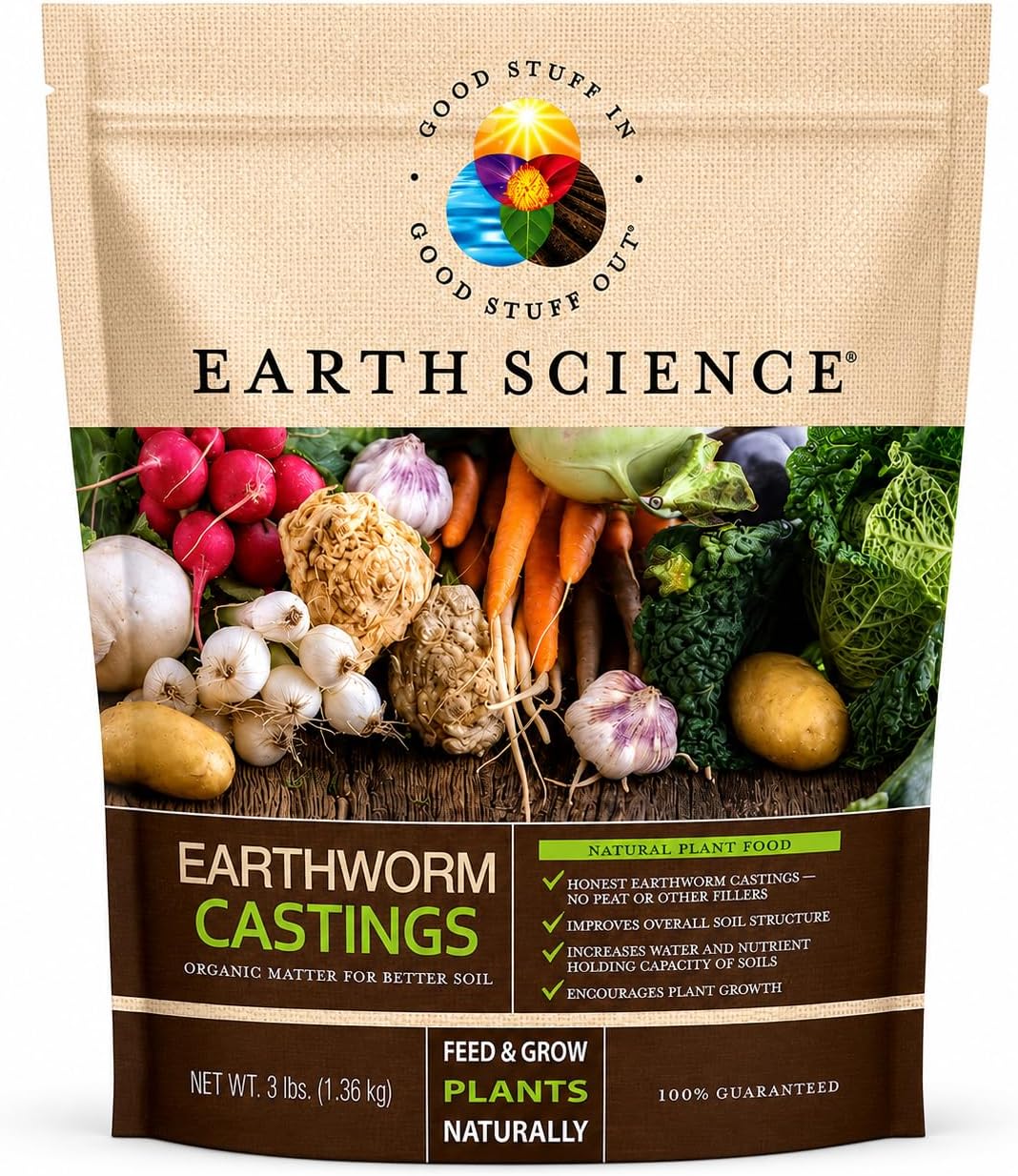
Earth Science Premium Earthworm Castings, 3 lb
| Item Form | Granules |
|---|---|
| Specific Uses For Product | Organic,Plant Food,Plant Growth |
| Coverage | Medium |
| Target Species | gardens, flower beds, fruits, trees, shrubs |
| Mixing Ratio | 1:4 |
Earth Science Premium Earthworm Castings are a pure vermicompost product intended to enrich garden and potting soils. Gardeners typically use it as a top dressing, mixed into potting mixes at about 1:4 castings to soil, or incorporated into garden beds at 1/4 to 1/2 inch and watered in; it can also be brewed as compost tea. The castings add organic matter that helps soil retain moisture, supports beneficial microbes, and can reduce compaction by improving aggregation. Practical benefits include a straightforward application for vegetables, flower beds, trees, and shrubs and the flexibility to use in pots, compost piles, or on lawns. The product is free of fillers and presented as a slow-release, natural fertilizer rather than a quick synthetic boost, so expect gradual improvements over weeks to months rather than immediate greening. Because this is a small, concentrated pouch, frequent reapplication during the growing season is recommended for larger beds or heavy-feeding crops.
Best for: Gardeners who prioritize dependable, natural soil improvement for organic vegetable beds and potted edibles and prefer steady, biology-driven results over quick chemical fixes.
Less Ideal for: Growers who need rapid, high-N fertilizer responses for a single fast-growing crop or who require large-volume amendments for extensive beds without frequent reapplication.
- 100% vermicompost with no peat or fillers
- Versatile uses: top dressing, potting mix amendment, compost tea, and compost layering
- Improves soil structure and water retention while feeding beneficial microbes
- Slow-acting nutrient release not suited for immediate greening or fast corrective feeding
Verdict: Use this pure earthworm castings product when you want a reliable, natural soil conditioner that builds long-term fertility for an organic vegetable garden.
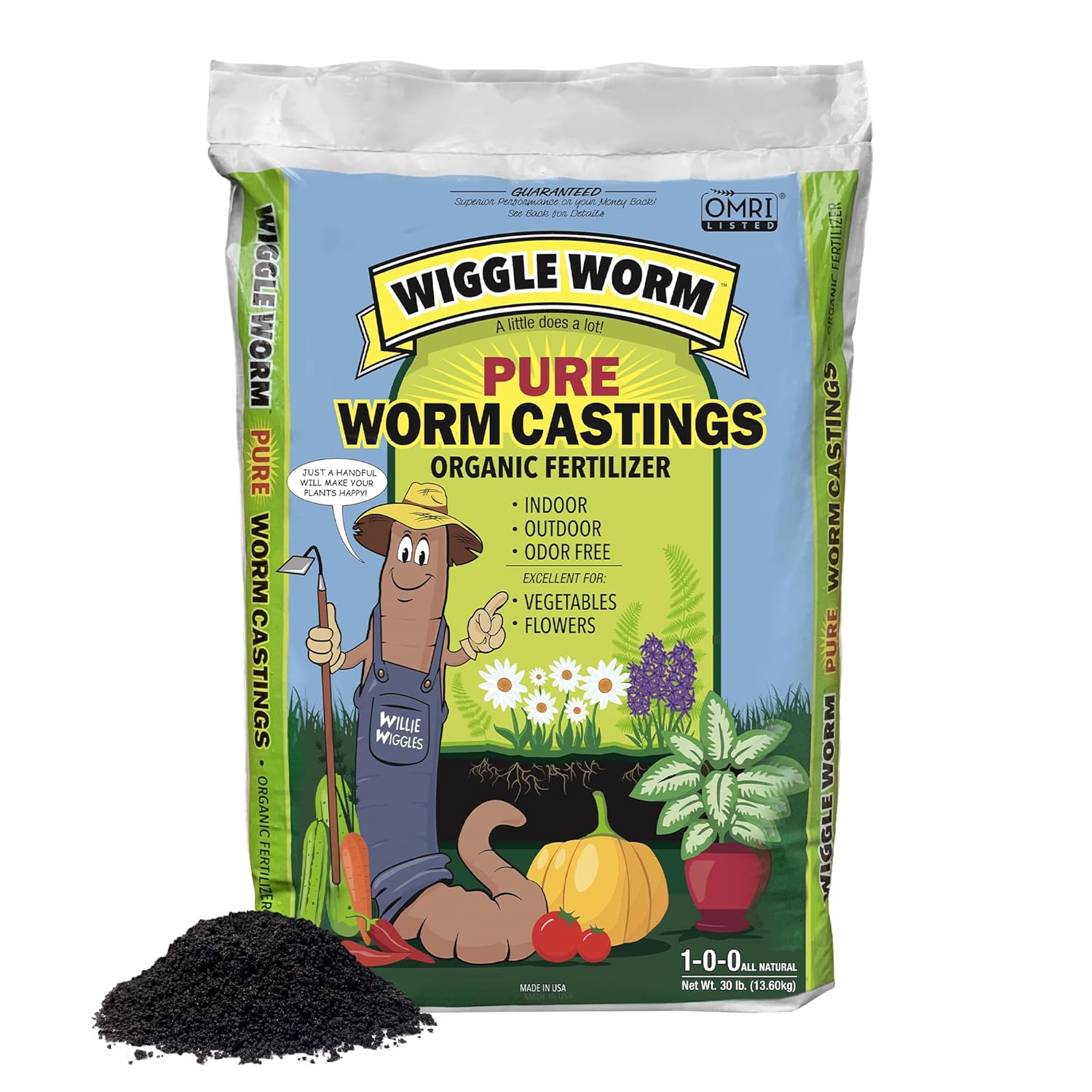
Wiggle Worm Pure Worm Castings Organic Fertilizer, 30 lb
| Item Form | Granules |
|---|---|
| Specific Uses For Product | Soil Conditioning |
| Application Method | Apply to soil |
| Unit Count | 480 Ounce |
Wiggle Worm Pure Worm Castings are a ready-to-use organic soil amendment made from concentrated earthworm castings. Gardeners typically mix a portion into potting mixes, top-dress established plants, work it into transplant holes, or brew it as a nutrient tea; the product page includes specific dosing for vegetables, containers, lawns, and roses. The castings are odorless, non-burning, and OMRI listed for organic use, so they supply water-soluble nutrients plus microbes that improve aeration, water retention, and root development without synthetic chemicals. Practical benefits include easy application, safe use on seedlings and mature plants, and versatility across raised beds, container gardens, and lawns. The main limitation is that this is a concentrated soil builder rather than an all-in-one fertilizer with NPK labels, so users seeking precise, fast-acting nutrient ratios may need to supplement for specific deficiencies; also a 30 lb bag is bulky to handle for small-space gardeners. For gardeners focused on long-term soil health and organic production, it functions as a low-risk, effective amendment.
Best for: Gardeners who prioritize building long-term soil health and want a safe, organic amendment for vegetables, ornamentals, and containers; buyers who value proven, low-risk inputs backed by strong user feedback.
Less Ideal for: Gardeners who need targeted, rapid nutrient correction based on precise NPK values or those who only want a lightweight product for very small balconies or indoor micro-gardens.
- OMRI listed organic and made from 100% worm castings
- Provides beneficial microbes that improve soil structure and water retention
- Odorless and non-burning so safe for seedlings and established plants
- Versatile dosing for containers, raised beds, lawns, and making worm casting tea
- No standard NPK nutrient label so not a precise standalone fertilizer for targeted feeding
- Large 30 lb bag can be heavy and awkward for gardeners with limited storage or mobility
Verdict: Choose this product when you want a proven, OMRI-listed worm casting that builds soil biology and improves plant health across beds and containers.
Choosing the Right Compost for Citrus: Key Factors to Consider
Nutrient Balance and Release Rate
Citrus trees need a steady supply of nitrogen, phosphorus, and potassium along with micronutrients like magnesium and iron. Compost that is well-matured tends to release nutrients slowly over weeks to months, feeding trees without causing foliage burn. Fast-release, high-nitrogen amendments can push excessive leafy growth at the expense of fruit, while deficient mixes stunt development.
When choosing compost for citrus, prefer blends with a documented analysis or that use diverse feedstocks such as finished leaf compost, vegetable waste, and well-rotted manure. Those sources produce a predictable nutrient release and support soil microbes that help roots access micronutrients.
Texture and Drainage
Citrus roots need a balance of moisture retention and air-filled pore space. Compost that is too fine or heavy holds water and increases root-rot risk, especially in containers. Conversely, extremely coarse materials drain rapidly and may not hold enough moisture between waterings.
Look for compost that improves crumb structure and contains a mix of particle sizes. In containers, mixes with added coarse bark, perlite, or pumice paired with mature compost give better drainage. In-ground citrus benefits from compost that integrates with native soil to improve structure without creating an impermeable layer.
Salt Levels and pH Considerations
Citrus are sensitive to high soluble salts and prefer slightly acidic to neutral soils. Compost with elevated salt content can cause leaf-tip burn, stunted root growth, and poor fruit set. Similarly, compost that significantly raises pH can induce micronutrient deficiencies, notably iron chlorosis.
Choose composts that provide conductivity or salt data when available and that tend to be neutral to slightly acidic. If using municipal or manure-based composts, verify salinity and allow for periodic flushing in containers to prevent salt buildup.
Organic Matter Quality and Stability
Well-decomposed organic matter supports a stable soil food web, retains nutrients, and improves water-holding capacity without tying up nitrogen. Immature or fresh-wood compost can continue decomposing in the soil and temporarily immobilize nitrogen, leaving citrus starved.
Assess compost maturity by looking for a dark, crumbly texture, earthy smell, and absence of recognizable food scraps. Stable compost also resists heating in the sun and integrates uniformly into the root zone rather than forming seams.
Suitability for Containers Versus In-Ground Planting
Container-grown citrus face different challenges than in-ground trees. Pots need lighter, well-draining mixes that hold enough moisture between waterings. In-ground citrus benefit from compost that enhances native clay or sand without creating a dense layer that impedes drainage.
When selecting compost, consider particle size, incorporation rate, and whether additional inert materials are necessary. For containers, mixes often include higher proportions of grit or perlite. For in-ground beds, a moderate incorporation rate of mature compost will improve structure without dramatically changing drainage patterns.
Disease and Weed Seed Cleanliness
Compost that was well-processed and reached adequate temperatures is less likely to carry pathogens, weed seeds, or persistent pests. Introducing contaminated compost can create new maintenance problems for citrus, such as fungal diseases or weed competition around the root crown.
Prefer composts with evidence of proper thermophilic composting or those labeled as fully finished. Avoid fresh manures or low-temperature municipal collections that may still contain viable weed seeds or disease organisms.
Using Compost in Container Citrus
Container citrus need mixes that minimize waterlogging while holding enough moisture between waterings. Start with a base potting medium and amend with 20 to 40 percent mature compost by volume to add nutrients and organic structure without making the mix heavy.
Include coarse components such as horticultural grit, pumice, or bark when compost particle size is fine. These materials increase macroporosity and help roots access oxygen. Monitor container drainage and flush periodically to prevent salt buildup.
- Aim for a light, airy mix with good drainage
- Use 20-40% mature compost in most potting blends
- Flush containers occasionally to manage salts
Incorporating Compost Into Garden Beds
For in-ground citrus, incorporate compost into the planting hole or the topsoil zone rather than creating a tight compost ring around the trunk. Mix compost evenly with native soil at a rate of roughly 25 to 30 percent by volume for established trees, increasing organic matter without changing drainage dynamics dramatically.
Apply a 2 to 3 inch mulch layer of finished compost around the drip line to feed roots gradually. Keep mulch a few inches away from the trunk to avoid creating moist conditions that encourage collar rot.
- Mix compost into native soil to a depth of at least 12 inches
- Use 2-3 inches of compost as surface mulch, kept off the trunk
Adjusting Compost Use by Soil Type
Sandy soils benefit from compost that increases water-holding capacity and nutrient retention. Use a slightly higher incorporation rate to help sandy sites retain moisture. For heavy clay soils, compost improves structure and drainage but avoid over-application that could create a perched water table.
Test your soil texture and adjust compost rates accordingly. In clay, work compost in thoroughly and consider adding coarse sand or grit if drainage remains poor.
- Increase compost in sandy soils to improve moisture retention
- Work compost deeply into clay soils to break up compaction
- Match application rate to existing soil texture
Feeding Schedule and Compost Top-Dress
Compost supplies slow-release nutrients and supports soil life, but citrus often still need targeted feeding. Apply a compost top-dress in early spring and again in midsummer for active growth, and supplement with a citrus-specific fertilizer if tissue tests or visual signs indicate deficiency.
Top-dressing with a thin layer of mature compost helps steady nutrient delivery without disturbing roots. Avoid heavy early-winter applications that could encourage late soft growth vulnerable to cold.
- Top-dress in spring and midsummer for steady nutrition
- Combine compost with targeted fertilization when needed
- Avoid heavy late-season nutrient pushes before cold snaps
Testing and Monitoring Soil Health
Regular soil testing helps track pH, soluble salts, and nutrient levels so you can adjust compost use and supplementary feeding. Monitor leaf color and fruit set as practical indicators of nutrient balance and iron availability.
Simple visual checks, such as whether leaves show tip burn or interveinal chlorosis, inform whether compost choice or additional inputs are needed. Adjust irrigation and flush containers if salts accumulate.
- Test soil periodically for pH and soluble salts
- Watch foliage and fruit set for early signs of nutrient issues
- Flush container soils if salt buildup appears
How We Chose the Best Compost for Citrus
We shortlisted composts that match the specific soil needs of citrus trees, focusing on measurable, gardener-relevant criteria. We prioritized composts with balanced nutrient profiles that supply steady nitrogen, phosphorus, and potassium without excessive salts that can stress citrus roots. Texture and drainage were key: composts that improve structure while allowing excess water to escape reduce root rot and support oxygenation. Organic matter content and stability were evaluated because persistent, well-decomposed organics feed soil life and prevent nitrogen tie-up. We also looked at suitability for containers versus in-ground plantings because potting mixes need lighter textures and longer-lasting moisture control. Additional filters excluded blends with high salt content, untested municipal biosolids, or materials with very high fresh-wood content that can rob nitrogen. We excluded products lacking clear ingredient transparency or those that rely solely on one feedstock. Our selection emphasizes composts that perform reliably in real garden and patio situations for citrus trees of different sizes.
FAQ
How much compost should I mix into the soil when planting a citrus tree?
Mix compost into the planting backfill at roughly 20 to 30 percent by volume for most sites. This improves structure and nutrition without creating an impermeable layer. For containers, keep compost portion lower and add coarse components to maintain drainage.
Can I use manure-based compost for citrus?
Manure-based compost can be beneficial if it is fully finished and well-aged. Ensure it is low in salts and stable; fresh manure can burn roots or introduce pathogens. If in doubt, use a well-matured garden compost instead.
Will compost change soil pH around my citrus trees?
Most mature composts are close to neutral but feedstock can influence pH slightly. Regular soil testing will reveal shifts. If you see iron chlorosis, check pH and select composts or supplements that help maintain slightly acidic to neutral conditions.
How often should I top-dress citrus with compost?
A light top-dress in early spring and an optional midseason application is usually sufficient. Heavy or late-season top-dressing can encourage soft growth susceptible to cold. Use tissue tests and visual cues to time additional feeding.
Is compost alone enough to feed a mature citrus tree?
Compost provides steady background nutrition but may not supply all micronutrients or the immediate nitrogen needs during peak growth or heavy fruiting. Periodic soil tests and targeted feeding can complement compost to meet citrus demands.
How do I avoid salt buildup from compost in containers?
Choose low-salt composts, use fresh water for periodic deep leaching, and repot or refresh the top portion of the mix every couple of years. Minimizing high-salt feedstocks and flushing containers after fertilizer applications reduces buildup risk.
Final Verdict
Focus on composts that are well-matured, provide balanced nutrients, and improve soil texture without increasing soluble salts. Prioritize texture and drainage for containers and a stable organic matter profile for in-ground trees. Regular soil testing and modest, timed top-dresses will keep citrus productive while avoiding common problems like root rot and nutrient imbalances. Choose compost based on your planting situation and be prepared to adjust incorporation rates or add coarse materials for pots. That approach helps you match compost characteristics to real garden conditions and grow healthier, more productive citrus trees.
