

Note: This article contains affiliate links. If you click on these links and make a purchase, I may earn a small commission at no extra cost to you. This helps support my research and content. Read my full affiliate disclosure here.
Choosing the right compost for climbing roses matters because these vigorous plants need a growing medium that supports deep root development, steady flowering, and disease resistance. The wrong compost can hold too much water, lock up nutrients, or fail to supply the slow-release feeding roses need through a long season. This guide covers seven shortlisted composts specially suited for climbing roses, and explains the practical differences gardeners should expect in soil structure, nutrients, and moisture management. We also summarize key evaluation points used to pick these top options so you can match a compost to your soil and growing situation.
Top Picks at a Glance
| Best Overall The best all-around choice for most situations | Heirloom Roses Mint Compost — 26 Quart Soil Amendment for Roses |  |
| Best Quality Built to a higher standard if you want something more solid | Coast of Maine Roses & Flowers Planting Soil, 20 qt (2-Pack) |  |
| Best Value The sweet spot between price and what you get | Back to the Roots Organic Worm Castings, 5 lb |  |
| Best Budget The cheapest option that still gets the job done reliably | Gantessa Stone Premium Organic Compost, 2 lb |  |
| Highest Rated A top-rated pick with lots of positive feedback | Brut Organic Worm Castings, 5 lb |  |
| Most Popular A crowd favorite that many people choose with confidence | R&M Organics Cow Manure Compost Soil Amendment (10 lb) |  |
| Best Seller A high-volume bestseller chosen again and again | Black Kow Composted Cow Manure, 35 lb Bag |  |
Heirloom Roses Mint Compost — 26 Quart Soil Amendment for Roses

| Item Form | Box, Bag |
|---|---|
| Specific Uses For Product | Soil Conditioning |
| Application Method | Mix into topsoil or use as top dressing |
| Coverage | 20 roses or garden area |
| Mixing Ratio | 1:5 |
Heirloom Roses Mint Compost is a boxed, ready-to-use soil amendment formulated for roses and general garden use. You apply it by mixing into topsoil at planting or by spreading 4–5 cups as a top dressing around established plants; one box covers about 20 roses and the manufacturer suggests reapplying every six months. The product emphasizes moisture retention for sandy soils, improved humus to loosen clay, and contains natural compounds that can help deter common pests like aphids and spider mites. Practical benefits include easier water management, improved root environment for climbing roses, and a simple mixing ratio (1:5) for integrating with existing soil. Limitations are that nutrient specifics and guaranteed analysis are not provided, so it functions more as an organic soil conditioner than a complete fertilizer, and a single 26 quart box is sized for modest plantings rather than large beds.
Best for: Gardeners who want a natural, easy-to-use soil conditioner to improve soil structure and moisture retention for climbing roses and who prioritize organic amendments over synthetic fertilizers.
Less Ideal for: Growers looking for a measured fertilizer program with explicit N-P-K values or those managing large beds who need bulk quantities per season.
- Formulated specifically for roses with application guidance for planting and top dressing
- Improves moisture retention in sandy soils and adds humus to help break up clay
- Includes natural mint composting agents that may help repel aphids and spider mites
- Convenient boxed packaging with a clear mixing ratio for easy use
- No N-P-K or detailed nutrient analysis provided so it is not a standalone fertilizer
- Single 26 quart box is best for small to medium plantings and may require multiple units for larger rose gardens
Verdict: A straightforward organic compost that improves soil structure and moisture control around climbing roses, making planting and winter bed prep simpler.
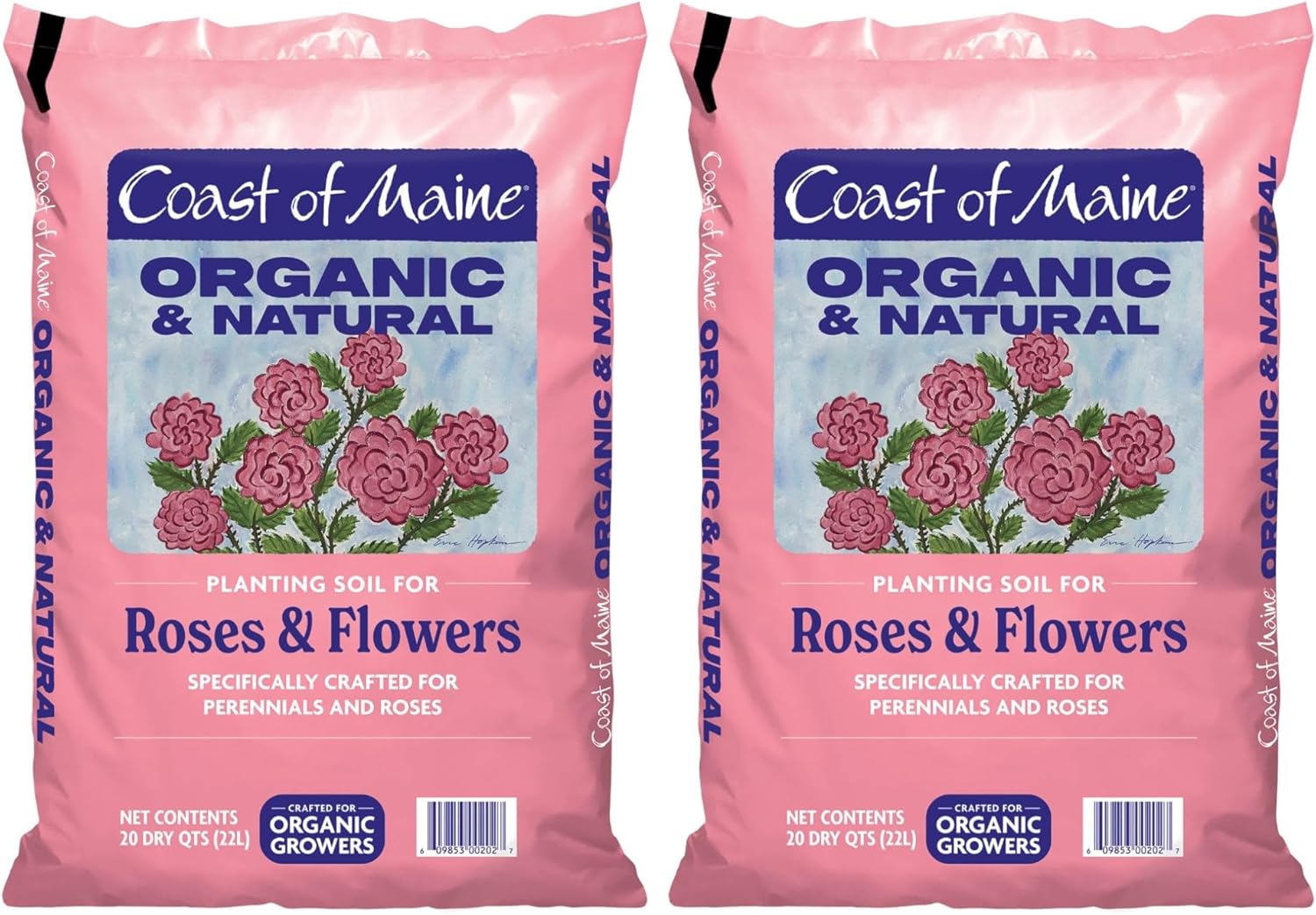
Coast of Maine Roses & Flowers Planting Soil, 20 qt (2-Pack)
| Unit Count | 2 Count |
|---|---|
| Volume | 20 quarts |
| Brand Name | Coast of Maine |
This Coast of Maine Roses & Flowers planting soil is an organic compost blend designed to revive planting mixes for roses, annuals, and perennials. Gardeners typically use it as a top dressing, a soil amendment mixed into existing bed soil, or straight into containers when repotting roses and flowering plants. Notable features include OMRI listing for organic use and a formula that uses seaweed, lobster meal, and composted materials to boost microbial life and supply slow-release nutrients. In practice the mix improves moisture retention while offering adequate drainage, which helps reduce watering frequency without waterlogging root crowns in containers. The product supports soil biodiversity and is safe around children and pets when used as directed. Important limitations are that this is a 20 quart bag sold in a two pack so it is best for small-scale container work or targeted amendments rather than large landscaping projects, and heavier organic mixes like this can compact over time compared with lightweight potting mixes formulated solely for container aeration.
Best for: Buyers who want an organic, nutrient-rich amendment for container roses and flowering pots and who value soil health and sustainable ingredients.
Less Ideal for: Anyone needing a lightweight commercial potting mix optimized only for maximum aeration or gardeners tackling large in-ground areas who need bulk volume.
- OMRI listed organic formula made from seaweed, lobster meal, and compost
- Balanced moisture retention and drainage suitable for container roses
- Supports soil microbiology and biodiversity for healthier root systems
- Safe for use around kids and pets when handled per instructions
- 20 quart bags are small for large projects so multiple bags are needed for beds
- Denser compost-rich mix can compact in containers over time compared with lighter potting-only mixes
Verdict: A small-batch organic soil blend that revitalizes container roses and flower pots by adding slow-release nutrients and supporting soil life.
Back to the Roots Organic Worm Castings, 5 lb

| Item Form | Granules |
|---|---|
| Specific Uses For Product | Plant Growth, Root Development, Seed Development, Soil Conditioning |
| Target Species | all plants |
| Included Components | Resealable Bag |
| Ingredients | Vermicompost |
These worm castings are a straightforward organic soil amendment you sprinkle into flower beds, potting mixes, or around established plants to boost soil life and root development. The product is pure vermicompost in granules, so it adds beneficial microbes and organic matter without burning seedlings or producing strong odors. Use it as a top dressing, mix a light amount into planting holes, or blend with potting soil for container-grown flowers; directions are simply to sprinkle and water. The resealable bag keeps the granules dry between uses and the ingredient list is just vermicompost, which makes this an easy, low-maintenance way to improve soil structure and long-term fertility. Limitations are that it is not a complete fertilizer with measurable NPK values, so for rapid nutrient correction or specific feed schedules you will still need a balanced fertilizer. Also the five pound bag covers modest area, so larger beds will require multiple bags or bulk sourcing.
Best for: Gardeners who want a low-effort, organic way to improve soil biology and structure in flower beds or containers without strong smells or risk of burning plants.
Less Ideal for: People needing a precise, high-nitrogen feed or immediate nutrient correction for large-scale beds should consider formulated fertilizers or bulk amendments instead.
- Pure vermicompost adds beneficial microbes and improves soil structure
- Odor-free, non-burning formula safe for seedlings and established plants
- Versatile use as top dressing, soil mix amendment, or in containers
- Resealable bag preserves product between uses
- Does not list NPK or act as a standalone, fast-acting fertilizer
- Five pound bag provides limited coverage for larger flower beds
Verdict: A simple, odor-free organic amendment that boosts soil life and is ideal for gardeners wanting an easy way to improve flower bed and container soil health.
Gantessa Stone Premium Organic Compost, 2 lb

| Item Form | Solid |
|---|---|
| Application Method | Soil Amendment, Top Dressing, Compost Tea |
| Coverage | Medium |
| Target Species | flowers, vegetables, herbs, and more |
| Unit Count | 32 Ounce |
This 2 lb bag of Gantessa Stone premium organic compost is a screened, manure-based amendment meant to boost soil structure and moisture retention in small vegetable garden beds or containers. Typical uses are mixing into potting mixes at the recommended 1:2 ratio, top-dressing established beds, or brewing compost tea. The product emphasizes improved porosity and water holding capacity and supplies a range of organic nutrients and beneficial microbes rather than concentrated NPK values. Because it is screened and sold in a compact unit, it is handy for hobby gardeners, balcony growers, and patch repairs where hauling large bags is impractical. Limitations are the small unit size and lack of guaranteed nutrient analysis, so it is best used to build organic matter rather than as a primary fertilizer for heavy-feeding crops. For larger beds you will need multiple bags or a bulk compost source, but for spot applications and seedling mixes this is a convenient, low-effort option.
Best for: Gardeners working on small vegetable beds, containers, or seedlings who want an easy-to-use organic amendment without hauling bulk compost.
Less Ideal for: Large-scale vegetable gardeners or those who need a measured fertilizer program for heavy-feeding crops should choose bulk compost or a product with a guaranteed nutrient analysis.
- Screened organic compost improves soil structure and water retention
- Suitable for multiple application methods: soil amendment, top dressing, or compost tea
- Compact 2 lb bag is convenient for container gardeners and small repairs
- Small 2 lb unit requires buying multiple bags for larger vegetable beds
- No detailed NPK or guaranteed nutrient analysis provided
Verdict: A handy screened organic compost for small vegetable gardens and containers when you want to quickly add organic matter without buying bulk.
Brut Organic Worm Castings, 5 lb

| Item Form | Granules |
|---|---|
| Specific Uses For Product | Gardening,Organic |
| Target Species | All plants |
| Mixing Ratio | 1:5 |
Brut Organic Worm Castings function as a concentrated, natural soil amendment you mix into potting mixes or top-dress garden beds and raised beds. Typical use is mixing at the recommended 1:5 ratio for new indoor plants, sprinkling a cup around established houseplants, or working into outdoor planting holes and beds according to the brand directions. The product is OMRI/CDFA listed and produced in controlled conditions, which supports consistent nutrient content and beneficial microbial life that help roots establish, improve soil structure, and increase moisture retention without burning plants. Practical benefits for raised garden beds include improved aeration, slow-release nutrients, and a boost in microbial activity that supports long-term fertility. Limitations are that it is not a complete NPK fertilizer for immediate heavy feeding needs and larger beds require significant quantities to hit the suggested per-square-foot rates, so frequent applications or bulk purchases may be needed for big projects.
Best for: Gardeners who prioritize dependable, organic soil improvement for raised beds and container gardens and prefer predictable, low-risk amendments that support long-term soil health.
Less Ideal for: Those needing immediate, high-NPK feeding for heavy-feeding crops or gardeners who want to amend very large beds without buying supplemental bulk material.
- Certified organic and produced indoors for consistent purity
- Rich in beneficial microbes that improve soil structure and plant vigor
- Easy-to-use granular form suitable for mixing or top-dressing
- Not a standalone high-NPK fertilizer for rapid nutrient correction
- Five-pound bag may be small for large raised beds and repeated seasonal use
Verdict: Use this OMRI/CDFA-listed worm castings product to reliably build long-term fertility and microbial health in raised beds and containers.
R&M Organics Cow Manure Compost Soil Amendment (10 lb)

| Item Form | Solid |
|---|---|
| Specific Uses For Product | Organic |
| Application Method | Apply a thin layer around plants or mix into soil |
| Coverage | All-purpose |
| Target Species | fruits, vegetables, flowers, lawns, trees |
This 10 lb bag of R&M Organics compost is a straightforward, all-purpose soil amendment aimed at improving soil health in garden beds, containers, and raised beds. Made from cured cow manure and fully composted, it is low-odor and easy to work with — apply a thin quarter-inch layer around established plants or mix into planting soil at the recommended 5:1 ratio for new beds. The compost enhances moisture retention, aeration, and organic matter, which helps roots establish and reduces watering frequency. Its small bag size and modest weight make it convenient for small to medium projects and for gardeners who prefer incremental soil improvements. Because the product is pure compost rather than a balanced fertilizer, it is best used as a long-term soil builder rather than a quick nutrient fix; you may still need targeted fertilizers for heavy-feeding vegetables or to correct specific nutrient deficiencies. The simplicity and low odor make it a practical choice for backyard growers who want a reliable organic amendment without handling fresh manure or bulk deliveries.
Best for: Gardeners who prefer incremental, low-effort soil improvement for beds and containers and who prioritize organic, low-odor amendments for everyday maintenance.
Less Ideal for: Large-scale gardeners or landscapers who need bulk amendments or immediate corrective fertilizers for specific nutrient deficiencies should look for bulk compost or formulated plant foods.
- Fully composted cow manure reduces pathogens and minimizes odor compared with raw manure
- Improves soil structure and moisture retention for beds, containers, and raised beds
- Small 10 lb bag is easy to carry, store, and apply for small to medium gardens
- Versatile all-purpose amendment suitable for fruits, vegetables, flowers, lawns, and trees
- Not a formulated fertilizer so it may not supply immediately available nutrients for heavy feeders
- Bag size is small for larger beds or bulk soil rebuilding projects
Verdict: A convenient, low-odor organic compost that steadily improves soil structure and moisture retention for small to medium garden beds.
Black Kow Composted Cow Manure, 35 lb Bag

| Item Form | Bagged |
|---|---|
| Specific Uses For Product | Flower Gardens |
| Target Species | houseplants, tomatoes |
| Mixing Ratio | 0.5-0.5-0.5 |
Black Kow Composted Cow Manure is a ready‑to‑use, bagged compost that supplies slow‑release nutrients and organic matter to garden soils and containers. It is typically used by mixing into garden beds, topping containers, or even as a planting medium for heavy feeders like tomatoes by cutting the bag and planting directly. The product lists a mild nutrient ratio (0.5-0.5-0.5), so it won’t burn roots and is safe for houseplants and sensitive crops. Practical benefits include improved soil structure, moisture retention, and a steady nutrient supply without the need for frequent feeding. The bagged form keeps handling tidy and makes it straightforward for small to medium gardens. Limitations are that nutrient levels are low compared with formulated fertilizers, so heavy feeders may need supplemental fertilizer for peak production, and the bag size means repeated purchases for larger landscapes. Expect a gradual improvement rather than immediate, high‑N growth spurts.
Best for: Buyers who want a low‑risk, easy way to add organic matter and gentle nutrition to flower beds, containers, and vegetable starts without the worry of burning plants.
Less Ideal for: Gardeners needing a high‑concentration fertilizer for rapid, high‑yield production or those managing very large landscapes where bulk amendments are more economical.
- Composted manure provides slow‑release nutrients that reduce burn risk
- Improves soil structure and moisture retention as organic matter
- Bagged format is clean and easy to handle for small gardens and containers
- Listed safe for houseplants and suitable for direct planting of tomatoes
- Low N‑P‑K analysis means additional fertilizer may be needed for heavy‑feeding crops
- 35 lb bag may be insufficient for large yards requiring repeated purchases
Verdict: A safe, easy organic amendment for gardeners who want steady soil improvement and low‑risk feeding for beds and containers.
Choosing the Right Compost for Climbing Roses: Key Factors to Consider
Nutrient Balance and Release
Climbing roses need a feed pattern that supports both leaf growth and repeated flowering. Compost with a balanced nutrient profile-moderate nitrogen, available phosphorus, and potassium-gives roses the building blocks for strong canes and abundant blooms. Equally important is how those nutrients are released. Well-composted material and blends with stable organic matter provide a slow, steady release rather than a single flush that can push excessive vegetative growth.
Avoid freshly made compost that still contains high levels of undecomposed carbon, because it can temporarily tie up nitrogen as microbes finish breaking it down. Look for descriptions indicating maturity or stable composting stages to ensure predictable nutrition for the season.
Drainage and Soil Structure
Climbing roses prefer soil that drains freely but still offers some root contact with moist particles. Compost that improves crumb structure and adds coarse, aerating components helps roots breathe and resist waterlogging. For heavy clay soils, a compost with a higher proportion of coarse particles or added grit can break up compaction and speed drying after rain. In looser soils, a finer, more humus-rich compost helps retain enough moisture and nutrients.
How a compost affects structure also influences planting depth and stake stability for trained canes. A mix that compacts significantly under irrigation will not support robust root anchoring over time.
Moisture Retention Vs. Overwatering Risk
Balancing moisture retention with the risk of overwatering is key for climbing roses, which benefit from consistent moisture during bud set but are vulnerable to root disease in soggy soils. Composts with well-decomposed organic matter hold water without becoming waterlogged, while blends with too much fine, peat-like material can hold excessive moisture and reduce oxygen at the root zone. Conversely, very coarse, chunky composts may require more frequent watering in hot weather.
Consider local climate and watering routines when choosing a compost. In dry regions, prioritize mixes with higher water-holding capacity. In cool, wet climates, favor composts that promote rapid drainage.
Organic Matter Quality and Maturity
High-quality compost is stable, humified, and free of strong ammonia or heat signatures that indicate incomplete decomposition. Mature organic matter improves soil biology, enhances nutrient exchange, and reduces the chance of disease organisms surviving in the mix. For climbing roses, mature compost also reduces the risk of transplant shock when incorporated into planting holes or when used as a top-dress.
Check for physical signs of maturity such as a dark crumbly texture and an earthy smell. Immature compost can continue decomposing in place and change the nutrient dynamics of the bed over the season.
Disease and Weed Seed Cleanliness
Compost that has been properly thermophilically processed is less likely to carry weed seeds, fungal pathogens, or insect pests into rose beds. Climbing roses are often trained against supports and pruning creates entry points for disease, so starting with a clean growing medium reduces early-season management work. Unclean compost can introduce problems that offset any fertilization benefits.
When sourcing compost, prefer products that note sanitization or maturity testing. Avoid unregulated or mixed-source materials that do not document processing standards.
Preparing a Planting Hole for a New Climbing Rose
Dig a hole wider than the rootball to allow roots to spread and establish quickly. Mix a portion of compost into the native soil rather than substituting entirely; a ratio of roughly one part compost to three parts native soil keeps drainage predictable while improving fertility.
Set the graft union or bud union at the appropriate level and backfill with the amended soil, firming gently to remove air pockets. Water thoroughly to settle the soil and check drainage before final staking or tying of canes.
- Use mature compost to avoid nitrogen lock-up near young roots
- Avoid creating a compost 'bowl' that holds excess water around the crown
- Leave a small mound around the base for better late-season drainage
Top-Dressing Mature Climbing Roses
Top-dressing with compost is an easy way to replenish organic matter and nutrients without disturbing established roots. Apply a 1 to 2 inch layer of well-rotted compost around the drip line in spring or after a heavy flowering flush, keeping material a few inches away from the crown to prevent moisture-related collar rot.
Top-dressing also feeds the soil food web, encouraging beneficial microbes that improve nutrient availability over time. Repeat applications annually or biannually depending on soil test results and garden feeding needs.
- Refresh compost after heavy pruning or a season of heavy bloom
- Combine with a mulch layer to conserve moisture and suppress weeds
- Avoid fresh manure or uncomposted materials as a top-dress
Compost Use in Large Containers and Obelisk Plantings
Climbing roses grown in large pots or obelisks need a potting mix that drains well while holding enough moisture between waterings. Use compost as a component of the container mix rather than the sole medium; blending compost with coarse grit or horticultural perlite improves aeration and reduces compaction.
Monitoring water needs is crucial because container-grown climbers encounter faster drying and can show stress quickly during hot spells. Use a mix that balances structure and moisture retention for predictable watering schedules.
- Include chunky components in container mixes for airflow
- Top-dress containers in spring with a thin layer of mature compost
- Repot or refresh the container medium every few years to maintain structure
Addressing Soil Tests and Nutrient Shortfalls
A soil test is the most direct way to identify nutrient imbalances affecting climbing roses. Compost can correct minor deficiencies in organic matter, phosphorus, and potassium, but severe pH or mineral issues may need targeted amendments.
If tests show low phosphorus, choose composts or blends known to supply available phosphorus, or pair compost with a phosphorus-rich amendment at planting. For high soil pH, select composts that do not further raise alkalinity and use acidifying practices only when indicated.
- Use compost to improve cation exchange and nutrient buffering
- Adjust compost application rates based on existing soil fertility
- Retest soil every 2 to 3 years to track changes after compost applications
Seasonal Timing and Application Rates
Apply bulk compost in spring to feed the rose as growth resumes, and consider a light top-dress after midseason pruning to support the second bloom flush. Avoid heavy autumn applications that might prolong soft growth susceptible to winter damage in cold climates.
Application rates vary with soil texture and existing organic matter. Lighter soils tolerate slightly higher compost proportions, while heavier clay soils benefit from smaller, repeated incorporations to gradually improve structure.
- Standard in-ground incorporation: up to one part compost to three parts soil
- Top-dress annually with 1 to 2 inches of mature compost
- For containers, limit compost to one-third of potting mix volume
How We Chose the Best Compost for Climbing Roses
We focused on characteristics that actually affect climbing roses in garden beds, borders, and large containers. Evaluation emphasized nutrient profile and release pattern, because roses need a balance of nitrogen for foliage and phosphorus for blooms across the season. Drainage and structure were next, since poor drainage invites root rot while overly coarse mixes dry out quickly. Water-holding capacity and moisture retention were tested conceptually to ensure compost supports summer bloom without suffocating roots. Organic matter quality and maturity were considered to avoid fresh, high-carbon material that can temporarily lock up nitrogen. Finally, disease and weed seed control were part of the filter to reduce early-season problems. We excluded immature or raw residues, bulk untested manures, and mixes with obvious contaminants. For practical relevance we prioritized composts whose specs match typical rose needs: stable organic matter, balanced nutrients, good crumb structure, and predictable moisture behavior. These evaluation points align with the scoring dimensions below and reflect real garden performance rather than marketing claims.
FAQ
How much compost should I mix into a new planting for a climbing rose?
Mix about one part mature compost to three parts native soil for a planting hole. This improves fertility and structure without creating waterlogged pockets that can harm roots.
Can I use fresh garden waste compost around roses?
Fresh or immature garden waste can still be breaking down and may temporarily tie up nitrogen. Use only well-rotted, mature compost around roses to avoid nutrient lock-up and unpredictable soil behavior.
Is compost enough feed for climbing roses long term?
Compost supplies ongoing nutrient release and improves soil health, but heavy-feeding roses may need supplemental fertilizer timed for bud set and repeat bloom. Use compost as a foundation and adjust feeding based on soil tests and bloom performance.
When is the best time to apply compost to climbing roses?
Apply compost in early spring as growth resumes and consider a light top-dress after a heavy bloom or midseason pruning. Avoid heavy late-autumn applications in cold regions that might encourage late growth.
Will compost help improve drainage in clay soil?
Yes. Repeated incorporations of mature, gritty compost improve crumb structure and drainage in clay over time. Work in smaller amounts across seasons to avoid creating a dense, over-amended layer.
Final Verdict
For climbing roses, prioritize composts that combine stable organic matter with balanced nutrients and a structure that supports both drainage and moisture retention. The right compost reduces disease risk, encourages strong cane development, and helps sustain repeated blooms. Match compost choice to your soil type and watering routine: improve drainage in heavy soils, choose more moisture-retentive mixes in dry climates, and always use mature, clean compost to avoid nutrient lock-up or pest introduction. That approach will keep trained roses healthy and flowering reliably.
