

Note: This article contains affiliate links. If you click on these links and make a purchase, I may earn a small commission at no extra cost to you. This helps support my research and content. Read my full affiliate disclosure here.
Picking the right compost for growing flowers changes how your beds and containers perform from the first planting through peak bloom. The right mix improves drainage and water retention, feeds flowering plants at the right rate, and helps establish strong roots so plants set more blooms instead of just foliage. This guide shortlists six top composts suited for flowering plants across gardens and patios. We evaluated mixes for nutrient profile, texture, and useability so you can pick an option that helps flowers thrive in your specific soil and watering conditions.
Top Picks at a Glance
| Best Quality Built to a higher standard if you want something more solid | BuildASoil Build-A-Flower Organic Top Dress Kit for Flowering Plants, 1 Gallon |  |
| Best Value The sweet spot between price and what you get | BRUT Worm Farms Cow Compost — 10 Quart Bag |  |
| Best Budget The cheapest option that still gets the job done reliably | Back to the Roots 3-in-1 Seed Starting Mix, 6 Quart, Organic Peat-Free |  |
| Highest Rated A top-rated pick with lots of positive feedback | Wiggle Worm Pure Worm Castings Organic Fertilizer, 30 lb |  |
| Most Popular A crowd favorite that many people choose with confidence | Brut Organic Worm Castings, 5 lb |  |
| Best Seller A high-volume bestseller chosen again and again | R&M Organics Cow Manure Compost Soil Amendment (10 lb) |  |
BuildASoil Build-A-Flower Organic Top Dress Kit for Flowering Plants, 1 Gallon

| Item Form | Granules |
|---|---|
| Application Method | Top dressing |
| Coverage | Flowering plants |
| Liquid Volume | 1 gallons |
BuildASoil Build-A-Flower is a ready-to-use organic top dress kit designed for flowering plants and garden beds. You apply a few handfuls around the base of plants before or during bloom and water to activate nutrient release. The formula combines premium composts, worm castings, kelp meal, rice bran and a pre-charged bio-char to deliver phosphorus, potassium, calcium and trace minerals while seeding beneficial microbes into your soil. That mix makes it useful for raised beds, in-ground flower beds and containers where you want faster bud set and sturdier stems. The product is packaged in a small 1 gallon bag so it is easy to carry and dose precisely around individual plants, but the bag size means it is intended for spot top-dressing rather than treating large beds all at once. It can have a strong odor when warm and should be handled with gloves and a mask. For growers focused on bloom performance, this kit gives an organic, biology-focused nutrient boost without synthetic fertilizers, with the practical caveat that multiple bags or follow-up dressings are needed for bigger areas.
Best for: Gardeners who prioritize flower performance and want an organic, biology-focused top-dress to boost bud set and stem strength around individual plants, containers, or small raised beds.
Less Ideal for: People who need to amend large landscapes or bulk soil all at once should choose bulk compost or larger-volume amendments instead.
- Formulated specifically for flowering plants with added phosphorus and potassium to support bloom development
- Contains diverse organic ingredients including worm castings, kelp meal and pre-charged bio-char to enhance soil biology
- Easy to apply as a top-dress with simple directions to water in and activate nutrients
- Convenient 1 gallon packaging allows precise spot treatment around individual plants and containers
- Small 1 gallon bag is not cost-effective for treating large beds without purchasing multiple bags
- May produce a strong odor in warm conditions and requires handling precautions
Verdict: A compact, performance-minded organic top-dress that reliably boosts blooms and soil biology for individual flowering plants and small beds.
BRUT Worm Farms Cow Compost — 10 Quart Bag

| Unit Count | 192 Ounce |
|---|---|
| Volume | 10 quarts |
| Brand Name | BRUT WORM FARMS |
| UPC | 860000284295 |
Brut Cow Compost is a ready‑to‑use bagged cow manure compost aimed at improving soil fertility and structure. It is made from 100% composted cow manure that has been finely sifted, which makes it easy to mix into potting mixes, top‑dress containers, or incorporate into garden beds. Notable features include an OMRI listing for organic use, a nutrient profile with nitrogen, calcium and iron, and a low‑odor, non‑burning formula that is safe around seedlings and houseplants. In practice the compost increases microbial activity and helps retain moisture, so plants show healthier foliage and better growth when used regularly. The 10 quart bag is convenient for small gardens, potted plants, or spot treatments without handling bulk loads. Limitations are the modest volume per bag for larger beds and the product is a general amendment rather than a complete, balanced fertilizer, so heavier feeding or specific NPK management may still be needed for high‑demand crops.
Best for: Gardeners who want an easy, certified organic soil amendment to boost soil life and moisture retention in containers, small beds, or targeted spots without handling raw manure.
Less Ideal for: People establishing large garden plots or those seeking a complete NPK fertilizer for heavy feeding crops should consider bulk compost or supplemental fertilizers instead.
- OMRI‑listed organic compost safe for edible and ornamental plants
- Finely sifted, low‑odor formula suitable for indoor use and seedlings
- Adds organic matter and beneficial microbes to improve moisture retention and soil structure
- Versatile application as top dressing, mix‑in amendment, or container soil enhancer
- Small 10 quart volume requires multiple bags for larger garden projects
- Not formulated as a balanced complete fertilizer for high‑demand crops
Verdict: A compact, OMRI‑listed bag of finely composted cow manure that reliably adds organic matter and microbial life to containers and small garden beds.
Back to the Roots 3-in-1 Seed Starting Mix, 6 Quart, Organic Peat-Free

| Unit Count | 192 Fluid Ounces |
|---|---|
| Style Name | 3-in-1 Seed Starting Mix |
| Brand Name | Back to the Roots |
| UPC | 810667035822 |
This 6-quart Back to the Roots 3-in-1 Seed Starting Mix is a peat-free, organic blend aimed at making seed starting and early potting simple. You use it straight from the bag to fill trays, small pots, or starter cells; the mix includes coconut coir for water retention, dolomitic limestone to balance pH, mycorrhizae to support root uptake, and yucca extract for moisture control. Practically, that means fewer extra amendments for a new gardener and a more forgiving environment for delicate seedlings. The formula is designed to drain well while retaining enough moisture for even watering, and the included nutrients and worm castings can reduce early feeding. Limits to note are the small 6-quart volume, which is best for hobby-scale starting rather than large beds, and a lighter texture that may dry faster in very hot, exposed conditions. For budget growers who want an all-in-one starter mix without experimenting with multiple additives, this is a convenient choice.
Best for: Great for budget-minded home gardeners who want a single, ready-to-use seed starting mix that reduces extra amendments and simplifies starting herbs, vegetables, and flowers.
Less Ideal for: Not the best fit for landscapers or gardeners starting large numbers of plants or filling large containers where bulk bagged mixes would be more economical.
- Peat-free organic formula with coconut coir for moisture retention and aeration
- Includes mycorrhizae and worm castings to support early root development and nutrient uptake
- pH balancing with dolomitic limestone reduces the need for corrective amendments
- Ready-to-use blend suitable for seed trays, small pots, and indoor container starts
- Only 6 quarts per bag, so multiple bags are needed for larger projects
- Light, fast-draining texture can require more frequent watering in hot or windy conditions
Verdict: A convenient, peat-free all-in-one starter mix that saves time and extra purchases for home gardeners starting small batches of seeds.
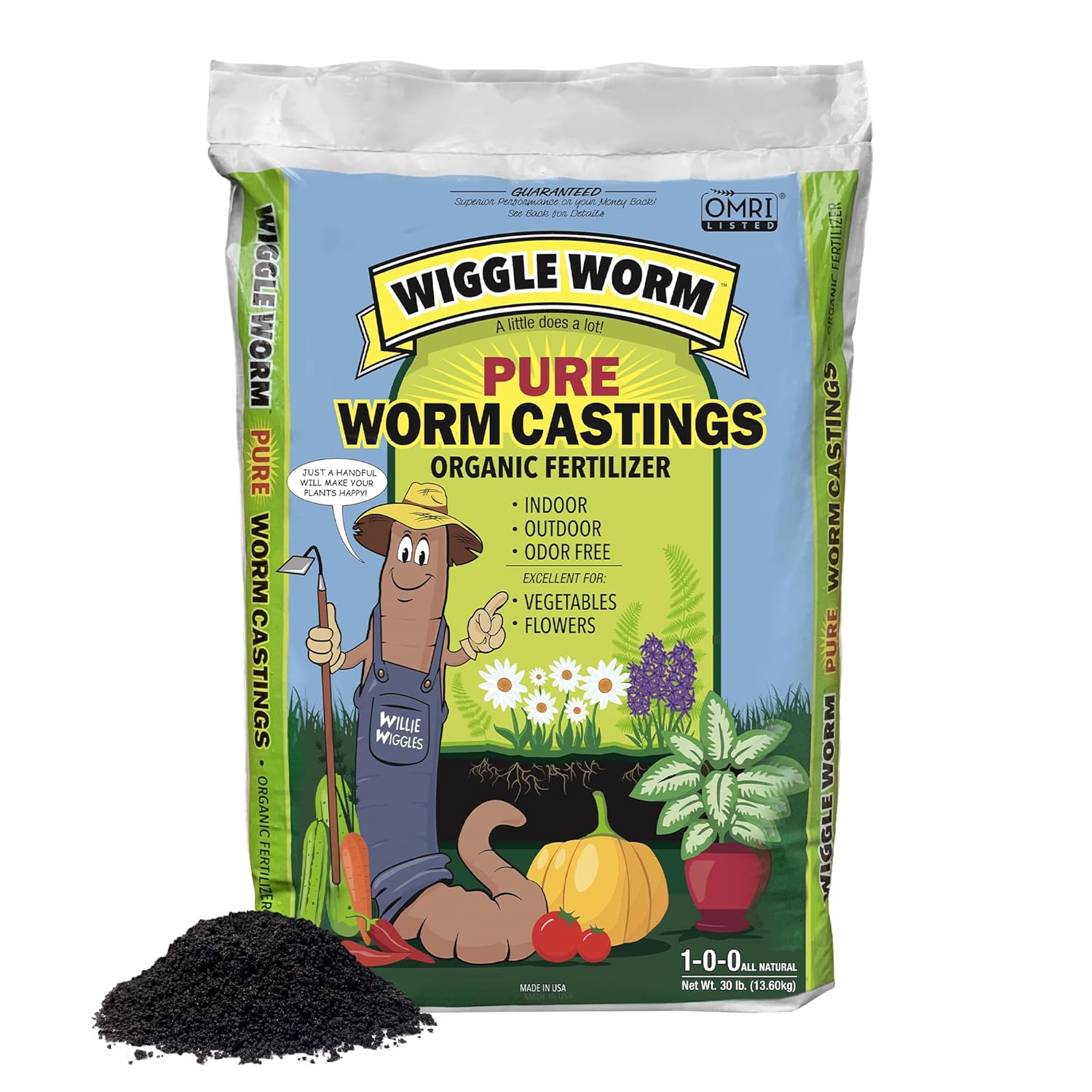
Wiggle Worm Pure Worm Castings Organic Fertilizer, 30 lb
| Item Form | Granules |
|---|---|
| Specific Uses For Product | Soil Conditioning |
| Application Method | Apply to soil |
| Unit Count | 480 Ounce |
Wiggle Worm Pure Worm Castings are a ready-to-use organic soil amendment made from concentrated earthworm castings. Gardeners typically mix a portion into potting mixes, top-dress established plants, work it into transplant holes, or brew it as a nutrient tea; the product page includes specific dosing for vegetables, containers, lawns, and roses. The castings are odorless, non-burning, and OMRI listed for organic use, so they supply water-soluble nutrients plus microbes that improve aeration, water retention, and root development without synthetic chemicals. Practical benefits include easy application, safe use on seedlings and mature plants, and versatility across raised beds, container gardens, and lawns. The main limitation is that this is a concentrated soil builder rather than an all-in-one fertilizer with NPK labels, so users seeking precise, fast-acting nutrient ratios may need to supplement for specific deficiencies; also a 30 lb bag is bulky to handle for small-space gardeners. For gardeners focused on long-term soil health and organic production, it functions as a low-risk, effective amendment.
Best for: Gardeners who prioritize building long-term soil health and want a safe, organic amendment for vegetables, ornamentals, and containers; buyers who value proven, low-risk inputs backed by strong user feedback.
Less Ideal for: Gardeners who need targeted, rapid nutrient correction based on precise NPK values or those who only want a lightweight product for very small balconies or indoor micro-gardens.
- OMRI listed organic and made from 100% worm castings
- Provides beneficial microbes that improve soil structure and water retention
- Odorless and non-burning so safe for seedlings and established plants
- Versatile dosing for containers, raised beds, lawns, and making worm casting tea
- No standard NPK nutrient label so not a precise standalone fertilizer for targeted feeding
- Large 30 lb bag can be heavy and awkward for gardeners with limited storage or mobility
Verdict: Choose this product when you want a proven, OMRI-listed worm casting that builds soil biology and improves plant health across beds and containers.
Brut Organic Worm Castings, 5 lb

| Item Form | Granules |
|---|---|
| Specific Uses For Product | Gardening,Organic |
| Target Species | All plants |
| Mixing Ratio | 1:5 |
Brut Organic Worm Castings function as a concentrated, natural soil amendment you mix into potting mixes or top-dress garden beds and raised beds. Typical use is mixing at the recommended 1:5 ratio for new indoor plants, sprinkling a cup around established houseplants, or working into outdoor planting holes and beds according to the brand directions. The product is OMRI/CDFA listed and produced in controlled conditions, which supports consistent nutrient content and beneficial microbial life that help roots establish, improve soil structure, and increase moisture retention without burning plants. Practical benefits for raised garden beds include improved aeration, slow-release nutrients, and a boost in microbial activity that supports long-term fertility. Limitations are that it is not a complete NPK fertilizer for immediate heavy feeding needs and larger beds require significant quantities to hit the suggested per-square-foot rates, so frequent applications or bulk purchases may be needed for big projects.
Best for: Gardeners who prioritize dependable, organic soil improvement for raised beds and container gardens and prefer predictable, low-risk amendments that support long-term soil health.
Less Ideal for: Those needing immediate, high-NPK feeding for heavy-feeding crops or gardeners who want to amend very large beds without buying supplemental bulk material.
- Certified organic and produced indoors for consistent purity
- Rich in beneficial microbes that improve soil structure and plant vigor
- Easy-to-use granular form suitable for mixing or top-dressing
- Not a standalone high-NPK fertilizer for rapid nutrient correction
- Five-pound bag may be small for large raised beds and repeated seasonal use
Verdict: Use this OMRI/CDFA-listed worm castings product to reliably build long-term fertility and microbial health in raised beds and containers.
R&M Organics Cow Manure Compost Soil Amendment (10 lb)

| Item Form | Solid |
|---|---|
| Specific Uses For Product | Organic |
| Application Method | Apply a thin layer around plants or mix into soil |
| Coverage | All-purpose |
| Target Species | fruits, vegetables, flowers, lawns, trees |
This 10 lb bag of R&M Organics compost is a straightforward, all-purpose soil amendment aimed at improving soil health in garden beds, containers, and raised beds. Made from cured cow manure and fully composted, it is low-odor and easy to work with — apply a thin quarter-inch layer around established plants or mix into planting soil at the recommended 5:1 ratio for new beds. The compost enhances moisture retention, aeration, and organic matter, which helps roots establish and reduces watering frequency. Its small bag size and modest weight make it convenient for small to medium projects and for gardeners who prefer incremental soil improvements. Because the product is pure compost rather than a balanced fertilizer, it is best used as a long-term soil builder rather than a quick nutrient fix; you may still need targeted fertilizers for heavy-feeding vegetables or to correct specific nutrient deficiencies. The simplicity and low odor make it a practical choice for backyard growers who want a reliable organic amendment without handling fresh manure or bulk deliveries.
Best for: Gardeners who prefer incremental, low-effort soil improvement for beds and containers and who prioritize organic, low-odor amendments for everyday maintenance.
Less Ideal for: Large-scale gardeners or landscapers who need bulk amendments or immediate corrective fertilizers for specific nutrient deficiencies should look for bulk compost or formulated plant foods.
- Fully composted cow manure reduces pathogens and minimizes odor compared with raw manure
- Improves soil structure and moisture retention for beds, containers, and raised beds
- Small 10 lb bag is easy to carry, store, and apply for small to medium gardens
- Versatile all-purpose amendment suitable for fruits, vegetables, flowers, lawns, and trees
- Not a formulated fertilizer so it may not supply immediately available nutrients for heavy feeders
- Bag size is small for larger beds or bulk soil rebuilding projects
Verdict: A convenient, low-odor organic compost that steadily improves soil structure and moisture retention for small to medium garden beds.
Choosing the Right Compost for Growing Flowers: Key Factors to Consider
Nutrient Balance and Release Pattern
Flowers rely on a mix of nutrients at different stages: nitrogen for foliage early on, phosphorus to support root development and bloom set, and potassium for overall plant health and stress tolerance. A compost that lists or tests for an appropriate balance will support both vegetative growth and flowering without forcing excessive leafy growth at the expense of blooms.
Release pattern matters because fast-release blends can cause a short spike of growth followed by nutrient dips. Slow-release or well-stabilized compost feeds plants over weeks to months, matching the flowering season and reducing the need for frequent supplemental feeding.
Texture and Soil Structure Improvement
Good compost should improve crumb structure in garden beds and create a light, aerated growing medium in containers. Fluffy, well-aggregated compost encourages root penetration and root hair development, both vital for flower water and nutrient uptake.
If compost is too fine and compacted it can impede drainage and reduce oxygen at the root zone. Coarser, well-aged particles help maintain pore space, prevent crusting, and combine with native soil to create a balanced, friable bed that supports steady bloom production.
Moisture Retention Versus Drainage
Flowers vary in water needs, but most benefit from compost that holds moisture while still allowing excess to escape. In sandy soils, compost should boost water-holding capacity so plants do not dry out between waterings. In heavy soils, compost must improve drainage and structure to avoid root rot.
Consider how you water and local rainfall patterns. A compost with good sponge-like qualities reduces daily watering in hot weather, while maintaining sufficient drainage for rainy periods. Matching compost moisture traits to your garden prevents stress that can shut down flower production.
Maturity, Pathogen Risk, and Cleanliness
Fully composted, stable materials will not tie up nitrogen or release harmful compounds that can stunt seedlings and delicate annuals. Mature compost has gone through high-heat stages or adequate curing to kill most weed seeds and pathogens. Immature or raw inputs can introduce weed pressure or phytotoxic chemicals that reduce germination and early growth.
Check for signs of maturity such as an earthy smell, uniform dark color, and absence of recognizable feedstock. Cleanliness also includes low levels of contaminants like plastics or large woody chunks that interfere with planting and root growth.
Particle Size and Blend Compatibility
Particle size affects both how compost mixes with native soil and how it behaves in containers. Fine, screened compost works well for potting mixes and topdressings, while coarser compost is better for building garden beds or improving heavy soils. A balanced blend that combines a range of particle sizes often performs best by delivering both structure and nutrient retention.
Compatibility with existing soil is important. If your garden soil is heavy clay, choose compost that adds openness and coarse material. For light, sandy soils, prioritize compost that contributes organic matter and water-holding particles to keep flowers hydrated.
Handling, Storage, and Application Practicality
Ease of moving, storing, and applying compost matters because bulky bags or wet, heavy material can be difficult to work with. Dry, dusty compost is hard to spread neatly; overly wet compost can be heavy and messier. Consider packaging sizes and whether you need screened or bagged material for container work.
Application practicality includes how well compost blends when topdressing, the effort to incorporate it into beds, and whether it can be used straight in containers. Products that are easy to scoop, spread, and integrate save time and make it more likely you will apply compost at the correct rates.
How Much Compost to Use in Flower Beds and Containers
Flower beds and containers require different application depths and mixes. For in-ground beds, a 1 to 3 inch layer of compost worked into the top 6 to 8 inches of soil improves structure and nutrient content without smothering established roots. Lighter applications repeated annually gradually build organic matter with minimal disruption.
Containers benefit from a higher proportion of compost in the potting mix because they hold less native soil and lose nutrients faster. A mix with about 25 to 40 percent compost blended with aerating materials helps containers retain moisture and feed flowering plants while keeping drainage reliable.
- Topdress beds with a thin layer each season to maintain organic matter.
- Refresh container mixes annually for the best bloom production.
- Avoid planting directly into very deep layers of pure compost; blend with mineral soil or potting medium.
Using Compost for Different Flower Types
Annuals, perennials, and bulbs have distinct needs. Annuals are heavy feeders and often respond well to richer, more nutrient-dense compost blends that support vigorous flowering through a single season. Perennials benefit from steadier, more balanced compost that supplies nutrients over multiple seasons without encouraging weak, floppy growth.
Bulbs usually need well-draining soil to prevent rot. Use a lighter compost with good drainage, or mix compost with grit or sand to protect bulbs while still delivering nutrients for strong spring blooms.
- Use richer blends for display annuals and mixed containers.
- Choose balanced, slower-release compost for long-lived perennials.
- Give bulbs a leaner, well-drained medium to prevent rot.
Topdressing, Soil Repair, and Mulch Alternatives
Compost works well as a topdressing to feed established flowers and slowly improve the topsoil. Spread a thin layer around plants and avoid burying crowns. Over time, soil organisms will incorporate the compost, enhancing fertility and structure.
In many cases compost can replace or supplement organic mulches. It moderates soil temperature, suppresses weeds when applied at a modest depth, and adds nutrients as it breaks down. Combine compost with a coarser mulch layer if moisture conservation and weed suppression are priorities.
- Topdress with a 1 inch layer in spring or fall.
- Use compost under a thin mulch layer to supply nutrients while reducing evaporation.
- Avoid piling compost against stems or crowns to prevent rot.
Testing and Adjusting Soil After Compost Application
A simple soil test before and after applying compost helps track changes in fertility and pH. Compost can raise pH slightly depending on source materials, so monitoring helps you decide if lime or sulfur is needed for long-term adjustments. Tests also show whether additional phosphorus or potassium is required for abundant blooms.
Adjust in small steps. If test results show a nutrient imbalance, supplement with targeted amendments rather than adding more compost. Over-application can lead to nutrient lockup or excessive vegetative growth that reduces flowering.
- Test soil every few years or when changing significant inputs.
- Make small, targeted amendments rather than large compost top-ups if nutrients are skewed.
- Record results to help refine compost selection and application rates over time.
Seasonal Timing and Application Tips
Apply compost in spring to support new growth and again in fall to help beds recover and rebuild organic matter. Avoid heavy fresh applications during peak bloom to prevent disturbing root systems or causing temporary nutrient surges that favor foliage.
When planting new beds, mix compost into the planting zone. For established beds, use topdressing or shallow incorporation. In containers, repot annually or refresh the top few inches midseason for long-blooming displays.
- Work compost into soil before planting new beds.
- Topdress established beds in early spring or late fall.
- Refresh container mixes each year for sustained bloom performance.
How We Chose the Best Compost for Growing Flowers
We prioritized characteristics that directly affect flowering success in garden beds and containers. Each compost was judged on nutrient balance and slow-release feeding potential, because blooms need steady phosphorus and potassium along with nitrogen in appropriate amounts. Texture and structure were evaluated to ensure mixes improve aeration without drying out quickly; a fluffy, crumbly texture encourages root growth and water infiltration. Moisture retention and drainage were tested conceptually, favoring composts that hold enough water for thirsty perennials while still letting excess drain after heavy rain. We also considered source material and maturity to judge weed seed and phytotoxic compound risk, and ease of use for both in-ground planting and potting. Practical handling factors such as odor, dustiness, and how well a compost blends with native soil were included. Exclusions: unfinished or raw manures, unprocessed yard waste, and products lacking clear composition information were not considered because they can harm tender flower roots or introduce weeds. The final picks reflect these concrete, garden-focused filters.
FAQ
Can I use compost alone in containers for flowering plants?
You can use compost as part of a container mix, but pure compost is often too dense and may retain too much moisture. Blend compost with aerating ingredients such as coarse bark or perlite so roots get oxygen and containers drain well.
How often should I topdress flower beds with compost?
Topdressing once a year is usually sufficient for most flower beds. A thin 1 inch layer in spring or fall gradually builds soil organic matter without overwhelming existing plants. Heavier annual topdressing can be used in garden renovation projects.
Will compost change my soil pH and affect flowers?
Compost can slightly alter pH depending on feedstock, but changes are usually modest. If you grow acid-loving or lime-loving flowers, test soil after repeated compost additions and adjust pH with targeted amendments if necessary.
Is homemade compost safe for delicate flower seedlings?
Finished, well-cured homemade compost is safe for seedlings. Immature or poorly composted material can contain pathogens or phytotoxic compounds that harm young roots. Ensure compost is fully decomposed and has an earthy smell before using with seedlings.
How much compost should I mix into soil when planting perennials?
Work about 1 to 3 inches of compost into the top 6 to 8 inches of soil when planting perennials. This improves structure and fertility without creating a distinctly different layer that can impede root movement between amended and native soil.
Final Verdict
Select compost for growing flowers that matches your soil type and the water needs of your plants. Prioritize a balanced nutrient profile, a stable, mature product, and a texture that improves aeration without causing waterlogging. Consider application rates and timing to avoid short-term growth surges that reduce bloom set. By matching compost characteristics to flower type and site conditions, you can confidently improve blooms and soil health over time.
