

Note: This article contains affiliate links. If you click on these links and make a purchase, I may earn a small commission at no extra cost to you. This helps support my research and content. Read my full affiliate disclosure here.
Choosing the right compost for your home garden makes a visible difference in plant vigor, soil drainage, and water retention. The right mix can feed vegetables, roses, shrubs, and container plants while improving soil structure over seasons. This guide covers seven shortlisted composts suited to typical home-garden uses and explains the practical tradeoffs between nutrient content, texture, and application rates. Below you will find how each option performs on key gardener concerns like nutrient balance and ease of use so you can pick the right compost for beds, pots, or soil repair.
Top Picks at a Glance
| Best Overall The best all-around choice for most situations | Back to the Roots Organic All-Purpose Compost Mix, 1 Cubic Foot |  |
| Best Quality Built to a higher standard if you want something more solid | Espoma Organic Land and Sea Gourmet Compost with Lobster & Crab Meal, 1 cu ft |  |
| Best Value The sweet spot between price and what you get | Garden Magic Michigan Peat Compost & Manure Blend, 40 lb |  |
| Best Budget The cheapest option that still gets the job done reliably | Gantessa Stone Premium Organic Compost, 2 lb |  |
| Highest Rated A top-rated pick with lots of positive feedback | Wiggle Worm 100% Pure Worm Castings Organic Fertilizer, 30 lb |  |
| Most Popular A crowd favorite that many people choose with confidence | BRUT Worm Castings Organic Fertilizer, 5 lb |  |
| Best Seller A high-volume bestseller chosen again and again | R&M Organics Cow Manure Compost Soil Amendment, 10 lb |  |
Back to the Roots Organic All-Purpose Compost Mix, 1 Cubic Foot

| Item Highlight | Organic compost soil amendment for raised beds, gardens and plants; peat-free blend with yucca and gypsum; 25.7 quart bag |
|---|---|
| Unit Count | 822.4 Ounce |
| Style Name | Compost |
| Brand Name | Back to the Roots |
This Back to the Roots compost is a ready-to-use, organic soil amendment designed to boost vegetables, herbs, fruits, and flowers in raised beds and containers. The bagged mix combines upcycled plant matter and wood fines instead of peat, and includes dolomitic limestone to help balance pH, gypsum to improve water absorption, and yucca extract to aid moisture control. In practice it loosens heavy soil, adds organic matter and nutrients, and makes watering more consistent for seedlings and maturing plants. It is straightforward to apply as a top dressing, mixed into potting media, or incorporated into a raised bed before planting. Expectations should be realistic: this is a compost-based all-purpose mix rather than a concentrated fertilizer, so heavy-feeding crops may still need supplemental fertilizer during the season. The product is versatile for most home garden uses, but gardeners wanting a specialty potting mix for seed starting or a high-N fertilizer blend should look elsewhere.
Best for: Gardeners who want a low-maintenance, environmentally minded compost to improve soil structure and feed a wide range of vegetables, herbs, and flowers in raised beds or containers.
Less Ideal for: Growers seeking a specialized seed-starting mix or a high-nitrogen fertilizer solution for heavy-feeding crops should consider different products.
- 100% organic and peat-free base made from upcycled plant matter and wood fines
- Includes dolomitic limestone and gypsum to help pH balance and improve water absorption
- Yucca extract improves moisture control for more consistent watering
- Versatile for raised beds, containers, and in-ground use
- Not a concentrated fertilizer so may require additional feeding for heavy feeders
- Volume listed in some places is confusing and may not match gardener expectations
Verdict: A versatile, peat-free organic compost that improves soil structure and moisture control for most home garden and raised bed needs.
Espoma Organic Land and Sea Gourmet Compost with Lobster & Crab Meal, 1 cu ft

| Item Form | Granules |
|---|---|
| Specific Uses For Product | Soil Conditioning, Plant Growth, Seed Development, Root Development |
| Applicable Species | Flowers, Vegetables, Trees, Shrubs |
| Ingredients | Aged forest products, sphagnum peat moss, humus, limestone, lobster meal, crab meal |
Espoma Land and Sea is a ready-to-use organic compost designed to improve native soils and container mixes when planting or transplanting. It combines aged forest products, sphagnum peat moss, humus, limestone for pH adjustment and lobster and crab meal to add slow-release nutrients. The formula includes mycorrhizae (endo and ecto) that help root establishment, so it is typically worked into planting holes, mixed into potting blends or used as a soil conditioner across beds and containers. Practical benefits are improved soil tilth, added organic matter for moisture retention and a natural source of nutrients that supports seedlings, vegetables and ornamentals. Because it is an amendment rather than a complete fertilizer, repeat applications or supplemental fertilizing may be needed for long-season heavy feeders. Also the bagged quantity suits small beds and containers best, so larger gardens will need multiple bags or bulk amendments. For gardeners focused on performance, it offers a consistent organic mix that supports healthier roots and steady growth without synthetic inputs.
Best for: Gardeners who prioritize plant performance and healthy root establishment and want an organic soil amendment for beds, containers and transplants.
Less Ideal for: People looking for a one-step complete fertilizer or those managing very large landscapes who need bulk amendments in pallet quantities.
- Organic ingredient blend including lobster and crab meal for slow-release nutrients
- Contains endo and ecto mycorrhizae to support root development and transplant success
- Improves soil structure and moisture retention when mixed into native soils or containers
- Ready-to-use granular form that is easy to work into planting holes or potting mixes
- Sold in modest bag size that requires multiple bags for larger gardens
- Not a complete fertilizer so heavy-feeding crops may need extra fertilization
Verdict: Choose this organic compost when you want a performance-focused soil amendment that boosts root health and supports steady growth without synthetic inputs.
Garden Magic Michigan Peat Compost & Manure Blend, 40 lb

| Unit Count | 640 Ounce |
|---|---|
| Item Type Name | Manure |
| Manufacturer | Michigan Peat |
| Volume | 40 liters |
This 40 lb Garden Magic Michigan Peat blend is a pre-mixed organic compost and composted animal manure product intended to boost soil fertility in lawns, raised beds and containers. It arrives ready to use and mixes easily into existing soil or potting media to improve structure and nutrient content. The formula emphasizes odor-free reed sedge peat and composted manure, so you get organic matter and slow-release nutrients without strong smells that can be unpleasant when working close to the house. A 40 lb bag covers roughly 0.75 cubic feet, making it convenient for spot improvements, small vegetable beds and container refreshes. Because it is a blended soil amendment rather than a finished potting mix, gardeners should incorporate it into existing soil rather than relying on it alone for seed starting or long-term container use. The product is straightforward, low-fuss, and suited to gardeners who want a practical, no-frills way to lift soil quality across small to medium projects.
Best for: Gardeners who want a practical, easy-to-apply soil amendment for improving garden beds, lawns and containers without extra mixing or strong odors.
Less Ideal for: People looking for a complete seed-starting mix or large-scale bulk amendments for commercial landscaping projects.
- Ready-to-use organic blend combining peat and composted manure
- Odor-free formulation suitable for use near homes and patios
- Useful for improving soil structure and adding slow-release nutrients
- Convenient 40 lb bag for spot amendments and small beds
- Not formulated as a complete potting mix for long-term container use
Verdict: A convenient, odor-free organic compost and manure blend that makes quick soil improvements for home gardens and containers.
Gantessa Stone Premium Organic Compost, 2 lb

| Item Form | Solid |
|---|---|
| Application Method | Soil Amendment, Top Dressing, Compost Tea |
| Coverage | Medium |
| Target Species | flowers, vegetables, herbs, and more |
| Mixing Ratio | 1:2 |
This screened organic compost is packaged in a 32-ounce bag and is designed for use as a soil amendment, top dressing, or to make compost tea. You can mix it into potting mixes or work it into garden beds at the recommended 1:2 mixing ratio to improve soil structure, aeration, and moisture retention. The product lists applications for flowers, vegetables and herbs and is easy to apply in small gardens, containers, and raised beds. Being a screened, solid compost, it is less likely to include large debris and is convenient for surface dressing and quick incorporation. The small unit size makes it handy for trialing in pots or spot-treating beds but means you will need multiple bags for larger vegetable plots. There are no listed nutrient analysis numbers, so gardeners wanting exact N-P-K figures or heavy-feeding formulas should supplement or test soil separately. For basic organic enrichment and improving water-holding capacity in home garden soil, this is a practical, easy-to-handle option.
Best for: Home gardeners working with containers, small raised beds, or spot repairs who prioritize an affordable, easy-to-apply organic soil amendment.
Less Ideal for: Gardeners managing large vegetable plots or those who need a measured fertilizer formula and guaranteed nutrient content should look for bulk compost or tested amendments.
- Screened, small-particle compost suitable for containers and top dressing
- Multiple application methods listed including soil amendment and compost tea
- Formulated for common garden plants including flowers, vegetables and herbs
- Small 32-ounce unit is insufficient for large beds and requires buying multiple bags
- No guaranteed nutrient analysis (N-P-K) provided
Verdict: A convenient, small-bag organic compost for affordable spot-treating and improving soil structure in containers and small garden beds.
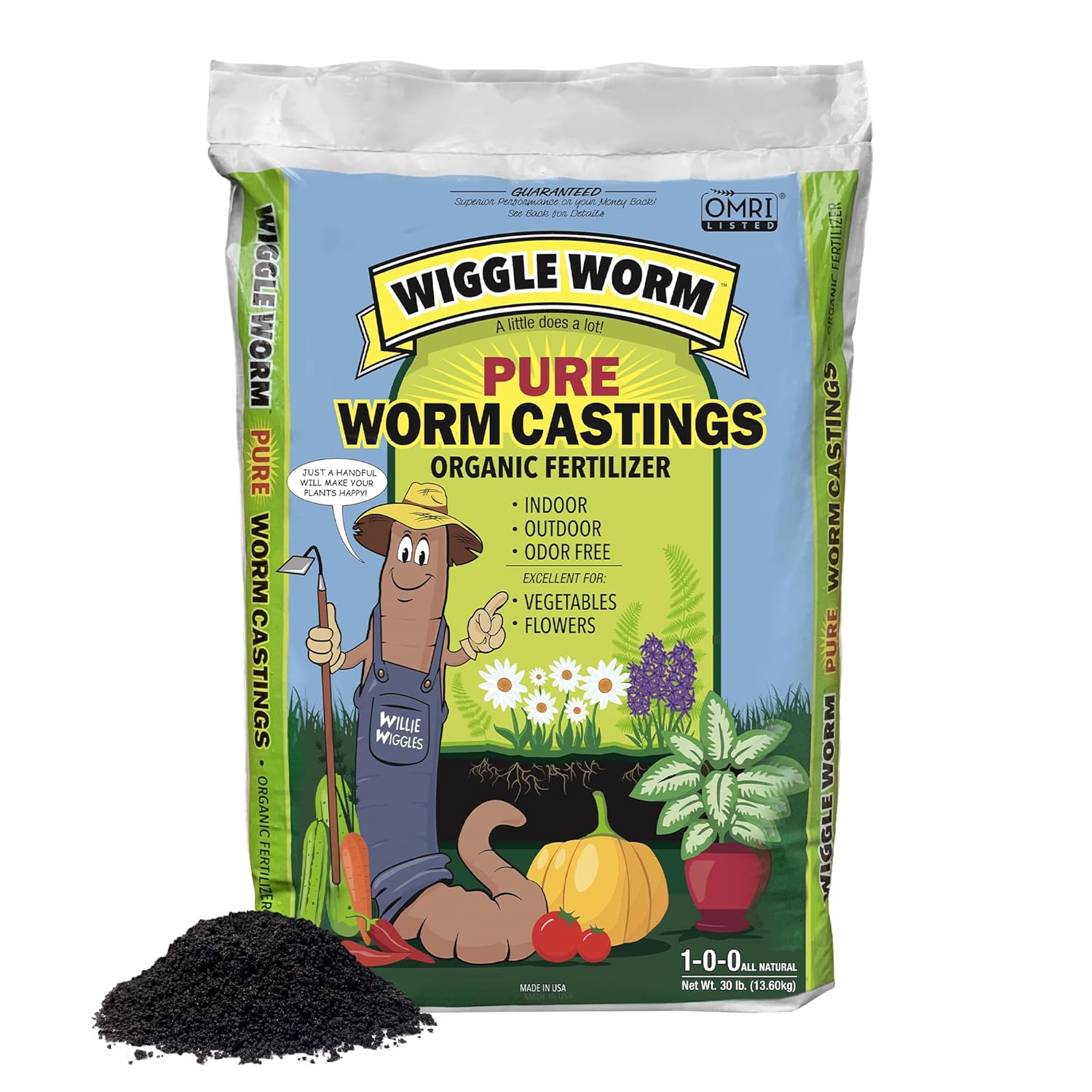
Wiggle Worm 100% Pure Worm Castings Organic Fertilizer, 30 lb
| Item Form | Granules |
|---|---|
| Specific Uses For Product | Soil Conditioning |
| Application Method | Apply to soil |
| OMRI Listed | Yes |
Wiggle Worm Pure Worm Castings is a ready-to-use organic soil amendment that supplies water-soluble nutrients while building long-term soil biology. Gardeners typically mix it into potting mixes, top-dress around established plants, add to planting holes, or make a casting tea for quick feeding. The product is OMRI listed and described as pure castings rather than unprocessed vermicompost, which means it is screened to remove debris and eggs and should integrate cleanly into beds and containers. Practical benefits include improved soil aeration, increased microbial activity, better water retention, and a low risk of burning plants because it is non-synthetic and odorless. It is concentrated, so small doses are needed and it can be used across vegetables, ornamentals, lawns, and container plantings. Limitations are that it is a bulk dry product that requires manual spreading or mixing and it does not replace specific balanced NPK fertilizers when precise nutrient ratios are required for high-demand crops.
Best for: Home gardeners who prioritize reliable, organic soil building and want a low-risk, long-term amendment to improve beds, containers, and lawns without worrying about burning plants.
Less Ideal for: Growers seeking precise, high-analysis synthetic fertilizers for rapid, targeted nutrient adjustments or commercial-scale operations needing mechanized application.
- OMRI listed for certified organic use
- Pure, screened castings with minimal debris or worm eggs
- Improves soil structure, aeration, and water retention
- Provides water-soluble nutrients that plants can absorb quickly
- Requires manual application and mixing for best results
- Not a formulated NPK fertilizer for precise nutrient management
Verdict: A dependable, OMRI-listed organic soil amendment that steadily improves soil health and supports healthier plants with minimal risk.
BRUT Worm Castings Organic Fertilizer, 5 lb

| Item Form | Granules |
|---|---|
| Specific Uses For Product | Gardening,Organic |
| Target Species | All plants |
| Mixing Ratio | 1:5 |
BRUT Worm Castings are a ready-to-use granular vermicompost intended to boost soil fertility and introduce beneficial microbes without risking nutrient burn. Typical uses are mixing into potting mixes at the recommended 1:5 ratio, top-dressing houseplants, or working into garden beds and planting holes for new shrubs and trees. The product is certified organic and formulated to be odor-free, so it is suitable for indoor containers as well as outdoor vegetable and flower gardens. Practical benefits include improved water retention and aeration, a slow-release source of nutrients safe for seedlings and mature plants, and straightforward application rates for lawns and beds. Limitations to note are that this 5 lb bag supplies modest area coverage for yard-scale projects, so larger gardens will need multiple bags, and it is a low-volume amendment rather than a complete potting soil, so you may still need a balanced soil mix or additional inputs for major nutrient deficiencies. Use gloves when handling as recommended.
Best for: Gardeners who want a safe, organic soil amendment to improve plant vigor and soil biology and who rely on peer-reviewed recommendations and clear usage instructions when choosing products.
Less Ideal for: People needing a bulk fertilizer or complete potting soil for large landscape projects or those who prefer a single-product, high-NPK fertilizer for rapid greening.
- Certified organic formula with beneficial microbes for healthier soil biology
- Odor-free granular form suitable for indoor potting mixes and top-dressing
- Clear application guidance (1:5 mixing ratio and per-area rates) for common garden tasks
- Slow-release nutrients that reduce risk of burning seedlings or sensitive plants
- 5 lb bag offers limited coverage for larger beds or lawns, requiring multiple bags for big projects
Verdict: A small-batch organic worm-casting amendment that reliably boosts soil biology and is safe for indoor and outdoor garden use.
R&M Organics Cow Manure Compost Soil Amendment, 10 lb

| Item Form | Solid |
|---|---|
| Specific Uses For Product | Organic |
| Application Method | Apply a thin layer around plants or mix into soil |
| Coverage | All-purpose |
| Target Species | fruits, vegetables, flowers, lawns, trees |
This 10 lb bag of R&M Organics compost is a straightforward, all-purpose soil amendment made from cured cow manure and finished through continuous aeration. It is intended for mixing into garden beds, raised beds, containers, or applied as a thin surface layer around established plants to boost organic matter and help soil hold moisture. Notable features include its fully composted low-odor profile and a recommended 5:1 mixing ratio for blends. In practice it adds humus and improves texture rather than acting as a concentrated fertilizer, so expect gradual benefits to root health and water retention over several seasons. The small bag size is convenient for hobby gardeners and urban plots but means larger landscapes will need multiple bags. Because it is a manure-based compost, it is best used as a regular soil-building input rather than a quick nutrient fix. For gardeners who prefer predictable, low-odor organic amendments, this product is easy to handle and store and integrates well into routine seasonal soil maintenance.
Best for: Home gardeners who want a low-odor, ready-to-use organic compost to gradually improve soil health in beds, raised planters, and containers without fuss.
Less Ideal for: Landscape professionals, large-scale vegetable producers, or anyone needing a concentrated, quick-release fertilizer for immediate nutrient correction.
- Fully composted cow manure processed with aeration to reduce odors
- Improves soil structure and moisture retention for vegetables, fruits and ornamentals
- Small 10 lb bag is easy to carry, store and apply for small gardens and containers
- Suitable for both mixing into soil and applying as a surface amendment
- 10 lb size is not economical for large beds or whole-yard applications
- Provides gradual soil-building benefits rather than fast-acting fertilizer
Verdict: A modest, low-odor manure-based compost that reliably builds soil health for small to medium home gardens.
Choosing the Right Compost for Home Garden: Key Factors to Consider
Nutrient Balance and C:N Ratio
Compost nutrient content determines how much it will feed plants versus just improving structure. A balanced carbon-to-nitrogen ratio helps microbes process the material without tying up nitrogen and stressing new plantings. For vegetable beds you want compost that contributes usable nitrogen and a mix of micronutrients, while ornamental beds benefit from steady, slow-release nutrition.
Knowing the typical nutrient profile helps you decide if compost should be the primary fertility source or part of a broader feeding plan. If the compost is low in available nitrogen, plan to supplement with composted manure or targeted fertilizers when planting heavy feeders.
Texture and Particle Size
Texture affects how compost integrates with existing soil and how it behaves in containers. Fine, crumbly compost mixes into topsoil easily and promotes seed-to-soil contact, while coarser compost with woodier particles improves drainage and aeration in heavier soils.
For raised beds and containers, look for a lighter, more screened product to avoid air pockets and uneven settling. For in-ground soil improvement, a mix with some coarse fragments can help break up compacted clays and improve long-term structure.
Maturity and Stability
Immature compost can rob the soil of nitrogen and release phytotoxic compounds that harm seedlings. Mature, stable compost will have an earthy smell, even color, and no obvious hot spots of heat or ammonia.
Using stable compost reduces the risk of seedling damage and keeps soil biology balanced. When in doubt, choose compost that has been cured and screened, or allow freshly delivered compost to age for several weeks before heavy planting.
Weed Seed and Contaminant Control
Home gardeners want compost that does not introduce weeds, persistent weed seeds, or contaminants such as pesticide residues or plastic fragments. Reliable thermal processing and proper feedstock selection reduce the chance of viable weed seeds surviving the composting process.
Inspect packaging or product descriptions for composting temperature profiles or quality assurances. For vegetable gardens, especially, choose compost with documented weed-seed reduction to limit future maintenance.
Source Materials and Traceability
Knowing what went into the compost affects nutrient content, potential contaminants, and suitability for different planting areas. Compost made from yard trimmings and kitchen scraps will differ from food-waste-only or manure-rich mixes.
Traceability also helps when you need specific characteristics such as low-salt compost for container plants or manure-enriched compost for heavy feeders. Favor products that list feedstocks and processing methods so you can match the compost to garden needs.
Application Rate and Packaging
How compost is packaged and recommended application rates determine usability around the home garden. Small bags or bale formats are easier to store and use in containers, while bulk loads suit larger lawn-and-border projects.
Clear guidance on how much to incorporate per square foot for bed preparation, how thick to topdress, and how much to add to potting mixes helps avoid over-application and nutrient imbalances. Consider the physical effort required to move bulk compost in and around the garden when planning projects.
When to Use Compost in the Growing Season
Compost is versatile but timing matters. In spring, incorporate a moderate layer into beds before planting to improve structure and provide a slow nutrient release. Avoid heavy fresh applications directly against young seedlings to prevent root disturbance.
In summer, use compost as a light topdressing to conserve moisture and feed established plants. In fall, a thicker application works well for overwinter soil improvement so microorganisms can continue to break down organic matter during milder days.
- Spring: mix 1 to 2 inches into top 6 inches of soil for bed prep
- Summer: thin topdress of 0.5 inch around established plants
- Fall: apply 2 to 3 inches to bare beds to decompose over winter
Using Compost in Containers and Potting Mixes
Containers need lighter, well-draining mixes. Use compost as a component rather than the sole medium. A typical container blend replaces 20 to 30 percent of the volume with screened compost to add nutrients and water-holding capacity without making the mix heavy.
When repotting, check that the compost is mature and free of large woody fragments. Too much uncomposted material can compact, reducing aeration and stressing roots.
- Use screened, fine compost for small pots
- Blend with coarse components like perlite or sharp sand for better drainage
- Avoid thick layers of only compost in deep containers
Topdressing Lawns and Established Beds
Light topdressing with compost improves soil over time without major disruption. For lawns, spread a thin layer and use a rake or spreader to work it into grass crowns; this helps reduce thatch and build microbial activity. For flower beds, a modest topdressing supplies slow-release nutrients and helps retain soil moisture.
Avoid applying more than a half-inch at a time on established lawns to prevent smothering. Repeat annual or biennial applications rather than heavy one-time doses for steady improvements.
- Lawns: aim for 0.125 to 0.5 inch per application
- Beds: 0.5 to 1 inch is often sufficient for established perennials
- Reapply periodically rather than deep single-layer applications
Managing Compost in Heavy Clay or Sandy Soils
Compost strategies differ by soil type. In heavy clay, use coarse-textured compost to open the soil, improve drainage, and create pore space. Incorporate compost deeply when renovating compacted areas rather than only topdressing.
In sandy soils, compost is valuable for water retention and nutrient-holding capacity. Use higher organic-matter compost and repeat applications to build long-term soil health because sandy soils lose organic matter faster through leaching.
- Clay soils: mix coarse compost and grit to break compaction
- Sandy soils: use richer, finer compost and plan for repeat amendments
- Test small areas first to observe settling and drainage changes
Storing and Handling Compost at Home
Store compost in a dry, shaded area and keep it covered to avoid nutrient washout from heavy rain. Small gardens benefit from storing bags on pallets or raised supports to prevent moisture pickup and plastic tearing.
When moving bulk compost, use a wheelbarrow and a tarp to minimize spills. Screen or sift compost if you need fine texture for seed starting or small pots.
- Keep compost covered and elevated if possible
- Screen coarse batches before using in fine applications
- Label and date any homemade or bagged compost to track maturity
How We Chose the Best Compost for Home Garden
We prioritized composts that deliver reliable, practical results in small-scale home gardens. Our selection criteria focused on measurable, gardener-relevant specifications: nutrient profile and organic matter content, texture and particle size, maturity and stability to avoid plant damage, weed seed and contaminant control, and packaging or delivery formats suited to small batches and containers. We looked for products that are appropriate for a range of uses including topdressing, mixing into planting beds, and container re-potting. We excluded any materials without clear composition data, immature or raw materials that risk nitrogen drawdown, and industrial-scale formulations unsuitable for hobbyist use. Editorial filters favored composts with documented sourcing and clear use instructions so gardeners can judge how much to apply and where it works best.
FAQ
How much compost should I add to a vegetable bed?
For new or heavily depleted vegetable beds, incorporate 1 to 2 inches of compost into the top 6 to 8 inches of soil. For annual topdressing, a thinner 0.5 to 1 inch layer is usually sufficient and reduces the chance of nitrogen tie-up.
Can I use compost straight from the bin for seedlings?
Fresh, unprocessed compost can contain unstable compounds that harm delicate seedlings. Use well-cured, screened compost mixed with sterile seed-starting mix or potting medium for young plants to avoid stunting.
Will compost attract pests or rodents in the garden?
Properly finished compost usually does not attract pests, but odorous food scraps or uncovered piles can. Keep compost bins closed, avoid adding meat or dairy, and maintain good aeration to minimize attraction.
How can I tell if compost is mature?
Mature compost is dark, crumbly, and has an earthy smell without ammonia or sour odors. It should not feel hot to the touch and will have fewer recognizable feedstock pieces. If it still heats or smells strongly, allow more curing time.
Is compost safe to use around edible crops?
Compost is generally safe for edible crops when made from appropriate feedstocks and processed to reduce contaminants and pathogens. For direct-contact uses like topdressing or mixing into raised beds, choose compost with clear sourcing and adequate maturity.
Final Verdict
Prioritize composts that match your immediate gardening needs: choose finer, screened compost for containers and seedbeds, and coarser, higher-organic mixes to renovate heavy soils. Balance nutrient goals with texture and maturity to avoid nitrogen tie-up or seedling stress. By weighing these tradeoffs and following recommended application rates, you can confidently use compost to improve soil structure, retain moisture, and feed plants over multiple seasons.
