

Note: This article contains affiliate links. If you click on these links and make a purchase, I may earn a small commission at no extra cost to you. This helps support my research and content. Read my full affiliate disclosure here.
Picking the right compost for petunias matters because these flowering annuals need steady fertility and free-draining soil to set abundant blooms through the season. The wrong mix can hold too much water or lock up nitrogen, leaving plants leggy or sparse. This guide covers six shortlisted composts suited for petunias and explains the practical tradeoffs you will encounter in pots, window boxes, and garden beds. We evaluate mixes for nutrient balance, drainage, and how they affect watering frequency and bloom longevity. Read on to understand which compost traits matter for your growing situation.
Top Picks at a Glance
| Best Quality Built to a higher standard if you want something more solid | Espoma Organic Land and Sea Gourmet Compost with Lobster & Crab Meal, 1 cu ft |  |
| Best Value The sweet spot between price and what you get | Old Potters Organic Plant-Based Compost, 24 Quarts |  |
| Best Budget The cheapest option that still gets the job done reliably | Gantessa Stone Premium Organic Compost, 2 lb |  |
| Highest Rated A top-rated pick with lots of positive feedback | Earth Science Premium Earthworm Castings, 3 lb |  |
| Most Popular A crowd favorite that many people choose with confidence | Brut Organic Worm Castings, 5 lb |  |
| Best Seller A high-volume bestseller chosen again and again | R&M Organics Cow Manure Compost Soil Amendment (10 lb) |  |
Espoma Organic Land and Sea Gourmet Compost with Lobster & Crab Meal, 1 cu ft

| Item Form | Granules |
|---|---|
| Specific Uses For Product | Soil Conditioning, Plant Growth, Seed Development, Root Development |
| Included Components | Lobster and crab meal |
| Ingredients | Aged forest products, sphagnum peat moss, humus, limestone, lobster meal & crab meal |
Espoma Organic Land and Sea is a premium, ready-to-use compost intended for amending garden beds, planters, and transplant holes. The mix combines aged forest products, sphagnum peat moss, humus, limestone for pH adjustment, and lobster and crab meal to deliver organic nutrients and slow-release nitrogen. It also includes a mycorrhizae blend to help root establishment and nutrient uptake. In practice this product is mixed into native soil when planting or used to refresh container mixes, and it noticeably improves moisture retention and soil texture while adding a food source for vegetables, flowers, trees, and shrubs. Because it is a finished compost you do not need to wait for further decomposition before planting. Limitations are typical of peat-containing mixes: it is somewhat bulky to handle and not a concentrated fertilizer for rapid greening, so heavy feeders may still need supplemental feedings during the season. Overall it is a convenient, performance-focused soil amendment for gardeners who want an organic, biologically active boost at planting time.
Best for: Gardeners who prioritize reliable, organic soil improvement at planting time and want a biologically active amendment that supports root development and steady plant performance.
Less Ideal for: Buyers seeking an instant, high-nitrogen fertilizer or those who strictly avoid peat-based products should consider alternatives.
- Finished, ready-to-use compost suitable for immediate planting
- Contains lobster and crab meal for slow-release organic nutrients
- Includes endo and ecto mycorrhizae to support root growth and nutrient uptake
- Improves soil texture and moisture retention for containers and beds
- Contains peat moss which some gardeners avoid for sustainability reasons
- Not formulated as a high-concentration fertilizer for rapid greening
Verdict: A ready-to-use organic compost that boosts soil biology and root performance at planting for gardeners focused on steady, long-term results.
Old Potters Organic Plant-Based Compost, 24 Quarts

| Unit Count | 768 Fluid Ounces |
|---|---|
| Style Name | Nutrient-rich |
| Brand Name | Old Potters |
This Old Potters organic compost is a plant-based, chemical-free amendment intended to boost soil health for gardens and lawns. Gardeners typically use it as a top dressing, mixed into potting mixes, or incorporated into planting holes to improve aeration and moisture retention. Notable features include a nutrient-rich blend with peatmoss and horticultural charcoal mentioned by the brand and a large 24-quart (768 fl oz) volume per bag. In practice it adds organic matter that can help turf roots establish when used as a thin top dressing and will lighten compacted soil when worked in. The product is sustainable in that it recycles plant material and avoids synthetic inputs. Important limitations are standard for compost products: it may vary in particle size and nutrient concentration batch to batch, and handling requires gloves and a mask for dust protection due to possible allergens. It is not a quick-release synthetic fertilizer, so expect gradual improvement over weeks to months rather than instant green-up.
Best for: Home gardeners and turf stewards who prefer organic, sustainable soil amendments and want a reliable compost to improve soil structure and moisture retention over time.
Less Ideal for: People who need immediate, fast-release nutrient fixes or precise, laboratory-grade soil amendments for professional turf management.
- 100% plant-based and chemical-free formulation suitable for organic lawn care
- Large 24-quart bag provides substantial coverage for top dressing or mixing into soil
- Contains peatmoss and horticultural charcoal components that aid aeration and moisture control
- Improves long-term soil structure and nutrient availability when incorporated into turf or garden beds
- Not a fast-acting synthetic fertilizer so results develop over multiple weeks
- May produce dust and requires gloves and a mask for safe handling due to allergy risk
Verdict: A roomy, plant-based compost that steadily improves soil structure and moisture retention, making it a practical choice for organic lawn top dressing.
Gantessa Stone Premium Organic Compost, 2 lb

| Item Form | Solid |
|---|---|
| Application Method | Soil Amendment, Top Dressing, Compost Tea |
| Coverage | Medium |
| Target Species | flowers, vegetables, herbs, and more |
| Unit Count | 32 Ounce |
This 2 lb bag of Gantessa Stone premium organic compost is a screened, manure-based amendment meant to boost soil structure and moisture retention in small vegetable garden beds or containers. Typical uses are mixing into potting mixes at the recommended 1:2 ratio, top-dressing established beds, or brewing compost tea. The product emphasizes improved porosity and water holding capacity and supplies a range of organic nutrients and beneficial microbes rather than concentrated NPK values. Because it is screened and sold in a compact unit, it is handy for hobby gardeners, balcony growers, and patch repairs where hauling large bags is impractical. Limitations are the small unit size and lack of guaranteed nutrient analysis, so it is best used to build organic matter rather than as a primary fertilizer for heavy-feeding crops. For larger beds you will need multiple bags or a bulk compost source, but for spot applications and seedling mixes this is a convenient, low-effort option.
Best for: Gardeners working on small vegetable beds, containers, or seedlings who want an easy-to-use organic amendment without hauling bulk compost.
Less Ideal for: Large-scale vegetable gardeners or those who need a measured fertilizer program for heavy-feeding crops should choose bulk compost or a product with a guaranteed nutrient analysis.
- Screened organic compost improves soil structure and water retention
- Suitable for multiple application methods: soil amendment, top dressing, or compost tea
- Compact 2 lb bag is convenient for container gardeners and small repairs
- Small 2 lb unit requires buying multiple bags for larger vegetable beds
- No detailed NPK or guaranteed nutrient analysis provided
Verdict: A handy screened organic compost for small vegetable gardens and containers when you want to quickly add organic matter without buying bulk.
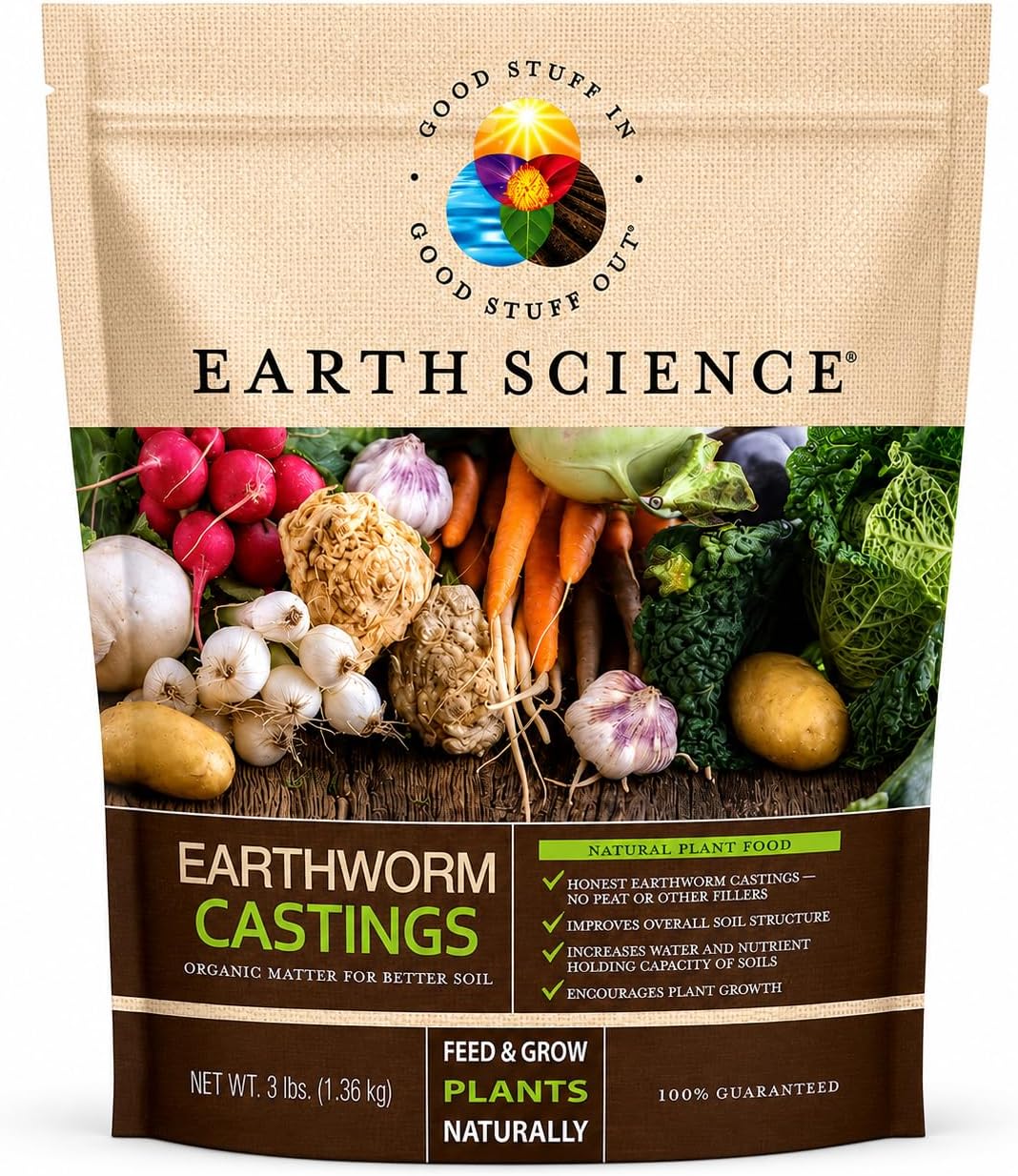
Earth Science Premium Earthworm Castings, 3 lb
| Item Form | Granules |
|---|---|
| Specific Uses For Product | Organic,Plant Food,Plant Growth |
| Coverage | Medium |
| Target Species | gardens, flower beds, fruits, trees, shrubs |
| Mixing Ratio | 1:4 |
Earth Science Premium Earthworm Castings are a pure vermicompost product intended to enrich garden and potting soils. Gardeners typically use it as a top dressing, mixed into potting mixes at about 1:4 castings to soil, or incorporated into garden beds at 1/4 to 1/2 inch and watered in; it can also be brewed as compost tea. The castings add organic matter that helps soil retain moisture, supports beneficial microbes, and can reduce compaction by improving aggregation. Practical benefits include a straightforward application for vegetables, flower beds, trees, and shrubs and the flexibility to use in pots, compost piles, or on lawns. The product is free of fillers and presented as a slow-release, natural fertilizer rather than a quick synthetic boost, so expect gradual improvements over weeks to months rather than immediate greening. Because this is a small, concentrated pouch, frequent reapplication during the growing season is recommended for larger beds or heavy-feeding crops.
Best for: Gardeners who prioritize dependable, natural soil improvement for organic vegetable beds and potted edibles and prefer steady, biology-driven results over quick chemical fixes.
Less Ideal for: Growers who need rapid, high-N fertilizer responses for a single fast-growing crop or who require large-volume amendments for extensive beds without frequent reapplication.
- 100% vermicompost with no peat or fillers
- Versatile uses: top dressing, potting mix amendment, compost tea, and compost layering
- Improves soil structure and water retention while feeding beneficial microbes
- Slow-acting nutrient release not suited for immediate greening or fast corrective feeding
Verdict: Use this pure earthworm castings product when you want a reliable, natural soil conditioner that builds long-term fertility for an organic vegetable garden.
Brut Organic Worm Castings, 5 lb

| Item Form | Granules |
|---|---|
| Specific Uses For Product | Gardening,Organic |
| Target Species | All plants |
| Mixing Ratio | 1:5 |
Brut Organic Worm Castings function as a concentrated, natural soil amendment you mix into potting mixes or top-dress garden beds and raised beds. Typical use is mixing at the recommended 1:5 ratio for new indoor plants, sprinkling a cup around established houseplants, or working into outdoor planting holes and beds according to the brand directions. The product is OMRI/CDFA listed and produced in controlled conditions, which supports consistent nutrient content and beneficial microbial life that help roots establish, improve soil structure, and increase moisture retention without burning plants. Practical benefits for raised garden beds include improved aeration, slow-release nutrients, and a boost in microbial activity that supports long-term fertility. Limitations are that it is not a complete NPK fertilizer for immediate heavy feeding needs and larger beds require significant quantities to hit the suggested per-square-foot rates, so frequent applications or bulk purchases may be needed for big projects.
Best for: Gardeners who prioritize dependable, organic soil improvement for raised beds and container gardens and prefer predictable, low-risk amendments that support long-term soil health.
Less Ideal for: Those needing immediate, high-NPK feeding for heavy-feeding crops or gardeners who want to amend very large beds without buying supplemental bulk material.
- Certified organic and produced indoors for consistent purity
- Rich in beneficial microbes that improve soil structure and plant vigor
- Easy-to-use granular form suitable for mixing or top-dressing
- Not a standalone high-NPK fertilizer for rapid nutrient correction
- Five-pound bag may be small for large raised beds and repeated seasonal use
Verdict: Use this OMRI/CDFA-listed worm castings product to reliably build long-term fertility and microbial health in raised beds and containers.
R&M Organics Cow Manure Compost Soil Amendment (10 lb)

| Item Form | Solid |
|---|---|
| Specific Uses For Product | Organic |
| Application Method | Apply a thin layer around plants or mix into soil |
| Coverage | All-purpose |
| Target Species | fruits, vegetables, flowers, lawns, trees |
This 10 lb bag of R&M Organics compost is a straightforward, all-purpose soil amendment aimed at improving soil health in garden beds, containers, and raised beds. Made from cured cow manure and fully composted, it is low-odor and easy to work with — apply a thin quarter-inch layer around established plants or mix into planting soil at the recommended 5:1 ratio for new beds. The compost enhances moisture retention, aeration, and organic matter, which helps roots establish and reduces watering frequency. Its small bag size and modest weight make it convenient for small to medium projects and for gardeners who prefer incremental soil improvements. Because the product is pure compost rather than a balanced fertilizer, it is best used as a long-term soil builder rather than a quick nutrient fix; you may still need targeted fertilizers for heavy-feeding vegetables or to correct specific nutrient deficiencies. The simplicity and low odor make it a practical choice for backyard growers who want a reliable organic amendment without handling fresh manure or bulk deliveries.
Best for: Gardeners who prefer incremental, low-effort soil improvement for beds and containers and who prioritize organic, low-odor amendments for everyday maintenance.
Less Ideal for: Large-scale gardeners or landscapers who need bulk amendments or immediate corrective fertilizers for specific nutrient deficiencies should look for bulk compost or formulated plant foods.
- Fully composted cow manure reduces pathogens and minimizes odor compared with raw manure
- Improves soil structure and moisture retention for beds, containers, and raised beds
- Small 10 lb bag is easy to carry, store, and apply for small to medium gardens
- Versatile all-purpose amendment suitable for fruits, vegetables, flowers, lawns, and trees
- Not a formulated fertilizer so it may not supply immediately available nutrients for heavy feeders
- Bag size is small for larger beds or bulk soil rebuilding projects
Verdict: A convenient, low-odor organic compost that steadily improves soil structure and moisture retention for small to medium garden beds.
Choosing the Right Compost for Petunias: Key Factors to Consider
Nutrient Balance and Release Pattern
Petunias need regular but moderate feeding to produce continual flowers. A compost with a balanced nutrient profile and predictable release pattern avoids sudden flushes of vegetative growth at the expense of blooms.
Fast-release nutrients help initial establishment, while a modest ongoing release or compatibility with light top-dressing feedings supports sustained flowering without frequent heavy fertilization. Beware mixes that list only "high nitrogen" without specifying slow- or fast-release behavior because they can push leafy growth and reduce blooms.
Drainage and Aeration
Petunias perform best in mixes that drain freely and provide air pockets around roots. Poorly draining compost can lead to root rot in containers and stress in rainfall-exposed beds.
Good drainage comes from coarse particles, added grit or perlite, and a stable crumb structure that resists compaction. Aeration helps roots access oxygen and supports quick recovery after wet periods, which is important for repeated bloom cycles.
Texture and Particle Size
Particle size determines how easily roots can penetrate and how quickly the mix settles. A compost that is too fine compacts over time, reducing oxygen availability and making plants more dependent on frequent watering.
A crumbly texture with a mix of fine humus and some larger particles gives both water-holding capacity and structural stability. That balance keeps petunia stems healthy and helps anchoring in hanging baskets and window boxes.
Moisture Retention Vs Fast Drying
You want a compost that holds enough moisture to avoid daily watering but dries sufficiently between waterings to prevent fungal issues. Different growing situations affect the ideal balance: shallow hanging baskets need faster-draining, lighter mixes, while deeper pots and in-ground beds can tolerate higher moisture-holding capacity.
Consider your climate and container depth when choosing a mix. In hot, windy sites pick a formulation that retains water without staying soggy; in cooler, shaded spots a slightly higher moisture retention can reduce watering frequency.
pH and Compatibility with Fertilizers
Most petunias prefer a slightly acidic to neutral pH. Compost that is very alkaline or acidic can interfere with nutrient availability and stunt flowering.
Also think about how the compost interacts with your feeding plan. Some mixes include long-term fertilizer that may overlap or conflict with weekly liquid feeds, while others are low-nutrient and rely on supplemental fertilizers. Choose a compost whose baseline nutrient level works with how you prefer to feed.
Organic Matter Source and Stability
The source and degree of decomposition of the organic matter affect nutrient availability and soil behavior. Well-matured compost made from leaf mold, garden waste, or stable green waste provides steady nutrients and avoids nitrogen tie-up.
Fresh, undercomposed materials can continue to break down in the pot and temporarily reduce available nitrogen. Stable organic matter also contributes to long-term structure and microbial health, which supports consistent bloom performance across a season.
Best Compost Traits for Containers and Hanging Baskets
Containers and hanging baskets amplify drainage and weight concerns. A lighter, fast-draining compost with added grit or perlite helps prevent waterlogging and reduces total weight while keeping roots supplied with oxygen. Look for mixes labeled as suitable for containers or that list components like peat-free coir blends plus a coarse amendment.
bullets:[
- Prefer mixes with a higher proportion of coarse particles to speed drainage
- Choose a blend that retains some moisture but does not compact after repeated watering
- Consider mixes that list explicit components such as coir, composted bark, or pumice for clarity
Adjusting Compost for In-Ground Plantings
For petunias planted directly in garden beds, use compost to improve soil structure and fertility without creating a dense, moisture-trapping layer. Mix compost into the existing topsoil rather than creating a separate opportunistic pocket. A 2 to 3 inch working in of mature compost improves drainage in heavy soils and boosts bloom potential in light soils.
- Work compost into the top 6 to 8 inches of soil for best root contact
- Avoid layering thick mulch of uncomposted material that may keep crowns wet
- Match compost moisture retention to your native soil texture to avoid overwatering
Managing Watering with Different Composts
How often you water depends heavily on the compost's water-holding traits and container size. Lighter, fast-draining mixes will need more frequent but shorter waterings; denser mixes need less frequent watering but should be monitored for poor aeration.
bullets:[
- Use the finger test or a moisture meter to gauge actual moisture rather than relying on schedule
- Water thoroughly until excess drains from the pot and then allow the surface to dry slightly before the next watering
- Adjust frequency during heat waves and heavy rain to avoid root stress
Feeding Strategy When Using Compost
Compost supplies baseline nutrients, but petunias benefit from regular light fertilization to sustain long bloom runs. If your chosen compost includes a long-duration fertilizer, reduce supplemental applications initially and watch for signs of overfeeding such as burnt leaf edges.
bullets:[
- Apply a balanced liquid fertilizer on a light schedule if the compost is low-nutrient
- Top-dress with a thin layer of compost mid-season to refresh nutrients in containers
- Flush containers occasionally to prevent salt buildup from feeds
Seasonal Care and Repotting Tips
Refresh or replace compost annually for most container-grown petunias. Over a season, compost can compact and lose structure, which reduces aeration and encourages shallow rooting. Repot into fresh mix or lightly loosen and top-dress with new compost at transplant time.
bullets':['Refresh the top inch of compost mid-season in larger pots','Repot shallow-rooted petunias into slightly deeper containers if roots are binding','Sterilize reused containers and break up compacted soil before refilling']]}],
faqs':[{
faqs':[{
faqs':[{
faqs':[{
- ]}]},
How We Chose the Best Compost for Petunias
We focused on practical garden performance and measurable properties that affect petunia health and flowering. Primary evaluation criteria included nutrient profile and release rate, drainage and aeration, texture and particle size, and organic matter quality. Each candidate was judged on how it supports steady bloom production, how it holds and releases water under container and bed conditions, and whether its texture promotes easy root penetration and transplanting. We excluded mixes formulated solely for vegetables or heavy-feeding shrubs that deliver excessively high slow-release fertilizer levels unsuited to delicate annuals. Products that rely primarily on uncomposted wood chips or inert fillers were also removed because they can cause nitrogen drawdown or poor moisture behavior. Other filters included excluding mixes with unclear organic matter sources and those lacking basic pH or nutrient transparency. The resulting list emphasizes composts that give predictable watering intervals, consistent bloom support, and dependable drainage for containers and in-ground plantings. Scoring favored mixes that balance a modest nutrient load with good aeration and stable structure over the season.
FAQ
How often should I water petunias in compost mixes?
It depends on container size and compost drainage. In fast-draining mixes you may water daily during heat; in moisture-retentive mixes every two to three days is common. Use the finger test or a moisture meter and water thoroughly until excess drains.
Can I use garden compost straight from my pile for petunias?
Garden compost can work if it is fully mature and crumbly. Avoid fresh or undercomposted material because it can tie up nitrogen and stress young plants. Screened, well-rotted compost is best for consistent blooms.
Do petunias need fertilizer if the compost already contains nutrients?
Often they do. Compost supplies baseline fertility but many petunias benefit from light, regular liquid feeding to maintain blooms. If the compost contains long-duration fertilizer, reduce additional feeds and monitor plant response.
Is a peat-free compost good for petunias?
Peat-free blends can be excellent if they combine fibrous components like coir with coarse amendments for drainage. Ensure the mix balances moisture retention and aeration suitable for your container or bed depth.
How can I improve drainage in heavy soil before planting petunias?
Work mature compost into the top soil and add coarse sand or grit to improve structure. Avoid creating a dense compost-only layer; blend it in to improve porosity and root access across the planting zone.
Final Verdict
Choose a compost that matches how you grow petunias. Prioritize blends that combine modest, steady fertility with good drainage and a crumbly texture for reliable root health. Balance moisture retention to your container size and climate, and plan a feeding routine that complements the compost's nutrient release. Ultimately, the best compost for petunias supports frequent flowering without encouraging excessive foliage. Focus on drainage, organic matter stability, and predictable nutrient behavior to keep petunias blooming from planting through season end.
